
The Grow Awards 2026 🏆
Likes
Comments
Share
@json9669
Follow
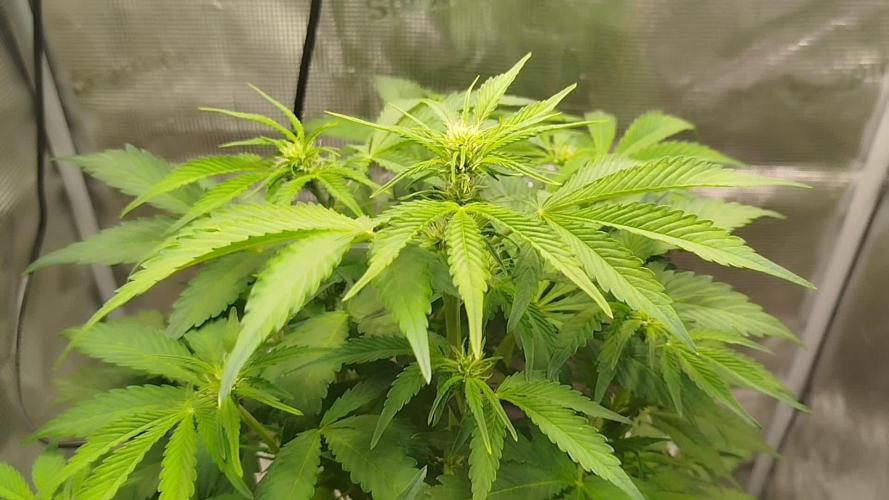
Nothing unusual just a healthy looking auto flower.
Likes
93
Share
@Ferenc
Follow
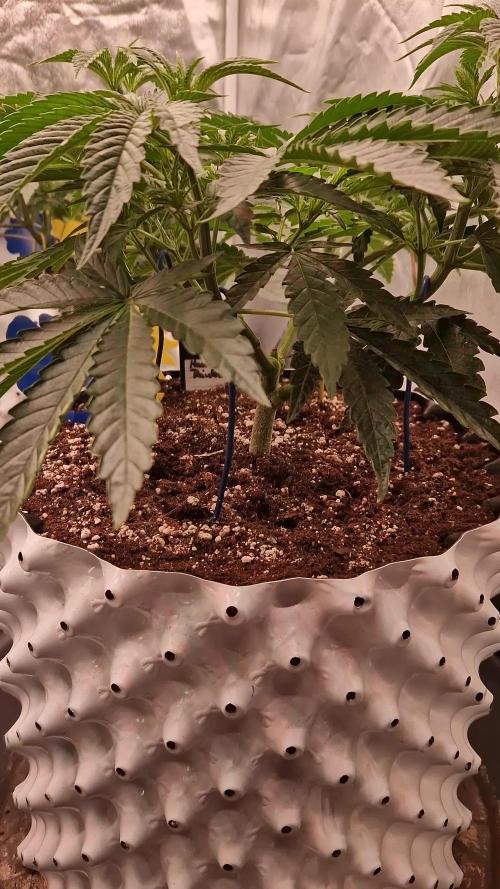
So the 3rd week started. I did realize that the plants started growing faster and on Sunday I did transform them to a bigger hydroponic pot. They were entering the vegetative stage. I know I should have not done it to the autoflowering so I should have planted it to the finisher pot but I did not know because it is my first time so I kept reading and receiving information. I stopped spraying the plants because I saw one yellow dot and I checked it can be toxicity or fungee so better not to play but still use it for the soil. I constantly raised up the quantity of the water so started adding 140 ml a day for two plants, 70ml 2 times morning, evening. So one plant receives 35 ml in the morning and the same amount in the evening, approximately 12 hours difference. I use two lamps 60W each with a dual head so (30W 2 times each plant.) The Gelato Cookie D'ohpe started smelling not strong but the smell was weak, only if you go closer or in the grow tent. I started also adding bat guano-acacia honey and water mix. (1-liter water 1 tablespoon bat guano, plus very good quality acacia honey mix 1 tablespoon). The Gelato Cookie D'ohpe also started growing faster, at the beginning it was growing slower but now, it has changed. I also set the light schedule 20 hours on and 4 hours off with two-timer. Ventilation started I use a small USB fan which is able to go 17 hours with a 5000mpah power bank so I bought 2 when one is off the second is used and the other is charged. Pretty much it works almost 24/0. I do fertilize on Monday, Wednesday, Friday with that bat guano mix giving the same amount of water like if it was normal. 140 ml a day (70ml morning, 70ml evening). Other days the same quantity of clean water. I never used tap water I buy still water from the shop.
Likes
37
Share
@Capo420
Follow
This past week has been a blast! After getting these ladies nutrition straightened out, they are thriving!💚🌱💚 I gave defoliated wayyy more than what I see other growers traditionally doing. After the "3rd and final haircut" I defoliated two more times 😅 Thank you the GD community for the support and resources along the way 🙏 My only concern now is the tent actually becoming too crowded.😆. Other then that I am thinking it should be smooth sailing these next 6 weeks or so. 🏴‍☠️😎🏴‍☠️ Happy Growing! 💚💪🌱😎🌱💪💚
Likes
16
Share
07-12 till 13-12 actually I did everything wrong this entire round. a bad start with much too late light. resulted in enormously stretched plants. almost impossible to save. after very deep repotting. they kept stretching. I still think too little light and too little water. now at the beginning of the third week of flowering they do not stop stretching .. a bizarre difference compared to the previous round.
Likes
72
Share
@BodyByVio
Follow
This week I had to Lollipop again (I know is very late and I hope I didn’t stressed the plant to much). My canopy is so tick and so many overlapping leaves and buds in the center of the plant that don’t receive enough light or any at all , n combination with the RH swings that I got going on (45 and 63 RH), I’m very afraid of mold. I should have did a better job at Lollipoping from day 21. I’m inexperienced grower and I didn’t knew better. I decided is better to risk to shock the plant a little bit risking a reduction in yield then get mold or pests and lose it all. My 30 pin dehumidifier works great with the AC but sometimes when the AC( compressor) stops my RH jump at 62% -63%, witch I don’t like . I’m trying to keep the humidity around 50% but in such a small room between the AC and Dehumidifier I got big swings in temp ( 75-82) and RH ( 45%-63%) witch is not ideal but is nothing that I can do. I played with the AC and Dehumidifier setting a lot trying to keep humidity around 50% and temp around 80 degrees and that’s the best I can. My AC is set at 82 degrees and my Dehumidifier is set at 45% RH. Also during the lights off (day time) is very hard to keep the temperature In control when outside is 110-115 degrees with my portable AC (1400BTU) in the 4x 6 closet. Is crazy but I do my best to keep temp under control. This is another rocky mistake I made is trying growing weed DWC in the middle of summer where temps are 105-115 degrees constant in a closet without centralized AC port and at second level in the building. LOL Also I think I underfed her (630 PPM TDS, PH 5.8-5.9) ) and I got a Ca deficiency witch I think is the reason my flowers developed slower then I anticipated. Hopefully I’m wrong and everything will be good. P.S. I got a little bit of calcium deficiency caused by salt buildup (to much PK boost) despite my earlier belief that is underfed. I increased the PPM from week 4 (630-640TDS) to 680 TDS) on week 5 while I kept the PK booster at 3+ml l per gallon. Slightly my PPM’s was rising in my reservoir for few days until I decided that my plant can’t take that much nutrients (PK). 2-3 days after I increased the TDS I’ve noticed more spots on the lower leaves with tip burns on top ( first signs of PK toxicity). One day later found spots and yellowing of the leaves on top of the plant that indicates Ca deficiency caused by salt buildup ( PK toxicity) and reversed osmosis (hope I’m not wrong). Going into week 6 I lowered the PK boost at 1.5ml / gallon and total TDS to 640 PPM. Seems like leaves damage to stop and my PPM to stay stabile at 630-640. Trying to keep PH at 5.8 max 5.9. I will post pictures of my Ca deficiency/ PK toxicity. If you guys have any suggestions please leave me a comment.
Likes
20
Share
This is a strain that is very easy to grow and resistant, after the fourth week it sticks a lug, and does not need a lot of vitamins, it grew with only 13 and 12 hours of light and went through cloudy days and a lot of humidity
Likes
4
Share
Last final defoliation done, now buds are fully exposed to the lights and the best part, harvest trim will be easier. Still it took me around 8 h altogether to defoliate all of them. Tones of buds and frost , amazing smells. Won't rush will give it a bit more to swell.
Likes
37
Share
loved growing this girl didn't need to tend to her much she does like to drink but other than that grew with no issues she has a good stretch and branches out well has an excellent bud to leaf ratio with more buds than leaves I was excited about this as I'd heard great stuff and she definitely lives up to the reputation thanks to all who help comment and make the site what it is thanks for reading happy growing guys
Likes
51
Share
Day 1: I got two of these Sweet Gelato seeds free from @Zamnesia. I’m only planting one at the moment . I’m really excited about growing it. I’ve really loved any Gelato I have tasted. I have my substrate prepared and my veg space is ready to go. I have put the seed in Ph’d water for 24hrs first and I will add to the soil tomorrow night. I’ll wet the soil down tomorrow morning with Ph’d water and I’ll put it the veg space with the lights on to warm up the soil before adding the seed. Day 2: Seed has been moved into the substrate and pot is now in Veg Space under 40watt CFL bulbs but once the seed germinates I will switch on the 200watt CFL. This is my least favourite part of growing, the wait for the seedlings 🌱 to break through the soil. I’ve planted the seed to one side of the pot as I find this makes LST easier. The plant will be spending it’s first 2 to 3 weeks in this veg space while I wait for my Purple Punch to finish in my main grow space. 72hrs Later: Houston we have lift off 🚀 The seed first started to peed through the soil after only 48hrs. That’s the fasted I’ve ever seen, hopefully it’s a sign of things to come. Leaves still haven’t opened but it’s fully above ground now.
Likes
61
Share
Grape Ape Cake ! Lineage; Hotcakes (Katsu Bubba Kush X Burnt Toast (from Raw Genetics) X Grape Ape An Exciting New Collab from Katsu Bluebird ! Welcome back, & or Thanks for Joining me ! Week 15, & the End of 9 weeks of flowering (65 Days of 12/12) Well Here we are, the last flower entry.. only one more entry the HARVEST of these Gorgeously Dank Flowers from Katsu. We are Seven Days into the flush & thus far everyone is holding steady ! Only 3-7 more day's for the group ! As your can see plants One & Five are the quickest of the Pheno's, they received their last watering today & once they dry back 50% of todays water they'll be into 24-48 hours darkness before the chop. As for Plants Two & Four are they Longest running of the Pheno's they will likely receive another watering, & run another 7 days. Plant Three is the one i'm watching closest ! this plant is SHOWSTOPPING... Grape Candies Dipped in Gasoline floods the floor, the moment I open the tent.. This particular pheno may go 7 more days maybe not.. Its very close to the finish line either way... I'm Drooling. The most exciting part about starting to pull plants is the ability for my to take some better isolated Bud Shot photo's ! :)I wish I had the funds to keep upgrading my photography gear but its an expensive hobby...maybe ONE DAY lol!💪 The Boys Club saw a little bit of action this week as well.. a long over due hand job for the jizz monster. I am very excited to cross this guy back with a cut of Pheno 3.. & maybe something else but I need to find it first.. any thoughts ? Grapes &...? This process used to be SO damn time consuming.. until the Trim Bin.. The recommendation is to use 1/10 ratio of baking flower as a natural absorbent to keep the moisture away from your pollen.. as you can see I dumped a bunch out after the first photo lol I cant wait to Share coming weeks as the Wonderful Harvest is almost here ! Thanks for Reading 🙌 If you have a question or a comment leave it down below otherwise, I Hope You Check in Next Week, Stay Safe out there & Happy Gardening Cariboo
Likes
Comments
Share
@Decimotox
Follow
End of week 7 for DL1/2 and E4. Start of flowering for E/1/2/3! I flipped those girls 3 days ago. Will be transplanting DL1/2 and E4 today after I post this update, so next week's update will have the start of flower for those girls as well! DL1 especially is showing her hunger, so it's definitely time to transplant! We pushed it out a few days longer than I'd have liked, but it's ok. We're looking good overall. The Eucalypti (1/2/3 especially) are looking insanely healthy. They seem to have taken to their new soil well and are loving the silicore supplement from Solfire that I've worked into the waterings. Can't wait until I can buy more of this silicore stuff. The sample won't last me long lol. In about 10 days, I'll do a heavy defoliation on E/1/2/3 and check for herms/sacs; then another, lighter defoliation 2 weeks later around week 4 of flower. Smooth sailing after that. Haven't seen any signs of sacs in the preflowers, but we'll see what we get in a couple weeks. I'm not even close to the best grower in the world, but I definitely feel like I've found a great recipe for success. This might've been the least amount of LST I've ever done on plants to get ~10-12 tops per plant, which is usually my goal. I would love to find a keeper pheno in a grow sometime and keep one giant mother plant, or even just train one plant in my 3x3 and fill the whole thing out. But for now, I'll keep going with three in the 3x3 lol. Should be another great harvest when all is said and done; fingers crossed no major issues. Humidity and temp will be my biggest challenges this summer. I likely will have to contend with 60+% humidity in flower. It's gonna suck. But we're going to persevere...somehow.
Likes
2
Share
@Daniss98
Follow
Hi growmies! This week has been absolutely cloudy so there’s almost no evolution on this little seedlings well as they are feminized they have more time to grow so im not that worried about it. Watering once every 2 days. I’ll keep you updated next Sunday till then have some Goodsmokes guys!
Likes
9
Share
@Porky97
Follow
Hey people this is my week 5 update on my grow I'm new to all of this and happy enough to take any and all comments and feed back let's learn and grow together Stay safe👊take care and stay stoned🍁
Likes
10
Share
The video is actually from 4 days after I planted my germinated seed. Found the vid after I already posted Week 1! With the seed being an autoflower I was worried it looked a little small at first, but I was wrong...
Likes
4
Share
@Drtomb
Follow
These plants have been running in a veg area for exactly 1 month. There are 9 plants and each plant has tops selected for a total of 27 tops. Once plants were moved into flower location they were trimmed back to the shortest top. Then all bud sites bellow the 2 from top are removed. Plants will begin to exponentially grow. Ill remove bud sites as the plants grow, Removing any lower branches that begin to stray from the main stem by more than 2"
Likes
55
Share
What's in the soil? What's not in the soil would be an easier question to answer. 16-18 DLI @ the minute. +++ as she grows. Probably not recommended, but to get to where it needs to be, I need to start now. Vegetative @1400ppm 0.8–1.2 kPa 80–86°F (26.7–30°C) 65–75%, LST Day 10, Fim'd Day 11 CEC (Cation Exchange Capacity): This is a measure of a soil's ability to hold and exchange positively charged nutrients, like calcium, magnesium, and potassium. Soils with high CEC (more clay and organic matter) have more negative charges that attract and hold these essential nutrients, preventing them from leaching away. Biochar is highly efficient at increasing cation exchange capacity (CEC) compared to many other amendments. Biochar's high CEC potential stems from its negatively charged functional groups, and studies show it can increase CEC by over 90%. Amendments like compost also increase CEC but are often more prone to rapid biodegradation, which can make biochar's effect more long-lasting. biochar acts as a long-lasting Cation Exchange Capacity (CEC) enhancer because its porous, carbon-rich structure provides sites for nutrients to bind to, effectively improving nutrient retention in soil without relying on the short-term benefits of fresh organic matter like compost or manure. Biochar's stability means these benefits last much longer than those from traditional organic amendments, making it a sustainable way to improve soil fertility, water retention, and structure over time. Needs to be charged first, similar to Coco, or it will immobilize cations, but at a much higher ratio. a high cation exchange capacity (CEC) results in a high buffer protection, meaning the soil can better resist changes in pH and nutrient availability. This is because a high CEC soil has more negatively charged sites to hold onto essential positively charged nutrients, like calcium and magnesium, and to buffer against acid ions, such as hydrogen. EC (Electrical Conductivity): This measures the amount of soluble salts in the soil. High EC levels indicate a high concentration of dissolved salts and can be a sign of potential salinity issues that can harm plants. The stored cations associated with a medium's cation exchange capacity (CEC) do not directly contribute to a real-time electrical conductivity (EC) reading. A real-time EC measurement reflects only the concentration of free, dissolved salt ions in the water solution within the medium. 98% of a plants nutrients comes directly from the water solution. 2% come directly from soil particles. CEC is a mediums storage capacity for cations. These stored cations do not contribute to a mediums EC directly. Electrical Conductivity (EC) does not measure salt ions adsorbed (stored) onto a Cation Exchange Capacity (CEC) site, as EC measures the conductivity of ions in solution within a soil or water sample, not those held on soil particles. A medium releases stored cations to water by ion exchange, where a new, more desirable ion from the water solution temporarily displaces the stored cation from the medium's surface, a process also seen in plants absorbing nutrients via mass flow. For example, in water softeners, sodium ions are released from resin beads to bond with the medium's surface, displacing calcium and magnesium ions which then enter the water. This same principle applies when plants take up nutrients from the soil solution: the cations are released from the soil particles into the water in response to a concentration equilibrium, and then moved to the root surface via mass flow. An example of ion exchange within the context of Cation Exchange Capacity (CEC) is a soil particle with a negative charge attracting and holding positively charged nutrient ions, like potassium (K+) or calcium (Ca2+), and then exchanging them for other positive ions present in the soil solution. For instance, a negatively charged clay particle in soil can hold a K+ ion and later release it to a plant's roots when a different cation, such as calcium (Ca2+), is abundant and replaces the potassium. This process of holding and swapping positively charged ions is fundamental to soil fertility, as it provides plants with essential nutrients. Negative charges on soil particles: Soil particles, particularly clay and organic matter, have negatively charged surfaces due to their chemical structure. Attraction of cations: These negative charges attract and hold positively charged ions, or cations, such as: Potassium (K+) Calcium (Ca2+) Magnesium (Mg2+) Sodium (Na+) Ammonium (NH4+) Plant roots excrete hydrogen ions (H+) through the action of proton pumps embedded in the root cell membranes, which use ATP (energy) to actively transport H+ ions from inside the root cell into the surrounding soil. This process lowers the pH of the soil, which helps to make certain mineral nutrients, such as iron, more available for uptake by the plant. Mechanism of H+ Excretion Proton Pumps: Root cells contain specialized proteins called proton pumps (H+-ATPases) in their cell membranes. Active Transport: These proton pumps use energy from ATP to actively move H+ ions from the cytoplasm of the root cell into the soil, against their concentration gradient. Role in pH Regulation: This active excretion of H+ is a major way plants regulate their internal cytoplasmic pH. Nutrient Availability: The resulting decrease in soil pH makes certain essential mineral nutrients, like iron, more soluble and available for the root cells to absorb. Ion Exchange: The H+ ions also displace positively charged mineral cations from the soil particles, making them available for uptake. Iron Uptake: In response to iron deficiency stress, plants enhance H+ excretion and reductant release to lower the pH and convert Fe3+ to the more available form Fe2+. The altered pH can influence the activity and composition of beneficial microbes in the soil. The H+ gradient created by the proton pumps can also be used for other vital cell functions, such as ATP synthesis and the transport of other solutes. The hydrogen ions (H+) excreted during photosynthesis come from the splitting of water molecules. This splitting, called photolysis, occurs in Photosystem II to replace the electrons used in the light-dependent reactions. The released hydrogen ions are then pumped into the thylakoid lumen, creating a proton gradient that drives ATP synthesis. Plants release hydrogen ions (H+) from their roots into the soil, a process that occurs in conjunction with nutrient uptake and photosynthesis. These H+ ions compete with mineral cations for the negatively charged sites on soil particles, a phenomenon known as cation exchange. By displacing beneficial mineral cations, the excreted H+ ions make these nutrients available for the plant to absorb, which can also lower the soil pH and indirectly affect its Cation Exchange Capacity (CEC) by altering the pool of exchangeable cations in the soil solution. Plants use proton (H+) exudation, driven by the H+-ATPase enzyme, to release H+ ions into the soil, creating a more acidic rhizosphere, which enhances nutrient availability and influences nutrient cycling processes. This acidification mobilizes insoluble nutrients like iron (Fe) by breaking them down, while also facilitating the activity of beneficial microbes involved in the nutrient cycle. Therefore, H+ exudation is a critical plant strategy for nutrient acquisition and management, allowing plants to improve their access to essential elements from the soil. A lack of water splitting during photosynthesis can affect iron uptake because the resulting energy imbalance disrupts the plant's ability to produce ATP and NADPH, which are crucial for overall photosynthetic energy conversion and can trigger a deficiency in iron homeostasis pathways. While photosynthesis uses hydrogen ions produced from water splitting for the Calvin cycle, not to create a hydrogen gas deficiency, the overall process is sensitive to nutrient availability, and iron is essential for chloroplast function. In photosynthesis, water is split to provide electrons to replace those lost in Photosystem II, which is triggered by light absorption. These electrons then travel along a transport chain to generate ATP (energy currency) and NADPH (reducing power). Carbon Fixation: The generated ATP and NADPH are then used to convert carbon dioxide into carbohydrates in the Calvin cycle. Impaired water splitting (via water in or out) breaks the chain reaction of photosynthesis. This leads to an imbalance in ATP and NADPH levels, which disrupts the Calvin cycle and overall energy production in the plant. Plants require a sufficient supply of essential mineral elements like iron for photosynthesis. Iron is vital for chlorophyll formation and plays a crucial role in electron transport within the chloroplasts. The complex relationship between nutrient status and photosynthesis is evident when iron deficiency can be reverted by depleting other micronutrients like manganese. This highlights how nutrient homeostasis influences photosynthetic function. A lack of adequate energy and reducing power from photosynthesis, which is directly linked to water splitting, can trigger complex adaptive responses in the plant's iron uptake and distribution systems. Plants possess receptors called transceptors that can directly detect specific nutrient concentrations in the soil or within the plant's tissues. These receptors trigger signaling pathways, sometimes involving calcium influx or changes in protein complex activity, that then influence nutrient uptake by the roots. Plants use this information to make long-term adjustments, such as Increasing root biomass to explore more soil for nutrients. Modifying metabolic pathways to make better use of available resources. Adjusting the rate of nutrient transport into the roots. That's why I keep a high EC. Abundance resonates Abundance.
Likes
45
Share
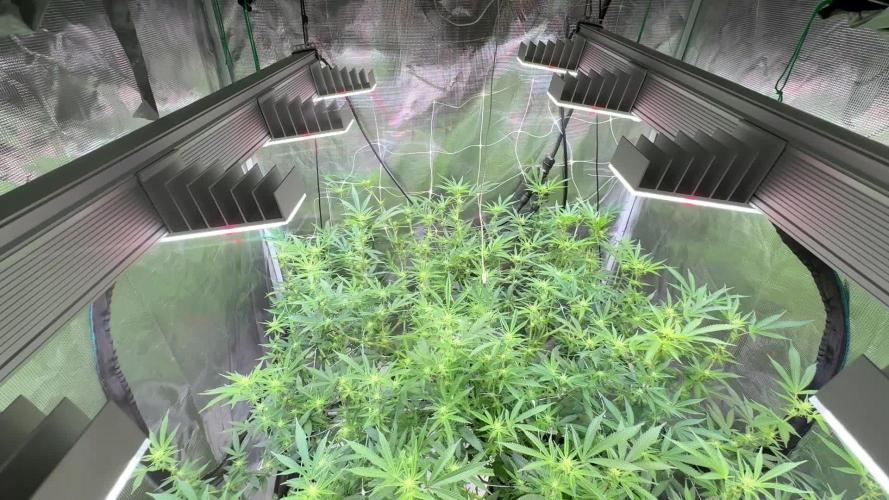
Dear Growers, Welcome to my Dutch Passion Diaries Competition 2025 entry! For this competition, I’ve chosen the Indoor Feminized strain: Orange Bud 2.0 Media from Week 15 or Flower week 5-6 After Moving into the New Tent for the flower weeks. Stage. Here’s what I’m working with for the Final Tent after Moving for the Flower time in the Future : • 🌱 Tent: 220x150x150 • 🧑‍🌾 Breeder Company: Dutch Passion • 💧 Humidity Range: 50 • ⏳ Flowering Time: 8W-10W • Strain Info: 20-25%THC, Sativa • 🌡️ Temperature: 26 • 🍵 Pot Size: 0.5l • Nutrient Brand: Narcos • ⚡ Lights : 720W x 2 Dimmed to 400w Each at the Moment. Because of Heatwave ⭐ A huge thank you to Dutch Passion for allowing me to be a part of this amazing competition and for supporting the grower community worldwide! Your genetics and passion speak for themselves! Curious to try these strains for yourself? You can check them out and support me at the same time through my personal link: https://dutch-passion.com/?a_aid=GGD I would truly appreciate every bit of feedback, help, questions, or discussions – and of course, your likes and interactions mean the world to me as I try to stand out in this exciting competition! Let’s grow together – and don’t forget to stop by again to see the latest updates! Happy growing! Stay lifted and stay curious! Peace & Buds!