


Likes
Comments
Share


@GrowingABushWithButch
Follow
It's Day 54 Week 08 0f Flower For My 02 Kombucha Cream by atlasseed . And For My Snow White and SpliffStrawberry by Spliff Seeds Amsterdam . So Today I Started My Day By Checking My Tricomes On My 2 Kombucha Cream. The 02 Where Looking Fully Milky So My 02 Kombucha Cream Got Flushed TODAY with Some Flawless Finish by Advanced Nutrients . The 2 Received 80ml of Flawless Finish mix with 1OGallons Of Water Ph at 6.0. Tomorrow they will get Rinse off with ph balance water. Yesterday I watered my Snow White and SpliffStrawberry Ppm where down to 100ppm. All 4 Plants will get a nice ice bath in a few days. My plan is to check the Tricomes on the SpliffStrawberry In a few more days she was still Milky when I check her yesterday. I will chop her down next weekend. And the rest will get the chop at 30%Amber Tricomes.
Happy Growing Growmies 🤘🏻


Likes
20
Share


@MrPott
Follow
She's growing to be cute and fuzzy so far. Not expecting her to be any bigger but to get fat buds from now on.

Processing
Likes
27
Share


@BudXs
Follow
Getting there... cant wait for Spring
Walls are up and painted, floor is laid, electrical all done, exhaust outlets mounted. Ive started to install the trim - I decided to put a grey stain instead of boring paint on the floor trim boards. Looks really solid against the dark bamboo floors.
I used two gallons and two coats of flat pure white paint for walls and ceiling. Should give me a reflectivity somewhere around 80%. Some may ask why not opt for mylar? I just dont like the look. I dont care too much for reflectivity, as I will be well above the required watts/sqft with the light setup I will be using.
I mounted an electrical receptacle in the ceiling, I thought it may come in handy for cord management. Im going to mount the 3 x meanwell drivers outside of the grow room and run some extra long cables to them. This is to keep heat out of the room, any little bit helps.
Will be running a 8inch fan with about 750 CFM in order to properly vent the room. Intake will be a door vent and the negative pressure the fan provides. Odor is not too much of a concern, but may as well add a carbon filter.
Tables to be built this week after trim is installed
Week 1 Spend - $2080
Week 2 Spend - $350 (mostly on hardware store visits)
Total so far - $2430


Likes
4
Share

@Borberad
Follow
#1 Blütewoche 7/8
#2 Blütewoche 9/10
Blütewoche 2- 8: Die volle Blüte
Die Blüte ist in vollem Gange! Die Pflanzen haben sich kräftig und leider diesmal zu unkontrolliert gestreckt. Wir sind der Sativa Genetik aufgrund mangelnder Zeit und schlechtem Lichtmanagment nicht so ganz Herr geworden. Wir haben versucht den DLI sukzessive durch höhenregultion auf 40-45 anzuheben jedoch wohl erst zu spät. Aufgrund der zu ungleichmäßigen ausleuchtung im für diebLampe zu großen "Zelt" wurde eine zweite GCX9 installiert. Der Düngeplan bleibt unverändert.
* Zustand der Pflanze: Enorm kräftiger Blütestretch, Stiele kaum zu kontrollieren
* Wichtige Ereignisse: Anhebung des DLI.
* Düngung & Messwerte:
* Gießwasser: pH ca. 6,3. Leitwert 1,4 bis 2 S.
* Drain: Wir stellen sicher, dass der pH-Wert nicht unter 5,5 und nicht über 6,8 liegt und der Leitwert die +/- 500 S Abweichung einhält.
* Anpassungen: Einsatz von Haltestangen, Einbau einer zweiten GCX9 zur besseren Ausleuchtung und Inbetriebnahme eines GC Signal zur Sonnen Auf- und Untergangssimulaion
Blütewoche 9 bzw 10 Letzte Woche/n vor der Ernte: Das große Finale
Das große Finale naht! Der Tangie Ghost Train nähert sich mit einer Blütezeit von 9-10 Wochen dem Erntefenster. Ab heute wird die Pflanze täglich nur noch mit Osmosewasser gespült, bis das Drainwasser klar durchläuft. Dies soll alle überschüssigen Nährstoffe enfernen und und für ein sauberes und geschmackvolles Endprodukt sorgen die Meinungen gehen dabei auch bei uns auseinander und das Endprodukt und auch der Ertrag sind nicht spürbar schlechter wenn man spült jedoch spart man Geld bzw. Rohstoffe also spricht aus unserer Sicht nichts dagegen. Die Trichome werden genau beobachtet, um den perfekten Erntezeitpunkt zu bestimmen.
* Zustand der Pflanze: Ernte rückt näher. Die Trichome sind langsam zum großen Teil milchig.
* Wichtige Ereignisse: Beginn der Spülung.
* Düngung & Messwerte: Es wird nur noch mit reinem Osmosewasser gespült.
* Anpassungen: Zur gleichmäßigeren Ausleuchtung wurde eine zweite Lampe installiert jedoch sind dabei an dieser Pflanze einge Köpfe gerollt. Collateralschäden sind bei umbaumaßnahmen leider nicht selten. 🙄
Likes
88
Share


@CBD_Sweden
Follow
My second growroom is built and the girls have moved in.
Medical Mass is a new medical cannabis strain with a high CBD content and a low THC level that provides good medical properties without a strong psychoactive effect. This is a mostly indica plant that contains 40% sativa and 60% indica. Critical Mass and CBD rich strain were crossed to create this amazing valuable variety.
The plant suits both for indoors and outdoors, for beginner and experienced growers. The strain grows up to 60 - 100 cm tall and produces good yields for such height of about 500 - 550 gr/m2. The plant demonstrates great results even in small spaces. The flowering time takes only 7-8 weeks and the harvest comes in late September.
The smoke brings very strong, intense flavors with sweet notes of honey and skunk and an intense pleasant relaxation. Medical Mass is the great choice for each medical user due its small height, ease of growing, fast flowering and of course great medical potency.
----------------------------------------------------------------------------------------------------------------------------
Week 19 Day 7 Now I definetly have realized the importance of right pH-level, my old pH-meter clearly didn't work. The new pH-meter showed 8.1 in my regular tapwater, way too high. So now the buds has started to grow again, they were purple earlier and now since she got water and nutes with right pH-level, the buds are turning back to green. And I also added some more nutes to her menu,
2018-02-03 Added some pics of the grow room after I cleaned the floor and putting the girls back in, and also added a video of the reality of a grower having some problems with too high pH-level. Since I'm still a novice growing cannabis I learn new things everyday, and hopefully the next round will be more or less perfect - perfection needs practice.

Likes
22
Share


@Lovebud
Follow
Day 64 ( 31 of 12/12 ) So a good week in the grow room , Been sorting out some life issues so havnt been online as much as i wanted, The girls are looking fantastic , Mills c4 has been upped to 1ml and as there all nice and green. i didn't up mills A+B like there chart suggests as if anything there a little too green , Ph at every feed has been 5.7 & end run off is 6.1 .
As we are into the full swing of flower i can see we have x3 different pheno types im sure , Plant number 5 is VERY strong incida in shape and appearance And looks like it will finish way ahead of the rest so far , it already had VERY tight internodes and is shaping up to had HUGE buds .
Plants 3 - 6 & 4 are looking the most sativa and there buds look furthest from finish ,
(EC : 1.6)
1 & 2 look epic and lots like the lots like the images on the dinafem site so far , and are growing fat

Likes
1
Share


@Ultraviolet_
Follow
Turned off IR @ nights
Red wigglers (Eisenia fetida) are highly beneficial. They are considered an ideal choice for "no-till" or container-based organic growing because they live in the upper layers of soil, feeding on organic mulch rather than the plant's root system. Red wigglers accelerate the breakdown of organic amendments and produce high-quality, nutrient-dense worm castings directly in the root zone. Clover is another exceptional component of an organic rhizosphere, offering a sustainable, self-sustaining alternative to synthetic nitrogen fertilizers produced via the energy-intensive Haber-Bosch process. By forming a symbiotic relationship with Rhizobia bacteria, clover converts atmospheric nitrogen N2 into ammonium NH4, providing a steady, slow-release nutrient source that enhances soil health and reduces environmental impacts. Red clover offers superior nitrogen fixation and biomass production compared to white or yellow clover, making it the premier choice for maximum soil vitality, particularly for improving soil structure and providing a high-volume nitrogen credit for subsequent crops.
If it is fully functional and efficient soil, the rhizophagy cycle is far superior long-term than any synthetic delivery when it comes to preventing deficiencies, not because it's "better," per se. The medium will require a very high CEC to make it to harvest without re-fertilization. The rhizosphere acts as a dynamic, interactive exchange where plants and soil microbes trade resources based on immediate needs. When a plant lacks a specific nutrient, it changes its physiology and releases specialized chemical cocktails—root exudates—into the surrounding soil. These exudates, which include sugars, amino acids, and organic acids, serve as a "shopping list" to attract specific microorganisms, which in turn return higher levels of desired nutrients. There is nothing in comparison to synthetic delivery, which causes plants to stop producing exudates, effectively "starving" the beneficial soil life, over time turning the soil barren and void of microbial life. Responsible use, applying the right amount at the right time, can minimize these negative effects. Relying solely on synthetic fertilizers without replenishing organic matter is what typically leads to exhausted soil. The use of synthetic fertilizers can utilize the Cation Exchange Capacity (CEC) of the soil, but without a robust rhizosphere and active microorganisms, the efficiency of this process is significantly reduced. This makes synthetic growing more difficult to prevent deficiencies overall compared to an efficient organic living soil with a robust rhizophagy cycle, as there is no "one size, fits all" when it comes to different nutrient profiles of strains/genetics, making it trickier to "guess" and prevent creeping deficiencies.
CEC does not contribute towards EC. Add more CEC using biochar, problem solved. If you keep pH between 6.3 and 6.7, hydrogen is exudated to cycle the medium's CEC for its needs. Keeping the pH between 6.3 and 6.7 creates an environment where plants release H+ to displace positively charged nutrients (like Ca2+, Mg2+, K+ held on soil particles or within artificial media this cycle through nutrients via the medium's Cation Exchange Capacity (CEC)
Microorganisms generate a stable potential of approximately 0.5 V EC. The rhizosphere creates its own food, similarly to chelation, using 1000's of varying combinations to create its own food.
Start to finish, just add water. Eventually, more materials will need to be added at the beginning of each new grow, but very attainable to go from seed to harvest without ever fertilizing, regenerative cultivation.
ATP is king above all else when it comes to biomass accumulation. Cellular root respiration and cellular respiration are essentially the same biological process, the breakdown of glucose to create usable energy (ATP) in the presence of oxygen, just taking place in different parts of the plant. Synthetic (salt-based) grows have significantly lower levels of total rhizosphere respiration, often referred to as root-zone activity, compared to organic living soil grows. While the plant roots themselves may respire in both systems, the surrounding soil ecosystem in a living soil setup is vastly more active, teeming with bacteria, fungi, and beneficial microorganisms.
2 pools of ATP, it won't double in growth buuuut, but improving root respiration by ensuring high oxygen in the soil is crucial. Good aeration ensures roots can fully utilize glucose to generate the ATP necessary for nutrient uptake, leading to healthier and more productive plants, even if growth isn't exactly doubled. The ATP created using root respiration is dedicated to rootzone growth; the ATP created using regular cellular respiration in a synthetic system would have to dedicate a lot of ATP to the roots when there is little or no root respiration. It's true that there is less of an initial ATP cost in breakdown when nutrients are already in their final form (synthetic), but you lose a solid chunk of ATP when the entire plant is reliant on cellular respiration alone; a large portion of ATP is dedicated to root zones for "forced" (active) nutrient uptake. Making it overall less efficient, even if the initial cost of breakdown is higher. If that makes sense. Oxygen is of critical importance when growing in living soil compared to synthetic methods because it supports the metabolic needs of the microbial, fungal, and insect ecosystem, rather than just the root respiration required by the plant itself. While synthetic grows can survive in lower-oxygen environments with precise mineral feeding, living soil systems rely on aerobic microbes to decompose organic matter (microbial mineralization) to create plant-available nutrients, which is an oxygen-intensive process. While a specific fair percentage is difficult to guess, my experience points to a massive, compound difference between the two methods and the amount of oxygen required. All the ATP spared is used on more biomass, not only that, but the extra root respiration can achieve a much higher CO2 compensation point naturally than you could with synthetic and atmospheric CO2 alone.
As a plant grows faster and increases in size, its demand for nutrients to support that growth increases, requiring a higher rate of nutrient uptake. As plants enter phases of rapid vegetative/floral growth, their metabolic demand for nutrients increases exponentially. Without a robust buffer zone—whether in the soil (cation exchange capacity) or in a hydroponic reservoir—deficiencies will occur rapidly because the instantaneous demand for specific nutrients can quickly exceed the rate of supply.
A growing body of evidence suggests that organic living soil provides superior long-term soil health and environmental benefits compared to synthetic fertilizers, which are often criticized for promoting a cycle of dependency and degradation. While synthetic fertilizers offer short-term convenience and high yields, they often come at the expense of long-term soil health, sustainability, and increased corporate control over growers/ farmers. Organic living soil, while slower and requiring more care to establish, creates a sustainable, resilient, and, ultimately, more fertile environment.
We don't grow; we facilitate energy conversions.
Once all water is removed, approximately 95% to 97% of a plant’s dry matter consists of carbon, oxygen, and hydrogen. These three elements form the structural backbone of all plants. Corporate interest sells you the other 3-5% NPK & all the rest in RATIOS! Why not throw the 3-5% in a pot, and focus your energy on the other 95-97%?
Indigenous Amazonians created, or at least significantly enhanced, the fertile, dark soil known as Terra Preta de Índio (Portuguese for "Indian Black Earth") by incorporating biochar and other organic materials into the soil. This anthropogenic (human-made) soil technique, which dates back roughly 2,500 to 8,000 years, allowed ancient civilizations to flourish in regions with naturally poor, acidic, and nutrient-poor tropical soils.

Processing
Likes
18
Share


@wheedtobeus420
Follow
Day 137 lord have mercy. She’s the never ending huge autoflower. She’s finally bulking and needs some support to stand but umm idk what’s she’s doing lol very upset when I forgot to water her and killed all her leaves off. HahHa guess when it comes time to trim her I’ll just rub the colas together 😂😂😂😂🎉😳mainely your dong is showing 🍆🍆🍆
Likes
17
Share


@MasterKush714
Follow
UPDATE GANG!!!!
Sooo im keeping up with it, as you can see we are starting to see the flowering in the video
LETS KEEP IT GOING!!!!!!!!!!!!


Likes
2
Share

@MrGrowDiarie
Follow
Day 49
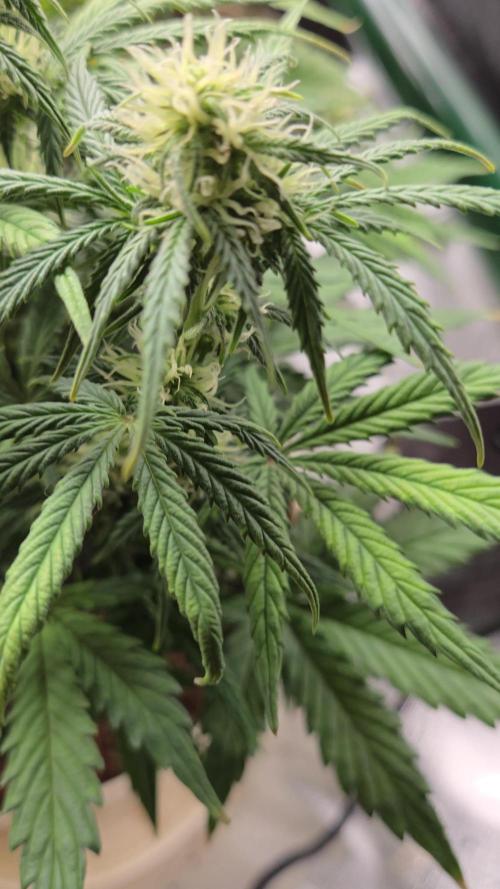
Today the plant stands confidently in the center of the tent, showing clear signs of being deep into its flowering phase. The top colas have become denser and more defined compared to last week, with bright white pistils stretching outward like tiny antennas searching for light. The aroma has intensified as well, carrying a sweet, herbal scent that becomes noticeable as soon as the tent is opened.
The leaves around the upper canopy are a lively green, although some of the older lower leaves are beginning to fade, which is typical at this stage. The plant’s structure is compact and bushy, with multiple flower sites forming evenly across the branches

Processing
Likes
3
Share


@GladaMinnen
Follow
Hello fellow buddlovers!
It is my great pleasure to announce the start of week 3! All our competitors are looking healthy and strong!
Today we begin to nourioush our little Padawans into becoming true committed servants of JAH.
They had have a taste of God forbidden fruits of nutrition from Gold Label such as root boost and soil a/soil b and some supplements for desert from humbolt county's own Ultra snow & Cal mag. To inspire the growth and the quality of the beauty sleep we replaced old CO2 bag with a new one.
Glads me to see that our soldiers are doing really good. They have growth from 17cm(day 15) to 20cm(day 17) in just 2 days since i fed them.
Really looking forward to see the full veggie bloom out.
Yours own Glada Minnen!
Don't be shy to ask anyting :).
Likes
Comments
Share


@SGCFarms
Follow
Not topped, only supercropped and lst. I should have did an actual scrog, but I didn’t and will probably regret it later. Still developing pistils, haven’t started really releasing any smells. No growth issues, though will probably defoliate at some point to help with light penetration. Loving her so far!

Likes
16
Share


@MadeInGermany
Follow
Info:
Unfortunately, I had to find out that my account is used for fake pages in social media.
I am only active here on growdiaries.
I am not on facebook instagram twitter etc All accounts except this one are fake.
Flowering day 4
since time change
to 12/12 h.
Hey everyone ☺️.
4 days ago she was placed in the flowering tent.
Thanks to the training it has become very bushy :-).
1 g Enhancer Pro l cocos was added.
As always, a cuttings were cut before moving 👍.
Otherwise everything was cleaned and checked.
Have fun and stay healthy 🙏🏻
You can buy this Strain at
https://www.barneysfarm.com/blue-cheese-34
Type:
Blue Cheese
☝️🏼
Genetics:
Blueberry
X
Original Cheese
👍
Vega lamp:
2 x Todogrow Led
Quantum Board 100 W
💡
Bloom Lamp :
2 x Todogrow Led
Cxb 3590 COB 3500 K 205W
💡💡☝️🏼
Soil :
Canna Coco
☝️🏼
Fertilizer:
Green House Powder Feeding
☝️🏼🌱
Water:
Osmosis water mixed with normal water (24 hours stale that the chlorine evaporates) to 0.2 EC. Add Cal / Mag to 0.4 Ec Ph with Organic Ph - to 5.5 - 5.8
Likes
7
Share


@Growstopher
Follow
5.8.25.
1st week of flower just started! I had some issues during 3rd week of veg. I was doing the tie down method but wasn’t going so good seemed to be stressing plant out to much. I stopped tying down took all ties off and now is putting on nice healthy growth! Full steam ahead!
Thanks for checking out grow! Have great week! !
Likes
3
Share


@SamDo
Follow
Hey guys!
Here we are in Week 9, and honestly, nothing major to report. The plant’s doing fine — my main focus is still on pH stability. I feel like the coco is finally buffering around 5.9 – 6.0, which is exactly what I’ve been aiming for. I’m keeping a close eye on it.
On the nutrient side, I’m sticking with the Athena base. I did add some Balance to the mix. Just to explain: I actually push the pH way higher than usual at first — up to about 7.4 — before adding the Athena nutrients. Once everything is mixed, it drops down to around 6.3, and then with just a drop or two of pH Down, I dial it back to 6.0–6.1. Right now, in the saucer I’m reading about 5.9–6.1, and the reservoir is showing about the same. So it looks like the buffer is finally kicking in.
Structurally, I topped the plant and now I’ve got four nice apexes that I’ll train slowly over the next weeks. After the defoliation, I’m letting her recover and put some energy back into growth. Next week, I might start adding a little Rhino Skin (Advanced Nutrients) to help strengthen the stems and give her a more solid structure. But no rush — we’ll see how she goes.
For now, EC is steady around 1.4–1.5, which is enough. I’ll bump it up later as needed.
That’s it for this week — keeping the pH steady, letting her recover from topping, and just being patient.
Catch you next week — peace!

Likes
24
Share


@CannabisCultivate
Follow
Divine Indica is a beautiful plant although she was very susceptible to everything along the way and it is unfortunate that the powdery mildew took over. If it had only been minor the wash would have cleaned her up but that was not the case for her, we also lost some of her to bud rot which was not a shock with the weather this season. As for the weight, it is an estimate due to the way our harvest took place this year and also a lack of scale. One thing spectacular about this girl is her aroma so we would like to see how she handles growing inside in the future.

Processing
Likes
20
Share


@UK420
Follow
Possibly transplanted into oxy pot a little early. But seems to be settling in now. Just need some more root development.
Root Update 27/8 - both oxy pot and 5 plants still in grow cubes, have all had a good increase in root development over night - 27 August
Root Update 28/8 - all grow cubes and one in oxy pot developing well.
Set up:
1 CFL 300w Dual Spectrum light with reflectors
1 kaizen carbon filter and air out.
1 eco fan air in
1 oxy pot
1 9 inch oscillating fan


Likes
8
Share

@Roberts
Follow
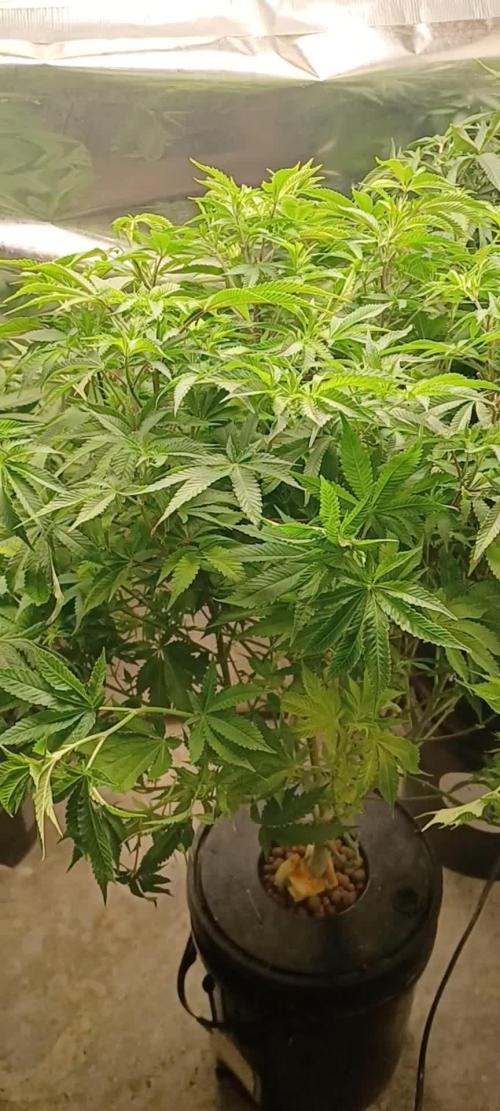
White widow has been doing better, but has not fully pulled out of her issues. She is doing a lot better in the overall. Thank you Seedsman, Medic Grow, and Athena nutrition. 🤜🏻🤛🏻🌱🌱🌱
Thank you grow diaries community for the 👇likes👇, follows, comments, and subscriptions on my YouTube channel👇.
❄️🌱🍻 Happy Growing 🌱🌱🌱
https://youtube.com/channel/UCAhN7yRzWLpcaRHhMIQ7X4g.

Likes
10
Share


@asstonmartian
Follow
Bushing out nicely! I probably should have adjusted the LST to allow them to grow taller but they were responding nicely so I kept them pinned and adjusted every few days. Finally started ph’ing the water to around 6. Water is tap, not measuring TDS or adding liquid nutes at this point.
The soils transplant was done with 50/50 mix of Natures Living Soil and soil, botto 1/3 of pot and remaining 2/3 soil.