


Likes
Comments
Share


@MassEric
Follow
Moving along nicely now. The timelapse is showing some nice growth over the last 6 days. The next month should really be fun to watch. I plan to let them stay in the buckets for another week before I move them into the larger containers.
Not much else to see early on. They should be ready for their first clipping here soon. Fun fun!

Likes
10
Share


@TheMedicatedFarmer
Follow
New Tent, Started with Mr Canucks GRO medium, and planted directly in 5 gallon pots with a light watering center and plastic cap to hold the humidity. Currently 2 of 4 have broken the soil in 4 days now it’s time to keep the medium moist. The weather is chiller right now. I adjust my grow tent temp to 78. It feels the tent is dialed in for the othe 3 to germinate. When checking the seeds I realized I put them to deep. So I knuckle depth to see if there is success. The soil was cold so hopefully increasing the temp provides better results.

Likes
3
Share

@Mrs_Larimar
Follow
2025-10-16
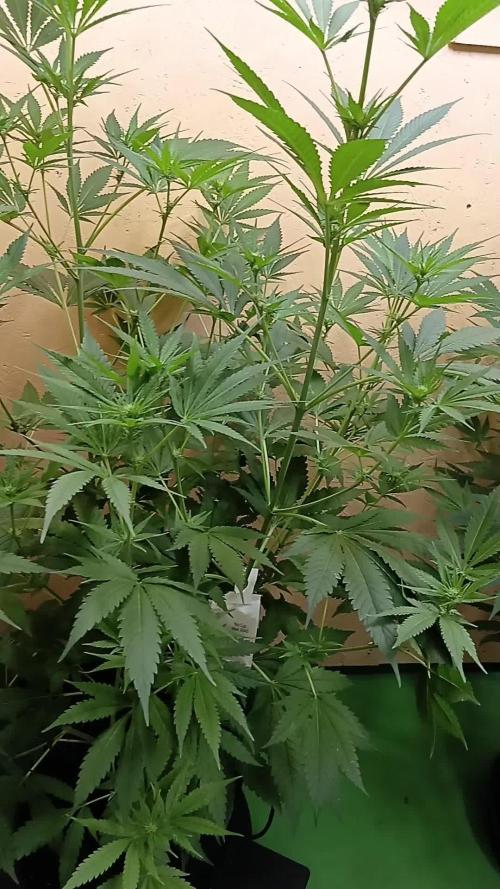
The kush´n Cookies plant does really well,
i was tucking some leaves and shoots- she spreads like she gets it paid.
RH was lowered,
Predaors were added for pestprevetion
watertank was filled
The fun can start.
Container: 35L Smart Pots
Growing Method: Autopot System with "Water-Only" strategy
🌿 Soil Preparation
Base Mix Recipe:
5g per liter soil - Startrex
5g per liter soil - Silicium Flash
Mixed thoroughly for optimal distribution
5x Fertilizer Tabs - strategically placed near bottom (20cm height) for autopot compatibility
1 tsp Mycotrex - applied directly in planting holes
Bactrex solution - used for initial watering
🏗️ Layer Construction
Bottom Layer (10cm): Drainage material (clay + perlite)
Air Circulation: Airdomes positioned
Growing Medium: Pre-mixed soil with embedded fertilizer tabs
Root Zone: Mycotrex application + seedling placement
Initial Watering: Bactrex solution
⚙️ System Activation
✅ Setup Complete - Autopot system now delivering automated water-only feeding
From this point forward: Pure water automation via Autopot system
🙏 Acknowledgments & Partnerships
Special Thanks:
Biotabs - Premium nutrient solutions
🏭 Puraplants - Autopot system provider
💰 Exclusive Discount Codes
🌐 Puraplants (Hamburg, Germany)
www.puraplants.de
Code: GrowBigger → 10% OFF
Biotabs Webshop
biotabs.nl/en/shop
Code: GDBT420 → 15% OFF

Likes
9
Share


@Northerngarden85
Follow
Another good week
Everything is going to plan
Only slight issue we come across was
Temp drop in lights off period in the small tent we just got another gas environ controller 👌👌 problem solved
But apart from that everything is spot on

Likes
21
Share


@DeepRootsGrowTrees
Follow
SATIVA DREAM by KANNABIA
Week #15 Overall
Week #14 Veg
This her last week of veg she's about to start to flower next week and she's looking good so far!! Stay Growing!!
Kannabia.com. SATIVA DREAM


Likes
12
Share


@Chucky324
Follow
Hello. This is the end of week 1 and the beginning of week 2 of flowering.
I switched over to flowering 6 days ago so this is the end of week 1.
Mixed up some nutrient for the 15 gallon reservoir and am giving a few minutes a day so the 15 gallons last 6 days.
And I'll hand water with rainwater when the pots seem dry.
The plants have filled up their spaces now and it was time to flower.
I'm flowering about a week late from last year, but it was a cold spring, and I got the plants in a little late.
So, I'm hoping to harvest around Aug 20th or so.
Have Fun.
Chuck.
Likes
64
Share


@SmokingTiki
Follow
I started the week by selecting the 3 best plants to put them into their final 26l pots with some Dynomyco. I made the selection based on their sizes, shapes and roots. I increased the light output from 25% to 50% and started the week with 23h of light per day. After a few days I noticed what I think are light burns on every plants so I reduced the number of hours/day to 18h and it seems ok now. I checked the pH, not optimum but alright for soil and I always have this 7.0 with this soil and this pH meter (don't know if it works properly or not because it's always 7.0 in this soil, never 7.1 or 6.9).
The 3 plants grew a lot this week, it's one of my best growth rate so far so I'm very happy 😁 The Wedding Cheesecake is by far above the two others, it already developped 5 nodes so I topped it (first time it happens to me that soon). As usual with this soil, I think they have a bit of nitrogen toxicity but nothing critical.
Plants heights at the end of the week :
-------------------------------------------
Gorilla Cookies : 18.5cm
Purple Lemonade : 15cm
Wedding Cheesecake : 22cm
Likes
7
Share


@ShiftyGaijin
Follow
Cutting back for a 2 or 3 day flush to reset. Started experiencing possible nute lockout so giving it a few days to heal. Probably going to cause yield problems. First grow. Still learning new things every day. Yield isn’t the final goal.
I am however excited about my new macro lens for my phone.


Likes
10
Share


@DrPredictor
Follow
One of the plants had some nutrient burn so I tried to flush her with plain water. I dont give her nutrients till she is good. The problem is that she got it from a fertilized soil layer which I put on the bottom of the pot. Sooo hopefully she is recovering. I'm scared that the other plant has also enough nutrients so this week I dont feed her at all. Lets see how she does next week.
Buds are doing well on plant 1. Plant 2 is a little bit behind.

Likes
5
Share


@EKWCR
Follow
I start flunshing now after the last dose of organic additives wich boost sugar and protein storages in the buds to create new tissues and enhance flavour an odour.


Likes
18
Share

@Northern_Ent
Follow
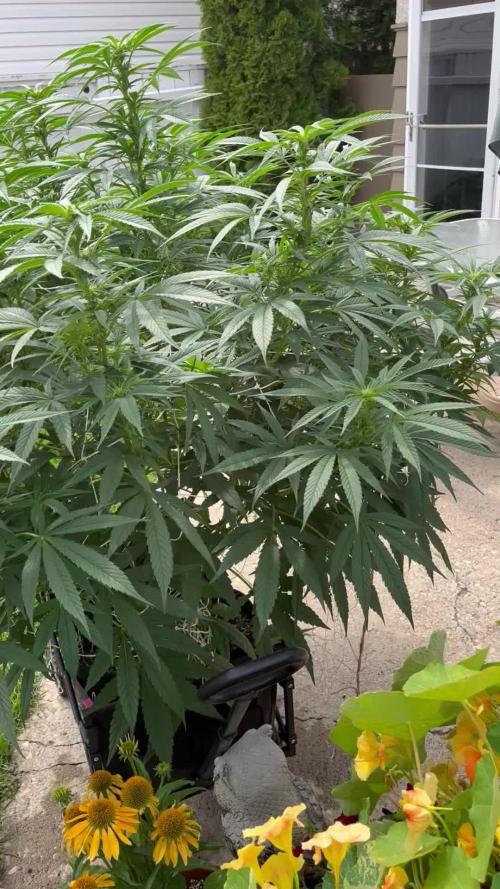
July 26: very nice flowers forming on Sunday Punch EV after two weeks of force flowering. Will continue doing that for at least another week.
Did a fourth lazy compost tea. See video explainer how I make it using blackstrap molasses and Epsom salts, both of which are cheap at the grocery store.
July 29: sunny and nice today.
July 31: defoliated lower fan leaves and small bud sites that won’t mature in time. Directs the plant’s energy to the bigger buds up top.
Aug 1: Added another top dressing of malted barley and Power Bloom as the plants seem to be a bit P deficient. There is a blue-ish tint to the leaves and another plant is showing reddish petioles (leaf stems) both of which are signs of P deficiency. More 50:50 barley and Power Bloom should work. Otherwise she looks great.

Likes
24
Share

@DapperDabber
Follow
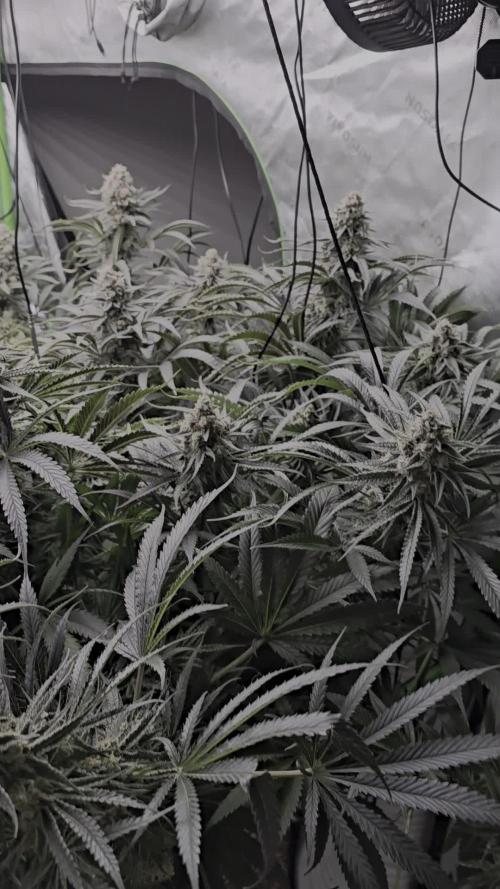
I must say, these ladies do not want to finish! I still haven't observed any amber trichomes and they're getting rather plump! The flowers are beautiful and smell complex!
Strong scents of diesel, floral and sweet.
I have dropped the lights to 75% and have reduced the photoperiod to 10/14 in an attempt to push them to finish. The resulting DLI is 32. The temperatures have been brought down. 70°f during the day and 58°f during the night. I am highly anticipating the initiation of the dry-back, which is signaled by the first sign of amber.
Less than two weeks left I would guess, but these ladies can take all the time they need. I have very high hopes for making top-shelf flower as well as trying to make some fresh frozen bubble hash for the first time! I'm surprised there hasn't been signs of hunger. But they appear happy and healthy! While there hasn't a nitrogen deficiency, the leaves are adopting a purple on some leaves. Very pretty!
I'm looking forward to doing some updates about whether or not I saw sucess in the bubble hash. As well, I would like to update about my drying and curing methods. I've been doing research on the mechanisms involved in a dry and cure that provides the best smoke!
My previous runs all had particular issues, whether it was poor enviornmental control or failing to purge the the off-gassing of drying flowers.
I have high hopes! The time is coming soon and I'm excited! Thanks for tuning in, take care!

Likes
1
Share

@Black_Magic
Follow
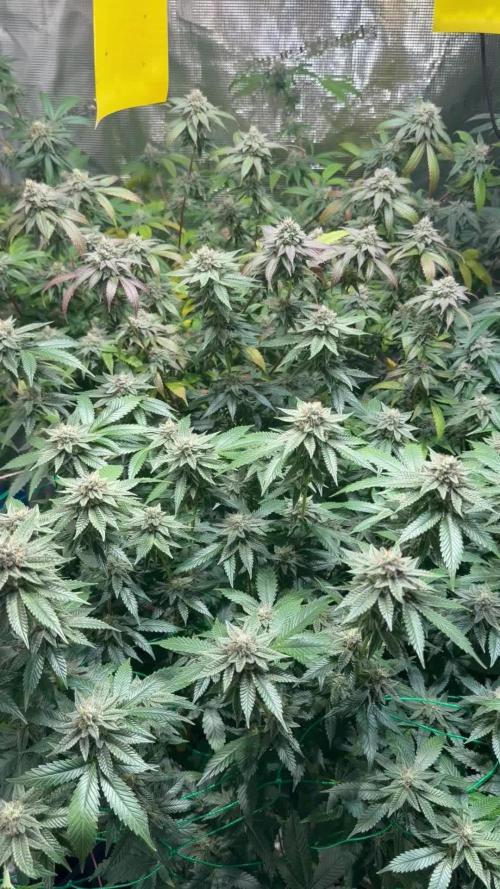
First flush was today
So much back pain 😭😭
I did manage to raise pH by 0.2
PP is still high as fuck
I am so done for today

Likes
8
Share


@Lazuli
Follow
April 18:
Thank you MSNL seeds for the package
i germinated as soon they got here 😄
So i start with 2 strains in my small tent, then when the 4x4 is free i will pump it full too with all of these for a few crops, cheers
April 23: they both above ground now
April 20: the seeds have roots and are now planted in 2 liter pots

Likes
53
Share


@AutoCrazy
Follow
This plant is pure gold. It’s incredibly healthy and while my other plants are starting to get attacked by thrips a bit this plant seems unaffected 😎.
I am up to 16 tops at this point so I have one more round of topping to get to the desired (32) amount of tops. After that it will just be maintenance and watching her in all her glory. I hope I can keep this lady wishing the limits of my greenhouse 😅.
Humboldt nailed it with this genetic mix!
Onward !!!
😎🍿🍻
Likes
59
Share


@JeyGanesha
Follow
Última settimana.lavaggio radici...2 giorni e 2 notti. E tagliooooooo........ .
Ecco arrivato il momento del taglio😍😍😍
Eccoci arrivati al termine.oggi 30/09/3024 raccolta..forza belle mie, vedete sé anche in concia continuate a tirar fuori cannabinoidi 😂🤣😂🤣 portate il %di THC di queste runtz layer cake AD un livello mai visto prima.🤣😂🤣😂
E magari è più forte del normale...tra poco vi dirò com'è a livello di sballo e gusto.... Seguitemi e vedrete come finirà 😂🤣😜💪👍

Likes
8
Share


@GrowFastDieYoung
Follow
Mang she smells like fruity/lemon, spicy diesel funk. Awesome nose her so far. Can't wait to taste hoe
Processing
Likes
18
Share


