


Likes
Comments
Share


@SackShopG
Follow
didn't know what to expect since its my first grow but I ended up doin a 5 day flush with 5 days of 24 hour light. Dr Bruce Bugbee was discussing whether 48hr of darkness helped, and made the case that having the light would more beneficial for terpene production. Dry time was 21 days with the humidity at 60

Likes
115
Share


@Coco4CocoPuffs
Follow
🍒 🍒 We are now 84 days from seed and we are 53 days in flower 🍒 🍒
This is week I've been waiting for👍we are just a few days from Harvest
so I've changed there feeding program yet again for the final push by flushing with just fresh PH water👍
Ok 👍looks like it's just the waiting game 😋 There looking fire 🔥
🍒 🍒 🍒 🍒 🍒 🍒 🍒🍒 🍒 🍒 🍒 🍒 🍒 🍒🍒 🍒 🍒 🍒 🍒 🍒 🍒
Thanks for the support my friends 🙏

Likes
6
Share


@thisisgroot
Follow
Another Barney's run!
This time FEM only.
2 bottoms are Glookies, 2 tops are Critical Kush
Been in veg for exactly 5 weeks from seed.
Looks totally great as for now.
Been using Sensi Bloom A+B from the start, like 1/4 of the recommended amount. I use high ppm tap water...

Likes
22
Share

@Marijuanaut
Follow
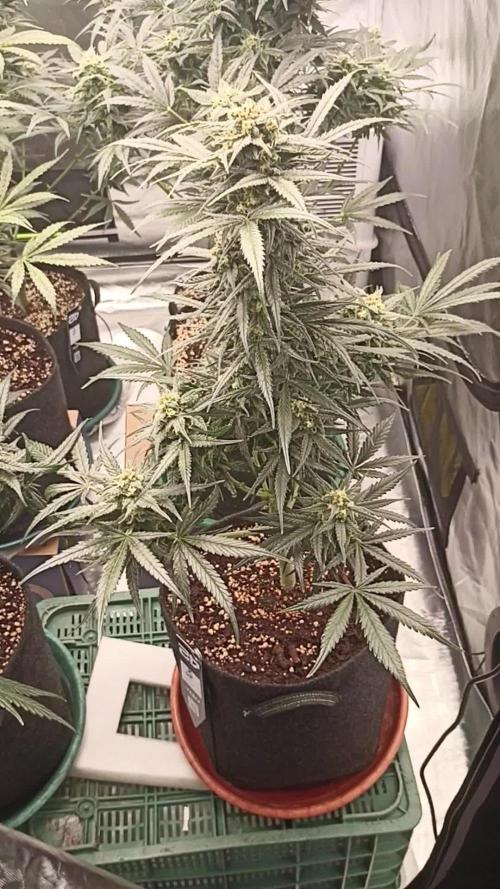
Almost there! 😍
The shorty is going first... the other two might need a couple weeks. 😋
Some signs of Cal deficiency specially on the Banana one 😎
💚💛❤️


Likes
32
Share


@Platinouuu
Follow
Seguimos en este lindo caminar con mis hijas! ya prontito a probar el fruto.

Likes
4
Share

@Nistnov
Follow
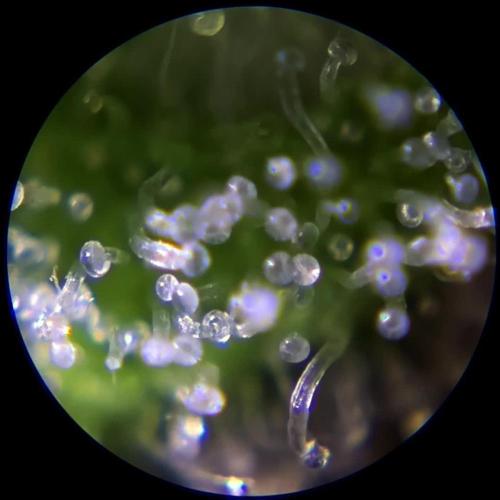
Had no time for the harvest so i took the risk and let her grow, under a rain cover. Im surprised that i didnt spot any bud rot! Removed fan leaves for better airflow.
The weather makes it hard for her to fatten up, so i will give her one more week to finish up.
Shes super frosty and has such an amazing smell.
I did harvest 3 small branches that are drying and curing right now, looking forward to the smoke test.

Likes
39
Share


@DogDoctorOfficial
Follow
And the flowering journey begins on this perfect exemplar, i mean she is growing as perfect as they can possible came, she is in did a very stable and outstanding girl and i am very curious to see how she goes from here <3 <3 <3
Man she is growing fast and getting taller and taller , loving this one
As always thank you all for stoping by, for the love and time you guys spend on my stuff, i fell blessed and humble, many thanks to you all <3<3<3
Genetics - Fast Buds Tester 2309
Ligth - LUMATEK ZEUS 465 COMPACT PRO
Food - APTUS HOLLAND
#aptus #aptusplanttech #aptusgang #aptusfamily #aptustrueplantscience #inbalancewithnature #trueplantscience #fastbuds #dogdoctorofficial #growerslove
With true love comes happiness <3 <3 <3 Always believe in your self and always do things expecting nothing and with an open heart , be a giver and the universe will give back to you in ways you could not even imagine so <3 <3 <3
All info and full product details can be find in can find @
https://2fast4buds.com/ wen released
https://aptus-holland.com/
https://autopot.co.uk/
https://lumatek-lighting.com/
Have a bunch more diaries going on, fell free to drop by and say hi <3 <3 <3
<3 <3 <3 Growers love to you all <3 <3 <3
Processing
Likes
31
Share


@Endriu
Follow
Hello Bros&Sis! Ciao!😊
quick update! Switching to flowering phase, hope everything goes fine!
I've burned some tips due to use of HPS, even if in combo with cooltube.
Hopes in some fine stretch to had an even canopy!
In the video is shown the first and last day of this week, enjoy!😘
See ya, and always thank you for stoppin' by. Ciao! :D


Likes
34
Share


@PapaNugs
Follow
This was the best smelling girl out of the crew. Happy with that. The size of the buds are good considering the plant size and total time of the plant. Will dry for 10-14 days then cure for a month before trying them out.
Likes
3
Share


@ulmer
Follow
Not much to say...
Athena Cleanse runs at 12ml for 16L rez now
EC is steady at 3.0 - Drain EC was at 4.6
At the moment i need to refill my Rez in a 4 day Cycle
Ive implemented a weekly Flush to keep the Hugo Block saturated at the top as well and to prevent too much Salt buildup.
Likes
16
Share


@Dunk_Junk
Follow
She's looking as pretty as anything this week!!
I think she's almost there. Just waiting on more pistils to change colour. Trichomes are mostly milky. I note she is quite smelly!!!!!!


Likes
22
Share


@Chumpkilla
Follow
7/24/23 - Day 42 - Ok, so where to start? I'm going to go over the last couple days of issues/troubleshooting. We had an issue with the lights not coming on for a whole day/night cycle. That was a couple of days ago, and everything seems okay since then. I had some Canoeing/tacoing on the leaves once the lights were back on. I think I had the PH too low, 5.8. In flower, I should start moving it up the scale. Once I corrected the PH to 6.2, the canoeing/tacoing in the leaves seemed to be gone/almost gone.
I'm REALLY worried about the height of the plant. She is only 12 in. from the light that I cannot move. I added a second scrogg net???? I don't know if that's done a lot, but I'm going to try and stop if from growing straight up. I think the best I can do is give it a lean. So Ill call this the ScoggGL (GangstaLean). You'll see some pictures up top as I start the ScoggGL
I did the first big trim and pulled a 3-gallon bucket of fan leaves out. I cut off a few side branches I didn't want the plant to waste energy on. I trimmed so many leaves off it was crazy. The smells have been awesome! You all know the smell of the fresh plant stems and leaves as you trim and rub across them. It's one of my favorite smells, which is in full effect.
I noticed that I have some pistils growing. I know what that means, shes going to have some flowers here in the next week. I couldn't be more excited!!!!!
The roots are just downright ruthless; they have been growing out of control. I have a great picture of them in there with no water.
I should note that I did two things that might have solved the Tacoing in the leaves. It could have been one or the other, but it also could be a combo of both things. I did the trimming to get some airflow between the leaves and changed the target for my PH from 5.8 to 6.2. When moving into flowering, I should have already done that. But I did both things while the leaves were Tacoing, and now they are not. I wanted to make sure I noted that.
7/26/23 - Day 44 - Things are looking great. No more tacoing, she's growing and still drinking about 2+ gallons a day of water. I hope the vertical growth stops soon, I want to remove a ton more fan leaves, and I'm hoping that it spends more time growing around than up, I'm keeping some leaves on just to slow some vertical growth.
7/27/23 - Day 45 - She's sleeping right now, but I will chop some more fan leaves when she wakes up. She's growing too tall, and I need to find a way to stop her. I think shocking her system will help stunt her growth. How crazy is this, what a conundrum I'm in. Normally I stress out trying to find the right time to trim to avoid stunting growth. I always keep my plants busy and do one or two chops. I think they need to grow as mother nature intended. Let them grow and do one, maybe two fan leave chops. That's always been my motto and its always worked out great for me. This is now the exact opposite. Feels weird even thinking about it, doing a leave chop two weeks into flower..... ARE YOU INSANE!!!!!! Lol
The 2nd chop has happened. I took a ton of fan leaves off. It's time for the plant to slow down heal and start working on the buds! Let's see how this goes over the next couple of days. I added a timelapse of me chopping her up.
7/28/23 - Day 46 - After adding more water last night, I was checking PH, and I did a quick check on the ppm from the nutes. If it went from 600ppm down to 130ppm in a couple of days. So we decided to give her another dose of nutes so she has something to eat. I'll update you after she wakes up for the day.
If you are looking for this experience, check out https://www.getleaf.co/

Likes
4
Share

@DogDoctorOfficial
Follow
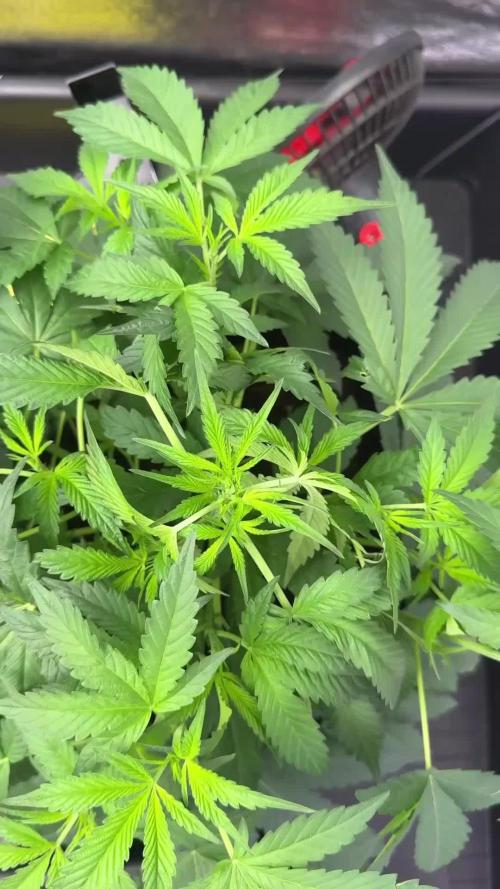
🌿 Amnesia Haze Auto – Pheno B | Week 4
Same Room, Same Love… Different Story.
One of my favorite things about growing from seed is watching every plant write its own story.
This is Amnesia Haze Auto – Pheno B, growing alongside her sister under exactly the same environment. Same tent. Same lights. Same nutrient solution. Same temperatures. Same humidity. Same grower.
Yet… she’s taking her own path.
While Pheno A decided to race ahead into early flowering, Pheno B is taking her time, focusing on building structure before committing her energy to reproduction. It’s one of the reasons I love documenting individual phenotypes—genetics always have something to teach us.
This project is also another chapter in my ongoing 12/12 From Seed Adventure, proving that every seed expresses itself differently, even when every environmental factor remains almost identical.
Sometimes nature simply decides to surprise us.
⸻
🌱 Environment
Just like her sister, Pheno B is enjoying a very stable environment.
• Day Temperature: 33°C
• Night Temperature: 25°C
• Relative Humidity: 63%
• CO₂: 639 ppm
• Solution Temperature: 26°C
• Root Zone Temperature: 21°C
• Light Schedule: 12/12
• pH: 6.1
• EC: 1.35 mS/cm
Keeping the environment stable allows the plants—not environmental fluctuations—to reveal their genetic differences.
⸻
? Different Pot, Different Pace
One noticeable difference between both sisters is the container size.
Unlike Pheno A, which is growing in a 15-liter pot, Pheno B is currently rooted inside an 11-liter container.
Will that influence her final development?
Possibly.
A slightly smaller root zone can influence overall vigor and stretch, especially once flowering begins. Whether that’s the main reason she’s developing a little slower—or whether it’s simply genetics—remains to be seen.
That’s exactly why I love these side-by-side comparisons.
Every week adds another piece to the puzzle.
⸻
💧 Feeding & Hand Watering
Unlike many of my larger projects, this run isn’t using AutoPots.
Every watering is done by hand.
That allows me to inspect every plant individually, monitor moisture levels closely, and adapt watering volume to each phenotype’s needs.
Current nutrient mix:
• Terra Grow — 1.8 ml/L
• Power Roots — 1 ml/L
• Pure Zym — 1 ml/L
• Sugar Royal — 1 ml/L
• pH Plus — as required
• Lemon Kick — as required
Current irrigation:
💧 Approximately 1.1 L per plant every 24 hours, adjusted according to pot weight and substrate moisture.
Sometimes growing slowly simply means drinking a little less while building a stronger foundation.
⸻
🌿 Training
Training remains intentionally gentle.
Only Low Stress Training (LST) is being used.
The goal isn’t forcing the plant into shape—it’s helping light reach more growing tips while keeping the canopy open and even.
Looking closely, Pheno B is responding beautifully.
Her internodal spacing remains compact, secondary branches are catching up nicely, and the structure is developing into a very balanced little bush.
She’s simply choosing to invest a bit more time in vegetative growth before flowering really takes over.
⸻
🌼 Early Development
One thing I find fascinating is how differently these sisters are behaving.
Pheno A already showed obvious pre-flower development.
Pheno B, however, is still mostly focused on vegetative growth.
The tops are stacking new leaves quickly, side branches continue to push outward, and while the first signs of maturity are beginning to appear, she’s clearly taking a slower, steadier approach.
Neither approach is better.
Just different.
And that’s the beauty of growing from seed.
⸻
📷 Photography Notes
Photographing these early stages is always rewarding.
The fresh lime-green growth against the darker mature leaves makes every new shoot stand out beautifully.
The architecture is becoming more defined every day, and documenting these subtle differences now will make the flowering comparison even more interesting later on.
Sometimes the smallest changes become the biggest stories once harvest arrives.
⸻
💚 Final Thoughts
Pheno B may not be in a hurry…
…but she’s healthy.
Strong.
Balanced.
Growing exactly at her own pace.
Every plant deserves to be judged by its own rhythm, not by the speed of the one growing beside it.
That’s one of the greatest lessons this hobby keeps teaching me.
I’m excited to see where this phenotype decides to take us over the coming weeks.
⸻
🙏 Thank You
A huge thank you to everyone following this adventure from the very beginning.
Whether you’re here to learn, compare phenotypes, or simply enjoy watching another grow unfold, I’m grateful you’ve decided to spend a little of your time here.
Special thanks toZamnesia and Plagron for the genetics, nutrients and growing media that keep this project thriving, and to everyone supporting this journey with comments, advice, encouragement, and curiosity.
See you all next week.
Growers Love ad let’s see what story Pheno B decides to write next. 🌱💚

Likes
6
Share


@Chubbs
Follow
Weekly update for these girls. They got a defoliated and lollipopped this week. Also went full on into preflower showing pistols and flower sites everywhere. Over all they're growing like champs. Happy Growing.
Processing
Likes
6
Share


@Mr_nugs_lover_David
Follow
She's looking very very frosty, strong minty sweet aroma,very powerful aroma, sticky buds, super frosty, compact nuggets, super happy with this strain can't wait to grow her again, super recomended strain. 100% organic grown using biotabs organics, guanokalong and florians living organics.

Likes
119
Share


@Roberts
Follow
I harvested this plant about a week ago. Gd was suffering some update issues still, but appears to be resolved. The plant grew great. I am impressed with the results myself. Nice big colas of frosty goodness. She bounced around a bit in growing under different lights. The results were great. I was even running the flowering light lower since she stretched a little too close to it. That was probably my biggest issue during the grow. I am anxious to try it once I get it processed. Thank you Spider Farmer, and Divine Seeds. 🤜🏻🤛🏻🌱❄️


Likes
10
Share


@TheMedicatedFarmer
Follow
Day 21 flower: they were thirsty. Work had me away a few days. So defoliation and 1750ml of H2O. Ppfd set to 725.
Day 22 Flower. These flowers took almost 1 gallon of H2O. That’s with no run off. Ppfd is set to 750. 6.49ph water. The soil was dry after 2 days. So I am going to have to watch the water. 1 more week and then we apply the bloom.
Day 23flower also added my heater and they are bouncing back. I amended the soil. My ph meter died so I over night ordered a new one..
Day 25 flower. Ok def moisture and temp. Side note I was not home for due to some medical stuff. So today ph set 6.5, more water.3500ml with no run off. And the plants looks way better. Also temps were drifting close to under 60. So temps at 77 and humidity 55. I also think when I started I never really saturated the pots the most water I ever gave was 1/2 gallon twice. So I think from the start I was battling a 1/2 dry pot.

