Likes
Comments
Share
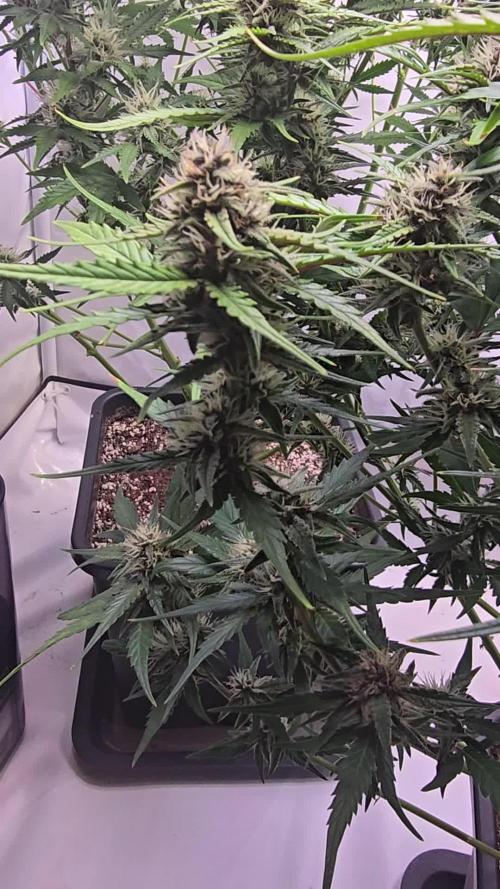
This week I defoliated a little to allow the side branches to stretch. Just started to see bud sights, really excited to see the terp profile on this one. From now on is the exciting part
Likes
8
Share
Plants are still thriving well. Watered after topping w/ proper rate for week for according to schedule PH water to 6.2 and soak pots. Temp stays high above 75 degrees humidy same until tent is opened led at 50 percent about 20 inches away
Likes
2
Share
Remember that, however you are played, or by whom, your soul is in your keeping alone. Even though those who presume to play you be kings or men of power, when you stand before God, you cannot say, 'But I was told by others to do thus,' or that virtue was not convenient at the time. This will not suffice. Remember that. Day:18 84°F and 65% RH (VPD) for the vegetative stage. Approximately 1.15kPa(assuming leaf temperature is about 2°F cooler than the air), which falls right into the ideal vegetative sweet spot (0.8kPa to 1.2kPa). At 1.15kPa, plants can draw water and nutrients efficiently without risking stress or wilting. It keeps the leaf pores (stomata) open, allowing for ideal carbon dioxide intake and maximizing vegetative growth. VPD is determined by the leaf's temperature, not just the ambient air. Because leaves usually run 1° to 3°F cooler than room air under bright grow lights, my actual VPD will be slightly lower, closer to the 1.0kPa mark. As she transitions from vegetative growth to flowering, one can gradually lower the humidity (to around 45–60%) and drop temperatures slightly to prevent disease from settling inside dense buds when they appear. Night:6 At 70°F and 60% relative humidity, Vapor Pressure Deficit (VPD) is 0.86 kPa. This is right on the cusp of whats optimal for the vegetative stage. During the nighttime, plants generally close their stomata and undergo cellular respiration rather than photosynthesis. Transpiration slows to a near stop, making VPD less critical at night than during the day. However, maintaining a nighttime VPD between 0.8 and 1.0 kPa is highly beneficial in that it ensures the air is dry enough to prevent powdery mildew or bud rot, but moist enough to keep the plant from undergoing unnecessary stress. This range keeps the environment comfortable for cellular processes and prevents large atmospheric swings. Keeping it all flowing. (Not pushing them yet, these are photoperiods) The optimal soil (root zone) temperature for cellular root respiration and nutrient uptake in cannabis is between 68F & 72F This narrow range balances biological energy production (cellular respiration) with the dissolved oxygen levels in the soil, maximizing plant growth and health. Warmer soils hold significantly less dissolved oxygen. When soil temperature exceeds 74F oxygen depletion occurs, inhibiting cellular respiration almost entirely, At 68-72F root cells generate optimal adenosine triphosphate (ATP) via respiration to power root-tip elongation and the active transport of water and nutrients. Too Hot (Above 78F) Root respiration increases, demanding more oxygen, while the water's oxygen-carrying capacity drops. This creates a prime environment for anaerobic pathogens and Pythium (root rot). Too Cold (Below 60F) Root metabolism and cellular respiration slow to a crawl. This severely impairs nutrient and water absorption, leading to yellowing, wilting, and phosphorus deficiencies. A lot depends on whether it's automatic or photoperiod; with photoperiod, there is not as much of a need to push "hard" as the real countdown only begins once the flower is initiated. Automatics, on the other hand, the chronological "clock" begins ticking the moment the seed germinates. It is of critical importance that the seedling growth gets off to the races, understanding that early growth is like compound interest, which will pay off come harvest. This reality is why getting autoflowers "off to the races" early on yields such exponential benefits. The "compound interest" is directly related to the surface area of the leaves. Larger, faster-growing seedlings process more light and build bigger root networks early on, which translates into an explosion of vertical and lateral growth during their short vegetative window. The margins for error are so thin with autoflowers; this early-stage momentum depends on several critical practices. Seedlings exposed to increased atmospheric CO2 levels early in life will develop at an increased rate. To effectively "extend" or optimize the capacity of Photosystem II (PSII) for increased photosynthetic efficiency. In standard oxygenic photosynthesis, Photosystem II (PSII) is naturally limited to the red-light spectrum, peaking at 680nm. Extending its light-harvesting capacity past 700nm into the far-red region requires bypassing the natural limits of standard chlorophyll a. Adding 730 nm (far-red) LEDs alongside standard red/blue lights has been shown to increase canopy photosynthesis by 20–30% in several crops by acting synergistically with shorter wavelengths. However, the limitation is that excessive, pure IR/Far-red light (without accompanying red light) can trigger the "shade avoidance response," causing plants to grow tall, weak, and spindly rather than robust. Utilizing infrared light (specifically the 700-750 nm far-red range) is a viable method to boost photosynthetic efficiency. It acts as a bridge to allow PSII to utilize a broader spectrum of light, breaking the traditional 700 nm barrier. UVR8-mediated signaling (often in conjunction with CRY proteins) triggers protective mechanisms that maintain the stability of the photosynthetic apparatus (including LHCII and reaction center proteins), thus ensuring that the efficiency of Photosystem II remains higher in UV-B-exposed plants compared to plants lacking this receptor. ΦPSII indictates the rate of electron transfer from water to plastoquinone, which drives the production of ATP and NADPH. There is a close link between ΦPSII and the true rate of CO2 fixation (Φ*co2). ETR stands for Electron Transport Rate. It measures the speed at which electrons are moved through the thylakoid membranes in a plant's chloroplasts during the light-dependent reactions of photosynthesis. Infrared light (particularly Near-Infrared or NIR) improves cellular energy by interacting directly with the electron transport chain (ETC) in mitochondria. This process boosts adenosine triphosphate production, which acts as a metabolic coefficient multiplier by accelerating enzyme activity dramatically. Extend then multiply. Far-Red photons interact with plant photoreceptors to accelerate the plant’s biological "clock" or trigger a shade-avoidance response. Autoflowers don't use the plant's biological clock, although the IR will initiate a shade avoidance and make them stretchy. You can just add equal measures of 660nm-680nm to negate the shade avoidance effect. Replacing nights' "darkness" with a combination of IR+ and 660nm. Because autoflowers don't require a dark period to flower, many growers just blast them with light. 18/6 24/0. However, this ignores the plant's metabolic rhythms, where daytime photosynthesis (light reactions) must be perfectly balanced with nighttime carbon fixation and assimilation (Calvin cycle) to avoid bottlenecking plant development. Cellular respiration is a 24/7 process, but it can only function while the plant has the free oxidative capacity to do so. A 100% photosynthetically active leaf cannot perform cellular respiration. The viral trend of defoliation of every leaf that isn't "getting enough light" is of great detriment overall, putting 100% of the cellular respiratory "workload" and responsibility on the 0/4/6 hours of darkness in sub-optimal conditions for enzymatic activity. Photosynthesis captures nearly 100% of the initial energy as carbon, while cellular respiration is the process that unlocks 90% of that captured energy into usable ATP so the plant can use it. Respiration is considered only roughly 30% to 40% efficient. It captures enough of the potential energy in glucose to synthesize around 30 to 38 ATP molecules per glucose molecule. The remaining 60% to 70% of the energy in the sugar is not captured in ATP; instead, it naturally escapes into the environment as heat, which helps regulate plant temperature. In plants, the primary enzymes of the Electron Transport Chain (ETC) and the ATP synthase complexes are typically adapted to function optimally in warmer temperatures (roughly 77°F to 95°F, depending on the specific plant strain). As temperatures rise within this physiological range, molecular collisions increase, speeding up respiration and ATP production. The cannabis plant has a branched respiratory pathway. During heat or cold stress, plants activate Alternative Oxidase (AOX). AOX burns sugars to dissipate energy as heat rather than coupling it to ATP production. This pathway actually functions optimally at elevated temperatures to help protect the cell from the damaging build-up of Reactive Oxygen Species (ROS) during heat stress. Enzyme activity generally scales with heat; there is a strict biological limit. If canopy temperatures in a grow room exceed 104°F, the enzymes and their supporting lipid membranes lose stability. Not saying you need to go crazy, just optimize nights the same as we optimize days. Phosphorus is the driving force behind early seedling development. It acts as the "energy hub" of the plant, directly driving cell division, robust root growth, and the creation of DNA. Without an adequate, easily accessible supply early on, the plant's overall growth potential and final yield can suffer permanently.
Likes
5
Share
Week 5 Pistils are changing colors pretty rapidly and she's about to start to bulk
Likes
10
Share
@Canna96
Follow
Hey now, hope everyone has been well. Super excited football season is finally here so things are about to get busy. I went out of town for 4 days and the plants struggled a little bit with the PH getting slightly too high before I returned. I also came back to see that some type of insect was munching away on the lower leaves of my Sundae Driver which I sprayed the plant and coco with neem oil, but hopefully they didnt do much damage before I can get them under control I have never experienced insect problems indoors, likely because I grow in Coco and not Soil. However, I left a 5 gallon airpot full of coco from a previous grow outside for a couple weeks by mistake, and pretty sure bugs got into. I wont make that rookie mistake again. Anyways the rest of the ladies are looking pretty good, They are almost getting what I consider a full dose of nutrients, even though it half of the manufacturers recommended dosage. I am feeding all Gen Hydro cal mag, Armor Si, and maxi grow. I also add some food grade hydrogen peroxide to keep the reservoir fresh for around 10 days or so but I clean it once a week. Not sure why I cant select them on this site anymore, I know they got sold but they don't list them under either name. I did get all the ladies transplanted from solo cups to airpots on day 16, and it took 24 hours or so for them to recover from the transplant and start growing again. I am running 3 of the 3.4 gallon, and 2 of the 5.4 gallon just because that is what I had available. I hopefully top them all sometime this week for the first time, as soon as the roots are a little stronger. I let them grow to 7 nodes or so before I top them and make sure they're growing fast. Hopefully I can still mainline the Sundae Driver, she looks healthy other than those two leaves chomped off. I dont really do any LST until I get get the first toppings done, because my primary goal at this stage is to ensure she grows a strong set of roots before I start manipulating her. All the plants are on their 5th nodes, except for this Green Crack 2.0 which is only on her 4th node. We got another heat wave coming through my region that I am not too excited about but at least its earlly in the game and I dont need to crank this light up yet. I am only running it at 30% and its putting off plenty to keep this ladies happy. Hoping to get a topping done this week, then another one next week, and be ready to flip to flower by week 7 or so. Thanks for stopping by, Stay Safe and Blaze On!!! 💪 Website: https://medicgrow.com/ https://growdiaries.com/grower/medicgrowled
Likes
61
Share
@Comfrey
Follow
Die Blüten wurden zur Hälfte nass getrimmt. Die Trocknung erfolgte im Growzelt mit Ventilator und Abluft bei einer Temperatur von 22 Grad Celsius und einer Luftfeuchtigkeit von ca. 56 Prozent über 7-9 Tage. Bei der täglichen Kontrolle habe ich wenige Blüten gefunden, die ich entsorgen musste. Sie braucht schon etwas Aufmerksamkeit, die Shaman. Anschließend wurden die Blüten trocken weiter getrimmt und zum Aushärten mit Boveda 62% in Schnappdeckelgläsern bei 20 Grad in einem Eichenschrank gelagert. Das Endprodukt und ein abschließender Konsumreport folgen. Ich bin ziemlich happy! 💚
Likes
16
Share
@Raizativa
Follow
250ml c/u 0.5 Micorizas @colectivo 1ml Calmag @biobizz 1ml Bio Grow 1ml Bio Heaven Riego día 21 250ml c/u 1ml calmag
Likes
11
Share
@Beans416
Follow
Another week. going to switch the 4 over to flower in the next couple days. And move the clones to another tent. Thanks for looking happy growing .
Likes
153
Share
And it looks like they didn't mind that much going to the hairdresser as they keeps on drinking the same and evolving at the same pass. They are all becoming beautiful beast ladies and im loving them all in diferent ways , so far the mor advanced one is the somango followed by the water melon followed by the no idea what it is seed and in the end e have bruce banned, im loving t he fact that they all started same time and that they all are going to finished different, this means i will be trying me second harvest plant smoking my pervious one 😝 . They are all drinking using the autopot system but the no idea what seed is not so im Daly giving her 2,5 liters from the autopot reservoir ,it sucks but its ok at the same time hehe eit is what it is and im not thinking on leaving anywhere, so i can easy do that every single day hehehe kind a lovit any way but dont tell anyone, its our little secret 🤫 😆💚🙏🙏🙏 As always thank you all for reading and checking out my diaries, im humbled by it all, much love to you all 💚💚💚🙏🙏🙏💚💚💚🙏 Thank you APTUSHOLLAND for having faith in my love for growing and for always being there wen my gardens need 🙏🙏🙏 Genetics : - watermelon candy - Zamnezia Seeds https://www.zamnesia.com/ -Somango Glue - Advanced seeds https://advancedseeds.com/web/ - ?- buddah Seeds - Bruce Banner - Fast Buds https://2fast4buds.com/ Grow tent - 4x8, but using 4x4 for this Auto Test Ligth - LUMATEK ZEUS 465 COMPACT PRO Food - HAPTUS HOLLAND Filter - vanguard hydroponics Falcon Filters Extraction - vanguard hydroponics 560 m3h control - Trolmaster All i grow is medicine for myself, for me and for my best friend with is me 😆 nothing to sell, so don’t even ask 😅💚💚💚 All info and full product details can be find in can find @ https://aptus-holland.com/ https://autopot.co.uk/ https://lumatek-lighting.com/ #aptus #aptusplantteck #aptusgang #aptusfamily #aptustrueplantscience #inbalancewithnature #trueplantscience #growerslove With true love comes happiness 💚🙏 Always believe in your self and always do things expecting nothing in return and with an open heart , be a giver and the universe will give back to you in ways you could not even imagine so 💚💚💚 More info and updates @ https://growdiaries.com/grower/dogdoctor https://instagram.com/dogdoctorofficial https://youtube.com/channel/UCR7ta4DKLFMg2xxTMr2cpIg 💚💚💚Growers love to you all 💚💚💚
Likes
Comments
Share
Plants are sometimes like kids: you don't see them for a while and they shock you. Now I see them every day, but looking back at how they were two weeks ago, I'm shocked. Nowadays, and probably thanks to Plagron, the plants are growing incredibly. Our Georgia Pie #2 had a great 5-week vegetative period and then went into flower. The result? It's nice and big, but once cleaned up, I hope it will give us beautiful flowers. We're now between the second and third flowering period, and it's very beautiful. Let's hope it finishes swelling properly and looks as it should. We're in an 11-liter square plastic pot, which is a classic for me. Techniques chosen: the plant was left to grow and simply cleaned. We're 100% organic and 1000% Plagron, as always. The soil we've chosen is the recently launched Plagron Bio LightMix, which will allow us to get our growing process off to a smoother and more reliable start, without the sudden changes that liquid fertilizers can cause. A week is more than enough, so let's not overdo it. We're in the early stages of flowering, but we're well-equipped with fertilizers and additives. We added: - Pure Zym 1 ml/l (3rd flowering last week) - Silic Rock 1 ml/l - CalMag Pro 1 ml/l - Sugar Royal 1 ml/l - Alga Bloom 4 ml/l - Power Buds 1 ml/l Once a week as a foliar spray: (until the first two weeks of flowering) - Vita Race 5 ml/l Choose your favorite style and calculate your results on the website: www.plagron.com Our new 720W Spider King lamp from Vanguard Hydroponics is now at 80% Z - https://www.zamnesia.io/en/531-growshop I can almost hear Ray Charles singing...Georgiaaa, try it. Z - https://www.zamnesia.io/en/11085-zamnesia-seeds-georgia-pie.html Z - Spice up your grow with this delicious US hybrid. Originally created in San Francisco, Zamnesia breeders worked hard to trace and stabilize the Gelatti x Kush Mints lineage that gave rise to the original Georgia Pie. The result? A 50/50 indica/sativa hybrid that grows beautifully both indoors and outdoors, quickly producing dense buds with deliciously sweet terpenes and a potent effect. Combining the genetics of two fantastic parent strains (Gelatti and Kush Mints), Georgia Pie is both productive and easy to grow. During the vegetative stage, plants grow vigorously, developing moderately spaced internodes and fairly broad fan leaves. Expect noticeable stretch when it transitions to flowering: mature plants can reach 130cm indoors and up to 200cm outdoors, with numerous side branches that will develop large buds. Thanks to its exuberant leaf growth, Georgia Pie responds very well to regular pruning, defoliation, and training. These interventions will open up the plant's canopy, exposing even the lower buds to light. Indoors, Georgia Pie typically requires 8–10 weeks of flowering to produce up to 500g/m², while outdoor plants are generally ready to harvest around mid-October, producing up to 500g/plant. You know it but I recommend it, here you will find many beautiful things basically "all the best that nature has to offer" Z - www.zamnesia.com Music // www.radionula.com + Feng Shui Music + Frequencies 432 Hz
Likes
10
Share
22/04: Harvest day. Videos of defoliation are coming. I cut her down and defoliated the whole canopy. Now started the drying phase...see you in a week.
Likes
30
Share
Variété parfaite pour les débutants. Les plantes sont très résistantes aux chocs de température et d'humidité. Elles donnent des rendements satisfaisants et un goût agréable. La runtz a une odeur très sucrée, presque comme un gâteau, je n'avais jamais senti une plante avec une odeur pareille, c'est très agréable. Les plants étaient tous petit, 50 centimètres environ, et n'avaient pas beaucoup d'odeur pendant la floraison, c'est parfait si vous voulez être discret. Concernant les effets, on voit bien que c'est une souche 50% sativa 50% indica. Au début les effets sont euphorisants, elle provoque des rires, mais par la suite et donne un bon effet analgésique, parfait pour aller dormir, je n'ai pas trop de flow de pensé avec et c'est très agréable pour se détendre. J'ai obtenu 34g et 45g sachant que j'ai eu pas mal de problèmes.
Likes
2
Share
Likes
102
Share
Germination date 🌱 02/12/2021 Day 101 16/03/2022 Strain 🍁 Barney's Farms Biscotti Mintz (Biscotti x Mintz) THC% • 30% 💡 Mars Hydro FC-E6500 • Power draw 650W + 5% • Max coverage 5 x 5 • LED 3978 pcs high quality chips • Max Yield 2.5g / watt • Noise level 0 DB • Removable Driver & Light bars • Daisy chain • Fast cool system https://marshydroled.co.uk/ 🇬🇧 PROMO CODE • (organicnature420) DISCOUNT https://www.mars-hydro.com/ 🇺🇲 PROMO CODE • (ORG420) DISCOUNT 👍🏻 ⛺ Mars Hydro 150 x 150 x 200cm 📤📥 AC infinity 6inch 💧 10lt dehumidifier ❄️ 3.1kw air con system 💉 Nutrients Dr Forest (dry amendments) Grow Bloom Bloom2 🌱 Growing Media • Soil Notes 📝 What a insane Strain. This girl is coated head to toe in frost. Biscotti Mintz is a beast 3/3 that look and smell mum worthy. Impressed with Barney's Farm they have done well with this. I just can't fault it. Even going to let the mutation slide as this is unreal ❄️❄️❄️❄️❄️❄️❄️❄️❄️ Discount codes in bio for Mars hydro
Likes
25
Share
@Mr2toke
Follow
Day 7 - 21/09/23 🌳 OG Kush is growing well. a nice healthy shade of green, and a decent height too. although the first leaves are a little odd looking to me. maybe its a phenotype thing? 🤔 Day 10 - 24/09/23 ok so i saw this growth on my OG Kush, which was not there last night... mold? mycelium? what the hell is this? 65W LED hanging at 14" running at 80%, 18/6 light schedule. Just using water to keep substrate around seedling hydrated. roughly using around 200ml every 24hrs.
Likes
10
Share
@Zeravlab
Follow
1/29/24 - Beginning of week. Looked good, was planning on letting it go another week but within a day the top leaves started turning yellow all over and I started seeing amber, just a few but spread out all over the plant, so last minute decision to harvest on 1/31/24.
Likes
Comments
Share
Secando aproximadamente 10 días y después trimmear y curar en frascos
Likes
12
Share
Gracias al equipo de AnesiaSeeds, Marshydro, XpertNutrients y Trolmaster sin ellos esto no sería posible. 💐🍁 Coco Jambo: Con una composición genética 60% Sativa y 40% Indica, Coco Jambo es tu billete dorado a un verano sin fin, ofreciéndote una escapada a un mundo donde el sol nunca se pone en tu felicidad. Con unos niveles de THC que oscilan entre un relajante 30% y un estimulante 34%, Coco Jambo es un faro de euforia que guía a sus usuarios en un viaje a través de olas de serenidad y vibrante alegría. Su aroma es una celebración de los sentidos; imagina el momento de euforia al abrir un coco y descubrir que rebosa de las frutas tropicales más suculentas. 🌻🚀 Consigue aqui tus semillas: https://anesiaseeds.com/es/product/coco-jambo/ 💡TS-3000 + TS-1000: se usaran dos de las lámparas de la serie TS de Marshydro, para cubrir todas las necesidades de las plantas durante el ciclo de cultivo, uso las dos lámparas en floracion para llegar a toda la carpa de 1.50 x 1.50 x 1.80. https://marshydro.eu/products/mars-hydro-ts-3000-led-grow-light/ 🏠 : Marshydro 1.50 x 1.50 x 1.80, carpa 100% estanca con ventanas laterales para llegar a todos los lugares durante el grow https://marshydro.eu/products/diy-150x150x200cm-grow-tent-kit 🌬️💨 Marshydro 6inch + filtro carbon para evitar olores indeseables. https://marshydro.eu/products/ifresh-smart-6inch-filter-kits/ 🍣🍦🌴 Xpert Nutrients es una empresa especializada en la producción y comercialización de fertilizantes líquidos y tierras, que garantizan excelentes cosechas y un crecimiento activo para sus plantas durante todas las fases de cultivo. Consigue aqui tus Nutrientes: https://xpertnutrients.com/es/shop/ 💻 Trolmaster Tent-X TCS-1 como controlador de luz, optimiza tu cultivo con la última tecnología del mercado, desde donde puedes controlar todos los parametros. https://www.trolmaster.com/Products/Details/TCS-1 📆 Semana 9: El engorde de los cogollos está prácticamente terminado y solo falta que maduren un poco antes de ser cosechada. Gran trabajo por parte de mis colaboradores, estoy bastante contento con este grow, el próximo tendré más atención en la etapa de crecimiento, la cual es muy importante si quiero obtener una cosecha de calidad. A partir de ahora agua hasta el fin.
Likes
5
Share
@pzwags420
Follow
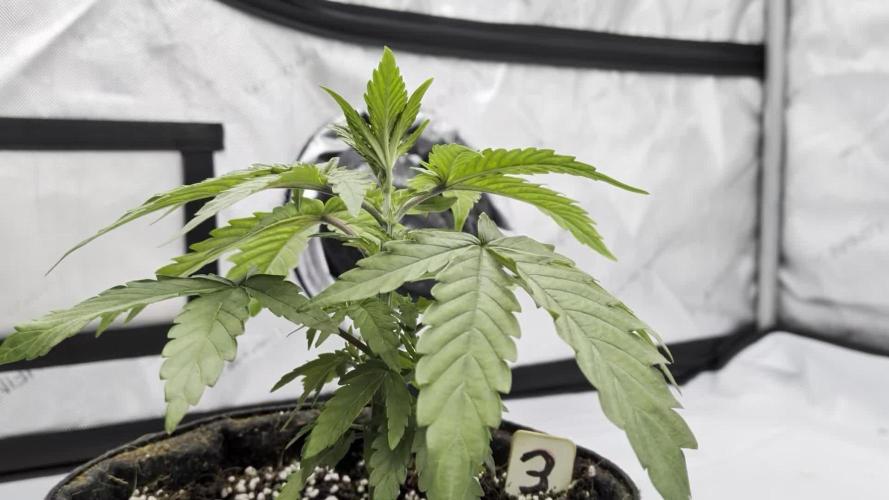
The start of week 5 is going well. Blueberry is smelling nice and my seedlings should be showing preflowers soon.