


Likes
Comments
Share


@RastaRick
Follow
Starting to see some real good growth. Everyone is looking real gree. I think next week calls for a session of LST. Still only using water with BioTabs. Not issues. Tenet is pretty hot at 27C and dry at 27%rh... Ruff but it's what I got

Likes
10
Share


@Mooogli_12
Follow
Originally wanted to sog 25 strawberry banana from advanced seeds..
Those seeds been stolen🤬💢
So i threw 9 seeds that i already had
1 blueberry and 1 passion fruit didnt pop out, its 7 plants left so its not 100% germination rate..
Bought a new light 'lumatek 200w' cuz the actual 'lumatek 300w pro' is to powerful for this tent.
So today is officialy DAY 1


Likes
18
Share


@Dunk_Junk
Follow
She popped up a couple of days ago (check the timelapse) so I'm calling this week 1.
I've put lots of perlite in her soil this time around, last couple of grows, as a test, did not have perlite and I noticed the soil was really firm and compact. Also it didn't drain very well at all.
Hopefully the addition of perlite will fix this.


Likes
11
Share


@Sawyer_grow
Follow
Hello guys,
Hope you are doing good.
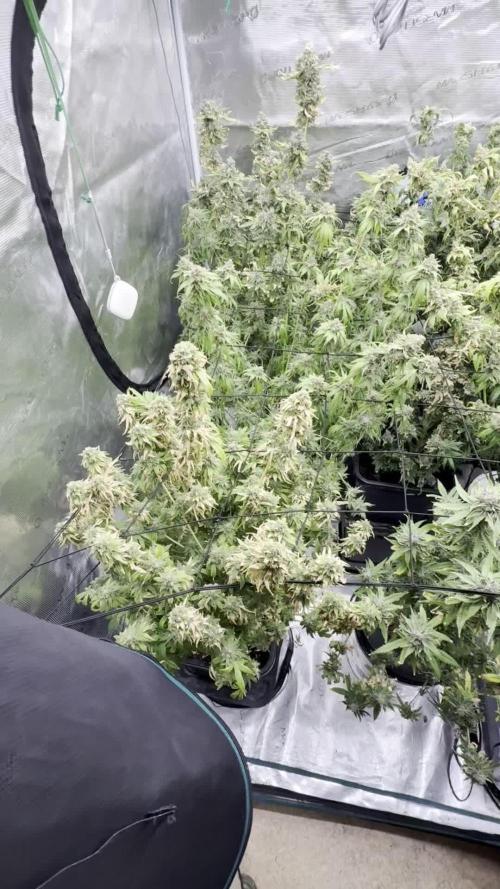
Second week of flowering and what a beautiful stretch she got almost 20 cm ! but it's now over since 1/2 days.
Before starting the third week of flowering I like to defoliate a bit as you can see into the pictures. Not big defoliation but enough to keep that energy on the flower and enough leaves to power that beautiful machine.
I also started to use the PK BOOSTER following the recommandation by GHSC.
She start to smell as well, when I was cutting her leaves that smell was playing with my nose and let's be honest it kinda made my day.
Hope you like it, don't hesitate to follow the tutorial and update on my IG.
Take care
Sawyer

Likes
39
Share


@Randyb4
Follow
Day 127 53 Days of flower, First day of Week 18
Day 128 54 Days of flower
Plants look good, they still have some white hairs though.
Day 129 55 Days of flower
Trimmed 1 bud from Plant B but it doesn't seem dry enough yet. Plants A and C look like they keep popping new hairs.
Day 130 56 Days of flower
Chopped Plants A and C and started hang drying them, they look great in my opinion.
Day 131 7 Days of drying for B and D
So the buds seemed dry and the stems snap so I jarred and trimmed. Looks like 3.5 ounces or or so but I didn't Weigh

Likes
44
Share


@RakonGrow
Follow
Note :
+ jegliches Zubehör wird in der GermniationsWoche aufgelistet . Zeitraffer Videos folgen immer nachträglich.
+ videos werden so geschnitten das nur ein geschlossenes Zelt erscheint , ergo Fehlen paar reale Minuten (ca 1 Std) .
+ + leider ist die Halterung defekt und die Videos etwas schief . Vielleicht mach ich mich irgendwann mal daran und korrigiere das. Sorry
Day 43:
+ Höhe : 64cm
Es wächst und wächst :))
Day 44:
+ Höhe : 65cm
+ 2 Liter Flaschenwasser , kein Dünger .
+ + PH 6.5
+ Drain : PH 7.0
Höhe ist bei 63cm , das ist 3 cm mehr als die Vorgabe ausweisst :))
Day 45:
+ 66cm höhe.
+ 2 Liter Flaschenwasser
+ + Dünger für Blühte
+ + + Canna Terrar Flores (Achtung wirkt wie PH-)
+ + + Canna Boost
+ + + Cannazym
+ + + Greenhouse Feeding BioEnhancer als PH+
Jetzt säuft sie wie wilde , keine 24h und die 2Liter sind komplett wech . Mehr geht aber nicht in den Topf , ergo muss ich mir langsam mal überlegen ob ich Tropfbewässerung nutze .
Und es treten duch das nur Wasser extreme "Calzium" Probleme auf . Hihi , aber so hab ich mal das ganze auf Startsequenze gesetzt . Ich arbeite also noch daran diese Mischung aus BioBizz Light und Urgesteinmehl nach Schätzung zu meistern :)) Den Fakt ist , da ist viel zu viel Urgesteinmehl drinne , was auch die Vegiphase schon gezeigt hat.
Day 46:
+ 1.5 Liter Flaschenwasser
+ + Dünger für Blühte
+ + + Canna Terrar Flores (Achtung wirkt wie PH-)
+ + + Canna Boost
+ + + Cannazym
+ + + Greenhouse Feeding BioEnhancer als PH+
Day 47:
Draussen zu heiss , drinnen zu feucht ... Ja genau was ich nicht brauch lol ...
GoPro aus der Halterung gefallen :))
Day 48:
+ Höhe : 68cm
+ 2 Liter Flaschenwasser
+ + Dünger für Blühte
+ + + Canna Terrar Flores (Achtung wirkt wie PH-)
+ + + Canna Boost
+ + + Cannazym
+ + + Greenhouse Feeding BioEnhancer als PH+
Draussen zu heiss , drinnen naja ... Der Entfeuchter arbeitet weil ich sonst hier Tropenstimmung bekomme :)) Ein wenig Entlaubung .
Day 49:
+ Höhe : 68cm
+ 2 Liter Flaschenwasser
+ + Dünger für Blühte
+ + + Canna Terrar Flores (Achtung wirkt wie PH-)
+ + + Canna Boost
+ + + Cannazym
+ + + Greenhouse Feeding BioEnhancer als PH+
+ + + PH 5.8
+ + Drain PH 6.5
Läuft bei der Lady , sie trinkt , liebt das Licht (auch wenn die Spitze etwas zuviel bekommt , sie betet halt etwas ) , Mangelerscheinungen sind echt gering . Hat die heissen Tage (27° im Zelt bei 60%-57% ) hat sie super überstanden . Ich werde immer besser im Gießen . 75% von oben , 25% lass ich von unten aufsaugen .


Likes
2
Share


@Gerbillionaire
Follow
Super easygoing strain, and fun to grow. Looks like a nice yield but I'll have to update with weight after it's dry. This sweetie was grown in 6 gallons, from seed, under non adjustable lighting from seedling through harvest. Base nutes and cal mag. Ocean Forest/perlite in the bottom 3/4, Happy Frog/perlite on the top 1/4. Trained with a combo of scrog/lst techniques. The lights are two 50 dollar "1000 watt equivalent" Amazon LEDs, they say their max input is 280 volts though so I have no idea what grams to watts will be when the dry weight comes in.
Thanks to everyone who checked or checks this diary out, that's pretty cool of you! I'll be back in a bit to update weight and smoke, happy trails!

Likes
5
Share


@eldruida_lamota
Follow
Que pasa familia, vamos con la septima semana de floración de estas Papaya Zoap F1 de Sweetseeds.
Vamos al lío, me quede con 3 por espacio, siempre pongo alguna semilla de más por si no abriese alguna por no perder ese hueco del indoor.
También se trasplantaron a su maceta definitiva, en este caso de 7 litros.
Y también superaron el shock por el trasplante se recuperaron 100%.
El ph se controla en 6.2 , la temperatura la tenemos entre 20/22 grados y la humedad ronda el 50%.
El fotoperiodo esta a 12/12 para floración. Las jodidas estiraron bastante, y es algo que no me gusta de todas las F1, que cultive hasta ahora.
El olor que desprende es muy peculiar es muy dulce y empalagoso, a mi parecer, no pinta nada mal.
Hasta aquí todo, Buenos humos 💨💨💨

Likes
29
Share


@gottagrowsometime
Follow
Welcome to my Ztrawberry Diary sponsored by Green House Seeds.
Days 85-98 Flowering Days 35-47 Flower Days 17-30
Plant is coming along real nice. She has stacked up in mass, rock hard big ass buds. Gonna be a very intense smoke. Has taken awhile for the top buds and bottom to follow up. Nearly all pistils up and down the plant are 70-30 Trichomes are nearly all cloudy pushing 35+ambers. Another week on water after this. I've upped the co2 to combat the high tent temperatures of 29c. Her buds are big, dense, stick of ripe berries with hints of gas and other a dank musk. Bit pungent. Really nice. Time for soft flushing. And to go under SF-1000 or lower the temperature.
Diet/Defoliation
Added a few of plagrons organic like with Atami products and all buds are getting nice and evenly ripening. Very happy with the products I used this grow, mainly Green House Feeding mineral line, and got some amazing fungi from the Biobloom I used at the start of pre flower. Carried her through most of her bloom phases. And I had to add other PK booster and a few terpine enhancers. This was her last day on nutrients. She'll be going under my SF-1000 now for ripening with lower temps. She's only been heavily on co2 this wk. (A few days. So, it won't of had much affect on it boost wise). Got a decent defol through her later stages of bloom. Most of her fans were removed and took a few sugars, well they were fans before the cakyxs swollen. Very sticky with a lovely gasy berrie smell that's very lovely.
Thanks to my sponsor from Green House Seeds, & shout out to mars-hydro for the lights.
COUPONS
Mars-Hydro "ggs" 3% WW
Spiderfarmer.eu "ggst" 3% EU only.
Zamneisa "GROWITGD" 20% WW.
Likes
29
Share


@DaddyPrime
Follow
8/10 buds are fattening up nicely. Moved plants under growlight to attempt to take better pictures. Cant wait to see what she looks like at the end

Likes
Comments
Share


@SolitudeCorners
Follow
This breeder is a scammer**
I’m going to end this grow diary here. During the later stage, I went through a mental breakdown and kind of lost focus on life for a while. I’ll upload whatever photos I still have, but I didn’t get my friend to help take proper photos because he was dealing with military conscription at that time.
I feel genuinely sorry to the sponsors who provided the seeds. I promised to complete the grow diary for them, and I broke that promise. I tried to save some branches, but they didn’t survive. I don’t have any excuses for this.
If I get another chance in the future, I’ll buy their seeds myself and grow them again properly.
**This breeder held a grow contest and sold a lot of packages for join the contests - seeds-Shirts stuffs and then cancel it after not enough people join him while dealing with his warrant (people talk like he used to be a scammer that famous in cannabis society in 2-3yrs ago) he just rebranding himself and claimed to work with gage geen founder (michael fang) ,I used to respect him and his work but after see him fat shaming people and talk so shit with their customers its just made me see more clearly
Processing
Likes
24
Share


@BillMonroe
Follow
No complaints... :)
I installed a webcam. Now I can learn how the plant responds. It's very interesting. I can recommend a webcam to make timelapse to everyone.
I used Booru webcam software to capture pictures. This time lapse video is of week 3 into week 4. (The light never changes, but the webcam auto-adjust messes with the colors)
Lots of changes daily... pics are from day 2 of this week

Likes
27
Share


@Ganjagrandaddy
Follow
Day 69 Flowering : Well we have seen the Glueberry finish and dried and the Mimosa Lemon is still pushing new pistils out !. I don't think she wants to finish just yet . She must have sensed my dissapointment at the bud structure and this week has kicked a second pistil flush all over. He colours are looking very nice now as she matures the older buds too. She is so strong smelling now too . a very strong lemon indicates a potency for a heady smoke. Her actual size is still huge and she has needed canes to keep her upright as she is everywhere and her skinny arms can't hold the weight properly. I think she will be at least another week and possibly 2 but we will see soon enough. Be safe and well growmies.

Likes
Comments
Share


@All_about_420
Follow
Heute gibt's wieder mehr zu gucken, ist auch nochmal einiges passiert.
Ich hab das letzte Mal die Schere angesetzt um noch einmal die Spitzen zu vervielfältigen
und ich habe nochmal Blattmasse, sowie untere Triebe entfernt.
Da sie so schnell wächst, wird es kein Problem sein, das alles wieder zu kompensieren,
diesmal aber schon zielgerichtet auf die wichtigen Teile der Pflanze.
Endspurt vor der Umstellung auf die Blüte und den Stretch.
Likes
17
Share

@4hundert20
Follow
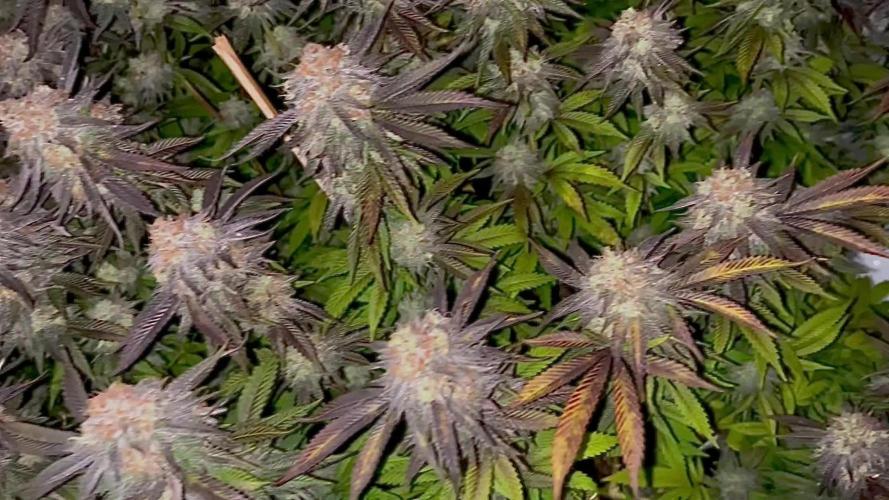
In den letzten Tagen hatte sie nur Wasser (pH 6,5, EC 200).
Seit drei Tagen nun gar nichts mehr.
Komplette Dunkelheit, kein Co2
Nur die Ventilatoren laufen und die Abluft.
Samstag wird geerntet.
Likes
75
Share


@Roberts
Follow
Gushers grew great during the grow. She loved the Spider Farmer G5000/UVR40 lights. She has a sweet fruity smell. Looks like some frosty nuggets of goodness will be my end results. Very eager to get to the smoke report. This grow was pretty smooth, and looks good. Thank you Spider Farmer, Athena, and Royal Queen Seeds. 👸 🤜🏻🤛🏻🌱🌱🌱
Discount code:GROWERS20
Thank you grow diaries community for the 👇likes👇, follows, comments, and subscriptions on my YouTube channel👇. ❄️🌱🍻
Happy Growing 🌱🌱🌱
https://youtube.com/channel/UCAhN7yRzWLpcaRHhMIQ7X4g
Spider Farmer Official Website Links:
US&Worldwide: https://www.spider-farmer.com
CA: https://spiderfarmer.ca
UK: https://spiderfarmer.co.uk
EU: https://spiderfarmer.eu
AU: https://spiderfarmer.com.au
G5000 Light Amazon Link:
amzn.to/4643esa
UVR 40:
https://www.amazon.com/dp/B0BR7SGTHS
Discount code: saveurcash (Stackable)
Likes
19
Share


@Showmethewaytogrowhome
Follow
The beginning of the week started badly. Spots on the lower leaves! I received great feedback from this website right away then a couple of days later from my grow shop.
Question was, was it nute burn or under feeding. Either way, a lot of water was the answer. I believe it was under watering!
Once the girls recovered, I continued with more frequent, higher volumes of watering with Kalong Grow added at half dosage.
Throughout the week, I continued to tie the plants down in the 3, 6, 9 & 12 o'clock positions. Changing the position every second day.
Additionally, I moved the girls position within the cupboard in a clockwise rotation every day. (Couldn't hurt so why not)
The fat bananas are ranging in height from 13-19cms and by Wednesday had obvious flower sites.
The northern light has no flower sites and is only 11cms tall. It's also extremely dense with even, consistent foliage. I stopped LST as it seemed ineffective/impractical.
By the end of the week the 'spot' issue was completely resolved.
On 27th I used a PH testing kit on the bottled water I had been using. Turns out it's overly alkaline. The tap water was 6.2 so I switched to tap water. I realise the chlorine etc is not good and have ordered a water filter to remove chlorine, lead, etc, etc.
I feel flowering is going to happen within 10 days or so...
Likes
12
Share


@DrGreenbutterThumb
Follow
In awe at this batch 2 weeks remaining and they are pretty swollen
Smells and swells. Can hints of change in color but still a pretty, green. Buds already snowcapped. And the selected branch that was pollinated has seeds Maturing.
Likes
6
Share


@lalaadhnelcop
Follow
The progress is real! On the 14th, all seeds had germinated. The difference of 4 days is, for me, unreal. I will keep you guys updated. See you soon