The Grow Awards 2026 🏆 













Likes
33
Share
@FreshCoastOrganics
Follow
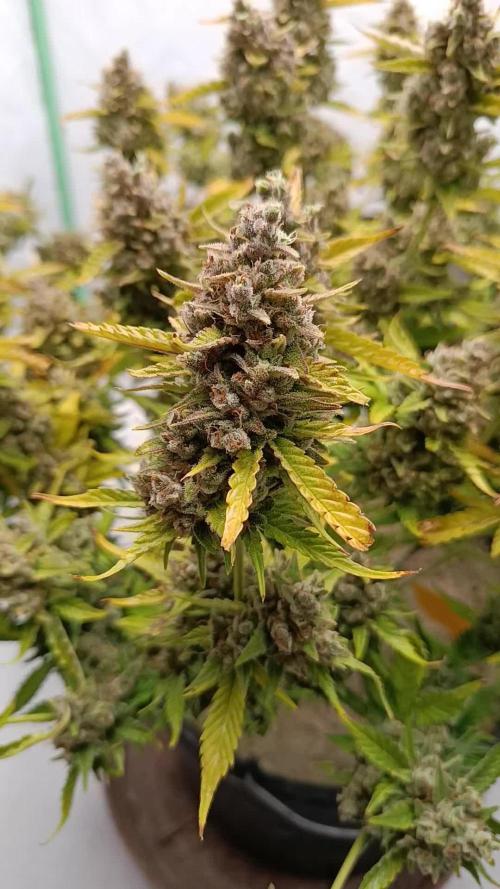
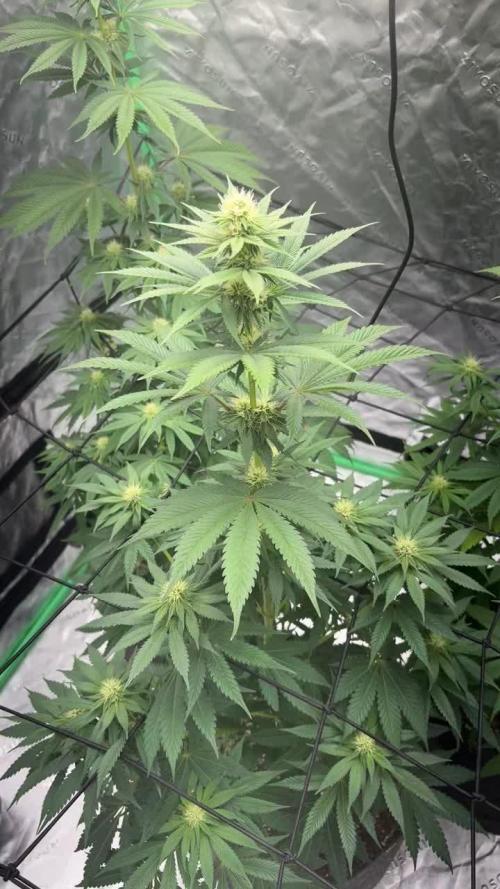
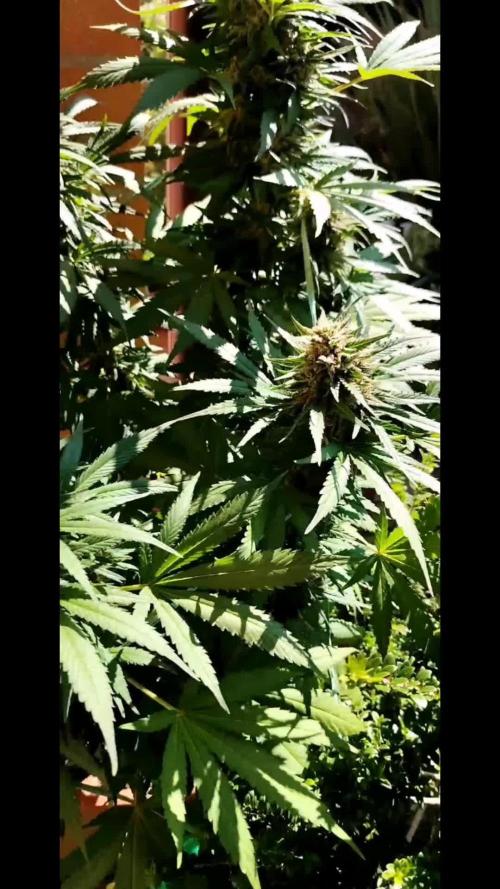
The girls are doing great! They are getting bushier by the day, I don’t want to stress her much by defoliation so I’m doing a good amount of leaf tucking and only removing lower yellowing leaves that were ready to fall off on their own.
The medium from Miller’s Soils has been extremely well balanced throughout the grow. I only dealt with a small amount of nute burn in the beginning but they quickly used those preloaded nutrients to their advantage.
They responded well to their Bloom feeding so I will continue to up the dosage as time goes on. So far she isn’t showing any signs of deficiencies or excesses in nutes so I’m treading lightly with the feed schedule.

Likes
41
Share
@WolverineGreens
Follow
Got a little behind on the defol. but everything runnin smoothly besides that. I lost a fight wit a greenhouse and he bruised my ribs. Been gettn around a little slow. Then on top of that broke my phone again ya kno, because im retarded. That makes life difficult sumtimes.
Just given em a gal of water and a recharge, coconut/aloe water mix rotated every 3 or 4 days and trying to stay out of the way. I had an issue wit the blumats so just turned it off about a week ago. Ill get around to fixen it eventually....50/50 on if thatll b during this run.
Member berry grew weird but turned into a monster, purple punch is standing out and so is the wedding cake and gorilla blue. And obviously the D is lookin lovely as always. Im down to 13 because i cut a gsc. It was a long shot from the start and didnt want to risk a hermie.
Cant wait to finish this run so that i can make a plan for outside. Form sum kinda ranking. How many of which plant goes where and all that.
I kno...I Kno I take shitty pics🤷


Likes
14
Share
@BushDoctor740
Follow
Ok so today is day 9 and I have had a change of plans for the grow and have lost 4 of the 9 papaya cookie seedlings.Probably just a stroke of bad luck but I must move forward.I have 5 papaya cookies,1 gelato auto and 3 mystery photos from fast buds mix pack in the tent that will flourish after the autos finish.Just plain water every few days is the plan and recharge once every 10 days.SE7000 is raised to the ceiling of my 5x5 80 inch high tent set at 30 percent power.

Likes
3
Share
@123Grow
Follow
Okay, Mos Cutty is coming to life. I still am having slow growth, but it’s going now.
Likes
2
Share
@HashishOculus
Follow
📅 Week 9 (Days 56–62)
🌸 Mid-Flower | Bud Development | Nutrient Monitoring
This week saw a clear ramp-up in flower density. The buds have begun to take on noticeable weight, with trichome coverage increasing steadily — not just on the sugar leaves, but now crawling onto small calyx fans. There’s a tangible stickiness to the upper canopy, and the diesel/cardamom/citrus terp profile has deepened. Aroma is more persistent after lights-on, lingering even after ventilation.
Leaf health has required a watchful eye. The lower fans have continued to yellow and were removed incrementally. Nothing alarming yet - mostly older leaves giving up their stores. But toward the end of the week, I spotted some yellowing beginning to creep into mid-canopy areas. No burn, no twist - just fading.
I’ve continued feeding - full strength Advanced Nutrients this week, including one adjusted dose focusing only on Grow (3.5 mL in 2L) to boost nitrogen in response to the yellowing. Watered with 2L at pH 6.4. No runoff, but weight and hydration have been monitored closely. Still a slight risk of earlier shallow root development limiting uptake, but the plant is holding its posture.
One environmental slip-up: I noticed the leaf edges starting to taco slightly mid-week. Tracked it down to the humidifier being off. Once re-enabled, RH returned to 50–55%, and the issue self-corrected. No further signs of VPD stress.
Trichomes:
Still mostly clear with very few cloudy. No amber in sight. Maturity is progressing slowly - right on pace for a post-vacation harvest.
Action points:
– Continue feeding through Week 10
– Monitor yellowing mid-canopy - may respond with another Grow-only supplement if it progresses
– Keep RH stable with the new humidifier
– Macro checks every few days to watch for trichome shift
🗓️ Overall:
A stable week with increasing density and trichome output. Aroma building. No rush yet — plant is following a long, even curve into maturity. Feeding schedule holds, with my daughter planned to feed once or twice while I’m away, then transition to water only.


Likes
8
Share
@DoenerToGo
Follow
Sorry for not updating you guys, i had some private stuff going on but i am way better off now :D
Likes
6
Share
@eldruida_lamota
Follow
Que pasa familia, vamos con la quinta semana de crecimiento de estas Lemonpaya feminizadas de fastbuds.
Vamos al lío, de las 3 plantas, me quede con 2 por espacio, siempre pongo alguna semilla de más por si no abriese alguna por no perder ese hueco del indoor.
También se trasplantaron a su maceta definitiva, en este caso de 7 litros que además provocó un shock que también solucione.
El ph se controla en 6.2 , la temperatura la tenemos entre 20/22 grados y la humedad ronda el 50%.
Hasta aquí todo, Buenos humos 💨💨💨
Likes
16
Share
@AestheticGenetics
Follow
4/9/25
This plant is beyond frosty. Stacking up super nicely. Seems like she will yeild quite a bit.
My only gripe is that she has like no smell at all.
Using the foil as a soil cover is working quite nicely. the top soil is getting filled with roots quite well.
Top dressed 1tsp of Bloom
1tsp microbe charge
1tsp bloom

Likes
13
Share
@FlavoursUk
Follow
Day 44 - The smell is divine, and the buds are looking very pretty. Beautiful fade going on in the leaves, almost like a purple/red/black. Planning to tapper down the nutrients as we are coming closer to Harvest.
Crucial to keep the pH in range during flowering and being away a few days, I wasn't able to correct it until I was back. So they were drinking more water than uptaking nutrients.. leaving a high EC in the system. Corrected the issue by adding plain RO water, treated with cleanse, no nutrients.
They are now on track and could do with a last defoliation, but I've been holding it off. Will get around to it over the next few days.
The buds are sticky, smell great and rock hard. Dehumidifier was added to the tent to try lower the humidity to a better range.
Can't wait to see the end results and product. Another 2 weeks an I think we will be good.

Likes
6
Share
@PatriciaGant
Follow
start of flowering. all nutrients are in ger section if not other mentioned all by maufavtures instrucktions. no big problems with the grow so far.

Likes
Comments
Share
@1smoke2joints
Follow
No problems at all, they are still green and healthy. White Widow is close to harvest. Its pistils are still mainly white, but there are many milky trichomes. I want to do an early harvest, to make its sativa traits more dominant, so I think I'm gonna chop it down on Sunday or Monday. Sorry for the bad-quality pictures.
Northern Light just started to flower like hell after defoliation, it was a good action.
Likes
26
Share
@pifflestikkz
Follow
Day 37
06/08/24 Tuesday
De-chlorinated tap water pH 6 today with calmag only.
Pre flower stretch initiated, pre flower female sex pistils forming 😍
All happy and healthy!
Structure of Melonade Runtz and Critical orange is Beautiful.
Pic and vid update
Day 39
08/08/24 Thursday
Feed today using de-chlorinated tap water pH 6 with Plagron PK13-14.
Showing her pre stretch 😍
Day 41
10/08/24 Saturday
De-chlorinated tap water pH 6 today again with calmag.
400ml with run off now.
Day 42
11/08/24 Sunday
End of week
De-chlorinated tap water pH 6 today again with calmag.
400ml with little run off this time
Pistils on pistils now 😁
Starting to see the beginning of bud formations 💚


Likes
12
Share
@GrowGuy97
Follow
Sorry for the lack of updating recently I have a new job & don’t have much time for anything but I just wanted to show how amazing these ladies are doing! Both Strains smell unbelievable & by far some of the frostiest plants I have grown, have taken to fox farm nutrients very & they have not really gave me any issues the entire grow! Will post some more updates around harvest time thanks for following friends!🙏🏼🙏🏼 Happy growing🌱🌱

Likes
2
Share
@TTerpz
Follow
Start of week 9
4/9/25
4/10/25: was fed with the nutrient dosage above
4/12/25 : watered with plain ph’d water
Likes
1
Share
@MrRaid
Follow
Okay I like this strain if I get an indica pheno buds are solid and frosty dank sticky smell like chocolate earthy pungent very colourful buds buds swell alot on the indica pheno and
Day 77 from seed plant 3 harvest she cant support herself this pheno reminds me of blue cheese very pungent when handled small but rock hard buds keep you updated on smoke report after cure plus the other 2 plants 👍
Plant 1 harvested on 11th December 81 day from seed will update with pictures
Likes
7
Share
@Zuppler
Follow
Vegetation Phase - Week 5
Week 5 marks a bittersweet milestone. RIP to the Marienkäfer homie — gone but never forgotten. Their watchful eyes and pest-snacking legacy will forever live on in the tent. Meanwhile, the Donutz gang is thriving and about to hit the next big step in their journey: the 7-liter pot upgrade.
Updates & Changes:
RIP Marienkäfer: Nature giveth and taketh away. The tent feels a little emptier without our little guardian, but pest pressure remains nonexistent thanks to their diligent work.
Transplant Time: The plants are moving up to 7L pots this week, giving their roots the room they need to expand and thrive before flipping to bloom. This upgrade will ensure a strong foundation for the explosive growth coming soon.
Watering: Still sticking with reverse osmosis (RO) water for maximum control and cleanliness.
Plan for Flower Transition:
After the transplant, the plants will chill for the rest of the week in their new homes to recover and adjust. Week 6 will cover the flip to flower. With the clean lollipopped structure and solid root development, these plants are set to focus all their energy on producing hefty main colas in the Sea of Green setup.
Observations:
The Donutz are stacking beautifully, with healthy green leaves and strong stems.
The SOG canopy is filling out, and each plant is shaping up to deliver a uniform, productive grow.
Next Steps:
Monitor the plants closely after transplanting to ensure they adjust smoothly to the 7L pots.
Maintain stable environmental conditions to avoid stress during the final veg phase.
Prepare for the flip to flower in Week 6 — the real show is about to begin!

Likes
7
Share
@CampaCavallo
Follow
8ª Settimana di Fioritura 💐💐💐💐💐💐💐💐
Che bello vedere i suoi bud esplodere di cristalli 🤩🎇💚


