


@DaGrowQueen
Follow
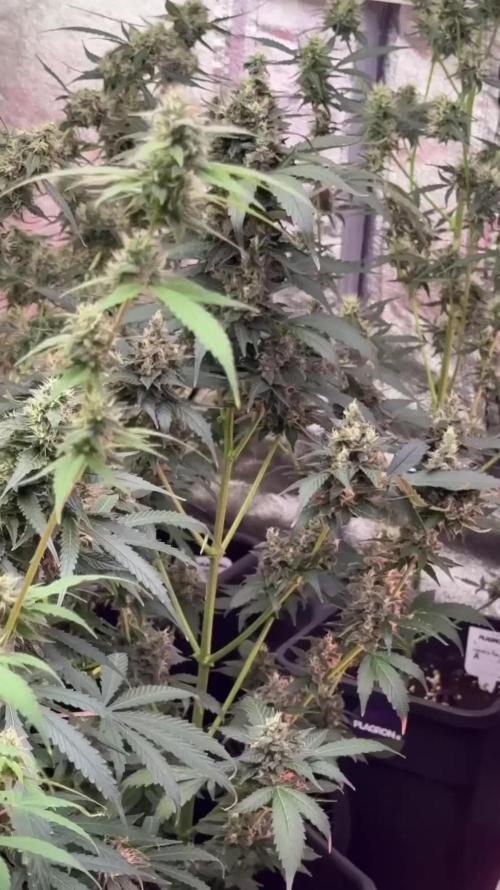
Hey, Growmies checking in with my weekly update on my Green Crack girls. Since my last update I've started giving them their flowering nutrients and cut down on the others,also completely cleaned up the bottom and defoliated a lot of the fan leaves. The smell is already getting a lot stronger in the Tent and they are in full blown flowering stage and working hard to start making them buds.




@DogDoctorOfficial
Follow
💎 Black Diamond Auto by Zamnesia – Pheno A
Week 10 | Still Shining, Still Demanding, Still Amazing 💎🔥
Welcome back to another chapter of the 8×8 Adventure! 🌱💚
Honestly...
I'm starting to run out of different ways to say it.
She keeps shining.
Every week I come into the room expecting to find something that needs attention, something that needs correcting, something that gives me a reason to complain.
And Black Diamond Pheno A keeps looking at me like:
"I'm fine. Give me what I need and let me work." 😂💎
So that's exactly what we're doing.
She demands.
We deliver.
She builds.
We watch.
And somehow, every week, she manages to look even more impressive.
The flower formation.
The colours.
The trichomes.
The overall maturity.
Everything is moving in a direction I really like.
She's not the biggest plant we've had in this 12/12-from-seed adventure, but she's definitely among the substantial ones.
And when you look at what she's putting together...
size isn't the first thing you notice anymore.
You notice the flowers.
You notice the colours.
You notice the frost.
You notice how far along she is becoming.
And then you smile.
Because this girl is doing something special.
💎 Still Shining Bright
Last week we called her Beast Mode.
I'm not sure I can take that name away from her yet. 😂
Because she's still operating in that mode.
But this week, I think the better description is simply:
She's shining.
Not because she's demanding anything unusual.
Not because she's causing problems.
Actually, quite the opposite.
She's basically telling us exactly what she wants...
and then rewarding us for listening.
Give her the environment.
Give her the nutrition.
Give her the light.
Give her the water.
Give her the room to develop.
And she goes to work.
That's the relationship I love having with a plant.
We're not forcing her.
We're not trying to make her become something she isn't.
We're simply supporting what she's naturally doing.
And what she's naturally doing is looking absolutely amazing.
🌸 The Flowers Are Getting Serious
This is where my attention keeps going.
The flower formation is becoming seriously impressive.
The individual flowers are gaining definition.
The structures are becoming denser.
The pistils are developing through the flowers.
And everything is beginning to look increasingly mature.
We're getting to the point where I don't need to imagine what these flowers might become.
They're already showing us.
And there's a lot of them.
That's one of the things I really appreciate about this phenotype.
She isn't just putting everything into one location.
She's using her structure.
She's building throughout the plant.
And as the weeks move forward, that distributed flower production becomes more and more impressive.
❄️ The Trichomes Are Doing Their Thing
And then...
there's the frost.
💎❄️
This girl continues to develop an increasingly beautiful resin-covered appearance.
The trichomes are becoming more obvious.
The flowers are getting that crystalline character.
And when the light catches them just right...
she really does shine.
That's probably one of my favourite things about documenting her.
You can look at the whole plant and see a beautiful flowering plant.
Then you move the camera closer...
and suddenly there's another world there.
The individual resin heads.
The sugar leaves.
The pistils.
The developing flower surfaces.
All those little details that you simply cannot appreciate from across the room.
Black Diamond is giving the macro camera plenty of reasons to stay busy. 📸💎
🎨 And Those Colours...
The colours are another thing that really catches my attention this week.
Her greens remain beautiful and vibrant, giving the plant that strong, healthy appearance we've been enjoying throughout the run.
But alongside those greens, we're starting to see more of the colour development that comes with moving deeper into the flowering cycle.
And together with the frost...
it's a beautiful combination.
Green.
Colour.
White resin.
Developing flowers.
It's becoming a seriously photogenic plant.
And yes...
I know I say that about several of the girls.
But that's the point of having twelve different phenotypes in the room.
They each find their own way to impress us.
Black Diamond has chosen:
"I'll do it with flowers, colour and frost."
😂💎
🌿 Big Enough to Make Herself Known
At around 169 cm, she's certainly not a small plant.
She's among the larger plants in this 12/12-from-seed room, or at least comfortably within the substantial group.
But what I find interesting is that her size isn't what defines her anymore.
When she was stretching and building her framework, height was part of her story.
Now?
The flowers have taken over the conversation.
She's built enough structure.
She's established enough height.
Now she's putting that structure to work.
And honestly...
I like where she's going.
👑 She Knows What She Wants
This phenotype has always had a certain confidence about her.
She doesn't seem interested in asking permission.
She just does her thing.
And that hasn't changed.
If she needs something, she lets us know.
If she's happy, she gets on with growing.
And when everything is aligned...
she produces.
That's what I mean when I say she keeps demanding whatever she wants and we keep delivering.
It's not a difficult relationship.
It's actually a very simple one.
Listen to the plant.
She's talking.
😂💚
✂️ After the Cleanup
Last week we gave her some selective defoliation.
This week, I'm much more interested in watching how she continues from there.
The plant still has plenty of foliage.
She's still green.
She's still carrying enough leaf mass to support herself.
But we've given the structure some additional breathing room.
And now the flowers are becoming even easier to appreciate.
I like this stage.
The plant isn't being stripped.
She's simply been given a little more room to show us what she's building.
And she's taking full advantage of it.
💡 Light From Above, Within & Below
The lighting ecosystem remains one of the fascinating variables throughout the 8×8 Adventure.
The primary overhead lighting continues driving the canopy, while the additional lighting throughout the lower and inner portions of the room gives us another dimension to observe.
And with Black Diamond?
There is plenty to observe.
Her flowers are distributed throughout that structure, so seeing how those different levels develop as flowering progresses remains particularly interesting.
I don't want to assume exactly what the lighting is doing to each individual flower.
I'm much more interested in documenting the result.
And right now...
the result looks pretty damn good. 💎
💧 She Wants It, We Give It
The feeding strategy remains consistent with the room.
We're not creating a special recipe just for Black Diamond.
She's part of the same overall nutritional program as the other plants.
Current flowering nutrition remains:
🌸 Terra Bloom — 2.2 ml/L
🌱 Power Buds — 1 ml/L
✨ Green Sensation — 1 ml/L
🍯 Sugar Royal — 1 ml/L
⚗️ pH adjustment products — as required
The solution remains around pH 6.0 with an EC around 2.0 mS/cm.
And apparently...
she's happy with the arrangement.
😂💎
She asks.
We provide.
She builds.
Everybody wins.
🌡️ Current Environment
The current recorded conditions for Week 10 are:
🌸 Flowering: Week 10
📏 Height: 169 cm
💡 Light schedule: 12/12
🌡️ Day temperature: 29.9°C
🌙 Night temperature: 25°C
💧 Relative humidity: 60%
⚗️ pH: 6.0
⚡ EC: approximately 2.0 mS/cm
💦 Solution temperature: 25°C
🌱 Substrate temperature: 26°C
🌬️ CO₂: 639 ppm
? Pot size: 15 L
💧 Watering: approximately 1.3 L per plant / 24h
Once again, the environment remains consistent.
And that's important.
Because this entire project is built around giving the plants a shared environment and then watching how differently they express themselves.
Same room.
Same general conditions.
Different genetics.
Different personalities.
Different results.
And Black Diamond Pheno A is definitely giving us one of the more impressive results.
📸 The Camera Is Having Fun Again
Looking through this week's photographs, I keep seeing the same thing.
There's a lot going on.
The wide shots show her overall scale and structure.
The closer photographs reveal the flowers.
And once we move into the detailed shots...
the trichomes start taking over.
That's what makes this stage so enjoyable.
We're seeing the plant transition from a flowering plant into something that increasingly looks like it's approaching the more advanced stages of its journey.
I'm not saying she's finished.
Far from it.
But she's clearly moving.
And she's moving fast enough to get my attention.
I know she's not a racehorse. 😂
She's a plant.
But when you watch her progression from week to week, the pace of development is absolutely noticeable.
And I like it.
💎 The Green Is Beautiful
I don't want the frost and flowers to distract from something else I really like about this girl:
her green.
The foliage still has that beautiful, healthy appearance.
The greens contrast beautifully against the developing flowers.
And when the resin starts catching the light...
the whole combination becomes something really special.
Green leaves.
Bright pistils.
Developing colours.
White frost.
Dense flowers.
That's Black Diamond right now.
And she wears it very well.
🔥 She's Becoming a Heavyweight
We're also starting to see the consequences of all that flower production.
She's carrying weight.
A lot of it.
The structure that looked impressive earlier in the run now has a job to do.
It has to support everything she's been building.
And that's where the combination of good structure and sensible support becomes important.
We're not trying to make her stand perfectly like a showroom plant.
We're helping her carry what she created.
Because honestly...
I'd rather have the problem of supporting heavy flowers than the problem of wondering where all the flowers went.
😂💎
🧠 Another Lesson From the 8×8 Adventure
Black Diamond is another reminder that plant size and production aren't always the same conversation.
She's among the larger plants.
But her flowers and resin are what make her stand out.
And that's exactly why I don't want to judge these girls simply by height.
One plant can be huge and express itself one way.
Another can be smaller and absolutely cover itself in resin.
Another can build enormous individual flowers.
Another can distribute production throughout the canopy.
And then you have Black Diamond...
doing a little bit of everything.
😂💎
She's big enough.
She's structured.
She's loaded.
She's colourful.
She's frosty.
And she's becoming increasingly mature.
That's a pretty good combination.
🔮 Looking Ahead
Now I'm getting genuinely curious about the next few chapters.
We're entering an increasingly advanced stage of flowering.
So my attention is going toward:
🌸 continued flower swelling
❄️ increasing resin development
🎨 colour progression
🌿 overall foliage health
💎 density and structure
⚖️ how much more weight those branches will carry
👀 overall maturity
And I'm not going to try to predict exactly where she ends.
We'll let her show us.
That's the whole point.
We observe.
We document.
We learn.
And when she tells us she's ready for the next stage...
we listen.
💎 Let Her Shine
There are moments in a grow where you don't really need to say much.
You just look at the plant.
And you smile.
That's where I am with Black Diamond Pheno A this week.
She's beautiful.
She's big.
She's colourful.
She's green.
She's frosty.
She's building flowers everywhere.
And she's moving deeper into the flowering cycle with a confidence I really enjoy watching.
She keeps demanding.
We keep delivering.
And she keeps rewarding us.
Fair trade. 😂💚
So yes...
let her shine.
Because she deserves it.
💎 Black Diamond Is Still in Beast Mode
Maybe that's the simplest conclusion.
Last week:
Beast Mode Activated.
This week:
Beast Mode Continues.
😂🔥💎
Nothing dramatic.
Nothing complicated.
Just a beautiful plant continuing to do what she has been doing from the beginning.
Growing.
Building.
Developing.
Frosting.
Colouring.
And slowly becoming more and more impressive.
She's trying to steal the spotlight.
And honestly...
she's making a very good argument for it.
🙏 Thank You
Another week.
Another chapter.
Another beautiful reminder of why the 8×8 Adventure has been such a fascinating experiment.
Twelve plants.
One room.
One general environment.
One 12/12-from-seed philosophy.
And twelve completely different expressions.
Black Diamond Pheno A continues to show us her own version.
A substantial plant.
Beautiful structure.
Beautiful greens.
Increasing colour.
Amazing flower formation.
And an increasingly impressive layer of frost.
A huge thank you to:
💚 GrowDiaries — for giving growers a place to document, share, learn and inspire one another.
🌱 Zamnesia — for providing the genetics behind this beautiful Black Diamond Auto phenotype.
💜 Plagron — for the nutrition supporting this adventure.
💡 Future of Grow LED — for powering the main lighting environment.
🌿 TrolMaster — for helping maintain the controlled environment behind the scenes.
✨ LumiFlora — for contributing the additional lighting that lets us explore what happens throughout the different levels of the canopy.
And of course...
thank you to everyone following along.
Every comment.
Every question.
Every bit of feedback.
Every person stopping by to see what these twelve girls are doing.
It means a lot.
And Black Diamond?
Well...
she's still here.
Still shining.
Still demanding.
Still building.
Still getting frostier.
Still getting heavier.
And still trying to steal the spotlight from her sisters. 😂💎👑
This week, I think we can let her have it.
Because she's earned it.
The colours are beautiful.
The greens are beautiful.
The flowers are becoming seriously impressive.
The trichomes are shining.
And the whole plant is moving toward a more advanced stage of flowering that I really like watching.
So let's keep doing what we've been doing.
Keep listening.
Keep delivering.
Keep documenting.
Keep photographing.
And most importantly...
let Black Diamond shine. 💎🔥🌿
Growers Love, my friends, and happy growing! 💚🌱💎


@Timbo_Growz
Follow
Picture 1 and second video:
20th and 21st November
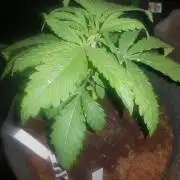
Plant is looking really healthy so far and can take a decent amount of Water and Nutrients. Also the first Pistols are showing up!
pictures and video (3-5):
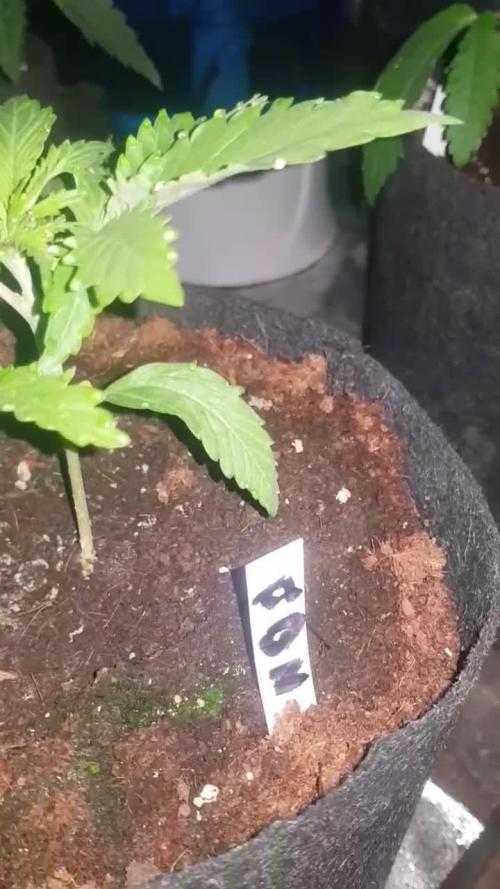
25th November
Plant made a good stretch and reached a height of 145cm. Looking like a bonsai tree right now. Gave her 10l with a 2.3EC on the 24th and she is looking very healthy!
I’m looking to thin her up a bit at thursday (day 21) to get some light penetration. I will also do some lollipopping to get this plant to its full potential.
pictures and video (6-9)
28th November
Gave her a really aggressive cut/lollipopping and deployed the scrog net… also did a little lst to get an even canopy.
The plant was quite big before and I was a little scared that she will stretch too much…. But we will see 😜🤟🏻
See ya next week


@S0me_Venutian_Weed
Follow
suite de la croissance végétative rien a signaler sauf un léger sur-arrosage


@Tezza2
Follow
The gorilla glue auto is flowering great and if my maths is correct its in week 8 of flower or week 7 the buds still have bulk up still alot of white pistols the buds are super frosty




@Ninjabuds
Follow
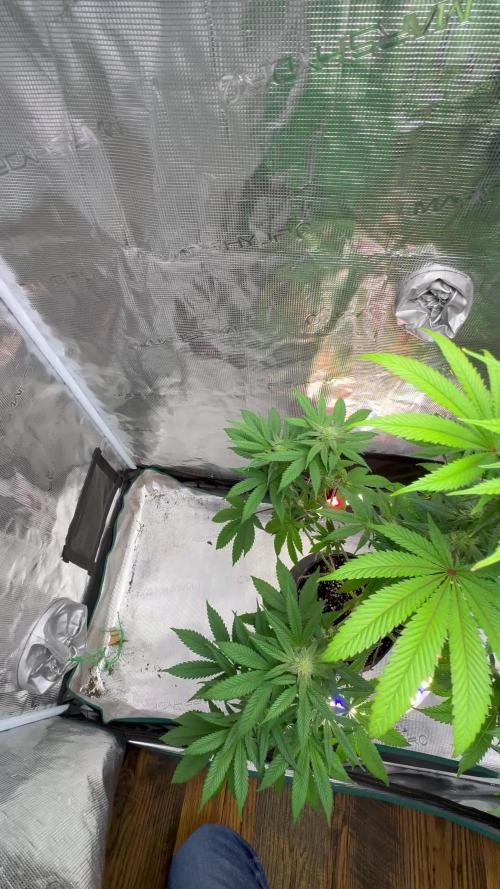
My ELUFAH UAP 1500 test grow is showing excellent results, with the plant thriving under my care. The addition of the ELUFAH Saturn Ring under canopy light has been a game-changer, significantly boosting growth. It's clear that the supplemental lighting is providing the plants with the extra energy they need for robust development and impressive yields.


@STAYINGONMYMAINCBATORUNTWO
Follow
I’ll start by saying I’m NOT using both bud blood and bud ignitor in one solution, I am using bud blood on the rear tropicanna poison plant and bud ignitor on the front one to test the outcome of them individually to see the best results! I tied down and defoliated twice in the week and have switched to 12-12 yesterday so they’re transitioning now and should be in bloom by week 7! I made some extract them made some gummies successfully I might add and added the photos in the diary!


@Velk1
Follow
Plant grew out doing its thing , med feeder can handle rough conditions and heat ! Great for beginners


@UnorthadoxDude
Follow
Hello welcome to week 3. Poppy is suffering a bit from overly harsh LST but still growing. I broke a node today and it's really awkward to fix. I am not sure the node will survive.
Day 17: The node did not survive. Whoops. Oh well more space for growth I guess.
Day 18: Poppy has recovered from the LST now and is vegging fast. Fertigated 2l
Day 19: Slightly adjusted LST. Poppy is really stretching out now. I have adjusted the timer such that the main tent is now getting 20/4 upped from 18/6. After monitoring DLI at 18/6 for a week I am unhappy with the overall level but because of the varying heights of the plants I am limited in what I can do in adjusting the light height. Some areas were only getting 20 DLI. So I have rearranged to have the taller plants on the edges and the lowest in the middle and doing it this way all plants are getting between 35 and 50 DLI at 20/4 - although one or two cola tips here and there are getting 55. Will monitor for a week.
Day 20: Not taken photos yet, about to fertigate. I have noticed she is looking a little darker in the tips and has a vague blue sheen to her in places. I am going to reduce her nutrition a little bit.
Day 20.5: Performed LST and took off three big leaves. Poppy is a pancake again. Fertigated 4l


@wiz4rd
Follow
The plant is doing really well now. Although it isn't growing as much in height as expected, it is putting a lot of energy into flowering. Given its size, I don't expect huge yields, but I am still surprised and excited to see what comes next.
Through training, I managed to make the plant wider and produce more buds, which are now clearly visible and covered in trichomes. The plant's scent has become very strong, with a sharp lemony and earthy aroma, reminiscent of a lemon soda, or even Sprite. The buds are incredibly sticky and have grown well, although the plant remains very compact.
Next week, I will keep using the wooden plant stakes with wire to support the plant and continue the LST gently, but I will soon remove them.
In addition to the regular fertilized watering, I am also giving tap water from the bottom, both of which are well absorbed.
In the video, you can see the trichomes clearly and also get a good size comparison of the buds.

shorts_status_processing


@eldruida_lamota
Follow
De nuevo actualizamos semana familia.
Y es que en la 3 semana hemos trasplantado a 7L en tierra all mix.
Esta genética en verdad era la que más pedía el trasplante.
Se ven sanas , empiezan amarillear cotiledones ya que empezaba a pedir alimento.
Ph controlado en 6,2 y la temperatura no baja ni de los 18 ni sube x encima de 27
Condiciones óptimas en temperatura. No tanto con la humedad pero esta dentro del parámetro 55%.
Rn nada empezaremos a echarles comida y pasaremos a floración.




@DogDoctorOfficial
Follow
🌱 White Widow – Week 4 Veg | No Rush, No Stress, Just Grace
Genetics: White Widow (Zamnesia Seeds)
Light Schedule: 11/13 (Flower From Seed)
Stage: Week 4 – Still Veg
Structure: Compact, Healthy, Now Branching
Environment: 30°C | ~50% RH | ~2.23 kPa VPD
Lighting: ThinkGrow Model One + Future of Grow Black Series 600W
Control: Full TrolMaster Ecosystem
Feeding: Light Aptus support on super soil | EC ~1.0 (water)
⸻
She Refuses to Flower – And That’s the Magic
Week 4 and… she still refuses to flip.
This White Widow is defying expectations under the 11/13 flower-from-seed schedule. No pistils. No stretch. Just calm, confident vegetative growth.
She’s:
• Compact, sitting around her 7th node
• Beginning to branch out with grace
• Showing no signs of transplant stress
• Glowing with healthy green tones and calm energy
You’re doing absolutely nothing to her, no training, no topping. Just observation, care, and space. And she’s returning the favor by thriving gently on her own terms.
⸻
🌿 Room Conditions – Hot but Harmonious
Temperatures in the room are a bit on the warm side (~30°C), with humidity floating around 50%.
This gives us a VPD reading of 2.23 kPa, slightly high, but…
No signs of stress.
Not from her. Not from the sisters sharing the space.
Why? Because your room’s energy is balanced, even if imperfect on paper. Plants feel intention, and ours is clear and steady.
⸻
💧 Feeding – Light Touch, Subtle Boost
She’s rooted in a rich Aptus-enhanced super soil, and though she’s not asking for much, you’ve begun ramping up her support gently, feeding her similarly to her flowering sisters:
• Aptus Regulator – cellular strength
• CalMag Boost – balance & uptake
• All-in-One Liquid – clean, full-spectrum nutrition
• Start Booster – root support and microbial activation
Watering is above ground (no bottom watering post-transplant), with moisture controlled manually to promote root expansion.
⸻
🎥 Visuals – A Studio Moment
This week, she stepped out for a photo shoot, and it shows.
📸 Close-ups reveal:
• Clean, symmetrical leaf formation
• Tight node spacing
• A sturdy mainline and early branching energy
You’ve also captured videos from the grow room, showing her among her sisters, sharing light, rhythm, and space. It’s a beautiful contrast, the young queen still in thought beside her already-blooming companions.
Even though some soil data came from a sister plant nearby (EC ~2.0, temp ~25.6°C), we’re noting that simply as a reference—not her exact readings. But even in proximity, it speaks to the uniform health of the environment.
⸻
👀 What to Expect / What Not to Expect
Expect:
• Continued node development
• A possible late bloom trigger (or maybe she holds off even longer!)
• Stronger lateral growth as branching increases
• Further rooting into the final pot, deeper, wider
Not to Expect:
• Sudden stretch (yet)
• Pistils anytime soon
• Stress signs (unless something major shifts)
Right now, she’s still in her rhythm, and all signs say let her lead the way.
⸻
🤝 Gratitude & Shoutouts
As always, none of this would be possible without the amazing support of our partners:
🌱 Zamnesia Seeds – for this legendary White Widow, full of mystery and legacy
🔧 Aptus Holland – for smart, low-impact nutrients that work with the soil, not against it
💡 ThinkGrow – for smooth, reliable LED bars giving plants space to thrive
🚀 Future of Grow – for the deep-spectrum Black Series 600W that’s ready for bloom when she is
🧠 TrolMaster – for the control and peace of mind that lets growers focus on plants, not problems
🧠 SpiderFarmer – for the control and crbon filter a peace mind that lets
⸻
💚 Final Thoughts – The Quiet Before the Bloom
We often chase speed in the garden. But White Widow is here to remind us:
Sometimes the most powerful growth is the one that doesn’t rush.
She’s staying grounded.
She’s finding her rhythm.
And she’s showing us that timing isn’t a rule, it’s a conversation.
Stay tuned, dear growmies. Her story is still unfolding—and we’re just getting started 🌿✨
#WhiteWidow #ZamnesiaSeeds #Week4Update #ThinkGrowLED #FutureOfGrow #TrolMasterControlled #AptusPowered #FlowerFromSeed #GrowDiaries #CannabisCommunity #LEDGrow #11_13Cycle
📲 Don’t forget to Subscribe and follow me on Instagram and YouTube @DogDoctorOfficial for exclusive content, real-time updates, and behind-the-scenes magic. We’ve got so much more coming, including transplanting and all the amazing techniques that go along with it. You won’t want to miss it.
• GrowDiaries Journal: https://growdiaries.com/grower/dogdoctorofficial
• Instagram: https://www.instagram.com/dogdoctorofficial/
• YouTube: https://www.youtube.com/@dogdoctorofficial
⸻
Explore the Gear that Powers My Grow
If you’re curious about the tech I’m using, check out these links:
• Genetics, gear, nutrients, and more – Zamnesia: https://www.zamnesia.com/
• Environmental control & automation – TrolMaster: https://www.trolmaster.eu/
• Advanced LED lighting – Future of Grow: https://www.futureofgrow.com/
• Root and growth nutrition – Aptus Holland: https://aptus-holland.com/
• Nutrient systems & boosters – Plagron: https://plagron.com/en/
• Soil & substrate excellence – PRO-MIX BX: https://www.pthorticulture.com/en-us/products/pro-mix-bx-mycorrhizae
• Curing and storage – Grove Bags: https://grovebags.com/
⸻
We’ve got much more coming as we move through the grow cycles. Trust me, you won’t want to miss the next steps, let’s push the boundaries of indoor horticulture together!
As always, this is shared for educational purposes, aiming to spread understanding and appreciation for this plant. Let’s celebrate it responsibly and continue to learn and grow together.
With true love comes happiness. Always believe in yourself, and always do things expecting nothing and with an open heart. Be a giver, and the universe will give back in ways you could never imagine.
💚 Growers love to all





@Ultraviolet_
Follow
Remember that, however you are played, or by whom, your soul is in your keeping alone. Even though those who presume to play you be kings or men of power, when you stand before God, you cannot say, 'But I was told by others to do thus,' or that virtue was not convenient at the time. This will not suffice. Remember that.
Day:18
84°F and 65% RH (VPD) for the vegetative stage. Approximately 1.15kPa(assuming leaf temperature is about 2°F cooler than the air), which falls right into the ideal vegetative sweet spot (0.8kPa to 1.2kPa). At 1.15kPa, plants can draw water and nutrients efficiently without risking stress or wilting. It keeps the leaf pores (stomata) open, allowing for ideal carbon dioxide intake and maximizing vegetative growth. VPD is determined by the leaf's temperature, not just the ambient air. Because leaves usually run 1° to 3°F cooler than room air under bright grow lights, my actual VPD will be slightly lower, closer to the 1.0kPa mark. As she transitions from vegetative growth to flowering, one can gradually lower the humidity (to around 45–60%) and drop temperatures slightly to prevent disease from settling inside dense buds when they appear.
Night:6
At 70°F and 60% relative humidity, Vapor Pressure Deficit (VPD) is 0.86 kPa. This is right on the cusp of whats optimal for the vegetative stage. During the nighttime, plants generally close their stomata and undergo cellular respiration rather than photosynthesis. Transpiration slows to a near stop, making VPD less critical at night than during the day. However, maintaining a nighttime VPD between 0.8 and 1.0 kPa is highly beneficial in that it ensures the air is dry enough to prevent powdery mildew or bud rot, but moist enough to keep the plant from undergoing unnecessary stress. This range keeps the environment comfortable for cellular processes and prevents large atmospheric swings. Keeping it all flowing.
(Not pushing them yet, these are photoperiods)
The optimal soil (root zone) temperature for cellular root respiration and nutrient uptake in cannabis is between 68F & 72F This narrow range balances biological energy production (cellular respiration) with the dissolved oxygen levels in the soil, maximizing plant growth and health. Warmer soils hold significantly less dissolved oxygen. When soil temperature exceeds 74F oxygen depletion occurs, inhibiting cellular respiration almost entirely, At 68-72F root cells generate optimal adenosine triphosphate (ATP) via respiration to power root-tip elongation and the active transport of water and nutrients.
Too Hot (Above 78F) Root respiration increases, demanding more oxygen, while the water's oxygen-carrying capacity drops. This creates a prime environment for anaerobic pathogens and Pythium (root rot).
Too Cold (Below 60F) Root metabolism and cellular respiration slow to a crawl. This severely impairs nutrient and water absorption, leading to yellowing, wilting, and phosphorus deficiencies.
A lot depends on whether it's automatic or photoperiod; with photoperiod, there is not as much of a need to push "hard" as the real countdown only begins once the flower is initiated. Automatics, on the other hand, the chronological "clock" begins ticking the moment the seed germinates. It is of critical importance that the seedling growth gets off to the races, understanding that early growth is like compound interest, which will pay off come harvest. This reality is why getting autoflowers "off to the races" early on yields such exponential benefits. The "compound interest" is directly related to the surface area of the leaves. Larger, faster-growing seedlings process more light and build bigger root networks early on, which translates into an explosion of vertical and lateral growth during their short vegetative window.
The margins for error are so thin with autoflowers; this early-stage momentum depends on several critical practices. Seedlings exposed to increased atmospheric CO2 levels early in life will develop at an increased rate. To effectively "extend" or optimize the capacity of Photosystem II (PSII) for increased photosynthetic efficiency. In standard oxygenic photosynthesis, Photosystem II (PSII) is naturally limited to the red-light spectrum, peaking at 680nm. Extending its light-harvesting capacity past 700nm into the far-red region requires bypassing the natural limits of standard chlorophyll a. Adding 730 nm (far-red) LEDs alongside standard red/blue lights has been shown to increase canopy photosynthesis by 20–30% in several crops by acting synergistically with shorter wavelengths. However, the limitation is that excessive, pure IR/Far-red light (without accompanying red light) can trigger the "shade avoidance response," causing plants to grow tall, weak, and spindly rather than robust. Utilizing infrared light (specifically the 700-750 nm far-red range) is a viable method to boost photosynthetic efficiency. It acts as a bridge to allow PSII to utilize a broader spectrum of light, breaking the traditional 700 nm barrier. UVR8-mediated signaling (often in conjunction with CRY proteins) triggers protective mechanisms that maintain the stability of the photosynthetic apparatus (including LHCII and reaction center proteins), thus ensuring that the efficiency of Photosystem II remains higher in UV-B-exposed plants compared to plants lacking this receptor. ΦPSII indictates the rate of electron transfer from water to plastoquinone, which drives the production of ATP and NADPH. There is a close link between ΦPSII and the true rate of CO2 fixation (Φ*co2).
ETR stands for Electron Transport Rate. It measures the speed at which electrons are moved through the thylakoid membranes in a plant's chloroplasts during the light-dependent reactions of photosynthesis. Infrared light (particularly Near-Infrared or NIR) improves cellular energy by interacting directly with the electron transport chain (ETC) in mitochondria. This process boosts adenosine triphosphate production, which acts as a metabolic coefficient multiplier by accelerating enzyme activity dramatically.
Extend then multiply.
Far-Red photons interact with plant photoreceptors to accelerate the plant’s biological "clock" or trigger a shade-avoidance response. Autoflowers don't use the plant's biological clock, although the IR will initiate a shade avoidance and make them stretchy. You can just add equal measures of 660nm-680nm to negate the shade avoidance effect. Replacing nights' "darkness" with a combination of IR+ and 660nm. Because autoflowers don't require a dark period to flower, many growers just blast them with light. 18/6 24/0. However, this ignores the plant's metabolic rhythms, where daytime photosynthesis (light reactions) must be perfectly balanced with nighttime carbon fixation and assimilation (Calvin cycle) to avoid bottlenecking plant development. Cellular respiration is a 24/7 process, but it can only function while the plant has the free oxidative capacity to do so. A 100% photosynthetically active leaf cannot perform cellular respiration. The viral trend of defoliation of every leaf that isn't "getting enough light" is of great detriment overall, putting 100% of the cellular respiratory "workload" and responsibility on the 0/4/6 hours of darkness in sub-optimal conditions for enzymatic activity. Photosynthesis captures nearly 100% of the initial energy as carbon, while cellular respiration is the process that unlocks 90% of that captured energy into usable ATP so the plant can use it. Respiration is considered only roughly 30% to 40% efficient. It captures enough of the potential energy in glucose to synthesize around 30 to 38 ATP molecules per glucose molecule. The remaining 60% to 70% of the energy in the sugar is not captured in ATP; instead, it naturally escapes into the environment as heat, which helps regulate plant temperature. In plants, the primary enzymes of the Electron Transport Chain (ETC) and the ATP synthase complexes are typically adapted to function optimally in warmer temperatures (roughly 77°F to 95°F, depending on the specific plant strain). As temperatures rise within this physiological range, molecular collisions increase, speeding up respiration and ATP production. The cannabis plant has a branched respiratory pathway. During heat or cold stress, plants activate Alternative Oxidase (AOX). AOX burns sugars to dissipate energy as heat rather than coupling it to ATP production. This pathway actually functions optimally at elevated temperatures to help protect the cell from the damaging build-up of Reactive Oxygen Species (ROS) during heat stress. Enzyme activity generally scales with heat; there is a strict biological limit. If canopy temperatures in a grow room exceed 104°F, the enzymes and their supporting lipid membranes lose stability. Not saying you need to go crazy, just optimize nights the same as we optimize days.
Phosphorus is the driving force behind early seedling development. It acts as the "energy hub" of the plant, directly driving cell division, robust root growth, and the creation of DNA. Without an adequate, easily accessible supply early on, the plant's overall growth potential and final yield can suffer permanently.


@Pakitohaiti
Follow
Hoy hago trasplante a 7 L ! Maceta definitiva!
Empieza el crecimiento foco led 450w a 110cm al 25% , 112w .
Debido al frío , voy a cultivar por las noches hasta las 12 de la mañana y parar 4 horas.
Así intentare mantener en la oscuridad del cultivo la temperatura más cálida de exterior.
Y la extracción por el momento trabaja 15 min. cada 90 min.

