


Likes
Comments
Share


@mlsheahan
Follow
Water only, with a little Thrive YahWhey in the soil drench. Otherwise, a heavy defoliation, as we had a couple of high temp, high humidity days here in the Midwest. There were some worries that the girls could trap moisture. As you can tell from the video that they took the stress very well. 2 more weeks until we start looking for a harvest date. Happy Growing!


Likes
8
Share


@SkunkyDog420
Follow
Hallo zusammen 🤙.
Sie wächst sehr schön und macht keine Probleme.
Rabattcode für den BIOTABS-Webshop https://biotabs.nl/en/shop/ GDBT420, damit erhalten Sie 15 Prozent


Likes
3
Share


@CannaBossBizz
Follow
She's doing great. Beautiful Leafs and a good height for her age. Let's Go veg!🤙🏽


Likes
1
Share

@pareto
Follow
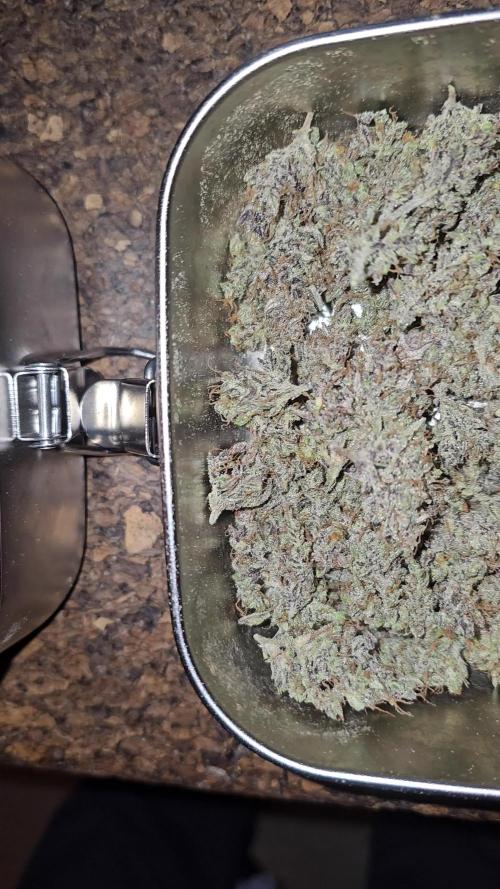
What a plant! Huge and plentyful. Great looking buds! Already smoked and vaped some and the taste and effect is also great. Kushy with a portion of fruit. Nice and pretty easy going effect. Still strong though.
Total runtime: 126 Days
-------------------------------------------------------------------------------------------------------------------------------------------------------------------------------
Set up cost (fixed costs)
-Lamp: 40€
-Timer: 3,5€
-Pot: 4€
-Total fixed costs: 47,5€
Given 5 years (or 15 grows) usage time translates to around 3,17€ per grow in materials.
Variable costs:
-Seed: free
-Soil: 4,5€
-Fertilizer: 3,50€
-Power : 25,17€
-Total variable costs: 32,71€
-Total costs per grow: 36,34€ and 0,56€/g!

Likes
79
Share


@bioaccessory
Follow
Вы только посмотрите, насколько неодинаково идет развитие разных сортов - лимонад за неделю удвоил в высоте, и цветет в полный рост, также зацвел 20:1, хоть и выглядит намного скромнее. А вот crack пока не цветет и в два раза ниже лимонада, но выглядит куда перспективнее остальных - такой пышный кустик с кучей междоузлий. И это при том, что объемы мешков примерно одинаковые. Ничего не хотел делать, но видимо придется как-то равнять растихи по высоте, или как минимум - еще поднять лампу(уже до упора) и включить боковой досвет.😏
Из бокса уже отчетливо пахнет, а я до сих пор не подключил фильтр, никак не заменю уголь. Есть чем заняться на следующей неделе, а делать как раз ничего не хочется 😒
Спасибо, что заглянули, и будьте здоровы! 🙏
Продолжение следует...😶
Processing
Likes
17
Share


@DudeGrowsWeed
Follow
Alien Vs Triangle is growing strong and looking great! Started giving some Mammoth P this week, looking forward to seeing the results from Mammoth P!!! 👍

Likes
67
Share


@AsNoriu
Follow
Day 50. All grow got busted heavily, for few last waterings AT LEAST pH was way off. When I caught it instead of my presumed 6.3 it was 5.7 . So damaged leaves and delayed smaller harvest. Very sad , especially when I am forced to leave ASAP.
Guess I'll delay my holiday for few weeks more ;))))
Outdoors girls beaten by frost, so no hope from them too. Worst time to put them out ... Live and learn ...
Mars SP150 is back ! I need more Watts and she helped to veg 5 girls for my friend already. I took light back a bit , anyway his girls are in greenhouse already ;)))
Happy Growing !!!


Likes
8
Share


@SpruceSauce
Follow
Week 2 of flower, feeding time. Intake was 1040ppm full dose of nutes, run off was 690,740,780ppm. 5 days between feeding so will do a flush next time.

Likes
6
Share

@k0nz1
Follow
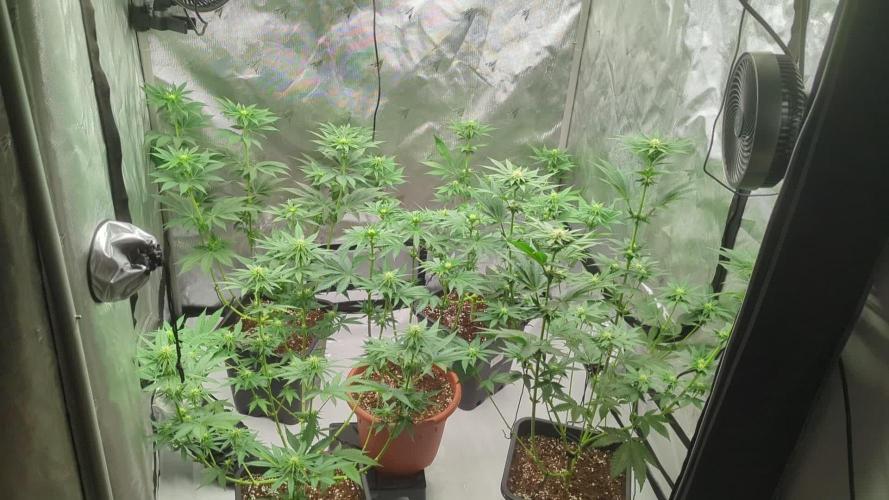
The tent ist getting really full rn. Big defoliation and lollipopping in the coming days .
The Lemon Orange stretching crazy. The Blueberry Pancakes are Bushmonsters with lots of Side branches. One of the BBP has little Nitrogen deficiency. Nothing serious.
All in all very healthy plants. Waiting for the first trichomes and aroma in the tent.
~55- 60 % rh
~ 21-26 celsius


Likes
3
Share


@Nomadgrowmad
Follow
Week starting off good end of week we got a lot of good growth seeing explosive growth from MephistoWedding and MangOreoz , the Chemdoggin is a little behind I think it’s gonna be shorter and bushier Indica , 24Carot is a day behind the rest but she’s catching up , overall week 2 has been good excited to see what week 3 brings ! As I will start introducing small amounts of nutrients Advanced Nutrients Connisour Blend Grow A and B at 3ml/ gal as well as 1/2 tsp per gal of Humboldts Counties Own Snow Storm Ultra



Likes
10
Share

@The_Doctor_Green
Follow
Hola a todo el mundo!!🙌😃.
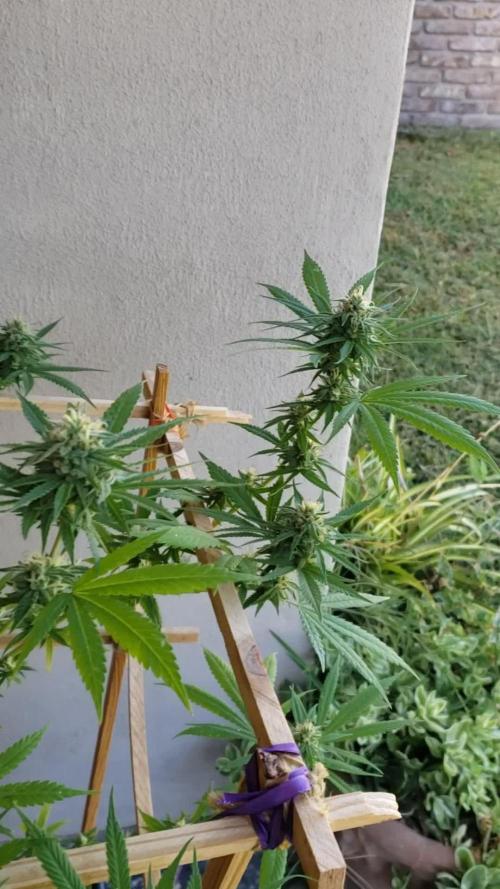
Espero que anden bien amigos!, yo ando con poco tiempo (créeme que me encantaría poder cultivar y vivir de esto😅, pero esta complicado), a lo que este diario se refiere, he aumentado dosis de fertilizantes, con un ph de 6 -6.1, aun no he vuelto a medir drenaje, las plantas vienen respondiendo bien a pesar del bloqueo que ha tenido, pero prometo en el próximo resumen cargar estos valores.
Nos vemos la próxima semana! Y si lees esto y no me sigues, en instagram, ayudarías siguiendome( es gratis seguirme😅😉).
Likes
4
Share


@Fatbudz
Follow
Week5
the temperatures dropped a bit and I did what I could...❄️❄️
Earlier this week I had to flush this little one because I thought she had nitrogen toxicity. Maybe not...
But From the water that ran out I realized that the soil was full of nuts and after the flush I didn't give it any more water. as I use a 12 liter vase, you can imagine how much water was retained in the root system. for that reason and because the water is good quality and has an amount of micronutrients, I didn't have to worry about giving water this week. let's see next week, wish me luck 🤞☺️🌞

Likes
2
Share

@MrWeeedWorld
Follow
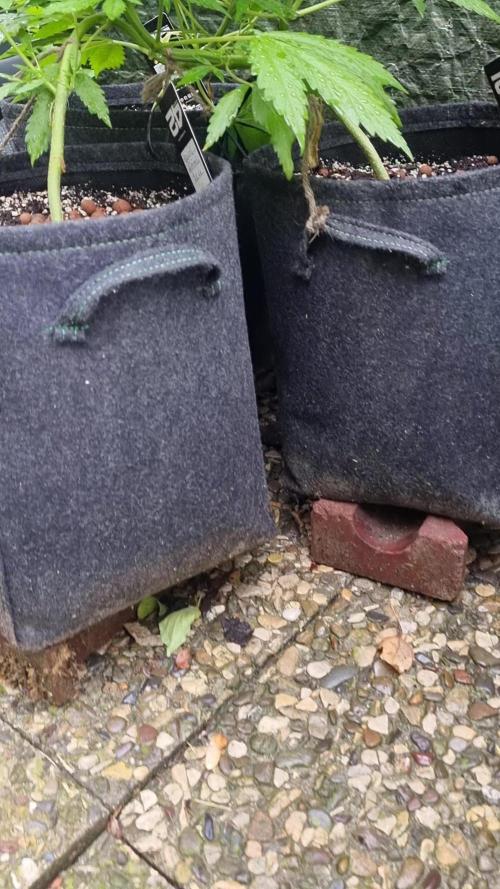
🍑 Apricot Automatic – Woche 8 | Blütewoche 3
Diese Woche zeigt sich endlich das wahre Ziel dieses außergewöhnlichen Projekts.
Was ursprünglich als drei einzelne Apricot Automatic Pflanzen begann, entwickelt sich immer mehr zu einer einzigen lebenden Skulptur. Mein Ziel war es von Anfang an, drei Pflanzen so miteinander wachsen zu lassen, dass sie später wie eine einzige riesige Pflanze wirken – und genau das beginnt jetzt Realität zu werden.
Die ersten drei Blütewochen haben den Stretch fast abgeschlossen. Nun richtet die gesamte Pflanze ihre Energie vollständig auf die Blütenbildung. Überall entstehen neue Budsites und an jeder Verzweigung schieben sich frische weiße Blütenfäden in Richtung Sonne.
Besonders spannend ist dabei die gleichmäßige Entwicklung. Statt einer dominanten Hauptcola entstehen unzählige gleich hohe Triebe, wodurch sich später eine unglaublich gleichmäßige Blütendecke bilden dürfte.
Trotz des wechselhaften Wetters zeigt die Apricot keinerlei Schwächen. Regen, Wind und kühlere Nächte scheinen sie kaum zu beeindrucken. Das satte Grün der Blätter, die kräftigen Stämme und die vitale Entwicklung sprechen für eine ausgesprochen robuste Genetik.
Noch ist von den typischen Apricot-Terpenen nur eine leichte fruchtige Süße wahrnehmbar, doch mit jeder Woche wird das Aroma intensiver werden.
Dieses Projekt ist für mich weit mehr als ein normaler Outdoor-Grow. Es ist ein kleines Experiment, das zeigen soll, was möglich ist, wenn drei Pflanzen perfekt miteinander harmonieren und gemeinsam zu einer Einheit erzogen werden.
Die Grundlage für eine spektakuläre Blüte ist gelegt – jetzt beginnt der Teil, auf den ich mich seit Wochen freue.
Vielen Dank an Fast Buds für diese fantastische Genetik und an Plagron, die auch draußen wieder für kräftiges Wachstum und gesunde Pflanzen sorgen.
Three roots... one plant... one dream. 🍑💚
--------------------------------------------------------------------------------------------------------------------------------------------------------------------
🍑 Apricot Automatic – Week 8 | Flower Week 3
Week 8 marks a very exciting point in this unique outdoor project.
What started as three individual Apricot Automatic plants is slowly transforming into what I imagined from day one—a single giant plant made from three perfectly trained sisters growing together as one.
The stretch is almost complete, and all of their energy is now shifting toward flower production. Every branch is stacking fresh white pistils, and new bud sites are appearing across the entire canopy.
The most rewarding part is how evenly the plants have developed. Instead of producing one dominant main cola, the training has created a balanced canopy with dozens of equally promising flowering tops that should mature together over the coming weeks.
Even with changing outdoor conditions, the Apricot girls continue to impress. Rain, wind and cooler temperatures haven't slowed them down at all. Healthy green foliage, strong stems and vigorous growth prove just how resilient this Fast Buds genetic really is.
The famous Apricot aroma is only beginning to reveal itself with subtle fruity sweetness, but I know the coming weeks will unlock the full terpene profile.
This grow is much more than simply growing three autoflowers outdoors. It is an experiment to demonstrate what can happen when three plants are carefully trained to become one living masterpiece.
The foundation has now been built.
From here on, the flowers will tell the rest of the story.
A huge thank you to Fast Buds for these amazing genetics and to Plagron for keeping this outdoor project thriving from the very beginning.
Three plants. Three root systems. One beautiful masterpiece. 🍑🌿🏆
Likes
21
Share


@Cali_Grown_420
Follow
Day 91, plants #1&3 are still maturing and not ready to be chopped. They are definitely running longer than I expected.
I have plant #2 in jars and curing already. Total dry weight for her was 98g or 3.5oz!!! Definitely more than I was expecting. I was hoping for 1.5oz so I’m definitely a happy guy about that!!!
Update #2: upon further investigating, looks like I’m going to start flushing the last 2 plants in a couple days when they go through all their current nutrients. They’re about ready to come down.
I harvested last two plants on day 98. Currently drying. I will update with final weight in a couple days.
Likes
3
Share


@Vincentsta7
Follow
Super sour grape(small it was stunned early )
Bruce strawberry Fumes
Watermelon Zkittles Fumes

