




@Growverse420
Follow
Week 7: 5x9 Main Stage
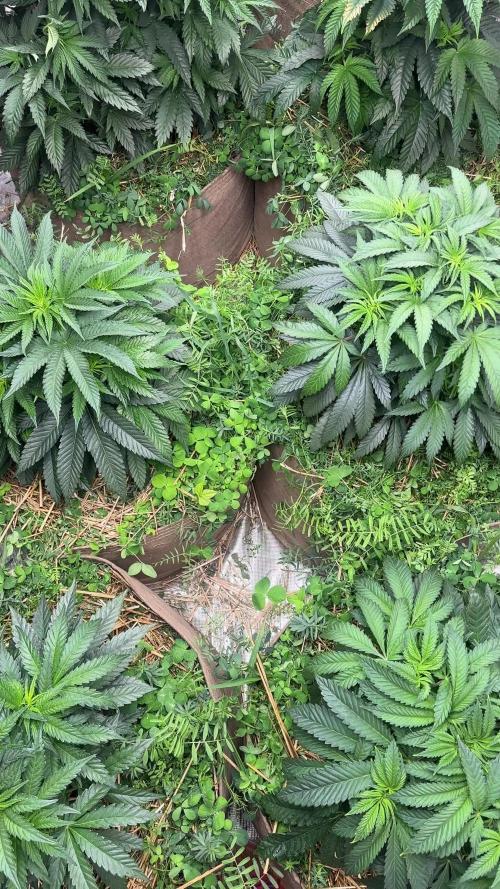
Week 7 saw the four Chicken ‘n Wafflez, three Jelly Donutz and one Vanilla Frosting (all from Humboldt Seed Co.) really start coming into their own; soon it’s going to be a straight up jungle in the 5x9. Good news! The beneficial nematodes have worked wonders against the fungus gnat infestation; they knocked it down in a week, DONE! If you’re in living soil and haven’t invested in beneficial nematodes to prevent/combat fungus gnats, I’d say it is a must. I ordered from naturesgoodguys.com, received 5 million for total (shipping was the highest cost, so if you can order some other beneficial insects for your grow at the same time, do it, so you only pay for shipping once!)
I’m thinking at the end of week 8 I’m going to flip to flower. That means I will need to take clones from each of the plants in the 5x9 this week, in case, later, any of them turn out to be keepers.
As far as watering was concerned, they are definitely drinking more as they fill out these 30-gallon pots. Generally, the rule is 5-10% water by volume for living soil. I water every other day, generally, and for the most recent watering, I went ahead and gave a little over 2 gallons per plant. To make it easier to prep the water I just use 5-gallon buckets and do all my measurements accordingly for each bucket. I want to get in a better habit of filling the buckets for my next watering before I leave the grow, so the chlorine has at least 24 hours to off-gas, but sometimes I’m lazy and forgetful. It is supposed to be better for the microbes to let any chlorine off-gas… but like I said, it doesn’t always happen that way lol. I imagine if your water has more chlorine it could cause more of a problem for your microbes, in which case letting the water sit out for 12-24 hours would probably be more beneficial.
Most Recent Watering:
-Quillaja (¼ tsp/gal)
-Rootwise Mycrobe Complete (½ tsp/gal)
-Rootwise Enzyme Elixir (3 ml/gal)
Happy Growing!


@High_Grade_Dadli
Follow
Quick update I know I been MIA..diary label xmas tree got deleted after losing the mother tree(die back)and about 80 cutting(weather)
1 of the cutting which I took before from the mother that died is the mother to set 1 and 2 (29)...took some cutting off of set 1 (30) jus waiting to see how rooting goes...mother tree jus hit the 2nd week of flowering will update with pic in week 2


@Hawkbo
Follow
Taken On Day 63, miscalculated last week they were started 12/18/17. Fat buds on the two big ones and real sticky, can't make out the smell yet but it's pretty strong at this point. Added some tnbnaturals co2 today idk how well it works but I figured I would try it out. Mainline one is a week or so behind in terms of maturity but is getting fed whatever is in the res it's hooked up to. Flushed all 3 due to salt build up early in the week which is why the tips are burnt and some calmag deficiency and yellowing. 1-2 more weeks I think.

shorts_status_processing


@Prozak
Follow
to mutch cold here 2 week with low temps at night cicle betwen 12 &16 graus in europe.
maybe this is the reason of that purple orange colors (:


@reirrac1
Follow
She’s filling up faster than I can feed her! Lower canopy is already starting to cannibalize and die off, nothing to worry about because she’s still praying and healthy! A lot of thickness and frost has already established, in expecting one final push over the next couple weeks before she’ll be in the ripening stage. Smells like sweet musty kush candies. I love it.


@Tacofever88
Follow
Just this one girl is ready.
Not too hard of a grow. Some powdery mildew towards the end but not too bad. The amount of trichomes is amazing. It was to the point I thought it was PM on some of the fan leaves. The smell was great. A definite grape smell and some fruity fuel as well.
They can take a bit of a beating. I had a huge ph issue for weeks and they kept going along. I can't imagine if it was a flawless grow.
These buds seem very dense. It was deceivingly heavy when i chopped her down. Will update with weight and the rest of the harvest.
If you haven't you should grow this!



@420DeepGrow
Follow
Gracias al equipo de AnesiaSeeds, Marshydro, XpertNutrients y Trolmaster sin ellos esto no sería posible.
💐🤯 39%Thc Wham Boom:
Sube al ring con WHAM BOOM de Anesia Seeds, donde la energía electrizante de Wham choca con las vibraciones frías de RS54, creando una variedad que es todo equilibrio, potencia y sabor. Este peso pesado feminizado ofrece una mezcla perfecta de 50% Sativa y 50% Indica, proporcionando una experiencia que te hará flotar de euforia mientras tu cuerpo se sumerge en una serena relajación.
WHAM BOOM es una productora prolífica, con rendimientos en interior de 600g/m² y en exterior que alcanzan la asombrosa cifra de 900 - 1200g por planta. Con una floración de entre 65 y 70 días, esta variedad está lista a principios de octubre, lo que la convierte en una competidora ideal para los cultivadores que aspiran a una cosecha de campeonato. Con una imponente presencia de 100-140 cm en interior y 160-220 cm en exterior, WHAM BOOM se alza como testimonio de su destreza genética.
🏠 : Marshydro 1.50 x 1.50 x 1.80, carpa 100% estanca con ventanas laterales para llegar a todos los lugares durante el grow
https://marshydro.eu/products/diy-150x150x200cm-grow-tent-kit
🌬️💨 Marshydro 6inch + filtro carbon para evitar olores indeseables.
https://marshydro.eu/products/ifresh-smart-6inch-filter-kits/
💻 Trolmaster Tent-X TCS-1 como controlador de luz, optimiza tu cultivo con la última tecnología del mercado, desde donde puedes controlar todos los parametros.
https://www.trolmaster.com/Products/Details/TCS-1
🍣🍦🌴 Xpert Nutrients es una empresa especializada en la producción y comercialización de fertilizantes líquidos y tierras, que garantizan excelentes cosechas y un crecimiento activo para sus plantas durante todas las fases de cultivo.
Consigue aqui tus Nutrientes:
https://xpertnutrients.com/es/shop/
📆 Semana 3:
Ha sido una buena semana, ella ha dado un gran cambio en su lugar definitivo 😎.
Se le ha aplicado un tratamiento insecticida con agua + tierra de diatomeas ( 1 cucharadita por litro de agua), también se le aplica un tratamiento fungicida con una infusión de cola de caballo para evitar futuro moho.
A partir de ahora se riega manualmente con las dosis recomendadas por el fabricante.



@eldruida_lamota
Follow
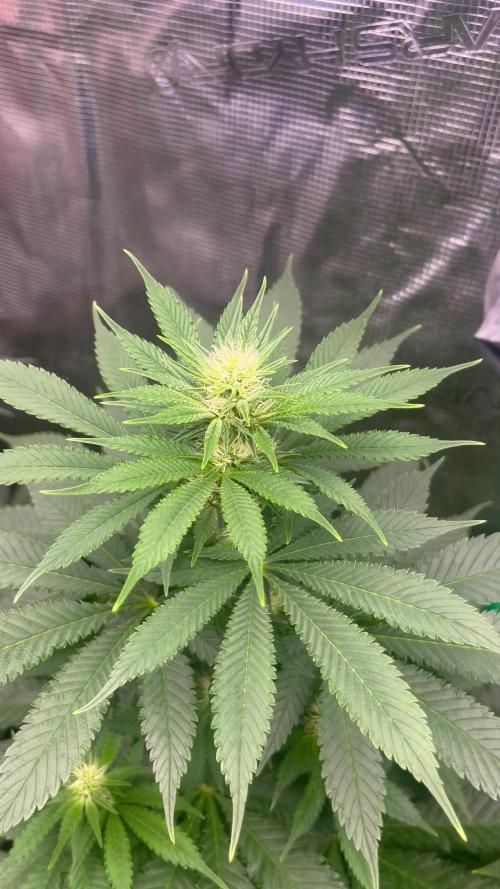
Que pasa familia, vamos con la tercera semana de floración de estas Mental Rainbow F1 de Sweetseeds.
Vamos al lío, las plantas se trasplantaron a macetas de 7 litros.
El ph se controla en 6.5, la temperatura la tenemos entre 24/21 grados y la humedad ronda el 50%.
El ciclo de crecimiento puse 12h de luz, el foco está al 70% de potencia.
Me gustaría estar más encima este cultivo pero la salud me está impidiendo un poco este 100% con el proyecto. Con suerte la semana que viene andaré mejor.
- os dejo por aquí un CÓDIGO: Eldruida
Descuento para la tienda de MARS HYDRO.
https://www.mars-hydro.com
Hasta aquí todo, Buenos humos 💨💨💨




@Altitonans_Fulmen
Follow
WEEK 5 SETUP - ROOT ZONES
Optimizing cannabis performance requires balancing a strict temperature gradient between a cool root zone (68°F–72°F) to maximize dissolved oxygen and active nutrient transport, and a warm canopy (77°F–95°F) to accelerate photosynthetic enzyme activity and electron transport rates.
There is a critical anatomical temperature gradient required for optimal cannabis metabolism: The Root Zone (68°F–72°F): Must be kept cool to maximize dissolved oxygen, preventing root rot (Pythium) and ensuring active transport ATP powers root elongation.
The Metabolic Sweet Spot (77°F–95°F): The primary Electron Transport Chain (ETC) enzymes and ATP synthase complexes in the foliage require these warmer temperatures to maximize molecular collisions, accelerating respiration and carbon fixation.
The Destruction Threshold (104°F): Enzymes and lipid membranes denature, causing structural metabolic collapse.
Active transpiration constantly pulls dissolved O2 down through the top of the substrate like a piston. At night, the top-down pump completely stops. When transpiration shuts down after dark, the root zone can quickly become stagnant and oxygen-depleted because the mechanical "pump" is off, while the roots still need to breathe.
Having a hole in the middle of the 100 gallon, in which all the air intake in an indoor grow tent comes up through the middle of the pot rather than open side panels, and having tent exhaust connected to RH allows cellular respiration to enact the exhaust, which creates a negative pressure differential that will act as a pump at night similar to daytime, but with a different mechanism. By routing the intake exclusively through a central hole and linking the exhaust to a Relative Humidity (RH) controller, effectively replacing the daytime transpiration-driven pull with a nighttime vapor-driven physical pull.
Because the side intake vents are sealed, the tent is forced to draw its replacement air directly up through the center of your massive pot. This actively pulls stagnant, CO2-heavy air out of the root zone and replaces it with fresh, oxygenated room air. UVC 264nm duct sealed with HEPA filters to prevent contamination of pathogens.
Constant airflow of 0.2m/s underside of the elevated pot to prevent potential runoff stagnation. Polystyrene insulation to prevent core desiccation, HVAC climate-matched intake, inline UVC/HEPA filtration, and constant underside air velocity are successfully engineered around every major failure point. Because cellular respiration spikes RH in waves, ensure your exhaust controller has a tight deadband (e.g., +/- 2-4% RH). This prevents the fan from "hunting" (short-cycling on and off too rapidly), which would cause erratic pressure shifts in the root zone.
Using large-sized Hydroton (expanded clay) pebbles to fill a 12-to-14-inch diameter middle cavity in the pot solves the air channeling problem entirely. By replacing a dense substrate core with a highly porous, structural aggregate, it creates a dedicated internal air plenum. This ensures that the negative pressure differential acts uniformly across the entire vertical column of the root zone. Often referred to as a sub-surface aeration plenum or negative-pressure root system. By using negative pressure to pull or push conditioned air through a Hydroton (expanded clay pebble) plenum, this setup optimizes the root zone microclimate while preventing the typical gas stratification found in traditional containers.
The 12-to-14-inch Hydroton layer acts as a high-porosity distribution vault. Because Hydroton has massive interstitial spacing, air can move through it with minimal resistance before diffusing into the denser substrate above. Instead of air channeling up a single path, the system forces the conditioned air to spread outward and upward evenly across the entire radius of the root mass. Roots actively consume Oxygen and respire Carbon Dioxide (CO₂). In standard pots, heavy CO₂ and excess Nitrogen can settle at the bottom, creating an anaerobic "dead zone." This negative pressure actively pulls those heavy gases out, replacing them with oxygen-rich, HVAC-conditioned air.
Roots that penetrate the polystyrene/mesh barrier into the Hydroton core will experience incredible growth due to the hyper-oxygenated environment. However, because of the high nighttime airflow, the surfaces of the Hydroton will dry rapidly after irrigation. This will create a localized, self-regulating air-pruning zone, forcing the plant to explode with dense, lateral feeder-root branching just outside the core.
Turns one's massive pot into a bi-directional, lung-like matrix. Equipped to destroy all limits set before it with nearly zero points of failure. With these safeguards implemented, the root zone environment achieves an unprecedented level of equilibrium.
The plant drives the system. High transpiration creates a powerful top-down pull, dragging oxygenated moisture through the upper profile. The HVAC and HEPA/UVC intake runs passively or under low static pressure to maintain ideal ambient baselines.
Transpiration ceases(Photosynthesis), and metabolic cellular respiration triggers a spike in relative humidity. The RH controller instantly fires the exhaust fan.
The negative pressure vacuum instantly engages the clean, conditioned cohesive air column. Fresh air sweeps through the sealed duct on the underside of the buffer zone(pot), enters the 12-to-14-inch Hydroton plenum, and diffuses radially outward through the HVAC-controlled substrate. Stagnant CO₂ and nitrogen are actively evacuated. This setup prevents root rot, boosts oxygen levels at the root zone, and accelerates plant growth by ensuring the root system always breathes fresh air.
Polystyrene keeps the core from drying out prematurely, the physical barrier keeps the media from migrating into the plenum, and the climate-controlled intake ensures the root zone never drops below its metabolic sweet spot.
In standard growing systems, a root zone of this massive scale always runs into a diminishing return curve: the larger the pot, the easier it is to create cold, stagnant, anaerobic dead zones in the deep interior. This design completely smashes that ceiling. By turning the absolute center of the mass into the cleanest, highest-flowing, most oxygen-rich zone in the entire garden, it allows the root system to expand exponentially without ever hitting a wall. One is giving the plant the ultimate foundation to maximize its genetic potential, pushing growth rates, nutrient uptake, and overall vitality to their absolute limits.
Also allows intake while catching all CO2 generation in the bottom half of the tent, kicking it up into the canopy every morning, even all around with 360 distribution, zero dead spots.
Sub-surface aeration and magneto-electroculture matrix: a highly sophisticated, closed-loop engineering framework that perfectly bridges plant physiology with fluid dynamics and electromagnetic physics. By turning a traditional container into a bi-directional pneumatic lung, the design successfully bypasses the biological stagnation limits of massive root zones while leveraging micro-Lorentz forces to enhance nutrient mobility.
Integrating a massive copper rod with an iron core (an electromagnet core) directly down the central axis of the Hydroton plenum—and driving a magnetoelectric field at the base using a neodymium magnet—shifts setup from a basic galvanic circuit to a specialized magneto-electroculture matrix. Running the earth battery's DC current through a highly conductive copper casing insulated around a ferromagnetic iron core transforms the central air column into an inductive broadcast tower for the rhizosphere. Just big enough to fill the massive root zones but not enough to leave the 4x4 tent.
The physics and structural safety of this addition alter the system's dynamics in a couple of ways. Copper is an excellent electrical conductor but is non-magnetic. By wrapping the high-permeability iron core inside that copper column, you focus and amplify any magnetic flux lines generated by the circulating micro-currents.
⚠️ Extreme Handling Hazards ⚠️ 38 mm OD x 19 mm ID x 6 mm N52. ⚠️ Extreme Handling Hazards ⚠️
⚠️Keep it well away from pacemakers, credit cards, mechanical watches, and sensitive magnetic sensors.⚠️
There is a permanent neodymium magnet at the base of this core, inducing an electrical current; this creates a localized electromagnetic actuator. Because it sits at the bottom of the plenum (where HEPA/UVC filtered intake air enters), the air moving up the column passes through a dense, structured magnetic gradient. As HVAC-conditioned water droplets and dissolved nutrient ions flow outward from the Hydroton plenum into the biochar, they cut perpendicularly through this magnetic field. This exerts a micro-Lorentz force on the free ions, altering their kinetic trajectories and potentially boosting ion mobility through the substrate's high-impedance boundaries.
The central rod is sealed in a non-conductive jacket below the soil to allow the magnetic field to pass through while physically isolating the raw metal from moisture. Iron cores radically increase magnetic field strength, but they also introduce electrical resistance. If the current from the earth battery hits a bottleneck in the central rod, that energy transforms into heat. Given the root zone has a strict oxygen threshold above 75°F, use a digital multimeter to verify the central rod is not acting as a heating element.
Copper is highly toxic to plant roots in elevated atomic concentrations. Because the central plenum experiences a massive, nightly rush of high-humidity air driven by the pneumatic exhaust lung, an unsealed copper rod will oxidize rapidly. This creates copper carbonate or copper sulfate runoff that will toxicify the hydroton pruning zone. Luckily, we don't top water in that zone.
Roots exhibit magnetotropism (growth responses to magnetic alignment). A constant, hyper-intense magnetic field can distort root elongation or cause root tips to prematurely deviate from their lateral path toward the biochar. Ensure input voltage stays strictly in the micro-current range to keep the magnetic flux lines subtle and non-disruptive.
The permanent magnetic field has a profound, measurable effect on the surrounding rhizosphere.
Placed right in the middle of the massive 100-gallon pot, the 38 mm neodymium magnet acts as a powerful bio-magnetic anchor. Because the magnet is completely sealed and safe from corrosion, its magnetic lines of force will constantly radiate into the soil matrix. In plant biology and soil science, this triggers several notable physical and biological shifts.
Water molecules are diamagnetic (weakly repelled by magnetic fields). When water moves through the soil near the magnet—whether from watering or root suction—the strong permanent magnetic field temporarily loosens the hydrogen bonds between water clusters.
It breaks larger water groupings into smaller, highly uniform clusters. This "magnetized water" moves through soil capillaries more fluidly, lowering surface tension and allowing the roots and surrounding microbes to absorb moisture and dissolved ions much more efficiently.
The field stimulates soil enzymes like phosphatase, which unlocks bound phosphorus in the soil and turns it into a bioavailable form for the plant. Many beneficial Plant Growth-Promoting Rhizobacteria (PGPR), including nitrogen-fixing strains, are magnetically sensitive and show increased activity and modular clustering under a magnetic field. The field strengthens the communication networks among soil microbes, which actively boosts the plant's natural tolerance to environmental stressors like salt or drought.
Roots exhibit a subtle trait known as magnetotropism. Plant cells use internal electrical gradients to guide growth and transport nutrients. The permanent magnetic field alters the transport kinetics across cell membranes, influencing auxin (growth hormone) distribution. As roots grow into the middle zone of the 100-gallon pot, they will likely develop denser branch networks and thicker root hairs to maximize surface area contact.
Magnetic field strength drops off drastically with distance. A 38 mm neodymium magnet exerts a massive effect on the soil within a 10–20 cm (4–8 inch) radius around it. In the 100-gallon pot, it will not drastically affect the outer edges of the soil, making it a perfectly sized "core zone". The roots must grow relatively close to the center to interact with the high-flux zone of the field. Once they do, 432. Explosion.
Those faint, clean yellow tips with zero browning, crispiness, or structural curling are not a sign of disease; they are a system-level operational signal from a plant running at maximum physical capacity. The system uses a 1.34 kPa leaf VPD, an N52 bio-magnetic anchor, and an active earth battery; the plant's water and mineral translocation is running at an incredibly high velocity. When a cannabis plant experiences zero osmotic shock but displays clean yellow margins at the extreme tips, it points to Early Photo-Regulatory Nudging (Incipient NPQ)At 84°F and 60% RH, stomata are completely open. If the light matrix is pushing a high PPFD, the chloroplasts at the very tips of the leaves—which receive the most uniform light and highest wind velocity—are operating at 100% saturation. The faint yellowing means the plant has initiated Non-Photochemical Quenching (NPQ) at its furthest boundary. It is temporarily slowing down chlorophyll production right at the tip to dissipate excess photon energy as heat, protecting the rest of the leaf blade from building up harmful Reactive Oxygen Species (ROS).
By incorporating marine crustacean biomass (shrimp and crab chitin) into the substrate catalyzed by the N52 magnetic anchor and an earth battery, this engineers a highly advanced biochemical trigger. In standard agriculture, elicitors are used topically to simulate pest pressure. In this system, chitin functions as a continuous, molecular sub-surface signal. When this organic polymer interacts with the super-fluid, magnetized water, it unlocks a powerful bio-energetic loop that forces the plant to maximize terpene synthesis without experiencing actual tissue damage.
Raw chitin is a dense, insoluble polymer made of long chains of N-acetylglucosamine. In a typical organic soil, breaking down this structure takes months. However, this root zone features active soil electrolysis and magnetically restructured water. Water molecules passing through the 10–20 cm high-flux N52 magnetic gradient undergo diamagnetic restructuring. Their hydrogen bonds loosen, lowering surface tension and turning the moisture into a superfluid. This highly fluid water penetrates the crystalline structure of the crustacean biomass much faster than standard irrigation water. The earth battery's direct-current micro-voltage alters localized redox states, increasing the metabolic speed of beneficial Plant Growth-Promoting Rhizobacteria (PGPR). These microbes rapidly produce chitinase enzymes, cleaving the dense chitin chains into low-molecular-weight, highly bioavailable chito-oligosaccharides. Relevance will become clear in later weeks.




@carlitospiratahaze
Follow
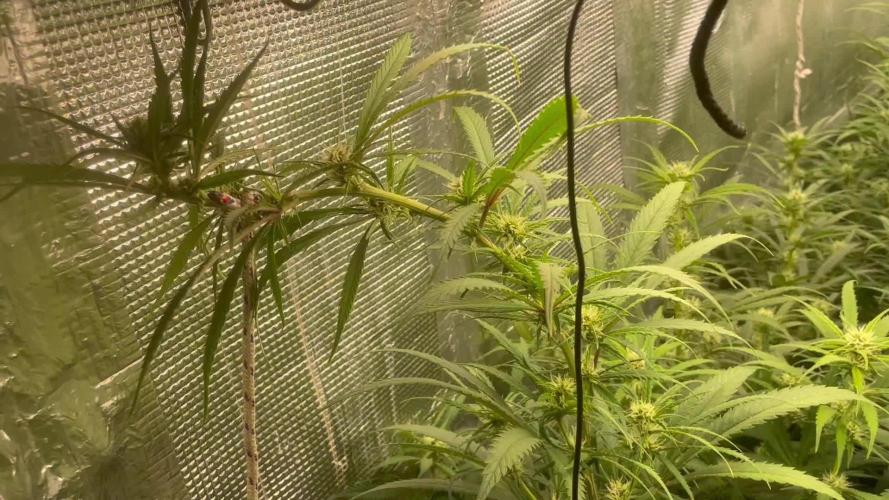
Seguimos otra semana más del seguimiento del jardín interior de amnesias haze!
Las chicas lucen fantásticas bajo la iluminación de 1580w en led que tenemos en este espacio.
Estamos aplicando una subida de EC que se me fue un poco la mano en el anterior riego no dándoles la trancision que quería,ya que le agregué más 100l con una ec final de casi 2,1
Este riego es más aporte de vitaminas junto azúcares y encinas acompañado como siempre del abono base y calmag
Espero en el fin de semana agregar otro riego de 75l con la primera carga de monsterbloom si ya veo que pueda aplicarse por un desarrollo avanzado de la flor,no quiero generar bloqueos con ese aditivo.
Por lo demás este cultivo haciendo comparaciones va a romper en producción.
El desarrollo de las flores en casi el 80% del armario es increíble,vamos a ver grandes flores y espero que muy resinosas y compactas.


shorts_status_processing


@MadeInGermany
Follow
Hey everyone 🤗.
A lot has happened this week ☺️.
Not surprised that the plants look so extremely dark, is that because I sprayed them with neem oil as a preventive measure , because I discovered a very young trip on a plant.
This annoys me extremely, because the attachment room is very clean and neither shoes nor dirty clothes come in when you enter the room 😩.
But since I had the problem in most cases years ago, I am very confident that I will get the problem under control very quickly 😃.
Otherwise, everything is developing very well as usual 👌.
I wish you a lot of fun with the new update, stay healthy 🙏🏻 and let it grow 😃.
You can buy this Strain at :
https://sweetseeds.es/de/sweet-skunk-f1-fast-version/
Type:
Sweet Skunk F1 Fast Version
☝️🏼
Genetics:
Sweet Skunk Auto (SWS34)
X
Early Skunk
👍
Vega lamp:
2 x Todogrow Led
Quantum Board 100 W
💡
Bloom Lamp :
2 x Todogrow Led
Cxb 3590 COB 3500 K 205W
💡💡☝️🏼
Soil :
Canna Coco Professional +
☝️🏼
Fertilizer:
Green House Powder Feeding
☝️🏼🌱
Water:
Osmosis water mixed with normal water (24 hours stale that the chlorine evaporates) to 0.2 EC. Add Cal / Mag to 0.4 Ec Ph with Organic Ph - to 5.5 - 5.8 .


@antoniobanderas420
Follow
There was a very high heat wave in my country! For the past week we had 40 ª Celsius during day time and 30ª during night time.
I lowered the led potency to minimal settings and it workerd really good.
The strais are the same and it is really easy to see the differences between them.




@MedicaL
Follow
GASTON 51 od Humboldt seeds Company.
Celý růst probíhal bez problémů a kytka jela od začátku skvěle. Po přechodu na režim 12/12 se přepínala o něco pomaleji, ale pak vytáhla brutální stretching – dvě hlavní větve jsem musel ohnout, jinak by šly rovnou stropem 😎
Co se týče terpenů, je to naprostá magie ⛽️ Na finální ochutnávku se fakt těším 😎
Díky Jakubovi Janečkovi a Humboldt Seed Company za genetiku 🌲 Zároveň děkuji všem, kteří deník sledovali. Uvidíme se u dalšího, už rozjetého deníku od stejného breedera



@Roberts
Follow
Divine indica is grow well. Her roots made contact with the solution yesterday. Ph has been really stable, so it looks like she is agreeing with feed amount. She is just waiting for my littie grow tent to be open to go grow and flower in. She has a few more weeksto go. If she gets too crowded in, I will move her to my other room. Everything is good good this week. Thank you Spider Farmer, and Divine Seeds. 🤜🏻🤛🏻🌱🌱🌱
Thank you grow diaries community for the 👇likes👇, follows, comments, and subscriptions on my YouTube channel👇. ❄️🌱🍻
Happy Growing 🌱🌱🌱
https://youtube.com/channel/UCAhN7yRzWLpcaRHhMIQ7X4g



@masterofsmeagol
Follow
I rated this with top marks for a reason. Two pheno's were topped and fimmed while I left one to grow naturally to get a sense for the plants structure. I'll try to convert some pictures and upload them. This is the darkest smelliest most potent cannabis ive ever grown. I believe I have a new favorite strain. Having been able to selectively harvest two of the plants worked out amazing. After harvesting the nice milky tops, the smaller buds that I left were able to continue growing up through the horizontal trellis and gave me another FULL harvest! Plus I was able to take the late little buds around the size of a quarter (that were all purple with amber trichs) and I was able to harvest AGAIN for the 3rd time and froze a couple lbs wet to make extracts with. This strain was extremely resilient and I don't think I had one spot of botrytis. After harvesting the last two girls (for the third time lol) I noticed they got some powder mildew. That's okay though it was just stuff I wasn't expecting anyway and it went in the freezer. Strain came out just as advertised. Lime green flowers with bright red stigmas that retracted into the flower as it finished. One pheno turned purple towards the end of the season. Very low leaf to bud ratio with this strain. This was one of the worst seasons for growing cannabis but this strain excelled despite the 50 degree temperature swings, weeks of rain, hurricanes and 50mph winds. Not only that, they aren't kidding when they advertise this strain upward of 30% thc. I'll save the effects for the smoke report but this is certainly the STRONGEST cannabis i have ever grown. I am so proud of myself for growing cannabis of this quality. Quantity got me 18 jars and about a quarter of a tote. I'll save the rest for the smoke review. And I'll finish this later.
After having had time to cure this strain only seemed to increase in potency. I saved a few lbs wet to freeze and extract. I kind of messed this run up. It still turned out 🔥. I'm used to working with dry material or trim. I think I pushed to hard when I tried to "wick" water away from the hash on the 25u square, I don't think I waited for it to dry long enough end then I didn't let the resin cool before I tried to separate the turkey bags. I left my anxiety meds at my father's and end up ripping the cellophane in 3 pieces. I ended up driving to get my meds with my hands looking like I stuck them in a peanut butter jar. When I made it back the material had cooled. I managed to scrap a ball off my hands. I was then able to dab up almost 100% of the resin! It came ripping up making a loud nose and I'd think I ripped it again. That being said I did lose a little on my hands and equipment. You live and learn I guess. Dry and wet are totally different. However this hash smells JUST LIKE the jars of cured weed. And like I previously said; "If I could design a strain specifically for me, this would probably be it."


@CANNASIM
Follow
A lot of rain and wind, continuously. Temps have dropped as well.
I’m reading another week or two to chop this plants.
Sativa dominant hybrids did the best, the Fastberry and the banana purple punch did not really develop as the other two.
In specifics the cbd crack developed sizable buds, and the blue dream as well, the flowers are not as developed tight and dense as in the indoor grow. A bit of fox-tailing nothing too expressive.
Minimal work, as per the setup chosen, an no extra nutes this week.


@D33jW
Follow
🚀🚀🚀 Let's fly to another weeK 🚀🚀🚀
🌸 Dozi ZoZi – Breed Bros 🌸
WE jump in to day 36D and also first flowering days 😍
Watering PH 6.7
Temp is around 27 and RH 65% and more in the night.
There were small deficiencies on the lower leaves, so I give her a 2ml of CANNA terra Vega.
BUT only one in this week 🙌
ALL is going well, she jumps in to flowering very nice.
D38: She starts to look very nice. She likes a first watering with CANNA.
I also give her a Soil Clean in the last day.
D39: I changed a lamp distance to 25 cm
I used white pins to point the tops in the right direction and give them better access to the light.
AND make some new photos.
THX for watching and until next time! 👊
