


Likes
16
Share

@DogDoctorOfficial
Follow
🌸 BlueBerry – Week 4 Flower Report
Grower’s Journal – Zamnesia BlueBerry | Entry 009
⸻
🌱 The Girls at Week 4
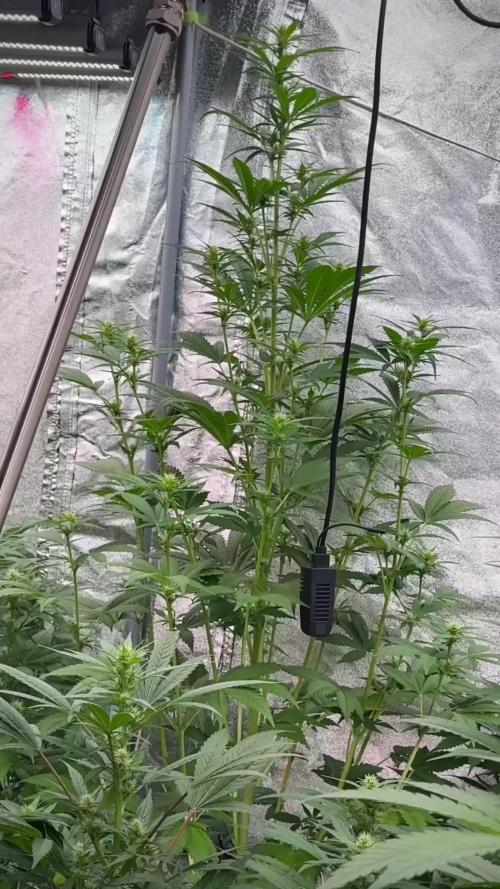
Both BlueBerry #1 and #2 are officially in their bloom stride.
• Structure: Stocky, balanced, strong branching.
• Stacking: Bud sites are forming beautifully and starting to swell.
• Frosting: Trichome production has begun — the first glitters catching the light.
They almost look like mirror images, which is a testament to the stability of these genetics. Every node is stacking just right, making this run a true delight to watch evolve.
⸻
💡 Under-Canopy Lights – The Hidden Secret
This week the under-canopy lights are proving their worth. Not only are the tops shining, but even the lowers are receiving enough energy to thrive. This setup is creating:
• Even growth across the whole plant.
• Healthier lower buds, not just popcorn.
• A canopy that feels alive from top to bottom.
It’s a real ecosystem of light, every layer glowing and working together.
⸻
Environment – Hot, Hot, Hot
Now, let’s talk about the truth of summer growing: the heat.
Temperatures are climbing so much that even taking pictures becomes a challenge. Let’s say this: by the time I’ve finished shooting the girls, I’m almost in “summer beachwear” mode 🌞👕😂. The garden is so warm and alive that it feels like stepping into a tropical bloom paradise, except instead of palm trees, I’m surrounded by BlueBerry flowers.
Humidity stays in balance, sensors are working, and despite the warmth, the girls are thriving.
⸻
🌿 Atmosphere & Gear
As always, the ecosystem setup is running smooth:
• TrolMaster brain + sensors keeping us updated.
• Spider Farmer + Aero Fans ensuring airflow in & out.
• Filters keeping everything fresh.
• LEDs (Future of Grow + ThinkGrow + Lumatek Zeus) pushing flower formation with perfect spectrum balance.
Every piece is connected, every reading aligned — it’s not just a grow tent, it’s a living orchestra of technology and nature working together.
⸻
✨ The Fun Side – Amnesia Moment
A little shoutout: taking care of the BlueBerry girls sometimes makes me forget the world outside (Amnesia closes, let’s call it that 😉). Between the heat, the scent of early terpenes, and the hypnotic way flowers are forming, time disappears in the room.
That’s the beauty of it — it’s not just gardening, it’s a whole-body, whole-heart experience.
⸻
🔮 Looking Ahead – Into Week 5
Next week, I expect:
• Flowers to bulk up heavily.
• Terpenes to become more noticeable, filling the room with the classic BlueBerry perfume.
• Trichomes to coat the buds more visibly.
• Room adjustments as needed once the AC comes into play, stabilizing the heat.
⸻
💬 Final Thoughts
Week 4 flower is the turning point — where the story moves from stretch to stack, from structure to sparkle. Both BlueBerries are stunning, almost identical, and thriving under both canopy and under-canopy light.
Yes, the heat makes it a sweaty job (half-naked photoshoot vibes 😅), but the result is worth it: strong, healthy, beautifully evolving BlueBerry ladies.
From genetics to gear, from environment to experience — everything is tuned for success. And now, it’s just about letting them shine. 🌸✨
DD (DogDoctor)🌱💚
📲 Don’t forget to Subscribe and follow me on Instagram and YouTube @DogDoctorOfficial for exclusive content, real-time updates, and behind-the-scenes magic. We’ve got so much more coming, including transplanting and all the amazing techniques that go along with it. You won’t want to miss it.
• GrowDiaries Journal: https://growdiaries.com/grower/dogdoctorofficial
• Instagram: https://www.instagram.com/dogdoctorofficial/
• YouTube: https://www.youtube.com/@dogdoctorofficial
⸻
Explore the Gear that Powers My Grow
If you’re curious about the tech I’m using, check out these links:
• Genetics, gear, nutrients, and more – Zamnesia: https://www.zamnesia.com/
• Environmental control & automation – TrolMaster: https://www.trolmaster.eu/
• Advanced LED lighting – Future of Grow: https://www.futureofgrow.com/
• Root and growth nutrition – Aptus Holland: https://aptus-holland.com/
• Nutrient systems & boosters – Plagron: https://plagron.com/en/
• Soil & substrate excellence – PRO-MIX BX: https://www.pthorticulture.com/en-us/products/pro-mix-bx-mycorrhizae
• Curing and storage – Grove Bags: https://grovebags.com/
⸻
We’ve got much more coming as we move through the grow cycles. Trust me, you won’t want to miss the next steps, let’s push the boundaries of indoor horticulture together!
As always, this is shared for educational purposes, aiming to spread understanding and appreciation for this plant. Let’s celebrate it responsibly and continue to learn and grow together.
With true love comes happiness. Always believe in yourself, and always do things expecting nothing and with an open heart. Be a giver, and the universe will give back in ways you could never imagine.
💚 Growers love to all 💚

Processing
Likes
8
Share


@eldruida_lamota
Follow
Buenas noches familia, después del revuelo del Covid y todas estas miradas volvemos unos actualizamos la semana estas green ak de zambezaseeds están ya fenómeno, un ejemplar está repleto de truco más y el otro ahí anda flotando todavía.
Ph regulado y temperatura/humedad dentro de los parámetros.
Os dejo las fotos para que apreciéis bien y espero estar la semana que viene por aquí, saludos familia

Likes
113
Share


@Anonymous_2022
Follow
Thanks for stopping by.. Please hit the like button if you like what you see and ill be sure to check you out too Growmies 🌱
First of all would like to give a BIG shout out to my sponsors for providing me with the necessary items for this grow 👍
🌟🌟🌟🌟Mars Hydro FC4800🌟🌟🌟🌟
Powered By Samsung LM301B Diodes: The Mars Hydro FC 4800 480-watt LED grow light is installed with high-performance Samsung LM301B chips, the top-bin horticultural diodes, to provide a high Photosynthetic photon efficacy efficiency of 2.85 μmol/j and a long-lasting color rendering capability, supporting indoor plants to grow and thrive.
High PPF Output and Uniform Light Distribution: FC4800 provides a high PPF of 1,366 μmol/S. The multi-light bar design and the dense diode layout facilitate an even distribution of grow lighting making PPFD optimized for Photosynthesis to achieve consistent growth in every part of the coverage range.
Exclusive Recipe Of Full Spectrum Lighting: The full spectrum is enhanced with blue and red light, in which the blue light stimulates plant growth and promotes the accumulation of plant-based phytochemicals; the abundant red light improves the maturing process and flower quality of the plants.
🌟🌟🌟 FastBuds Purple Lemonade FF ⭐️ ⭐️⭐️
Arising from a cross between purple and citrus Cali genetics, Purple Lemonade FF (Fastflowering) offers a complex high made up of perfectly balanced cerebral and body effects that are ideal for daytime use. Expect an extremely enjoyable high that boosts your mood while deeply relaxing your whole body and getting rid of muscle pain. This meticulous cross produces up to 550 g/m2 of some of the most beautiful purple buds, with pinkish and reddish hues that will catch everyone’s attention. The beautiful purple buds are ready for harvest in 7-8 weeks and come hand-in-hand with unbelievably sugary citrus terps that are just as refreshing as a cold lemonade on a hot Summer day. It’s the ideal variety for the sweet-tooth stoner seeking strains that deliver both in quality and quantity of resin
——————————————————————————————
👊👊👊👊Down to Business 👊👊👊👊
Week 8 from seed and week 3 flower
So shes moving beautifully and already starting to get abit of frost 😎
Cant wait to see if she throws out some pretty colours 🤞
No complaints at all with this girl all is good and she smells sweet like candy 🍭
Thanks for stopping bye 🙏🙏🙏

Likes
Comments
Share


@Earthsower
Follow
She looks a lot better than three weeks ago least she’s back moving again with further growth I fed her 100ml of phd water due to a very light pot. I am still holding her in natural sunlight!

Likes
Comments
Share


@Batista
Follow
We are watching trichomes every day and it looks like it is almost ready so we are thinking of harvesting next week. It is already possible to see some amber trichomes. Unfortunately it seems that we are not going to harvest the expected amount, the buds were not very dense and fat, apparently the buds are just small leaves with trichomes.

Likes
3
Share


@Mr_nugs_lover_David
Follow
On August 19th I decide to apply supercroping technique to get much more sunlight penetration in the whole canopy, let's see how she turns out, she's pretty big to be planted late in the season,looks fenomenal and very healthy,I also applied a defoliation now that we are in second week to get that the light gets to every single flower site. 🌸💚❤️💛

Likes
58
Share


@AsNoriu
Follow
Day 74. One more victim of war against bud rot. Prevention needs sacrifices sometimes...
Day 78. Second was sacrificed for more space too ;)))
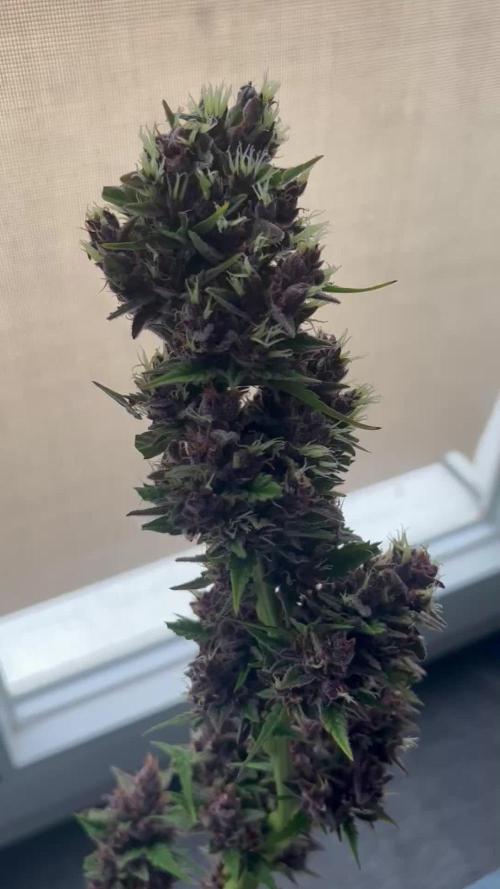
Day 84. First girl is Jared . Fantastic bud quality !!!
Day 88. I said fantastic quality about first one ??? ;))) That's till I touched second !!!
Purple phenotype is pure joy for eyes !!!
Happy Growing !!!
Likes
3
Share


Likes
50
Share


@Rwein93
Follow
Ciao ragazzi e bentornati qui con me e le sorelle Limonose 🍋
Tutte 3 hanno smesso di crescere, la numero uno ha una struttura incredibile,💪 mi sono pentito di non aver fatto Lst su tutte le sorelle.🤦♂️
La numero 2 è alta e ben strutturata ma ha una sola cola bella grassa.
Mentre la numero 3 sembra più avanti delle altre con quasi tutti i peli arancioni e i buds di media grandezza.
Le cole principali delle altre invece misurano circa 3/4 cm, ma sono ancora parecchio indietro👍
Il colore è standard! Niente di particolare bei buds verde chiaro e pistilli bianchi ma sembrano molto gelide🤙
L odore delle sorelle sembra diverso tra di loro. La numero 1 ha note accentuate di diesel e nocciola, la numero 2 ha un profumo aspro tipo mapo e la numero 3 ricorda un dolce cremoso al limone 😋
Eh niente ragazzi! Aspettiamo che loro ingrassino per bene!👊
Grazie a tutti per aver guardato e restate sintonizzati per nuovi aggiornamenti.🙏
Buona settimana e felice crescita 🌱 🌱 🌱


Likes
16
Share


@Chubbs
Follow
These ladies are in full flower and progressing like a dream. The colas on them are chunky to all get out. And to think they've barely begun the flower period is mind blowing to me. I'll go in this week and do a good cleaning taking out some of the crispy leafs on the under canopy. Over all though Happy Growing.

Likes
71
Share


@Roberts
Follow
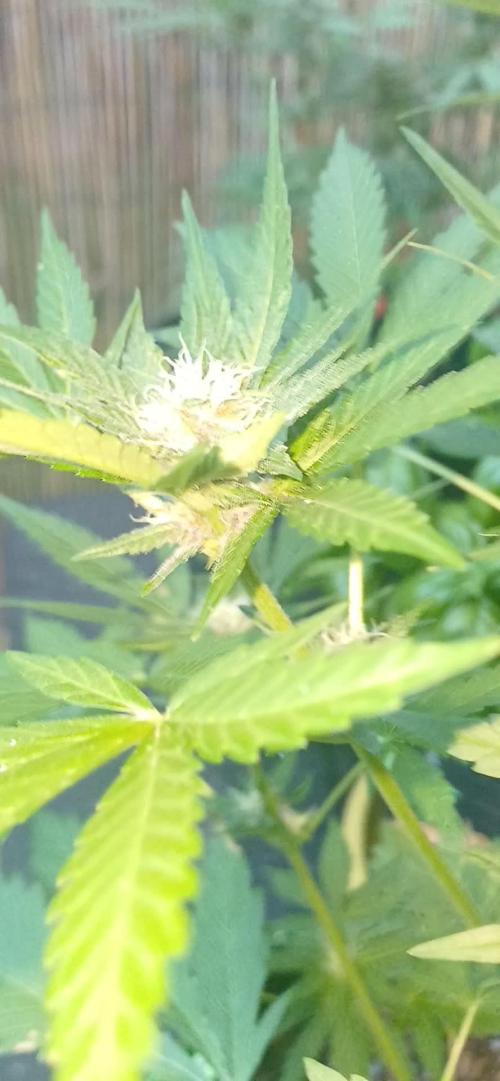
Blue Dream Xtreme is still the biggest in the run. Growing well. I did some root pruning early week. Cut off the long root tails. I should of done that in beginning, and aimed for a furry root basket. Learning new stuff all the time. I am growing her in a New Level Hydro bucket, under the Spider Farmer SE5000 light at 60 percent currently. Thank you New Level Hydro, Spider Farmer, and Amsterdam Marijuana Seeds. 💪 🌱🤜🤛
Http://amsterdammarijuanaseeds.com
Thank you grow diaries community for the 👇likes👇, follows, comments, and subscriptions on my YouTube channel👇. ❄️🌱🍻 Happy Growing 🌱🌱🌱
https://youtube.com/channel/UCAhN7yRzWLpcaRHhMIQ7X4g
SE5000
https://amzn.to/3qFpAML
Spider Farmer Official Website Links:
US&Worldwide: https://www.spider-farmer.com
UK: https://spiderfarmer.co.uk
CA: https://spiderfarmer.ca
EU: https://spiderfarmer.eu
AU: https://spiderfarmer.com.au
Coupon Code: saveurcash
Www.newlevelhydro.com
Www.hygrozyme.com

Likes
4
Share


@TyRun
Follow
Looks like I fell into the classic coco trap — when it’s still too early to water to runoff. You either overwater, or the pH in the root zone keeps rising every day.
The result is obvious: #4 and #6 got calcium and phosphorus lockout because I didn’t water to runoff right after transplant. They’re still recovering.
#3, on the other hand, is doing great — you can tell by how perky she looks. She was transplanted later, so she got proper runoff earlier than the others. It literally took just 2–3 days without runoff to cause issues.
Overall, these are just early-stage problems that won’t matter later. We’ll probably remove those big leaves anyway since they’ll be in the shade (or maybe not, if they’re still functional when side lighting kicks in — then the marks might stay 😄).
Plants are already adapting to the watering routine, and root zone pH should stabilize soon.
Feed (input): EC 1.5 / pH 5.4 (today tested 4.9 just for fun)
Runoff: EC 1.1–1.2 / pH 6.4–6.7
Experimenting with VPD — was around 1.3–1.35 most of the week, now pushed to 1.5.
Growth rate is decent, leaf color recovered to bright green, no stunting.
Interesting note — plant #6 has a very unusual branch structure, never seen side branches attach like this. Doesn’t want to grow upward at all 😄
Likes
155
Share


@deFharo
Follow
Bienvenidos cultivadores de marihuana clandestinos y también a los que tienen la fortuna de no serlo!🖐️👨🌾👍
Este es un diario semanal de técnicas de cultivo y Bio preparados orgánicos caseros, los cuales llevo experimentando dos años en cultivos de marihuana interior.
Esta semana dos en uno:
1) ELABORACIÓN DE AUXINAS EN POLVO EXTRAIDAS DE ALUBIAS NEGRAS GERMINADAS.
La primera vez que hice este preparado y lo publiqué en GD fue en Octubre de 2019, lo volví a hacer en Junio de 2020 y llevo dos años usándolo, me ha costado el precio de 2kg de alubias negras.
INGREDIENTES:
- 1kg de alubias o frijoles negros, porque son las semillas que más concentración de auxinas contienen, comparándolas por ejemplo, con lentejas o cualquier otro tipo de leguminosas, también se puede usar granos de maíz.
Preferentemente, se deben usar semillas de alubias nuevas y cultivadas cerca de tu zona.
- Agua pura.
PROCEDIMIENTO:
- Se cubren las alubias con agua y se dejan a remojo durante una noche.
- Al día siguiente se separa el agua. Esta agua la puedes usar para riegos, contienen varios minerales.
- Se mantiene la humedad en el recipiente de las alubias por unos días, hasta que germinen. Se pueden cubrir con un paño húmedo y compensar la perdida de humedad rociando agua. Se debe observar que la mayoría de las semillas hayan germinado.
- Cuando las alubias, en su mayoría estén germinadas, se añade unos dos litros agua pura y se bate todo.
- Ahora filtramos con malla y escurrimos los restos sólidos. (Reservamos esta materia para un segundo lavado)
- Dejamos reposar el líquido durante dos días, hasta que se vea acumulación de materia en el fondo.
- Retirar la mayor cantidad posible de agua clara.
- Dejar al sol cubierto con una malla, hasta la completa deshidratación del producto.
- Moler y guardar en un sitio seco y oscuro, en estas condiciones puede ser efectivo durante años.
-- A los residuos sólidos recuperados del primer filtrado, les añado agua, los bato y los filtro con doble malla, lo embotello y guardo en el frigorífico (no más de 15 días, pues fermenta), lo uso para mezclas de riego. Los residuos finales se aprovechan, para aquellos que tengan tierra en exterior o hagan compost.
QUE SON LAS AUXINAS Y USOS:
- Las auxinas son un grupo de hormonas vegetales naturales, que regulan varios aspectos del desarrollo y crecimiento de las plantas, en la marihuana sobre todo en el periodo de crecimiento vegetativo y en el comienzo de la floración, después no hacen falta.
- Uno de los aspecto más característicos es el efecto que causan en el desarrollo del crecimiento radicular, promoviendo sobre todo la formación de raíces secundarias y adventicias gracias a la estimulación celular que provocan las hormonas.
- Otro aspecto de las auxinas es que distribuye su energía principalmente al ápice primario, reprimiendo el desarrollo de las ramas laterales, lo que provoca dominancia apical, pero esto es en el caso de plantas de marihuana sin corte apical y donde se quiere conseguir un cogollo principal monstruoso, su uso puede dar muy buenos resultados en cultivos SOG... pero ¿Qué pasa si hacemos un corte apical para promover el crecimiento de ramas laterales y que por ende, de buenos cogollos en cada una de ellas? Cuando se hace un corte apical al ápice principal las hormonas se reorganizan por la planta, ahora para mandar energía a todas las ramas y sus ápices, promoviendo el crecimiento!.. es un buen momento, después de un corte apical, aplicar auxinas para potenciar el proceso.
- Finalmente os dejo un gráfico de la actuación de las auxinas en las diferentes etapas de un cultivo, también se ve la importante relación con otras hormonas (Citoquininas o Ácido Giberélico) y los nutrientes claves que no deben faltar para finalizar todo el proceso hormonal. Las Citoquininas y el ácido Giberélico naturales se encuentra en el agua de coco, y es muy interesante conocer como actúan, en la quinta semana de este diario hablo sobre las propiedades del agua de coco.
Bien, una vez dicho lo anterior, yo uso las auxinas en polvo de las siguientes formas.
- Como mezcla del sustrato donde germino las semillas y donde mantengo las plántulas hasta el trasplante a la maceta definitiva, para potenciar el enraizamiento.
- Por la misma razón, lo espolvoreo sobre el cepellón de raíces de la plántula, en el momento del trasplante a la maceta final.
- Lo uso como enraizante de esquejes, impregnando el tallo de polvo antes de enterrarlo.
- 10 días después de realizar el producto, todavía tenía en la nevera un litro de auxinas líquidas, provenientes del segundo lavado de los restos de las alubias molidas... y entonces pensé que sería buena idea incorporarlo a un fermentado, y de aquí vienen esta segunda parte...
2) LACTO FERMENTO DE AUXINAS ENRIQUECIDO CON NUTRIENTES Y MINERALES
En esta ocasión, para la fermentación anaeróbica, elegí hacerlo con suero de leche como base de microorganismos (Ácido láctico, Bacterias Acidolácticas BAL y Lactobacillus) que harán el trabajo de solubilizar los nutrientes y quelatar los minerales, es un preparado muy eficiente para riegos y aplicaciones foliares, en este caso lo hice enriquecido, mezclando diversos materiales orgánicos con otros minerales. Puedes ver la lista arriba.
Sobre esto tengo que decir que después de dos años haciendo diferentes lacto fermentos, ahora los hago más específicos, sin mezclar tantos nutrientes, por ejemplo, si quiero solubilizar guanos, harina de huesos o algas, lo que hago es crear un lacto fermento con cada uno de ellos, en el caso de lacto fermentos con minerales, sigo preparándolo mezclando varios, este preparado es muy eficiente en quelatar minerales, y sobre todo en solubilizar fósforo.
PROCEDIMIENTO:
A veces consigo suero de oveja de un vecino que hace quesos, a veces hago suero de leche cruda de vaca y cuando no tengo ninguna de estas fuentes, hago suero a partir de leche pasteurizada, como el caso de este.
- Mezclo el suero (1l) con la melaza y la miel, lo caliento a unos 30°C.
- Peso los ingredientes. Como regla general, en el caso de componentes orgánicos usar del 8 al 10% como máximo, respecto a la cantidad de líquido. En el caso de minerales del 4 al 5%.
- Añado la levadura al suero con la melaza y la miel.
- Añado los componentes secos al barril.
- Añado el suero con la melaza y la levadura al barril y agito.
- Añado el litro de auxinas líquidas y agito bien.
- Lo cierro hermético con válvula de gases.
- Guardo el barril a oscuras al menos durante 30 días, pero cuanto más tiempo lo mantengas cerrado antes de abrirlo por primera vez el resultado será mejor.
La fermentación comienza violentamente a los pocos minutos dura varios días así y después se hace más lenta.
USOS:
Este es un preparado que uso como complemento a las auxinas en polvo, lo uso para hacer riegos o aplicaciones foliares de disponibilidad inmediata.
- Hago aplicaciones foliares en plántulas, en las primeras semanas de vida.
- Lo uso al comienzo de la etapa de crecimiento vegetativo en conjunto con agua de coco.
- Riego con este preparado después de hacer cortes apicales.
- Lo vuelvo a usar en riego en conjunto con el agua de coco al comienzo de la floración, y esta es la última vez que lo uso en un cultivo.
Una señal inequívoca de la actuación de las hormonas, es que las plantas son más susceptibles al fototropismo, esto se traduce en una respuesta mayor a la incidencia lumínica, las plantas, sus hojas y brotes se inclinan y se dirigen hacia la mayor fuente de luz. Yo lo he visto muchas veces después de aplicar auxinas.
y esto es todo por hoy... 😅
Hasta la próxima semana...
GRACIAS POR ESTAR AHÍ, CULTIVADORES!!🖐️👨🌾💧💦🌞💡
=================================


Likes
21
Share


@BLAZED
Follow
W15 (9-5 to 15-5)
9-5
Temperature: 24.6 degrees (lights on) 20.3 degrees (lights off)
Humidity: 70% (highest) 46% (lowest)
Watering: None.
No pictures.
10-5
Temperature: 25.2 degrees (lights on) 20.8 degrees (lights off)
Humidity: 67% (highest) 44% (lowest)
Watering: 1000 ml.
11-5
Temperature: 25.4 degrees (lights on) 19.8 degrees (lights off)
Humidity: 67% (highest) 36% (lowest)
Watering: 1000 ml.
No pictures.
12-5
Temperature: 25.9 degrees (lights on) 20 degrees (lights off)
Humidity: 59% (highest) 42% (lowest)
Watering: 1500 ml.
Set the strength of the light to 95%
13-5
Temperature: 26.8 degrees (lights on) 20.9 degrees (lights off)
Humidity: 61% (highest) 47% (lowest)
Watering: 1500 ml.
No pictures.
14-5
Temperature: 27 degrees (lights on) 19.2 degrees (lights off)
Humidity: 68% (highest) 41% (lowest)
Watering: 1500 ml.
15-5
Temperature: 26.1 degrees (lights on) 19.8 degrees (lights off)
Humidity: 67% (highest) 43% (lowest)
Watering: None.


Likes
34
Share


@AshBrand
Follow
11/24/21 - They look really good for how overgrown they are becoming. We need to move the light to the top of the tent soon.
11/25/21 - Still need to move the light to the top of the tent but all plants look reeeally good and are flowering.
11/26/21 - So far so good. They are drinking more water so we have increased feedings. Once the light gets moved to the top all plants will be getting sufficient light.
11/27/21 - We moved the light way up to the top and bumped the light to about 70% power. See today’s picture!
11/28/21 - The plants look amazing! Check out the video from today. Basically we are just letting the plants flower. Feeding as needed.
11/29/21 - The girls are doing great and are budding nicely. Huge flowers are opening up!
11/30/21 - Tomorrow will be the start of Week 3 of flower! We are so excited to have these plants and watching them go crazy in flower.

Processing
Likes
7
Share


@Kushizlez
Follow
Day 24-31
(Day 25) The smell in here is absolutely ridiculous. My last grow didn’t smell even close to this bad in early flower.
(Day 27) Stretch is finally all done. #6 in the back is very stout and barely stretched compared to everything else. I doubt it will yield much but I’m excited to see the nice tight colas on it. It seems to be still getting adequate light and raising it up is hard to do with a scrog net so I will just leave it. If it wasn’t getting enough light it would be stretching right?
The early frost is really shocking to me. My last indoor round definitely wasn’t this caked and I’ve never had an outdoor plant on this level either. That’s also true in terms of smell too.
(Day 29) I’m still debating whether I should feed anything in flower or just leave it. The only deficiency I’m seeing is purple stems from P def which could actually just be from light intensity rather than a lack of P.
I’ve done some thinking and I’ve decided to only feed my small plant. What I’m most curious about is if a PK boost will actually make any kind of a difference in flower when it comes to bud size and smokability. So to test this theory I will be top dressing a teaspoon of 0-18-0 bat guano, a tablespoon of 1-4-2 Destiny launch and a half strength watering of 0-0-15 kelp extract. I’m trying to avoid N all together as I just toxed my guinea pig plants with another experimental flowering PK boost that had a very small amount of N in it. This plant in particular actually has very early signs of N def and probably will fade harder than the rest.
(Day 31) Shit. Looks like #1 is starting to herm. It’s definitely not environment or light leaks so maybe it’s just genetic or the recent leaching stressed it out too much. Either way, it’s only a single lower branch and I’m prepared to cut her down if I start seeing anymore. I double checked every other budsite but couldn’t find anymore. In my experience true herms usually start pushing bananas out of the main tops and plants like mine can usually be salvaged with little to no seeded bud. But then again it’s day 31, when these things usually start to happen. I’m 50/50 on this one. I will be watching it everyday like a hawk if anymore show up. The breeder I’m using, ‘Jordan of the Island’s’ is notorious for having unstable genetics and this will be the last time I run any of his stuff. The quality is good, certainly better than most European and Dutch genetics I’ve run but I know I could do better where genetics are concerned. I can’t wait to start hunting my archive dosidos x gelato 41 and in house sugarcane.