


Likes
Comments
Share


@OBXGuy61
Follow
2 weeks since they went in the ground and have doubled in size. And wow, the 2 weeks they had. 2-2.5 inches of rain, 15 mph wind a few days and about 8 days of clouds.
Check out the video from week 6 and this week to see the change. Or the pics of course.

Likes
46
Share


@eldruida_lamota
Follow
Que hay familia, vamos con la sexta semana de floración de estas Candy Rain de Zamnesia, para el concurso POWER BUDS Plagron x Zamnesia CONTEST.
Las flores van formandose progresivamente y empieza a desprender unos aromas bastante dulces, también empiezan a tricomar bien y a madurar.
Esta vez regué con una aplicación de Sugar Royal, 1 ml x litro de agua, Alga Bloom 2 ml x litro y Power Bud 0.8 ml x litro, Green Sensation 0.8 x litro, por supuesto controlando siempre el Ph, que ahora mismo lo dejamos en 6.
Tragan alrededor de 1 litro por planta cada 48 horas.(3 riegos semanales).
La temperatura máxima está en 21.5 grados y la humedad está entorno al 50%.
Hasta aquí es todo, vamos viendo estas semanas como se forman y progresan nuestras flores.
Os comento que tengo un descuento y para que compréis en la web de Zamnesia de un 20%, el código es ZAMMIGD2023
The discount 20% and the code is ZAMMIGD2023
https://www.zamnesia.com/
Hasta aquí todo, buenos humos 💨💨💨

Likes
7
Share


@Ctrellis90
Follow
Everything is going well for the ladies so far.
Really can't complain. Plenty of stretching for the durban kinda put me in a situation like this strain usually does to me lol. Looks like I'll be tieing her down around the tent supports again to keep her from kissing the lights.
No,I think we're all done stretching and we should be able to kick back and watch the buds stack!


Likes
9
Share


@Headies
Follow
This is the beginning of each week. So I flushed them and switched nutrients. They were mag deficient, nitro toxic. Not PH actually. I'm adding co2 next week after I seal the room. I think I need to back the PAR down to 800 but they are still alive and it's over half way done.
How any more weeks? I thought this was a 65 day auto. Hydro in a 5 gallon pot could add up to three weeks I heard with Autos. could these go 12 weeks total?


Likes
27
Share


@ohserp
Follow
I’ll start out by saying I had to move plant 4 out because it was getting too big. So there’s three in the tent and one in a closet at the moment! May do some more moving around but not sure. So far plant 2 is flowering the hardest with plant 1 behind, then plant 3, and finally the monster plant 4. All same strain but different growth patterns, which is pretty cool

Likes
58
Share


@WeedManiacLove
Follow
Fue una excelente semanas al ver las raíces, me impresionaron mucho, ver un bonito color y buen desarrollo de las micorrizas que necesitamos para darle vida al sustrato y para crear la conexión con el trébol blanco! 💪
Al transplantar colocamos de nuevo micorrizas de Elite91 esperando que siga su buen desarrollo.
Cream Mandarine no tolero mucho el transplante.
Es mi primera vez con Green House y veo que las plantas le costó mas tiempo recuperarse que la Royal Queen.
Super contento!!😍
Cuatro días después de cambiar de macetero, realicé poda apical en el tercer nodo para empezar a formar la estructura que queremos lograr.😎🙏
Buenos Humos!


Likes
13
Share


@Autofutur
Follow
This plant was another fastbud success.
Even though I struggled with climate during part of this grow,this plant managed to get big and vigorous in the end.
The bud structure is not may favourite and maybe she overstretched as I was also trying things with the light.
The Turps coming out of this girl are loud,smell of sour orange candy,with some floral tones.
Beautiful fade with orange and purple colours with a good amount of frost.
Likes
10
Share


@LittleManGrow
Follow
Some bad news... Had pollen sac explode in the tent (two actually). I'm going to finish the grow, might lose some yield and have some seeds but better then nothing. I new this might happen from the sacs I found earlier in the grow. I did mist the tent down to minimize the pollen spread hopefully not to many flowers compromised.


Likes
9
Share


@Dormando
Follow
BEGIN WEEK 11 -
Day 71 - 1/1 -
Day 24 into flowering.
1+2 Fert Water.
Day 72 - 1/2 -
Day 25 into flowering.
Soil pH seemed near 7. Needs more acidic soil. 6.0 pH Plain Water.
Day 73 - 1/3 -
Day 26 into flowering.
Soil pH too high over ~6.8. Watered with 5.0 pH water.
Day 74 - 1/4 -
Day 27 into flowering.
Fert Water 1 + 2ml.
Day 75 - 1/5 -
Day 28 - 4 Weeks into flowering.
5-6pH plain water.
Day 76 - 1/6 -
Day 29 into flowering.
5pH Plain Water to adjust soil pH too high over 6.8; almost 7.
0.5+1 Ferts added.
Finally pH restored to 6.5.
Day 77 - 1/7 -
Day 30 into flowering.
Feed 5pH Plain Water.
END WEEK 11.
Likes
13
Share


@shwable
Follow
I'm switching to 18/6 now and continue to feed them small amounts of growzymes by green buzz nutrients in distilled water which I think they like.
The LSD-Auto is finally starting to gain some pace and grows just as fast as the runtz muffin.
I consider transplanting them at the end of the week so I hope for more good growth.
Update: It's the end of day 9 and I decided to transplant. I expect faster growth now because I think the baby pots already slowed them down a little bit.
Update: Day 12 and they look amazing! Now they start to grow really fast. They look healthy and I will start with training soon.
If You have any tipps or experience to share please drop it down below💚
Likes
4
Share


@Bread_n_Buds
Follow
After the first days of germination, when it was time to fertilize our Fruit Punch Automatic started strong.
In this diary you will find that grow free maximum with the application of some technique that does not involve cuts to preserve its speed. The plant after taking the first food + started like a rocket and is quickly going on internode after internode we will soon go into pre-flowering.
The other will instead be worked with Mainfolding / Mainling as for all strains: 1 Plant Left to grow without cuts and 1 with Mainlining.
The comparison is the salt of the experience.
We have started the Plagron fertilization program, we are in 100% organic configuration, the soil is recycled Promix + 1/3 fresh soil + 10% Perlite + RQS Mycorrhiza Mix (4 mixes, 1 under the small fiber pot).
We are administering // 1 ml/l of Power Roots - 1 ml/l Sugar Royal - 1 ml/l Pure Zym - 3 ml/Alga Grow
https://plagron.com/en
https://www.royalqueenseeds.it/growing/452-easy-roots-mix-di-micorrhize.html
Try this strain, it's one of the best in recent years with a very high THC level
---- https://www.zamnesia.io/it/10965-zamnesia-seeds-fruit-punch-automatic.html
Brief description of Zamnesia // Sativa strains are very rewarding to grow, but their long flowering times and their greater susceptibility to disease and overfertilization can make them a little more difficult to manage. Also, their imposing heights are less suitable for indoor use and can attract unwanted attention if grown outdoors. However, with the arrival of Fruit Punch Automatic, growing sativa strains at home just got a whole lot easier. Combining Skunk #1, Haze and ruderalis, Fruit Punch Auto is 70% sativa dominant and produces up to 21% THC, along with a delicious blend of terpenes. Plus, it can be grown indoors, outdoors and in greenhouses. With their bright green hues, golden pistils and thick layer of resin, Fruit Punch Auto buds always have a great appeal. When you smoke her, you will be amazed by her flavours, aromas and effects! As the name suggests, Fruit Punch Automatic boasts delicious tropical aromas reminiscent of banana, pineapple, mango and citrus. When you open the jars you will feel like you are in a tropical cocktail bar on an exotic beach. Fruit Punch Auto will delight your palate with pungent fruity notes followed by light notes of Skunk and spice on the exhale. Within minutes of your first hit, this potent sativa will stimulate your mind, leaving you in an energetic and carefree state, ideal for morning or daytime sessions, as well as social settings or creative pursuits.
You can find the entire world of growing on Zamnesia and more, just take a look at the site and you will find "all the best that nature has to offer" in various shapes and colors.
The new strains are fantastic and the old ones are no exception...
p.s. no hermaphrodites yet, can you growers say the same?
---- // www.zamnesia.com
Processing
Likes
4
Share


@CrookedyNook
Follow
I’m driving myself crazy trying to figure out what to do. I’ve been on the web, sent an email for help and scoured social media. I hate feeling like I’m harming my girls. I just got one plant doing a little better. Now the other has joined in. Gelato is a rock star.
Likes
4
Share

@eldruida_lamota
Follow
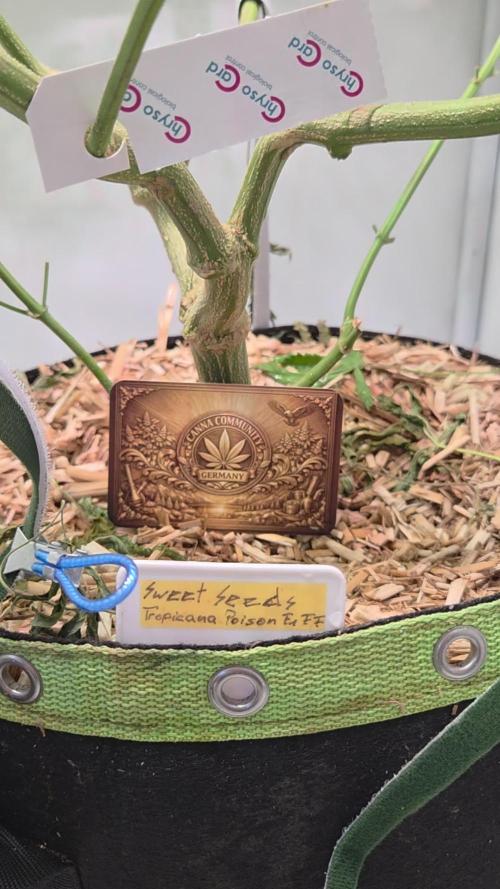
Que pasa familia, vamos con la quinta semana de crecimiento de estas Tropicana poison F1 de Sweetseeds.
Vamos al lío , las 3 plantas seleccionadas fueron trasplantadas a su maceta definitiva, ya superaron el shock por el trasplante, estas semanas las paremos todas a floración.
El ph se controla en 6.2 , la temperatura la tenemos entre 20/22 grados y la humedad ronda el 50%.
El ciclo de crecimiento puse 12h de luz, el foco está al 100% de potencia.
Hasta aquí todo, Buenos humos 💨💨💨


Likes
18
Share


@Arcilla151
Follow
Hola gente! Esta semana recien comence con fertilizante de crecimiento, comence a ver los brotes nuevos muy amarillentos asi que le meti un poco de ferti. Van super bien creo yo, les hice corte apical a alas 3 al día 33 de vegetación, la #1 es la que mas me gusta hasta el momento, #2 tiene mucho espacio internodal para mi gusto pero igual va bien.
Estan empezando a generar olor, como a menta al tocar las hojas, me gusta!
Likes
44
Share


@Gruenerfinger85
Follow
Hallo meine Garten und Pflanzen Freunde.
Es ist soweit diese Schönheiten mussten leider früher dran glauben als gedacht.
Wie ihr wahrscheinlich mitbekommen habt musste ich den Grow früher als geplant beenden. Ich muss aber sagen dafür dass die Pflanzen noch normal 4 bis 5 Wochen Blütezeit gehabt hätten kann sich das Ergebnis sehen lassen, bei allen Pflanzen.
Mir sagt dass das diese Strains überragend sind, ich kann sagen das alle Pflanzen die im Raum 1 waren und wo ich die Ernte vorgezogen habe ein gutes Ergebnis geliefert haben genauso wie geschmacklich und von der Wirkung super sind, obwohl alle Pflanzen noch nicht ihr volles Potenzial entfalten konnten, bin ich sowie meine Bekannten sehr zufrieden.
Ich Danke dir für deine Besuche und deine Unterstützung.
Genauso danke ich Patricia von Zamnesia vom ganzen Herzen für die Unterstützung und die Möglichkeit in den Genuss so toller Genetiken zu kommen von Zamnesia.👌🏼
Die Pflanzen wurden auf eine harte Probe gestellt die sie mit Bravurös gemeistert haben.
Auch ein großes Dankeschön geht an S&R Organics raus die mir immer mit Rat und Tat zur Seite standen und ein super Produkt entwickelt haben und diesen mit der Allgemeinheit teilt.


Likes
1
Share

@xl_xzax-GNX
Follow
day 1 Jan19 12am initial Seed Drop
40 cell seed tray and dome 99rH
seed 1 75F (1hr post drop)
seed 2 77 (1hr post drop)
JAN 20 day 2 Seed A: Taproot ~2pm // Seed B: Taproot ~11pm
JAN 21 Day 3
22Day 4 failed restarted no Taproot penetration through root plugs and no sprouting from plugs
23Day 5 try 1 fail start germ try 2
24Day 6
25Day 7
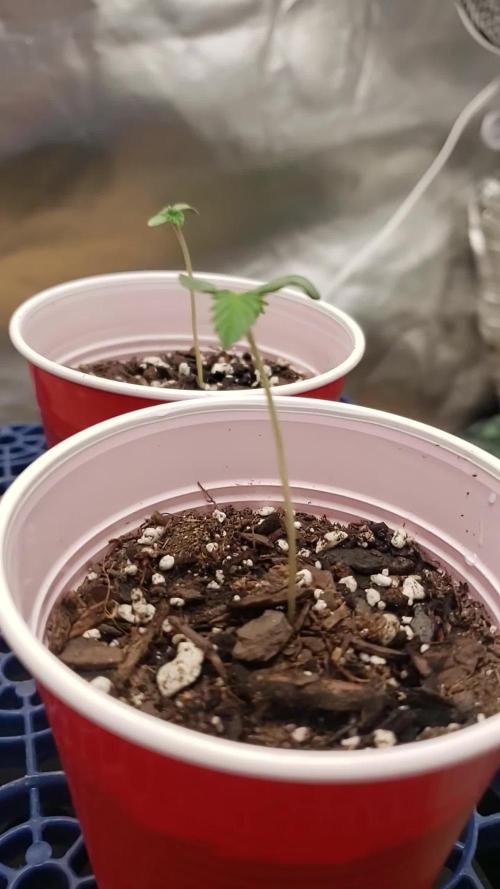
**germination reset** -solo cups and direct into soil
day 1 jan 23 1 gmo cookie 3 purple urkle
day2-day3 Jan24-jan25 74F 62rH lost 1x purpleurkle
day 4 Jan26 74F 62rH
day5 jan27 74F 62rH
gmo Seed sprout cotyledon leaves with true leaves form and emergence
urkle #1 stem sprout still shell no cotyledon or trues
urkle#2 waiting Taproot in soil waiting for vertical push a
day6 jan 28 seed A seedling day 2 and Seed B seedling day 1
days Jan 29 seed#3 cut never emerged from soil
**SEEDLING**
jan27 gmoCookie seedling day1await purpleUrkle coytledon leaves& shell shed
jan 28 gmoCookie seedling day2 purpleUrkle day 1 seedling cotyledon and shell shed 8pm ct
jan29 gmoCookie seed 1⅝inch 25mL 6.6ph water purpleUrkle seed1⅛in 10mL 6.6pH water
jan30
jan31
feb1
feb2
feb3
feb4
feb5
feb6
feb7
feb8
feb9
feb10
feb11
feb12
Likes
5
Share


@UhhDoiigreen
Follow
Perfect to this point dense even colas. Smelling great covered in 💎 last week has been compost teas last one given today. Only water for the next 7-10 and nothing after that till harvest besides 36hr of darkness
Home stretch time
