


Likes
Comments
Share


@Northernnewbie
Follow
Today I harvested after about 24 hours with lights turned on. The smell is strong lemon with a hint of mint :) I cant wait to taste her when its dry, and in my opinion it smells and looks good :)
Had some problems with temperature, but with some gear improvements I think I got the right solution for it for next time.
As this is my first try doing this im pretty happy, but ofcourse there is room for improvements :)
Thanks to everyone for checking in on my diary and the likes! :)
Happy growing and peace 🌲✌️
Total dry weight - 338grams 🌲

Likes
6
Share


@Luv2Grow
Follow
Day 51 - Into the beginnings of week 8 and all is looking good so far. She’s still got a few days before she needs any water and she’s really fattening up each day. Other than that, not much happening with her.
Day 52 - She’s definitely fattened up quite a bit the last couple of day but hard getting the light spread out to some of her outer branches so my new light should be here and installed tomorrow. She’ll be needing her watering tomorrow as well, she’s almost dry.
Day 53 - Gave her 2 gallons of plain pH’d water today and she seems to be the only one not really bothered by the heat in the tent. I’m doing what I can to keep things as cool as I can but not helping much. Either way, this girl still seems to be thriving so not complaining too much about her.
Day 54 - Looks good after watering yesterday, he next will be nutes. She is fattening up beautifully. Other than that, I think she’s really liking the second light in there and the heat doesn’t seem to bother her too much though it’s finally cooling down a bit.
Day 55 - Nothing major happening today, she’s doing good after her watering yesterday and it appears she’s still chunking up. Got some updated pictures today as well.



Likes
3
Share


@Phenohunter88
Follow
I need to learn how to clone better. Half of them died. No skylotus clones survived. ALL of the Terpenado clones are making roots but Space Monkeys didn't make it and half the Herer Hashplants made it. I can pinpoint a couple errors I made:
1.) Didn't sanitize a god damn thing.
2.) Didn't cut the stems at a 45 degree angle.
3.) Put waaayyy to many nutrients in the cloner reservoir.
I mean...one the Space Monkeys was just rotting the humidity dome. Terp 3 clone didn't even droop. Terp 2 clone died and Terp 1 made it out as well.
I took more cuttings this week and put then in Root Riots. I have a good feeling about them. So good that I think I will flip to flower this week.
Terp 2 has developed a powdered milk with strawberry scent when doing a stem rub. The other two are the same. Terp 3 is offensive.
I fucked up again when taking a cutting from Terp 1....snipped another top. She's gonna grow like a snake.
I am being overzealous with the nitrogen. The leaves are quintessential nitrogen toxicity at this point. Gonna flush for a day or 2 and then flip.
Day 39 - Flipped to flower today. Most of them are starting preflower and I tried to identify the sexes. I'm hoping atleast 2 of the Terps are female...we will see though. I really don't wanna build a bunch of male isolation chambers right now.....didn't feed today. They have plenty of nitrogen.
Day 40 - I have a skylotus that was germed at the same time as the terps and HE is a male. I hear that males will preflower earlier. I'm going to use this as a reference point and assume that my Terps are females since they haven't sexed yet. Of course...I could be completely wrong. First day of 12/12 and they are thirsty af. Nitrogen ended up not being a problem. I fed them bloom nutrient today to kick start flower. The extra phosphorous should kick em into gear.
Day 42
Terp 1: Bright Strawberry Smell, almost no gas undertones. Not sexing yet. Might have issues from vermiculite mixture.
Terp 2: Bright berries with strong gas undertones. Earthy funk somewhere in there too. The least bushiest out of all of them but good node spacing. Started off the smallest but picked up good speed later. Kept up with #3 well. Definitely not as hardy as the other
terps. Her clones died while Terp 1 and Terp 2's clones feigned death but eventually gave me strong roots.
Terp 3: Funky Strawberries. Like...Strawberry Fanta cut with diesel and old Bustelo coffee grinds. No bright berry scent. Makes me gag a little. Growth is superb. Strongest out of all three and a hungry gal to boot. Confirmed female as of about 2 days ago. She's
fast, hardy, decent node spacing and gave me her terpene profile a long time ago. Was bigger than my Crem De La Chem of 4 weeks at 2 weeks. Didn't stretch until flower switch. Got a healthy clone of her too. So far she's the winner.


Likes
1
Share

@Mo_Powers
Follow
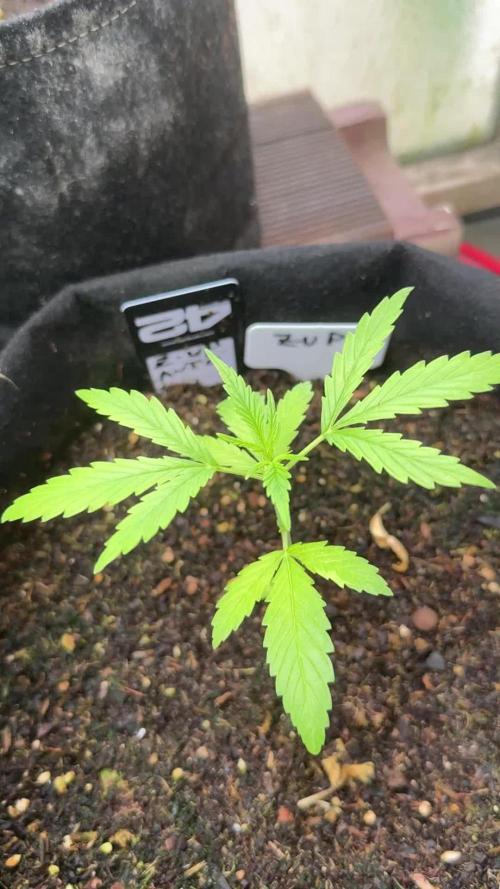
The cold days are behind us and summer is just around the corner. It’s only a small step so far, but with the warming sun, it’s set to take off in the coming weeks.
Likes
57
Share


@Roberts
Follow
Runtz Punch has been still giving me issues with the spotting. So I neem oil treated her 4 days ago. It looks like it stopped or slowed down. With the nitrogen toxicity she has been showing I was kinda afraid to do it. It tends to boost the nitrogen when sprayed. I did look for pest under 100 x magnification. I didn't see anything. Regardless, hopefully it is resolved. I might just treat the whole room here to be safe then sorry mid flowering. Beside that everything is still growing and making progress. Thank you Herbies seeds, Athena, and Spider Farmer. 🤜🏻🤛🏻🌱🌱🌱
Thank you grow diaries community for the 👇likes👇, follows, comments, and subscriptions on my YouTube channel👇.
❄️🌱🍻 Happy Growing 🌱🌱🌱
https://youtube.com/channel/UCAhN7yRzWLpcaRHhMIQ7X4g.

Likes
4
Share


@SzkolaZiola
Follow
Magnificent plant! Sooo, sooo resinous, covered in trichomes and smells super-citrusy - kind of like lemon scented Geranium 🍋
Small but mighty hard buds. This is one of the most trichome producing flowers I have ever seen. I'm in love 😍
Breeder did great job here!

Likes
26
Share


@Foggedaboudit
Follow
Start of week 9! The buds are really starting to swell and look more spectacular every day! The smell is intensely fruity too! I reckon about two more weeks and it’ll be time! Last feeding before flush!

Likes
9
Share


@Bread_n_Buds
Follow
This is one of the strains that is doing very well in both the technical/free versions, we are talking about the Fruti Punch Automatic by Zamnesia.
Remember that we are growing a plant worked with the techniques indicated and another left to grow without pruning to preserve its speed; in the previous/next diary you will find the other plant of the same variety.
In this diary we find a plant worked with a technique that I have recently become passionate about thanks to my friend Yan402 who in a discussion convinced me to study it further also on autoflowering plants, now I am having a lot of fun. This plant is eure being a medium low internode it has been worked with a very precise Main Lining, I have also done much better in terms of elegance but I like this one a lot too.
Comparison is the salt of experience, so the plant in the other diary will be treated very differently, go and see it to make a comparison.
We started the Plagron fertilization program, we are in 100% organic configuration, the soil is made up of recycled Promix + 1/3 fresh soil + 10% Perlite + RQS Mycorrhizae Mix (4 g in the mix, 1 g under the small fiber pot).
In the middle of the week the pre-flowering started so I decided to start the program for this phase: 1 ml/l of Power Roots - 1 ml/l of Pure Zym - 1 ml/l of Sugar Royal - 1 ml/l of Power Buds - 4 ml/l of Alga Bloom
Remember the Green Sensation from the 3rd/4th week of flowering depending on the flowering speed or how you see the calyxes composing, when the calyx is in the swelling phase it is used.
We sprayed 5 ml/l of Vita Race foliar fertilizer once a week.
-------------------------------------------------
https://plagron.com/it
We always have the excellent RQS mycorrhizae running through the soil.
https://www.zamnesia.io/it/5778-mix-micorrhiza-easy-roots.html
One of the best in recent years with a very high THC level
--------------------------------------------------------
https://www.zamnesia.io/en/10965-zamnesia-seeds-fruit-punch-automatic.html
Brief description of Zamnesia // Sativa strains are very rewarding to grow, but their long flowering times and their greater susceptibility to disease and overfertilization can make them a little more difficult to manage. Also, their imposing heights are less suitable for indoor use and can attract unwanted attention if grown outdoors. However, with the arrival of Fruit Punch Automatic, growing sativa strains at home just got a whole lot easier. Combining Skunk #1, Haze and ruderalis, Fruit Punch Auto is 70% sativa dominant and produces up to 21% THC, along with a delicious blend of terpenes. Plus, it can be grown indoors, outdoors and in greenhouses. With their bright green hues, golden pistils and thick layer of resin, Fruit Punch Auto buds always have a great appeal. When you smoke her, you will be amazed by her flavours, aromas and effects! As the name suggests, Fruit Punch Automatic boasts delicious tropical aromas reminiscent of banana, pineapple, mango and citrus. When you open the jars you will feel like you are in a tropical cocktail bar on an exotic beach. Fruit Punch Auto will delight your palate with pungent fruity notes followed by light notes of Skunk and spice on the exhale. Within minutes of your first hit, this potent sativa will stimulate your mind, leaving you in an energetic and carefree state, ideal for morning or daytime sessions, as well as social settings or creative pursuits.
The whole world of growing and much more is on Zamnesia: just take a look at the site and you will find "all the best that nature has to offer" in various shapes and colors.
---------------
www.zamnesia.com

Likes
2
Share


@valiotoro
Follow
Hello everyone week 1 has passed for this Auto Kerosene Krash from Dutch Passion 😎
this plant is doing very well growing at fast pace and with a beautiful green colour on the leaves.
Spider Farmer SE-7000 50%
wish you all happy growing!


Likes
11
Share


@Beedog
Follow
Day 63 have to harvest day 77 cause have to move house hope they be ready the small ones be ready any day but don’t know about the big ones 🤞 growth continues anyway hopefully fatten up nice by next week
Likes
20
Share


@GanjagrowingGal
Follow
5.6oz dry weight wow! First grow & in soil?? This strain is amazing! Anyone that grows this will not be disappointed! She smells and tastes and smokes absolutely amazing! So fruity! She is my firm favourite strain now! Beautiful! Really recommend her so much!

Likes
14
Share

@benmcintosh
Follow
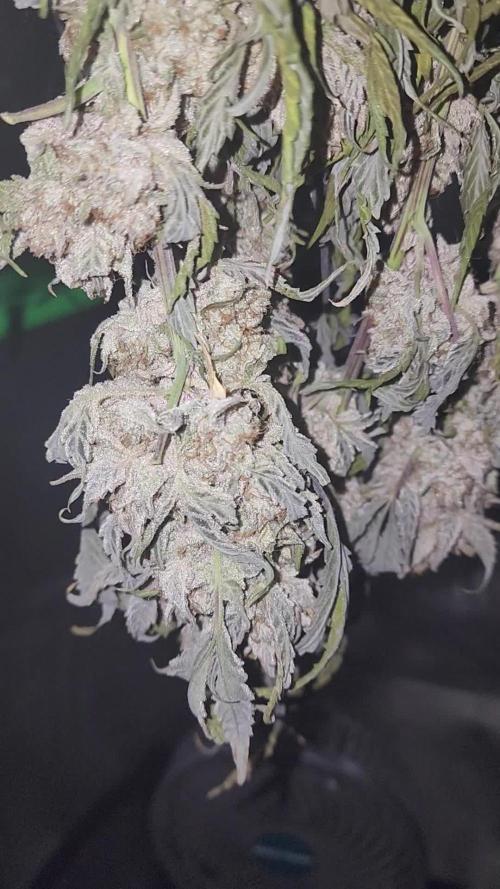
Harvest day 86-84 these girls were great to grow and easy at that. After dry ill get back with final weight. But these were my best yet def should be over a lbs between the 3


Likes
69
Share


@Natrona
Follow
*****DIVINE SEEDS *****
*****FRACTAL*****
SPONSORED GROW
Week 9 6/2-6/8 Now at the start of week 9, my outside gals, except L. Cake are now in flower.
Several pics show the very narrow new leaves and small white hairs evidence of flower formation. 6/7 This is the first time I’ve had to add nutrients to her feeding. Some lower leaves were yellow. Since I’ve been using amended soil, this indicates Fractal is a heavy feeder. Nutrients in soils are used up and she is starting to use her own food sources
6/7
5 gallons well water
TPS1 60ml used 1 gallon per plant =12ml
Cal-Mag 25ml used 1 gallon per plant =5ml
Recharge 5ml used 1 gallon per plant =1ml
Signal 1.25ml
PPM 1414, PH 6.93, Temp 82.5
Note I do not have to PH adjust my well water. However, our city water comes out of the tap at 8.2 ph so I must PH down using the city line hose and my inside grows.
============
Germination April 6.
Vegetation
Week 1 water only
Week 2 water only
Week 3 added recharge and TPS1 increased ppm to 570.
Week 4 continues with recharge and TPS1. I added Fox Cal mag increasing ppm to 685 - 805.
Week 5
TPS1 9ml/gal
Recharge 5 ml/gal
Fox Cal-mag 5 ml/gal
Week 6 5/12-19 Moved outside in 5 gal air pots receiving rain and well water.
Week 7 5/19-25
Opium received only rain water for the last 2 weeks. Since I was in Colorado last week, I feel very behind on my diaries. Despite my absence, my outside gals did just fine. Opium loves the outside sun, breeze, and frequent rain.
They love the natural rain and sunshine evidenced by vigorous growth.
Thank you @DivineSeeds
Thanks for the visits, likes and comment, I appreciate all the plant love💚.
Have fun & love what you grow 💚
Sending you good vibes of love, light, and healing 💫
💫Natrona 💫
Sending you good vibes of love, light, and healing 💫
💫Natrona 💫
***FRACTAL***a
Rating:
Fractal is an especially psychedelic strain that Divine Seeds developed for esoteric and mystical experiences, meditation and creativity. A potent and vivid landrace variety from Southern India was crossed with a sticky leaning Indica (mostly Afghani), then Skunk #1 joined this company. Their progeny underwent multiple selection experiments, until its massive built, resin concentration and hypnotizing powers reached an ultimate level. The result is now known as Fractal – resinous, spicy and productive. Best choice for commercial growing: a compromise between bigger yields and fast ripening! A great source of hashish that has something incense-like to its musky smell.
Indoors expect 170 сm height, out of doors plants grow up to 200 сm. Fractal fits for all types of growing environment: grow boxes, hydroponic or aeroponic setups, outdoor plantations, balconies, terraces and green houses. For more weight it is recommended to train Fractal plants to broaden their structure and limit their vertical growth. For that purpose use ScroG or SoG, LST, FIM or topping, supercropping or mainlining – there are no limitations for the strain itself, but certainly low-stress methods are recommended to smaller samples. Fractal has an inherent immunity to molds and insect pests, but since its colas are thick, protect your plants from stale air. Also during rainy weeks your plantation may need to be covered. Ready for outdoor harvesting in October. Big and dense buds the color of olive, hunter green heavily coated with crystals.
Whole Fractal buds smell hashy and earthy, while cedar and fruity hints are noticeable on breaking. Measure your portion carefully: the potency is above average! With Fractal you experience an overall stoning that either keeps you put or slows your motion down, also vertigo is possible. However, in moderate dosage the impact is described as a pleasant sensation of well-being and placidity. Perfect for spending a night by a bonfire without talking, therefore is more often enjoyed as a solo smoke. Efficiently relieves muscle spasms and seizures, inflammations, combats insomnia and increases your appetite. Up to 3 hours of altered state of mind can be expected. Best consumed at night time.
Pots: 5gallon Air pots
Soil Fox Farm Happy Frog Amended with worm castings, dolomite lime and mychorihiza
Seeds provided by Divine Seeds
Divine Seeds breeding company
The link to Fractal Feminized Seeds
Fractal - Divine Seeds breeding company
The link to Fractal Auto Seeds
Auto Fractal - Divine Seeds breeding company

Processing
Likes
18
Share


@Tate0420
Follow
Girls are starting to flower. GC is taking off and bushing out like crazy. Blueberry Chemdawg is taking off as well just not as quick as the Green Crack. I've been constantly tying the tops over on the Green Crack so as of now it looks like about 8 Main colas. Can't wait for these girls to fatten up and see what they can do!
Likes
42
Share


@StarLorr
Follow
Welcome to my Gorilla Melon🦍🍉 Diary.
In this Diary:
Seeds: Fast Buds (from contest)thanks
Media: Pro~Mix HP *•ns
I will again be using the Remo nutrients.
Nutrients: Remo Supercharged Kit *•ns
*•not sponsored
___________________________
Feeding:
Little water just to keep things moist.
___________________________
Planted the seed on Tuesday 07-Jan-25
Pop up by Friday 10-Jan-25
Once big enough i will transplant it to a 7 gallon bucket.
___________________________
Thanks for stopping by, likes and comments are appreciated!👊🏻😎
Keep on growin!
Keep on tokin!!!
😙💨💨💨💨💨
Likes
10
Share


@Rob691
Follow
D-50 : Everyone is doing great ! The one that had a difficiency alert a couple of weeks ago has recovered. Thanks to the community's helpers !
I setup the net 2 days ago so the flowers are driven to the light and covers maximum of space in the tent. Well, with only 3 strains, I'm not sure it's very usefull, but later would be too late, so I'm doing that now.
I already know when I'm going to harvest those girls cause I will be in hollydays for one week at the end of december. So, I'll harvest between the 19th december.
I also know what will be my next grow : 3 Shogun (RQS) with 3 Chocolate Haze (RQS). All of themp in the 1m² box. I'll try main-lining with two time toppings on them. They should be a litle less tall after that and optimizing the flower production. At the same time I will test the SmartPots. I think I'm good for a 19 weeks session with 7-8 week veg. and 9-10 weeks flo. So I could start the session at the very bigining of january in the second box (Secret Jardin DP60) while the first session is gently drying...
D-53 : all is good :) just add Biobizz Microbes today. Let’s see !
D-55 : add Calmag today to the nutrients. Hope it will help the litle Pinapple that shows a bit of deficiencies.