


Likes
Comments
Share


@ZombieKushAddicted
Follow
to view this lamp or any other marshydro product go to: https://instagram.com/marshydro_aliexpress?igshid=YmMyMTA2M2Y=

Likes
Comments
Share




Likes
19
Share


@adam_pawloski87
Follow
Another fun strain to run from Fastbuds, Bruce banner was amazing at a total of 83 days , came out with some thick dense resiny coated buds , an very sweet smell! Has very tight buds with tight stems so it would def be better to tie her down an open her up for some LST ! I highly recommend y’all trying Bruce Banner out , you won’t be disappointed!!


Likes
2
Share


@Cavusesco
Follow
Block 1: Ali
i will do nothing with this plant. He is the Boss the highest
Block 2: Abbas
Topping at 5.node
Week 4
Block 3: Latif
Topping at 6. node
Week 4
Block 4: Vince
Removed 8 big leafs which are made shadows to the buds
Likes
21
Share

@SkunkyDog420
Follow
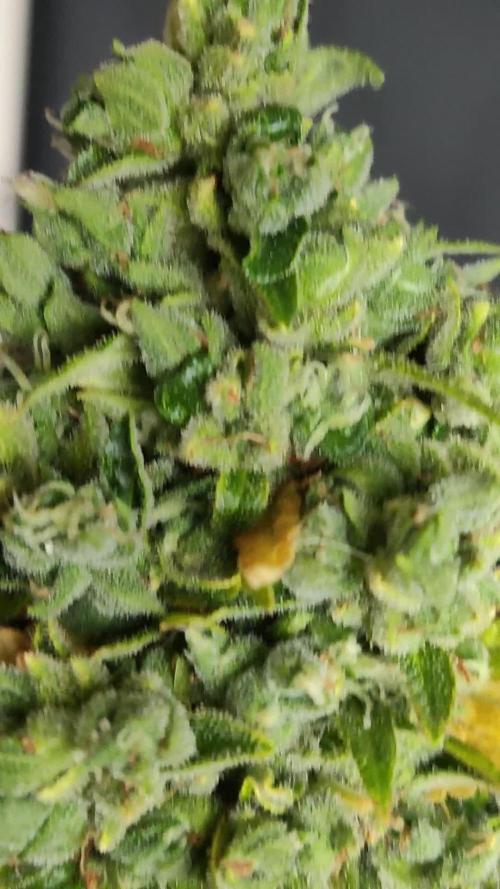
Hallo zusammen 🤙.
Habe sie heute geerntet.
Wir sehen uns in 3 Wochen mit dem Erntebericht.

Likes
6
Share


@REALBUDZ
Follow
Despite the fact that this is an auto flowering plant, they are a very worthy example that show that even autos can be better than photoperiodic flowers. I am growing this strain for the third time, it always pleases me with the amount of taste and, most importantly, the way it is smoked, very good THC.
Thank u @Sweetseeds 🦅


Likes
10
Share

@Oyziphar
Follow
Glorious summer sunny days 🌞🌞🌞 The plants has now started blooming well 🌷🌷🌷
Third week of Light Deprivation
👉👉👉👉Every morning at 8:30 am I move the plants in the greenhouse.
👉👉👉👉Every evening at 8:30 pm I move the plants (together with some other strains) inside the growroom (which I don't use in the summer)
Before I placed the plant in the growroom, I took these photos outside on the lawn
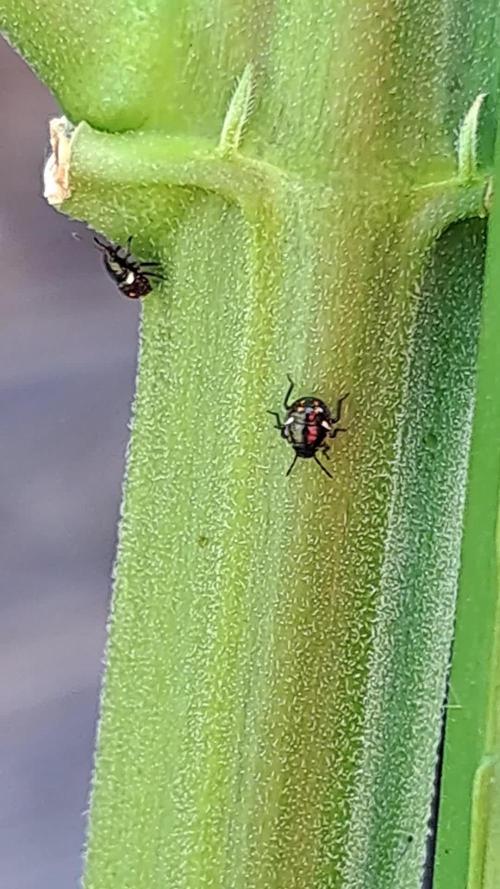
A few days ago I noticed some little insects running around on plant #3. I think they are some members of the Heteroptera family... 😕 They are not harmfull 😇
👉 Once a week I give the plants a liquid booster with OPF 4:2:8 ; Fulvic 25 ; Yuccah ; Biovin liquid ; Earthworm compost extract.
Big Thanks to Luc from Plant Health Solutions / Bioplantenvoeding dot nl 🙏🙏🙏
Plant #1 ; height : 140 cm
Plant #2 ; height : 128 cm
Plant #3 ; height : 111 cm



Likes
5
Share


@momothehobo
Follow
This week the alpha plant needed some training but boy did she stretch! I had to defoliate them both but a lot less on the omega plant she's been such a pleasure to watch grow because, up until now I haven't done anything but give her water sunlight and nutrients.
Likes
73
Share


@cannabis_connoisseur_circle
Follow
4 of my plants stopped growing after day 3. I flushed 2 of them because my runoff EC was 3.6. I want to see if flushing will help then I will flush other two plants.
Please help me
Last watering was on day 7 and flushing on 2 plants was on day 7 as well
_____________________________________________________________________________________________________________________________________
27/01/2020 day 8: reviving started . light height was increased to 115 cm(45")
Plant CCA1: Stunted Grow, didn't Flush
Plant CCA2: Stunted Grow, didn't Flush
Plant CCB1: Stunted Grow, in the Flushed soil
Plant CCB2: Stunted Grow, in the Flushed soil
Plant CCC1: slow grow, didn't Flush soil
_____________________________________________________________________________________________________________________________________
Day 9: Dome added on top of seedlings, and added more fans and air flowing throughout grow area.
_____________________________________________________________________________________________________________________________________
Day 10: some minor development on CCB1, CCB2(those that i Flushed). CCC1 is growing a bit faster(this Plant didn't have any problem).
Day 10: soil was dry on top for CCA1 and CCA2, so these two seedlings been watered with 6.0 PH and 0.3 EC.
_____________________________________________________________________________________________________________________________________
Day 11: Plant CCA1 and CCA2 showing some signs.
Plant CCB1 was the weakest one , therefore I removed it from big pot and transplanted it to a 1 Litre pot , so soil could dry faster and I am treating her with 0.5 ml Advanced Nutrient Piranha in 1L water with 6.1 PH and 0.3 EC. I will give her 100ml every day for 10 days.
Plant CCB2: showing more signs of development than the rest. she is still in flushed soil and soil still drying up
Plant CCC1: was the one which didn't have a stunned growth and will feed her for first time tomorrow.
According to all advices I passed following steps: increasing light height, soil will dry up until tomorrow.
I gonna start light feeding for some of them tomorrow and the rest other day.
_____________________________________________________________________________________________________________________________________
Day 12:
CCA1 and CCA2 was watered(6.0 PH and 0.3 EC) 0.5 Litre
CCB1: transplanted one, she is being treated with 100 ml containing 0.5ml Piranha mixed with 1 litre water per day.(5.9 PH-0.3EC)
CCB2: she been fed with 0.4L water mixed with Piranha
CCC1: she had her 1.5 L low dose First time nutrient feeding(using 1/4 Strength of what recommended of Sensi Grow A&B,B52,Voodoo Juice,Piranha,Tarantula) with 5.9 PH and 0.5EC. I will update about her end of day 12 or beginning of day 13. she enjoying it from very first moment.
I will update about different methods that I used for each of plants to revive them.
_____________________________________________________________________________________________________________________________________
Day 13:
I transplanted other two seedling(CCA1 and CCA2) to 1 Litre pot for treatment because I used @Vincent11 methods for CCB1 and his advice helped me quite fast. But I see some yellowish colour on new leaves. it may be a nitrogen deficiency as @Jinks101 stated before or transplant stress.
CCA1: transplanted to 1 litre pot and using Piranha 0.5 ml in 1 L water and watering it with 100 ml per day same as i did for CCB1.(5.9 PH-0.3EC)
CCA2: transplanted to 1 litre pot and using Piranha 0.5 ml in 1 L water and watering it with 100 ml per day.(5.9 PH-0.3EC)
CCB1: I see some yellowish colour on new leaves. it may be a nitrogen deficiency or transplant stress, she is still being treated with 100 ml containing 0.5ml Piranha mixed with 1 litre water per day.(5.9 PH-0.3EC)
CCB2: she had her 1.5 L low dose First time nutrient feeding(using 1/4 Strength of what recommended of Sensi Grow A&B,B52,Voodoo Juice,Piranha,Tarantula) with 5.9 PH and 0.5EC. but there is some white line in the middle of leaves.
CCC1: I uploaded a photo so we can compare her before and after first feeding on day 12 and after feeding in day 13. but there is some white line in the middle of leaves like CCB2. she will have her first watering with 10% run off in a day or two.
I will use water-feed technique.
_____________________________________________________________________________________________________________________________________
Day 14:
Its last day of the week and listening to everyone advices helped me to recover my plants.
increasing light height ,decreasing room humidity, adding dome, adding more air circulation, transplanting weakest seedling to 1L pot and treating them with 100ml(0/5ml Piranha+1L water),deceasing watering ph to 6.0, transplanted seedling soil mixed with some peat moss so i could decrease soil ph from 7.8 to 7.2, letting soil dry.
CCA1: she is being treated with 100 ml containing 0.5ml Piranha mixed with 1 litre water per day.(5.9 PH-0.3EC)
CCA2: she is being treated with 100 ml containing 0.5ml Piranha mixed with 1 litre water per day.(5.9 PH-0.3EC)
CCB1: she had her 100 ml low dose First time nutrient feeding(using 1/4 Strength of what recommended of Sensi Grow A&B,B52,Voodoo Juice,Piranha,Tarantula) with 5.9 PH and 0.5EC. she improved a lot, I am quite happy that i saved her because she was the weakest one.
CCB2: She was fed yesterday, so she was enjoying all her day.
CCC1: she had her proper 3L water(5.9PH,0.3 EC) feed with 20% run off( runoff PH is still high for this plant)
Wrapping up this week i uploaded pictures of each plant comparing it with day 8 when reviving started.
Thanks everyone for following this diary.
Likes
3
Share


@BLAZED
Follow
Week 11 (26-8 to 1-9)
26-8
Temps: 20.5 to 26.1 degrees
Humidity: 50% to 56%
27-8
Temps: 20.7 to 27.3 degrees
Humidity: 50% to 56%
Watering: Both 1500 ml. (Only Calcium) EC: 0.4 PH: 5.6
Dry Weight: Both 2.7 kg.
28-8
Temps: 21.5 to 28 degrees
Humidity: 51% to 56%
29-8
Temps: 23.3 to 27.4 degrees
Humidity: 55% to 62%
30-8
Temps: 19.9 to 27.7 degrees
Humidity: 50% to 60%
31-8
Temps: 20.2 to 26.6 degrees
Humidity: 50% to 55%
1-9
Temps: 21.1 to 29.1 degrees
Humidity: 49% to 55%
Watering: Both 1000 ml. EC: 1.4 PH: 5.6
Dry Weight: Both 2.4 kg.
Recalibrated my PH pen and it was only 0.1 off, so i dont think the leaf problems are PH related.
Likes
2
Share


@Saintvicious
Follow
She's unstoppable. Looks like we are about to be in pre flower. It's show time.


Likes
79
Share


@Gorrilla420
Follow
So this plant grew huge, was put in the ground at around 3 weeks old and she took of from there. I topped it around a week after she went in ground and believe it was the perfect time as all side branches shit up as well as the 2 main heads. Biggest auto I’ve done to date including any indoor. She didn’t get the attention it deserved and not much feed went into this plant she just lived of the soil and rain. Will certainly try this strain again.
Well done to tastebudz for this amazing auto and big thank you to them for letting me try there strains!
Happy growing🌱


Likes
20
Share


@DeepRootsGrowTrees
Follow
KRITIC AUTO by KANNABIA
Week #5 Overall
Week #3 Flower
This week she's is doing great no issues she's getting a nice aroma to her she's getting weight to her and you can see the trichomes on her buds.
Stay Growing!!
Kannabia.com
KRITIC AUTO


Likes
23
Share


@HanzGrowz
Follow
They’re all hitting their stride in terms of flower. Chemdawg easily the most impressive bud development/size wise, but Bubba is massive and has a TON of bud sites.
No leaf discolouration at all so I’m guessing the ladies have switched to flower smoothly with the right amount of food in the soil. I top dressed with Gaia Bloom to give them a little extra for the next few weeks as they push forward.
Crazy to believe Bubba might only have 25 days left which means I don’t know if she’ll get fed anything other than water from here on out

Likes
9
Share


@Vet4weed
Follow
At the beginning of this week I switched over to blooming fertilizer and gave both plants about 1/4 gallon, beginning with 12ml/gal mix each type.
Made a huge rookie error, and left the lights on for 24 hours beginning on day 58. I was out sick and didn't discover it for a few days. Poor girls, their soil dried a bit and they drooped for a couple days. I switched them back to 12 hours after discovering what had happened on day 62. I also bumped up their nutrient ratio to Heavy feeding (4 teaspoons per gallon) of Tiger Bloom and a little less than General Feeding (4 tablespoons per gallon) of Big Bloom, giving them 1 Qt of water/nutrient mix at lights out time. The next day they bounced right back to life! :-)

Likes
9
Share


@Headies
Follow
So this week after I gave it under nutrients I apparently gave it too much nitrogen while having a potassium deficiency. Shiney dark leaves, So i fixed that, but some didn't bounce back, and I tried nitrogen. I think they are doing pretty good considering everything I've put them through SO FAR. lol. Nutrients are NPK Raw's total lineup, follow their instructions at first, Fastbuds adjustments as of this week.
Likes
213
Share


@Rock_n_Roll_Randy
Follow
35 days in flower and im seeing swollen bud sacks everywhere so..... IT WORKED. Nuken pollen on my monkey dough and gorilla glue and backcrossed a couple nukens