


Likes
Comments
Share


@Growyourownathome2x2
Follow
Sunday the 28th of May Day 32 of 12/12 everything looking good starting to stack up nicely, front left plant is the runt of the 4 but still smelling so good 🍁😁

Likes
14
Share


@GoldenWeedGrower
Follow
D43/V39 - 13/05/23 - Changed water , added nutes until EC=0.9
D44/V40 - 14/05/23 - Defolation - Added water EC= 1.1 pH 6.5
D45/F01 - 15/05/23 - Start flowering. Monitoring water from maximum to above, for the week out
D46/F02 - 16/05/23 - Continuing LST. Flowering stage is now clear
D47/F03 - 17/05/23 - EC= 0.9, Added nutes until EC 1.1. pH 6.4 (added some drops of pH-)
D48/F04 - 18/05/23 - Added water and nutes EC=1.1, pH 6.5
D49/F05 - 19/05/23 - Nothing to report

Likes
2
Share

@Black_Widow
Follow
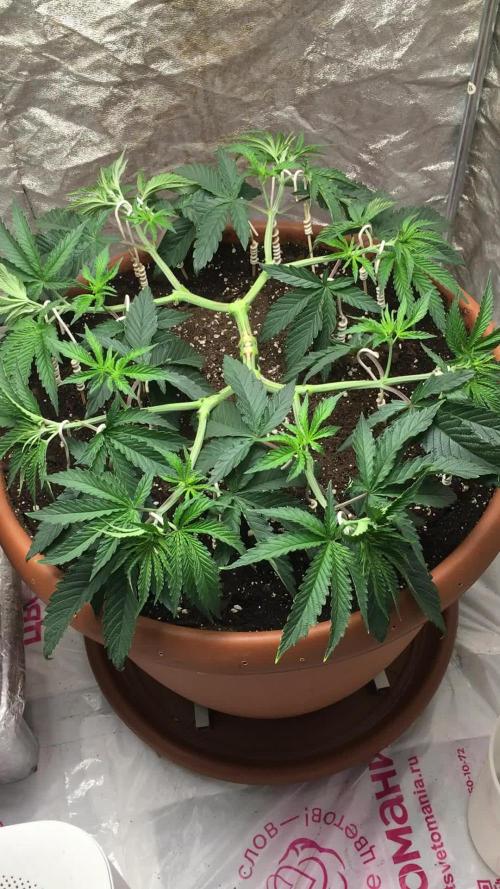
Привет садоводы !
уже середина новой недели , а я только приехал
за время моего отсутсвия растения подросли и окрепли
сегодня я пересадил цветок в большой 45 литровый горшок и подкормил удобрениями
кажется растение чувствует себя хороно .цвет листьев хороший
подержу ее еще пару недель на вегетации , посмотрю как пойдет дальше !
Likes
55
Share


@GardenOfHerbs
Follow
- i'm back already! i decited to harvest today on day 93, there was about 5-10% amber so i din't want to wait any longer!
- all pics are from right before/during/after harvest
- the 2 lowest branches are trimmed up and drying in a brown paper bag, the rest is drying in my carboard box
- i will be back with a harvest report and smoke report in about 10 days when everything is nice and dry.
- added 3 videos at the end so check em out


Likes
19
Share

@Northern_Ent
Follow
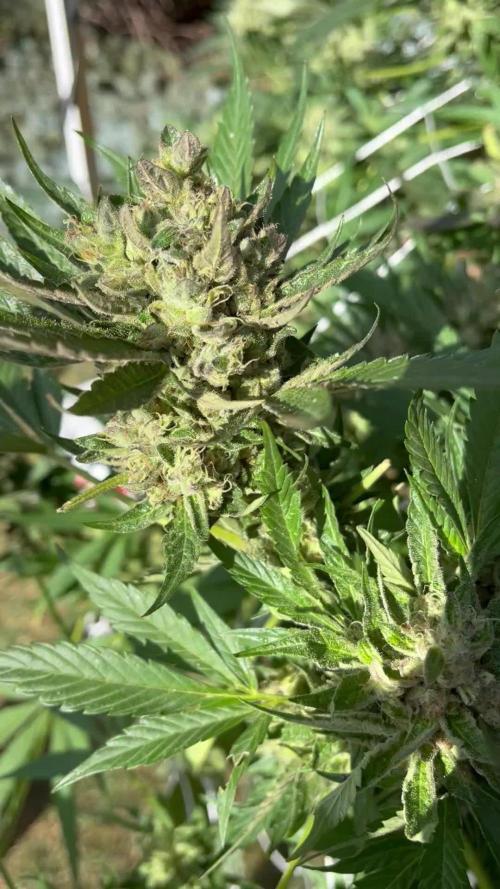
Sep 27: lots of buds remaining and I did a big defoliation to expose the buds to sunlight. Lowered scrog net during the defoliation.

Likes
9
Share


@HollowSource
Follow
She is trying hard to keep up with the amnesia but I think she is also destined to be short and fat. The tops look primed to develop into lovely fat buds, a lot broader than the others. She is starting to get a nice minty scent to her.

Likes
18
Share


@Growbabie
Follow
demorou mas está ai a primeira semente da 24k Gold auto da Cannabiorganics!
Dia 29/11/2021 - Para minha surpresa essa manhã outra semente da 24k gold auto germinou, ela aparentemente veio das profundezas do vaso de 7 litros ehehehehe essa vai ser forte. Falta somente uma delas germinar para 100% de sucesso. Estou molhando um pouco varias vezes ao dia.
Dia 30/11 - tudo normal, crescendo no seu tempo.
Dia 01/12/2021 - dia normal
Dia 02/12/2021 - dia normal, estou achando elas bem lenta mas é isso.
03/12/2021 - A 24kGold#1 parece estar adorando a luz, ehehe, reguei elas com 250ml de agua hoje e somente.
04/12/2021 - tudo ok
05/12/2021 - tudo certo tirando o fato da 24kgold#2 nao estar se desenvolvendo
iniciando a primeira semana oficialmente, vambora 🚀

Likes
14
Share


@Quintall
Follow
Die erste Woche ist da die Pfalze in der Mitte hat leider ihren Samen erst recht spät abgeworfen. Deswegen glaube ich das die bisschen gespargelt hat.
Die Pflnazen schlucken langsam immer mehr Wasser. Sie fangen sehr leicht an zu riechen.
Luftfeuchtigkeit immer zwischen 60-70 %
Temperatur 20-25 grad
Likes
2
Share


Likes
17
Share


@Hawkbo
Follow
This one stretched a good amount, I thought it got lightly pollinated by a moonshine cookies male but I havnt found any seeds yet. The Marge Simpson nugs are pretty cool lookin. I had one bad feed that burnt the tips in flower i wish i could take back but the ph meter got confused. This shit is top shelf.
Likes
7
Share


@Susquihanna
Follow
Whew, I am a few days late in posting but I have been MIA. Glad to be back to my plants and gardening. My faithful follower @hindugod even reached out to me to see why I was late in posting my pictures.
A Disney Vacation was good for me but not so much for my plants. I also left my husband and two livestock in charge of feeding and protecting my plants from the elements of nature. Miss Dosido continues to dance and grow!! She is dancing her way to 30 inches tall!! And, she had begun to flower. Take a look at the magnified flowering picture!!
Our weather has been kinda crazy and hellish- as in HOT- and her leaves are getting burned on the edges even though I have a pool umbrella protecting her from the direct sun.
It has been quite hot this past week, but hopefully we will get a break in the weather. Please continue to enjoy my diary and let's chat it up friends.
Likes
4
Share
@Samsationalseeds
Follow
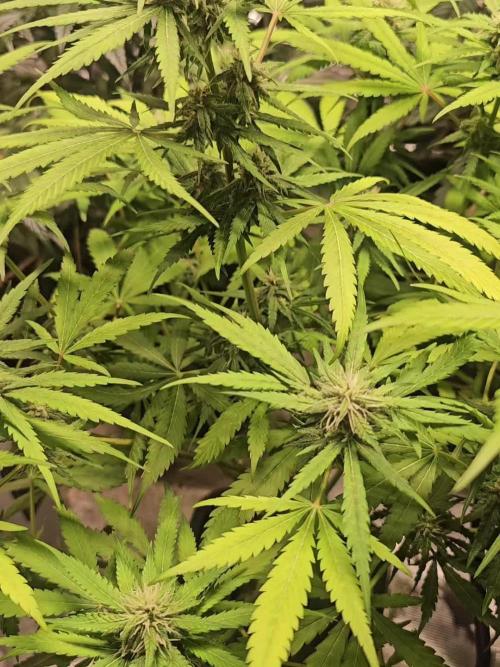
Last week's vidoe. For some reason, it's taking like minutes to upload thirty second videos.
I will try my best to show the updated videos on a lot of these plants.Now i'm impressed with a lot of my autos growing in this naturally derived nutrient.Solution
Likes
9
Share


@SnoopyShaggy
Follow
Purple punch genetics, i attempted an fully organic grow and i achieved success in overall.
My organic ammendments were
1) EM1 bacteria
2) Earthworm castings
3) freshly caught sea fish waste water( Fish blood+ skin)water
4) pure bat guano(5N:18P:5K:2Mgo)
5) Onion peel compost tea(check out my recipe in Veg mode.
6) Decarbed banana peel crushed powder
7) Aloe vera EM-AS
This nutrient feed was easy to get and everything was a by-product of kitchen compost turn into compost tea.
A great grow instead i am happy to see these positive outcomes.
The smell of this items will stink ,most growers will find the smell unbearable but i see absolute win because of the carbon filter and the smell goes of within 2 days.
I am going to measure the outcomes once the buds are dried.
Processing
Likes
1
Share


@magicjohnson
Follow
So This week was the same as the last really, It seems all I have to do is sit back and watch these ladies do their thing!
Ive not gone full on with the bloom supplements or PK yet as only 2/5 of the GG are seriously flowering.
The other 3/5 GG are now Finally showing some signs of flower and some tops are starting to build and lowers producing more pistils each day!
The Stardawgs continue to explode, even some friends who were sceptical about the performance of the Quantum board LED's have been flow away by the results.
All of the buds seem to be building dramatically top to bottom which no shortage of frost!
Macro shots on the way!!
Likes
20
Share


@LaGrassaFarm
Follow
Muy buenas, por aquí una semana más y ya se va viendo el final del trayecto de estas plantas.
Última semana que abonamos.
Y ya estando atento con el microscopio, para ver el color del los tricomas, en el momento que encontremos mas uno, ámbar, le damos tijera jejej
Pues nada, muchas gracias siempre por el apoyo, y buena semana tengáis.🙌

Likes
28
Share


@Pogosvk
Follow
ESTA SEMANA SOLO AGUA PARA IR METIENDO FLORACION Y LAS BACTERIAS DE BACTOHEMP PARA LA KRITICAL GB Y BACTOMATIK PARA LAS QUICK ONE MEDIA PASTILLA Y COJIDO UN TAMAÑO MUY BUENO DADO Q SON PLANTAS DE POCO TAMAÑO Y QUE E COMETIDO FALLOS DE PRINCIPIANTE EN LAS PRIMERAS SEMANAS DADO QUE EN MI CASA TENGO PROBLEMAS DE INTIMIDAD JAJAJAJ
HICE UN POQUITO DE DEFOLIACION Y POR PERRO Y NO MOVER LAS PLANTAS CORTE UNA RAMA LLENA DE FLORES DE LA PARTE DE ABAJO DE LA QUICK ONE 2 Q ESTABA CRECIENDO QUE FLIPAS ESPERO Q NO SE JODA....
EL DIA 26 YA Q VEO Q EMPIEZA A FLORECER E METIDO LAS BACTERIAS Y UN POCO DE CRECIMIENTO YA QUE LLEVABAN UNA SEMANA A AGUA DE MOMENTO VA TODO BIEN O ESO CREO POR QUE ES MI PRIMER GROW EJJEJE
dia 28 ultimo dia de la 4 semana preparando la floracion y creo q mi pequeño armario de 60x60x140 se me queda pequeño jajajjaja


Likes
19
Share


@Ninjabuds
Follow
My Blackberry Moon Rocks plant is looking fantastic! I chopped down the first one a few days ago, and it's almost dry. Can't wait to try it out. The other plant still has about a week to go. It's got these huge buds, and they're starting to get this awesome purple color. I'm really excited to see how it smokes.
The past week has been awesome for drying my plants. The weather's been perfect – nice and dry, with just enough breeze to keep things moving. I finally got around to chopping down those two big plants I've been meaning to trim. They're almost ready, just need a little more time to dry out completely. I can't wait to see how they turned out.


Likes
6
Share


@Art88
Follow
Cleaned the crown out and lifted the canopy gonna give them another week then flipping 🤙