


Likes
Comments
Share


@Cindylee
Follow
Likey likey this weed for me not a big producer,and that is a big factor for me,,maybe if I give her a run and use lst on her,,possibilities


Likes
3
Share

@MandaleApical
Follow
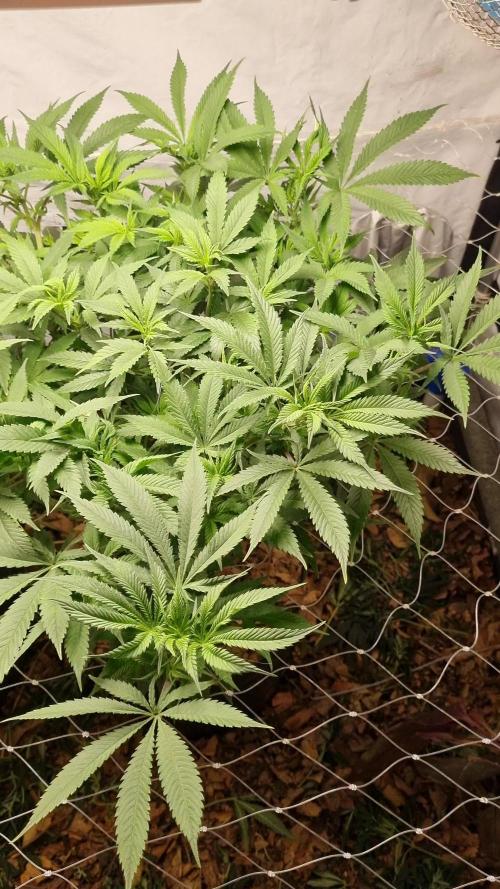
Bueno después de una semana solucionamos los problemas que tenía una de las últimas plantas aplicamos qué es lo que aplicamos microorganismos en grandes cantidades como para ayudar a la planta a asimilar el nuevo sustrato que pueda adaptarse de una mejor manera y pueda observar mejor los nutrientes y de ahí se solucionaron los problemas nutricionales que estaba presentando hicimos defoliación y poda de bajos y pasamos a flora este mismo día que estoy subiendo el video la planta se recuperó fenomenalmente estiró sacó nuevos brotes lo mismo hicieron las demás plantas comenzamos a regar de manera más frecuente la cantela y una vez por semana la maceta sin fondo y eso dio muchos mejores resultados los paneles subimos la intensidad de un 40% a un 65% y lo sucesión vamos a ir aumentando su intensidad hasta llegar al 100%.

Likes
4
Share


@MoneyMorris
Follow
Looking like 3 more weeks until harvest. I’m going to start flushing in about 10-12 days

Likes
23
Share


@Kakui
Follow
V8, supuestamente hoy haría transplante a los maceteros definitivos, pero, hace 3 días que las plantas están presentando hojas débiles y dobladas hacia abajo, en un principio pensé en que podría ser exceso de agua, pero creo que es exceso de nutrientes, básicamente exceso de nitrógeno, ya que las hojas están con un verde muy oscuro y algunas están presentando manchas color café.
Así que hoy les hice lavado de raíz, con agua EC 0, hasta que el drenaje fue de cercano a 4 EC. Esperaré unos días a ver si se recuperan, si no, simplemente las eliminaré y empezaré de nuevo, ojalá se recuperen.
V9, al final si era exceso de nutrientes/nitrógeno, menos mal que se recuperaron con el lavado de raíces, pensé que morirían, ahora veré como siguen para decidir si hago transplante hoy mismo.
V10, se realizó trasplante a macetas definitivas y un riego suave. Las plantas están todavía en recuperación, esperaré unos días más para empezar el LST.
V12, riego.
V13, se realizó una pequeña defoliación y LST.
Likes
73
Share


@Roberts
Follow
Cookies and Cream is growing great she has a frost starting and colas are developing nicely. I did a solution change 4 days ago. Been getting the ph stable again since. I had minor spots on leaves from it. Beside that everything is looking good. Thank you Medic Grow, and MSNL Seeds. 🤜🏻🤛🏻🌱🌱🌱
Thank you grow diaries community for the 👇likes👇, follows, comments, and subscriptions on my YouTube channel👇. ❄️🌱🍻
Happy Growing 🌱🌱🌱
https://youtube.com/channel/UCAhN7yRzWLpcaRHhMIQ7X4g

Likes
158
Share


@northernMike
Follow
Hey everybody, hope all is well👊.
It's been a good week, all plants are growing extremely well.
Pulled Sour girl #2 out of the box and got 21 grams(dry) of small
popcorn buds and 98 grams(dry) of nice sized nuggets, SUPER HAPPY😋.
Harvested Sour Girl #1 yesterday, this plant turned into a monster, it was almost 40 inches tall
and right around 36 inches wide💪. I never got real big buds from this plant,but I got lots of med. sized nuggets👍.
I put 77 grams of popcorn buds and 460 grams of nuggets into the tent to dry.👍
Will report on smoke and taste as soon as #1 is dry, right around 7-9 days.
As for the Amesia auto, I've had it growing in the gorilla tent under the new light(xs2000),
just letting it do it's thing, no topping or lst, 0 defoe and 0 food for the first 3 weeks.
For the flowering cycle I fed molasses and great white,humates and bloom from Dutch Sciences, that's it..
Super easy to grow and the buds are HUGE, harvested today and I got my biggest bud so far,
Main Cola 100 grams wet, HOLY SMOKES😍, couldn't believe it when I put that on the scale😶.
Remember, It's 420 Somewhere


Likes
6
Share

@Nonem420
Follow
Day 105
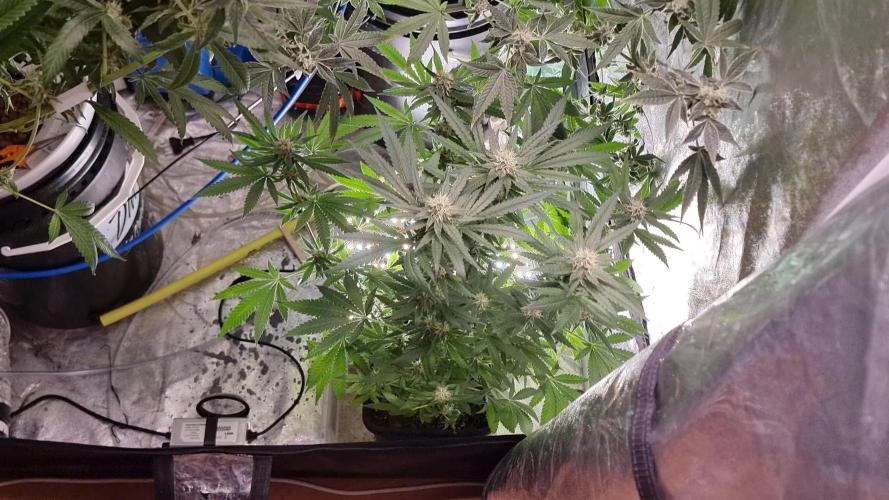
The Pinus Contorta Purple Matcha is going crazy with the smell, 1 or 2 more weeks for more trichomes to turn amber. The Fresh Pressed Runtz is doing good too but she's far from being ready (on paper 10 weeks vs the 8/9 of the purple matcha).


Likes
42
Share


@rhodes68
Follow
1/17 Week 10 and wow
Ok girls are doing well not a worrisome issue to be found unless its space.
Brought Dink to the Flowering tent put Bambi in the Auto tent Dink is a very WIDE plant and thats a problem in the 4x5.
Dropping Koolbloom for a while in favor of Peak, its better its expensive but Pussy has gotten to the point of fast building so bringing it in.
Octo, Solitaire, Chew Mee and Plenty will benefit well.
Pretty much everything else as it was last week no serious changes to nuets.
We decided to go with 6 clones instead of the 9, we need a break and this keeps us under the plant limit.
1/19
Dropped Bloom 10% for Flowering plants
Reset the auto tent for easier access
Clones now in the 3x3


Likes
13
Share

@GERGrowDesigns
Follow
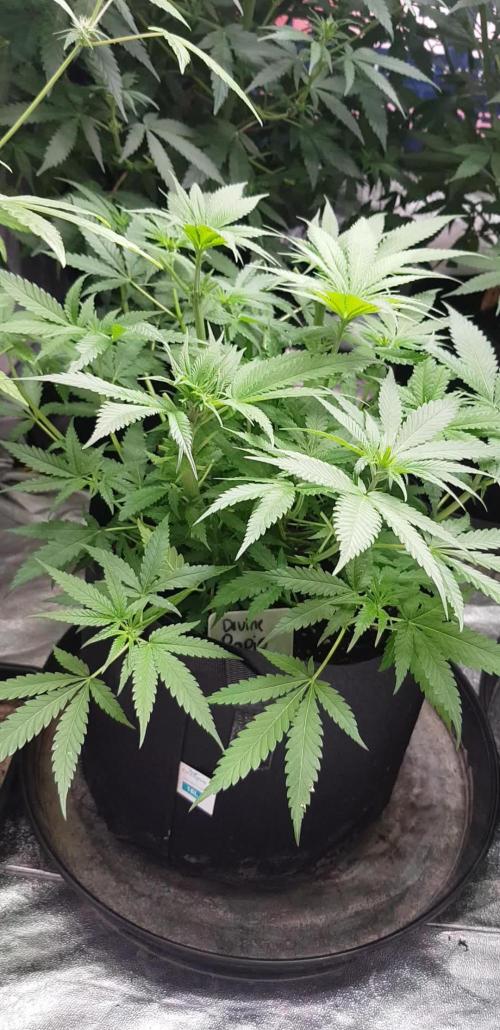
Welcome to Flower Week 1 of Divine Seeds Divine Rapier
I'm excited to share my grow journey with you from my
Sensi Seeds Project . It's going to be an incredible ride, full of learning, growing, and connecting with fellow growers from all around the world!
For this Project , I’ve chosen the Feminized Photo Strain Divine Rapier:
Here’s what I’m working with:
• 🌱 Tent: 120x60x80
• 🧑🌾 Breeder Company: Divine Seeds
• 💧Strain Info : 29%
• ⏳ Flowering Time: 6-7weeks

Likes
19
Share


@creichs
Follow
Power Flower is now only an inch shorter than the Holy Punch
600W light is 9 inches away from plant (over the holy punch (Trying to give the two Power Flowers more room to grow))


Likes
39
Share


@J_diaz420
Follow
Como es un cultivo s.o.g hice el transplante rápidamente el día 12, para dejar crear raices ya que se pasará a floración tempranamente por el día 20 a 25 de vegetación, se transplanto de 1 a 5 lts.
El día 14 se hará 1° riego con fertilizante y el día 15 ya se hará riego foliar con estimulador de floración delta 9 para próximamente pasar a floración ✌️🍀💚
Likes
26
Share


@pifflestikkz
Follow
Day 17
17/07/24 Wednesday
De-chlorinated tap water pH 6 with calmag 5ml -5L.
Very humid week, noticed a green turning colour on top of soils where the humidity has been far to high.
I have installed door netting and recently left open all day and night now so they can condition over night in colder temps.
All are doing well, one overdose slightly behind and looking ABIT swifted. But she'll come around 💪💚
Day 19
19/07/24 Friday
Lite Feed today, 250ml each pot small run off.
Seeing excellent start to these babies. Let's get it 👌💚
Day 21
21/07/24 Sunday
De-chlorinated tap water pH 6 with calmag 5ml to 5L.
Watering in 1L each day from now.
Updated video

Likes
17
Share


@The_Projexx
Follow
Very fun strain to grow. Easy to train and love to get big. We had 2 different expressions on the plants and both where very pleasing. Both plants grew vigorously and provided me with just over 3/4 pound of dry medicine!


Likes
12
Share


@DoDrugs420
Follow
Hypno Seeds knows what rules the world, so we created a strain to let everyone have their chance to try some Juicy Pussy Auto. An autoflowering cannabis cultivar that’s absolutely dripping in trichomes, potency, and flavor. It’s a Sativa-dominant strain due to its Thai Stick cross and is balanced out with some special Indica strains to give it its mellow, yet arousing effects and massive juicy yields of big hard nugs. Take a sip and enjoy!
Tech Specs
THC 19%-24%
CBD 0.50%
Flavor Orange Creamsicle, Pungent, Sweet
Type 35% Indica / 65% Sativa
Flowering 9 Weeks
Height 120-160 Cm
Effect Calming, Creative, Extra Sensual, Pleasant, Relaxation
Genetics Thai Stick X Indica Strains
---------------------------------------------------------------------------------------------------------------
Grow Sponsored by MARSHYDRO
HIGH EFFICIENCY WHITE LED LIGHT: Newest SMD LED technology provide highest PAR/LUMEN output(743umol@18"), designed to replace a single-ended 250watt HPS; MARS HYDRO TS 1000W Plants Growing lamp makes you get 30% higher yield compare OLD blurple led lights, Max 2.0g yield per wattage (power draw)
LOW ENERGY CONSUMPTION GROW LIGHTING : Consuming only 150W with 342 LEDS! It saves up to 50% energy than other led grow lights. Perfect for 2.5x2.5ft,Max coverage 3x3ft. Over 90% light energy can be absorbed by plants; higher intensity and more even coverage in a MARS HYDRO grow tent, reflective area, or by crossing over using multiple TS1000
SUNLIKE FULL SPECTRUM LED INDOOR GROWING: 660-665nm Red IR/3200-4200Knm/5200-6800Knm, infinite close to natural light, best for all plants all stages growing, rapid plant response from seed to flower and increase yield & crop quality
HIGH REFLECTIVE & NOISE FREE-Fanless LED GROW SYSTEM design will make your growing life easy and quiet, quickly heat dispersing material aluminum reducing light lost to aisles and walls, increase the light intensity up to 20%, allowing your plants receive more energy and without burning your plants for maximum headroom
Get your own at https://www.amazon.de/dp/B07ZVFBR34

Likes
2
Share


@BigGGrows
Follow
This week has yielded positive results from the FIM And LST. I topped the internodal new branching that grew from the FIM job as well this week and the 2 extra tops are growing in response on each branching. She is now under a 4 bulb vivosun T5 6500K fixture and is responding very well to the light changes. Her stems are begging to give off terpines when rubbed. She smells of tart sweet lemons and diesel fuel haha. I am very happy about this grow and am expecting preflower to begin soon.

Likes
4
Share


@Growstopher
Follow
Fastbuds seeds
LSD-25 auto #2
Only using spring water for first week and spraying with foop mist every night.
Going to be using foop nutrients with Humboldts secret cal/mag and nectar for the gods ph up and down.
Here we go!

Processing
Likes
21
Share


@LittleBigTrees
Follow
Switched from 24/0 to 12/12 at the end of day 14, also switched the 730nm Led's on. Its been 7 days the plants have started growing a lot faster but there's still no pistils showing.
I started feeding biobizz grow @ 2ml/l
At the moment there getting watered every 3-4 days.
The light is showing 25000lux on a lux meter app.