


Likes
Comments
Share


@rkomaaa
Follow
It's been an exciting journey training my plants, and I'm happy with the progress they've made. I've been implementing various training techniques to encourage healthy growth and maximize yields. The plants have responded positively to the training, and I'm hopeful that they will continue to thrive and develop as planned. Fingers crossed for a successful outcome!

Likes
6
Share


@Prof_Weed
Follow
Removed 2 leaves.
Has got a little bit of deficencies, i think the pot is to small, not easy to feed..
But Overall happy!
Likes
42
Share


@Ultraviolet
Follow
Thank you. Gave her a cocktail to help with stress. Added 1st net for lateral support, not so much now, but for later. Blue light is absorbed by photoreceptor proteins called phototropins, which trigger a hormonal response that causes cells on the shaded side to elongate, making the plant bend toward the light. Try and fill this side a little. She is quite big already, just needs to find her stride again after the undue torture.
5 apex stems with 20-30 mini cola, let them develop a little, with the apical dominance shattered, all those 20-30 will all compete with each other as soon as that stretch is initiated. Key to a good stretch is making sure the plant is cycling efficiently, with large ATP conversions occurring lights out.
For now, I'm keeping light intensity high. A plant will slow its vertical growth in very high light intensities, leading to a more compact form with thicker stems and leaves. This response is a protective mechanism against light stress, which can damage the photosynthetic apparatus and lead to symptoms like leaf scorching, yellowing, and brittleness. Instead of growing taller, the plant invests its energy into creating a more robust, stress-tolerant structure.
Providing plants with necessary antioxidants helps protect the photosynthetic apparatus by scavenging reactive oxygen species (ROS) that cause damage from excess light.
UV light exposure can impact the xanthophyll cycle by either enhancing its photoprotective role or causing damage, depending on the intensity and type of UV radiation. UV exposure can trigger the synthesis of more xanthophyll cycle pigments to increase the plant's capacity to dissipate excess energy, but it can also cause direct damage, particularly to Photosystem II, and may lead to a decrease in the de-epoxidation state (DEPS ratio) which indicates a reduced capacity to dissipate excess energy.
Plants can respond to UV stress by increasing the synthesis of xanthophyll cycle pigments, such as violaxanthin and zeaxanthin, to improve their photoprotective capacity. UV-induced changes in xanthophyll cycle pigments can be linked to a plant's overall tolerance to high radiation stress. The xanthophyll cycle helps protect against photoinhibition, which is especially important when the plant is exposed to high levels of both UV and visible light. High doses of UV radiation can directly damage photosynthetic components, including the proteins, lipids, and pigments in the thylakoid membranes. Exposure to UV radiation can have a mixed effect on the de-epoxidation state (DEPS ratio) of the xanthophyll cycle pigments. In some cases, UV can inhibit the conversion of violaxanthin to zeaxanthin, resulting in a lower DEPS ratio and a reduced capacity for energy dissipation. However, the total pool of xanthophyll cycle pigments may increase, and this enhanced pool size could provide a greater potential for photoprotection despite a lower DEPS ratio.
The xanthophyll cycle works alongside other mechanisms, such as the accumulation of flavonoids (UV screens), to protect the plant from UV-induced damage.
Blue light repairs 100% UV-induced damage in plants through a process called photoreactivation, which uses a light-dependent enzyme called photolyase. This enzyme uses energy from blue and UV-A light to directly reverse the damaging pyrimidine dimers in the DNA caused by UV-B radiation, a key mechanism for maintaining the plant's genetic integrity.
After carbon, light, water, temperature, and nutrients, the limiting factor of a plant's growth is often its own internal factors or the amount of a key ingredient. Chlorophyll concentration is one such factor, as the amount of this pigment limits how much light can be captured for photosynthesis. Other factors include chloroplast number, respiration rate, and the concentration of carbon dioxide in the atmosphere, as plants are often in a CO2-deficient condition.
60x60x18=64800seconds x 700 = 45,360,000moles. 45DLI
Exposure to 165 µW/cm² of ultraviolet-B (UV-B) light for 3600 seconds = 1 hour, a extremely high, acute dose triggering stress responses and protective mechanisms.
.
The plant's photoreceptor protein, UVR8, senses the UV-B radiation. This triggers a signaling cascade that activates specific genes to protect the plant from damage. In response to the UV-B signal, the plant ramps up the biosynthesis of protective compounds like flavonoids, phenolic acids, and anthocyanins. These compounds absorb UV radiation and accumulate in the epidermal layers of leaves to shield inner photosynthetic tissues. The plant may increase leaf thickness or deposit more cuticular wax, creating a physical barrier to the radiation. The plant will produce more enzymatic and non-enzymatic antioxidants to neutralize the reactive oxygen species (ROS) produced by the UV-B radiation. The plant activates enzymes, including photolyases, to repair DNA damage caused by the UV-B. These repair mechanisms are critical for preventing permanent genetic mutations.
While protective measures are activated, a high dose delivered over a short period can cause stress that overwhelms the plant's defenses.
Photosynthesis is highly sensitive to UV-B. A high dose can inactivate Photosystem II (PSII), damage thylakoid membranes within the chloroplasts, and reduce chlorophyll content, which lowers the plant's overall photosynthetic capacity. Despite repair mechanisms, high UV-B doses can inflict persistent damage on the plant's DNA. One study found that acute, high-dose UV-B had a greater effect on genome stability than chronic, low-dose exposure. The overproduction of reactive oxygen species can cause oxidative stress, leading to the oxidation of lipids and proteins and disrupting cellular function.
Likes
35
Share


@eldruida_lamota
Follow
Que hay familia, adelantamos semana de las red hot cookies, ÚLTIMA semana antes del machetazo, estoy deseando cortar estos caramelos llenos de polen, que parecen caramelos de fresa, olor Muy afrutado, cepa muy bien trabajada de sweetseeds que antes de cosechar, ya la recomendaría.
No tienen ni 60 días de floración , y a mi parecer , están bien hechas. 50% tonalidades rojas , 50% tonalidades verdes con toques rojos.
.
La humedad esta al 45% la temperatura está entre 21/27 grados , y como siempre el ph , ya que es de lo más importante,está en 5,8/6,0.
.
Nos vemos de nuevo para la COSECHA, un saludo y buenos humos fumetillas💨💨💨.

Likes
21
Share

@RealGrowDiary
Follow
Day 77
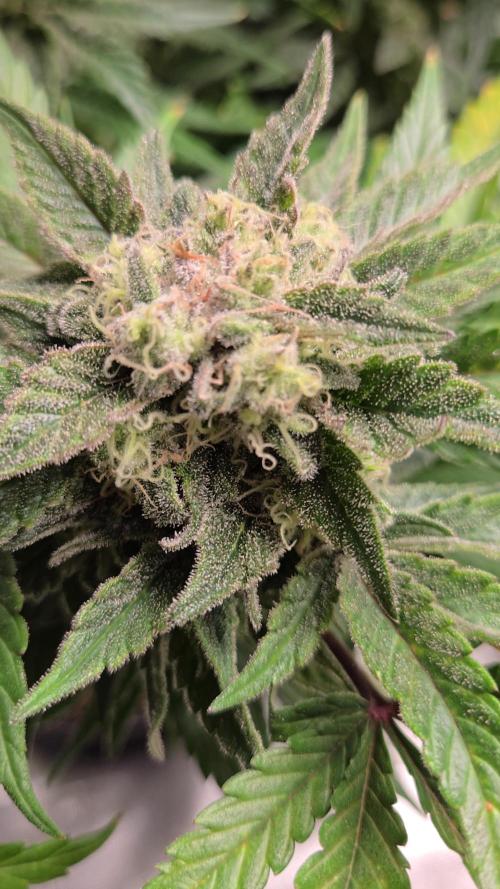
The plant is deep into late flowering now, and the buds are clearly maturing. Trichome coverage has noticeably increased-most are cloudy, with only a few remaining clear. Pistils are starting to darken and curl inward, although there are still some fresh light-colored hairs emerging. The aroma has intensified, becoming richer and more pungent when the lights warm up.
The leaves show a slight fade, mostly around the edges, which is normal at this stage as the plant reallocates energy toward bud development. No signs of stress or significant nutrient issues, Humidity and airflow remain stable to prevent mold since the buds are now dense and sticky
Section Fully Updatet.


Likes
7
Share


@FrankFarm
Follow
Here is first week of flowering nothing much after change the life cycle just add water and make them some compost teea this week
Likes
Comments
Share


Likes
3
Share


@XxBILLZAxX
Follow
Curling is still a problem still :(
A rainy week so high humidity all around... looking tasty though! Buds are getting bigger and sticker!
Likes
21
Share


@CanadianFillmore
Follow
Welcome growfessors 👽 to another episode of growfessor theatre, 4x4 edition. Week 5F begins for the ladies and they are looking good! Frosty trichomes are displaying themselves and bud sites are bulking up!! 🌳💚
Thanks for tuning in growfessors 👽🌳💚, tune in again for another episode!


Likes
Comments
Share


Likes
24
Share


@Spazmagi
Follow
12/8 - Here we are at the beginning of week 10. Her buds are starting to frost up and she is definitely bulking up more than her sister, but her sister has a longer projected flowering time-frame (Heavy Sativa vs Indica). Anyways, did some minor pruning for airflow optimization and to remove some unhappy leaves from her undergrowth. They weren't yellow, but they weren't getting enough light and it was showing. Haven't done much to her this week other than top her off with Tap every other day. Seems like her feed from last week was on point as her pH and EC were solid as the water level lowered. After her first top-off, her EC started to fall as she ate more (reflected in the lower ec in the res after topping off with tap). Tapered her down to 80% strength as she is moving further along in flower and should hopefully finish sooner than her sister. If she needs a bump in her EC, I may top off with full strength nutes, but I'm going to just wait and see how she responds.
Breeder's timeline reflects a ~65 day seed-to-harvest, but I can assure anyone out there growing this strain in DWC that she will not be ready in that time-frame. Currently she is sitting on day 67 and still looks like she has another 2 weeks or more. I grew her in soil before and she was ready pretty darn close to her expected time-frame (~70 days), but this strain responds to DWC differently. She didn't have slow growth or anything; just seems like she will veg longer in hydro than in soil. Not sure why.
Thanks for stopping by the garden, and, as always, Happy Growing!


Likes
189
Share


@Green_Man_420
Follow
Big shout to RQS and @James for the beans for this grow. Once again the genetics from these guys is unbelievable.
Really appreciate all the likes messages and support from you awesome bunch of growers. ✌️🙌💚
Week 9 is upon us. Loving the way this Mimosa is filling out. Really putting some weight on. The pics aren’t doing much justice. Will carry on feeding for another 2 weeks the start the flush. The colours are really starting to come through. I will monitor the progression closely now and let the plants tell me what they need. Have a great week people ✌️👊🏻

Likes
120
Share


@DogDoctorOfficial
Follow
Welcome back to another thrilling update on our Lego Ninja Tropical Tangie Run. Week 7 has been an exhilarating journey of rapid growth and breathtaking canopy development. Our Tangie is proving to be an extraordinary ninja superstar!
Last week, we embarked on an exciting transplant adventure. Our fearless Tangie had outgrown her previous home, so we bravely transferred her to a spacious 25-liter fabric pot. With the assistance of Aptus Holland Mycor Mix, we ensured a smooth transition, providing her with beneficial mycorrhizal fungi. These underground helpers are like her very own ninja squad, supporting her root system and establishing a strong foundation.
To continue supporting her growth and development, we incorporated the incredible Aptus All-in-One Pellets into the soil. These pellets act as potent ninja power capsules, packed with essential nutrients. Each watering session delivers the perfect dose of nourishment, fueling our Tangie's journey to greatness. She's thriving with optimal health and vitality.
And let's not forget our loyal companions, the trusty Lego Ninja buddies. They have remained steadfast by our side throughout this green adventure, offering both moral support and an unwavering display of ninja vibes in the grow room. Who would have guessed that little plastic warriors could be such fantastic companions?
After the successful transplant, it was time to introduce our Tangie to the art of scrogging. We skillfully installed a scrog net, creating a framework for her to weave her way through. This setup resembles a challenging ninja obstacle course, encouraging her to grow horizontally and maximize her bud production. It's truly remarkable to witness her impressive moves as she gracefully and sexily fills up the space.
Of course, proper nutrition remains crucial for our Tangie's ninja training. Instead of using Aptus Holland Veg Watering Mix and All-in-One Liquid separately, we have now transitioned to solely relying on the pellets. These convenient premixed pellets integrated into the soil eliminate the need for additional liquid NPK. This simplification allows us to focus on other essential aspects of her training.
To ensure she remains pest-free, we have been diligently conducting leaf picking sessions, which also serve as an opportunity to check for any unwanted visitors. So far, our Tangie has passed with flying colors, and her vibrant 9-fingered leaves are a fantastic sign of her overall health.
As our Tangie continues her epic ninja journey, she basks in a PPFD of 600. These photons act as her loyal ninja training partners, stimulating robust photosynthesis and fostering explosive growth. With each photon absorbed, she becomes increasingly formidable, ready to take on any challenge that lies ahead.
In summary, Week 7 has been an absolutely exhilarating chapter in our Lego Ninja Tropical Tangie Run. The successful transplant, the magic of Aptus products, the support of our Lego Ninja buddies, and the installation of the scrog net have all played vital roles in our Tangie's remarkable progress. We owe a tremendous SHOUT OUT to Aptus Holland, Dutch Passion, and Grow Diaries for their continued support and exceptional products for the love and for it all, without them nothing we see here wold be possible.
Join us for the next update, where we will delve deeper into the fascinating world of ninja training techniques and witness the unfolding of our Tangie's extraordinary ninja powers. Until then, continue cultivating with joy, embrace the indomitable ninja spirit, and remember that every plant has the potential to become a botanical ninja superstar!
As always thank you all for stopping by, for the love and for it all , this journey of mine wold just not be the same without you guys, the love and support is very much appreciated and i fell honored and blessed with you all in my life<3 <3 <3
#aptus #aptusplanttech #aptusgang #aptusfamily #aptustrueplantscience #inbalancewithnature #trueplantscience #dutchpassion #dogdoctorofficial #legoninjago #growerslove
With true love comes happiness <3 <3 <3 Always believe in your self and always do things expecting nothing and with an open heart , be a giver and the universe will give back to you in ways you could not even imagine so <3 <3 <3
Friendly reminder all you see here is pure research and for educational purposes only
<3 <3 <3 Growers Love To you All <3 <3 <3


Likes
5
Share


@Genji87
Follow
Week 7 is starting, i will upgrade
You can see how i preparing one branch for silverspray to produce isolated semen on this single branch while the rest will produce normal buds

Likes
4
Share

@420abbybox
Follow
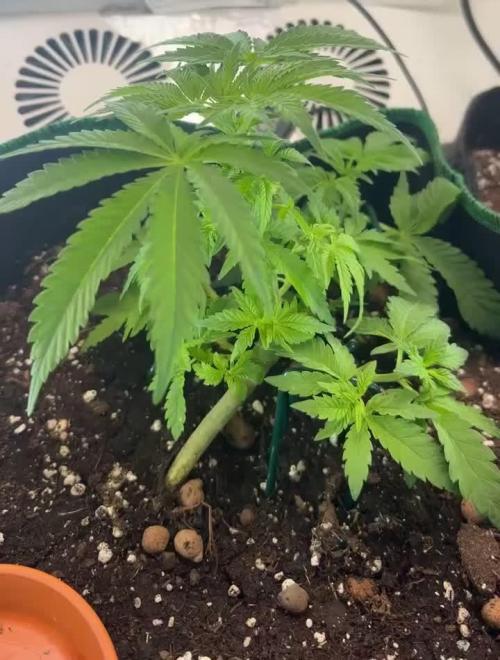
day 5 from transplant and surprises the shock recovery time was faster than initially anticipated went from 3.8L-20L pots the plant seems to be growing rapidly with the 2 sets of topped side branches have recovered fully this is a long vegative stage experiment
Likes
13
Share


@Flowers_By_Irene
Follow
Partially drained the tank at the start of the week and topped up with ro water and 1ml of final solution per Litre. Last 2.5 days were in darkness.
I trimmed the majority of fan leaves before hanging up to dry in the tent today. Started out trimming with the plants in the tent and soon realised it would be much easier to just cut them down whole, hang them upside down outside the tent and trim them up a bit.
I have a small dehumidifier and a small fan heater setup in the tent and they have been keeping a humidity level of about 60% and a temp of 16 Celsius for the last few days while the lights have been off. I figure that's a good starting point for drying and I can increase the temperature if needed, that will drop the humidity also.
Intake fan at the bottom and extract fan at the top are running constantly as they have been since the grow started (low power 4" fans).
I might add back in a fan for circulation depending on how the drying goes, or maybe even trim or hang the plants better to get more airflow around the buds

Likes
8
Share


@HideAndFly420
Follow
I just moved the mimosa inside a little growbox i bought 40x40x120 with a mes hydro 600.
Let’s see!
Likes
1
Share


@MrPerlite89
Follow
Great week one didn’t pop so I dropped another sourgirl and waiting on my O2 machine
