The Grow Awards 2026 🏆
Likes
Comments
Share
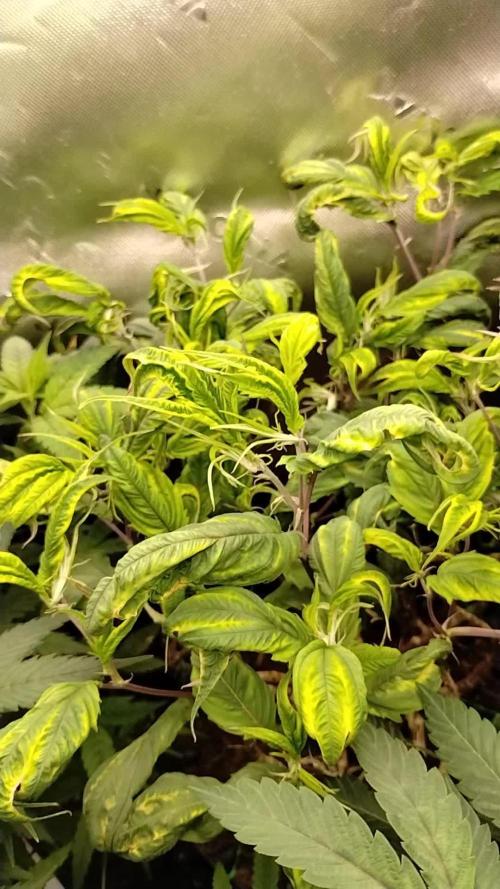
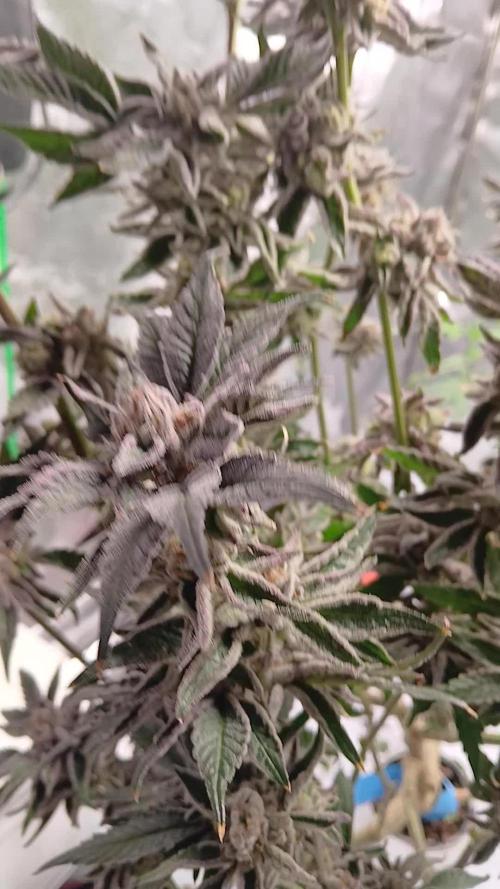
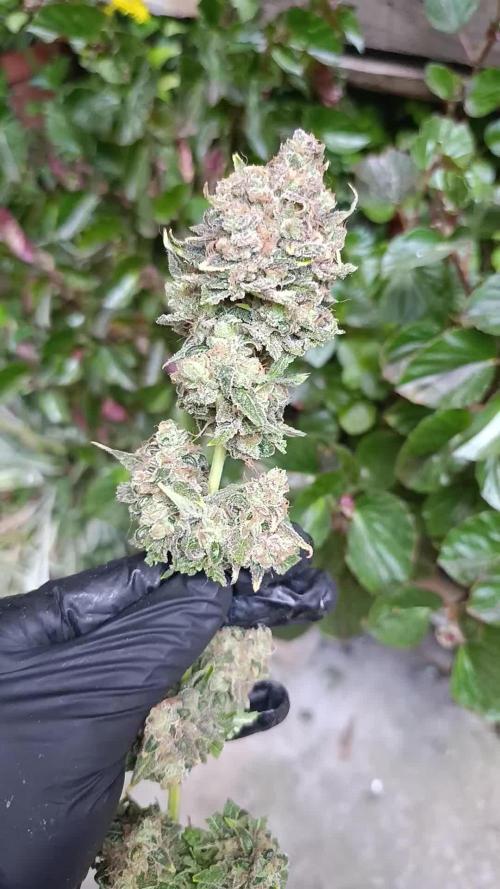
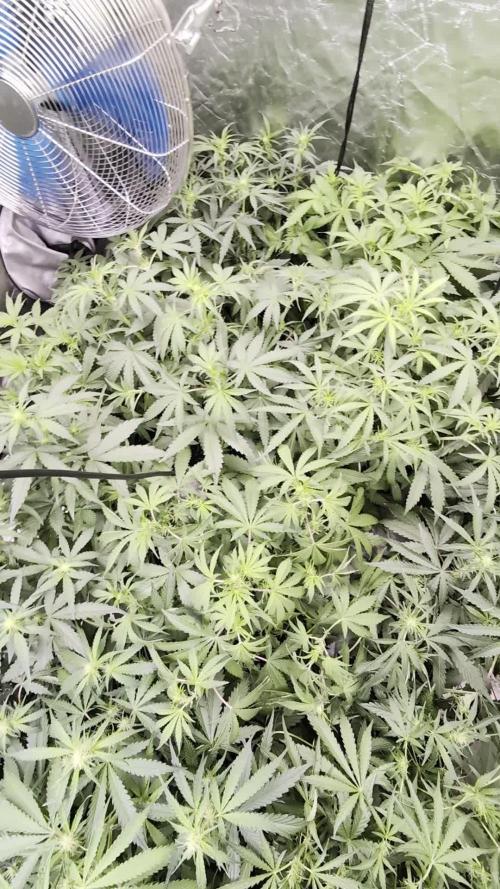
day 49 just pure water phed down. it is day 51, morning before lights on, I might chop today. I use a zero water filter pitcher got off walmart. My humidifier is only a sonic wave. If you use regular tap water it will get gunky in a sonic humidifier. If you have a heat humidifier that boils the water the mist should be clean. These are the 2 types of water humidifiers. Researching best water filters this "zero water" also comes with a free ppm meter! yay! Other water pitcher brands; the water still has ppm. So water misted will still have ppm contamination. You can easily used distilled water only, and reverse osmosis. I just fill a 4gal office water jug with the pitcher and fill my humidifier when needed. I do not use a humidifier in my entire grow up to this point when I chop, I need the perfect rh or this whole effort can fail. growing up to this point only requires 20% effort, chopping now for the 2 weeks dry is this 80% of crucial determination, succeed. A lot of tasks are required today for a clean chop. I feel confident, observed my cross seeds with pink paradise and one with a slightly open caylex looks dark enough for successful germination. I figured 8-16 seeds may be created, 3-4 buds were potentially pollinated. Many growers don't understand when creating genetics with female/female there is a slight chance of herm. You lose 50% of your genetic function. Just water last 2 days, no humic no folvic, 1st time entire grow ha! There is a lot of cleaning to do, remove the trees, clean the entire tent and environment with bleach water, hacksaw. I am very proud of my grow. I have sampled 3 of the strains, dr. thunder legit made my lips numb but it could have just been the terps removing my skin cells from the sticky filter, no lie. This is my best grow to date. I did this for you, and to document hype or not under the best conditions I could give my plants, full max potential, although I wish I had more lights, I am not looking for industrial lol, this is how I grow. Learn a lot on youtube and podcasts there is many good content and I may dab into it. You can have a room full of growers and you have 1 seed in your hand, they will all tell you that their way is correct ;) and the best way. Oreo is stinky AF, Bridal is just amazing glad its massive, just not into sativa but the test seemed slight sativa with majority indica, pink untested, dr, thunder just a lip numming plant aha, its very nice, all 4 amazing appeal like advertised, and excited for next run. Either crosses from this or other copycat genetics. I will give you beautiful glamout shots today, the sizes of the plants, My guesstimate bridal 1lb, thunder 1lb, pink, 0.4lb, bridal 0.5, I am ambitious off 640w lm301h, and 4x 20w blurples daisy chained. day 51 4 chopped see you in a few weeks :D
Likes
44
Share
This was the girls 1st full week of flower. They have done great, lots of stretch, small buds starting to form, and lots of praying 🙏 They have been pretty easy so far, I hit the barrier for these girls with nutrients, burnt the tips a bit , despite that, they have shown no issues. Looking forward to these girls finishing (as always) but they have been lab tested by other home growers who hit 3-4% terpenes, and close to 29% thc
Processing
Likes
12
Share
@XxxAuto
Follow
Wooow.... real uplifting smoke.. very easy to grow, and extremely fast finish 👽 Test smoke at my birthday 😋BIG THICK HARD AND HEAVY BUDS !!
Processing
Likes
13
Share
@MG2009
Follow
Looking good can't wait to see mystery cookie offspring 06/04/2018 She is sparkling with trichomes frosty as .... Well frost. Growing for seed but will use weed for concentrates ( hashish)😁 06/06/2018 Begin 11.5 - 12.5 light schedule, try to get buds fattened up looking for heavy crop of seeds. Also looking at trichomes for maturity, get as many ripe seeds as possible. Ps.found first fully ripe seed today!👍
Likes
12
Share
She almost dies once but came back after switch nutrients to advanced nutrients and recover her by reviving and great results! The best dense and snowy buds I ever grow.
Likes
20
Share
Ha sido un grow muy divertido, me ha gustado como ha quedado finalmente, una planta bajita, con muchas colas, algo finas pero bien prensadas y con mucha resina. Ha sido una de las plantas que mejor ha consumido los nutrientes durante todas las fases de cultivo. El aroma es bestial, tonos cítricos y a hachis . Pronto actualizo con notas de humo.
Likes
5
Share
Start of week 3. Threw some new cover crop seeds and added an alfalfa mulch layer in prep for the flower stretch. Spotted the first pistil on day 17, she is very eager to get going. Tied the main stem down in an attempt to train her. Never got this right before but practice makes perfect, haha! Gave her a good watering of some kelp
Likes
68
Share
Removed autoflower and put her in her own pot outside the tent. Foliars applied in strong blue 430nm with 4000Hz tone. 20-minute dose prior to application. In essence, you're seeing a combination of the infrared light reflected by the plant, which the camera perceives as red, and any residual visible blue light the plant reflects, which results in a purple hue. I was doing more stretching of the stems, adjusting weights, just a little too much, and it snapped almost clean. I got a little lucky in that it was still connected, wrapped her almost instantly while holding her in place with yoyo's. The core framework is now in place. If your soil has a high pH, it's not ideal; you want a pH of 6.4, 6.5, or 6.6, which is ideal. If you are over a pH of 7, you have no hydrogen on the clay colloid. If you want your pH down, add Carbon. If you keep the pH below 7, you will unlock hydrogen, a whole host of new microbes become active and begin working, the plant will now be able to make more sugar because she has microbes giving off carbon dioxide, and the carbon you added hangs onto water. Everything has electricity in it. When you get the microbes eating carbon, breathing oxygen, giving off CO2, those aerobic soil microbes will carry about 0.5V of electricity that makes up the EC. The microorganisms will take a metal-based mineral and a non-metal-based mineral with about 1000 different combinations, and they will create an organic salt! That doesn't kill them, that the plant loves, that the plant enjoys. This creates an environment that is conducive to growing its own food. Metal-based: Could include elements like iron, manganese, copper, or zinc, which are essential nutrients for plants but can exist in forms not readily accessible. Non-metal-based: Examples like calcium carbonate, phosphate, or sulfur are also important for plant growth and potentially serve as building blocks for the organic salt. Chelation in a plant medium is a chemical process where a chelating agent, a negatively charged organic compound, binds to positively charged metal ions, like iron, zinc, and manganese. This forms a stable, soluble complex that protects the micronutrient from becoming unavailable to the plant in the soil or solution. The chelate complex is then more easily absorbed by the plant's roots, preventing nutrient deficiency, improving nutrient uptake, and enhancing plant growth. Chelation is similar to how microorganisms create organic salts, as both involve using organic molecules to bind with metal ions, but chelation specifically forms ring-like structures, or chelates, while the "organic salts" of microorganisms primarily refer to metal-complexed low molecular weight organic acids like gluconic acid. Microorganisms use this process to solubilize soil phosphates by chelating cations such as iron (Fe) and calcium (Ca), increasing their availability. Added sugars stimulate soil microbial activity, but directly applying sugar, especially in viscous form, can be tricky to dilute. Adding to the soil is generally not a beneficial practice for the plant itself and is not a substitute for fertilizer. While beneficial microbes can be encouraged by the sugar, harmful ones may also be stimulated, and the added sugar is a poor source of essential plant nutrients. Sugar in soil acts as a food source for microbes, but its effects on plants vary significantly with the sugar's form and concentration: simple sugars like glucose can quickly boost microbial activity and nutrient release. But scavenge A LOT of oxygen in the process, precious oxygen. Overly high concentrations of any sugar can attract pests, cause root rot by disrupting osmotic balance, and lead to detrimental fungal growth. If you are one who likes warm tropical high rh, dead already. Beneficial, absolutely, but only to those who don't run out of oxygen. Blackstrap is mostly glucose, iirc regular molasses is mostly sucrose. Sugars, especially sucrose, act as signaling molecules that interact with plant hormones and regulate gene expression, which are critical for triggering the floral transition. When sucrose is added to the growth medium significantly influences its effect on floral transition. Probably wouldn't bother with blackstrap given its higher glucose content. Microbes in the soil consume the sugar and, in the process, draw nitrogen from the soil, which is the same nutrient the plant needs. Glucose is not an oxygen scavenger itself, but it acts as a substrate for the glucose oxidase (GOx) enzyme, effectively removing oxygen from a system. Regular molasses (powdered if you can), as soon as she flips to flower or a week before, the wrong form of sugar can delay flower, or worse. Wrong quantity, not great either. The timing of sucrose application is crucial. It was more complicated than I gave it credit for, that's for sure. When a medium's carbon-to-nitrogen (C:N) ratio reaches 24:1, it signifies an optimal balance for soil microbes to thrive, leading to efficient decomposition and nutrient cycling. At this ratio, soil microorganisms have enough nitrogen for their metabolic needs, allowing them to break down organic matter and release vital nutrients like phosphorus and zinc for plants. Exceeding this ratio results in slower decomposition and nitrogen immobilization, while a ratio below 24:1 leads to faster breakdown and excess nitrogen availability. Carbon and nitrogen are two elements in soils and are required by most biology for energy. Carbon and nitrogen occur in the soil as both organic and inorganic forms. The inorganic carbon in the soil has minimal effect on soil biochemical activity, whereas the organic forms of carbon are essential for biological activity. Inorganic carbon in the soil is primarily present as carbonates, whereas organic carbon is present in many forms, including live and dead plant materials and microorganisms; some are more labile and therefore can be easily decomposed, such as sugars, amino acids, and root exudates, while others are more recalcitrant, such as lignin, humin, and humic acids. Soil nitrogen is mostly present in organic forms (usually more than 95 % of the total soil nitrogen), but also in inorganic forms, such as nitrate and ammonium. Soil biology prefers a certain ratio of carbon to nitrogen (C:N). Amino acids make up proteins and are one of the nitrogen-containing compounds in the soil that are essential for biological energy. The C:N ratio of soil microbes is about 10:1, whereas the preferred C:N ratio of their food is 24:1 (USDA Natural Resource Conservation Service 2011). Soil bacteria (3-10:1 C:N ratio) generally have a lower C:N ratio than soil fungi (4-18:1 C:N ratio) (Hoorman & Islam 2010; Zhang and Elser 2017). It is also important to mention that the ratio of carbon to other nutrients, such as sulfur (S) and phosphorous (P) also are relevant to determine net mineralization/immobilization. For example, plant material with C:S ratio smaller than 200:1 will promote mineralization of sulfate, while C:S ratio higher than 400:1 will promote immobilization (Scherer 2001). In soil science and microbiology, the C:S ratio helps determine whether sulfur will be released (mineralized) or tied up (immobilized) by microorganisms. A carbon-to-sulfur (C:S) ratio smaller than 200:1 promotes the mineralization of sulfate, when the C:S ratio is low, it indicates that the organic matter decomposing in the soil is rich in sulfur relative to carbon. Microorganisms require both carbon and sulfur for their metabolic processes. With an excess of sulfur, microbes take what they need and release the surplus sulfur into the soil as plant-available sulfate A carbon-to-sulfur (C:S) ratio higher than 400:1 will promote the immobilization of sulfur from the soil. This occurs because when high-carbon, low-sulfur materials (like sawdust) are added to soil, microbes consume the carbon and pull sulfur from the soil to meet their nutritional needs, temporarily making it unavailable to plants. 200:1 C:S 400:1: In this range, both mineralization and immobilization can occur simultaneously, making the net availability of sulfur less predictable. This dynamic is similar to how the carbon-to-nitrogen (C:N) ratio regulates the availability of nitrogen in soil. Just as microbes need a certain amount of nitrogen to process carbon, they also require a balanced amount of sulfur. Both mineralization and immobilization are driven by the metabolic needs of the soil's microbial population. Sulfur is crucial for protein synthesis. A balanced ratio is particularly important in relation to nitrogen (N), as plants need adequate sulfur to efficiently use nitrogen. A severely imbalanced C:S ratio can hinder the efficient use of nitrogen, as seen in trials where adding nitrogen without balancing sulfur levels actually lowered crop yields. Maintaining a balanced carbon-to-sulfur (C:S) ratio is highly beneficial for plant growth, but this happens indirectly by regulating soil microbial activity. Unlike the C:N ratio, which is widely discussed for its direct effect on nutrient availability, the C:S ratio determines whether sulfur in the soil's organic matter is released (mineralized) or temporarily locked up (immobilized). Applied 3-day drought stress. Glucose will hinder oxygenation more than sucrose in a solution because glucose is consumed faster and has a higher oxygen demand, leading to a more rapid decrease in oxygen levels. When cells respire, they use oxygen to break down glucose, and this process requires more oxygen for glucose than for sucrose because sucrose must first be broken down into glucose and fructose before it can be metabolized. In a growth medium, glucose is a more immediate and universal signaling molecule for unicellular and multicellular organisms because it is directly used for energy and triggers a rapid gene expression response. In contrast, sucrose primarily acts as a signaling molecule in plants to regulate specific developmental processes by being transported or broken down, which can be a more complex and slower signaling process. Critical stuff. During wakefulness (DC electric current) life can not entangle electrons and protons. During the daytime, the light is sensed as multiple color frequencies in sunlight. Coherence requires monochromatic light. Therefore, at night, IR light dominates cell biology. This is another reason why the DC electric current disappears during the night. The coherence of water is maintained by using its density changes imparted by infrared light released from mitochondria in the absence of light. This density change can be examined by NMR analysis, and water is found to be in its icosahedral molecular form. This is the state that water should be in at night. This is when a light frequency is lowest and when the wave part of the photoelectric effect is in maximum use. 3600
Likes
9
Share
Привет друзья. Хочу познакомить вас с новым сортом автоцветущих растений от Smail_Seeds сорт ORIGINAL AUTO CHEMZKITTLEZ F1 reg. Сегодня растению 24 дня. Сорт выводим сами. https://t.me/smail_seeds #Smail_Seeds
Likes
16
Share
@NMGDOC
Follow
Semana pre floración del 15 al 21 de marzo. Empezamos la pre floración bajando las horas de luz y utilizando Genesis. Para fertilizar utilizar media parte de grow y media parte de bloom del Snoop's Dog Premium. El 20 de marzo las podé un poquito en la parte de abajo, no estamos haciendo scrog porque al ser tan novata me dio miedo hacer el corte apical, pero la malla servirá igualmente para separar las ramas. El 21 de marzo se aplicó el jabón potásico y aceite de neem. Vi algún bichito negro y pequeño tipo mosca, no sé si será la mosca negra del sustrato porque usamos coco y no vi larvas ni daños en las hojas ni por abajo, ni por arriba. Por precaución he puesto canela en recipientes. Próximamente agregaré el deshumidificador porque por ahora, con el extractor todo el tiempo, la humedad no baja del 50-55%.
Likes
4
Share
150 g dry per plant in 12 plant tent. Marvelous in my book with this type of quality.
Likes
83
Share
@RunWithIt
Follow
What a fun experience! This was my first time trying a mixed grow style of synthetics and organic. I think I may have found my new go-to strategy. This definitely wasn't a perfect run by any means - as a matter of fact, I botched the feedings earlier in her life. However this grow definitely taught me a lot more about how to treat this strain properly. Now I'm running her clones in the 3x3x6. So the legacy will continue! Let's see how this strain does during the summer months! Cheers everyone! This has been an awesome grow. What I'm lacking in yield, I yet again make up for in quality. And I don't think yield will be an issue with the clones, they're week 6 veg - and quite massive! - RWI out!! 😁 😶‍🌫️🤑
Likes
11
Share
I loved it. Grew some really nice buds, produced an amazing smell that filled the room once I opened my tent. The buds are really sticky, trichomes looked amazing they were about 75% cloudy when I cut her down.
Likes
1
Share
@Ninjabuds
Follow
It’s day 27 from seed for all the plants in the photo sea of green. Let’s call it the battle of the strains summer 2025. All of the plants are starting to have visible differences. I’m already starting to tell witch plants are more sensitive than others.
Likes
233
Share
Tag 63 Blüte die 10. Woche beginnt und die Damen sind fast soweit aber für es sind immer noch zuviele Trichome klar und die ersten werden erst Bernsteinfarben. Würde ich WPFF also Waschen und Liverosin pressen wäre jetzt oder in paar Tagen Ernte. So wie es aussieht dauert es also noch ca 10 Tage. Meiner Erfahrung nach sind jetzt die entscheidenden Tage wo noch viele sekundäre Stoffe wie Terpene und Cannabinoide geildet werden. Der Duft ist Fantastisch bei jedem öffnen des Zeltes. Da der Sommer mit der Hitze eine Pause macht kann ich niedrigere Temp. halten und schone noch die ganzen flüchtigen Terpene. Also ich habe wirklich viel Glück mit dem Wetter gerade. Die letzten Tage habe ich angefangen nur noch mit Wasser zu gießen, angepasst mit Canna CalMag auf (EC 0,5)(PH 6,0-6,2). Nur der mineralisch gedüngten Frozen Tropicana Cherry mische ich noch 2ml/L Canna Flush ins Gießwasser um Salze rauszuspülen. Den Drain halte ich gering. Es reicht mir wenn ich nur 5% drain habe (der EC ist da bei 1,4 und PH 6,1). Besser könnte ich es mir nicht wünschen. Canna Terra hat wieder einmal mehr als perfekt funktioniert. Die Ladies trinken auch noch viel auch das zeigt mir das Sie noch wollen und es noch zu früh wäre sie zu ernten. Jeder grower kennt das ja am Ende trinken sie nur noch sehr langsam und sagen dir ja Buchstäblich das es soweit ist. Ich finde es sehr wichtig die Pflanzen zu beobachten und nicht irgendeinem Plan stur zu folgen. Da wir in paar Tagen in Urlaub fahren muss ich wohl die Ernte und das aufhängen der Pflanze meinem alten Growbro anvertrauen genauso die Vorzucht des neuen grows. Ich hoffe das die Damen noch nicht trocken sind wenn ich wieder da bin. Aber da will ich hier keinen zulabern. Ihr könnt euch ja vorstellen wie das ist erade in den letzten Tagen nicht da zu sein. Zum Glück kann ich mich da auf meinen Kumpel verlassen er hat auch schon viele Jahre Erfahrung und ja meinen Grow Style ja von mir gelernt und fast 1 zu 1 übernommen.. Ich hoffe die Fotos und meine ersten Videos gefallen euch. Sagt mir gerne ob ich weiterhin Videos aufnehmen soll oder interessiert euch das weniger. Ich wünsche euch allen gesunde und glückliche Pflanzen und ein schnes Wochenende
Likes
126
Share
@nonick123
Follow
Día 34 (19/02) Pasamos a 12/12 😁 Riego 1,25 Litro H20 + Wholly Base 2 ml/l + Solid Green 1,5 ml/l + Rise Up 1 ml/l de Gen1:11 TDS 875 PPMs - pH 6,28 Día 36 (21/02). Las plantas están explotando en crecimiento vertical! 2,5 cm al día 😍💥 Dia 38 (23/02). Riego 1,25 Litro H20 + Wholly Base 2 ml/l + Solid Green 1,5 ml/l + Rise Up 1 ml/l de Gen1:11 TDS 875 PPMs - pH 6,28 He decidido subir el riego a 1,25 litros porque se muestran sedientas! Día 39 (24/02) Muestra las preflores y no para de estirarse! 😍😍😍🐎 💦Nutrients by Gen1:11 - www.genoneeleven.com 🌱Substrate PRO-MIX HP BACILLUS + MYCORRHIZAE - www.pthorticulture.com/en/products/pro-mix-hp-biostimulant-plus-mycorrhizae
Likes
9
Share
@Rizik86
Follow
Day 22 - Plant is 6 inches tall. Tons of roots sticking down into the water. Checked PPM 215. PAR/PPFD ranges from 200 to 270 at the height of the plant. Day 25 - Plant is 9 inches tall and 12 inches wide. Water dropped a lot. PPM was 100. Added 2 gallons of RO. Added 10 mL of CalMag. Added 10 mL of the 3 base nutes Micro Grow and Bloom. Added 5 mL of each of the additives. PPM was 515. Day 26 - Plant is 11 inches tall. Fast growth! Short and bushy. Roots are thick as spaghetti noodles and formed a thick rootball. Nearly a dozen budsites. Stem is thicker then a pencil. Day 27 - PPM is 415 in am. Afternoon PPM is 370. Plant is 12 inches tall. PAR/PPFD is 400 to 450 near the top of the plant. DLI is 27 based on 20 hours on and 4 hours off. Late night checked PPM 375. Added 10 mL of Micro Grow and Bloom nutes. PPM is 810. Day 28 - PPM is 775. The plant is getting huge. The stock is about as thick as a Bic lighter. Plant is 13 inches tall.
Processing
Likes
10
Share
@BodyByVio
Follow
After 21 days in turbo cloner I transplanted 4 Sweet seeds Green Poison into 1 gallon plastic pots filled with Cana coco. Few days later I transplanted another 4 clones into DWC! Stay tuned! Coco feed at 700ppm Dwc feed at 480ppm