


Likes
Comments
Share


@Ryno1990
Follow
The Purple Goat Cheese is growing pretty good comming into week 4 of veg she's been topped an a couple leafs plucked off to open up some lower branches to the light over all she's been growing good no problems yet she's been loving this medic grow fold 6 led
Ending week 4 the Purple Goat Cheese has started to get some growth with her she's starting to come back good after being topped took a couple extra days but she's starting to pick up on some growth

Likes
67
Share


@Ageddd
Follow
Hello GD !!!!
This week things went complicated... Both cheese started preflowering and flowering right now, imma put you in the whole context of this .. Im really confused at the moment
Both plants showed preflowers, over developed pre flowers ? ....
Then hairs appearing, and i started to worry about this..
Temperature was good at 10/5 so put the plants outside, topped the girl and removed a few lower branches
Couple of cloudy days and .......more hairs... maybe more like a first stage flower
Talked about this with a more experienced grower, he told me that the plants should re vegetate when noticing longer days..
I have been researching and many people coincide with the revegetation, but.... maybe some grower or skilled revegger can help me out ? I mean im feeding the plant with BioGrow ph 6.5, yesterday with Green Explosion and BioGrow to seeif this helps the plant ....
My plan was to make a monster plant this year, but things are not going as expected.
Got a Jack Herer waiting if i need to germinate a new plant now but would be a mess of Cheese
Thank you for your time guys !!!!!
EDITED 22/05 : The other cheese which have a slowly develop in comparision, has developed flowers too but are smaller, and seems she is showing ReVegetation Signs !!!! with more leaves in the popcorn buds and new growth, so we are waiting a few days to take a decission.
Thank you so much for the advice mates !
EDITED 24/05: The buds are getting frosty .... wtf, temperatures are low, this is a really weird year... Winter come later than usual, and still here..

Likes
34
Share


@MadeInGermany
Follow
Unfortunately, I had to find out that my account is being used for fake social media sites.
I am only active on growdiaries here.
I'm not on Facebook Instagram Twitter etc.
All accounts except this one are fake.
Have fun with the update.
Hey everyone 😀.
The plant develops as it should 😍.
It grows very well and very beautifully. She also coped with the topping very well, so I will top it a few more times before it finally goes to the flower tent 😃.
Until then, I wish eucb a lot of fun until the next update.
Stay healthy and let it grow 🙏🏻
You can buy this Strain at :
https://www.exoticseed.eu/
Type:
Quick Sherbet
☝️🏼
Genetics:
75% Indica / 25% Sativa
Sunset Sherbet X Black Lemon
👍
Vega lamp:
2 x Todogrow Led
Quantum Board 100 W
💡
Bloom Lamp :
2 x Todogrow Led
Cxb 3590 COB 3500 K 205W
💡💡☝️🏼
Soil :
Canna Coco Professional +
☝️🏼
Fertilizer:
Green House Powder Feeding
☝️🏼🌱
Water:
Osmosis water mixed with normal water (24 hours stale that the chlorine evaporates) to 0.2 EC. Add Cal / Mag to 0.4 Ec Ph with Organic Ph - to 5.5 - 5.8 .

Processing
Likes
27
Share


@BudXs
Follow
Getting there... cant wait for Spring
Walls are up and painted, floor is laid, electrical all done, exhaust outlets mounted. Ive started to install the trim - I decided to put a grey stain instead of boring paint on the floor trim boards. Looks really solid against the dark bamboo floors.
I used two gallons and two coats of flat pure white paint for walls and ceiling. Should give me a reflectivity somewhere around 80%. Some may ask why not opt for mylar? I just dont like the look. I dont care too much for reflectivity, as I will be well above the required watts/sqft with the light setup I will be using.
I mounted an electrical receptacle in the ceiling, I thought it may come in handy for cord management. Im going to mount the 3 x meanwell drivers outside of the grow room and run some extra long cables to them. This is to keep heat out of the room, any little bit helps.
Will be running a 8inch fan with about 750 CFM in order to properly vent the room. Intake will be a door vent and the negative pressure the fan provides. Odor is not too much of a concern, but may as well add a carbon filter.
Tables to be built this week after trim is installed
Week 1 Spend - $2080
Week 2 Spend - $350 (mostly on hardware store visits)
Total so far - $2430
Likes
22
Share


@RDWCGrowing
Follow
1/11/2024 Vegetation Week 1 Day 1- I have a root almost in the water.. Yay!! Top feeding is almost done. she is looking a little sad as I work the transition Top feeding but once the roots are fully in the water she will start to take off. Ensured my PPFD is set between 250-300 it is set to: 258
1/12/2024 Vegetation Week 1 Day 2- I have a root in the water.... NO TOP FEED TODAY SIR!!! now that a root is touching the water and she looks stable, I am not going to topfeed, I will see how she looks tomorrow and as long as everything looks good I am going to go ahead and do a change and week 1 fill on Nutes.. I know it is a couple of days in but the same Nutes go through Week 2 and get changed at Week 3 So I should be good to go.. I will just ensure I fill to root touching the water when I change tomorrow.
1/13/2024 Vegetation Week 1 Day 3- Water Change Day!!
I added 36 Gallons of Water to the system:
Silica= .5mil/gal= 18mil
CalMag= .75mil/gal = 27mil
FloraMicro=3.0mil/gal = 108mil
FloraGro=2.0mil/gal = 72mil
FloraBloom= 2.0mil/gal = 72mil
PH DOWN= 30mil
Very important thing with this system is to now wait the 24 hours for the system to adjust.. Do not make any further adjustments to your PH up or Down for 24 hours to allow time for the system to balance.
1/14/2024 Vegetation Week 1 Day 4- Today I just adjusted the PH to ensure that it was right at 6.0
1/15/2024 Vegetation Week 1 Day 5- Today I Cleaned up the lower damaged leaves from the transition from top feeding to roots in the water. She looks good today.
1/16/2024 Vegetation Week 1 Day 6- Today I just took a picture of the beautiful lady for Log. Other than that just normal day to day operations, check the pH, check the Humidifiers and fill as necessary, check level of water in the Res. Everything looks great. onto Tomorrow!!
1/17/2024 Vegetation Week 1 Day 7- Today I filled the humidifers, checked the PH and just let her grow.. Grow baby Grow.....

Likes
13
Share


@Bread_n_Buds
Follow
This week I present the HARVEST of GODFATHER OG Autoflowering #2. The first plant is another monster, the one you found last week, the one before harvest. Thanks to an exceptionally long transition period between vegetative and flowering, it has developed a large quantity of cannabis and truly splendid flowers, with impressive resin production, beauty, and robustness.
The plant has a lanky appearance, due, as mentioned, to a longer-than-average transition period between vegetative and flowering. It almost seemed like it wouldn't flower, but then, perhaps due to genetic characteristics or the addition of Power Buds to stimulate initial growth, the plant performed at its best in a small pot.
Pot and soil - This plant was grown in an 11-liter pot with Plagron BiloLight Mix organic soil.
Lighting - The Zamnesia Phytonaut 480W LED lamp, used from mid-flowering onward, allowed fruiting. We achieved a PPFD (photosynthetically active photon flux density) between 800 and 1200 μmol/m²/s, with cycles of 24, 23, 20, and finally 18 hours.
Z https://www.zamnesia.io/it/14526-lampada-led-per-coltivazione-phytonaut-480.html (National link in case Google doesn't work)
Growing system: Zamnesia Ecosystem, fan, extractor, and grow tent, all made by Zamnesia.
Trichhomes: We let the plant mature longer than usual to bring out its indica characteristics; this time, there are numerous amber trichomes and beautiful red-tipped trichomes.
Fertilization: Grown with Plagron Official, a 100% organic base fertilizer, and all recommended additives.
Visit www.plagron.com for grow cycle calculations, product selection, and general information.
All nutrients are available on the Zamnesia website. Also check out the live substrate and the fantastic new Zammi product line.
You can find this excellent strain here:
https://www.zamnesia.io/en/11102-blueberry-crumble-auto-zamnesia-seeds-feminized.html
(Google it if the link doesn't work; it's a national link)
You can find this excellent strain here:
https://www.zamnesia.io/it/14330-godfather-og-auto-zamnesia-seeds-femminizzato.html
(Google it if the link doesn't work; it's a national link)
Terpene // Caryophyllene, Myrcene, Limonene
Parents // Alpha OG x XXX OG x Ruderalis
Genetics // 60% Indica / 40% Sativa
THC // 26%
CBD // 0-1%
Climate // Mediterranean
Resistance // Mold Resistant
Taste // Aroma // Sweet, Fruity, Spicy Pine Diesel
Effect // Relaxing, long-lasting, body high, calming
Zamnesia Description - Godfather OG Automatic by Zamnesia Seeds is the autoflowering version of one of the most potent OG strains on the market. With 26% THC, a rich terpene profile, and a full flowering cycle of 9-10 weeks, this indica-dominant hybrid is ideal for growers seeking fast, aromatic, and intense results without compromise.
Godfather OG Auto is the result of a cross between Alpha OG, XXX OG, and Ruderalis. This blend retains the potency of the original OG while incorporating the speed and autoflowering potential of Ruderalis. The 60/40 indica-sativa balance ensures fast and reliable yields.
Every hit delivers the classic OG bouquet: sweet fruity notes, fresh pine, wood, and a subtle diesel aftertaste. The smoke is dense, aromatic, and satisfying, perfect for lovers of bold, complex flavors.
Compact and discreet, Godfather OG Automatic is perfect for small spaces, balconies, or grow tents. Indoors, it can reach a height of 100 cm with yields of up to 450 g/m², while outdoors, it reaches 120 cm with a potential yield of 150 g/plant. All this in just 9-10 weeks from seed to harvest, with feminized seeds for maximum reliability.
"The best that nature has to offer"
www.zamnesia.com


Likes
21
Share


@Trickybis82
Follow
22/5 just given them 20l fresh water per tray which is done (2 times a week).
Feed schedule 📅 changed
2.4ml per ltr (bloom)
1.8ml per ltr (micro)
0.8ml per ltr (grow)
10ml per 20 ltr tray. (Flowerbomb)
Had a problem with (smaller plants) tray. Which was too with pump luckly i have a spare so have changed them over. I have kept this tray on a pre Flower schedule now they have a better pump i believe they will pick up speed.
So far so good fingers crossed 🤞 😊


Likes
45
Share


@KrautFabrik
Follow
Day 54: added some nematodes to kill the fungus gnats
Day 56: nutrients like plan
Last feeding
Pictures are taken on day 56
---------------------------------------------
She develops great buds and is getting some nice colour😎👍 she is the Queen of this run 😁
Happy growing 🍌🌱
Likes
21
Share


@Dunk_Junk
Follow
Wow she's looking beautiful this week!!!!!!!
Trichomes mostly milky/clear.
I'm thinking one more week, the last AutoGlueBerry I grew I started harvest on week 13.


Likes
6
Share

@TrickzGrowz
Follow
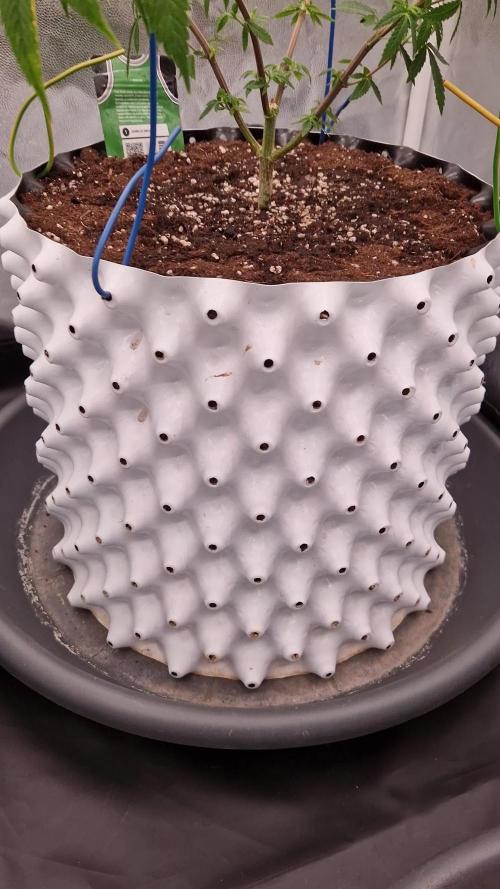
Echt kräftige Triebe bekommen, bin gespannt wie sie sich jetzt im großen Topf ausbreitet.
Likes
4
Share

@GoodTimesOrganics
Follow
Hi liebe Community and Welcome back! 💚
Jetzt kommen wir allmählich Richtung finaler Blütewoche.
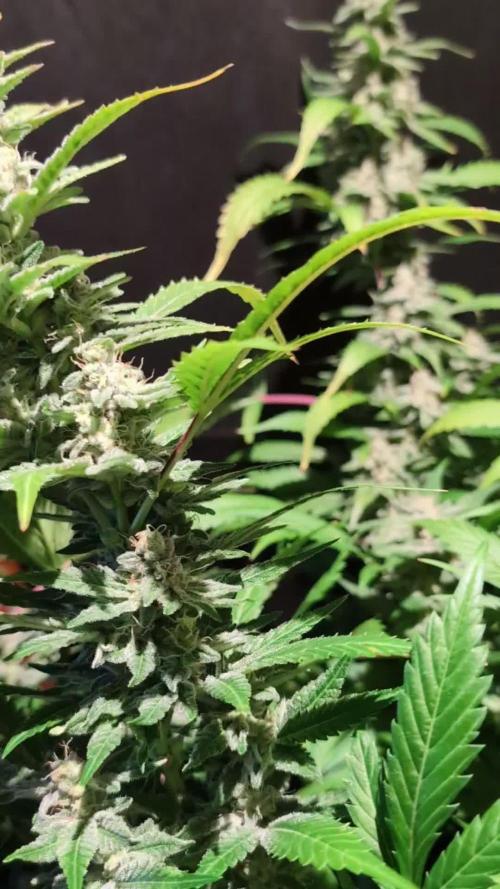
Es lässt sich beobachten, dass die Blütenbildung im mittleren Bereich der Colas stark ausgebreitet hat und die Pflanze Richtung Spitze eher etwas dünner wird.
Sie bildet die Blüten sehr vielseitig aus, von dünner kompakt bis hin zur breiten dichteren stellen.
Bei diesem Genotypen, ist das Wuchsverhalten eher etwas Indica dominiert, da sie nicht so sehr in den Stretch ging.
Ihr Geruch wirkt jedoch inzwischen immer intensiver in Richtung Grapefruit (GMO). Wie beschrieben kommt dieses Aroma stark aus dem GMO Phenoltypen. Allerdings drückt bei ihr auch eine etwas süße und mehr fruchtige Note durch.
Die Wachstumsbedingungen im Growzelt sind aktuell wieder super!
———————
🌞 Temp: 22°C
🌚 Temp: 20 °C
💨 RH: 53%
VPD: 0,91 kPa
😎PPFD: 830 mqm
———————
Stay Tuned! 💚
Likes
5
Share


@Oktoberfest
Follow
Von links nach rechts: Sleepy Joe, Lava Cake, Runtz.
02. Mai 2025
Die Wurzeln sind jetzt sehr gut entwickelt. Seit dem Einschalten des Lüfters haben die drei gut 20l Wasser verbraucht. 😅 Sie wachsen so unglaublich schnell, dass sie in drei Tagen fast die LED berührt haben. Dadurch leichte Verbrennungen an den Spitzen der Lava Cake. Viel höher darf die Runtz nicht werden, sonst muss ich die Spitze nach unten binden. Das Zelt ist nur 180 cm hoch.
Der Lüfter des Filters läuft jetzt schneller mit 50% Leistung. Die Luftfeuchtigkeit lag heute bei 75% und musste aus dem Zelt. Das führt aber auch dazu, dass die Wärme abgesaugt wird. Wird Zeit, dass es draußen konstant wärmer wird.
03. Mai 2025
Die Lüftung habe ich über den Trenntrafo wieder eine Stufe langsamer gestellt. Aber auch vorher lag die Temperatur nachts bei 22°C, also alles im grünen Bereich.
Licht:
Eine der zwei Sanlight S4W strahlt exclusiv seitlich auf die Runtz. Normalerweise würde ich das nicht so machen, aber die Runtz wächst sehr luftig und hat sehr großen Abstand zwischen den Blättern. Sie sieht gesund aus und wächst gleichmäßig. Die Rückseite der Pflanze zeigt keinen Lichtmangel durch unsymetrisches Wachstum. Eine Beleuchtung von oben wäre aktuell schlechter. Ich muss schon sagen, die Runtz überrascht mich immer wieder und ich mag das zwar hohe aber sehr luftige Wachstum!
Die Sleepy Joe und die Lava Cake sind vergleichbar hoch und teilen sich die zweite Sanlight S4W. Auch ihnen geht es gut, etwas größer wachsende Pflanzen sind mir aber lieber.
Wasserbrauch:
Bisher 30l. Heute den kleinen Tank mit 20l Wasser inkl. 64 ml Canna Aqua Flores aufgefüllt. 34 ml pro 10l bei hartem Wasser gemäß Rechner von Canna. Beim letzten Grow habe ich noch pH-down verwendet, das ist laut Canna nicht nötig und funktioniert aktuell perfekt! Canna: "Es sind pH-Stabilisatoren enthalten die ein Einstellen des pH-Werts unnötig machen." Quelle: https://www.canna-de.com/canna-aqua-flores
Die Pflanzen wachsen wie beim letzten Grow kräftig und gesund, ohne Anzeichen von Mangelerscheinungen. Und sie sind nicht übertrieben dunkelgrün durch zu viel Stickstoff. 😱

Likes
41
Share

@ZoobZoob_farmZ
Follow
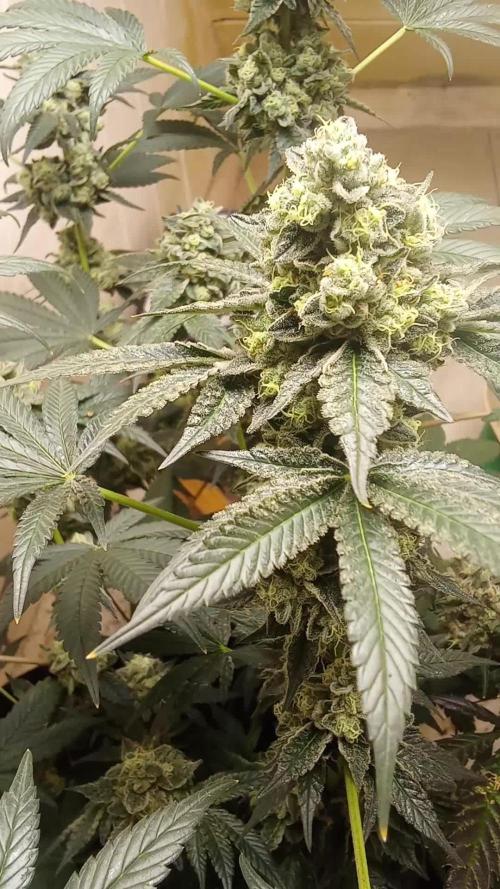
.💪🌱🌲☀️👌Truffle gas #1 × (Animal Cookies x Do Si Dos )
Hi everyone 👋 for the smell 👃 this one verry gas, diesel And earthy And slightly minty
Useful links👇👇👇
https://artgenetix.world/
https://marshydro.eu/products/mars-hydro-ts-1000-150w-led-grow-lights/?lang=fr
https://shop.greenhousefeeding.com/4-bio-nutrients
https://www.royalqueenseeds.fr/47-growing
https://biotabs.nl/fr/produit/bio-pk-5-8/
Likes
16
Share


@XoticGROW666
Follow
NICE BLACK-OUT FADE TIPS BURN HERE & THERE CUD AVE TAKEN HER XTRA MORE WK BUT THE OUTDOOR WEATHER WAS TOO RISKY!!


Likes
8
Share


@ButterfliesLittleFarm
Follow
Hello Diary,
Milky Way F1 has completed its second week of flowering, a total of five weeks since the beginning of the vegetation.
Although it is the beginning of the flowering phase, Milky Way F1 is full of flowers that develop really fast.
The shape of the plant is usual, the main cola rises dominantly above the rest of the surrounding branches, which have all reached a similar height.
If all these wounds are filled with flowers, I will be very very pleased.
Some leaves dry up or turn yellow, so I mostly remove all such occurrences.
This week I added supplements to both waterings.
The first time I put the Easy Bloom Booster tablet in 7 liters of water and the second time I added Bio Flowering Booster.
The conditions on the farm are good, the humidity is lower than 50% while the temperature is around 27, 28 degrees.
Here is a quick overview of the week:
30/05/2023 - Day 31.
Watering. I added one Easy Bloom tablet to 7 liters of water and lowered the pH. on 6.0
I watered all three plants with that amount.
02/06/2023 - Day 34.
Watering. This time I added all three components from the Bio Flowering Booster kit. I also watered all three plants in the Box with 7 liters of water.
03/06/2023 - Day 35.
Photo shoot for the end of the 5th week.
Milky Way F1 - 53 cm
That's it for this week. See you soon.
Likes
9
Share


@MarsHydroLED
Follow
Day 57 of flower .
4 Afghani hindu kush
1 chocolate mint og
Using the full fox farm dirty dozen nutrients box
1 mars hyrdo tsw2000 full power 💪😀


Likes
28
Share


@carjos
Follow
I been away from grow diaries several weeks now, quick video for documentation, mute sound in video please, Andie Capp is looking so tired between 11am-1pm. As well am feeding as needed. 2-3 ounces 4-5 times a day for Yao, and 0.5 - 1 ounce 2-3 times a day for Andie.
