




Likes
19
Share


@GoldenWeedGrower
Follow
Legend
Timestamp: 📅
Measures: 🛠️
Water: 🌊
Actions: 💼
Thoughts: 🧠
Events: 🚀
________________________________
📅 D43/F04 - 05/10/23 - ,
🛠️ EC 1.1 pH 6.4
🌊 Added 2L of water and nutes
💼 Big Defolation
🧠
🚀
________________________________
📅 D44/F05 - 06/10/23
🛠️
🌊 RES Changed 💦💦💦
💼
🧠 I'll let her run pure water 'til tomorrow
🚀
________________________________
📅 D45/F06 - 07/10/23
🛠️ EC 1.1 pH 6.5
🌊 New water
💼 Defolation and HST on the litte one
🧠
🚀
________________________________
📅 D46/F07 - 08/10/23
🛠️ EC: 1.1, pH 6.4
🌊 Added 5L of water and nutes
💼 LST and defolation on the little one
🧠
🚀
________________________________
📅 D47/F08 - 09/10/23
🛠️ EC1.2, pH 6.4
🌊 Added 3L of water and nutes
💼 Increased EC from 1.1 up to 1.2 adding only B52. Made a Timelapse of the little one
🧠
🚀
________________________________
📅 D48/F09 - 10/10/23
🛠️ EC: 1.3 , pH 5.5
🌊 Added 4L and nutes
💼 Eliminated lot of sprouts of the little one and lollipopping on the big one. Added water and raised EC up to 1.3 from 1.1
🧠 Very hungry and thirst girls. pH decresead drastically and it can be a problem
🚀
________________________________
📅 D49/F10 - 11/10/23
🛠️ EC: 1.3 stable pH 5.1 decreasing
🌊
💼 Strouts cutted and LST on the little one. Also raised the lamp. No water added
🧠 The little one is ready to bloom, I need to change the water and put bloom nutes, also to support the big one. I think I'm going to do it tomorrow or in a couple of days
🚀

Likes
28
Share


@Ganjaman420UK
Follow
Plants are looking very healthy overall
Love plant 4 of the Dark Devil..
Haven't seen colours like this in a plant before..
This plant will have such nice bag appeal when dried and cured in sure 😊🤤😋
When touching the leaves around the bud it gives off an intense sweet and fruity aroma...
Cannot wait until shes done
HAPPY GROWING AND GOODLUCK 🌱😎👊👍✌️


Likes
4
Share

@tsf_homegrow
Follow
🇩🇪
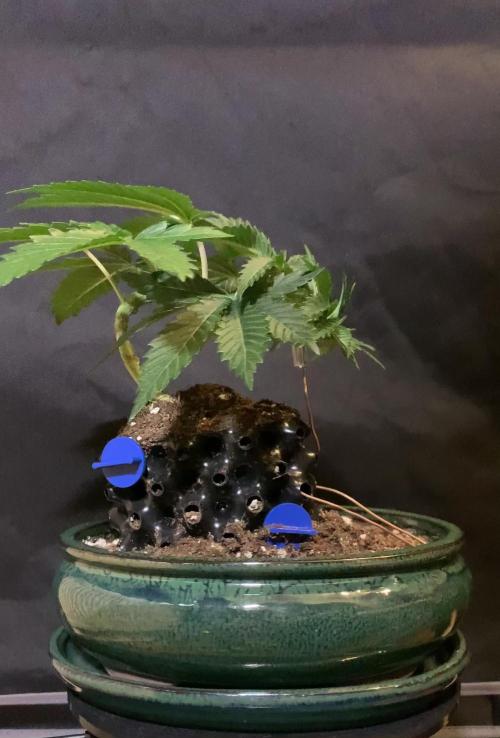
10.12. neue Drähte eingezogen um die kleine weiter in Form zu halten und etwas gerader auszurichten. Happy growing💛✌️
9.12. gestern den Draht unten am Stamm gelöst, und neue Drähte gesetzt. Heute das Video aufgenommen. Einmal eine rundum Ansicht.
7.12. einen weiteren Draht diesmal mit Gummi Stück eingebaut um den Trieb auf Höhe zu halten und keine Druckstelle zu hinterlassen.
🇬🇧
12.10. New wires were installed to keep the little one in shape and straighten it out a bit. Happy growing! 💛✌️
12.9. Yesterday I loosened the wire at the bottom of the trunk and attached new wires. I recorded the video today. It's a 360-degree view.
12.7. I installed another wire, this time with a piece of rubber, to keep the shoot at the correct height and avoid leaving a pressure mark.


Likes
4
Share

@Oyziphar
Follow
🌞
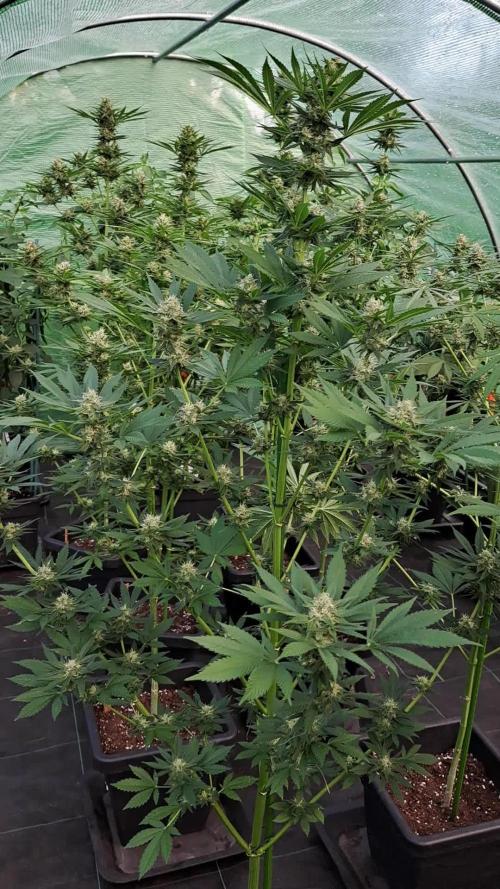
The week started with moderate (25°C) summer temperatures 🌡️🌡️🌡️ But the day before yesterday and yesterday we had hot (+25°C) temperatures again 🌶️🌶️🌶️
Sixth week of Light Deprivation
👉👉👉👉Every morning at 9:00 am I move the plant to the greenhouse.
👉👉👉👉Every evening at 9:00 pm I move the plant (together with some other strains) inside the growroom (which I don't use in the summer)
➡️ The buds are filling up, more and more trichomes, and every day they start to smell stronger 👃👃👃
👉Once this week I boost the plant with gift of water enriched with OPF 7:2:3 ; Fulvic 25 ; Yuccah ; Biovin liquid ; Earthworm compost extract
⭐Big Thanks to Luc from Plant Health Solutions / Bioplantenvoeding dot nl ⭐


Likes
9
Share


@DeepRootsGrowTrees
Follow
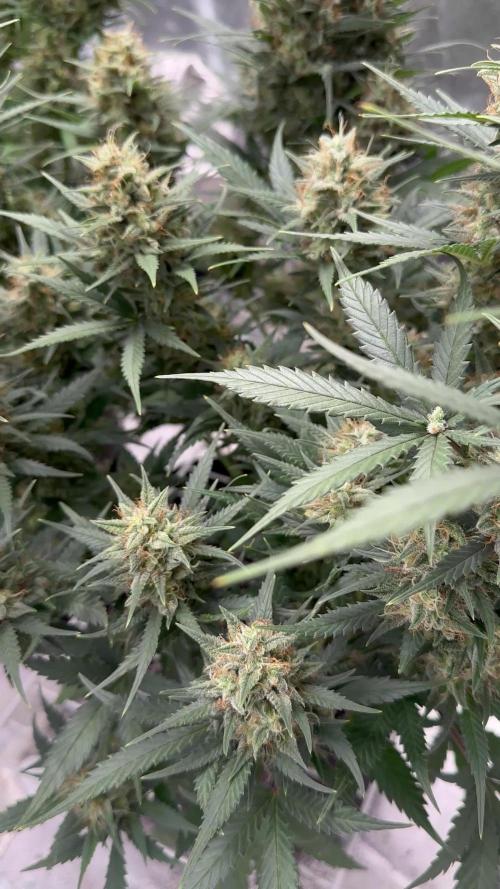
TRIPLE G by ROYAL QUEEN SEEDS
Week #11 Overall
Week #10 veg
This week she's going good no issues with the elements she's dealing with the heat fairly good also.
Stay Growing!!
Likes
6
Share


@Mr_Green79
Follow
Ja die Manderin Cream wächst jetzt am Tag mindestens 5 cm.
Es haben sich sehr viele Blüten gebildet. Habe jetzt den Ec wert auf 1200.
Die Pflanze trinkt am Tag 0,9 Lieter und ich fülle den Tank jeden Tag mit ca. einen Lieter auf mit einen Ec wert von 1087.
Erhöhung von B52 und Big bud und Tasty terp.
Habe noch keinerlei erfahrungen mit Automatic und wusste nur , das sie in der Blütephase kein stress vertragen..
Deshalb habe ich die Entlaubung nicht gemacht..
Werde 3 wochen vor der Ernte etwas entlauben...
Aber ich muss mich erstmal genauer mit der Blütezeit befassen.. oder es genauer im Blick behalten durch vergleiche hier im netz.
Habe hier Züchter gesehen mit der cream Manderin die 14 wochen Blütezeit hatten.. oder Sie so lange Blühen ließen..und nicht wie angegeben 9 wochen und fertig...
Aber die ergebnisse wahren echt Top bei den anderen .. schauen wir mal...


Processing
Likes
1
Share


@MrRaid
Follow
Think they ain't gonna stretch much now looks ok had to flush soil as she definitely dosent like alot of food light feeds for this strain maybe up It later on using very cheap led grow lights this setup is very cheap but it's for me to see the difference between a perfect setup to a budget setup still has most things she needs good airflow humidity is good can get hot as I didnt invest in ac but nothing over 28c most days they sit at 25c humidity 55% they growing quick even with no feed for 7 days this grow isn't at my home so only see these girls every 48 hours maybe 24 hours I'm feeling to check them day 35 and they stretched like crazy


Likes
295
Share


@Ju_Bps
Follow
Hello growmies 👩🌾👨🌾🌲🌲,
👋 Buds keep coming along and frosty, but not really bump for the moment just a bit on the end week.
💪 Not too much work, just removed some leaves.
💧 Give water each 2/3 day
1.5 l Water + Roots + Bloom
1.5 l Water + Roots + Ez plus
1.5 l Water + Roots + Bloom + Sugar Royal
PH @6
RQS - Easy Bloom Booster Tabs
1 tabs/5 l
RQS - Easy Grow Booster Tabs
1 tabs/5 l
RQS - Easy Micronutrients Plus
1 tabs/5 l (1 watering each 10 days.)
💡Mars Hydro - FC 3000
50% 46 cm.
Mars Hydro Fan kit
Setting 6
Have a good week and see you next week 👋
Thanks community for follow, likes, comments, always a pleasure 👩🌾👨🌾❤️🌲
Mars Hydro - Smart FC3000 300W Samsung LM301B LED Grow Light💡💡
https://www.mars-hydro.com/fc-3000-samsung-lm301b-led-grow-light
Mars Hydro - 6 Inch Inline Fan And Carbon Filter Combo With Thermostat Controller 💨💨
https://www.mars-hydro.com/6-inch-inline-duct-fan-and-carbon-filter-combo-with-thermostat-controller
RQS - Titan F1🌲🌲
https://www.royalqueenseeds.com/f1-hybrid-cannabis-seeds/624-titan-f1.html
Likes
1
Share


@Flowers_labs_extracs
Follow
Buenas en esta la primera semana desde su germinación las vemos estupendamente, hemos pasado a abonar desde la primera semana con Power rotts para empezar hacer un sistema radicular muy bueno
Likes
9
Share


@TheGreenGroomer
Follow
Guys, I did it! I managed to get to the end of my grow with no problems and a whopping dry weight of 189 grams (6.6 oz). I am over the moon with the outcome, especially considering this was my first time. The buds have been curing for 12 days now, breaking down extra chlorophyll for a smoother smoke.
The aromas are subtle when putting your nose in the jars—nothing crazy—but when you break into a bud, it smells absolutely amazing. It has an aroma almost like Stardog, with a diesel, piney, and gassy scent.
As for the taste, the buds are just as impressive! They taste exactly how they smell: diesel, piney, and gassy, much like a Stardog. The effect is incredible; it numbed my whole body and put me in a couch lock state. This strain is probably not the best for daytime smoking due to its potent, body-numbing effect.
I can't wait to continue this journey with my next grow!
Likes
15
Share


@Siriuz
Follow
Yo guys whats up
Check out my videos and lemme know
Im trying my best to keep up
MY girls are doing very good
Im just too busy right now with my son
He is 10 months old now and sometimes I have to leave behind the girls thank God I had built over the past months a great setup and I keep improving every time I have budget so it is very kind of you every like you give and every Comment is a blessings for us as a family you guys help us a lot to continue promoting and growing the best medicine in this world, thanks brothers happy growing and keep enjoying our diaries we will keep posting once we get the time and space for sure stay tuned
Now this
PPM 1000 lowering down to
800/600/400
Until we are done for the remaining weeks
Also we stop adding nutes for like 2 weeks now or so
We only add water every Day
Like 300ml at least to keep them hydrated
But for us is best to add one 1.5 liters then wait for them to drain and leave them like that for like 3-4 days until water in the bottom is full absorb this forces the roots to go and drink water which makes the plant grow bigger...
I know THESE are autos but you would be impress depending on the genetics of what they're capable of
The only thing that really f them up is time
They dont go back just forward so yeah
Got to be quick
Anyways how you doing guys
Happy growing thanks for everything
Likes
1
Share

@therealgrowmie
Follow
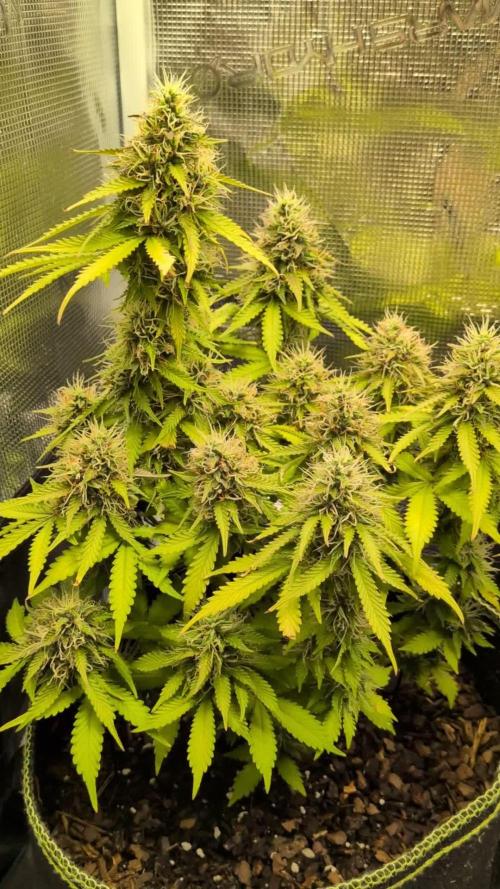
Things are progressing with this grow.
The nutritional issues caused by recent heat stress may have stunted growth a bit, but the buds are forming nicely regardless.
They’ve started to bulk up, and now it’s just a matter of waiting for the final growth and ripening to finish. A lot of the pistils are still white, so we’re likely at least two weeks away from harvest.
Until next week, Growmies!
---
Quick rundown on everything else:
Watering: 1500ml every third day
Fertilizer: According to the BioBizz schedule
Light intensity: ~1000 PPFD
VPD: ~1.62 kPa
Temperature: ~28°C
Relative humidity: ~55%
Likes
10
Share

@CrackinBeans
Follow
Well I'm a bit upset last week I ended up dropping my ph meter in a tank of nutes I was mixing and by the time I got it out the meter was junk. I was planning on flushing the crystal but had to wait another week for the meter.
I suppose the good thing to take from this was I found out why I was having issues with my plants. When the new ph meter came in I went to check my run off and my nutes that I had all ready mixed up. It turns out that my meter i had been using this whole grow was off by about -2-2.5 so this whole time I had been feeding the plants at around 3ph smfh. I cant believe they look how they do knowing what went on this whole time.
Fastbuds crystal meth is 3days into flush and i will be cutting it down this weekend most likely.
Mephisto hubbabubbasmelloscope is smelling like sweet sweet candy and is thick in resin
Bighead seeds freeze berry/ blueberry crumble has a dank pungent stank to it and also is frosty but larrfy
Big bomb is still growing thick and have bud sites everywhere
Now I'm ready for the next batch and ready to get dialed in!


Likes
9
Share


@iHateSativa
Follow
This is obviously not week one.
I had this Power Africa clone in the corner of my mother tent under some weak CFL lights, i transplanted it A week or two ago.
I have no definite plans for this plant but I decided to HST her today, i'll see what happens over the next couple weeks.
I do intend to turn the harvest into hash, so 100 grams would do fine.
