


Likes
Comments
Share


@Roberts
Follow
Drunken bitch slap has gotten pretty big. She is growing great under the Hortibloom Solux 350. I had to hst some of the taller colas. They were getting too close to the light. She got a solution change today that is more geared to flowering. Plus I added a tablespoon of blackstrap molasses. Everything is looking great. 🤞🏻she takes to the solution change well. I also changed the air stone out. She is ready for another week. Thank you Aeque Genetics, and Hortibloom. 🤜🏻🤛🏻🌱❄️🌱
Thank you grow diaries community for the 👇likes👇, follows, comments, and subscriptions on my YouTube channel👇. ❄️🌱🍻
Happy Growing 🌱🌱🌱
https://youtube.com/channel/UCAhN7yRzWLpcaRHhMIQ7X4g

Likes
4
Share

@MO_PureLeaf
Follow
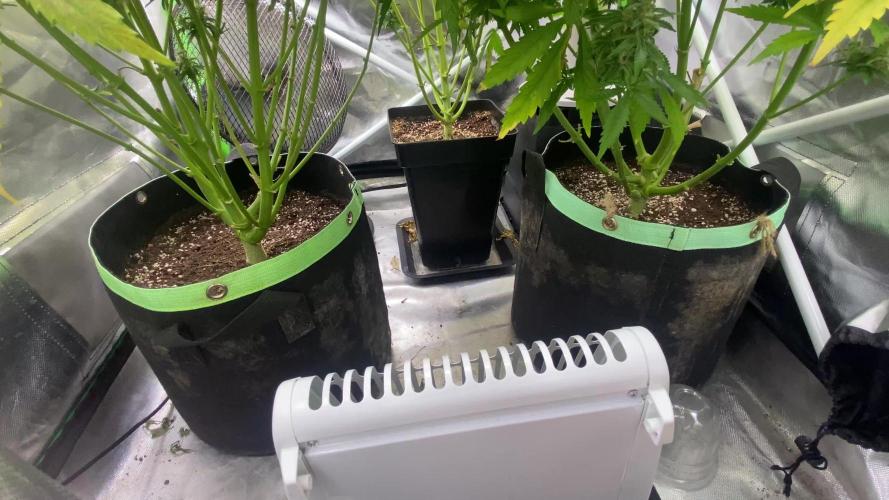
Mental Raimbow zeigt sowohl ihr Herbst, ihr natürlichen Farben und die „leichte Krankheit“ machen ihren eigenen Stiel raus, die Colas sind alle sehr Kompakt und sehr duftig :) das macht das grow’n trotz der späteren Komplikationen doch sehr angenehm :)
Und die buds von der #MRB2 bauscht sucht Tag für Tag immer mehr auf und das ist cool an zu sehen was die Wasser Umstellung alles bringen kann :). Wir werde beim Zweiten run der Mental Rainbow mal weniger mit ph-down arbeiten und das Wasser, mal Wasser sein lassen :) Cal/Mag werde ich auch nur sporadisch benutzen, und Super Vit immer mal 6 bis 9 Tropfen rein tröpfeln lassen. wir habe das Dritte mal oben auf dem Dachboden angebaut und habe jetzt im Winter herausgefunden wie ich am besten Klima halten kann, Tags Konstante 24 bis 25grad mit 45% RLF Feuchtigkeit und in der Nacht zwischen 17 und 18Grad aber etwas höher die RLF die ist dann auf maximal 50 bis 51% RLF im Zelt . Der Dachboden selber hat meist unter 10grad gehabt in der Nacht sogar 5grad und 55 bis 60% RLF. Wir hatten zum Glück noch Styropor gehabt und jetzt sieht unser zelt von außen aus wie eine Box 🤦🏻♂️😂 aber es tut was es soll :) und zwar Wärme speichern und die kalte Luft draußen behalten klappt sogar sehr gut und das Zelt steht auf einer Schaumstoff Matte um vom Boden her die Kälte etwas zurück zu halten.
Unsere Verbesserungen als Nächstes für unser Grow Equipment:
Untersetzer für unsere Stofftöpfe
Eine UV Lampe, oder einzelne Rot und Blau Röhren.
CO2 Bags
Dünger von AN (sobald wir ein Angebot gefunden haben)
Neue LST Stäbe
Wir werden euch weiterhin auf den laufenden halten 🏼

Processing
Likes
6
Share


@URB_COLOMBIA
Follow
Plants with best root growth are begging for soil and it shows.
Another two clones is showing root sites.
Qualitative change in root growth seen via week on week comparison.
DAY 23: June 7 2018: Transferred two of the clones from the clone box to 1 liter pots with an living soil medium. Of the two, 1 will carry on using URB through the end of its life.
DAY 25: June 9 2018: Drenched the soil medium of the URB test (orange pot) as a soil inoculation-- ratio of 0.8ml per liter of water...will apply whatever is left over to the base of the stalk. [see photos and video]


Processing
Likes
9
Share


Likes
18
Share


@CBDAutoGrower
Follow
Main cola is getting dense and bigger, but all the other little ones are still pretty small, it will be interesting to see how this one finishes. Gave it a little more worm castings and 2-8-4 this week and will be the last feed it gets, from now on it just gets water ph between 6.2 and 6.8. Will continue some minor defoliation and will try to LST it just for airflow from now until harvest in a couple more weeks.

Likes
4
Share


@HookahCli
Follow
d87
No se ha regado todavía, ha crecido bastante, muy ramificada, esta semana ha pegado un buen estirón, el cambio de luna nueva a luna llena les hace subir la savia a las hojas, ahora esta en cuarto creciente, se prevé buen crecimiento para la próxima semana.
d90
Se ha regado con abundante agua y luego con 2L de mezcla con fertilizantes.

Likes
4
Share


@RzUdoo
Follow
It didn t rain for 5 days, so went to see them. My Girls! All dong well. Deep rooted and all managing well. Nature is great. Life is great. Jah is great! Now i will return only one more time, early September for harvest, (if they are ready by then).
Happy to see my Guardians - the Sea-Eagles are back. Have not seen them for a while. Forefathers are watching over the I!
Jah Bless! Mother Nature!

Likes
4
Share


@Growedbypepper
Follow
En esta semana me encargo de entregarle a ala planta poco más que melaza y microorganismos ya nos encontramos en la recta final de esta planta espero poder cultivarla bien pronto con tu olor tan cremoso que carga 🔥🔥🔥 tengo un par de inconvenientes el clima cuando está lloviendo demasiado complica mucho espero no tener que cosechar antes de tiempo 🛵🛵
Likes
13
Share


@Verde_og
Follow
Seguimos regando solo con agua esperando que quede lo mas limpia posible. Ya es cosa de dias la fecha de corte. Esperare a que se seque el sustrato y terminaré este cultivo para posteriormente ponerme a darle un buen curado. Muy contento con esta cepa de @sweetseeds 💪👨🌾
Likes
Comments
Share


@Chronickarl
Follow
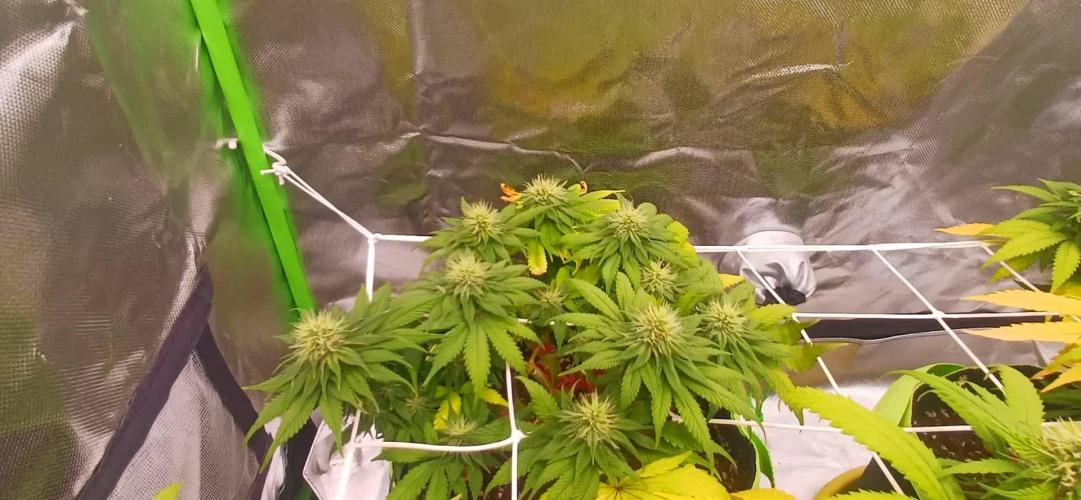
No problems as such still watching and learning characteristics of the plants strawberry cough has responded with a very strong growth pattern and even spread of canopy the wedding cake is starting to stretch out abit and the Bruce banner is showing signs of being slower than the rest



Likes
21
Share

@ThatsmyGrow
Follow
🌸 Week 11 – Gorilla Cookies Auto Pheno Hunt
Another week is in the books, and now all the phenos have officially entered the bulking phase. 🔥🌸
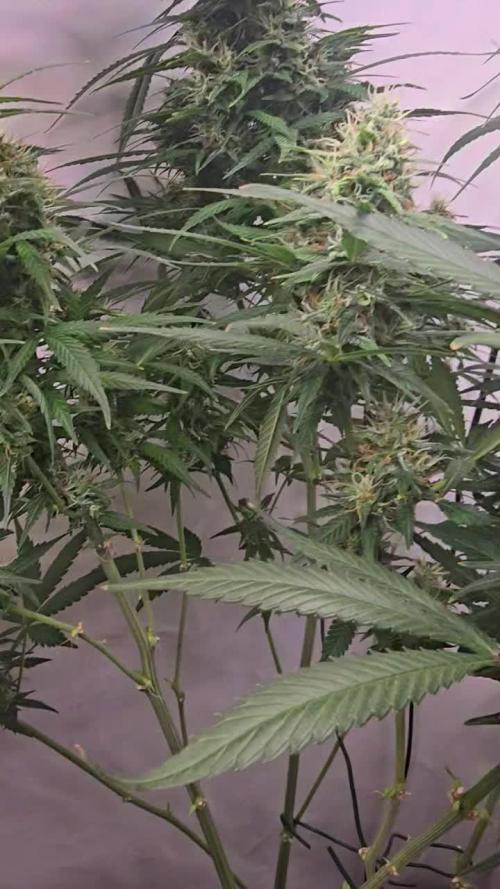
The flowers are swelling rapidly, and it's amazing to see how differently each phenotype is stacking and filling out. Every week brings more weight, stronger aromas, and denser buds.
📈 Current observations:
All phenos are now focusing entirely on bulking up their flowers.
Pheno #1 and #2 are producing massive buds, with some already reaching the size of soft drink cans. 🥤🔥
Pheno #6 has made incredible progress over the last two weeks. Although it had the slowest start, it has developed beautifully and is building flowers surprisingly well. It will most likely need around two extra weeks after the others and will probably finish the grow on its own.
Pheno #3 unfortunately never fully recovered after I had to remove several main colas because they were growing into the SANlight fixture. While it's still producing nice flowers, it clearly lost some of its potential.
Pheno #4 continues to be my personal favorite. The aroma is absolutely incredible, with a sweet Kush profile, and the buds are becoming rock hard already. 💎
📊 Current environment:
Temperature: 31°C
Relative Humidity: 63%
VPD: ~1.66 kPa
SANlight fixture at maximum height
Light intensity: 90%
⏳ Looking ahead:
If everything continues as expected, I think the first phenos will be ready for harvest in about two weeks. The final stage is always my favorite—watching the buds swell even more, the trichomes mature, and the terpene profiles reach their peak.
I'm excited to see which phenotype finishes on top, but right now Pheno #4 is definitely leading the pack. 👑🔥
💬 Which pheno would you harvest first based on these updates?

Likes
2
Share


@LoganatorDude
Follow
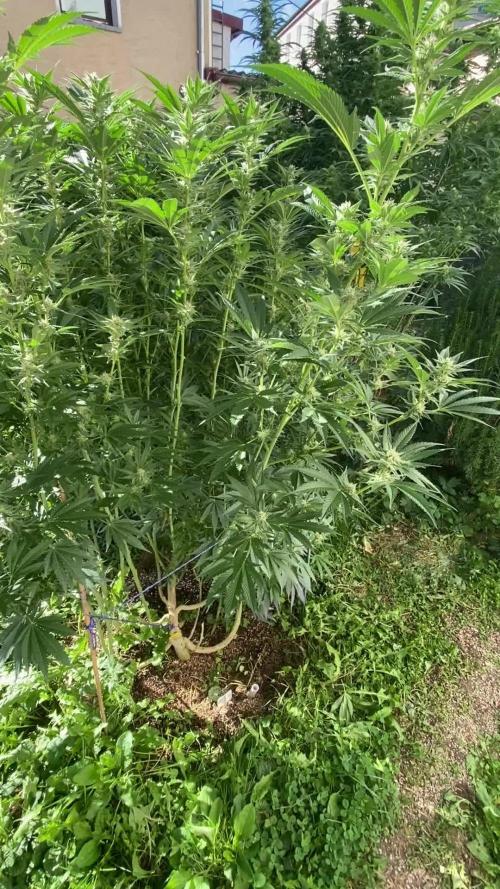
I know they look rough. It’s just because I didn’t want to feed them too much in those little pots, now they are getting established into bigger pots with a lot more food!


Likes
14
Share


@Curbyourenthusi
Follow
********************************************************************
START OF WEEK
Went to the grow store and wound up with an AC Infinity EVO6. It should be a nice light for the future, and when my warranty replacement comes back, assuming that won't be an issue, it'll be nice to have a decent back-up. That's the bright side, but I am a little bummed about laying down the cash with ten to 14 days left. That part is the kick in the nutes. Fine, moving on.
As for the grow, it's plowing forward. These plants are doing all the things we want them to do right now. They're getting fat, they're getting sticky, and the fade is fading away. Some branches may call for some last minute support, but for now the sucked-in tent walls will continue to suffice. The feed is still at 1100ppm and pk boosted, but the plan is to finish this week around 750.
********************************************************************
END OF WEEK
Day 63 of flowering has arrived. I've backed off the nutrients. We're now sitting at 850ppm with about 6-8 gallons in the system remaining. This should equate to a Thursday refill with no feed, and then a Saturday or Sunday chop. VPD has been running a touch high this week, but that's not a concern. It's staying in the ideal range for most of the lights on period, and then trailing up in the last few hours to around 1.7-1.8. No biggie. The new light is really nice, but it runs hotter than the combo of the S22 and S44 (500W total), and that's with the EVO6 driver outside of the tent. This also isn't a big deal. The max tent temp is around 84, and before that wouldn't get past 82. Not a huge difference, and potentially better for the plants with the additional heat. I've got two CO2 mushroom bags in there, so more temp should mean more production at that level.
I'm excited for this grow to finish and I'm looking forward to sampling the variety. I'm definitely using half, if not more, to make bubble hash. I'm probably just going to run it all together, as opposed to having runs for each pheno. I'll sample the tops independently, and smash rosin by pheno, but I'm not sold on isolating the hash. Seems like triple the work, but I've got a week to make further considerations, so we'll see.
This will be my last grow until I sell this place and move into my next place. I'm going to miss growing. It's brought me a ton of peace by giving me something to anticipate, study, and take pride in. It's such an enjoyable hobby. I'll miss it in the time being, but I'm grateful that I won't need to step foot inside of a dispensary in 2024. Big win there! Everyone should grow their own.

Likes
2
Share

@MrGrowDiarie
Follow
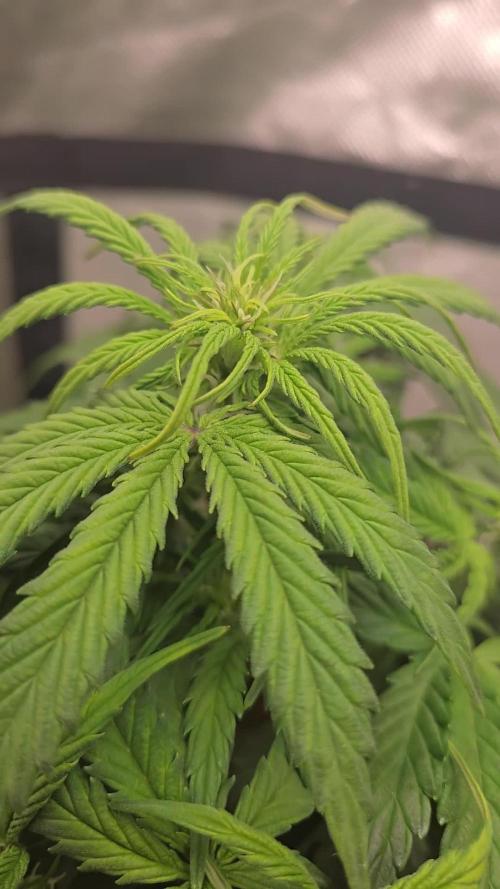
Day 35
Today the plant shows healthy, vigorous vegetative growth. The canopy has filled out noticeably, with several new shoots emerging from the top and sides. The leaves appear a rich green, and the serrated edges are well-defined. The plant is developing tighter node spacing compared to earlier growth stages, giving it a fuller, bushier appearance.
The top growth (“new growth tips”) is a lighter green, which is typical for fresh developing foliage. Multiple tops are pushing upward, suggesting the plant has responded to previous growth changes—possibly training or natural branching. The lower leaves appear slightly more mature and darker, while the new growth is soft and fresh.
Compared to an earlier stage, the plant clearly looks more structured and defined, with emerging symmetry in its branching. It seems to be entering a phase where vertical and lateral shoots are increasing in number, giving it a more complex canopy.
Likes
9
Share


Likes
Comments
Share


@AestheticGenetics
Follow
5/6/25 beautiful dang plant. Nice stretchy indica structure. She will produce very nicely. Excited to see how the bud structure is later in her life
Likes
43
Share


@Lukush
Follow
Hey growmies its flushing time for mi watermelon 🍉 🍉!!
Her smell is vary fruity and sweet, can't wait to smoke this one !!
WhiteWidow also is in flushing time !
All the girls are looking good 👍💪❤️
I just installed mi new Sp 6500 👍💪👍💪 we gonna finish them up whit some good extra wats !
Check out this led on the website💪👍
https://marshydro.eu/products/mars-hydro-sp-6500-led-grow-light/
SP6500, as one of the huge single bar LED grow lights, installed with top quality Samsung LM301B diodes, designed with enhanced red in broad-spectrum light, emits the highest central PPF and has the superb penetration that its major applications are for high-wire plants and greenhouses.
Wattage – 650w
Veg Coverage – 4×5 ft
Flower Coverage – 3×5 ft
Featuring a thick aluminium passive heat sink and densely arranged chips, the SP Series provides high efficacy but low heat output while minimizing obstruction to natural LIGHT!