







Likes
15
Share


@TopKat5
Follow
This week I decided not to do any feeding of nutrients, just some good ole H20 , ph'd around 5.5. I haven't seen anymore bleaching of tips so I'm guessing the raising of the lights helped and possibly the change in PH (my levels were off). I'm starting to think I may turn this plant into a mother plant, eventually taking 6 clones, selecting the best 4 of the 6 to start a scrog. I feel as though if I just grow this one plant it'll take forever to fill in the tent for a scrog

Likes
7
Share


@PCGrows
Follow
This is more preflower week, bud sites emerged bud plant is hasn’t quite stretched yet. This’ll be the week she gets y’all or I know my pots are a little too big and she’s working to much on root growth those first weeks

Likes
Comments
Share


@Dankmark420
Follow
Now it’s just a waiting game to watch theese beautiful flowers bud up🙌🏼💪


Likes
22
Share


@Dankbudz84
Follow
I’ve spotted like 3 gnats over the last 2 weeks. I did 2 treatments of doctor zymes and I haven’t seen any since. I know it not something to worry about since I haven’t caught any on the sticky traps. But some leaves did have a little sign of them. Everything looks good to me. The girls have been fed girl flower power in a compost tea, with cal mag, recharge and molasses. Any feedback good or bad would be great.

Likes
54
Share


@MrJones
Follow
MrJones Cream Mandeiran Auto XL - ViparSpectra XS2000 240W Infrared Full Spectrum LED Grow Light
´🍪⊱╮🍪╰⊰🍪 WEEKLY GOALS 🍪╰⊰´🍪⊱╮🍪
🏡Indoor - 3"x4"x8" Custom Built Grow Closet
🌞Environment - 80F and 50%Humidity - using Humidfyer as needed.
🌾LST and Defoliation - this strain likes to stretch!
🗓️Week 2 Seedlings
⚱️5-Gallon 📊6.2 PH
💧 Feeding / Using Dr. Earth Dry Organic Amendments - Home Grown & Bud / Bloom Booster
🌞ViparSpectra XS2000 240W x2 Infrared Full Spectrum LED Grow Light
🕷️ IPM - Will be using Green Cleaner" 1 OZ per Gallon, and CannControl from Mammoth alternating between products each month for Integrated Pest Management.
´🍪⊱╮🍪╰⊰🍪 PLANT UPDATES 🍪╰⊰´🍪⊱╮🍪
📝 Notes - Girls are just blowing up, they have doubled in size and started producing their second and third nodes, the leaves look perfectly healthy! The ViparSpectra XS2000's are just killing it!
╰⊰🍪╰⊰´🍪⊱╮🍪╰⊰🍪╰⊰🍪╰⊰´🍪⊱╮🍪╰⊰🍪╰⊰🍪╰⊰🍪⊱╮
🔶Sunday 06.27.21/ Continuing feeding just H20 PHed to around 6.0/6.5
🔶Monday 06.28.21/ Plants are just doing great, no water needed for today!
🔶Tuesday 06.29.21/ Plants are looking good, the soil is still moist going to water in the morning, along with a nice top dressing!
🔶Wednesday 06.30.21/ So I topped dress with 7 TBS Dr. Earth Flower Girl and 3 TBS Dr. Earth Home Grown
🔶Thursday 07.01.21/ If you could only see how these girls are doing from the beginning of the week until now they have at least doubled in size!
🔶Friday 07.02.21/ Just watering with H20 PH - 6.2
🔶Saturday 07.03.21/ Trouble-free grow, great lights these ViperSpectra XS-2000 they run so cool for the amount of light they put out!
╰⊰🍪╰⊰´🍪⊱╮🍪╰⊰🍪╰⊰🍪╰⊰´🍪⊱╮🍪╰⊰🍪╰⊰🍪╰⊰🍪⊱╮
Cream Mandarine XL Auto®️ Information
Tall-stemmed auto-flowering strain. This high-yielding 4th generation auto-flowering strain is the resulting hybrid from the cross between selected specimens of our Cream Mandarine Auto®️ (SWS29)) and a Super Tai’98 elite clone.
The genetic coming from the Super Tai’98 elite clone contributes with interesting Sativa characteristics to this hybrid, such as bigger size, but also subtle aromatic and spicy tones with hints of wood and nuts. The so much appreciated Cream Mandarine Auto®️ genetic contributes with traits from the Indica side, such as high flower and resin production, but also sweet and fresh aromas with tones of citric fruits of the mandarin orange type.
DATA SHEET
Variety SWS55
Indica: 35% / Sativa: 63,4% / Ruderalis: 1,6%
THC: 18-23% · CBD: 0,6%
Indoor Yield: 450-650 g/m2
Outdoor Yield: 50-300 g/plant
Indoor/Outdoor Harvest: 9 weeks from germination
Height: 110-150 cm

Likes
8
Share


@Icedoutgreen
Follow
Diese Woche haben sich die Pflanzen von der Entlaubung der letzten Woche erholen dürfen, nach drei Tagen (die ersten drei Bilder) haben sie schon wieder einiges an Blattwerk zulegen können. Des Weiteren ist die Woche nicht viel passiert, ausser dass ich die Bodenfläche zurückgewonnen habe und endlich einen Umluftventilator zum clippen kaufen konnte. Ach und zum Ende der zweiten Blütewoche habe ich einen Komposttee gemacht, den sie am Samstag Abend bekommen haben. Ich hätte schon früher gerne den Tee gemacht, aber ich musste auch hier erstmal alle Sachen kaufen, da ich leider wieder komplett von Null beginnen musste.


Likes
17
Share


@Aircoholic
Follow
Last week it was time to harvest Jack Herer Auto - the number of amber trichomes was getting too high for my taste. Unfortunately my chronic illness flared up massively, making it very difficult to get the harvest done in time. After everything was done and the last bud chopped down, I switched off the camera that I quickly threw on the tripod to film the defoliation and harvest, I realized, I have completely forgotten to take any before photos. So, there aren't any. All you get is 2 videos and two photos post harvest. There might be some additional photos and videos when trimming the buds and some of the grove bags for curing.
Other than that, Jack Herer grew tall and beautiful, sativa dominant in structure, with plenty of bud sites, trichomes and terpenes - but the buds ended up being quite airy, larfy. Not sure if that's due to the heat wave and higher temps before that. It's not the end of the world either, the buds are super sticky, they smell absolutely delicious, and I'm sure they'll be very tasty.


Likes
42
Share


@Ganjagrandaddy
Follow
Day 42 FLOWERING: Good afternoon ( in the UK anyway) brownies. It has been a steady weeks bud building this week and outing imposters!. I have somehow managed to mix pits during the initial set up and have two ladies representing their opposite strains !!!!!. Doh
The girl scout cookie #2 is actually the #3 Amnesia Haze and the #3 is the Girls scout #2 . I have suspected it for a while but they have failed in their ploy to fool me and their ripening phases have given thwirbruse up. Seeing how similar the #3 was to the #1Girl Scout and how close they were in finishing to each other too , it was way more evident now that the #1Girls scout looks ready to come out for her dark period . She has finished very quickly and i am in no doubt she is done with most of her pistils being a golden orange now. She has many small clusters of buds but is not going to win any yield cups I dont think. She smells so sweet and edible though with a sticky feel too. Her leaves have a really beautiful fade too . So e very nice colours among the cannabalising. I dont think the # 2 will be far behind in her finish either with her pistils starting to orange up now.
Now that the #3 amnesia is correctly identified and in the right row , it is clear to see how they all look alike and are at the same stage in bud development. They are a 77 day (11 weeks) flowering period and are still in their bud building stage with a huge production in trichromes taking place too. Thet are so like Gorilla glue #4 in their look which can only be a good thing...
The #1 and 2 are bigger than the @3 purely due to the lst I did . They both have medium sized colas for info ar al of their mains so hopefully will have some donkey dick buds covered in frost around week 9-10. Bud porn ahead I think.
Normal feedings for these ladies for the upcoming weeks but the G.S.C are going to be fed with water a few days now to let them know its time!!!!. Be safe and red eyed folks. Until next time. tata

Likes
109
Share


@MadeInGermany
Follow
Welcome
to the
Green House Seeds Company Cup 🏆.
Day 70
Hey everyone 🤗.
In the last update I decided to put the Wonder Pie in the darkroom for the next few days. These plans have now changed 😄.
Since the trichomes were only 10% amber, I briefly decided to give it another week.
Now the time has finally come.
The trichomes are about 70% amber and 30% milky 😍.
The grow:
This plant grew very well and didn't cause any problems.
Her growth was very symmetrical and beautiful.
She didn't need any support up to the last few days :-).
Nutrients:
I can really recommend the GHSC Powder Feeding series to everyone 👍.
It is very easy with this fertilizer.
You save a lot of time and work :-).
It covers all nutrients, you could see that from the fact that the plant looked perfect throughout 😃.
Genetic:
Let's get to the most important.
First of all, I am very happy that I have secured a mother 🙏🏻😃.
Genetics couldn't have been better 👌.
It looks beautiful from start to finish 😍. I've never had such a beautiful and symmetrical growth.
The look of the buds is just as cool 😃, and the smell that it already has on the buds is an absolute note 1 😍😍😍.
A detailed report will of course come with the harvest.
But before that there is another harvest update for in between 😃👍.
The Wonder Pie comes to the darkroom today, and can spend another 2 nights there before it finally gets under the scissors 😎.
Until then, I wish you all a nice week, stay healthy 🙏🏻 and let it grow ☘️🍀
You can buy this Strain and Nutrients at :
https://greenhouseseeds.nl/
☝️🏼☝️🏼☝️🏼☝️🏼☝️🏼☝️🏼☝️🏼☝️🏼☝️🏼☝️🏼☝️🏼☝️🏼
Green House Seeds Company Cup 🏆
Type:
Wonder Pie
☝️🏼
Genetics:
Wedding Cake x OG Kush
👍😍
Vega lamp: 2 x Todogrow Led
Quantum Board 100 W
💡
Flower Lamp : 2 x Todogrow Led
Cxb 3590 COB 3500 K 205 W
💡💡☝️🏼
Earth: Canna Bio
☝️🏼
Fertilizer: Bio Grow Feeding ( GHSC ) , Enhancer ( GHSC ) , Bio Bloom ( GHSC)
☝️🏼🌱
Water: Osmosis water mixed with normal water (24 hours stale that the chlorine evaporates) to 0.2 EC. Add Cal / Mag to 0.4 Ec Ph with Organic Ph - to 6.0

Likes
30
Share


@zombikush81
Follow
Conclusion and a plant that grows quite slender in bloom doubles if it does not treble its size, responds well to defoliation, it is usually harvested in 8-9 weeks but if it is left a week more mature to perfection. on a scale of 1/10 my vote for this variety is 8.

Likes
35
Share


@Hiroots420
Follow
Impecable cosecha de Sweet Cheese, se llenó todo el espacio de secado de buenas cabezas, próximamente actualizaré números finales de cantidades pero hasta el momento se lo ve muy prometedor.
Likes
4
Share

@Gram_Solo
Follow
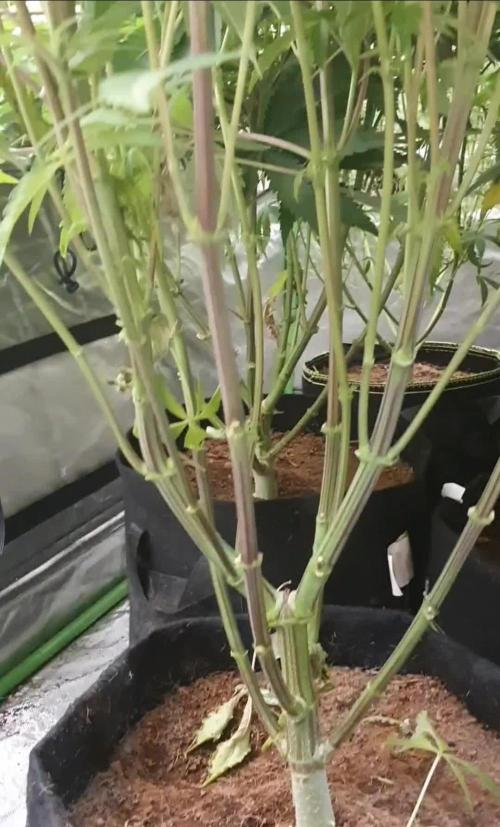
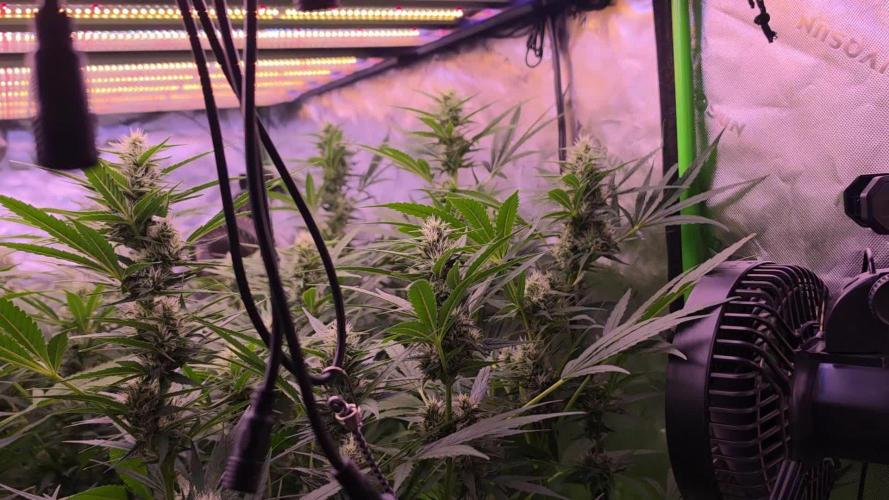
We begin flowering!!😎
Moved all 4 into the 4x4 this week
They are stretching out already infew days.
I'm going to do more defoilation early flower clearing out the clutter at the bottom.
not long til others are ready so they will get more space




Likes
33
Share


@Rollex420
Follow
Impressive how this plant managed to grow despite the few hours of light .. I guess what it could do with a better season than this year (there has been a lot of rains) and in a place where it grows with constant light.. anyway I am very happy with her, I would also say proud of how the growth went.
In the last few weeks, as you can see, the plant has suffered an attack by caterpillars that have eaten some of its leaves in a short time, the plant has remained very strong anyway. I tried to remove them manually until they disappeared completely
Before proceeding with the cut, I put the plant in the dark for 48 hours, further stressing it by shocking the roots with ice cubes. I've never used these two methods, but I've heard a lot about them. some say it is useless while others say that these methods work to increase the production of trichomes and terpenes. We'll see, I'll share my experience with you as always.
Also follow me on Instagram for daily updates!
Keep growing fam!
Much love 💚