The Grow Awards 2026 🏆
Likes
Comments
Share
@IbeBryBry
Follow
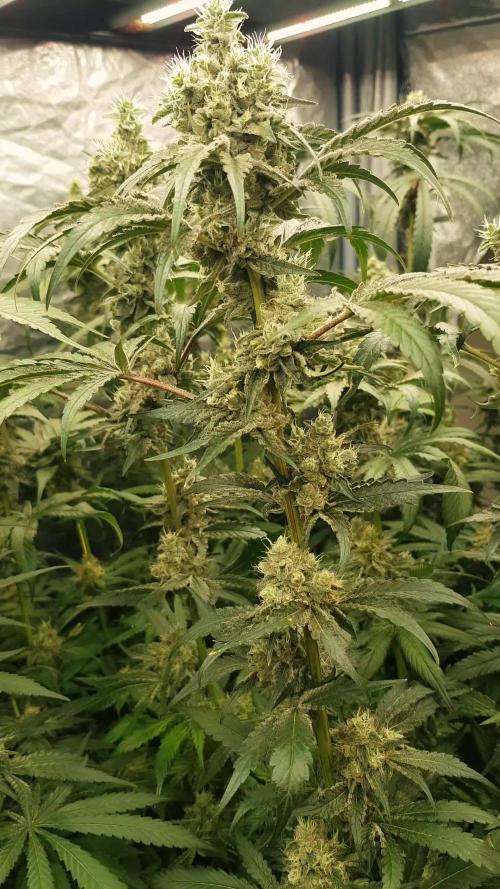
Put in dark for 4 days before wet trim and getting hung up to dry. Little beauty, smells amazing can't wait to give it a try. Gnome Automatics for the win!!!
Likes
12
Share
@ChaseGH
Follow
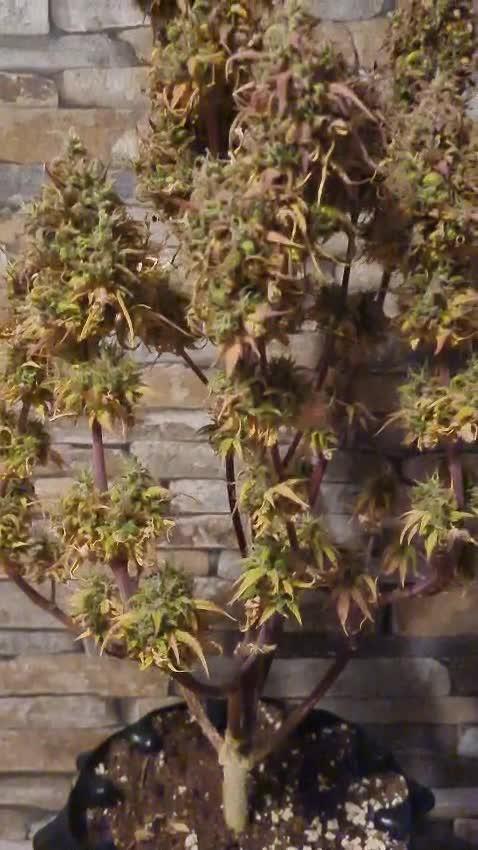
Shishkaberry #3 took about 3 days to take down and trim. So much work! Started pulling some of the Tangcicle and Shishkaberry #2 and #4 on 10/14. Found some bud rot on most of the larger colas on #2 and #4. Sucks, but I think I was able to isolate and remove the majority of it. Lost a lot of primo flower tho. Tropicanna Banana getting much closer. Showing lots of purple with the cold night temperatures.
Likes
34
Share
Yellow butterfly came to see me the other day; that was nice. Starting to show signs of stress on the odd leaf, localized isolated blips, blemishes, who said growing up was going to be easy! Smaller leaves have less surface area for stomata to occupy, so the stomata are packed more densely to maintain adequate gas exchange. Smaller leaves might have higher stomatal density to compensate for their smaller size, potentially maximizing carbon uptake and minimizing water loss. Environmental conditions like light intensity and water availability can influence stomatal density, and these factors can affect leaf size as well. Leaf development involves cell division and expansion, and stomatal differentiation is sensitive to these processes. In essence, the smaller leaf size can lead to a higher stomatal density due to the constraints of available space and the need to optimize gas exchange for photosynthesis and transpiration. In the long term, UV-B radiation can lead to more complex changes in stomatal morphology, including effects on both stomatal density and size, potentially impacting carbon sequestration and water use. In essence, UV-B can be a double-edged sword for stomata: It can induce stomatal closure and potentially reduce stomatal size, but it may also trigger an increase in stomatal density as a compensatory mechanism. It is generally more efficient for gas exchange to have smaller leaves with a higher stomatal density, rather than large leaves with lower stomatal density. This is because smaller stomata can facilitate faster gas exchange due to shorter diffusion pathways, even though they may have the same total pore area as fewer, larger stomata. Leaf size tends to decrease in colder climates to reduce heat loss, while larger leaves are more common in warmer, humid environments. Plants in arid regions often develop smaller leaves with a thicker cuticle and/or hairs to minimize water loss through transpiration. Conversely, plants in wet environments may have larger leaves and drip tips to facilitate water runoff. Leaf size and shape can vary based on light availability. For example, leaves in shaded areas may be larger and thinner to maximize light absorption. Leaf mass per area (LMA) can be higher in stressful environments with limited nutrients, indicating a greater investment in structural components for protection and critical resource conservation. Wind speed, humidity, and soil conditions can also influence leaf morphology, leading to variations in leaf shape, size, and surface characteristics. Small leaves: Reduce water loss in arid or cold climates. Environmental conditions significantly affect gene expression in plants. Plants are sessile organisms, meaning they cannot move to escape unfavorable conditions, so they rely on gene expression to adapt to their surroundings. Environmental factors like light, temperature, water, and nutrient availability can trigger changes in gene expression, allowing plants to respond to and survive in diverse environments. Depending on the environment a young seedling encounters, the developmental program following seed germination could be skotomorphogenesis in the dark or photomorphogenesis in the light. Light signals are interpreted by a repertoire of photoreceptors followed by sophisticated gene expression networks, eventually resulting in developmental changes. The expression and functions of photoreceptors and key signaling molecules are highly coordinated and regulated at multiple levels of the central dogma in molecular biology. Light activates gene expression through the actions of positive transcriptional regulators and the relaxation of chromatin by histone acetylation. Small regulatory RNAs help attenuate the expression of light-responsive genes. Alternative splicing, protein phosphorylation/dephosphorylation, the formation of diverse transcriptional complexes, and selective protein degradation all contribute to proteome diversity and change the functions of individual proteins. Photomorphogenesis, the light-driven developmental changes in plants, significantly impacts gene expression. It involves a cascade of events where light signals, perceived by photoreceptors, trigger changes in gene expression patterns, ultimately leading to the development of a plant in response to its light environment. Genes are expressed, not dictated! While having the potential to encode proteins, genes are not automatically and constantly active. Instead, their expression (the process of turning them into proteins) is carefully regulated by the cell, responding to internal and external signals. This means that genes can be "turned on" or "turned off," and the level of expression can be adjusted, depending on the cell's needs and the surrounding environment. In plants, genes are not simply "on" or "off" but rather their expression is carefully regulated based on various factors, including the cell type, developmental stage, and environmental conditions. This means that while all cells in a plant contain the same genetic information (the same genes), different cells will express different subsets of those genes at different times. This regulation is crucial for the proper functioning and development of the plant. When a green plant is exposed to red light, much of the red light is absorbed, but some is also reflected back. The reflected red light, along with any blue light reflected from other parts of the plant, can be perceived by our eyes as purple. Carotenoids absorb light in blue-green region of the visible spectrum, complementing chlorophyll's absorption in the red region. They safeguard the photosynthetic machinery from excessive light by activating singlet oxygen, an oxidant formed during photosynthesis. Carotenoids also quench triplet chlorophyll, which can negatively affect photosynthesis, and scavenge reactive oxygen species (ROS) that can damage cellular proteins. Additionally, carotenoid derivatives signal plant development and responses to environmental cues. They serve as precursors for the biosynthesis of phytohormones such as abscisic acid () and strigolactones (SLs). These pigments are responsible for the orange, red, and yellow hues of fruits and vegetables, while acting as free scavengers to protect plants during photosynthesis. Singlet oxygen (¹O₂) is an electronically excited state of molecular oxygen (O₂). Singlet oxygen is produced as a byproduct during photosynthesis, primarily within the photosystem II (PSII) reaction center and light-harvesting antenna complex. This occurs when excess energy from excited chlorophyll molecules is transferred to molecular oxygen. While singlet oxygen can cause oxidative damage, plants have mechanisms to manage its production and mitigate its harmful effects. Singlet oxygen (¹O₂) is considered a reactive oxygen species (ROS). It's a form of oxygen with higher energy and reactivity compared to the more common triplet oxygen found in its ground state. Singlet oxygen is generated both in biological systems, such as during photosynthesis in plants, and in cellular processes, and through chemical and photochemical reactions. While singlet oxygen is a ROS, it's important to note that it differs from other ROS like superoxide (O₂⁻), hydrogen peroxide (H₂O₂), and hydroxyl radicals (OH) in its formation, reactivity, and specific biological roles. Non-photochemical quenching (NPQ) protects plants from damage caused by reactive oxygen species (ROS) by dissipating excess light energy as heat. This process reduces the overexcitation of photosynthetic pigments, which can lead to the production of ROS, thus mitigating the potential for photodamage. Zeaxanthin, a carotenoid pigment, plays a crucial role in photoprotection in plants by both enhancing non-photochemical quenching (NPQ) and scavenging reactive oxygen species (ROS). In high-light conditions, zeaxanthin is synthesized from violaxanthin through the xanthophyll cycle, and this zeaxanthin then facilitates heat dissipation of excess light energy (NPQ) and quenches harmful ROS. The Issue of Singlet Oxygen!! ROS Formation: Blue light, with its higher energy photons, can promote the formation of reactive oxygen species (ROS), including singlet oxygen, within the plant. Potential Damage: High levels of ROS can damage cellular components, including proteins, lipids, and DNA, potentially impacting plant health and productivity. Balancing Act: A balanced spectrum of light, including both blue and red light, is crucial for mitigating the harmful effects of excessive blue light and promoting optimal plant growth and stress tolerance. The Importance of Red Light: Red light (especially far-red) can help to mitigate the negative effects of excessive blue light by: Balancing the Photoreceptor Response: Red light can influence the activity of photoreceptors like phytochrome, which are involved in regulating plant responses to different light wavelengths. Enhancing Antioxidant Production: Red and blue light can stimulate the production of antioxidants, which help to neutralize ROS and protect the plant from oxidative damage. Optimizing Photosynthesis: Red light is efficiently used in photosynthesis, and its combination with blue light can lead to increased photosynthetic efficiency and biomass production. In controlled environments like greenhouses and vertical farms, optimizing the ratio of blue and red light is a key strategy for promoting healthy plant growth and yield. Understanding the interplay between blue light signaling, ROS production, and antioxidant defense mechanisms can inform breeding programs and biotechnological interventions aimed at improving plant stress resistance. In summary, while blue light is essential for plant development and photosynthesis, it's crucial to balance it with other light wavelengths, particularly red light, to prevent excessive ROS formation and promote overall plant health. Oxidative damage in plants occurs when there's an imbalance between the production of reactive oxygen species (ROS) and the plant's ability to neutralize them, leading to cellular damage. This imbalance, known as oxidative stress, can result from various environmental stressors, affecting plant growth, development, and overall productivity. Causes of Oxidative Damage: Abiotic stresses: These include extreme temperatures (heat and cold), drought, salinity, heavy metal toxicity, and excessive light. Biotic stresses: Pathogen attacks and insect infestations can also trigger oxidative stress. Metabolic processes: Normal cellular activities, particularly in chloroplasts, mitochondria, and peroxisomes, can generate ROS as byproducts. Certain chlorophyll biosynthesis intermediates can produce singlet oxygen (1O2), a potent ROS, leading to oxidative damage. ROS can damage lipids (lipid peroxidation), proteins, carbohydrates, and nucleic acids (DNA). Oxidative stress can compromise the integrity of cell membranes, affecting their function and permeability. Oxidative damage can interfere with essential cellular functions, including photosynthesis, respiration, and signal transduction. In severe cases, oxidative stress can trigger programmed cell death (apoptosis). Oxidative damage can lead to stunted growth, reduced biomass, and lower crop yields. Plants have evolved intricate antioxidant defense systems to counteract oxidative stress. These include: Enzymes like superoxide dismutase (SOD), catalase (CAT), and various peroxidases scavenge ROS and neutralize their damaging effects. Antioxidant molecules like glutathione, ascorbic acid (vitamin C), C60 fullerene, and carotenoids directly neutralize ROS. Developing plant varieties with gene expression focused on enhanced antioxidant capacity and stress tolerance is crucial. Optimizing irrigation, fertilization, and other management practices can help minimize stress and oxidative damage. Applying antioxidant compounds or elicitors can help plants cope with oxidative stress. Introducing genes for enhanced antioxidant enzymes or stress-related proteins over generations. Phytohormones, also known as plant hormones, are a group of naturally occurring organic compounds that regulate plant growth, development, and various physiological processes. The five major classes of phytohormones are: auxins, gibberellins, cytokinins, ethylene, and abscisic acid. In addition to these, other phytohormones like brassinosteroids, jasmonates, and salicylates also play significant roles. Here's a breakdown of the key phytohormones: Auxins: Primarily involved in cell elongation, root initiation, and apical dominance. Gibberellins: Promote stem elongation, seed germination, and flowering. Cytokinins: Stimulate cell division and differentiation, and delay leaf senescence. Ethylene: Regulates fruit ripening, leaf abscission, and senescence. Abscisic acid (ABA): Plays a role in seed dormancy, stomatal closure, and stress responses. Brassinosteroids: Involved in cell elongation, division, and stress responses. Jasmonates: Regulate plant defense against pathogens and herbivores, as well as other processes. Salicylic acid: Plays a role in plant defense against pathogens. 1. Red and Far-Red Light (Phytochromes): Red light: Primarily activates the phytochrome system, converting it to its active form (Pfr), which promotes processes like stem elongation and flowering. Far-red light: Inhibits the phytochrome system by converting the active Pfr form back to the inactive Pr form. This can trigger shade avoidance responses and inhibit germination. Phytohormones: Red and far-red light regulate phytohormones like auxin and gibberellins, which are involved in stem elongation and other growth processes. 2. Blue Light (Cryptochromes and Phototropins): Blue light: Activates cryptochromes and phototropins, which are involved in various processes like stomatal opening, seedling de-etiolation, and phototropism (growth towards light). Phytohormones: Blue light affects auxin levels, influencing stem growth, and also impacts other phytohormones involved in these processes. Example: Blue light can promote vegetative growth and can interact with red light to promote flowering. 3. UV-B Light (UV-B Receptors): UV-B light: Perceived by UVR8 receptors, it can affect plant growth and development and has roles in stress responses, like UV protection. Phytohormones: UV-B light can influence phytohormones involved in stress responses, potentially affecting growth and development. 4. Other Colors: Green light: Plants are generally less sensitive to green light, as chlorophyll reflects it. Other wavelengths: While less studied, other wavelengths can also influence plant growth and development through interactions with different photoreceptors and phytohormones. Key Points: Cross-Signaling: Plants often experience a mix of light wavelengths, leading to complex interactions between different photoreceptors and phytohormones. Species Variability: The precise effects of light color on phytohormones can vary between different plant species. Hormonal Interactions: Phytohormones don't act in isolation; their interactions and interplay with other phytohormones and environmental signals are critical for plant responses. The spectral ratio of light (the composition of different colors of light) significantly influences a plant's hormonal balance. Different wavelengths of light are perceived by specific photoreceptors in plants, which in turn regulate the production and activity of various plant hormones (phytohormones). These hormones then control a wide range of developmental processes.
Likes
3
Share
I took David Robinson's tip a little late " dont grow small flowers" So I took anything that was taking away from the main coals. Of that works out in my favour I will have to find out !! There is a large story behind there fine ladies . But for now let's just say f*ck cancer.
Likes
38
Share
Here we are, last week of feeding! She has been showing the first ambers begining of the week so I don't want to wait too long before harvest. Week 11 will be flush week. I really love this pheno; how it looks, smells and I hope tastes! The buds have nicely grown in size this last two week and trimming should be quite easy on this one! 😘 I realize I did't take global pics this week so next week before harvest I'll make plenty of them. But, I made a video attempt trying to film in macro and I already feel sorry for those of you that will get sick watching it... 😨 With this level of zoom it is so difficult to have a smooth travelling and no shaking, especially when you have to manually live focus. I will improve my skills for the harvest video!
Likes
5
Share
@AustinRon
Follow
TH 1Q2025 - Week 8 - Flower 5 
(ON Haze X Original Haze) X Northern Lights #2 “Todd’s Haze” Objective - 8 Female Plants, Topped ONCE @ Flip, 12” when topped - Modified Sea of Green Seeds Wet: 1139PM, 28.2.2025 Germinated: 2.3.2025 Flip: 21.3.2025 Harvest: 77 Days, DATE: 6.6.2025 _________________________________________ __ Fri Apr 25, 2025 TH 1Q25 36:F:5:1 Cleaned Emitters - Replaced Pump Cleaned Manifold Filter = TWICE Replaced IRRIGATION Pump with mini-sump Photosynthesis plus produces enough biofilm to disqualify from running in the reservoir. - Remediate: Apply half diluted to watering zone, every other day. Include PCAL 1660 for Add’l Calcium and Phosphorous - [x] CEASED PHOTOSYNTHESIS PLUS IN RESERVOIR - The BIO film is ‘orange/pink,’ PSP is the SUSPECT. - [x] Harvest Dehu - [x] Refresh Reservoir - 2 Gallons - [x] EC: 2.3, 2.4 - [x] Primer A & B: [ 31, ml] - [x] Silica Skin GEN 3: [ 16, ml] - [x] SLF-100: [ 10, ml] - [x] 1900: Measure Runoff - [x] Amount: [ 1250 , ml] - [x] EC: [ 2.3, mS/cm] __ Sat Apr 26, 2025 TH 1Q25 37:F:5:2 - [x] Replace Main Feed (1/2 Silcone tubing) with 3/8” Black Chemical Resistant - [x] Refresh Reservoir - 2 Gallons - [x] EC: 2.3, 2.4 - [x] Primer A & B: [ 31, ml] - [x] Silica Skin GEN 3: [ 16, ml] - [x] SLF-100: [ 10, ml] - [x] 1900: Measure Runoff - [x] Amount: [ 950, ml] - [x] EC: [ 2.4, mS/cm] __ Sun Apr 27, 2025 TH 1Q25 38:F:5:3 - [x] Lower Defoliation in Preparation for Intra-Canopy Lighting Install - [x] Harvest Dehu: 3.5 Gallons (None Yesterday) - [x] Refresh Reservoir - 3 Gallons - [x] EC: 2.4 - [x] Primer A & B: [ 48.8, ml] - [x] Silica Skin GEN 3: [ 24.4, ml] - [x] SLF-100: [ 15, ml] RUNOFF: [ 950, ml, 2.4/5, mS/cm]  __ Mon Apr 28, 2025 TH 1Q25 39:F:5:4 Observations - @ 2.4 EC is making for DENSE GREEN in the leaves. We DON’T lack nitrogen. ;-} - Some Nitrogen Curling on NL2 Dominant (Pheno #2) - Will REDUCE EC if doesn’t abate today . . . - We have some White filmy scum forming on top surface of res water. Suspect Silica. Will clean out res TUESDAY and restart w/Out Silica Skin. If we’re clear FRIDAY - Start Re-adding until and unless white scum forms … Reducing EC: 2.3 # Will reduce Day by Day to 2.1 - [x] Harvest Dehu: 2.5 Gallons Runoff - [x] EC: [ TBD, mS/cm] - [x] Amt: [ 950, ml] __ Tue Apr 29, 2025 TH 1Q25 40:F:5:5 - [x] Install Intra-canopy Light 50% Dimmer Note: After H2O2 yesterday, and 1 cup (in about 2 gals) today - the amount of scum is REDUCED SIGNIFICANTLY. I filtered with hand strainer until there was no more film or particularate (there wasn’t a lot) - The overall appearance is better. Have refreshed with 3 Gallons and Primer A&B Only (and SLF-100). We’ll monitor. If it stays clean, we’ll test again with Silica Skin Gen 3. __ Wed Apr 30, 2025 TH 1Q25 41:F:5:6  Refresh Reservoir - [x] Amount: [ 2, Gal] - [x] Primer A&B: [ 32, ml] - [x] SLF-100: [ 10, ml] Runoff Amount: [ 2, gal] EC: [ 2.9, mS/cm] R&R Reservoir (Rinse components w/ 45% H2O2) - [x] Disconnect MAIN FEED Line - [x] Disconnect, Remove, and Clean PUMPS - [x] Flush Chiller - [x] Clean Reservoir Reassembly - [x] Reinstall components NOTE: We have a SMALL amt of white slate like precipitate - Most Likely Silica … __ Thu May 1, 2025 TH 1Q25 42:F:5:7 Mix 1 Liter of CalPhos for HAND APPLICATION Tonight CAL50K, 1 ml yields .5 EC (250 ppm)/Liter, or .125 EC per Gal ~16 ml’s/gal - ~2.1 EC - [ ] Mix and ApplyPCAL 1660 & CAL50K - [ ] Photosynthesis Plus - [ ] Quillaja 60 - [ ] Apply ~ 120 ml/plant - [x] CAL50K to EC: 2.1 (4 ml/qt) - [x] For 2.1 EC: [ 16, g] Cal50K *** RESERVOIR EMPTY!!! *** After REDUCING Per Event flow in Half - we STILL Emptied the reservoir … SINCE we ONLY HAD 2 GALLONS, We’re good (Catchment is 2 Gal) Last night I cleaned the manifold filter ~ 7PM (Start Time) and reduced to 18 minutes TOTAL time (9 Events, 2 minutes/event) Runoff Amount: [ 7600, ml] # We Emptied the Res Overnight, at 3 min/event - dropped to TWO ~2300 EC: 2.9 Refresh Reservoir: 2 Gal (Reclaimed DEHU) - [x] SLF-100: [ 10, ml] - [x] Primer A&B: [ 32, ml]
Likes
61
Share
@Dunk_Junk
Follow
6cm vertical growth this week but she threw out some nice side growth. Apologies for the timelapse, it starts halfway through the week and finish/start are in the middle of the week 😳
Likes
54
Share
Well let me start out by saying DONT LISTEN TO YOUTUBE BULLSHI** .. LOL almost lost all of my plants to nutrient burn it completely ate my Blueberry #1 and took out one of my washing machines.. I have my (WM) chilling out in the 2 gallon pot still and probably will flower it in there.. good thing is I got more space now for my other babies!! We flushed the 2 gallon pots completely and transplanted as soon as we could to stop any more damage from happening. Thankfully saved 8 of the 10 girls and brought them back to full health . I can definitely tell how much it slowed them down because now that they have the right climate and feed they’ve been exploding in growth ..///I wanted to do my own thing when it came to training so I had a couple experiments 🧐 I honestly can’t wait for this grow to finish because I’m bringing in an auto pot system for the next run I’ll be running some fire (Wet Betty seeds from exotic genetics) well anyways here they are!!
Likes
120
Share
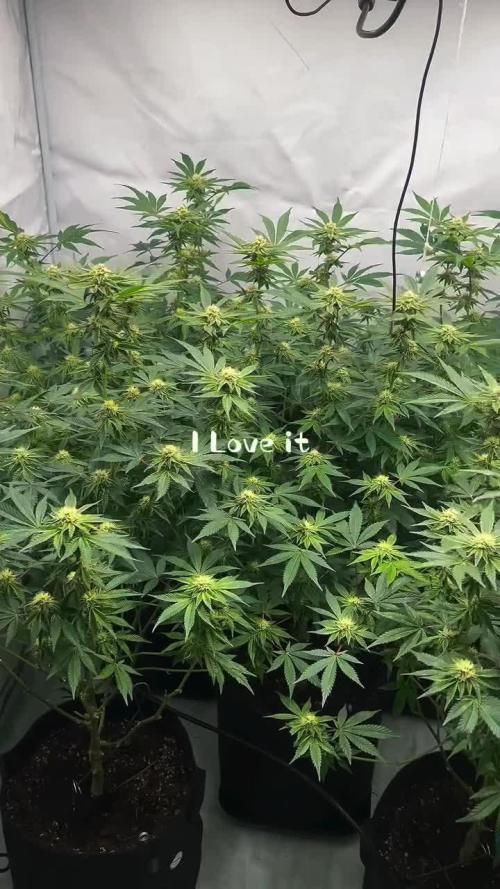
The ladies are doing great. A week or two more and then I am switching to 12/12. I topped the heck out of these girls, so just going to let them recover before the switch. As always thank you for your support. 😀
Likes
12
Share
📆 Semana 5 El mal tiempo continúa 😞, con lluvias y poca luz, lo que sigue afectando el desarrollo de la planta. Aunque el crecimiento sigue siendo lento, se mantiene sana y sin signos de estrés o deficiencias. Los nudos siguen formándose de manera adecuada, aunque con menos vigor del esperado. Seguimos cuidando al máximo para que, cuando el clima mejore, recupere el ritmo de crecimiento. ¡No nos rendimos! 💪
Processing
Likes
21
Share
5.23 F60 5.27 F65 - Everything has been going well this week. The plants went through a feed cycle that should carry them through flower no problemo. Started with the AACT Tea, then a bokashi drench with Fish Shit from Fishheadfarms and plain water from here on out. They are drinking quite a bit. 1.5-2 gallons a plant every 3ish days. The terps in my tents smell out of this world. The ScrOG and 3x3 are like a candy store. Passion Berry has mango/guava citrus terps while Deadstar v2 has strawberry watermelon terps. The 4x5 is much more varied, but in general the sweet pink dominates with it's grape candy terps and the dread bread cuts through with it stanky gassy lemon while the prayer pupil smells like moth balls and a bit of GMO. Very lucky to get to experience this much variety. 5.29 F67
Likes
39
Share
4/30/25 one of the plants R3 got the chop at day 54 of flower and has been trying for 2 days. The rest of the plants are still producing pistils and seem to have atleast a few weeks left but we shall see.
Likes
11
Share
@Ninjabuds
Follow
The Blackberry Moon Rocks are looking promising. One of them is growing into this beautiful little bush, and I think it's almost ready to harvest. The other plant is stacking up buds, but I'm thinking it's still a couple of weeks away. The past few weeks have been so beautiful, watching the plants grow and change. It's amazing how something so small and fragile can turn into something so strong and vibrant. Now that they're getting ready to bloom, it feels a little bittersweet. I'm so excited to see the finished product, but I'll definitely miss having them around while they're growing.
Likes
19
Share
Day 7 of flowering & so far we’re off to a good start. They’ve grown 5” since last week so that’s almost an 1” a day. So far I’m still watering every other day with 1/2 gallon of water each-6.3 ph & that seems to be fine. I might have to start watering everyday here pretty soon though or I’ll have to increase the amount of water I give them each time I water. I’m having fun, I hope they are too.