





Likes
8
Share


@TorvicKofran
Follow
ESPAÑOL:
Hola chicos, espero se encuentren muy bien!
Esta semana las chicas han mejorado un poco, se detuvo el amarillamiento, descubri que Cal-Max de Grotek interfiere en la composicion de la linea hesi por lo que las chicas sufren un bloqueo de nutrientes, dejé de utilizarlo y las chicas han continuado con su desarrollo relativamente normal.
ya estan en su 5ta semana de floracion, Tutankhamon ha producido una cantidad gigantesca de resina, Lennon esta engordando a toda velocidad y aun le quedan 6 semanas aprox.
Anubis a pesar de su color intenso amarillo palido esta engordando bastante bien y su produccion de resina es inimaginable y ya solo que quedan 2 semanas y media aprox.
espero que a partir de ahora ya no surjan mas problemas y que las chicas terminen su floracion de la mejor manera.
esto es todo por esta semana chicos, espero que se encuentren muy bien !
INGLES:
Hello guys, I hope you are very well!
This week the girls have improved a little, the yellowing stopped, I discovered that Cal-Max from Grotek interferes with the composition of the hesi line so the girls suffer a nutrient lock, I stopped using it and the girls have continued with their relatively normal development.
They are already in their 5th week of flowering, Tutankhamun has produced a gigantic amount of resin, Lennon is gaining weight at full speed and he still has about 6 weeks left.
Anubis, despite its intense pale yellow color, is gaining weight quite well and its resin production is unimaginable and there are only about 2 and a half weeks left.
I hope that from now on no more problems arise and that the girls finish their flowering in the best way.
This is it for this week guys, I hope you are doing well!


Likes
23
Share


@BreakingBud
Follow
plants are flowering well, foliar feeding will continue for another 2 weeks, 2 600w lamps are now set at 450w. defoliation will be applied this week.

Likes
13
Share


@Robeeriegenetics
Follow
Added nutrients to top off reservoirs everything looks good …I am content so far with testing will be dropping light schedule to 11 on 13 off to accelerate bud development hopefully shortening flowering time
Likes
24
Share

@CologneGrow
Follow
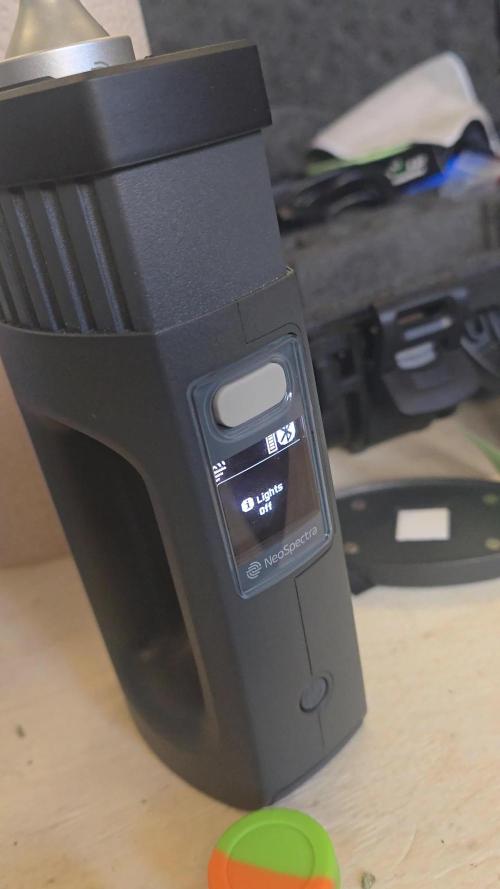
Trocknung 8 Tage bei 60%rlf und ca 18 Grad
27% THC Gehalt 13.5% Restfeuchte und wasseraktivität von 0.4 jetzt beginnt das Curen.


Likes
33
Share


@STAYINGONMYMAINCBATORUNTWO
Follow
I am officially in flush now! I love how far I have come with these girls! They have started to plump up nearly the size of 2 clipper lighters in width! The smell is so sweet and after the touch you can smell the caramel all through it! I can’t wait to taste!
Likes
8
Share


@MrBuenchico
Follow
Tras 10 años cultivando en hidro con arlita (Dutch pot) nos pasamos al RDWC de fabricación propia.
El sistema cuenta con 8 cubos para plantas y un deposito externo de almacenaje y trabajo, donde esta alojada la bomba de agua que impulsa a un enfriador y luego se reparte entre las macetas. Todo ese agua se recoge y vuelve al tanque por un tubo de 30mm de diámetro.
El deposito cuenta con medidor continuo de EC y regulador PH con bomba dosificadora, Ambos de la marca Milwaukee
El sistema cuenta con una bomba de aire de 8 salidas con piedras difusoras para cada una de las macetas.
A ver que tal sale mi primer cultivo en este sistema. 💪
Likes
4
Share

@420DeepGrow
Follow
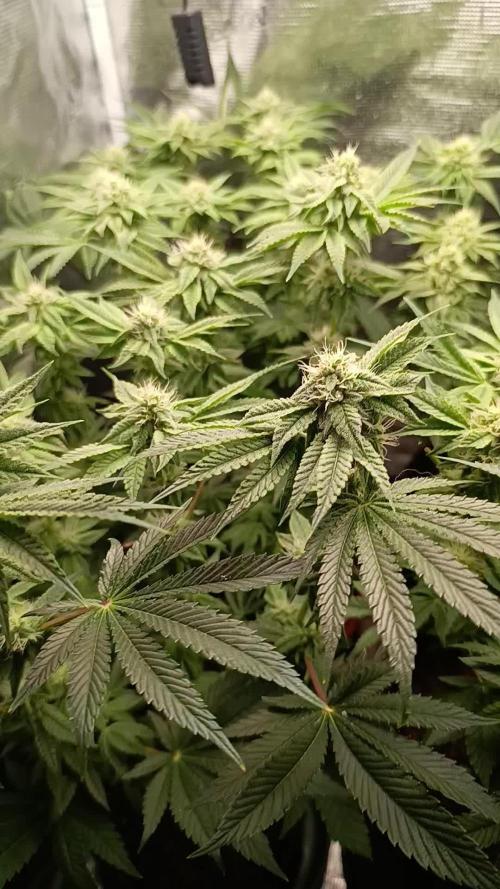
📆 Semana 6
El cultivo sigue en pleno engorde, con cogollos ganando volumen y cerrando estructura. La resina aumenta claramente y los aromas se intensifican.
La planta se mantiene estable, enfocada en densidad y calidad final.
Seguimos creciendo fuerte 💪!
Likes
17
Share


@Ashbash
Follow
So gonna stick with 1ml/l for the rest of the grow now, i think the problems were just too much in the soil and since lowering nutes the problems are slowing down. Another week or two for the Zkittlez, seeing amber on the sugar leaves but not quite on the buds yet although it is mostly cloudy. Lemon AK is behing as it was germed later but still looks to be forming some nice buds and now has a fantastic smell of its own. Looking forward to these so much cant wait!!!!
Likes
6
Share

@Mishka420
Follow
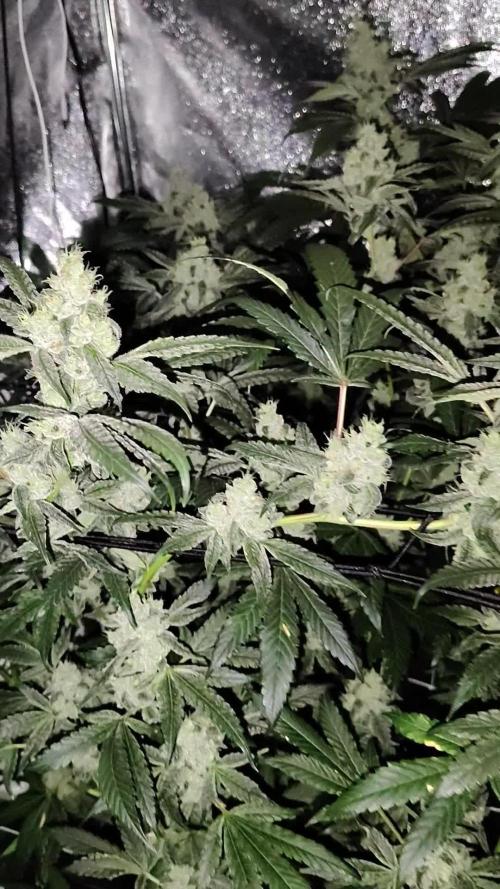
Flowering is now in its final ripening stage. Buds have reached impressive density and are heavily coated with trichomes, extending across the sugar leaves and giving the entire canopy an extremely frosty appearance.
Calyxes continue to swell, with pistils slowly beginning to darken, indicating that harvest is approaching. Aroma intensity has increased significantly, with strong resin production dominating this stage.
The plant remains healthy and stable, supported by the Athena Blended Line, including Bloom A & B, Balance, CaMg and Cleanse, with PK supplementation active since flower week 3 to maximize flower density and resin output.
SCROG training has paid off with an even canopy and excellent light distribution across all bud sites. Focus is now fully on maintaining stable conditions and allowing the flowers to finish ripening naturally.

Likes
20
Share

@420DeepGrow
Follow
Gracias al equipo de Royal Queen Seeds, Marshydro, XpertNutrients y Trolmaster sin ellos esto no sería posible.
💐🍁Punch Pie:
Un híbrido monstruoso con un 90% de dominancia índica, ocupa uno de los primeros puestos de la lista de favoritas de Kid Dynamite.
La Punch Pie desciende de la Cherry Punch Pie de Tyson 2.0 y contiene la genética de dos índicas galardonadas: la Purple Punch y la Purple Kush.
Punch Pie tu paladar se impregnará con ricas notas de pastel de frutos rojos, repostería caramelizada y tierra. Luego, pocos minutos después de la primera calada, sentirás todo el poder de este portento. La Punch Pie proporciona un combo 1-2 que se manifiesta justo en medio de los ojos y derrite todo el cuerpo, dejándote en un estado somnoliento, hambriento y apacible.
Produce plantas compactas que alcanzan una altura de 80-110cm en interior y hasta 120-150cm en exterior. Tras 9 semanas de floración, esta señorita robusta crece con fuerza para soportar el peso de sus densas flores, y da cosechas de hasta 600g/m² en interior y 750g por planta en exterior bajo el sol.
💡TS-3000 + TS-1000: se usaran dos de las lámparas de la serie TS de Marshydro, para cubrir todas las necesidades de las plantas durante el ciclo de cultivo, uso las dos lámparas en floracion para llegar a toda la carpa de 1.50 x 1.50 x 1.80.
https://marshydro.eu/products/mars-hydro-ts-3000-led-grow-light/
🏠 : Marshydro 1.50 x 1.50 x 1.80, carpa 100% estanca con ventanas laterales para llegar a todos los lugares durante el grow
https://marshydro.eu/products/diy-150x150x200cm-grow-tent-kit
🌬️💨 Marshydro 6inch + filtro carbon para evitar olores indeseables.
https://marshydro.eu/products/ifresh-smart-6inch-filter-kits/
💻 Trolmaster Tent-X TCS-1 como controlador de luz, optimiza tu cultivo con la última tecnología del mercado, desde donde puedes controlar todos los parametros.
https://www.trolmaster.com/Products/Details/TCS-
📆 Semana 3:
Ha sido una buena semana, ella ha dado un gran cambio en su lugar definitivo 😎.
Se le ha aplicado un tratamiento insecticida con agua + tierra de diatomeas ( 1 cucharadita por litro de agua), también se le aplica un tratamiento fungicida con una infusión de cola de caballo para evitar futuro moho.
A partir de ahora se riega manualmente con las dosis recomendadas por el fabricante.
Likes
245
Share


@Roberts
Follow
What can I say THC Bomb looks like it is gonna try to become a monster. It is really loving the Spiderfarmer SF-1000 light. I believe it is flowering slower, due to the persistent stretching still. Which is a good thing. I increase more blooming nutrition, and am lowering nitrogen levels. I also added a top layer of dynomyco for additional fungal action for flowering. Dunno if it will make a difference. Curious to see how big it is gonna grow. Hopefully huge🤞. Thanks again bomb seeds🔥💣💥🤯
Thank you grow diaries community for the support. The likes, and follows are greatly appreciated. Showing your support for fellow growers 🌱👍. Also would like to invite you to my YouTube channel for more cannabis related videos. Remember to smash that subscribe button. 😀 Happy growing everyone, and be safe out there.🌱🤜🤛

Likes
5
Share

@SkunkyDog420
Follow
Hallo zusammen 🤙
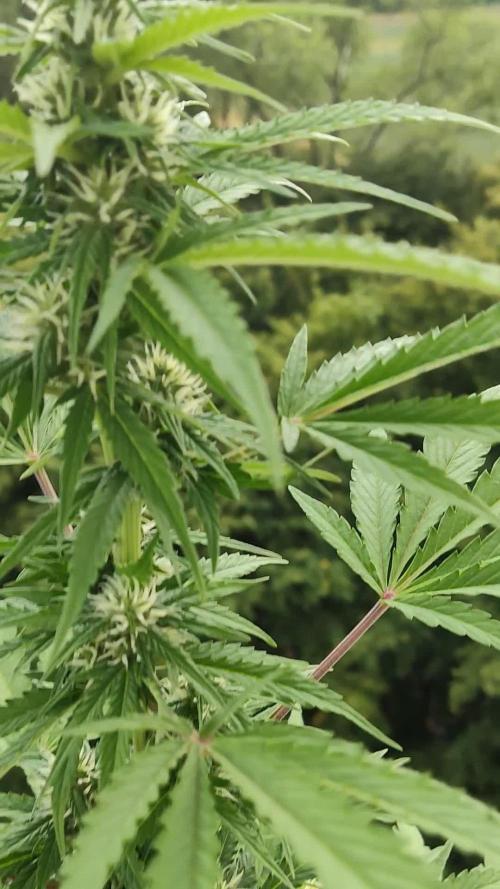
Sie wächst sehr schön und macht keine Probleme.
Wer einen Rabatt von 20 % haben möchte muss den Code: ZAMMIGROW2024 eingeben.

Likes
48
Share


@Wackytabacky_420
Follow
So let me start off with I'm sorry🙏 I'm 3 days late on my update🤬 been crazy round here with the holidays!!
So not much happened the first 10 days but watering with a spray bottle. Probably start feeding at 14 days old. Things are going great as of right now. Will get to the more thorough diaries once feedings begin. We'll till next week thanks for stopping by! Best of luck and Happy Growing!😎🌱💚💪💪
Likes
9
Share


@TheGreenGroomer
Follow
🌿 Grow Diary Update: Week 5 Check-In 🌿
Hey growers,
Can you believe it's Week 5 already? Time's flying, and so is our girl – she's a beast now! I've been itching to defoliate more, but I've maxed out the amount of defol i can do and i have now stopped completely to avoid stressing her out too much :/
Overall, she's looking happy, but I noticed some leaves getting darker than I'd like, so I dialed down the nitrogen a bit...
Remember my PPMS struggle? Well, good news – got them down to 1200ppm but could not get it any lower.. i could lower the ppm/ec of intake even more to hopefully drop it but in this stage of flower feeding lower than 800ppms is too low unless you need to flush to reset the medium so i am just gonna keep sticking to the 800ppm feed for now and measure run off each time hopefully i can get it around 900-1000, yes these high ppm/ec levels are fine for cannabis but mostly when your using co2 thats like 700ppm+ but at the end of the day SHE LOOKS GREAT!
Here's to another week of growth and learning!
Happy growing,
TheGreenGroomer🌱
ps - sorry for over exposed/out of focus images i will get better images for next update, also smells allot stronger when humidity is on the higher end, she smells so good!

Likes
35
Share


@dataTwiiix
Follow
08/06: go pour une 2ème semaine de veg. Le démarrage à été houleux mais ça y est les deux plants ont enfin une jolie allure. 125ml*engraisser #11
08/10: c'est la première fois que j'intègre 50 pourcent de coco coir à mon substrat mal les apports en humus et en guano je doit quand même légèrement engraisser à chaque arrosage et arroser plus souvent mais gentillement biensur. Voilà mon constat de la semaine :D
Topping à hauteur du premier noeuds en vue de tenter un main-lining sur le plus vigoureux des deux plants LaFantaLight, le second aura droit à un lst pour unifier la hauteur des deux plants qui sont sous les mêmes lampes.
Likes
2
Share


@dsullivan157
Follow
Probably going to need some water agin here soon. I haven’t fed them yet. My other tray is starting to catch up. I am still not using any artificial light. I will start using something to keep them in veg longer but other than that they will be full term.
Likes
4
Share

@GREENPHOENIX6262
Follow
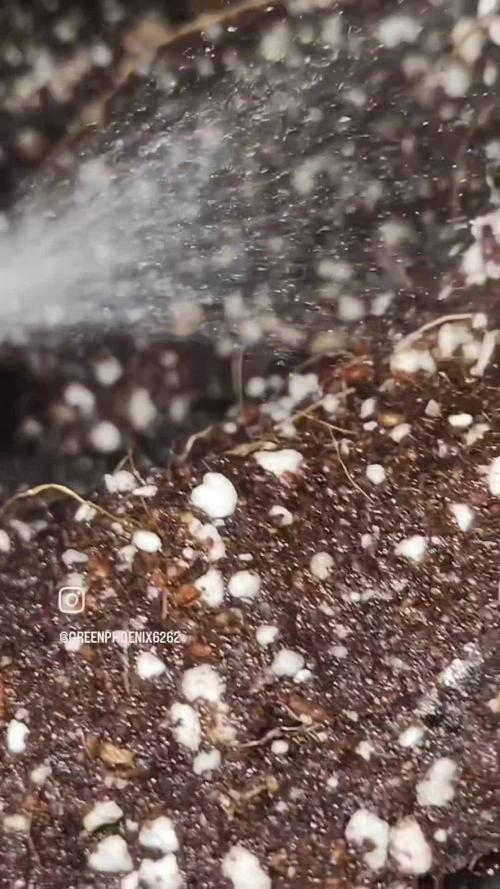
10/14 - Mother had to be discarded - PH burn - pulled 17 viable clones - all clones are alive and thriving - split between 2 tents (2x2 - 4x4) all clones will be moved into the 4x4 - All the clones have been topped.

Likes
41
Share


@negrowsoil
Follow
Starting week 6
this bitch needed some magnesium and phosphorus
Now she starting to get swole
