


Likes
Comments
Share


@Jozef_Balcerek
Follow
Lampa na 50%. 65cm po LST 70cm. Warunki temperatury i wilgotności stabilne. Wydaje mi się ze po LST rośliny stanęły. Zobaczymy jak będzie dalej. Opóźniona panna bez LST.

Likes
12
Share


@Visions
Follow
If you don't follow my Instagram then you will have to read this portion.
Lineage Breakdown:
Pink Sugar Breath F1 created by UFO Genetics.
Pink Sugar Breath: Platinum Kush Breath(IHG) X Pink Sugar Cookies(UFO)
Pink Sugar Cookies: Sugar Cane(IHG) X Gsc Twister
Pink Sugar Breath F2: Pink Sugar Breath Male(Funk/Purple Stems/Dumper) X Pink Sugar Breath Female(Pink Sugar Cookie Pheno) Bred by Me.
I originally popped a good amount of these testers I created using a funk sugar breath male and a baker dough sugar breath with more of the pink sugar cookie lineage. This resulted in a pheno hunters dream. Each pheno develops massive amounts of resin. Green phenos imo are the best smokes SO far. They range from chemical og funk to og funk and dough. The purple pheno has more of a kush breath with sugary dough to it. Lastly is the pink pheno. The pink pheno develops amazing trichome production with all terps within the mom and pop.
I originally popped these in x3 ran soil. They were broken in half. Overwatered. You fucking name it. I was stress testing this already herm vulnerable gsc twisted/ogkb hybrid. That being said the average grower should have minimum to none herm issues. 3 broke out batch but it was just a small trait from the vigorous stress I gave them. They developed high bract to leaf ratio with an intense sativa high. Growing these require 63 to 72 for a full expressions and an added body buzz with that kush breath high. 9/10.
Flowering expect these to stretch 3x as big. They will need boosters/ extra feeding withing 17 days from flip. These are limited tested F2s. Only available @ [email protected]
Likes
9
Share


@Vet4weed
Follow
Well, I've confirmed through sources that we officially entered the flowering stage as of last week. Time for some adjustments. Just prior to confirming flowering, I did one last trim, removing the larger fan leaves at the top to allow more light to the bottom. Good thing I did this now, as any later I've been told will shock them too much. With confirmed flowering, I switched over from both blue and red lights to just red. I also lowered the lights closer to about 9 inches after being assured that they won't burn the leaves any. With the transition, I gave the plants one last watering with the N-P-P mixture.

Likes
61
Share


@Grey_Wolf
Follow
Sensi seeds Jack herer
7 Weeks of flowering completed
31st March 2020
Mission Jack herer is getting closer and closer to completion with every day that passes.
Luckily there has been no more mold on any of the buds and maybe that is because I have drastically changed my watering schedule to only once a week
this is to keep the moisture at a mininum so that mold isn't likely to grow.
The one feed I do give her is a 10 litre mix of water containing Ozi tonic @10mls Litre , because the weather has been quite wet and much cooler she doesnt seem to be needing any extra
watering anyway which is a bonus.
Other than that I don't have anything else to report this week
Take care everybody and thanks for reading my diary update . 👍


Likes
14
Share

@BudVision
Follow
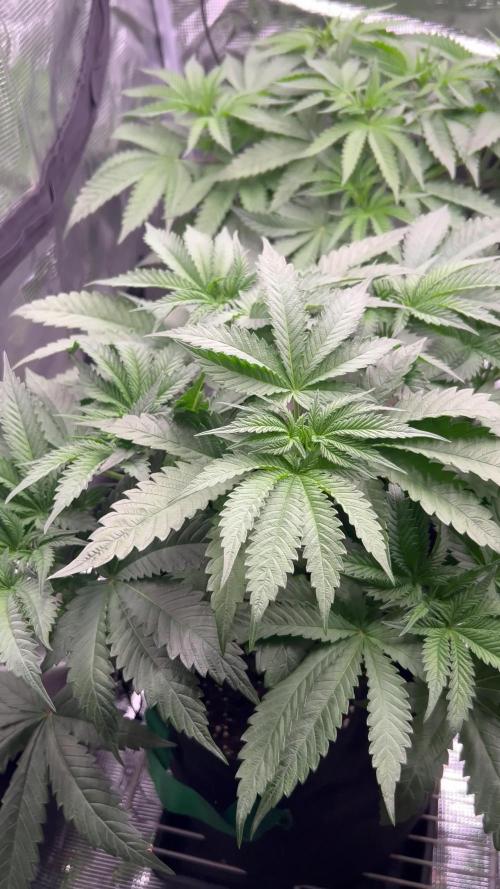
Hi growers,
first week of flower is done and the plants are filling up the tent nicely. They’re looking healthy and strong, so I’m really curious to see how much more they’ll stretch. Peace and happy growing ✌️


Processing
Likes
8
Share


@Marihumama
Follow
Did some cuttings on her, found some bugseggs not much
It's been raining a lot but she won't be up for very much longer and I still hope for some sunny days😘
Likes
2
Share


@Ultraviolet_
Follow
We become aware at such times of man's wonderful ability to bring seemingly unrelated elements into harmonic balance, and receive a glimpse into a world where everything exists in conscious sympathetic attunement to everything else. When we listen to a piece of music that seems to strike a beautiful chord somewhere inside us, or view a painting that simply glows with harmonic awareness well executed, we probably do not spare much time to contemplate the wonderfully intricate combination of vibrations that our sensors make it possible for us to perceive. We tend to appreciate the relationship between the parts of something by an awareness of the harmony or dissonance of the whole. This ability enables us to say "what a beautiful house!" instead of "analysis has proven that this collection of building materials exhibits certain elements of harmonic proportion." While this ability to instinctively appreciate the beauty of true harmony has an important role to play in evolution, a more analytical understanding of the laws involved can be most useful. This is especially so if we wish to create works of art where each part exists in true harmony, not only with the other part of that particular whole, but with the universe within which the creator and the created exist.
Everything vibrates. From the most dense matter to the most subtle cosmic rays, everything which our senses allow our thoughts to become aware of, can be specified in terms of wavelength or frequency of vibration. These two terms define the same thing, but from different points of view.
The following are the approximate wavelengths of various energy carriers:
Cosmic rays 0.000,000,001 mm
Gamma rays 0.000,000,1 mm
X rays 0.000,500 mm
Ultraviolet rays 0.003 mm
Visible light 0.006 mm
Infrared 0.01 mm
Sound waves 1 meter
Radio waves 300 meters
Violet light 400 nm to 450 nm
Blue light 450 nm to 500 nm
Green light 500 nm to 570 nm
Yellow light 570 nm to 590 nm
Orange light 590 nm to 610 nm
Red light 610 to 700 nm
1 nanometer (nm) = 0.000,000,1 cm = 1/10,000,000 cm
If a guitar string is plucked and we hear a sound, it is not too difficult for the human mind to associate this sound with the vibration of the guitar string. With color it is quite different. It is difficult for us to conceive that the color of a substance is not an inherent property of the substance itself, but an indication picked up by our senses of that substance's ability to absorb or reflect the light which happens to be shining on it at that moment. Neither the matter nor the light is colored. What happens is that the brain learns to differentiate between the frequencies reflected or transmitted by the substance the eyes are focused on. The same thing happens with sound. When we say "Oh! Listen, they're playing my favorite song," what we really mean is: "My brain has stored within it a particular pattern of frequencies. I have compared the new information being received with this stored pattern and have deduced the answer that the two patterns are similar within certain specified tolerances." The 'pleasure' involved could have something to do with our running the pre-recorded pattern at the same time, in 'sympathy' with the new pattern as it is received.
The word sympathy describes very well our ability to appreciate color and sound. It also describes the reason behind certain elements of harmony. For instance, if a substance vibrating at 100 cycles per second (tone 1) is in the proximity of another substance vibrating at 200 cycles per second (tone 2), we could perceive, if we had the right equipment, a certain sympathetic relationship between the two.
We will see from this that there is a uniform doubling of the first tone seen in the second. At various points along the waves, the two are the same in amplitude. At other points, they are at opposite poles to each other. This doubled frequency has more points of similarity to the original than any other frequency except the original itself. If the equipment we had available for measuring these two frequencies was a soundboard amplifier and a pair of ears, then we would hear what would sound to us like one tone. If we had the opportunity to hear one at a time, we would hear that although they sound the same, one is higher in pitch than the other. This characteristic of 'the same but different in pitch', musicians have called the octave. Any two tones produced where one has exactly doubled the frequency of the other is called an octave. Speaking in ratios, an octave would appear then as the ratio 2:1 or 1:2, depending on whether we are talking of an octave up or down.
A single note produced by almost any instrument will contain more than one wavelength or frequency. It will have a dominant frequency, the wavelength of which we would call the note's 'fundamental' or 1st harmonic. It will also have a varying number of upper harmonics, gradually fading in intensity into infinity or silence.
Natural harmonics always have the same pattern of intervals between them. The interval between the 1st and 2nd harmonic is a perfect octave; between the 2nd and 3rd a perfect fifth; between the 3rd and 4th a perfect 4th; and so on, the intervals becoming smaller and smaller until they lose any relationship with the western 12 tone scale as it exists at the moment. Just as an octave has certain elements of sympathy with its fundamental, so some intervals have been noted to be more perfectly in sympathy with the fundamental than others. The ratio of the 'perfect 5th' or interval of 7 semitones, as it occurs in the harmonic series, is 3:2 or 2:3, while that of the 'perfect fourth" is 4:3 or 3:4. All the tones in the western 12 tone scale can be expressed in terms of the ratio between the upper tone and its fundamental. This would seem to be an ideal way of generating a scale from any given fundamental and several attempts have been made to do this, the Pythagorean system being probably the most well known. Although when working with a single tone instrument playing on its own, the Pythagorean formula works wonderfully well, if we had several instruments tuned this way together and asked them to play almost any western music, we would find that at times they sounded quite out of tune to each other.
The lack of flexibility of the various scale systems based on the harmonic series has led to what is known as the 'tempered' scale. This uses as its primary unit of interval the ratio of the octave or 2:1. It then proceeds to divide the interval between any fundamental and its upper octave into 12 smaller intervals by applying the ratio: two to the one-twelfth power, to one (21/12:1). This equals 1.059463094, so by multiplying any frequency by this number, we will obtain the tempered semitone next up from our fundamental. We will also find that any tone twelve semitones up from any other tone, in a scale generated in this way, will have exactly double the frequency.
If we took the note middle C on a piano and halved the wavelength, we would have the note C one octave above. If we halved this, we would have the C above, and so on. However, within about 6 octaves, we would find that although a 'sound' was being produced, no human ear could perceive it. If we kept on going, halving and producing upper octaves of our fundamental C, we would proceed through the infrared band, into the visible light spectrum. If we happened to be outside during the day, we would, for one octave only, see the note C with our eyes. The next octave above would already be in the ultraviolet band, and outside the eye's sensitivity range. If we can think of color as being an indication of a substance's vibratory rate or wavelength, we may begin to see a relationship that could exist between the color and sound spectrums.
The logical extension of what has so far been said is that there exists a scale in the color spectrum that corresponds exactly to the scale in the sound spectrum, each color tone being an octave of the equivalent note in the sound range.
This is not the end of the story but only the beginning. If we can for the moment accept that any wavelength in one band has upper and lower octave stretching out to infinity, then the next question is 'fine, but what shall we use as our fundamental? A particular color? A particular sound frequency?' The musicians among us will probably say 'A 440'. This means that the note A should vibrate at 440 Hertz, or 440 times per second. They would tell us that this is standard pitch has been adopted by most orchestras around the world; pianos are tuned to it, instruments are constructed to formulas based on it, and so to them it would probably seem the most appropriate place to begin. Some of these musicians may know of the battle that is still raging with regards to this being the standard, but few would know why A = 440 Hz was chosen except that it worked when it was set to be a suitable compromise between the many different pitches in use at the time.
432 Hz is said to be mathematically consistent with the patterns of the universe. Studies reveal that 432 Hz tuning vibrates with the universe’s golden mean PHI and unifies the properties of light, time, space, matter, gravity, and magnetism with biology, the DNA code, and consciousness. When our atoms and DNA start to resonate in harmony with the spiraling pattern of nature, our sense of connection to nature is said to be magnified.
Another interesting factor to consider is that the A=432 Hz tuning correlates with the color spectrum, while the A=440 Hz is off. Audiophiles have also stated that A = 432 Hz music seems to be non-local and can fill an entire room, whereas A=440 Hz can be perceived as directional or linear in sound propagation.
Once you adopt the idea that sound (or vibration in general) can have an equalizing and harmonizing effect (as well as a disturbing effect), the science of harmony can be applied to bring greater harmony into one's life or tune to specific energies. There is a form of absolute and relative harmony. Absolute harmony can, for example, be determined by the tuning of an instrument. The ancients tuned their instruments at an A of 432 Hz instead of 440 Hz - and for a good reason. There are plenty of music examples on the internet that you can listen to in order to establish the difference for yourself.
Attuning the instrument to 432 Hz results in a more relaxing sound, while 440 Hz slightly tenses up the body. This is because 440 Hz is out of tune with both macro and micro cosmos. On the contrary, 432 Hz is in tune. To give an example of how this is manifested microcosmically: our breath (0,3 Hz) and our pulse (1,2 Hz) relate to the frequency of the lower octave of an A of 432 Hz (108 Hz) as 1:360 and 1:90.
It is interesting to note that 432 Hz was the standard pitch of many old instruments and that it was only recently (19th and 20th century) the standard pitch was increased. This was done in order to be able to play for bigger audiences. Bigger audiences (more bodies) absorb more of the lower frequencies, so the higher pitch was more likely to “cut through”. One of the oldest instruments of the world is the bell ensemble of Yi Zeng (dated 423 BC), tuned to a standard F4 of 345 Hz, which gives an A= 432 Hz. The frequency of 345 Hz is that of the platonic year! Similarly, many old organs are tuned in A=432 as well; for example, St. Peter’s Capella Gregoriana, St. Peter’s Capella Giulia, S. Maria Maggiore in Rome.
Maria Renold’s book “Intervals Scales Tones and the Concert Pitch C=128 Hz” claims conclusive evidence that 440 Hz and raising concert pitch above scientific “C” Prime=128 Hz (Concert A=432 Hz) disassociates the connection of consciousness to the body and creates anti-social conditions in humanity.
The difference between concert pitch A=440 Hz and Concert A=432 Hz is only 8 cycles per second, but it is a perceptible difference of awareness in the human consciousness experience of the dream we share called existence.
Likes
125
Share


@LegacyMarketFarm
Follow
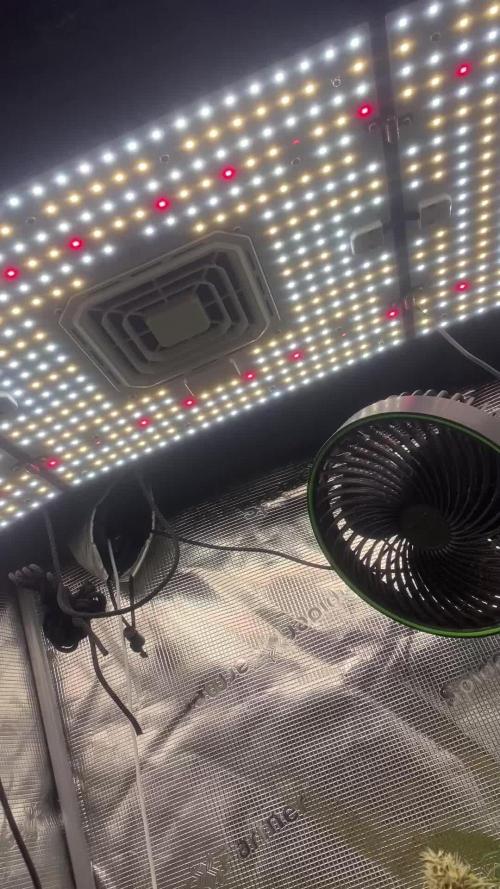
MAY 28TH 2024 - AMENDED with a TOP DRESS between EACH ROW of plant's using GAIA GREEN GYPSUM & GAIA GREEN MINERALIZED PHOSPHATE.
The plant's will be getting another top dress THIS SUNDAY as their LIGHT CYCLE changes to 14/10. We will be TOP DRESSING with GAIA GREEN POWER BLOOM & GAIA GREEN GLACIAL ROCK DUST.
They where given their first FLOWER MICROBE tea 55 gallons split between all of the beds. Not even in flower yet and their consumption is pretty encouraging signs.
MAKE SURE to subscribe to our YOUTUBE for this next FULL LENGTH episode coming up after THIS SUNDAY !!
MOST IMPORTANT OF ALL, SUPPORT OUR SPONSORS !
PROMO CODE GREEN PLANET : LEGACY
PROMO CODE MARS HYDRO : LEGACY
PROMO CODE SEEDSMAN : LEGACY10
MAKE SURE TO FOLLOW OUR SOCIALS & JOIN OUR GREAT COMMUNITIES !
TWITTER : https://x.com/LegacyMrketFarm
YOUTUBE : www.youtube.com/channel/UCR89iF2Iqy3zlHZhFfU2MMg
YOUTUBE GAMING : www.youtube.com/channel/UCw8-qCFg-PUf00waTO5JOGw



Likes
7
Share


@FarmZOG
Follow
Big Heavy chunks
I was expecting more Trich by now but well
Battling sudden raises in Ph It should be 5.7 it goes to 6.4-6.6

Likes
2
Share

@IndigoMist8
Follow
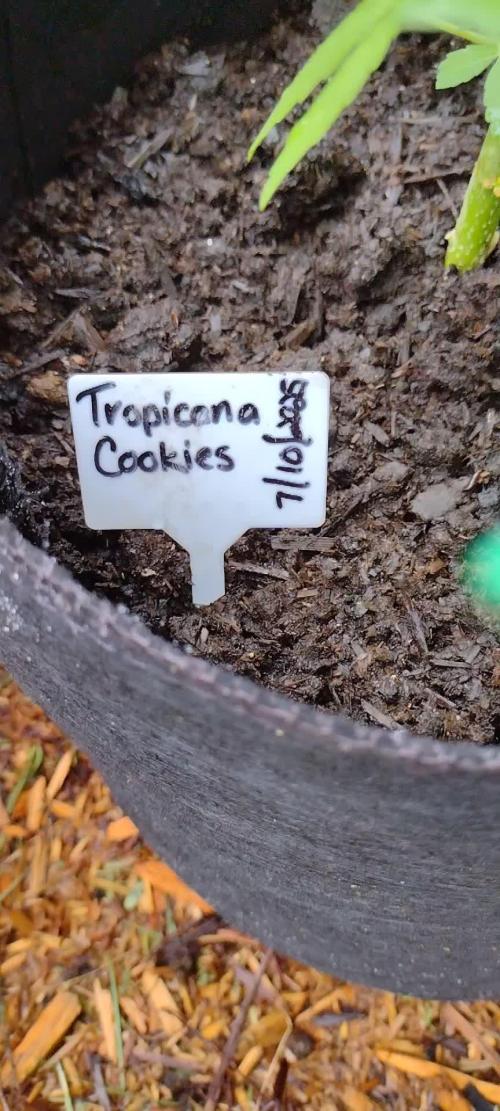
She really stretched and started showing her color. She got fed (2/4 tbsp Dr Earth/Flower Girl) and topped with mushroom compost. Just trying to keep up with the watering as she has been thirsty.
Likes
10
Share


@420DeepGrow
Follow
Gracias al equipo de Zamnesia, Marshydro, XpertNutrients y Trolmaster sin ellos esto no sería posible.
💐🍁MAC 1:
La MAC 1 es una variedad muy solicitada, creada originalmente por Capulator y distribuida solamente a determinados criadores y cultivadores. ¡Pero ahora ya puedes cultivar este tesoro en casa y disfrutar de sus cogollos densos, jugosos y potentes!
Gracias a su densa copa y vigor, la MAC 1 es una opción ideal para LST, poda apical y otras técnicas de entrenamiento (incluido el lollipopping). Cuando entra en floración, las plantas de la MAC 1 se estiran bastante y una vez maduras pueden alcanzar una altura de 160cm en interior y más de 180cm en exterior. De media, las plantas feminizadas de la MAC 1 necesitan un total de 9-10 semanas para terminar la floración, momento en el que estarán repletas de cogollos índica pequeños y compactos.
🌻🚀 Consigue aqui tus semillas:
https://www.zamnesia.es/10906-zamnesia-seeds-mac-1.html
Código Descuento 20%: ZAMMIGD2023
💡TS-3000 + TS-1000: se usaran dos de las lámparas de la serie TS de Marshydro, para cubrir todas las necesidades de las plantas durante el ciclo de cultivo, uso las dos lámparas en floracion para llegar a toda la carpa de 1.50 x 1.50 x 1.80.
https://marshydro.eu/products/mars-hydro-ts-3000-led-grow-light/
🏠 : Marshydro 1.50 x 1.50 x 1.80, carpa 100% estanca con ventanas laterales para llegar a todos los lugares durante el grow
https://marshydro.eu/products/diy-150x150x200cm-grow-tent-kit
🌬️💨 Marshydro 6inch + filtro carbon para evitar olores indeseables.
https://marshydro.eu/products/ifresh-smart-6inch-filter-kits/
💻 Trolmaster Tent-X TCS-1 como controlador de luz, optimiza tu cultivo con la última tecnología del mercado, desde donde puedes controlar todos los parametros.
https://www.trolmaster.com/Products/Details/TCS-1
🍣🍦🌴 Xpert Nutrients es una empresa especializada en la producción y comercialización de fertilizantes líquidos y tierras, que garantizan excelentes cosechas y un crecimiento activo para sus plantas durante todas las fases de cultivo.
Consigue aqui tus Nutrientes:
https://xpertnutrients.com/es/shop/
📆 Semana 3:
Muy buena semana, he aplicado un riego solamente con agua de manantial para reducir la cantidad de sales acumuladas en el sustrato y se ha notado una mejoria .
Creo que le quedan unas dos semanas por estirar, parece que va a ser una buena cosecha.
Se mantiene un buen control del cuarto de cultivo gracias a @marshydro y @trolmaster.
Mantengo las dosis de 1/3 de nutrientes recomendados por el fabricante.
Potencia del foco 80%

Likes
44
Share


@Roberts
Follow
Bubba Kush Mintz Autoflower is doing great. She is growing nice, and steady. I have not really had any issues. I have only added a little water every few days. She us likely comming up for a solution change soon. Thank you Spider Farmer, Athena, and Aeque Genetics. 🤜🏻🤛🏻🌱🌱🌱
Thank you grow diaries community for the 👇likes👇, follows, comments, and subscriptions on my YouTube channel👇. ❄️🌱🍻
Happy Growing 🌱🌱🌱
https://youtube.com/channel/UCAhN7yRzWLpcaRHhMIQ7X4g
Likes
38
Share


@Danger90946
Follow
Here we are in week six of flower and not a lot has happen this week other than the usual watering and letting her do her thing. Only trouble this week was updating GoPro had to try a few times. Other than that we got some rain in my home town and collected about 60 gallons that I'm going to use to finish the rest of the grow. Also, got my new AC Infinity CLOUDLINE T4, Quiet Inline Duct Fan System with Temperature and Humidity Controller, 4-Inch. I was really hoping this two plants would finish before the year ended, however, it looks like they got others plans. See you guys next week.


Likes
14
Share


@ClydeGrows
Follow
Cal-med 1ml/L
Top dressed a sprinkle of Gaia green dry amendments (power bloom).
I was away for new years and it was underwatered along with the others, but I don't see much scope for improvement 😂 side by side in the tent is this guy and another of the same seed (critical +2.0). The difference between the two was expected but still astounding!
Likes
10
Share


@greennug
Follow
happy with plants at this stage. cant wait to see them bulk up. they are starting to smell a little now the sour lemon tart is alot more pungent than critical orange punch at this stage.

Likes
7
Share


@Cargic
Follow
11/24 I was checking the bottom of the pot looking at the roots and I accidentally hit one of the colas off the light and it almost broke it off. Thankfully it didn’t that’s why I have that random tie connected to my tent pole.
11/27 the main colas fan leaves are really starting to fade which worries me a bit since it seems a bit too soon, but oh well we are going to ride it out. There is not much I can do at this point without making it a harsh smoke.
Likes
28
Share


@No_Clout
Follow
Everything’s looking great with these two really happy with these perfect height for me, I’m defiantly going to be doing a lot of Mephisto strains in the near future. ✌️🏻
Still looking good, starting to frost up now also added an 4” air intake and hung it up to blow air across the canopy.

Likes
63
Share


@AsNoriu
Follow
Day 85. Just before lights photo's for better true colour understanding, Bio Grow and AlgaMic is out, after finishing this cycle CalMag and Silica out too.
Hope its not too early, but girls are really healthy, time to pump up the flowers not leaves :)
Day 86. Girls just flying, very happy with Gorillas and Control Garden looks really funky, they stand under no direct light on them... and still flowers looks amazing.
Got my new mobile, had to try out :)
Next week very busy at work, no updates I think.
Day 89. So again i made mistake, while watering them last time accidently left heater on, they overdried , plus temps where at +33c ...
Bunny Gorilla looks bad, Gorilla Max got biggest pistil damage, half went brown.
Thinking i took nitrogen too early out, but we shall see.
On other hand all Control Garden took it well even Cookies with theirs waxy leaves stood thurst nice as such stress can be ...
Planing to do defoliation next week, but if Gorillas started to eat themselves already will leave them as it is. Future will show ..
Happy Growing !!!
