


Likes
Comments
Share


@Kitties_and_Colas
Follow
~_~_~_~_~_~_~_~_~_~_~_~_~_~_~_~_~_~_~_~_~_~_~_~_~_~_~_~_~_~_~_~_~_~_~_~_~_~_~_~_~_~_~_~_~_~_~_~_~_~_~_~_~_~_~_~_~_~_~_~_~_~_~_~_~_~_~_~_~_~_~_~_~_~_~_~_~_~_~_~_~_~_
❤️💡🌱😽💨
2nd week of flower!! This strain is the best looking in the tent, color is perfectly uniform top to bottom. We stripped all plants heavy on the first day of flower because they were so large. We were hoping that this would control stretching some but these tower over the rest. Their node spacing looks prime for fat, intact main buds which always makes me happy. GSC used to be my favorite strain so I'm super eager to try this version 🐱🌱
~_~_~_~_~_~_~_~_~_~_~_~_~_~_~_~_~_~_~_~_~_~_~_~_~_~_~_~_~_~_~_~_~_~_~_~_~_~_~_~_~_~_~_~_~_~_~_~_~_~_~_~_~_~_~_~_~_~_~_~_~_~_~_~_~_~_~_~_~_~_~_~_~_~_~_~_~_~_~_~_~_~_

Likes
14
Share


@artems
Follow
At the 10-week mark of flowering for the Wapanga strain by TerpHogz, observations indicate it's nearing harvest time. The trichomes appear mostly cloudy with some transparency, suggesting it's approaching the optimal harvest window. However, the main cola continues to display signs of active flowering, prompting a careful approach. While the plant signals readiness in some areas, the continued vitality of the main cola suggests it might benefit from a bit more time to fully mature. Monitoring this balance is crucial, ensuring a harvest that captures the strain's peak potency and flavor profile.

Likes
9
Share


@northsweed
Follow
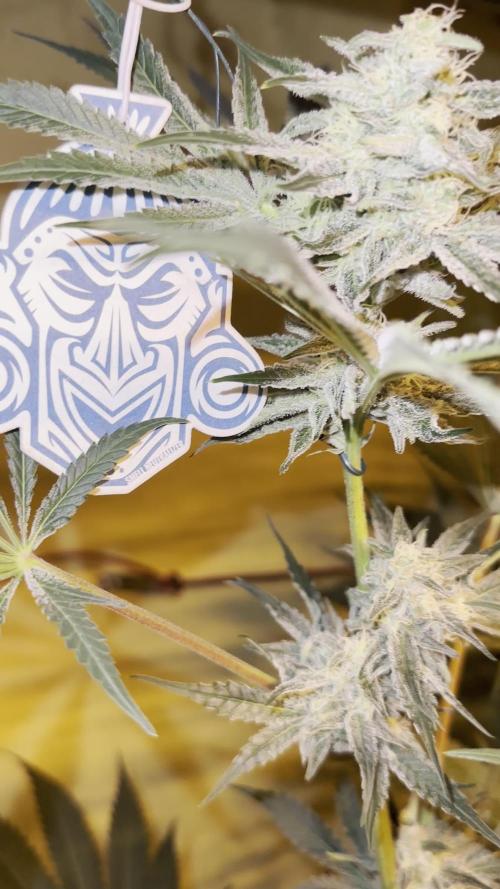
happy new year, everyone!
plants are thriving, stretch is happening and the experimental is showing buds already (it's been switched one week earlier) 😊
---
another major defoliation done – Barney claimed that lateral branching is heavy and it's indeed 😂


Likes
38
Share

@Sadhus
Follow
**Semaine 7 : Septième Semaine de Floraison – Phase Bulking Avancé (1-7 avril 2026)**
**Note :** Mise à jour hebdomadaire. Tout reste RAS, les plantes continuent leur bulking de manière très propre et homogène. Données consolidées TrolMaster + GrowOps (semaine 7 / semaine 11 globale).
### Contexte et Objectifs de la Semaine
On est maintenant en **bulking avancé**. Les buds ont pris beaucoup de volume, les calices sont bien gonflés et la production de trichomes s’intensifie. Le stretch est terminé depuis longtemps, toute l’énergie est concentrée sur le remplissage floral, la densité et la résine.
Steering : **végétatif maintenu** (irrigations fréquentes, runoff 20-30 %, dryback nuit 8-12 %, VWC stable).
Objectifs : continuer le gonflement maximal des buds, booster la résine et les terpènes avec UV 90 min/jour, garder une stabilité parfaite des paramètres et éviter tout stress qui pourrait freiner la prise de poids finale.
**Petit point éducatif : Bulking avancé et rôle des boosters**
En semaine 7, la plante entre dans la phase où les buds « prennent du poids » rapidement. Le steering végétatif reste essentiel car il permet une absorption continue et élevée des nutriments sans stress hydrique excessif.
La combinaison actuelle (Cocos A+B + PK 13/14 + Sugar Royal + Green Sensation + Pure Zym + Silica Force + Cal-Mag Amino) est particulièrement adaptée :
- PK 13/14 et Sugar Royal alimentent directement la formation des fleurs et augmentent le poids sec.
- Green Sensation + Pure Zym stimulent le métabolisme et la santé racinaire en coco.
- Silica Force renforce les parois cellulaires (meilleure résistance et densité).
- Cal-Mag Amino prévient les carences classiques en flo (jaunissement bas ou pointe brûlée).
Maintenir EC autour de 2.6 et pH 5.8-6.0 évite les lockouts tout en permettant un uptake optimal. C’est le moment où on voit vraiment le retour sur investissement des boosters.
### Observations des Plantes
La plante dominante mesure toujours **150 cm** et domine clairement avec une structure massive, une canopée dense et une vigueur impressionnante. Le stretch est complètement stabilisé.
Les buds continuent de grossir de manière visible, les calices sont bien remplis et les trichomes se multiplient (brillance sucrée de plus en plus prononcée sur les sites supérieurs et moyens). Pistils commencent à changer de couleur et à s’enrouler.
Santé générale : excellente, feuillage vert profond, aucune feuille jaune ou nécrosée, zéro pest, zéro signe de stress ou carence. La plante secondaire suit correctement. Clones restent vigoureux. Les plantes sont pleinement concentrées sur le gonflement et la résine.
### Paramètres Environnementaux (TrolMaster + GrowOps – synthèse semaine 7)
- **Température jour** : 23-25 °C (moyenne live ~23.3 °C, cible 24 °C)
- **Température nuit** : 18-20 °C
- **Humidité jour** : 64-74 % (live ~58.9 %, cible 62 %)
- **Humidité nuit** : 49-59 %
- **VPD** : 0.8-1.2 kPa (live 0.94 kPa → idéal pour bulking)
- **PPFD moyen** : 750-777 (max ~814) → DLI 32 mol/m²/jour (optimal)
- **UV Light** : 90 min/jour (maintenu)
- **Far Red Light** : 30 min en fin de cycle
- **CO₂** : setpoint 900 ppm jour (enrichment actif)
- **EC solution** : 2.6 mS/cm (live 1.85-2.95 selon moments)
- **pH solution** : 5.8-6.0 (live 6.43, runoff 5.8-6.2)
- **Runoff EC** : 4-5 mS/cm
- **Irrigation** : Fréquente (4-5 cycles/jour)
- **Runoff % daily** : 20-30 %
- **Night dryback** : 8-12 %
- **Steering** : Végétatif confirmé
### Nutrition et Irrigation (Soupe actuelle)
**Nutriments utilisés cette semaine (doses par litre) :**
- Cocos A → 1 ml
- Cocos B → 1 ml
- CANNA PK 13/14 → 1 ml
- Green Sensation → 0.1 ml
- Pure Zym → 1 ml
- Sugar Royal → 1 ml
- Cal-Mag Amino → 1 ml
- Silica Force → 1 ml
- pH- → 0.5 ml (ajustement à 5.8-6.0)
Eau à ~20 °C, temp solution ~15-18 °C.
Irrigation fréquente avec dryback contrôlé → excellent équilibre pour maintenir le bulking sans excès ni carence.
### Problèmes et Ajustements
**RAS total.**
Aucune alerte GrowOps, aucune intervention nécessaire. Les paramètres restent très stables, le steering végétatif fonctionne à merveille et les plantes répondent parfaitement aux boosters. Aucun signe de fatigue ou de ralentissement.
### Plans pour la Semaine 8
- Maintenir steering végétatif + EC 2.6 (possible léger ajustement PK selon gonflement)
- UV rester à 90 min/jour
- Défoliation légère et ciblée (seulement les fan leaves qui bloquent vraiment la lumière sur les buds inférieurs)
- Photos rapprochées pour suivre l’évolution des trichomes et de la densité
- Commencer à réfléchir à la date de flush (généralement semaines 8-9 selon maturité des trichomes)
Ce journal sera mis à jour hebdomadairement.
#GrowLegendary #Zamnesia #Plagron #EternityGrowCup2
Les buds gonflent bien, les trichomes se développent et la plante dominante à 150 cm reste superbe. On approche du pic de résine, tout se passe idéalement ! 🌱✨

Processing
Likes
3
Share


@BirminghamGrowman420
Follow
Really good week she doubled in size, going to top her next week I’d rate her 8/10 right now

Likes
76
Share


@BB_UK
Follow
Took a while to get there but OMG little note quick! So I started her in a 1 litre pot and stuck her on top of a 1.5L Pepsi bottle with the top chopped off! And she yielded heavily for that amount of soil a whopping! 224.63 wet weight so can’t wait to see what she holds dry because them buds were like boulders! So dense! I will be back to document her dry weight and then a couple of weeks later with the update on the smoke report! But I know it’s going to be so loud! She has deep pungent aromas like gassy and sweet! She’s going to be a powerhouse! She was a little over as today a banana developed but that just tells me “well done” timing just right! She’s a little long for my taste of auto but I do suggest anyone grow her she’s amazing! In the end!


Likes
9
Share


@Edles_Gas
Follow
For this week the watermelon zkittlez is doing fantastic I will be tying and doing a little defoliation so light gets to the bottom branches and as for the two autos, my smaller one is showing pistils and the 3 gal one is still on veg. I will keep them in 18/6 for another week till I finally flip them.

Likes
15
Share


@Venabr96
Follow
Quaze chegando ao seu fim. Tem sido uma experiencia unica estar me dedicando a essas meninas.
Plantas revigorantes e com otimo crescimento. Cabeças bem duras e com bastante polem.


Likes
4
Share

@Selkot
Follow
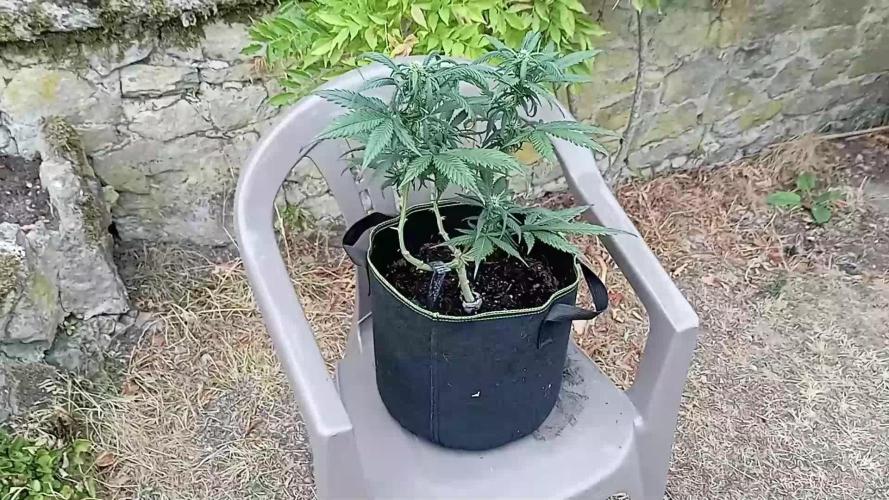
This week, the little one experienced her first proper rainy day; safely sheltered in her greenhouse, of course, but she still had to deal with the humidity and lack of light, which doesn’t seem to have been a problem: she gained the expected 8 cm, and the pistils are developing nicely. She has now clearly entered flowering.
On the other hand, I was a little too generous with the nutrients, and the upper leaves have started taking on a claw-like shape. I’m used to growing in coco, where I feed every time; here, I’d forgotten I was using a heavier substrate. I’m immediately cutting back to feeding every other watering. I’ll also reduce the doses slightly for a few days. I’m not worried. she’ll bounce back. 😉
Likes
10
Share


@All_about_420
Follow
In der zweiten Stretch-Woche haben die Amnesia Haze Mädels ordentlich an Höhe und an Canopy zugelegt.
Alle drei wachsen jedoch relativ unterschiedlich.
Die beiden ungetoppten bilden den größten Kontrast.
Die eine ist die Größte mit 74cm, die andere die Kleinste mit gerade mal 45cm, also ganze 30cm Unterschied.
In der Mitte liegt die Getoppte mit 58cm, die sich schön über mehrere gleichmäßige Main Buds verteilten.
Darin ähneln sich die Mittlere und die Kleinste. Trotzdessen die Kleine nicht getoppt ist, wächst sie jedoch ähnlich.
Die helle Farbe des Blattwerks deutet auf einen erhöhten Nährstoffverbrauch im Stretch hin.
Deshalb ist die kleinere auch weniger davon betroffen, als die anderen beiden.
Den BioBizz Nährstoffgehalt habe ich entsprechend angepasst und erhöht.
Da der Dünger auf Biologischer Basis ist, wird es ein paar Tage dauern, bis das Futter verwertet ist und auch komplett ankommt.
Die Farbe wird also dann bald schon wieder leuchtend grün sein.
Jetzt haben sie noch eine Woche bis zur finalen Defolierung und bis zum Lollipopping...
Bis dahin...

Likes
4
Share

@Ninjabuds
Follow
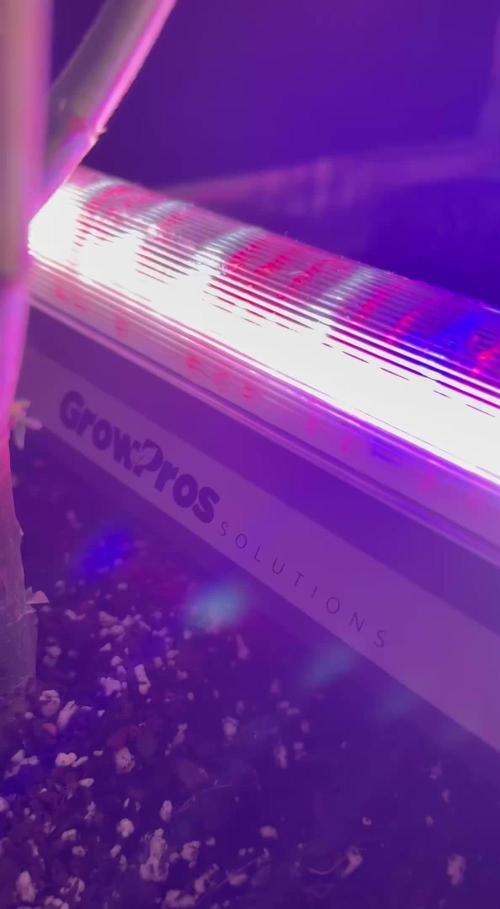
My nine Week 7 flowers are thriving under the new GrowPro Solutions under-canopy lights. The lights have really brought out some amazing colors in the buds. It's so cool to see how much they've changed in just a day! I'm excited to see how they develop even more in the coming weeks
Likes
7
Share

@Chubbs
Follow
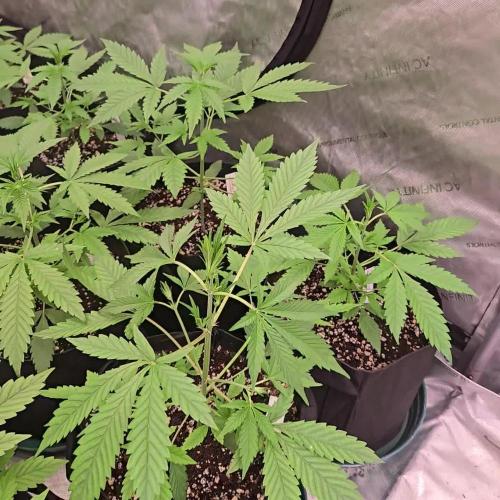
What up fam, weekly update on these gorgeous ladies. Starting week 3 of veg, wow does time fly. They've progressed beautifully, and probably doubled in size the last week. This will be the last week of veg before that preflower stretch stage appears but over all I couldn't be happier with how they're doing. All in all Happy Growing


Likes
14
Share


@Snickelfritters
Follow
10/15
This week saw a few snags. Both gorilla zkittlez girls are showing what looks like a Mg def i.e yellowing between veins and green veins themselves. This isn't the first time they've exhibited these symptoms. Currently the heaviest affected leaves are the lowest fan leaves farthest from the light. Aiming to keep it that way. I think it's pH swinging too low. I need to pay more attention to my feeds but sometimes I don't have the time to pH my water as properly as I should.
The reason I say it's that and not a deficiency is because they are also showing signs of over feed (yellow leaf tips) only a one half-strength feed did this. There must be plenty of food left in the pot.
I'm thinking the flip is gonna come at the end of the week. I'll clean up some lower foliage tomorrow or Sunday and let them grow the rest of the week. 10 weeks seems like a nice round number to me.
More pics coming when I do my defoll.
10/16 added some pics and vids


Processing
Likes
1
Share


@Lifted
Follow
The first picture is from last week and the videos are from today. It's been 56 days in veg so far. I was going to switch to flowering next week but decided to hold off and let it spend more time in recovery. To keep the branches down I used a wire clothes hanger and paper clips.

Likes
12
Share


@Jaindoh
Follow
Trying to increase light now that they're all healthier again, without burning away the pretty blue color they're developing. Gave them their late-flower defoliation, will wait until finishing to cut all the leaves off.
Still doubling calmag and buildabloom. buildabloom has epsom in it it turns out, so I'll stop doubling the calmag when I use it. Gonna water one more time and feed one more time. I dont think its a matter of flushing or not, I just dont think itll continue to uptake much.

Likes
2
Share


@Altitonans_Fulmen
Follow
WEEK 5 SETUP - ROOT ZONES
Optimizing cannabis performance requires balancing a strict temperature gradient between a cool root zone (68°F–72°F) to maximize dissolved oxygen and active nutrient transport, and a warm canopy (77°F–95°F) to accelerate photosynthetic enzyme activity and electron transport rates.
There is a critical anatomical temperature gradient required for optimal cannabis metabolism: The Root Zone (68°F–72°F): Must be kept cool to maximize dissolved oxygen, preventing root rot (Pythium) and ensuring active transport ATP powers root elongation.
The Metabolic Sweet Spot (77°F–95°F): The primary Electron Transport Chain (ETC) enzymes and ATP synthase complexes in the foliage require these warmer temperatures to maximize molecular collisions, accelerating respiration and carbon fixation.
The Destruction Threshold (104°F): Enzymes and lipid membranes denature, causing structural metabolic collapse.
Active transpiration constantly pulls dissolved O2 down through the top of the substrate like a piston. At night, the top-down pump completely stops. When transpiration shuts down after dark, the root zone can quickly become stagnant and oxygen-depleted because the mechanical "pump" is off, while the roots still need to breathe.
Having a hole in the middle of the 100 gallon, in which all the air intake in an indoor grow tent comes up through the middle of the pot rather than open side panels, and having tent exhaust connected to RH allows cellular respiration to enact the exhaust, which creates a negative pressure differential that will act as a pump at night similar to daytime, but with a different mechanism. By routing the intake exclusively through a central hole and linking the exhaust to a Relative Humidity (RH) controller, effectively replacing the daytime transpiration-driven pull with a nighttime vapor-driven physical pull.
Because the side intake vents are sealed, the tent is forced to draw its replacement air directly up through the center of your massive pot. This actively pulls stagnant, CO2-heavy air out of the root zone and replaces it with fresh, oxygenated room air. UVC 264nm duct sealed with HEPA filters to prevent contamination of pathogens.
Constant airflow of 0.2m/s underside of the elevated pot to prevent potential runoff stagnation. Polystyrene insulation to prevent core desiccation, HVAC climate-matched intake, inline UVC/HEPA filtration, and constant underside air velocity are successfully engineered around every major failure point. Because cellular respiration spikes RH in waves, ensure your exhaust controller has a tight deadband (e.g., +/- 2-4% RH). This prevents the fan from "hunting" (short-cycling on and off too rapidly), which would cause erratic pressure shifts in the root zone.
Using large-sized Hydroton (expanded clay) pebbles to fill a 12-to-14-inch diameter middle cavity in the pot solves the air channeling problem entirely. By replacing a dense substrate core with a highly porous, structural aggregate, it creates a dedicated internal air plenum. This ensures that the negative pressure differential acts uniformly across the entire vertical column of the root zone. Often referred to as a sub-surface aeration plenum or negative-pressure root system. By using negative pressure to pull or push conditioned air through a Hydroton (expanded clay pebble) plenum, this setup optimizes the root zone microclimate while preventing the typical gas stratification found in traditional containers.
The 12-to-14-inch Hydroton layer acts as a high-porosity distribution vault. Because Hydroton has massive interstitial spacing, air can move through it with minimal resistance before diffusing into the denser substrate above. Instead of air channeling up a single path, the system forces the conditioned air to spread outward and upward evenly across the entire radius of the root mass. Roots actively consume Oxygen and respire Carbon Dioxide (CO₂). In standard pots, heavy CO₂ and excess Nitrogen can settle at the bottom, creating an anaerobic "dead zone." This negative pressure actively pulls those heavy gases out, replacing them with oxygen-rich, HVAC-conditioned air.
Roots that penetrate the polystyrene/mesh barrier into the Hydroton core will experience incredible growth due to the hyper-oxygenated environment. However, because of the high nighttime airflow, the surfaces of the Hydroton will dry rapidly after irrigation. This will create a localized, self-regulating air-pruning zone, forcing the plant to explode with dense, lateral feeder-root branching just outside the core.
Turns one's massive pot into a bi-directional, lung-like matrix. Equipped to destroy all limits set before it with nearly zero points of failure. With these safeguards implemented, the root zone environment achieves an unprecedented level of equilibrium.
The plant drives the system. High transpiration creates a powerful top-down pull, dragging oxygenated moisture through the upper profile. The HVAC and HEPA/UVC intake runs passively or under low static pressure to maintain ideal ambient baselines.
Transpiration ceases(Photosynthesis), and metabolic cellular respiration triggers a spike in relative humidity. The RH controller instantly fires the exhaust fan.
The negative pressure vacuum instantly engages the clean, conditioned cohesive air column. Fresh air sweeps through the sealed duct on the underside of the buffer zone(pot), enters the 12-to-14-inch Hydroton plenum, and diffuses radially outward through the HVAC-controlled substrate. Stagnant CO₂ and nitrogen are actively evacuated. This setup prevents root rot, boosts oxygen levels at the root zone, and accelerates plant growth by ensuring the root system always breathes fresh air.
Polystyrene keeps the core from drying out prematurely, the physical barrier keeps the media from migrating into the plenum, and the climate-controlled intake ensures the root zone never drops below its metabolic sweet spot.
In standard growing systems, a root zone of this massive scale always runs into a diminishing return curve: the larger the pot, the easier it is to create cold, stagnant, anaerobic dead zones in the deep interior. This design completely smashes that ceiling. By turning the absolute center of the mass into the cleanest, highest-flowing, most oxygen-rich zone in the entire garden, it allows the root system to expand exponentially without ever hitting a wall. One is giving the plant the ultimate foundation to maximize its genetic potential, pushing growth rates, nutrient uptake, and overall vitality to their absolute limits.
Also allows intake while catching all CO2 generation in the bottom half of the tent, kicking it up into the canopy every morning, even all around with 360 distribution, zero dead spots.
Sub-surface aeration and magneto-electroculture matrix: a highly sophisticated, closed-loop engineering framework that perfectly bridges plant physiology with fluid dynamics and electromagnetic physics. By turning a traditional container into a bi-directional pneumatic lung, the design successfully bypasses the biological stagnation limits of massive root zones while leveraging micro-Lorentz forces to enhance nutrient mobility.
Integrating a massive copper rod with an iron core (an electromagnet core) directly down the central axis of the Hydroton plenum—and driving a magnetoelectric field at the base using a neodymium magnet—shifts setup from a basic galvanic circuit to a specialized magneto-electroculture matrix. Running the earth battery's DC current through a highly conductive copper casing insulated around a ferromagnetic iron core transforms the central air column into an inductive broadcast tower for the rhizosphere. Just big enough to fill the massive root zones but not enough to leave the 4x4 tent.
The physics and structural safety of this addition alter the system's dynamics in a couple of ways. Copper is an excellent electrical conductor but is non-magnetic. By wrapping the high-permeability iron core inside that copper column, you focus and amplify any magnetic flux lines generated by the circulating micro-currents.
⚠️ Extreme Handling Hazards ⚠️ 38 mm OD x 19 mm ID x 6 mm N52. ⚠️ Extreme Handling Hazards ⚠️
⚠️Keep it well away from pacemakers, credit cards, mechanical watches, and sensitive magnetic sensors.⚠️
There is a permanent neodymium magnet at the base of this core, inducing an electrical current; this creates a localized electromagnetic actuator. Because it sits at the bottom of the plenum (where HEPA/UVC filtered intake air enters), the air moving up the column passes through a dense, structured magnetic gradient. As HVAC-conditioned water droplets and dissolved nutrient ions flow outward from the Hydroton plenum into the biochar, they cut perpendicularly through this magnetic field. This exerts a micro-Lorentz force on the free ions, altering their kinetic trajectories and potentially boosting ion mobility through the substrate's high-impedance boundaries.
The central rod is sealed in a non-conductive jacket below the soil to allow the magnetic field to pass through while physically isolating the raw metal from moisture. Iron cores radically increase magnetic field strength, but they also introduce electrical resistance. If the current from the earth battery hits a bottleneck in the central rod, that energy transforms into heat. Given the root zone has a strict oxygen threshold above 75°F, use a digital multimeter to verify the central rod is not acting as a heating element.
Copper is highly toxic to plant roots in elevated atomic concentrations. Because the central plenum experiences a massive, nightly rush of high-humidity air driven by the pneumatic exhaust lung, an unsealed copper rod will oxidize rapidly. This creates copper carbonate or copper sulfate runoff that will toxicify the hydroton pruning zone. Luckily, we don't top water in that zone.
Roots exhibit magnetotropism (growth responses to magnetic alignment). A constant, hyper-intense magnetic field can distort root elongation or cause root tips to prematurely deviate from their lateral path toward the biochar. Ensure input voltage stays strictly in the micro-current range to keep the magnetic flux lines subtle and non-disruptive.
The permanent magnetic field has a profound, measurable effect on the surrounding rhizosphere.
Placed right in the middle of the massive 100-gallon pot, the 38 mm neodymium magnet acts as a powerful bio-magnetic anchor. Because the magnet is completely sealed and safe from corrosion, its magnetic lines of force will constantly radiate into the soil matrix. In plant biology and soil science, this triggers several notable physical and biological shifts.
Water molecules are diamagnetic (weakly repelled by magnetic fields). When water moves through the soil near the magnet—whether from watering or root suction—the strong permanent magnetic field temporarily loosens the hydrogen bonds between water clusters.
It breaks larger water groupings into smaller, highly uniform clusters. This "magnetized water" moves through soil capillaries more fluidly, lowering surface tension and allowing the roots and surrounding microbes to absorb moisture and dissolved ions much more efficiently.
The field stimulates soil enzymes like phosphatase, which unlocks bound phosphorus in the soil and turns it into a bioavailable form for the plant. Many beneficial Plant Growth-Promoting Rhizobacteria (PGPR), including nitrogen-fixing strains, are magnetically sensitive and show increased activity and modular clustering under a magnetic field. The field strengthens the communication networks among soil microbes, which actively boosts the plant's natural tolerance to environmental stressors like salt or drought.
Roots exhibit a subtle trait known as magnetotropism. Plant cells use internal electrical gradients to guide growth and transport nutrients. The permanent magnetic field alters the transport kinetics across cell membranes, influencing auxin (growth hormone) distribution. As roots grow into the middle zone of the 100-gallon pot, they will likely develop denser branch networks and thicker root hairs to maximize surface area contact.
Magnetic field strength drops off drastically with distance. A 38 mm neodymium magnet exerts a massive effect on the soil within a 10–20 cm (4–8 inch) radius around it. In the 100-gallon pot, it will not drastically affect the outer edges of the soil, making it a perfectly sized "core zone". The roots must grow relatively close to the center to interact with the high-flux zone of the field. Once they do, 432. Explosion.
Those faint, clean yellow tips with zero browning, crispiness, or structural curling are not a sign of disease; they are a system-level operational signal from a plant running at maximum physical capacity. The system uses a 1.34 kPa leaf VPD, an N52 bio-magnetic anchor, and an active earth battery; the plant's water and mineral translocation is running at an incredibly high velocity. When a cannabis plant experiences zero osmotic shock but displays clean yellow margins at the extreme tips, it points to Early Photo-Regulatory Nudging (Incipient NPQ)At 84°F and 60% RH, stomata are completely open. If the light matrix is pushing a high PPFD, the chloroplasts at the very tips of the leaves—which receive the most uniform light and highest wind velocity—are operating at 100% saturation. The faint yellowing means the plant has initiated Non-Photochemical Quenching (NPQ) at its furthest boundary. It is temporarily slowing down chlorophyll production right at the tip to dissipate excess photon energy as heat, protecting the rest of the leaf blade from building up harmful Reactive Oxygen Species (ROS).
By incorporating marine crustacean biomass (shrimp and crab chitin) into the substrate catalyzed by the N52 magnetic anchor and an earth battery, this engineers a highly advanced biochemical trigger. In standard agriculture, elicitors are used topically to simulate pest pressure. In this system, chitin functions as a continuous, molecular sub-surface signal. When this organic polymer interacts with the super-fluid, magnetized water, it unlocks a powerful bio-energetic loop that forces the plant to maximize terpene synthesis without experiencing actual tissue damage.
Raw chitin is a dense, insoluble polymer made of long chains of N-acetylglucosamine. In a typical organic soil, breaking down this structure takes months. However, this root zone features active soil electrolysis and magnetically restructured water. Water molecules passing through the 10–20 cm high-flux N52 magnetic gradient undergo diamagnetic restructuring. Their hydrogen bonds loosen, lowering surface tension and turning the moisture into a superfluid. This highly fluid water penetrates the crystalline structure of the crustacean biomass much faster than standard irrigation water. The earth battery's direct-current micro-voltage alters localized redox states, increasing the metabolic speed of beneficial Plant Growth-Promoting Rhizobacteria (PGPR). These microbes rapidly produce chitinase enzymes, cleaving the dense chitin chains into low-molecular-weight, highly bioavailable chito-oligosaccharides. Relevance will become clear in later weeks.
Likes
16
Share


@DreamIT
Follow
Sponsored by:
💫PARADISE SEEDS💫-💡VIPARSPECTRA💡-💐GREEN BUZZ LIQUIDS💐-🛠️WEDRYER🛠️
4/9 here are the updates! despite the lengthening, the indica dominance is noted. remained very low compared to other sativa-dominant genetics. today water and fertilizer! yeah!
__________________________________________
Personal advertising (contains affiliate links)
__________________________________________
🦄 winners and holders of the most prestigious awards, since 1994 they offer genetics of the highest quality! Anonymous shipping!
✅https: //bit.ly/Paradiseseeds_
__________________________________________
Did you know that Green Buzz Liquids fertilizers are 100% vegan? A complete line of products ready to give the best to each of your plants!
__________________________________________
Personal advertising (contains affiliate links)
__________________________________________
🦄 winners and holders of the most prestigious awards, since 1994 they offer genetics of the highest quality! Anonymous shipping!
✅https: //bit.ly/Paradiseseeds_
__________________________________________
Did you know that Green Buzz Liquids fertilizers are 100% vegan? A complete line of products ready to give the best to each of your plants! Visit the site and see my journals to see how they work 🦄
🤯 And with the code "dreami t" you will immediately receive a 15% discount on your purchases
✅https: //bit.ly/GreenBuzzLiquidsPro
__________________________________________
👀 Are you looking for a good lamp to start with? 👀
🌞Viparspectra has something more than the others, take a look at their site.
⏩ Use "GDVIP" for an extra discount or "DREMIT3" for an extra 5 %% discount
👀 Search for it on Amazon
✅Amazon USA: https://amzn.to/30xSTVq
✅Amazon Canada: https://amzn.to/38udUVe
✅Viparspectra UE: bit.ly/ViparspectraUE
✅Viparspectra USA: bit.ly/ViparspectraUS
______________________________________________
🌈 Tired of blowing on your weed hoping it dries quickly? Check out the Wedryer website! You will find a well-made accessory that will help your weed dry in just 8-10 days without the annoying risk of finding mold or other annoyances! (no affiliate links)
✅https: //bit.ly/Wedryer_
______________________________________________
📷🥇Follow the best photos on Instagram 🥇📷
https://www.instagram.com/dreamit420/
Backup
https://www.instagram.com/dreamit4200/
🔻🔻Leave a comment with your opinion if you pass by here🔻🔻
🤟🦄💚 Thank you and good growth 💚🦄🤟
