Likes
Comments
Share
@Canna96
Follow
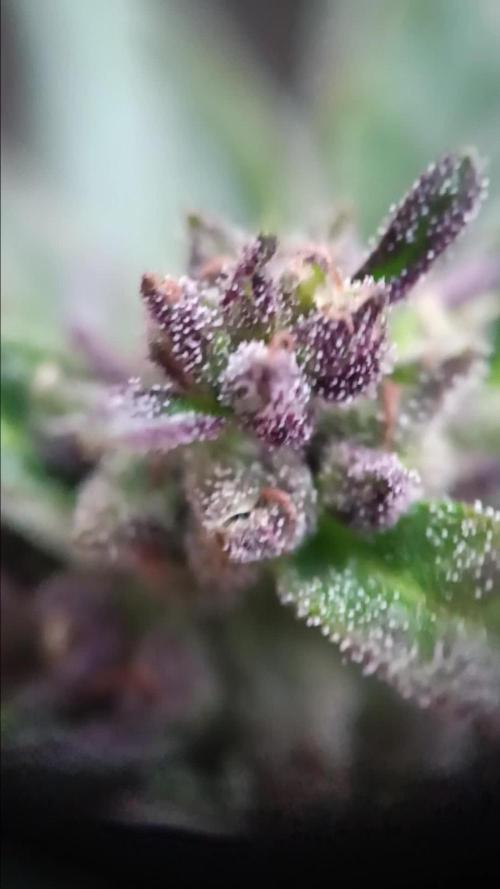
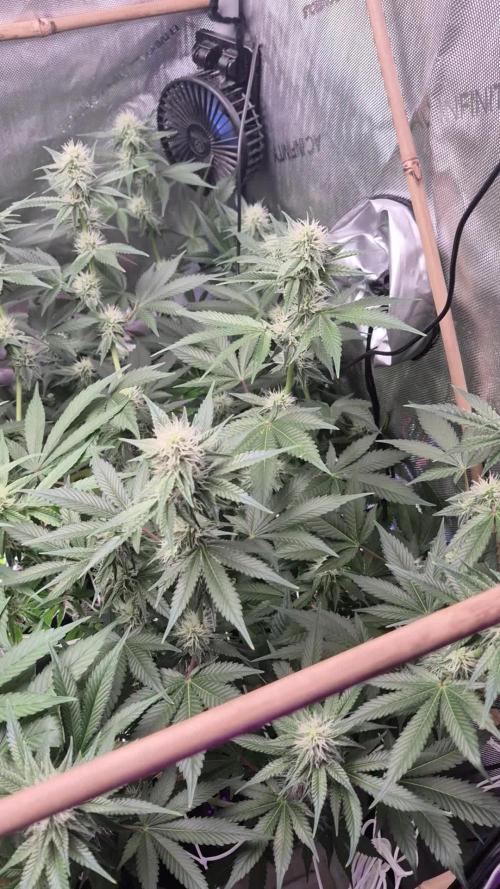
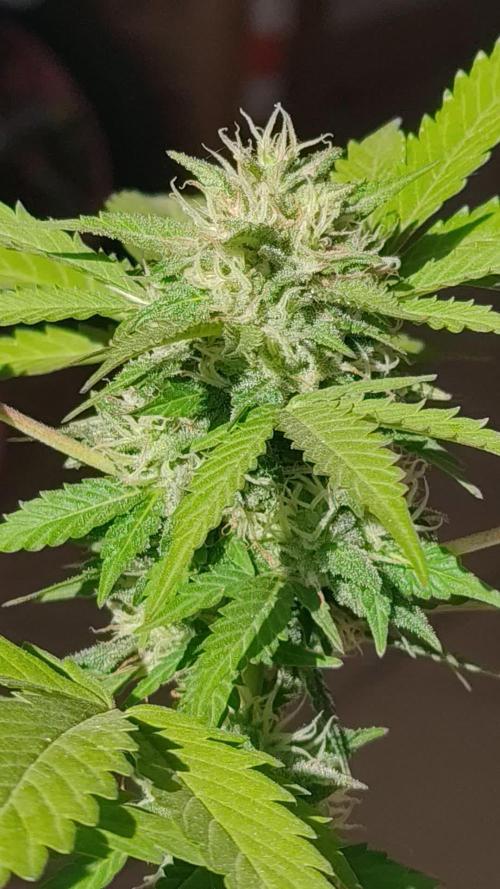
Hey now, hope everyone is having a great weekend and staying safe. Another great week for the ladies, as they are now about 2 weeks into flower, and the stretch is winding down. I am still feeding them silica, cal mag, and flower nutrients maxi bloom by GHE. I will start to add a PK booster this week. I also will be switching to light from V1 to F1 sometime this week, and also integrating the UV/IR bar into the light cycle later this week. I will run the UV/IR bar for approximately 30 minutes prior to lights off to get started. The 5X5 is really starting to fill up nicely, I am running two dehumidifiers outside of the tent and I am able to maintain around 50% RH in the tent during lights on, and around 55% RH with lights off. Still very happy with the Spectrum X from Medic Grow. I am running her at 90% in the V1 cycle and will be transitioning to the F1 cycle later this week. Overall, the plants seem very happy and healthy. The temperature and humidity is significantly dropping so that helps keeping the tent cool and not overly humid. This is by far the best time of year to be flowering plants in my region. I hope everyone has a great weekend, Thanks for stopping by, Stay Safe and Blaze On!!! 💪 Website: https://medicgrow.com/ https://growdiaries.com/grower/medicgrowled
Likes
29
Share
Gracias al equipo de Sensi Seeds, Marshydro, XpertNutrients y Pro-Mix, sin ellos esto no seria posible. 💐🍁: Mr Nice G13 x Hash Plant: Las semillas de cannabis Mr Nice G13 x Hash Plant son 100% Indica. La variedad incluye G13 en su genética; una planta afgana de primera calidad que (según la leyenda) fue sacada de contrabando de un centro de investigación del gobierno por un técnico. Sensi Seeds desarrolló la variedad con el objetivo de mejorar aún más la G13 y el resultado fue Mr Nice, que se lanzó en 1999. Mr Nice G13 x Hash Plant Regular tiene un tiempo de floración de 60 a 65 días. Como era de esperar, dada su genética índica, esta variedad no alcanza alturas significativas. Sin embargo, cuando se cultiva en exterior, no es raro que las plantas alcancen unos 190 a 240 cm. En interior, son mucho más compactas, y la planta media crece aproximadamente entre 80 y 170 cm. Mr Nice G13 x Hash Plant Regular proporciona un colocón corporal increíblemente potente. Es 100 % índica y esto se nota en el efecto de "apagón" que produce, ya que los usuarios afirman sentirse muy relajados y aliviados después de consumirla. Gracias a la genética "doble afgana", las plantas producen un aroma terroso y picante. Este aroma tiene un matiz dulce, rico y penetrante, que se intensifica a medida que maduran los cogollos. Al gusto, es casi como una mezcla de ganja y hachís, ya que es excepcionalmente fuerte y rico. 🚀🌻 Consigue aquí tus semillas: https://sensiseeds.com/en/cannabis-seeds/sensi-seeds/mr-nice-g13-x-hash-plant 💡FC6500: Eficiencia líder en el mercado: la lámpara de cultivo LED FC-E6500, que ostenta un estatus líder en el mercado, es una solución rentable con un PPE de 2,8 µmol/J y un rendimiento máximo de 2,5 g/vatio. Ofrece un PPF alto de 2026 umol/S y es adecuada para una cobertura de vegetación de 1,50 m x 1,50 m y una cobertura de flores de 1,20 m x 1,20 m. Iluminación versátil y uniforme. https://marshydro.eu/products/mars-hydro-fc-e-6500-730w-commercial-led-grow-light/?gad_source=1&gclid=Cj0KCQjw1qO0BhDwARIsANfnkv9IIrYSbmJqz8PqpJOIyWwJfp5bc3SGJgUV68USLQ4tjmXDYwoBuAsaAue3EALw_wcB 🚥 MarsHydro ADLITE UV/IR/RED: Para lograr un crecimiento óptimo de las plantas y maximizar los rendimientos es un arte simple que depende en gran medida de las condiciones ambientales adecuadas. Reconociendo las limitaciones de la iluminación natural y las soluciones de iluminación tradicionales para satisfacer estas necesidades únicas, lanzamos ADLITE. Estas luces especiales UV, IR y roja están diseñadas para llenar áreas del espectro, proporcionando las altas longitudes de onda que las plantas necesitan para un crecimiento y desarrollo óptimos. Consigue aqui tu Adlite: https://marshydro.eu/collections/adlite-supplemental-lights/ 🏠 : Marshydro 1.50 x 1.50 x 1.80, carpa 100% estanca con ventanas laterales para llegar a todos los lugares durante el grow https://marshydro.eu/products/diy-150x150x200cm-grow-tent-kit 🌬️💨 Marshydro 6inch + filtro carbon para evitar olores indeseables. https://marshydro.eu/products/ifresh-smart-6inch-filter-kits/ 🍣🍦🌴 Xpert Nutrients es una empresa especializada en la producción y comercialización de fertilizantes líquidos y tierras, que garantizan excelentes cosechas y un crecimiento activo para sus plantas durante todas las fases de cultivo. Consigue aqui tus Nutrientes: https://xpertnutrients.com/es/shop/ 📆 Semana 5: Una vez terminada la fase de estiramiento dedican todo su esfuerzo a crear nuevos pistilos y resina, es hora de engordar estos futuros cogollos. La carpa esta totalmente cubierta gracias al FC-6500 y los Adlite de Marshydro, se nota la floración mas avanzada que otras veces y con una mayor densidad. Continuo con las dosis de nutrientes recomendadas por XpertNutrients.
Likes
1
Share
@GrowFunMD
Follow
Plants are growing great. There is a little yellowing occurring. Right now, not sure if it is the plant(s) wanting nutrients already or if it is because of me getting water on the plant(s) when watering. Not gonna worry about it. I'll probably be turning on the AutoPot system in the next few days (with nutrients), anyway. Topped on day 15 (today).
Likes
14
Share
Semana 8 de floración.🌹 Entramos en una fase clave del cultivo, donde el foco está puesto en la maduración progresiva y en mantener la estabilidad para que las plantas terminen de expresar todo su potencial. Los cogollos continúan engordando semana tras semana, con una producción de resina muy evidente, especialmente en hojas de azúcar y cálices superiores. Los aromas empiezan a intensificarse y la estructura floral se mantiene firme y bien formada, las flores empiezan a coger alimentos de las hojas. -Permanent Marker: Las Permanent Marker están mostrando una floración muy atractiva. Cogollos cada vez más compactos, tricomas visibles incluso a simple vista y una evolución constante sin signos de estrés. Los tricomas se observan mayoritariamente claros con aparición progresiva de lechosos, lo que indica que aún queda margen de engorde y maduración. Los pistilos comienzan a oxidar poco a poco, pero todavía hay una gran cantidad de blancos activos. El terpeno que desprende es muy potente, complejo de describir, con lijeras variaciones entre los tres ejemplares. En esta etapa se ha decidido no forzar la nutrición, priorizando estabilidad y salud general para un final limpio y de calidad. -Jealousy Diesel Auto Las Jealousy Diesel auto avanzan a un ritmo algo más lento, pero de forma constante y saludable. La formación de tricomas está siendo abrumadora, junto a un impresionante terpeno a cítricos, naranja y picante que se pega en tu olfato por horas después de manipularla. Se ha respetado su ritmo natural, sin prisas, permitiendo que continúen desarrollando resina y estructura floral progresivamente. 🔬 Control y decisiones técnicas: • Ambiente estable durante toda la semana. • Fotoperiodo 12/12. • Nutrición moderada, sin excesos. • Riegos ajustados y observación diaria. • Sin signos de estrés ni carencias relevantes. En este punto del cultivo, la prioridad ha sido mantener constancia y evitar cualquier cambio brusco que pudiera afectar a la calidad final. 🔍 Estado de maduración: Tricomas: mayoritariamente claros, inicio de lechosos. Pistilos: mezcla de blancos y algunos oxidados. Resina: muy abundante. Cogollos: aún en fase de engorde. Todavía no es momento de cosechar. Se prioriza dejar que las plantas completen su ciclo y alcancen su punto óptimo de maduración. La magia está haciendo efecto. ,😍🌿✨❤️
Likes
28
Share
Had a lot of fun growing these girls. They went through a lot off the bat due to my inexperience. Learned a lot during this run and it was extremely rewarding to nurse them back to health. I am very pleased with this grow for it being my first run. I had no expectations as I am just starting to learn and want nothing more than to acquire knowledge. The quality and yields will come once I get more dialed in. Once these girls got healthy they had no problems for the whole grow. I am already planning improvements for future systems and am extremely excited to continue on my grow journey. Thanks to all who helped me out.
Likes
14
Share
Finally started seeing some baby buds! YES!!! I really start running into issues with humidifier staying on so I've basically gave up on it, at some point around here I added a heater near the inlet fan and it's jumped the temp numbers up quite a bit Some log entries: 1/21: Fed w/ 2 gallons for all 4 15ml big bloom, 10ml grow big and tiger bloom, 2.5ml cleankelp. all units per ga h2o 1/24: Fed w week 7 noots, trimmed 1-4, heavy on 1 & 4
Likes
6
Share
@sedygrows
Follow
This week i‘m forcing her to bloom. More nutrients and more ‚Sanlight‘ haha. Training with the clippers didn‘t really impress her, so she’ll be fine with the new setting. :)
Likes
19
Share
Yellow butterfly came to see me the other day; that was nice. Starting to show signs of stress on the odd leaf, localized isolated blips, blemishes, who said growing up was going to be easy! Smaller leaves have less surface area for stomata to occupy, so the stomata are packed more densely to maintain adequate gas exchange. Smaller leaves might have higher stomatal density to compensate for their smaller size, potentially maximizing carbon uptake and minimizing water loss. Environmental conditions like light intensity and water availability can influence stomatal density, and these factors can affect leaf size as well. Leaf development involves cell division and expansion, and stomatal differentiation is sensitive to these processes. In essence, the smaller leaf size can lead to a higher stomatal density due to the constraints of available space and the need to optimize gas exchange for photosynthesis and transpiration. In the long term, UV-B radiation can lead to more complex changes in stomatal morphology, including effects on both stomatal density and size, potentially impacting carbon sequestration and water use. In essence, UV-B can be a double-edged sword for stomata: It can induce stomatal closure and potentially reduce stomatal size, but it may also trigger an increase in stomatal density as a compensatory mechanism. It is generally more efficient for gas exchange to have smaller leaves with a higher stomatal density, rather than large leaves with lower stomatal density. This is because smaller stomata can facilitate faster gas exchange due to shorter diffusion pathways, even though they may have the same total pore area as fewer, larger stomata. Leaf size tends to decrease in colder climates to reduce heat loss, while larger leaves are more common in warmer, humid environments. Plants in arid regions often develop smaller leaves with a thicker cuticle and/or hairs to minimize water loss through transpiration. Conversely, plants in wet environments may have larger leaves and drip tips to facilitate water runoff. Leaf size and shape can vary based on light availability. For example, leaves in shaded areas may be larger and thinner to maximize light absorption. Leaf mass per area (LMA) can be higher in stressful environments with limited nutrients, indicating a greater investment in structural components for protection and critical resource conservation. Wind speed, humidity, and soil conditions can also influence leaf morphology, leading to variations in leaf shape, size, and surface characteristics. Small leaves: Reduce water loss in arid or cold climates. Environmental conditions significantly affect gene expression in plants. Plants are sessile organisms, meaning they cannot move to escape unfavorable conditions, so they rely on gene expression to adapt to their surroundings. Environmental factors like light, temperature, water, and nutrient availability can trigger changes in gene expression, allowing plants to respond to and survive in diverse environments. Depending on the environment a young seedling encounters, the developmental program following seed germination could be skotomorphogenesis in the dark or photomorphogenesis in the light. Light signals are interpreted by a repertoire of photoreceptors followed by sophisticated gene expression networks, eventually resulting in developmental changes. The expression and functions of photoreceptors and key signaling molecules are highly coordinated and regulated at multiple levels of the central dogma in molecular biology. Light activates gene expression through the actions of positive transcriptional regulators and the relaxation of chromatin by histone acetylation. Small regulatory RNAs help attenuate the expression of light-responsive genes. Alternative splicing, protein phosphorylation/dephosphorylation, the formation of diverse transcriptional complexes, and selective protein degradation all contribute to proteome diversity and change the functions of individual proteins. Photomorphogenesis, the light-driven developmental changes in plants, significantly impacts gene expression. It involves a cascade of events where light signals, perceived by photoreceptors, trigger changes in gene expression patterns, ultimately leading to the development of a plant in response to its light environment. Genes are expressed, not dictated! While having the potential to encode proteins, genes are not automatically and constantly active. Instead, their expression (the process of turning them into proteins) is carefully regulated by the cell, responding to internal and external signals. This means that genes can be "turned on" or "turned off," and the level of expression can be adjusted, depending on the cell's needs and the surrounding environment. In plants, genes are not simply "on" or "off" but rather their expression is carefully regulated based on various factors, including the cell type, developmental stage, and environmental conditions. This means that while all cells in a plant contain the same genetic information (the same genes), different cells will express different subsets of those genes at different times. This regulation is crucial for the proper functioning and development of the plant. When a green plant is exposed to red light, much of the red light is absorbed, but some is also reflected back. The reflected red light, along with any blue light reflected from other parts of the plant, can be perceived by our eyes as purple. Carotenoids absorb light in blue-green region of the visible spectrum, complementing chlorophyll's absorption in the red region. They safeguard the photosynthetic machinery from excessive light by activating singlet oxygen, an oxidant formed during photosynthesis. Carotenoids also quench triplet chlorophyll, which can negatively affect photosynthesis, and scavenge reactive oxygen species (ROS) that can damage cellular proteins. Additionally, carotenoid derivatives signal plant development and responses to environmental cues. They serve as precursors for the biosynthesis of phytohormones such as abscisic acid () and strigolactones (SLs). These pigments are responsible for the orange, red, and yellow hues of fruits and vegetables, while acting as free scavengers to protect plants during photosynthesis. Singlet oxygen (¹O₂) is an electronically excited state of molecular oxygen (O₂). Singlet oxygen is produced as a byproduct during photosynthesis, primarily within the photosystem II (PSII) reaction center and light-harvesting antenna complex. This occurs when excess energy from excited chlorophyll molecules is transferred to molecular oxygen. While singlet oxygen can cause oxidative damage, plants have mechanisms to manage its production and mitigate its harmful effects. Singlet oxygen (¹O₂) is considered a reactive oxygen species (ROS). It's a form of oxygen with higher energy and reactivity compared to the more common triplet oxygen found in its ground state. Singlet oxygen is generated both in biological systems, such as during photosynthesis in plants, and in cellular processes, and through chemical and photochemical reactions. While singlet oxygen is a ROS, it's important to note that it differs from other ROS like superoxide (O₂⁻), hydrogen peroxide (H₂O₂), and hydroxyl radicals (OH) in its formation, reactivity, and specific biological roles. Non-photochemical quenching (NPQ) protects plants from damage caused by reactive oxygen species (ROS) by dissipating excess light energy as heat. This process reduces the overexcitation of photosynthetic pigments, which can lead to the production of ROS, thus mitigating the potential for photodamage. Zeaxanthin, a carotenoid pigment, plays a crucial role in photoprotection in plants by both enhancing non-photochemical quenching (NPQ) and scavenging reactive oxygen species (ROS). In high-light conditions, zeaxanthin is synthesized from violaxanthin through the xanthophyll cycle, and this zeaxanthin then facilitates heat dissipation of excess light energy (NPQ) and quenches harmful ROS. The Issue of Singlet Oxygen!! ROS Formation: Blue light, with its higher energy photons, can promote the formation of reactive oxygen species (ROS), including singlet oxygen, within the plant. Potential Damage: High levels of ROS can damage cellular components, including proteins, lipids, and DNA, potentially impacting plant health and productivity. Balancing Act: A balanced spectrum of light, including both blue and red light, is crucial for mitigating the harmful effects of excessive blue light and promoting optimal plant growth and stress tolerance. The Importance of Red Light: Red light (especially far-red) can help to mitigate the negative effects of excessive blue light by: Balancing the Photoreceptor Response: Red light can influence the activity of photoreceptors like phytochrome, which are involved in regulating plant responses to different light wavelengths. Enhancing Antioxidant Production: Red and blue light can stimulate the production of antioxidants, which help to neutralize ROS and protect the plant from oxidative damage. Optimizing Photosynthesis: Red light is efficiently used in photosynthesis, and its combination with blue light can lead to increased photosynthetic efficiency and biomass production. In controlled environments like greenhouses and vertical farms, optimizing the ratio of blue and red light is a key strategy for promoting healthy plant growth and yield. Understanding the interplay between blue light signaling, ROS production, and antioxidant defense mechanisms can inform breeding programs and biotechnological interventions aimed at improving plant stress resistance. In summary, while blue light is essential for plant development and photosynthesis, it's crucial to balance it with other light wavelengths, particularly red light, to prevent excessive ROS formation and promote overall plant health. Oxidative damage in plants occurs when there's an imbalance between the production of reactive oxygen species (ROS) and the plant's ability to neutralize them, leading to cellular damage. This imbalance, known as oxidative stress, can result from various environmental stressors, affecting plant growth, development, and overall productivity. Causes of Oxidative Damage: Abiotic stresses: These include extreme temperatures (heat and cold), drought, salinity, heavy metal toxicity, and excessive light. Biotic stresses: Pathogen attacks and insect infestations can also trigger oxidative stress. Metabolic processes: Normal cellular activities, particularly in chloroplasts, mitochondria, and peroxisomes, can generate ROS as byproducts. Certain chlorophyll biosynthesis intermediates can produce singlet oxygen (1O2), a potent ROS, leading to oxidative damage. ROS can damage lipids (lipid peroxidation), proteins, carbohydrates, and nucleic acids (DNA). Oxidative stress can compromise the integrity of cell membranes, affecting their function and permeability. Oxidative damage can interfere with essential cellular functions, including photosynthesis, respiration, and signal transduction. In severe cases, oxidative stress can trigger programmed cell death (apoptosis). Oxidative damage can lead to stunted growth, reduced biomass, and lower crop yields. Plants have evolved intricate antioxidant defense systems to counteract oxidative stress. These include: Enzymes like superoxide dismutase (SOD), catalase (CAT), and various peroxidases scavenge ROS and neutralize their damaging effects. Antioxidant molecules like glutathione, ascorbic acid (vitamin C), C60 fullerene, and carotenoids directly neutralize ROS. Developing plant varieties with gene expression focused on enhanced antioxidant capacity and stress tolerance is crucial. Optimizing irrigation, fertilization, and other management practices can help minimize stress and oxidative damage. Applying antioxidant compounds or elicitors can help plants cope with oxidative stress. Introducing genes for enhanced antioxidant enzymes or stress-related proteins over generations. Phytohormones, also known as plant hormones, are a group of naturally occurring organic compounds that regulate plant growth, development, and various physiological processes. The five major classes of phytohormones are: auxins, gibberellins, cytokinins, ethylene, and abscisic acid. In addition to these, other phytohormones like brassinosteroids, jasmonates, and salicylates also play significant roles. Here's a breakdown of the key phytohormones: Auxins: Primarily involved in cell elongation, root initiation, and apical dominance. Gibberellins: Promote stem elongation, seed germination, and flowering. Cytokinins: Stimulate cell division and differentiation, and delay leaf senescence. Ethylene: Regulates fruit ripening, leaf abscission, and senescence. Abscisic acid (ABA): Plays a role in seed dormancy, stomatal closure, and stress responses. Brassinosteroids: Involved in cell elongation, division, and stress responses. Jasmonates: Regulate plant defense against pathogens and herbivores, as well as other processes. Salicylic acid: Plays a role in plant defense against pathogens. 1. Red and Far-Red Light (Phytochromes): Red light: Primarily activates the phytochrome system, converting it to its active form (Pfr), which promotes processes like stem elongation and flowering. Far-red light: Inhibits the phytochrome system by converting the active Pfr form back to the inactive Pr form. This can trigger shade avoidance responses and inhibit germination. Phytohormones: Red and far-red light regulate phytohormones like auxin and gibberellins, which are involved in stem elongation and other growth processes. 2. Blue Light (Cryptochromes and Phototropins): Blue light: Activates cryptochromes and phototropins, which are involved in various processes like stomatal opening, seedling de-etiolation, and phototropism (growth towards light). Phytohormones: Blue light affects auxin levels, influencing stem growth, and also impacts other phytohormones involved in these processes. Example: Blue light can promote vegetative growth and can interact with red light to promote flowering. 3. UV-B Light (UV-B Receptors): UV-B light: Perceived by UVR8 receptors, it can affect plant growth and development and has roles in stress responses, like UV protection. Phytohormones: UV-B light can influence phytohormones involved in stress responses, potentially affecting growth and development. 4. Other Colors: Green light: Plants are generally less sensitive to green light, as chlorophyll reflects it. Other wavelengths: While less studied, other wavelengths can also influence plant growth and development through interactions with different photoreceptors and phytohormones. Key Points: Cross-Signaling: Plants often experience a mix of light wavelengths, leading to complex interactions between different photoreceptors and phytohormones. Species Variability: The precise effects of light color on phytohormones can vary between different plant species. Hormonal Interactions: Phytohormones don't act in isolation; their interactions and interplay with other phytohormones and environmental signals are critical for plant responses. The spectral ratio of light (the composition of different colors of light) significantly influences a plant's hormonal balance. Different wavelengths of light are perceived by specific photoreceptors in plants, which in turn regulate the production and activity of various plant hormones (phytohormones). These hormones then control a wide range of developmental processes.
Likes
6
Share
@Floryx
Follow
-getting really tight now -will install scrog-web to use the space fully -some leafs still have yellow and brown spots -think i will fetilize twice a week from now on -getting a lil cold in the night but therefore humidity is now almost perfect Thankful for any comment :)
Likes
8
Share
@Cali_Rayy
Follow
Expected more of a vertical stretch this past week but maybe that’s what’s going to happen next; smell is weak but it’s just the beginning; stay tuned
Likes
1
Share
Welcome to Week 8!!! December 8 - Decided to scrap the scrOG netting for these 3 plants and stick with LST. All plants don’t look great but I’m just keeping a close eye on them. December 10 - Watered all three with 10g BLOOM and 3.5g BOOST
Likes
5
Share
This thing gets bushy no matter how much I trim. Just letting her be and hopefully see some height this week. Got better bud clips and wire...
Likes
24
Share
Buena cosecha, nos costo un poco mantener la alimentación ya que con 1.6 Ec pedían más , les subimos algo en las últimas semanas y dio resultado. El panel.es muy potente les mete mucha carga lumínica. Estas GELATO-K han ofrecido varios fenotipo con sabores muy dispares.. aún así todos bastante buenos. Ha sido un buen aprendizaje. Gracias a todos los que pasan a visitar mi perfil. En breves volvemos con más! Saludos
Likes
7
Share
Week two plant are growing well I have since stopped 24 hours of light on day night and is now giving the girls some rest since they have established some nice roots. Gave them some compost tea feeding as well...let see how they react
Likes
12
Share
Hallo zusammen 🤙. So das war es für sie wir sehen uns in 2 Wochen wieder.
Likes
1
Share
@Myrnie
Follow
Didn't have too many pictures before the flip, the other plant in the tent was being wild and stretchy. Still making good growth but is still kinda small.
Likes
167
Share
⭐ TrolMaster tracking ⭐ I started to track my crop during week 15, when I got the Tent-X TCS-1 by TrolMaster. First impression was: this is too professional for me, I can't handle setting it up and using it well. Then I started reading some posts on Instagram, I visited their site and in 5 minutes my cultivation experience took a huge step forward with disarming simplicity, I couldn't believe it. I have uploaded tracking videos from the TrolMaster app for each week from the 15th to the 19th, as well as the two weeks of drying stage. ⭐ Controller Chronicles ⭐ Day after day I appreciated the clarity and precision for data, access to all settings and instant readings by connecting a WIFI router to the controller's LAN port. I loved the possibility to dim my lamps remotely, or even automatically based on the temperature in the box! 🌱 GERMINATION (2 days) Seeds in a glass of EC 0.4 tap water for 10 hours, then in root riots and under the lamp. They sprouted after 48 hours from dry seed. 🌿 GROWING STAGE (10 weeks and half) I decided to give these plants a long vegetative growth and this allowed me to do a lot of training on both. Starting from the 4th veg week I started with defoliation sessions every two weeks, for a total of four during the entire vegetative phase. The last defoliation was done a couple of days before the switch, in order to allow the lower parts of the plant to get as much light as possible. Furthermore I did Topping on week 6, cutting the apical branch, then on week 8 I did Topping again on several sites, as well as SuperCropping on the highest branches to make the canopy uniform. The light cycle I used is 18/6 and the last two veg weeks I lowered the light hours to 16/8 first and 14/10 then. During the veg stage I made 4 DWC change, PH was always between 5.5 and 6, about EC I started with 0.6 and was 1.4 on the last veg week. 🌸 FLOWERING STAGE (9 weeks) I started this phase after 36 hours of darkness, I then changed the DWCs solution (adding a flowering stimulator). Then I mounted the ScrOG-net about 50 cm from the base of the plants and I wove the phenotype #1 through the net occupying at least 60% of the available space; the phenotype #2 stretched shortly after the switch and I used the net only to widen the central branches. They showed the pre-flowers two weeks after the switch, then I made two defoliations on week 3 and 5 flo. During the last four weeks of flowering (weeks 6-9) I simply paid attention to the PH-EC levels to provide the roots with optimal conditions. I then kept the TEMP-RH-VPD-PPFD values ​​under control and this also thanks to the Tent-X controller by TrolMaster which allows me to provide optimal conditions also above. I chopped them when trichomes were about 85% milky and 15% amber. During the flowering stage PH was always between 5.8 and 6.2, about EC I started with 2 and was 2.3 on the last week before flush. ✅ HARVEST - From dry seed to harvest: 140 days (2 days germination + 75 days veg + 63 days flo). - Chopped after 4 days flush and 48 hours in dark; - Wet trim, removed fan leaves. ✅ DRYING STAGE - Time: 14 days; - Average: 20° C - 50% RH. - After that I made a dry trim, removed branches and sugar leaves. ⚖️ DRY WEIGHT - Phenotype #1: 230 gr buds + 25 gr larf; - Phenotype #2: 105 gr buds + 50 gr larf. So, the overall dry weight is: 335 gr buds + 75 gr larf. ✅ CURING STAGE - Curing is done after 30 days with Boveda 62%.
Likes
7
Share
@TruTraTri
Follow
By coincidence the video is perfectly timed. I didn’t plan for that, but I’m proud of the timing now😂 For my climate density and size were fine. Planted her a bit late. Withstood all weather conditions without shelter or special care, some mild pest infections. As it was a cutting I can't tell about original structure, but even the cutting looked like "from seed" with a nice christmas tree optic (with a little lst). Big buds stay as they are, smaller are going to be pressed or bubbled. ~7-10d drying ~1 month curing - update. Update for end of contest, some dry picture + 7 of x days curing. Already very sweet and fruity. (Nicer) Smellier than my other outdoors. 30g very fine buds and don't know how much trim + popcorn. Anyway .. harsh conditions + survivor + no mold. Most important properties for my outdoor location. 👌💪 Let it grow!😁
Likes
9
Share
@Xabii
Follow
Values are average of the day. DATE - °C - RH% (Tent Temp/RH) 20240704 21.2 59.1 20240705 22.9 56.2 20240706 23.6 54.4 20240707 22.4 46.0 20240708 23.3 49.1 20240709 25.1 52.2 20240710 26.4 59.0 DATE - PH 20240704 6.23 20240705 6.26 20240706 6.28 20240707 6.28 20240708 6.29 20240709 6.30 20240710 6.32 DATE - EC(us/cm) 20240704 939 20240705 957 20240706 986 20240707 974 20240708 988 20240709 1023 20240710 1067 DATE - °C (Reservoir) 20240704 19.4 20240705 20.0 20240706 21.1 20240707 20.2 20240708 20.6 20240709 22.0 20240710 23.9