


Likes
Comments
Share


@BadGrower
Follow
As we venture into week one of the flowering stage, the living soil within our garden beds has already been enriched with carefully selected amendments, laying a robust foundation for our plants to thrive. Living soil is not a static entity; it's a dynamic, breathing ecosystem that needs as much care and attention as the plants it supports. At this crucial juncture, our primary responsibility is to maintain the delicate balance of this ecosystem. Watering practices continue to play a pivotal role—moisture levels are kept at an optimal level, allowing the soil to dry between watering sessions, thereby preventing saturation and promoting oxygen uptake to the roots. Such measures are not merely about quenching the plants' thirst but also about preserving the intricate web of life that exists within every handful of soil.
This web of life has indeed become more intricate with a massive explosion of predator mites that have become an integral part of our soil's community. These tiny but formidable allies are voracious predators of various pests that can threaten our plants. Their increased activity is not just a sign of a healthy ecosystem but also a natural form of pest management that reduces the need for chemical interventions. These mites, along with a host of other microorganisms, play a critical role in nutrient cycling and disease suppression, further enhancing the resilience of the plants during their flowering phase. The very life of the soil is now visibly bustling, indicating a thriving micro-ecosystem that contributes to the health of our plants.
Above and beyond these microscopic interactions, the larger creatures in our ecosystem—the worms—have begun their vital work. The 'chop and drop' cover crops and clover that were introduced earlier have now become fodder for these earthworkers. As they consume this organic matter, they are not just feeding themselves but are also processing it into rich castings, a natural fertilizer full of available nutrients for the plants. This activity does not just nourish; it aerates the soil, creating spaces for roots to expand and for air to circulate. The sight of such activity is evidence of a living soil that is not just a growing medium but a thriving ecosystem in its own right. The soil, with all its biodiversity, is an orchestra where every organism, from the tiniest mite to the diligent earthworm, plays a critical part in the symphony of growth that supports our flowering plants. As each day passes, this ecosystem draws closer to perfect harmony, bolstering the plants in their quest to bloom with vitality.

Likes
12
Share


@Aleks555
Follow
🏆 Eternity Grow Cup 2025: Plagron and Zamnesia 🏆
Strain: Runtz - Zamnesia Seeds
Our girl is doing great! It's day 43 since sprouting, and 13 days since we switched the light to 12/12. She's grown significantly, with many branches stretching upwards. Given how many there were, I decided to trim her and removed about 10 thick and thin branches. I’m not sure how this will affect her, but I'm hoping to get fewer colas, though thicker and denser ones.
We don’t waste anything from the pruning. The leaves that we cut off are frozen, then crushed in a blender. We mix the resulting mass with water, let it sit, and then water the plant with this solution. Additionally, we finely chop the leaves and mix them into the top layer of the soil, a practice called mulching. This way, we recycle everything and make full use of the plant material.

Likes
9
Share


@Dgessy
Follow
La Petite fille a atteint sont potentiel en taille, maintenant j'attends le mûrissement des têtes 👍😊 Le ratio fleurs/feuilles est super !!! De beaux calices et pas beaucoup de feuilles 😊 Le soleil est toujours au rendez-vous, rarement il fait autant beau dans ma région à cette période de l'année.

Processing
Likes
24
Share


@MadeInGermany
Follow
Hi everyone 🤗.
Since she started to flower last week, she got Canna Flores and Canna Boost for the first time :-).
It develops very nicely, gets an even level and has a nice extension 👍.
Otherwise there is nothing to report this week :-).
I wish you all a nice weekend, stay healthy 🙏🏻 and let it grow 🌱
You can buy this Strain at :
www.Zamnesia.com
Type:
Runtz
☝️🏼
Genetics:
Zkittlez x Gelato
👍
Vega lamp: 2 x Todogrow Led
Quantum Board 100 W
💡
Bloom Lamp : 2 x Todogrow Led
Cxb 3590 COB 3500 K 205 W
💡💡☝️🏼
Soil : Canna Bio
☝️🏼
Nutrients : Canna Bio
☝️🏼🌱
Water: Osmosis water mixed with normal water (24 hours stale that the chlorine evaporates) to 0.2 EC. Add Cal / Mag to 0.4 Ec Ph with Organic Ph - to 6.0 - 6.3
Processing
Likes
4
Share


@Andres
Follow
new crop ... we'll see how it grows ... outdoors....let's see what she offers us outdoor ... and what color she can show us ...


Likes
48
Share


@Focus420
Follow
11.týden
71 - den kontrola v pořádku
72 - den. Pohnojím všechny holky, kromě blackberry a brooklynu ty už jen vodou s ph - (5,8)
73 - den listy na autech začínají žloutnout. Jdeme do finále
74 den - kontrola trichomu kapesním mikroskopem. Trichomy se zdají být pořád nedostatečně jantarové
75 den - celoročky jsem dnes hnojil 😁
Blackberry gum, auto brooklyn a sleep proplachuji...


Likes
9
Share


@Ronin716
Follow
Just another photo dump lol This girl is proving to be a slow finish for me. Going on to week 16 now and I’ve decided to give her the flush as her trichs are all starting to go amber. I felt I’ve traded enough potency for yield now and I don’t think she’s really racking on much more weight. This might be the last update until after harvest. Up until it’s time to trim and jar. Wish me luck folks. I’m thinking I’ll be close to a half pound of this fatty 😍😂

Likes
58
Share


@Rap_a_cap
Follow
Usual summer week here in the south, every day above 86 ° F (max 100 ° F). My pheno is a medium sized plant, is not a beast but is growing well, drinking 2 gallons per day of spring water showing only few signs of heat stress. She's in full stretch. I fed her half the recommended dose of Biobizz Grow 'cause is too hot and don't want to burn her. I think we are 10 days before flowering. I covered her with a PVC net in order to give her a little shield from the sun and give me more privacy ;-)
P. S. She has an unbelievable smell, it remember to me Kashmir pollen hash

Likes
50
Share

@squalino
Follow
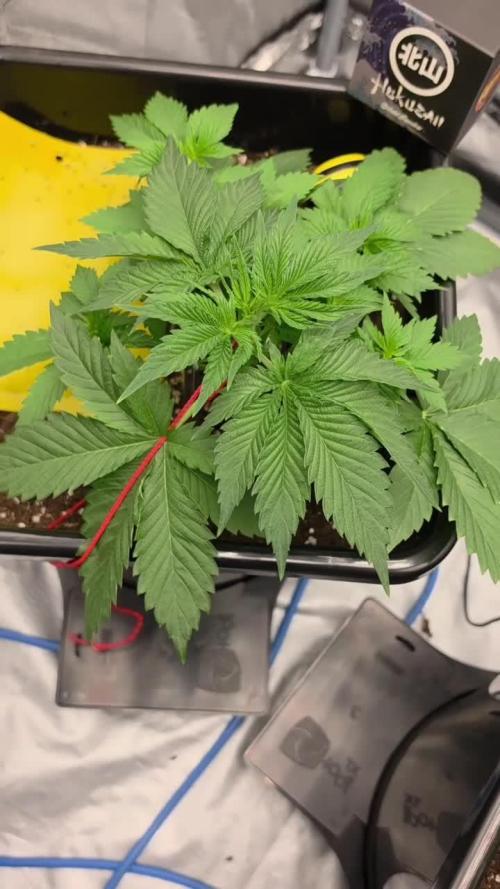
La Samouraï ❤️
Hokuzan par World Breeders
Date de germination : 9 septembre 2026
Âge : 21 jours (Semaine 3)
Taille : 20 cm (+6 cm en une semaine, malgré le LST !) ❤️❤️❤️❤️❤️❤️❤️❤️❤️❤️❤️❤️❤️❤️❤️❤️❤️❤️❤️❤️❤️❤️❤️❤️❤️❤️❤️❤️❤️❤️❤️❤️
📅 Journal quotidien (Jour 15 à 21)
Jour 15 : Aucun apport .
Jour 16 : Arrosage (1 g Bactrex / 1 L d'eau).
Jour 17 : Palissage LST.
Jour 18 : Aucun appor.
Jour 19 : Ajustement LST.
Jour 20 : Aucun apport.
Jour 21 : Aucun apport. ❤️❤️❤️❤️❤️❤️❤️❤️❤️❤️❤️❤️❤️❤️❤️❤️❤️❤️❤️❤️❤️❤️❤️❤️❤️❤️
📝 Descriptif
Excellente croissance ! La plante est passée de 9 cm à 20 cm cette semaine. Le palissage LST a permis de bien ouvrir la canopée et de développer les branches secondaires. Le tronc s'épaissit fortement et le feuillage est d'un vert éclatant de santé. ❤️❤️❤️❤️❤️❤️❤️❤️❤️❤️❤️❤️❤️❤️❤️❤️❤️❤️❤️❤️❤️❤️❤️❤️❤️❤️❤️
💡 Saviez-vous que...
Dans les années 50, le gouvernement japonais a attaquant semé du chanvre le long des voies ferrées pour stabilisateur les sols. Pendant des années, ils ont dû envoyer des équipes désherber des kilomètres de cannabis géant au bord des rails ! 🚂🌿 ❤️❤️❤️❤️❤️❤️❤️❤️❤️❤️❤️❤️❤️❤️❤️❤️❤️❤️❤️❤️❤️❤️❤️❤️❤️❤️❤️❤️
Un grand merci à World Breeders pour cette génétique exceptionnelle, et merci à tous les lecteurs qui suivent le journal ! 💚🌱❤️
Likes
35
Share


@bioaccessory
Follow
Hello colleagues!
This week I added a lamp with far-red diodes, returned the blue ones, and now I have even brighter colors in my box. 😎
Thin branches begin to bend and break - I tie them up. I'm reaching the finish line.
Thank you for stopping by, and be healthy! 🙏
To be continued... 😶

Likes
11
Share


@GREENPHOENIX6262
Follow
*Week 3 Flower - 09/10*
Blimburn Apple Fritter - Seedsman Genetics Critical+2.0
Healthy - 0 signs on of deficiencies
Most fan leaves have been stripped; - Lighter defoliation - Aggressive LST on main colas
*Week 3 Flower Mid-week update 09/13*
Approximately 3 inch increase in Height on both plants - Critical+2.0 - Seedsman Genetics - Blumburn Apple Fritter
1 Gallon increase on water feed (Nutes included)
Budsite density has increased.
Light defoliation
*End of week recap 09/16* (Week 3 Flower)
BlimBurn - Apple Fritter - 47 Inches - Flowering processing accordingly - 0 deficiencies
Seedsman Genetics - Critical+2.0 - 46 Inches - Flowering processing accordingly - 0 deficiencies
Increased water feed (2.5 gallons every day +Nutes)
*SEE UPDATE END OF WEEK VIDEO RECAP*


Likes
15
Share

@Pheno_Minds
Follow
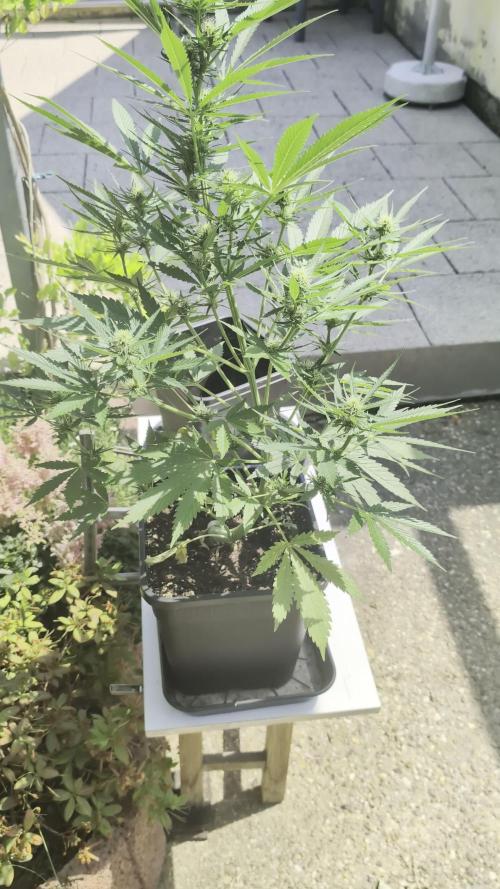
💧 Wir befinden uns in Woche 3 der Blüte, insgesamt ist die Strawberry Banana von Fastbuds. Die Pflanze hat ihren Stretch hinter sich und konzentriert sich jetzt voll auf die Blütenbildung an den Internodien.
📏 In dieser Woche habe ich 2 Bewässerungen durchgeführt, ergänzt durch Sondergaben von jeweils 21 ml S&R Organics 5in1.
📸 Die aktuelle Optik zeigt eine gesunde Pflanze mit tiefgrünen Blättern und einer stabilen Struktur. Die Blütenansätze entwickeln sich gleichmäßig, die ersten weißen Stigmen sind deutlich sichtbar und die Harzproduktion läuft an. Die Blattform ist sortentypisch und zeigt keine Anzeichen von Stress oder Mangelerscheinungen.
📋 Die Pflanze steht gut im Futter und die Blütenentwicklung nimmt jetzt Fahrt auf. Bisher sieht alles nach einem planmäßigen Verlauf aus.


Likes
120
Share

@Hologram
Follow
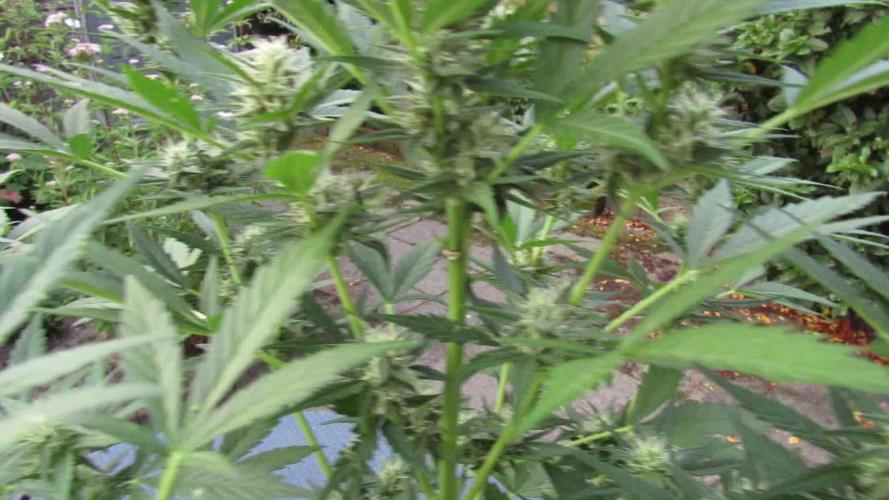
OK, im doing an update now becouse my breakup cake is going tranny!!(hermie)
I already have noiticed she was not growing as strong .. but u can blame that on anything , especially when growing outdoor..
but this morning i saw that she was g(r)oing 'bananas'!😢
I have put her aside from the rest (in the back of garden) but think gonna have to terminate her asap!..(and i will, right after this post👍)
The weed she will give will be filled with seeds and those seeds will be hermies too, so wothless..
and if i dont throw her away quick she can infect the rest.
So goodbye breakup cake..😢
who wants to eat a cake when they are breaking up anyway..😒 (just hiding my pain with lame humour 😳)
happy growing for all ✊

Processing
Likes
29
Share


@Reaper
Follow
Day 22 - december 26
The hydro goes really fast now we can see the difference in growth vs the soil
ppm 500 Ph 6.1
day 23
water change - 730ppm
day 25
i cut off the 2 top fanleaves of the hydro and soil plant wich are blocking light on the stems underneath, now both plants have 6 main stems so both plants will have the same structure. nothing needs to be cut from here its just veg a bit longer and wait for flowers.
also did LST on all 6 branches each has a string on them with a pencil attached to them to bend the young stems gently as you can see in the final video of this week.
day 28:
the hydro plant recovered from the too light nute mix new growth is healthy again theres just brown spots on the oldest water leaves. temps are also a bit low when lights turn of (15ceclius) in the res. i put the timer of the light now at 20/24 to keep it 2h warmer.
Likes
28
Share


Likes
10
Share


@WakeAndBake
Follow
I can't wait to try this big 😍 buds they smell nice and I'm pretty sure that the taste will be nice


