


Likes
Comments
Share


@9LittleGrow
Follow
It’s day 36 and I’m so happy with them cuz I think they grow little slow but @ this time they grow nicely and healthier than earlier days.
I’m gonna make next 2 more vege weeks and then let the girls to start flowering week


Likes
47
Share


@Northern_Ent
Follow
Sep 14: starting the ninth week of flowering and getting close to the finish. Buds are still putting out new pistils and definitely packing on weight. Also cool nights lately so there is some purple and blue colour starting.
This is one of my favourite all time grows, and possibly the best.
Sep 15: she is definitely packing on weight and if there was no support the outer manifold branches would be collapsing. Every single day I’m amazed at the daily progress on this plant. Definitely this year’s star.
Sep 17: still going. New flowers are still forming so she’ll be going a bit longer. I want her done by the end of September if possible. Not that I’m complaining about more flower growth it’s just the sun gets weak and then it often gets too cold by mid October. I want ripe buds and not stragglers.
Sep 18: I was thinking to start harvesting this weekend but the flowers are still blooming so I’ll put it off at least another week.
Sep 20: some rain overnight the last few day. I have shaken the branches to get off excess water, but I found two small patches of bud rot (identified by dead leaves) that were removed and I then harvested the nearby bud. 49 g wet bud now hanging. These buds are huge and likely slow to dry thoroughly.
#seedsman420growoff
#seedsmanseeds

Likes
Comments
Share


@DawgPoundFarms
Follow
Combined the cop of water and paper towel method then planted the sprouts in root root cubes
Likes
3
Share


@blaze454
Follow
Big Week. Massive Defoliation - Lolly Popping - Soil Moisture Sensors - Transplanting from 3gln to 5gln Fabric Pots - Got 99% of Irrigation Parts -Transfer To Flower !!!
Still trying to get a new probe for my ph meter. I ordered one from Hanna directly hopefully this will fix the situation as i am semi blind using old ph meter.
Removed probably 50 stalks trying to decrese the bulk and eliminate popcorns.
Half to address the white mold on the roots. I will give a Lost Coast Plant Therapy root drench. i am adjust main room humidity down and turning down humidifier. Might be looking at getting a dehumidifier. A/C would be nice to but...
Let the Kolas Grow
Likes
6
Share


@Exr_300
Follow
Coming along the weather I feel like it has slowed its growing but can’t complain for a plant that all I’ve given it it’s organic soil Gaia green amendments n my first grow ever I like but definitely room for much much improvement I wanna do compost teas just haven’t gone around it
Likes
6
Share


@Cheechsdad
Follow
One of the lower branches bent over and I had to snip it off- hoping it didn’t shock it too bad, going to start green crack auto next week near ending of Larry lemon
Likes
35
Share


@Rangaku
Follow
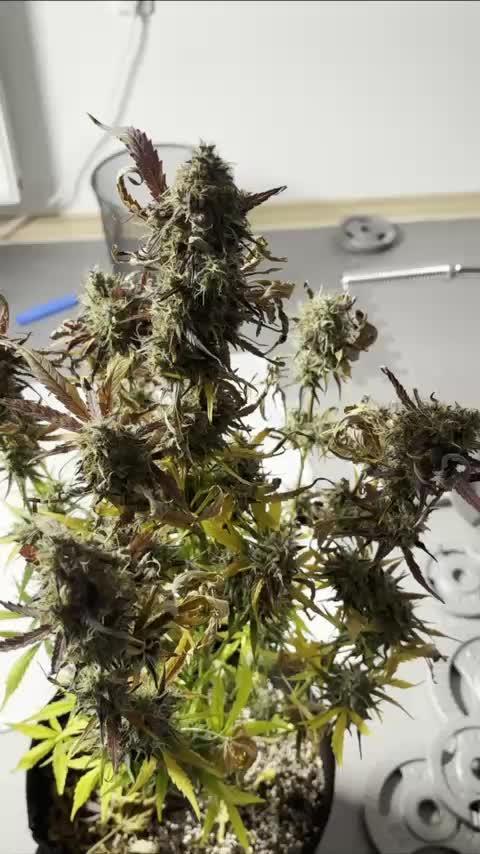
The big girls have the tent to themselves after the GZ auto was harvested this week , looks to be around 5oz when dry so a nice little bonus smoke .
Tied the girls out into final positions and they are looking and feeling chunky some of these colas are over a foot long and getting smelly as .



Likes
47
Share


@rhodes68
Follow
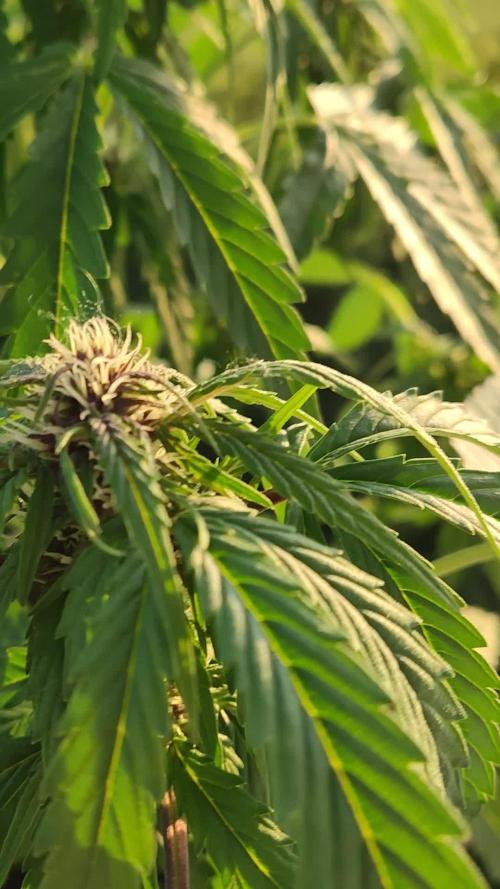
12/3 Week 10
Brandy being harvested in the AM
Layla and Maggie got a PK 0-10-7 booster in 6.5 water @1 gal each still plenty of nuets in the pot just getting them all I can
12/4 Harvested Brandy numbers and pics also be in harvest week when others are done.
Not bad for a little plant we did not give much hope of producing. Trics look good - Into the dry box as the tent is full.
206 Grams Wet
*****UPDATE***** 12/8 78g dry
*****UPDATE***** 12/10 tested 0.5g after decarb and yep all we could have wanted, sativa-ish with good legs. More later
12/5 Fed Maggie and Layla 1 gal each at 6.5PH 12.5ml/gal Soul Peak PK booster, foliar of full cal-mag at lights out just to be sure.
Later
Just as I hoped it sparked new hair growth, they standing up nice and pretty New plants in tent
Quick foliar feed on Maggie, Cal-Mag 1 ml/qt
12/7
Last defoliation on Layla and Maggie just taking off the excess baggage and opening the air and light paths.
Layla is definitely ripening but I think one more dose of PK perhaps if not just water. Decide tomorrow
Maggie still aggressively building buds so she is absolutely getting more PK, remember there is Dr Earth in the pot so its not like she is being starved for other nuets.
I think Maggie, being a sativa pheno, may go another two weeks. Layla has to stay until the drying tent is empty, not using the boxes unless I must.
12/8
0.75 gal ea @6.4 Peak PK 12.5ml/gal
12/10 Looking good still finishing off pics at lights out
Tried to fix the nuet list , anything I dont use any longer or dry put to 0.01 dose.
Want to be able to say some things about some of this stuff at harvest.


Likes
16
Share


@IQuSX
Follow
The second branch has grown and leveled with the base🏎️🏎️
I think about one more week & let’s go to the bloom

Processing
Likes
16
Share


@Dunk_Junk
Follow
Well into flowering now.
She is definitely a more indica phenotype 😭
I must have lucked out first time round with such a Sativa phenotype 😍
I'd love to know more on this side. The likely phenotypes, and how and why they come about. Also what is the likelyhood/prevalence of each of the phenotypes.......
So many questions 😂
But anyway, she's looking absolutely fab. Flowers developing well so on she goes a few more weeks! 👌


Likes
1
Share


@CaliJ
Follow
everything went well, I preferred to wait 11 weeks and the result is there. good variety to be in a good mood during the day even if a little light for me 😁

Likes
3
Share

@PhinolaGreen
Follow
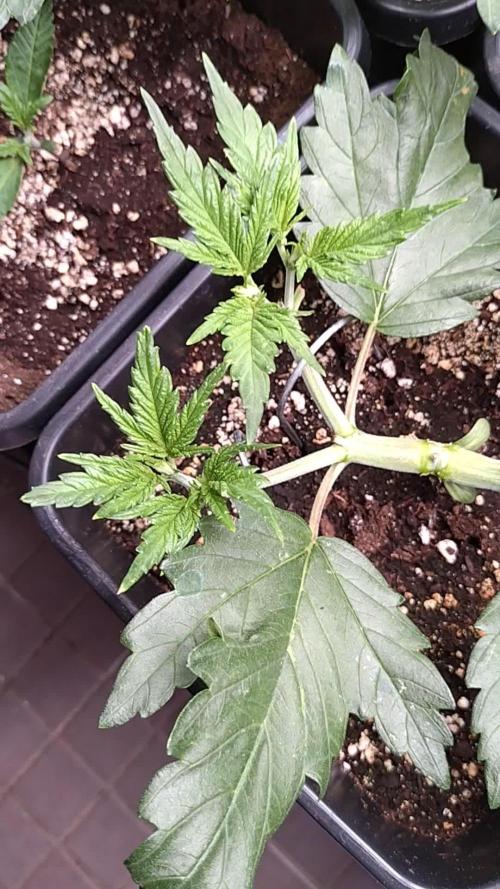
4. Woche
Alle Ladys wurden 3x getoppt, jetzt mache ich eigentlich nicht mehr viel, nur noch bisschen in Form bringen und dann dürfen die Ladys wachsen, wie sie wollen 😁
Likes
11
Share

@GREENPHOENIX6262
Follow
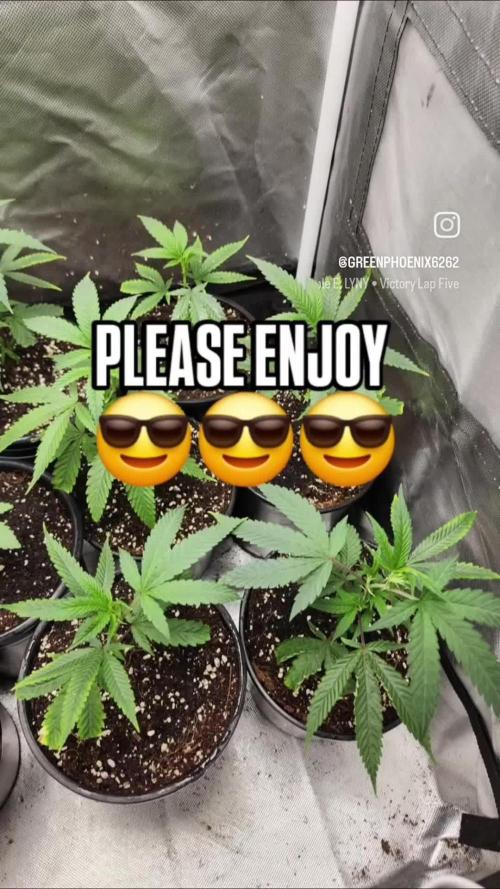
03/01 - (M) - Currently in pre-flower - She is growing amazingly - No deficiencies, wilted leaves or visual que's - I have changed her feeding program to daily micro-dosing between clean water and nute feed alternating days - She will be transferred into the 4x4 flower tent within the week.
03/01 - (C) - The clones are coming along nicely - Transplanted the 7 into 1 gallon pots last night - The substrate is the same as the mother with an added top dressing of worm castings last night - Increased feed formula on some of the nutes (Nitrogen/Silica and Cal-Mag) - High humidity/High heat is the name of the name the game - Specs to follow
Clone specs - Week 2
Height - 13 Inches
Temps - 82°(f)
Feed Temp - 65° (f)
Humidity - 79 - 81%
Watering Vol - 2 cups every 3 days
Nutrient Feed - Nitrogen - Silica - Cal-Mag - Microbes - Kelp - Horti Grow - Myco
03/04 (M) - She has been transferred into the 4x4 - Her setup run is identical to the 3x3 setup with the difference being the 4x4 has 2 AC infinity fans and a 6 inch carbon filter - Her nute feeds are twice a day running of the drip emitter (9 drippers) watering for about a minute.
03/04 (C) - The clones have transplanted without any issues into their 1 gallon pots - all 7 will be transplanted into 5 gallon pots in about a month - They are running alone in the 2x2 tent until next transplant.
03/08 -(M&C) Closing out the week on a good note - Mother is doing fine and the clones as well 😎😎😎😎😎😎😎

Likes
20
Share


@Hawkbo
Follow
Purple Lemonade , Gelato 1&2, LAK 2&3 are all just about done theyll be coming down over the weekend or early next week. T26, Pineapple Express, Mexican Airlines, LAK 1, 6 Shooter Blue Dreamatic and Cream Cookies are all on the flush but will need a few more before chop. This tent reeks up the whole block it's pretty intense skunk in the driveway right now. There will be one more update I'm guessing for most of these before the harvest update. This was the most successful autoflower crop I've had in a long time I think theres some really good quality buds on some of these. I'll put the video up now and as I go thru the pics theyll be uploaded so if your interested come back tmm for the pics.
These reek of Lemon skunk all of them. 1 is gunna be a little while longer but the 2nd 2 should come down in the next few days.
Likes
4
Share


@NuttyYeti
Follow
Gonna top her soon. For now she can grow. She's looking good and healthy 😍✌️💚
Likes
42
Share


@Natrona
Follow
Week 15 days 99-105 . I'm am flushing all plants with 1 gallon of filtered water each. I've reduced the light cycle from 18 to 14 hours to reduce heat stress. It may reduce yield as well based on comments I've read in other growers diaries. An oz per plant would be nice. Of course more would be better but an oz makes a pound of cannabutter. Reducing the light hours is reducing the purpleness in the stems of og kush and gorilla glue but Purple chill still has purple stems
The Natrona sisters spend their nights in the garage where the temps are 10-15 degrees cooler than in the day temps in the tent. Night temps ranged this week between 63-66 with rh 51-76%. The high rhythm comes after a rain.
During the day, I'm keeping the tent open while circulating 2 fans. Day Temps can reach 80 so it gets hot in there.
flooded each plant with 1 gal of water. From here forward I will be flushing all plants with filtered water at 1 gal for each plant every other day.
Monday, flushed with 1 gal of water. Starting this flush, I added ice to the top of the soil before watering. See photo.
This is a stress technique used to force plant phenotype colors. I don't think it will work for mine as I over fed. While I have 3 different strains, they look the same with blue green dominance.
Thursday, flushed with 1 gal of water. Starting this flush, I added ice to the top of the soil before watering. See photo
Saturday, flushed with 1 gal of water. Starting this flush, I added ice to the top of the soil before watering. See photo
Sunday photos
I'm not seeing any change in leaf or bud colorations from flushing out the fertilizers nor from the ice treatment.
General comments"
After putting the plants in the garage during the night, morning soil temperatures are within a degree of the night air temperature. This has been about 15 degrees cooler (50s) than the tent temperatures (75+). This week our weather has been unseasonably warm so the night temperatures have been 63-71 with Rh 51-70%
Tent temps in the day 75-80 and RH 47-59%.
Special thanks to @DreamIT for showing me how to add music to video. Check out my Gigi video above for a short clip.
Likes
Comments
Share

@Dubl_Jointed
Follow
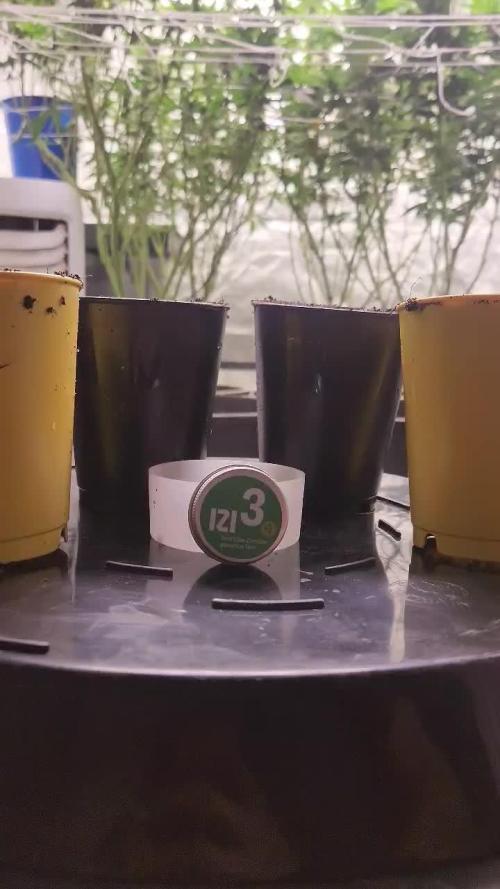
It begins!, excited to try out some new genetics! I have no clue whats in store im going in blind 😅👌


