


Likes
Comments
Share


@Char23
Follow
Deceded to cut! Perhaps a little prematurely but I was seeing cloudy and some amber so decided to pull the trigger. First grow and all so hopefully only up from here!
Not much to note apart from the buds fattening up and further fading in the leaves as expected.
I dropped the temp a bit and they spent their final 48 hours in darkness. Literally just going off what I have read and I will have nothing to compare this to as this is my first grow!
Very happy with what i see and I am now hanging the plants whole. I am expecting some nice clean smoke as these were flushed for their final 3 weeks.
Hoping for a 7-10 day dry and then into jars for curing after trimming over screens
Will update harvest for all 3 plants once this stage is complete with dry weights.
Thanks to all that have commented and I will be planting 4 mephisto seeds from a mystery pack once the tent is free.


Likes
67
Share


@GanjaReaper
Follow
Day 21:
From day 10 to 21 I couldn't take care of the plants because of private reasons,
I asked my friend to take care of the plants and he didn't do a good job!
He should had asked me or alerted me when he saw mayor problems, not just saying a little bit of light green or yellow.
As you can see, we have alot of yellowing beneeth the plants, different sizes and even got some burnt leafs indicate that he didn't water on time.
Did some run-off checks and saw many various values😓
Ph between 6.8-7.5 and EC between 1 to 2.
The PH should had been 5.8-6 and EC at this stage 1.8+ since they need alot of nutrients because cocos soil doesn't have any.
Because of this shit, they have been underfed, burnt, stress and more. Not ideal for autoflowers.
Even the reservoir from humidifier was empty, indicating that it hasn't been filled for days!!
Also it didn't got sorted out, there are always spots that get dryer faster or stay more wet. Get more light or less.
Therefore it is wise to change spots of your plants all the time, I call it dancing.
Your plants will grow more equally.
If you look at the bigger plants, this should had been the size of all the plants sadly.
They now look like they are in end of week 2 instead of week 3 and the bad plants end of week 1 😕
I did some defolation on some plants on the lower area.
Roots start to show underneeth the pots, which is really good.
I putted the bad plants in left under corner, Lets hope I can still nurse them.
I still have 1-2 weeks to fix this before it goes into flowering, lets hope they will still grow double in size, otherwise this will be a lower rewarding grow.
Likes
4
Share


@SamDo
Follow
Hello growers,
Vegetative Week 10 – Pineapple Upside Down (Round 2)
This week was relatively calm, but a slight issue appeared toward the end.
The plant showed signs of reduced vigor.
Leaves became slightly droopy and overall posture looked softer than usual.
No drastic symptoms, but enough to raise attention.
Nutrition had not been modified initially, but given the plant’s size and development stage, hunger became a possibility.
EC was increased to 2.0, while pH remains stable around 5.9.
At the same time, environmental factors were reconsidered.
The plant has now been moved into a larger grow space to improve airflow and overall environmental control.
Current parameters are set as follows:
• EC: 2.0
• pH: 5.9
• VPD: 0.7
• Temperature: ~23°C
• PPFD: ~600
Everything appears properly calibrated.
The coming week will determine whether the drooping was nutritional demand, airflow-related, or simple temporary stress.
For now, the system is stable.
Monitoring and observation will guide the next adjustments.
See you next week. Take care.


Likes
17
Share


@mcjordan
Follow
Week 9 started, nothing much has changed from week 8, just looking at buds and trying to notice the changes in size and just checking in. Plants look well, mostly buds, some lower leaves arent that healthy but probably due to light. Still adding flower nutriens, because I think harvest could be one or two weeks away, could flush later. Not sure if I should add even more water? Cant really tell from plants. Hoping this week buds will get bigger in size, currently they seem pretty small still.
Week 9 ended, plant 1 has nice big bugs, some brown-ish flowers, sad that it outgrew space, some top buds were burnt by light, plant no 2 which was under secondary light also have nice big buds (this light has more red color i think), also this plant outgrew its space and had burnt top buds from light, but it looks almost ready, lots of brown flowers, also it has leaves with marks and issues, so already started to flush it, plant no 3 has nice frosty buds, but they are smaller in size, either lightning setup didnt reach it or maybe it was because of all the stress it recieved in vegetation weeks. Defoliated plants, which I think now is kind of mistake, should remove only the big fan leaves, no the small ones, perhaps thats why plant no 3 has smaller buds, because it recieved lots of defolation lately. Changed up lightning setup and moved plants around for better light conditions.
Plant no 1 or no 2 could actually be ready for harvest or in few days, im not really sure, Im waiting on all plants for harvest, because will use grow space for drying and curing. Also I've shoulde started flushing somewhere this week, now Im going to start flushing only at end of week which could be too late.

Likes
19
Share


@Ultraviolet
Follow
Yellow butterfly came to see me the other day; that was nice.
Starting to show signs of stress on the odd leaf, localized isolated blips, blemishes, who said growing up was going to be easy!
Smaller leaves have less surface area for stomata to occupy, so the stomata are packed more densely to maintain adequate gas exchange. Smaller leaves might have higher stomatal density to compensate for their smaller size, potentially maximizing carbon uptake and minimizing water loss. Environmental conditions like light intensity and water availability can influence stomatal density, and these factors can affect leaf size as well. Leaf development involves cell division and expansion, and stomatal differentiation is sensitive to these processes. In essence, the smaller leaf size can lead to a higher stomatal density due to the constraints of available space and the need to optimize gas exchange for photosynthesis and transpiration. In the long term, UV-B radiation can lead to more complex changes in stomatal morphology, including effects on both stomatal density and size, potentially impacting carbon sequestration and water use. In essence, UV-B can be a double-edged sword for stomata: It can induce stomatal closure and potentially reduce stomatal size, but it may also trigger an increase in stomatal density as a compensatory mechanism. It is generally more efficient for gas exchange to have smaller leaves with a higher stomatal density, rather than large leaves with lower stomatal density. This is because smaller stomata can facilitate faster gas exchange due to shorter diffusion pathways, even though they may have the same total pore area as fewer, larger stomata. Leaf size tends to decrease in colder climates to reduce heat loss, while larger leaves are more common in warmer, humid environments. Plants in arid regions often develop smaller leaves with a thicker cuticle and/or hairs to minimize water loss through transpiration. Conversely, plants in wet environments may have larger leaves and drip tips to facilitate water runoff. Leaf size and shape can vary based on light availability. For example, leaves in shaded areas may be larger and thinner to maximize light absorption. Leaf mass per area (LMA) can be higher in stressful environments with limited nutrients, indicating a greater investment in structural components for protection and critical resource conservation. Wind speed, humidity, and soil conditions can also influence leaf morphology, leading to variations in leaf shape, size, and surface characteristics. Small leaves: Reduce water loss in arid or cold climates.
Environmental conditions significantly affect gene expression in plants. Plants are sessile organisms, meaning they cannot move to escape unfavorable conditions, so they rely on gene expression to adapt to their surroundings. Environmental factors like light, temperature, water, and nutrient availability can trigger changes in gene expression, allowing plants to respond to and survive in diverse environments.
Depending on the environment a young seedling encounters, the developmental program following seed germination could be skotomorphogenesis in the dark or photomorphogenesis in the light. Light signals are interpreted by a repertoire of photoreceptors followed by sophisticated gene expression networks, eventually resulting in developmental changes. The expression and functions of photoreceptors and key signaling molecules are highly coordinated and regulated at multiple levels of the central dogma in molecular biology. Light activates gene expression through the actions of positive transcriptional regulators and the relaxation of chromatin by histone acetylation. Small regulatory RNAs help attenuate the expression of light-responsive genes. Alternative splicing, protein phosphorylation/dephosphorylation, the formation of diverse transcriptional complexes, and selective protein degradation all contribute to proteome diversity and change the functions of individual proteins.
Photomorphogenesis, the light-driven developmental changes in plants, significantly impacts gene expression. It involves a cascade of events where light signals, perceived by photoreceptors, trigger changes in gene expression patterns, ultimately leading to the development of a plant in response to its light environment.
Genes are expressed, not dictated! While having the potential to encode proteins, genes are not automatically and constantly active. Instead, their expression (the process of turning them into proteins) is carefully regulated by the cell, responding to internal and external signals. This means that genes can be "turned on" or "turned off," and the level of expression can be adjusted, depending on the cell's needs and the surrounding environment. In plants, genes are not simply "on" or "off" but rather their expression is carefully regulated based on various factors, including the cell type, developmental stage, and environmental conditions. This means that while all cells in a plant contain the same genetic information (the same genes), different cells will express different subsets of those genes at different times. This regulation is crucial for the proper functioning and development of the plant.
When a green plant is exposed to red light, much of the red light is absorbed, but some is also reflected back. The reflected red light, along with any blue light reflected from other parts of the plant, can be perceived by our eyes as purple.
Carotenoids absorb light in blue-green region of the visible spectrum, complementing chlorophyll's absorption in the red region. They safeguard the photosynthetic machinery from excessive light by activating singlet oxygen, an oxidant formed during photosynthesis. Carotenoids also quench triplet chlorophyll, which can negatively affect photosynthesis, and scavenge reactive oxygen species (ROS) that can damage cellular proteins. Additionally, carotenoid derivatives signal plant development and responses to environmental cues. They serve as precursors for the biosynthesis of phytohormones such as abscisic acid () and strigolactones (SLs). These pigments are responsible for the orange, red, and yellow hues of fruits and vegetables, while acting as free scavengers to protect plants during photosynthesis.
Singlet oxygen (¹O₂) is an electronically excited state of molecular oxygen (O₂). Singlet oxygen is produced as a byproduct during photosynthesis, primarily within the photosystem II (PSII) reaction center and light-harvesting antenna complex. This occurs when excess energy from excited chlorophyll molecules is transferred to molecular oxygen. While singlet oxygen can cause oxidative damage, plants have mechanisms to manage its production and mitigate its harmful effects.
Singlet oxygen (¹O₂) is considered a reactive oxygen species (ROS). It's a form of oxygen with higher energy and reactivity compared to the more common triplet oxygen found in its ground state. Singlet oxygen is generated both in biological systems, such as during photosynthesis in plants, and in cellular processes, and through chemical and photochemical reactions. While singlet oxygen is a ROS, it's important to note that it differs from other ROS like superoxide (O₂⁻), hydrogen peroxide (H₂O₂), and hydroxyl radicals (OH) in its formation, reactivity, and specific biological roles. Non-photochemical quenching (NPQ) protects plants from damage caused by reactive oxygen species (ROS) by dissipating excess light energy as heat. This process reduces the overexcitation of photosynthetic pigments, which can lead to the production of ROS, thus mitigating the potential for photodamage. Zeaxanthin, a carotenoid pigment, plays a crucial role in photoprotection in plants by both enhancing non-photochemical quenching (NPQ) and scavenging reactive oxygen species (ROS). In high-light conditions, zeaxanthin is synthesized from violaxanthin through the xanthophyll cycle, and this zeaxanthin then facilitates heat dissipation of excess light energy (NPQ) and quenches harmful ROS.
The Issue of Singlet Oxygen!!
ROS Formation: Blue light, with its higher energy photons, can promote the formation of reactive oxygen species (ROS), including singlet oxygen, within the plant.
Potential Damage: High levels of ROS can damage cellular components, including proteins, lipids, and DNA, potentially impacting plant health and productivity.
Balancing Act: A balanced spectrum of light, including both blue and red light, is crucial for mitigating the harmful effects of excessive blue light and promoting optimal plant growth and stress tolerance.
The Importance of Red Light:
Red light (especially far-red) can help to mitigate the negative effects of excessive blue light by:
Balancing the Photoreceptor Response: Red light can influence the activity of photoreceptors like phytochrome, which are involved in regulating plant responses to different light wavelengths.
Enhancing Antioxidant Production: Red and blue light can stimulate the production of antioxidants, which help to neutralize ROS and protect the plant from oxidative damage.
Optimizing Photosynthesis: Red light is efficiently used in photosynthesis, and its combination with blue light can lead to increased photosynthetic efficiency and biomass production.
In controlled environments like greenhouses and vertical farms, optimizing the ratio of blue and red light is a key strategy for promoting healthy plant growth and yield.
Understanding the interplay between blue light signaling, ROS production, and antioxidant defense mechanisms can inform breeding programs and biotechnological interventions aimed at improving plant stress resistance. In summary, while blue light is essential for plant development and photosynthesis, it's crucial to balance it with other light wavelengths, particularly red light, to prevent excessive ROS formation and promote overall plant health. Oxidative damage in plants occurs when there's an imbalance between the production of reactive oxygen species (ROS) and the plant's ability to neutralize them, leading to cellular damage. This imbalance, known as oxidative stress, can result from various environmental stressors, affecting plant growth, development, and overall productivity.
Causes of Oxidative Damage: Abiotic stresses: These include extreme temperatures (heat and cold), drought, salinity, heavy metal toxicity, and excessive light. Biotic stresses: Pathogen attacks and insect infestations can also trigger oxidative stress. Metabolic processes: Normal cellular activities, particularly in chloroplasts, mitochondria, and peroxisomes, can generate ROS as byproducts. Certain chlorophyll biosynthesis intermediates can produce singlet oxygen (1O2), a potent ROS, leading to oxidative damage. ROS can damage lipids (lipid peroxidation), proteins, carbohydrates, and nucleic acids (DNA). Oxidative stress can compromise the integrity of cell membranes, affecting their function and permeability. Oxidative damage can interfere with essential cellular functions, including photosynthesis, respiration, and signal transduction. In severe cases, oxidative stress can trigger programmed cell death (apoptosis). Oxidative damage can lead to stunted growth, reduced biomass, and lower crop yields.
Plants have evolved intricate antioxidant defense systems to counteract oxidative stress. These include: Enzymes like superoxide dismutase (SOD), catalase (CAT), and various peroxidases scavenge ROS and neutralize their damaging effects. Antioxidant molecules like glutathione, ascorbic acid (vitamin C), C60 fullerene, and carotenoids directly neutralize ROS. Developing plant varieties with gene expression focused on enhanced antioxidant capacity and stress tolerance is crucial. Optimizing irrigation, fertilization, and other management practices can help minimize stress and oxidative damage. Applying antioxidant compounds or elicitors can help plants cope with oxidative stress. Introducing genes for enhanced antioxidant enzymes or stress-related proteins over generations.
Phytohormones, also known as plant hormones, are a group of naturally occurring organic compounds that regulate plant growth, development, and various physiological processes. The five major classes of phytohormones are: auxins, gibberellins, cytokinins, ethylene, and abscisic acid. In addition to these, other phytohormones like brassinosteroids, jasmonates, and salicylates also play significant roles.
Here's a breakdown of the key phytohormones:
Auxins: Primarily involved in cell elongation, root initiation, and apical dominance.
Gibberellins: Promote stem elongation, seed germination, and flowering.
Cytokinins: Stimulate cell division and differentiation, and delay leaf senescence.
Ethylene: Regulates fruit ripening, leaf abscission, and senescence.
Abscisic acid (ABA): Plays a role in seed dormancy, stomatal closure, and stress responses.
Brassinosteroids: Involved in cell elongation, division, and stress responses.
Jasmonates: Regulate plant defense against pathogens and herbivores, as well as other processes.
Salicylic acid: Plays a role in plant defense against pathogens.
1. Red and Far-Red Light (Phytochromes):
Red light:
Primarily activates the phytochrome system, converting it to its active form (Pfr), which promotes processes like stem elongation and flowering.
Far-red light:
Inhibits the phytochrome system by converting the active Pfr form back to the inactive Pr form. This can trigger shade avoidance responses and inhibit germination.
Phytohormones:
Red and far-red light regulate phytohormones like auxin and gibberellins, which are involved in stem elongation and other growth processes.
2. Blue Light (Cryptochromes and Phototropins):
Blue light:
Activates cryptochromes and phototropins, which are involved in various processes like stomatal opening, seedling de-etiolation, and phototropism (growth towards light).
Phytohormones:
Blue light affects auxin levels, influencing stem growth, and also impacts other phytohormones involved in these processes.
Example:
Blue light can promote vegetative growth and can interact with red light to promote flowering.
3. UV-B Light (UV-B Receptors):
UV-B light:
Perceived by UVR8 receptors, it can affect plant growth and development and has roles in stress responses, like UV protection.
Phytohormones:
UV-B light can influence phytohormones involved in stress responses, potentially affecting growth and development.
4. Other Colors:
Green light:
Plants are generally less sensitive to green light, as chlorophyll reflects it.
Other wavelengths:
While less studied, other wavelengths can also influence plant growth and development through interactions with different photoreceptors and phytohormones.
Key Points:
Cross-Signaling:
Plants often experience a mix of light wavelengths, leading to complex interactions between different photoreceptors and phytohormones.
Species Variability:
The precise effects of light color on phytohormones can vary between different plant species.
Hormonal Interactions:
Phytohormones don't act in isolation; their interactions and interplay with other phytohormones and environmental signals are critical for plant responses.
The spectral ratio of light (the composition of different colors of light) significantly influences a plant's hormonal balance. Different wavelengths of light are perceived by specific photoreceptors in plants, which in turn regulate the production and activity of various plant hormones (phytohormones). These hormones then control a wide range of developmental processes.
Likes
5
Share

@Naujas
Follow
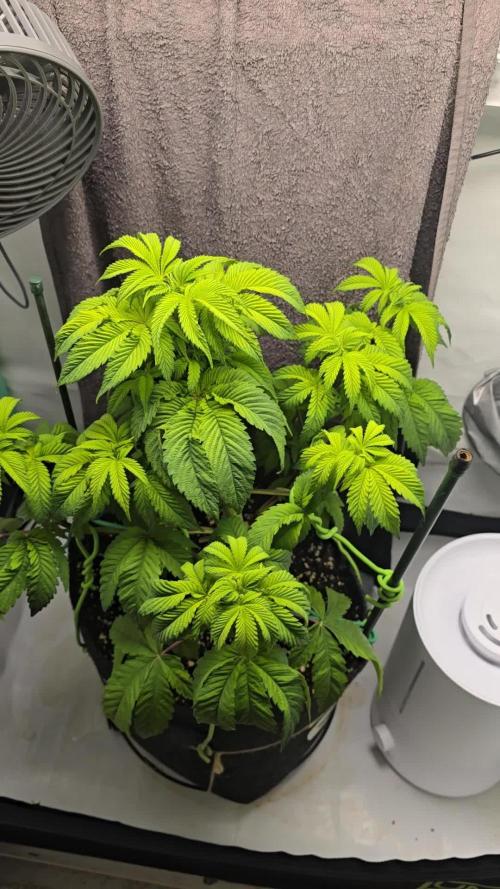
Taigi, šią savaitę išvykstu, turiu tik tiek naujienų, atrodo, kad ji sveiksta, kitą savaitę vėl grįšiu jos aplankyti :) Sėkmės visiems :).

Likes
11
Share


@SintrexGrow
Follow
The plant is growing pretty fast. Royal queen seeds look like they have a good breed of seeds. Highly recommended.
Plant is very healthy and has no deficiency biether pests.
Enjoying all the biobizz nutrients that i am giving her.
Likes
8
Share

@Ruthlez
Follow
🌱 Grow Diary – 5. Blütewoche
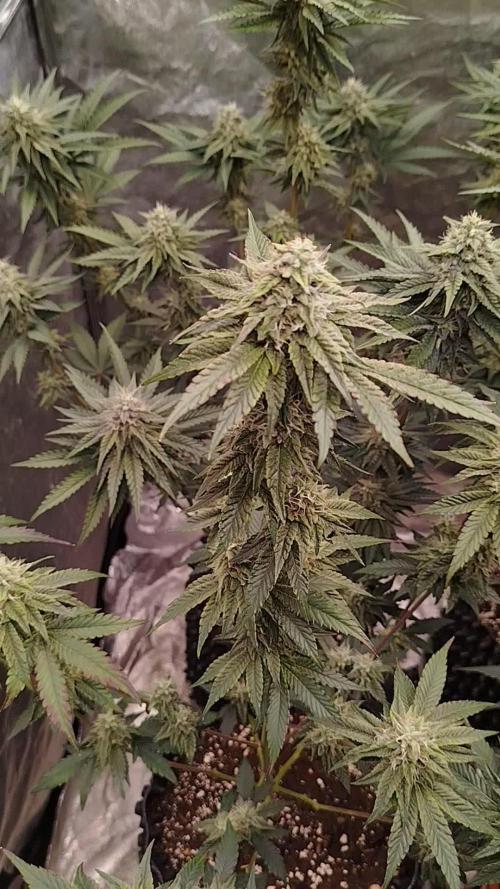
Die Pflanzen befinden sich mittlerweile in der 5. Blütewoche und sind insgesamt seit 8 Wochen im Grow. Alle vier Pflanzen entwickeln sich weiterhin prächtig. Jede Sorte zeigt einen wirklich schönen Phänotyp und die Pflanzen duften mittlerweile herrlich intensiv. 😍🌸
Die Buds werden von Woche zu Woche schwerer. Teilweise musste ich die Äste bereits zusätzlich abstützen, da das Gewicht der Blüten ordentlich zunimmt. Die Entwicklung macht richtig Spaß und die Pflanzen sehen weiterhin sehr vital aus.
Ab dieser Woche gibt es außerdem kein Plagron Pure Zym mehr.
Noch ein paar Wochen liegen vor uns – ich bin gespannt, wie sich die Blüten in den kommenden Wochen weiterentwickeln. 🌿🔥
Likes
39
Share


@Hazecat_420
Follow
Todo marcha como corresponde, esta vez se regó con Flawless Finish para que las plantas se alimenten de los últimos nutrientes y ya secando el sustrato comenzamos la cosecha. Próxima semana finaliza el cultivo. El aroma que mantienen estas nenas me ha dejado encantada!! 😍


Likes
212
Share


@GODSGIFT_2005_JM
Follow
😎MARSHYDRO LED😎
CHEMICAL BRIDE is on RIGHT BACK CORNER
Defoliation 3rd week flowering for better light 💡 penetration & 💨 air movement for mold prevention


Likes
18
Share


@Canadian
Follow
The plants seem to be growing very fast very strong.
thank you for reading I will continue to update have a happy grow

Processing
Likes
27
Share


@WestOzzie
Follow
The big stretch has slowed, gathering she's getting ready for flowering now,the smell is getting stronger,im impressed how good she's going and really enjoying my first grow , hopefully she gets fat nugs soon
Likes
15
Share


@VanHealzing
Follow
Day 55 of flower
1 and 3 are finishing off a bit earlier then expected, so I started my flush to get ready for the harvest .
2 and 4 i belive can make it to day 65.
#4 looks like it's parent, Purple Urkle.
#2 looks like GDP
So I think I will he keeping 2 and 4

Likes
5
Share


@VfB752
Follow
Beleuchtung auf 100%
Düngen bei jedem zweiten gießen
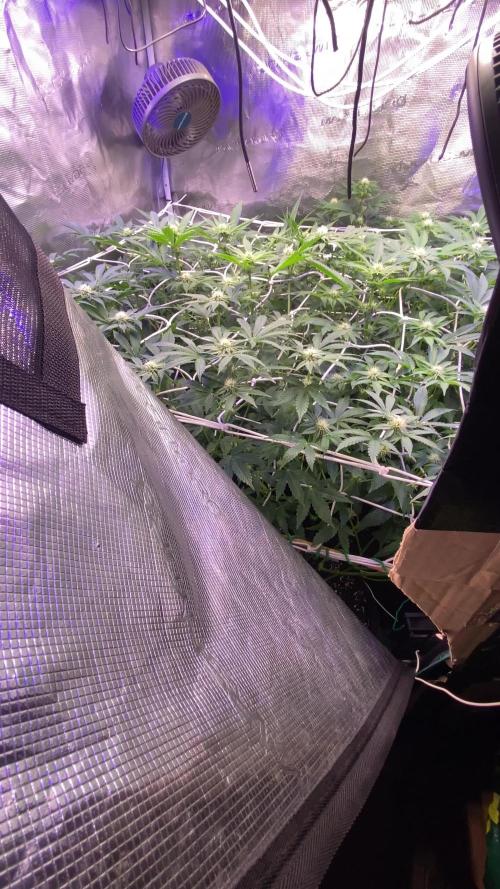
Sind alle 3 die gleichen samen aber die vordere ist gegenüber den anderen zwei sehr dunkel wieso auch immer aber sieht verdammt schön aus 😍




Likes
22
Share


@DeepRootsGrowTrees
Follow
GSC BY KANNABIA
WEEK #18 March 15th-22nd
Week #8 Flower
This week she is looking good. Buds continue to gain weight with a tight bud structure that is covered with trichomes.

Likes
9
Share


@homiegrown
Follow
These plants are doing way better then my last G14 so far! They love the Recharge and Bushdoctor I gave them yesterday.