


Likes
Comments
Share


@ghostgrowerz
Follow
3 Ciclo - Green Tiger - Craazy Seeds (BSF) - https://www.crazyseeds.shop/shop/produto.php?id=38ab2e762664b54d5e3d70cb21e25b2a4276b3c3
Genética: (Early Skunk x Skunk) x Skunk P90
1 - Na decima segunda semana, realizei uma rega com bloom em 6,2 de ph
2 - Infelizmente meu medidor de PH estragou, já faz uns dias que o PH aparece bem abaixo que o normal, por isso acredito que atrasou os buds engordarem 😭
OBS: Utilizo medidor de ph digital, comprei os saches para regulagem do calibrador, mas não estava calibrando corretamente. Após trocar a pilha melhorou a fixação do PH, e após deixar por algumas horas o eletrodo sob agua oxigenada V10, o calibrador voltar a ler PHs mais altos, antes ao colocar na água aparecia 5,5. Agora retornou a 7,5 a 8 que é o correto do PH da minha cidade. Eu estava colocando PH UP então acredito que o PH da terra deve estar nas alturas, vou medir o run off nos proximos dias e realizar um flush para neutralizar o PH da terra em 6,2
Equipamentos/Acessórios:
Quantum Board Quattro https://www.armariogrow.com.br/quantum-board-quattro
Grow: Flora: Estufa Probox Basic 60 60x60x160
Vaso: Air Pot 10 L
Termo Higrômetro: AcuRite
Umidificador: Difusor De Ar Elétrico Umidificador
👻👻



Likes
1
Share


@Growing_Spartan
Follow
May 8th, the trellis is getting filled out but the biggest plant is still looking bare and small

Likes
128
Share

@yan402
Follow
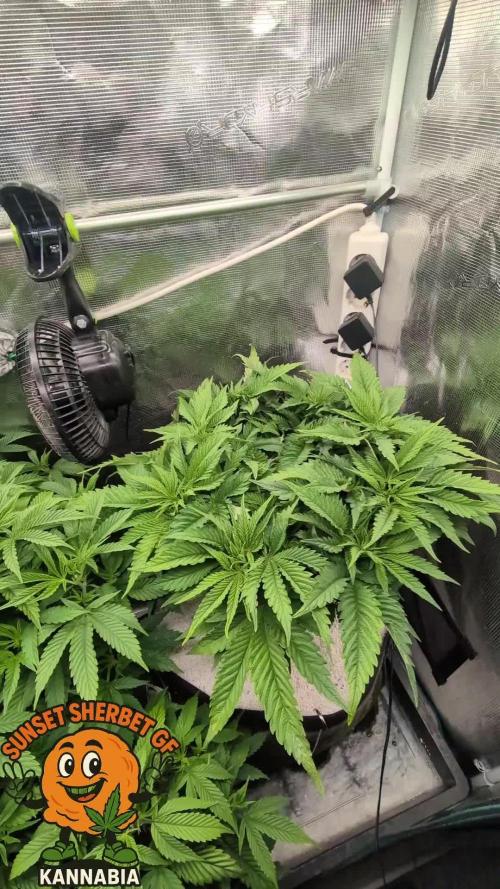
🌸🍊✨🍭🌸🍊✨🍭🌸🍊✨🍭🌸
Back at it with Kannabia — huge thanks for the NEW EXCLUSIVE Upcoming Kannabia's seed Launch 🙏🍨🍊
Grateful for the trust and for everyone following along, I’ll run her clean and showcase what she can do.
Dessert-party goals: berry–citrus sherbet terps, creamy finish, tight stacks, easy trim, zero drama.
Veg 24/0, clean manifold + LST, flip on a happy, even canopy.
Coco’s fresh, seed goes in now. 🚀
Added on 12.10.2025
🌞 Light conditions: Limited direct light for the first 4 weeks — ~4 h/day on weekdays and ~10–11 h on weekends due to tent sharing and work schedule.
🌸🍊✨🍭🌸🍊✨🍭🌸🍊✨🍭🌸
💭❗💭❗💭❗💭❗💭❗💭❗💭
❗Events & thoughts worth noting❗
💭❗💭❗💭❗💭❗💭❗💭❗💭
10.08.25 GW1 Sowed seed, soaked starter pot with #1
12.08.25 GW1 Seed popped hip hip hurray
28.08.25 VW2 Stopped using GreenBuzzBloom, took it out of the schedule.
01.09.25 VW3 TriPartMicro 10→30ml, TriPart bloom 10→30ml
12.09.25 VW4 Applied nemadodes against thrips and fungus gnats.
20.09.25 VW6 topped and trained for first time, decided against a full manifold as I lost a few weeks already.
26.09.25 VW7 Topped her one more time for 8 mains
27.09.25 VW7 Topped up the pot with perlite instead of clay pebbles this time, just trying things out, TriPartMicro 30→40ml , TriPartBloom 30→20ml
10.10.25 VW9 have her a haircut, umm be trimming the side shoots tomorrow, rest in the video 📹
12.10.25 VW9 done some extra trimming to clean up a bit and chose two extra side shoots to nurture info mains, so kept the 8 original mains plus 2 rest in the video 📹
🌱💦🌱💦🌱💦🌱💦🌱💦🌱
🌿 Day to day tasks & actions 🌿
🌱💦🌱💦🌱💦🌱💦🌱💦🌱
10.10.25 VW8– no water no feed
11.10.25 VW9 – Fed 5l of #1 → 2l runoff
12.10.25 VW9 – Fed 5l of #1 → 2l runoff
13.10.25 VW9 – no water no feed
14.10.25 VW9 – no water no feed
15.10.25 VW9 – Fed 5 plain pHed water → 2l runoff
16.10.25 VW9 – Fed 5 plain pHed water → 2l runoff
17.10.25 VW9 – no water no feed
(*RUNOFF reused for tomato plants)
🍶💧🍶💧🍶💧🍶💧🍶
💧 Nutrients in 30L #1
🍶💧🍶💧🍶💧🍶💧🍶
💧 TriPart Micro: 10 → 30 → 40 ml
= 0.33 → 1.00 → 1.33 ml/L
🍶 TriPart Grow: 0 ml
= 0.00 ml/L
💧 TriPart Bloom: 10 → 30 → 20 ml
= 0.33 → 1.00 → 0.67 ml/L
💧 Cal-Mag: 60 ml
= 2.00 ml/L
🍶 Home-made FFJ/FPJ (new batch): 30 ml
= 1.00 ml/L
💧 pH Down:
Citric acid (BuxXtrade) — adjust to ~pH 6.0
📦 TOTAL : = 160 ml per 30L = 5.33 ml/L
🍶💧🍶💧🍶💧🍶💧🍶
⚙️✂️⚙️✂️⚙️✂️⚙️✂️⚙️
✂️ Tools & equipment ✂️
⚙️✂️⚙️✂️⚙️✂️⚙️✂️⚙️
✂️ 2× MarsHydro SP3000
⚙️ MarsHydro 150mm ACF Ventilator
✂️ Trotec dehumidifier (big unit)
⚙️ Mini no-name dehumidifier
✂️ Kebab skewers (LST – stainless)
⚙️ Wire + roast skewers (LST assist)
✂️ Scissors (HST)
⚙️ Vacuum (for spills & cleanup)
✂️⚙️✂️⚙️✂️⚙️⚙️✂️⚙️✂️⚙️✂️⚙️
---
🍊🍧🌬️🍬🍊🍧🌬️🍬🍊🍧🌬️🍬 Mystery seed (Kannabia Seeds) — NEW EXCLUSIVE
🍊🍧🌬️🍬🍊🍧🌬️🍬🍊🍧🌬️🍬
Species: Hybrid (GF / swift-flowering line)
Genetics: TBA (breeder sheet pending)
THC: TBA
Effect: Euphoric, relaxed, creative (target profile)
Flavor: Berry–citrus sherbet, sweet candy, creamy finish
Flowering (indoors): ~6–7 weeks target (GF)
Resistance: High (aim: no drama)
Indoor yield: TBA
Outdoor yield: TBA
Structure: TBA
Notes: Brand-new exclusive from Kannabia’s GF line — I’ll update specs when the breeder card drops. Goal is rich sherbet terps (berry–citrus + cream), low leaf-to-calyx, easy trim. Stage harvest stays on the table if tops finish early.

Processing
Likes
7
Share


@gablmo
Follow
I finally turned 600 watts on, would love to get comments from you folks, so clueless here. If you see something wrong, please let me know.

Likes
153
Share


@DogDoctorOfficial
Follow
And it looks like they didn't mind that much going to the hairdresser as they keeps on drinking the same and evolving at the same pass. They are all becoming beautiful beast ladies and im loving them all in diferent ways , so far the mor advanced one is the somango followed by the water melon followed by the no idea what it is seed and in the end e have bruce banned, im loving t he fact that they all started same time and that they all are going to finished different, this means i will be trying me second harvest plant smoking my pervious one 😝 .
They are all drinking using the autopot system but the no idea what seed is not so im Daly giving her 2,5 liters from the autopot reservoir ,it sucks but its ok at the same time hehe eit is what it is and im not thinking on leaving anywhere, so i can easy do that every single day hehehe kind a lovit any way but dont tell anyone, its our little secret 🤫 😆💚🙏🙏🙏
As always thank you all for reading and checking out my diaries, im humbled by it all, much love to you all 💚💚💚🙏🙏🙏💚💚💚🙏
Thank you APTUSHOLLAND for having faith in my love for growing and for always being there wen my gardens need 🙏🙏🙏
Genetics :
- watermelon candy - Zamnezia Seeds https://www.zamnesia.com/
-Somango Glue - Advanced seeds https://advancedseeds.com/web/
- ?- buddah Seeds
- Bruce Banner - Fast Buds https://2fast4buds.com/
Grow tent - 4x8, but using 4x4 for this Auto Test
Ligth - LUMATEK ZEUS 465 COMPACT PRO
Food - HAPTUS HOLLAND
Filter - vanguard hydroponics Falcon Filters
Extraction - vanguard hydroponics 560 m3h
control - Trolmaster
All i grow is medicine for myself, for me and for my best friend with is me 😆 nothing to sell, so don’t even ask 😅💚💚💚
All info and full product details can be find in can find @
https://aptus-holland.com/
https://autopot.co.uk/
https://lumatek-lighting.com/
#aptus #aptusplantteck #aptusgang #aptusfamily #aptustrueplantscience #inbalancewithnature #trueplantscience #growerslove
With true love comes happiness 💚🙏 Always believe in your self and always do things expecting nothing in return and with an open heart , be a giver and the universe will give back to you in ways you could not even imagine so 💚💚💚
More info and updates @
https://growdiaries.com/grower/dogdoctor
https://instagram.com/dogdoctorofficial
https://youtube.com/channel/UCR7ta4DKLFMg2xxTMr2cpIg
💚💚💚Growers love to you all 💚💚💚


Likes
44
Share


@XperencdGmanXG
Follow
a week after the 100mm storm and just some spitting since then. To get good buds this plant needs regular water, so I hope mother nature starts giving us some more regular rain here.


Likes
7
Share


@ArucambaAutoflowers297
Follow
So far the floraflex potpro system has been paying off! My time in the garden went from 90 minutes to 15 minutes and the results speak for themselves.
Since theyre all still in veg im expecting some big girls.
Tried to hop on the no calmag schedule but some didnt take to well to it. So i dropped my dosage back to 3gr per gal of B1 and B2.
New growth looks nice and healthy on the affected plant so i might start raising the dosage


Likes
2
Share


@Sobreruedas
Follow
Coloqué las semillas en un vaso con agua de osmosis durante 2 días. Al segundo día empezaron a reventar y se les empezó a formar la raíz.
Likes
6
Share


@StonedandSteady
Follow
@humboldtcountysown LLC for Veg&Bloom Thanks Again Phil&Gail! @rocket_seeds Newest Seed Sponsor!!! @vivosun.official VIVOSUN®️ VS2000w & VS1000w Grow-Thank You so Much J Bro! I'm Honored and Very Proud to be apart of your Family/Team! I #FlippedToFlower on Friday 6/24/22 ShoutOut to our Bro @soillife420_2 for Gifting us this VS®️ VS1000w LED Grow Light! Sponsored VS®️ VS2000w LED Grow Light with Samsung LM301 Diodes & Sosen Brand Driver, Dimmable Lights, Sunlike Full Spectrum with Grow Room Glasses for Seedling Veg & Bloom Plant Growing Lamps for 4x2 Veg & 3x3 Flower Grow Tent or Grow space! Lower Cost & High Efficiency: VS®️ VS2000w LED grow lights use the latest LED plant light technology including Samsung LM301 Diodes, high-energy efficiency with 2.9μmol/J; Extremely high output but consumes only 200W of electricity, making it more efficient than traditional HID lamps and other plant lamps on the market! It comes equipped with 3000k Warm white Diodes that Boosts Bloom, 5000k Cool white lights that Promotes Germination and 660nm Red lights for Higher Yields! Thier attached to a Durable, Waterproof Aluminum Heat Sink with Low Noise and only weights 9.03lbs. with a 5 year Warranty! SuperCropped3rdTime #TransPlanted into 3GallonPots from 1GallonPots #Lollipopped ToppedThe3rdTime #LeafTucked Transferred into our 6×5ft. #ChronicCave BasementFlowerArea and Growing under our Brilliantly Bright VIVOSUN®️ VS2000w-VS1000w with the 12/12 lighting schedule, Dimmed⬇️=50% around 30" Over Canopy's We Love to use Team @tnbnaturals @tnb_naturals #TNBNaturals #TheEnhancer #Co2DispersalCanister for Vigorous and Great Growth for our Grows! ShoutOut to Bro @dr._weedman I'm Growing from Team @ilovegrowingmarijuana_strains #HeroMixpack #ILGM #SkywalkerOG-Fem #BruceBanner-Fem #BlackWidow-Fem and started Up a New phenoz of those, my Team @nirvana_seeds nirvanashop.com #Zkittlez-Fem and a New pheno, Team @nukeheads.nutrients #CheetahPiss-Fem clone and from my Wonderful Wife's @juicyjj85 plant, I've taken two Clones from our Bro @goliathgrowshow #GoliathGrower #MacBerries-reg Thanks Again Everyone!!! #BudBrothers4-L Happy Growing! Cheers Famz!!! Much Props and Much Pars!💯VS®️💡's+⛺'s=🏆's
#LoveWhatYouGrow
#BringGreenToYourLife
#vivosun #vs1000 #vivosungrowlight #vivosungrowtent #vs2000 #vs3000 #vs4000 #vs1000e #vsf4300 #hcf1600 #hcf3200
https://linktr.ee/vivosun.official
https://www.linkedin.com/uas/login?session_redirect=%2Fcompany%2F77743591%2F
https://youtube.com/c/VIVOSUN
https://instagram.com/vivosun.official?igshid=YmMyMTA2M2Y=
https://www.facebook.com/198734887125319/posts/1724749361190523/?extid=a&mibextid=baczqb
https://mobile.twitter.com/VIVOSUN/header_photo
https://pin.it/2uORZDs
https://www.tiktok.com/@vivosunglobal?lang=en&is_from_webapp=1&sender_device=mobile&sender_web_id=7110614037704197678
https://www.amazon.com/stores/page/A2F7F49B-7130-4423-BF67-59CE3EC5A44F?maas=maas_adg_01A961034EF443FE5006848DB5A6C70B_afap_abs&ref_=aa_maas&tag=maas&ingress=3&visitId=3e0468ed-290c-4c15-9d06-7a22afdff345&mc_cid=e5417eb03f&mc_eid=69bad0aef8
https://www.amazon.com/stores/page/3EDD8CEC-742A-44F6-90C4-0930E78DD730?ingress=2&visitId=6cfb6992-f86f-4c85-a5ad-4cb5d1c06d07&ref_=ast_bln
Limited-time deal: VIVOSUN 6-Pair 1/8 Inch Adjustable Grow Light Hanger, Heavy Duty Rope Hanger with Reinforced Metal Gears, 8-Ft Long and 150 lbs Weight Capacity Rope Rachet for Grow Light, Inline Fan https://a.co/d/1WezHcI

Likes
33
Share


@FlavoursUk
Follow
Had great results, especially when i upgraded to RO water.. if theres one thing i could of changed it would of been using the reverse Osmosis water sooner.
The rest of the grow was pretty easy, didn't even plant train as this was suppose to be a hassle free run. It was just that. Some good genetics from seedstockers too.
Good stuff!

Likes
5
Share


Likes
121
Share


@NuggetPawn
Follow
So she was chopped (wet trimmed) yesterday (F74) and is now hanging up to dry at 55% RH and temps between 15 and 18ºc.
I made fresh frozen dry ice hash today using a 160 micron bubble bag, a flat surface, 8kg of dry ice and a couple 5 gal buckets. I already have the weights for that, which far exceeded my expectations. Those figures I will post once she is dried and in 1 quart screw top glass jars.
People suppose dry ice hash is inferior quality vs bubble hash. I am not experienced enough to comment on that but must say it is extremely easy to make hash with dry ice, it took 40 mins to process 995g of trim which included sugar leaves, some stems and popcorn buds. I then pressed it into 3.5g briquettes for storage using a pollen press. As you can see from videos, this stuff is all blonde - and after already trying some today with some friends, it knocked our boots off!
Will be back in 5-7 days with harvest figures, smoke analysis and other details!
Happy growing all!
P.s I ticked defoliation this week - the only week I intentionally cut any leaves off for the entire grow 😉
Likes
10
Share


@Canadian_Bud
Follow
26-11-2022
Awesome start she is ripping it up in fast growth right out of the gate. Always did like a Lemon lol.
Starting off with a small deep water culture 2 gal with airstone. Going to make it a lot easier to just pass her into the Aeroponic envirnment. Less shock and gives me a chance to put her in a 5 gal bucket with clean fresh temperater adjusted water prior to her switch in a few weeks.
She's got her first wings!😎
1-12-2022
The problem free grow so far she grows as she should. Her primary leaves are getting larger Qucikly. I up'd the wattage on the lights now at 80%. 😎

Processing
Likes
13
Share


@Andres
Follow
She is growing healthy and the spring started here. The temperature up.


Likes
14
Share


@BLAZED
Follow
Week 12 (3-10 to 9-10)
3-10
Temperature: 27.5 degrees (lights on) 20 degrees (lights off)
Humidity: 86% (highest) 60% (lowest)
Watering: 1200 ml. PH 6.4 EC: 1.8 (with Hybrids & PK+)
4-10
Temperature: 27.3 degrees (lights on) 19.8 degrees (lights off)
Humidity: 72% (highest) 55% (lowest)
Watering: None.
5-10
Temperature: 25.8 degrees (lights on) 19.5 degrees (lights off)
Humidity: 80% (highest) 82% (lowest)
Watering: 700 ml. PH 6.5 EC: 0.6 (without Hybrids & PK+)
Last night i accidentally let the light at 20% strength, so the whole day the light was on the lowest wattage.
6-10
Temperature: 28.6 degrees (lights on) 21.1 degrees (lights off)
Humidity: 81% (highest) 56% (lowest)
Watering: 1000 ml. PH 6.5 EC: 0.6 (without Hybrids & PK+)
7-10
Watering: None.
8-10
Temperature: 27.4 degrees (lights on) 18.4 degrees (lights off)
Humidity: 85% (highest) 53% (lowest)
Watering: 1300 ml. PH 6.4 EC: 0.6 (without Hybrids & PK+)
9-10
Temperature: 27.9 degrees (lights on) 19.4 degrees (lights off)
Humidity: 80% (highest) 52% (lowest)
Watering: 1000 ml. PH 6.4 EC: 0.6 (without Hybrids & PK+)