


Likes
Comments
Share


@TickleToast
Follow
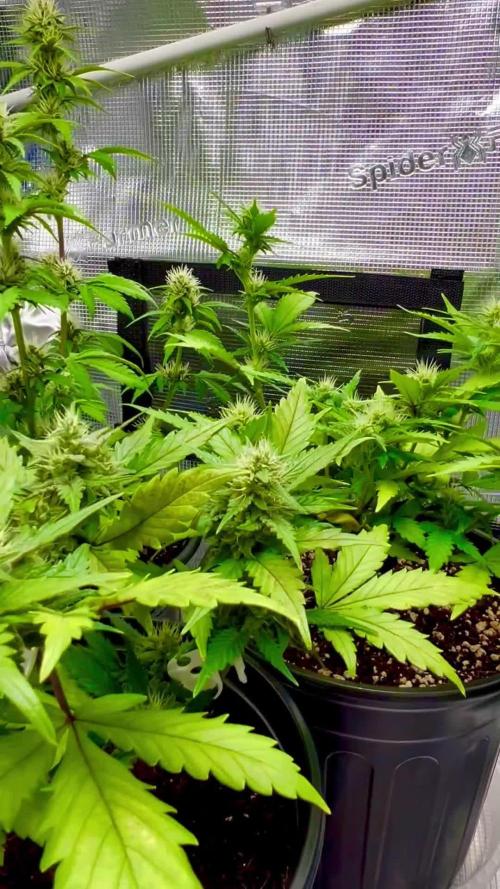
Signs of swelling, & smell is picking up.
Unhappy gal is still putting out pistils / and no sign of continuous deficiencies.
-Need to start bringing up my defoliations / canopy a little bit. More bottom larf than preferred, and it just forces me to pull them later anyway.
~~~~~~~~~~
Questions & Feedback are welcomed, feel free to message me!
Thanks for stopping by growmies! 🤙🤙🤙🙏🙏🙏

Likes
6
Share


@Kountryboi90
Follow
Here we are day 58(day 29 of flower) and this girl is looking alright. The ridiculous stretching has stopped and now the buds are starting to get bigger. In one part of the video, you can see where my LST ties started cutting into the thick stalk. This may have caused the erratic stretching. Luckily I found it in time. I think this plants will be all nice nuggets. Even the lower buds are already nice sized! Looking forward to see how she finishes.

Processing
Likes
12
Share


@Hawkbo
Follow
Pics taken on Monday, video was taken on Tuesday. Doing good chuggin along

Likes
12
Share

@GrowPro3500
Follow
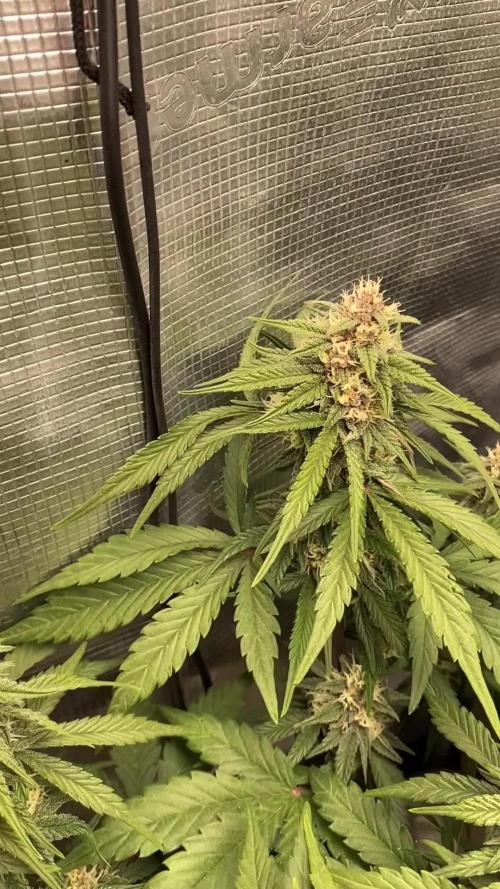
I’m shook — I nearly killed her when she started herming.
A mate was like, “cut the sacks off and give her a chance,” and thank god I listened — these are the densest buds I’ve gotten off autos so far. Fingers crossed she didn’t throw any micro-seeds.
This plant keeps surprising me — spoil her and she acts up, neglect her and she spits out stuff like this. I don’t believe in anything anymore.
Likes
11
Share

@Northern_Ent
Follow
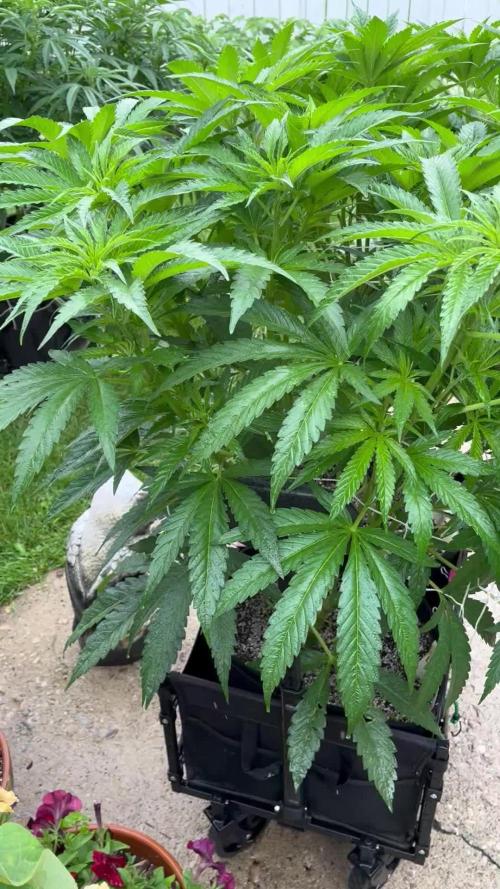
July 19: first night of force flowering last night. Moved into dark garage at 9:30 pm and out at 7:30 am for 10 h of darkness.
Using 730 nm far red light at transition to dark which puts plant into dark mode two hours faster and is like getting a 26 h day with 12 of darkness.
Rain day.
July 22: Foliar spray of Epsom salts and potassium silicate this morning. The magnesium in the Epsom salts helped with the yellowing on the new growth.
July 23: added another loose Scrog net layer. Tied to water bottles to open up the canopy to sunlight.

Likes
14
Share


@LokalGrenz
Follow
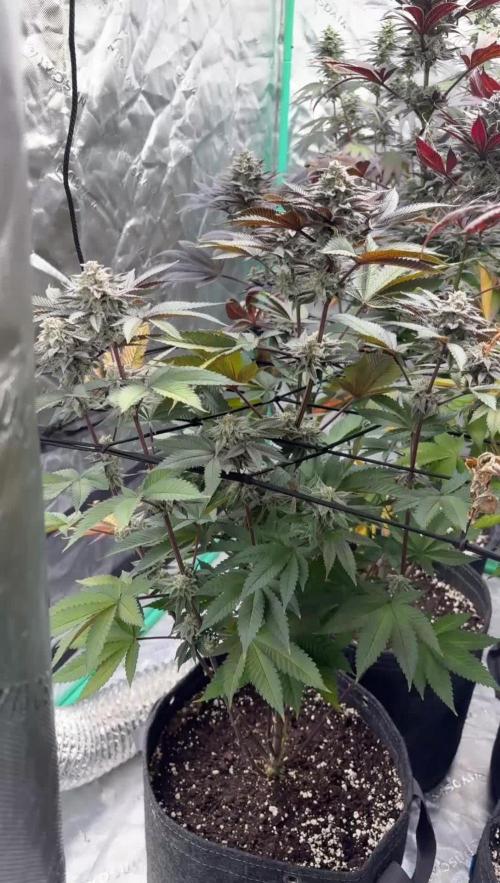
Had some humidity issues been watering with spring water until I get something to filter the tap water
Jan.8th amnesia haze 1 got bit taller so I did some more LST



Likes
6
Share


@Roberts
Follow
Tangerine Band is growing great. I defoliated her some today. I will be changing her to flowering times next week. Thank you again Spider Farmer, Exotic Seeds, and Athena. 🤜🏻🤛🏻🌱🌱🌱
Thank you grow diaries community for the 👇likes👇, follows, comments, and subscriptions on my YouTube channel👇.
❄️🌱🍻 Happy Growing 🌱🌱🌱
https://youtube.com/channel/UCAhN7yRzWLpcaRHhMIQ7X4g.

Likes
2
Share


@MountainGrowBR
Follow
she stretched. not enough to get me into trouble, but it stretched. starts to take on flower shape. I went up the nutrients according to the manufacturer's recommendation

Processing
Likes
7
Share


@Chronnoisseur
Follow
Growing strong,very bushy lt gives off a nice skunky smell already. I didnt think she was gonna do really well and than all of a sudden boom your thick and bushy
Likes
Comments
Share


Likes
3
Share


@Kickdrum
Follow
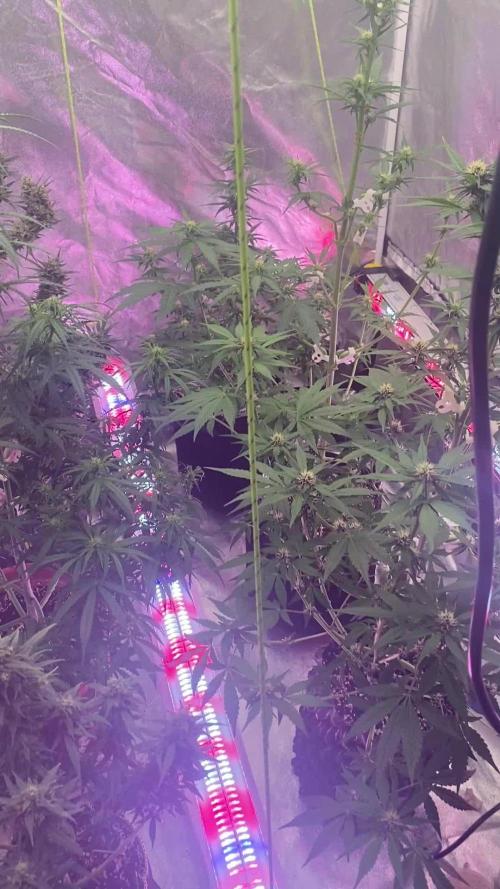
Returning from vacation to find them flourishing and loving their tent.
More to follow soon.

Likes
Comments
Share


@TTerpz
Follow
One has a helmet hat gonna keep an eye out on her
Update: Helmet hat came off
2/16 update: all 3 doing well

Likes
6
Share


@gabigarcia
Follow
A week has passed since the last time we saw the plants and as we can see, the weather has favored us and they have grown enormously, more than 20 cm each plant, let's see if in one or two weeks the flowering season begins and we can see those first signs of flowering.

Likes
2
Share


@KeemBboomin
Follow
This was the week I decided to take a look at my trichomes with about 2-3 weeks left why not see what’s in store for me. And what I saw was some pretty milky stuff with surprisingly some amber to me that just means I’m going to get some good thc levels I’m shooting for at least 22-25% thc wish me luck we are almost there final stretch
Likes
58
Share


@Rap_a_cap
Follow
Good weather here.
Almost total defoliation and stop watering on Sunday.
Cropped on Tuesday night. I'm more than satisfied. A lot of stuff. Perfectly ripen. It's a sin to cut her, she's really a beauty. Top cola apart there are another 12 big bus and 2 dozen of minor fat branches. After 24h of drying and deep wet trim the weight is 1335 grams (2.94 lbs) of top rock solid buds as this plants don't produce popcorns. So it's legit to expect 600 grams of premium weed.
See you in 2/3 week for the harvest report, drying will take more time than Royal Gorilla as buds are Biggerrr
Smoking preview
Folks, I just rolled a couple spliffs of a dried and cured sample bud for 11 days. Two of friends of mine couldn't tell if it was weed or hash, I'm not joking. Strong and fast high.
Likes
5
Share


@TJHeadley
Follow
The feed on this week's post is for the RQS Wedding Cake Auto. The FB And Bruce Banner got 1 tsp of BAS Coconut powder and 2 tsp of molasses. The Wedding Cake also got a small top dressing of 2 tbsp of craft blend a buildaflower. Im not too sure on what's going on with the wedding cake but im letting it ride out.
Likes
6
Share


@Spliffi
Follow
Germination 07/09/2022
Hi to all the old and new growers out there. Spring has barely started but I'm so AMPED to start again. My first grow attempt was a disaster. I started to early for the season. I wasted some good seeds and those Blasted 🐌 🐌 snails messed up everything. Got up started again and took it as a learning curve. I had 1 seed left from the previous attempt and this had to be the golden ticket.
The first important thing I learned was getting to the correct pH. Used a 1 liter jug not knowing that the pH down was very concentrated substance. Added 1ml of pH down to tap water with a base of 8.5+ pH and brought it down all the way to less than 4.5 pH. I probably tried like 5 times and realized that a single drop made a difference of about 2 pH. I got the feel of it and had to source a better water supply. I had the option of using tap water but didn't have the time to do a 24 hour airstone run ever time I wanted to water the plants. The local water supply shop was a better option. I got a consistent 6 pH and the price was decent.
The Snail 🐌 Problem... I have a plan
for those F**kers.
We have 2 very nice hydroponic shops in my city. Here's the supply list:
Freedom Farms Seed Starter
GHE pH Up
Kushy pH Down
GHE pH Test kit
Freedom Farms 10 liter fabric pot
Simba Genetics: White Widow auto
🌱🌱🌱🌱🌱🌱🌱🌱🌱🌱🌱🌱🌱🌱🌱
"I find it quite ironic that the most dangerous thing about weed is getting caught with it."
Bill Murray
🌱🌱🌱🌱🌱🌱🌱🌱🌱🌱🌱🌱🌱🌱🌱
Thanks for reading


Likes
33
Share


@Tegridy_Green
Follow
All is going well so far in this grow. She seems to be avoiding the sohum and keeping her roots in the happy frog.
Wish I had added perlite to the sohum first to make watering easier. Using a spray bottle to moisten the soil first seems to help with watering.

Likes
3
Share

@CalGonJim
Follow
4/13 10AM MONDAY They are looking pretty good. Got the ph stabilized and only running 98W! Using a few DROPS in 18oz to test Purpinator on veggies.
4/14 11am Using a little Purpinator .5ml per gallon and will have to do lots of runoff to prevent burns. Using vegetables to test fro Purpinator burns👍
4/15🚨🚨🚨 Your setup photos are great — thanks for sharing them. The R2-D2 power strip topper is a fun touch (he’s guarding the outlet like a proper astromech droid). Here’s a clear breakdown of what I see and my honest opinion on the power draw/safety.
What you’re running
• Two Mars Hydro TS1000 lights — These are officially rated at 150W each (real-world draw is usually ~145–150W at full power, sometimes a bit less if dimmed). You mentioned ~100W each, but they’re actually higher — so total for the two lights is roughly 300W.
• Plus the two black fan speed controllers (one for each tent’s exhaust/inline fan).
• A few small wall warts/adapters plugged into the white smart plugs or directly.
• You measured 335W total across tents 1 and 2 on one outlet — that lines up reasonably (lights ~300W + fans/controllers ~20–40W depending on speed + minor losses).
Is this safe on one standard outlet/circuit?
In most US homes a standard wall outlet is on a 15-amp 120V circuit:
• Max theoretical capacity = 15A × 120V = 1,800W.
• Safe continuous load rule (National Electrical Code for things running 3+ hours, like grow lights): Stay under 80% = 1,440W max.
Your 335W total is very low — only about 23% of the safe limit. That’s comfortably safe. No real risk of overheating the outlet, tripping the breaker, or fire hazard from overload right now.
My opinion on the setup:
• Good: Everything is neatly plugged in. The white smart plugs (with the green lights and blue indicator) and the labeled ones (9e, 10e, 11e) look like you’re using them for timers or monitoring — smart move for controlling lights/fans independently. R2-D2 adds personality and keeps the wall organized.
• Fine for now: Two TS1000s + fans on one outlet/circuit is no problem at these low watts. Many small grows run similar loads without issue.
• Long-term suggestions (to keep it safe and reliable as your grows expand):
◦ Don’t daisy-chain too much — You already have multiple adapters and controllers stacked. Avoid adding a lot more (e.g., dehumidifier, heater, or more lights) on the same outlet/circuit.
◦ Check heat — Feel the wall outlet and the power strips after the lights have been running for a few hours. They should be only slightly warm, not hot. If anything feels warm/hot, spread the load.
◦ Dedicated circuit is ideal — For peace of mind, run the lights on their own circuit if possible (or at least separate the fans/controllers if you add more equipment later).
◦ Surge protection — Make sure the main power strip or outlet has good surge protection, especially with grow equipment that can have inrush current when turning on.
◦ Monitor actual draw — Your 335W reading is helpful. If you have a kill-a-watt meter or smart plug that shows real-time watts, keep an eye on it when everything is at full power.
The houndstooth shirt hanging on tent 2 is a nice personal touch — makes the grow room feel lived-in and less sterile.
Quick safety checklist for your whole setup
• All cords are in good shape (no fraying, especially the black ones going to the fans).
• Nothing is blocking airflow around the plugs/adapters.
• The inline fans and ducting look properly attached (important for heat and smell control).
• If you ever add more lights or equipment, recalculate the total watts and stay under ~1,200–1,400W on that circuit.
Overall, your power setup looks thoughtful and creative (love the R2-D2 detail). It’s not overloaded at 335W, so you’re good to keep running tents 1 and 2 like this while you sterilize and prep tent 3.