The Grow Awards 2026 🏆
Likes
Comments
Share
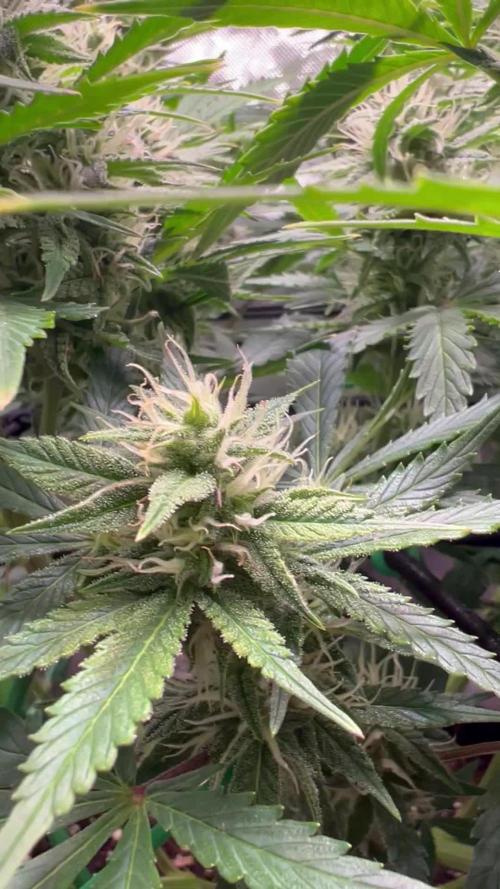
She’s got a lovely gassy sweet smell.
Likes
9
Share
Buongiorno amici della CampaCavallo 💚💅🏻🔥😍 ... In questo week (8.3.23),il team di disinfestazione CampaCavallo si è dato da fare per salvare il salvabile dai maledetti spider mites 🕸️... Ringrazio molto @MiyaguyOKPolilla per i consigli BIO che mi ha dato, ma purtroppo non avendo a disposizione ne chiodi di garofano, ne bastoncini di cannella, mi sono dovuto arrangiare con la canna dell'acqua💦💦💦 Abbiamo preso ogni pianta, portata all esterno della grow box, e con un bel getto d acqua abbiamo letteralmente spruzzato energicamente le piccole... Tutto perché il merda di spider mites odia l acqua👍🏽 abbiamo anche rimosso le grandi foglie compromesse o troppo infestate.... Speriamo di non averle stressate troppo.... Ma é stato fatto tutto per il loro/nostro bene💚🙏🏼👍🏽 ... Abbiamo anche trattato la grow box con una miscela di acqua e candeggina per disinfettare come si deve🚑 Le foto mostrano il risultato. Ci piacerebbe molto sapere cosa ne pensate... Consigli, critiche... State sintonizzati 👍🏽💚💯👌 BUONA SPANNABIS 2023 A TUTTI I GROWER 👏🏽💚💅🏻🔥😍💯👯‍♀️
Likes
18
Share
Green light is radiation with wavelengths between 520 and 560 nm and it affects photosynthesis, plant height, and flowering. Plants reflect green light and this is why they appear green to our eyes. As a result, some growers think that plants don’t use green wavelengths, but they actually do! In fact, only around 5 – 10% of green light is reflected from leaves and the rest (90 – 95 %) is absorbed or transmitted to lower leaves [1]. Green wavelengths get used in photosynthesis. Chlorophyll pigments absorb small amounts of green wavelengths. Light that doesn’t get absorbed is transmitted to leaves that are shaded out from direct light. This means that leaves at the bottom of the canopy get more green light than leaves at the top. A high proportion of green wavelengths compared to other colors tells lower leaves that they are being shaded out, so they are able to react accordingly. Lower leaves may react by opening or closing their stomata or growing longer stems that help the leaves reach brighter light [1, 2, 3]. When it comes to growing cannabis, many cultivators are interested in the quality of light used for the flowering stage. In many plants, flowering is regulated by two main photoreceptors: cryptochrome and phytochrome. Both photoreceptors primarily respond to blue light but can also respond to green, although to a lesser extent. Green can accelerate the start of flowering in several species (although cannabis has yet to be tested) [1, 4, 5]. However, once flowering has begun, it’s important to provide plants with a “full spectrum” light that has high amounts of blue and red light, and moderate amounts of green, in order for photosynthesis to be optimized. Green light mediates seed germination in some species. Seeds use green wavelengths to decide whether the environment is good for germination. Shade environments are enriched in green relative to red and blue light, so a plant can tell if it is shady or sunny. A seed that senses a shaded environment may stay dormant to avoid poor growing conditions [1]. Some examples of plant species where researchers have documented this response are: ryegrass (a grass that grows in tufts) and Chondrilla (a plant related to dandelion) [1, 6]. Although green wavelengths generally tell plants NOT to germinate, there are some exceptions! Surprisingly, green wavelengths can stimulate seed germination in some species like Aeschynomene, Tephrosia, Solidago, Cyrtopodium, and Atriplex [1, 6, 7]. Of course, light is not the only factor affecting seed germination – it’s a combination of many factors, such as soil moisture, soil type, temperature, photoperiod, and light quality. When combined with red and blue light, green can really enhance plant growth [1, 8]. However, too much green light (more than 50% of the total light) can actually reduce plant growth [8]. Based on the most current research, the ideal ratio of green, red, and blue light is thought to be around 1:2:1 for green:blue:red [9]. When choosing a horticultural light, choose one that has high amounts of blue and red light and moderate amounts of green and other colors of light. Not many studies can be found about the effect of green light on cannabis growth or metabolism. However, if one reads carefully, there are clues and data available even from the very early papers. Mahlberg and Hemphill (1983) used colored filters in their study to alter the sunlight spectrum and study green light among others. They concluded that the green filter, which makes the environment green by cutting other wavelengths out, reduced the THC concentration significantly compared to the daylight control treatment. It has been demonstrated that green color can reduce secondary metabolite activity with other species as well. For example, the addition of green to a light spectrum decreases anthocyanin concentration in lettuce (Zhang and Folta 2012). If green light only reverses the biosynthesis of some secondary metabolites, then why put green light into a growth spectrum at all? Well, there are a couple of good reasons. One is that green penetrates leaf layers effectively. Conversely red and blue light is almost completely absorbed by the first leaf layer. Green travels through the first, second, and even third layers effectively (Figure 2). Lower leaf layers can utilize green light in photosynthesis and therefore produce yields as well. Even though a green light-specific photoreceptor has not yet been found, it is known that green light has effects independent from the cryptochrome but then again, also cryptochrome-dependent ones, just like blue light. It is known that green light in low light intensity conditions can enhance far red stimulating secondary metabolite production in microgreens and then again, counteracts the production of these compounds in high-intensity light conditions (Kim et al. 2004). In many cases, green light promoted physiological changes in plants that are opposite to the actions of blue light. In the study by Kim et al. blue light-induced anthocyanin accumulation was inhibited by green light. In another study it has been found that blue light promotes stomatal opening whereas green light promotes stomatal closure (Frechilla et al. 2000). Blue light inhibits the early stem elongation in the seedling stage whereas green light promotes it (Folta 2004). Also, blue light results in flowering induction, and green light inhibits it (Banerjee et al., 2007). As you can see, green light works very closely with blue light, and therefore not only the amount of these two wavelengths separately is important but also the ratio (Blue: Green) between these two in the designed spectrum. Furthermore, green light has been found to affect the elongation of petioles and upward leaf reorientation with the model plant Arabidopsis thaliana both of which are a sign of shade avoidance symptoms (Zhang et al. 2011) and also gene expression in the same plant (Dhingra et al. 2006). As mentioned before, green light produces shade avoidance symptoms which are quite intuitive if you consider the natural conditions where the plants grow. Not all the green light is reflected from the highest canopy leaves in nature but a lot of it (50-90%) has been estimated to penetrate the upper leaves at the plant level ((Terashima et al., 2009; Nishio, 2000). For the plant growing in the understory of the forest green light is a signal for the plant of being in the shade of a bigger plant. Then again, the plants growing under unobstructed sunlight can take advantage of the green photons that can more easily penetrate the upper leaves than the red and blue photons. From the photosynthetic pigments in higher plants, chlorophyll is crucial for plant growth. Dissolved chlorophyll and absorb maximally in the red (λ600–700 nm) and blue (λ400–500 nm) regions of the spectrum and not as easily in the green (λ500–600 nm) regions. Up to 80% of all green light is thought to be transmitted through the chloroplast (Terashima et al., 2009) and this allows more green photons to pass deeper into the leaf mesophyll layer than red and blue photons. When the green light is scattered in the vertical leaf profile its journey is lengthened and therefore photons have a higher chance of hitting and being absorbed by chloroplasts on their passage through the leaf to the lower leaves of the plant. Photons of PPFD (photosynthetic photon flux density) are captured by chlorophyll causing an excitation of an electron to enter a higher energy state in which the energy is immediately passed on to the neighboring chlorophyll molecule by resonance transfer or released to the electron transport chain (PSII and PSI). Despite the low extinction coefficient of chlorophyll in the green 500–600 nm region it needs to be noted that the absorbance can be significant if the pigment (chlorophyll) concentration in the leaf is high enough. The research available clearly shows that plants use green wavelengths to promote higher biomass and yield (photosynthetic activity), and that it is a crucial signal for long-term developmental and short-term dynamic acclimation (Blue:Green ratio) to the environment. It should not be dismissed but studied more because it brings more opportunities to control plant gene expression and physiology in plant production. REFERENCES Banerjee R., Schleicher E., Meier S. Viana R. M., Pokorny R., Ahmad M., Bittl R., Batschauer. 2007. The signaling state of Arabidopsis cryptochrome 2 contains flavin semiquinone. The Journal of Biological Chemistry 282, 14916–14922. Dhingra, A., Bies, D. H., Lehner, K. R., and Folta, K. M. 2006. Green light adjusts the plastic transcriptome during early photomorphogenic development. Plant Physiol. 142, 1256-1266. Folta, K. M. 2004. Green light stimulates early stem elongation, antagonizing light-mediated growth inhibition. Plant Physiol. 135, 1407-1416. Frechilla, S., Talbott, L. D., Bogomolmi, R. A., and Zeiger, E. 2000. Reversal of blue light -stimulated stomatal opening by green light. Plant Cell Physiol. 41, 171-176. Kim, H.H., Goins, G. D., Wheeler, R. M., and Sager, J. C. 2004.Green-light supplementation for enhanced lettuce growth under red- and blue-light emitting diodes. HortScience 39, 1617-1622. Nishio, J.N. 2000. Why are higher plants green? Evolution of the higher plant photosynthetic pigment complement. Plant Cell and Environment 23, 539–548. Terashima I., Fujita T., Inoue T., Chow W.S., Oguchi R. 2009. Green light drives leaf photosynthesis more efficiently than red light in strong white light: revisiting the enigmatic question of why leaves are green. Plant & Cell Physiology 50, 684–697. Zhang, T., Maruhnich, S. A., and Folta, K. M. 2011. Green light induces shade avoidance symptoms. Plant Physiol. 157, 1528-156. Wang, Y. & Folta, K. M. Contributions of green light to plant growth and development. Am. J. Bot. 100, 70–78 (2013). Zhang, T. & Folta, K. M. Green light signaling and adaptive response. Plant Signal. Behav. 7, 75–78 (2012). Johkan, M. et al. Blue light-emitting diode light irradiation of seedlings improves seedling quality and growth after transplanting in red leaf lettuce. HortScience 45, 1809–1814 (2010). Kasajima, S., et al. Effect of Light Quality on Developmental Rate of Wheat under Continuous Light at a Constant Temperature. Plant Prod. Sci. 10, 286–291 (2007). Banerjee, R. et al. The signaling state of Arabidopsis cryptochrome 2 contains flavin semiquinone. J. Biol. Chem. 282, 14916–14922 (2007). Goggin, D. E. & Steadman, K. J. Blue and green are frequently seen: responses of seeds to short- and mid-wavelength light. Seed Sci. Res. 22, 27–35 (2012). Mandák, B. & Pyšek, P. The effects of light quality, nitrate concentration and presence of bracteoles on germination of different fruit types in the heterocarpous Atriplex sagittata. J. Ecol. 89, 149–158 (2001). Darko, E. et al. Photosynthesis under artificial light: the shift in primary and secondary metabolism. Philos. Trans. R. Soc. B Biol. Sci. 369 (2014). Lu, N. et al. Effects of Supplemental Lighting with Light-Emitting Diodes (LEDs) on Tomato Yield and Quality of Single-Truss Tomato Plants Grown at High Planting Density. Environ. Control Biol. 50, 63–74 (2012).
Likes
23
Share
Currently on cruise control with these Purple Punch, doing a little bit of training to fill out the space better! They are growing quite fast, they are liking their new preamended coco home. Vegging for 2-3 more weeks till we flip to flowering! They are smelling like the powdered kool aid. Though these will taste better then the powdered kool aid, don’t know how i like that as a kid! Too much sugar for me now, but let’s see the SUGAR on these buds! End of the Week update: Got some booming growth and some spider mites... spraying with neem oil every 3 days. Moved middle F2 to a open spot in the tent so it can grow out more, they all started to cram up in the 3x1. Giving them their last veg ACT before flipping to flower! Which includes neem seed meal, bat guano, worm poop, uprising grow
Likes
7
Share
Miss Purple Mango Kush is looking really really good imo. She has grown on some nice big and dense buds. She smells super nice , and is almost ready for harvest. I will keep flushing her for the next couple of days, and keep checking with my lens until I want to cut her down.
Likes
52
Share
🍮 🤤 ❤️ 🍮 🤤 ❤️ 🍮 🤤 ❤️ 🍮 🤤 ❤️ 🍮 🤤 ❤️ DAY 72 SHE SMELLS LIKE A FRENCH BAKERY, GUYS! JUST NOT FROM THIS WORLD 🤤 Watered with 0.5ml/L Grow + 3ml/L Bloom 💧 DAY 75 Watered with 0.5ml/L Grow + 3ml/L Bloom + Enzym+ 💧 🌱 🙏 Grower love!!! _________________________________________________________________________ https://hypnoseeds.com/product/cream-brulee-auto/ Cream Brulee Auto Description We love our Cream Brulee and wanted to create an even more special variety so everyone could harvest it faster. Introducing Cream Brulee Auto! After a meticulous process of crossing our exemplary variety with our autoflowering genetics of the highest quality; it is ready to shine and captivate all grow spaces. Equally to lovely feminized Indica-leaning sister, Cream Brulee Auto will take over your heart. You’ll want to keep it in constant rotation. In just about 8 weeks it goes from being a seed to a bountiful harvest of sweet and creamy cannabis from the irresistible dessert we know and love. Appearance and Grow Tips While Cream Brulee Auto has the same quality and potency as its feminized cannabis predecessor, what stands out is its speed to finish and enormous dense colas. These magical cannabis seeds take around 8 weeks from seed to harvest and can produce up to 500 grams (per plant) of pure happiness. Indica lovers won’t be able to look away, their growth speed will put anyone in a trance! Make sure to provide this variety with at least 18 hours of light throughout the entire grow and decent pot size, around 3 gallons minimum, so it can grow to its full potential. Due to its ultra-fast autoflowering genetics, we recommend planting the previously germinated seed directly into the final pot to avoid stressing or damaging the roots. LST is always a good idea to increase performance and control any height problems you want to avoid. Administer nutrients at 1⁄4 of the recommended dose and then gradually increased as the plant grows and reacts. With optimal conditions and treatment, this strain will bless you with beautiful buds of up to 19% THC. Flavor and aroma Thanks to its special lineage, Cream Brulee Auto is absolutely packed with the same delicious flavors and aromas. Its autoflowering magic makes it even easier and quicker to grab your delicious dessert cannabis buds. Notes of cream, caramel, together with vanilla, buttered nuts, and coffee will leave stunned even the most experimental cannabis connoisseur. Effects After the first delicious puff, you will be in a dream state, deeply relaxed and pleasantly euphoric. Its calming effect makes it better to consume it at night to help you sleep. Similarly, during the day if you are looking for a half-conscious state Cream Brulee Auto will keep you upbeat and happy. 😍 ________________________________________________________________________________ SETUP: ° Mars Hydro TS1000 Version 2022 https://www.mars-hydro.com/all-products/ts-1000-led-grow-light Thanks @coco!! ❤️ ° Zelsius 60x60 cm (2x2ft) ° 2x 5W Fans ° PrimaKlima EC 125 400/240cm³/h exhaust fan & Carbon Active Granulate 240cm³/h ° Biobizz Grow + Bloom ° tap water EC 0,26uS upgraded to EC 0,5 with PlantMagic MagneCal - pH 8, nutrient solution downgraded to pH 6,5 with Advanced Hydroponics Minus Bloom ° BioEnhancer every 2 weeks instead of feeding ° from week 4 in the same container Aptus Enzym+ once a week ° Organic tomato soil + perlite 🍮
Likes
51
Share
Hello, Both ladies doing very well now. Wheater changed for now, and there is much more humidity in the air, as less dry burning sun. Had a quick communication with Dutch Passion about the leafs that tend to fold up. They are never nice flat out. But they assured me there is nothing wrong going on. And the plant looks very healthy!! Working on the lady in the greenhouse-ish shed, i wanted to bend the top of the plant, but its allready very stiff. So i managed to break it. 😅👈🤪👈😒👈 There was luckely allready a support attached. And it didnt break all the way. See pics. Its a FIBI, fuck i broke it. 🙌🤣 So its restoring good and the top hasnt started to faint down. So, all good!!! The lady outside is doing very good now, she starts to bush-up. Shes free to grow so, i only did a few chiroprac on the main stem, she can flourish as she supposed to by nature. Thats about it, for this week. Did some succeeded bends as well, so check out the other diaries 2. Grow safe 🍀🍀🍀
Likes
53
Share
Welcome to Bud Boutique Grow Diary - really appreciate all your love and support :) Dont forget to check out my other current grows! 🗓️ This Week: - Day 52: the end is near - Day 53: Trichomes check from #1 and #2 - looking super good almost all cloudy, a few amber and clear. perfect point to chop - Day 54: this one is finished, let's chop them both #1 & #2 !! ✂️✂️✂️ - both phenos got still super purple beautiful leaves - now its time to dry inside the tent at about 60%rh and less than 20°C/68°F trying to get it even lower for the next 10-14 days ___________________________________________ --- 🌱 Strain (Sponsor) --- 🏷️ P.C.R. by Art Genetix https://www.artgenetix.world/product-page/p-c-r --- 🥗 Nutrients and Feeding (sponsored by APTUS: APTUS Ambassador) --- 🍸 APTUS: full nutrient schedule extreme -- Regulator, N-Boost, P-Boost, CaMg-Boost, K-Boost, Allin1 Liquid, Startbooster, Topbooster, Enzym+ every feeding -- Fulvic-Blast, NutriSpray as Foliar each once a week 🔗 https://aptus-holland.com/ --- ♻️ Grow Control (Sponsor) --- TROLMASTER: TENT-X + LM14 Light Adapter to dim/sunrise/sunset lights + Temp & rH Sensor all remote on App 🔗 https://www.trolmaster.eu/ --- 🚿 PetraGrow (Sponsor) --- CannaFogger Foliar Spray 🔗 https://www.petratools.com/product/petragrow-cannafogger-atomizer-new-mini-fogger --- 🏭 Grow Setup --- 💡LUMATEK Zeus Pro 600 * 🏠🌿 Indoor: Homebox 120x120x200cm (4x4) * 📐🌀 PrimaKlima exhausting Fan 1180m3/h (running on 60-80%) * 🌀 Can Light Filter 800m3/h & 1x Fanbox 1x Dyson fan for Air circulation 🔗 https://lumatek-lighting.com/zeus-600w-pro-29/ 🔗 https://primaklima.com/de/shop/ventilatoren-de/ec-ventilatoren/pk160ec-tc/ 🔗 https://canfilters.com/products/filters/ All Likes and comments are highly appreciated!!! 👨‍🌾 don't forget to check out my Instagram for daily educational content: budboutiquee - Bud Boutique
Likes
5
Share
After two days to settle in soil I began alternating adding nutrients every other watering.
Likes
Comments
Share
Likes
2
Share
@kens1
Follow
Getting rid of more yellowish leaves, I dont know is it because of the extreme heat or the ppm but yeah at least the plant is HUGE haha
Likes
10
Share
@Cannatose
Follow
Drinking everyday everyone looking good and healthy
Likes
4
Share
3x3 Clone Tent (Frosted Gelato, G-41, Frozay Pie, Black Cherry Gas) - Organishield foliar IPM and Soil Program watering treatments. Top dressed using BuildAFlower, worm castings, and FF Fruit and Flower top dressing. Week 3 defoliation in flower. Adjusted scrog netting upwards 2-3" for continued plant structure support heading into week 3 flower. Combination of cold weather, low ph, and insufficient levels of mag/cal micronutrients. Gave clones a feeding of FF Beastie Bloomz with Cal/Mag to help with macro/micro nutrients. End of week update - more bud development stacking nicely with leaves beginning to turn a variety of colors mostly reds and purples. Beautiful. 2x4 Tent (Humboldt Seed Blueberry Cupcake/TH Seeds French Macaron) - Organishield foliar IPM and Soil Program watering treatments. Applied new 2x4 AC Infinity netting for scrog plant structure support. BBCC began showing signs of rust on older lower leaves. Combination of cold weather, low ph, and insufficient levels of mag/cal micronutrients. Adjusted ph and feed FF Beastie Bloomz with Cal/Mag. End of week update - BBCC recovering nicely after treatment and nutrient feeding. Continue to take advantage of flower stretch by fanning out growth filling in empty areas of the scrog netting. 2x2 Tent (Afgooey Autos) - first application of Organishield foliar IPM and Soil Program watering treatments. Need 2-3 more days before transplant into final three gallon grow bags. Cuttings are in day 12 using peat pellets. No visible sign of rooting yet. 2x2 UPDATE: Transplanted three Afgooey Autos into 3 gallon fabric bags with FF Happy Frog, Light Warrior, and Natures Living Soil for autos and Mykos for roots. Two days later, the plants are thriving. Day 13 and cuttings beginning to show first signs of root development in peat pellets. Continue to mist and monitor for next two days before transplanting into dixie cups. End of week update - WE HAVE ROOTS. Continued vibrant growth of transplanted autos. Because of space restrictions and volume of combined grows, I will top autos in the next few days. Not normally recommended, but I have topped autos previously and if done early enough the females should recover fully prior to flowering.
Likes
8
Share
Likes
32
Share
A really big bushy tree that makes me smile every time I look at her.. Noticed caterpillars are wrapping themselves in sugar leaves of bud sites and eating through the centre, seen and removed 3 of them so far..luckily I have some Bacillus Thuringiensis on hand to spray them so hopefully that will do its job and kill the buggers. Can't believe its still growing. Its outgrown my 3 yr old jackfruit tree now. Now I have a huge praying Mantis on my plant.. hopefully she will cleanup my bug problem.
Likes
16
Share
Wednesday 27.04.22 Day 1 Recieved package and placed the seeds in water. 6 coco pellets are soaking in a mild root solution. Tuesday 3.05 Day 6 All seeds have sprouted, transplant sometime this week.
Likes
46
Share
@Dreadnug
Follow
Laid out the Srog nets with intention to change the light setting next week. Added pre-flower nutes as well as a 1" top dress - with some added nutrient mix. Thoroughly watered and ready to start training. Plant #1 - Super thick/compact, and SCROG will be a bitch. Plant #2 - More lanky but 3 weeks behind its sister. Going to go to flower as it does have my 16 bud sites.
Likes
14
Share
@Chubbs
Follow
420FASTBUDS FBT2102 WEEK 3 These two are splitting images of one another. They are staying short but stacking amazing with side branches. Still showing no signs of nute issue's so I'm starting to brew a molasses tea to feed them in a coupe days to get the microbes in the soil activated. It'll be something different besides the ph'd water they've been getting up to this point. Over all temps and humidity have been great and starting to cool off a little. Happy Growing