


Likes
Comments
Share


@mikheil007
Follow
Vanilla Latte is very special strain for me: I've never grown the plant like this: thank you Humboldt Seed Company for such a good job



Likes
2
Share


@High_Grade_Dadli
Follow
Didn't bother with the defoliation this week....maybe this upcoming week let's see how she takes to the food first😎
Likes
79
Share


@DogDoctorOfficial
Follow
Week 9: Navigating the Path to Harvest!
Greetings once again, fellow cultivators! As we journey deeper into the heart of our botanical adventure, Week 9 brings us closer to the long-awaited harvest of our beloved Epsilon F1. In this week's installment, we dive into the intricacies of nutrient management and the final stages of flower development.
Our Epsilon F1 stands tall and proud, a testament to the care and dedication lavished upon her throughout her growth journey. With each passing week, her beauty becomes more radiant, her buds more plump and resinous. It's a sight to behold, a testament to the magic of nature and the art of cultivation.
Ah, but this week brings a significant shift in our approach to feeding. We've made the bold decision to cut all additional nutrients, relying solely on Fluvic Blast and Enzym+, both trusted companions from the Aptus Holland lineup. Why, you ask? Because at this stage of the game, our focus shifts from nutrient uptake to nutrient utilization. Fluvic Blast, with its rich blend of organic acids and trace minerals, acts as a catalyst for nutrient absorption, ensuring that our Epsilon F1 can make the most of the resources available to her. Enzym+, on the other hand, plays a crucial role in breaking down organic matter, releasing valuable nutrients that might otherwise remain locked away in the soil. Together, these two powerhouses work in harmony to optimize nutrient availability and promote healthy, vigorous growth in the final weeks before harvest.
As we approach the culmination of our journey, let us not forget the lessons learned along the way. From the delicate balance of light and nutrients to the art of patience and perseverance, each day in the grow room has been a lesson in humility and gratitude. We owe a debt of gratitude to Royal Queen Seeds for providing us with the genetic masterpiece that is the Epsilon F1, and to Aptus Holland for crafting nutrients that have nourished our plant from seedling to harvest.
And so, as we bid adieu to Week 9 and prepare for the final stretch, let us take a moment to marvel at the beauty of our Epsilon F1 and the miracle of nature's creation. May her harvest be abundant, her buds potent, and her legacy enduring. Until next time, dear friends, happy growing!
#EpsilonF1HarvestJourney #Week9FinalStretch #BotanicalBeauty #RoyalQueenSeedsGenetics #AptusHollandNourishment
Genetics -Epsilon F1 @rqs_esp @royalqueenseedssp @rqsglobal
Food - @aptusholland @aptus_world @aptus_es @aptus_portugal @aptusbrasil @aptusplanttechaus @aptus_thailand @aptusplanttechnz @aptususa_official
LED @lumatekeu
Controls - @trolmaster.eu @trolmaster.agro @trolmaster.support
As always thank you all for stopping by, for the love and for it all , this journey of mine wold just not be the same without you guys, the love and support is very much appreciated and i fell honored and blessed with you all in my life
With true love comes happiness , Always believe in your self and always do things expecting nothing and with an open heart , be a giver the universe will give back to you in ways you could not even imagine so
#aptus #aptusplanttech #aptusgang #aptusfamily #aptustrueplantscience #inbalancewithnature #trueplantscience #rqs #ApoloMission #MoonHarvestAdventure #playwithlego #lego #legotime #legovideo #tothemoonandback
More info and complete updates from all my adventures can be found Link in the profile description
Friendly reminder all you see here is pure research and for educational purposes only
Growers Love To you All

Likes
7
Share


@HegauHillsFarmers_D23
Follow
Die RP 43 hat in dieser Woche begonnen die ersten richtigen Stempel zu bilden 👀
Auch der Stretch war in dieser Woche sehr stark ausgebildet, sie hat sich fast verdoppelt 🌱🍀 Ich hoffe sie geht nicht mehr arg zu lange in die Höhe 😏
Ich habe zusätzlich in dieser Woche die untersten Triebe entfernt und sie zwar lichter geschnitten ✂️
Aufgrund der Blütenbildung habe ich begonnen den Blütedünger anzupassen und Big-Bud sowie B52 ergänzt.💦
Sie wird langsam hungrig und benötigt die Nährstoffe.


Likes
10
Share


@Growmigos
Follow
Ich habe sie getoppt,hat kein stillstand gemacht und die seitentriebe schießen!! Sie hat sich in der letzten woche an volumen verdoppelt....
Likes
36
Share


@brownbae420
Follow
Day 74
- Wiz Stash - Flush with water - 1 week from chop
- Gorilla Cookies - Flush with water - 1 week from chop
- Gummi bears - getting fat - est. 3 weeks from chop
- Vibe: 😜
Day 50 - 3BOG x Samsquanch
- FLOWERING!
- No further LST
- Allowing her to grow
- Vibe: 😎

Likes
7
Share

@PhinolaGreen
Follow
Harvest
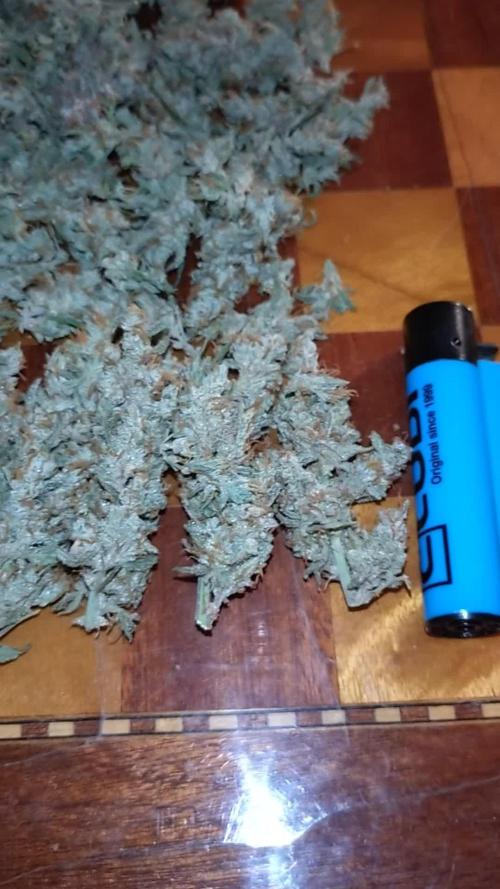
Ooooooh ihr glaubt ja gar nicht, wie Geil die Sorte beim Wet Trim gerochen hat. Es hat was von Tangie, dieses Moschusmäßige, schwer aber mit Noten von Schokolade und Weintrauben... Hätte ich nicht gedacht und echt toll geworden.
Mache nochmal ein Update, wenn die rdy to dry Trim ist 😄

Likes
1
Share


@Dr_Med_Rasen
Follow
Hey,
just wanted to show my little experiment. A selfmade grow bucket. Lemon Cherry Cookies Auto by Fastbuds. Plant is 4 Weeks old now, was in soil before in a 1L Pot. Changed to Hydro because other plants having trouble with my ph or magnesium problems. I dont know. Because my last grow in this bucket went pretty well i tried to give it another chance before i buy myself a better dwc system with more buckets.
👉Update Day 32
Removed 2 large leaves to give the shoots underneath more access to light.
Also added an AC Infinity 60x60 SCROG net and set it up in a way that the lower shoots give the upper ones more space, allowing them to get better light exposure.
------------German----------
Hey,
wollte nur mein kleines Experiment zeigen. Ein selbstgebauter DWC-Kübel, bestehend aus nem Airpot, nem Eimer und ner Aquariumpumpe mit Luftstein. Dazu noch n günstiger Füllstandsanzeiger von Amazon.
Lemon Cherry Cookies Auto von Fastbuds. Die Pflanze ist jetzt 4 Wochen alt, war vorher in Erde in einem 1L Topf. Bin auf Hydro umgestiegen, weil andere Pflanzen Probleme mit meinem ph-Wert oder Magnesiumprobleme hatten. Ich weiß es nicht. Da meine letzter Grow in diesem Bucket gut lief wollte ich DWC eine weitere Chance geben, bevor ich mir ein besseres System kaufe.
👉Update Tag 32
2 große Blätter mehr entfernt um den Trieben darunter mehr Licht zur Verfügung zu stellen.
Zudem noch ein AC Infinity 60x60 Scrognetz bekommen und so gespannt dass die unteren Triebe die oberen etwas freier stehen lassen und diese sich besser mit Licht versorgen können.
Likes
14
Share


@xxsinabitxx
Follow
Week six of flower I went in to the tent today an lots of new purple on the buds, couldn't believe how nice they look💚🤩, man does she look stunning, I'm in awe with these beautiful flowers👌🏻

Likes
12
Share

@Jardineiro_Br
Follow
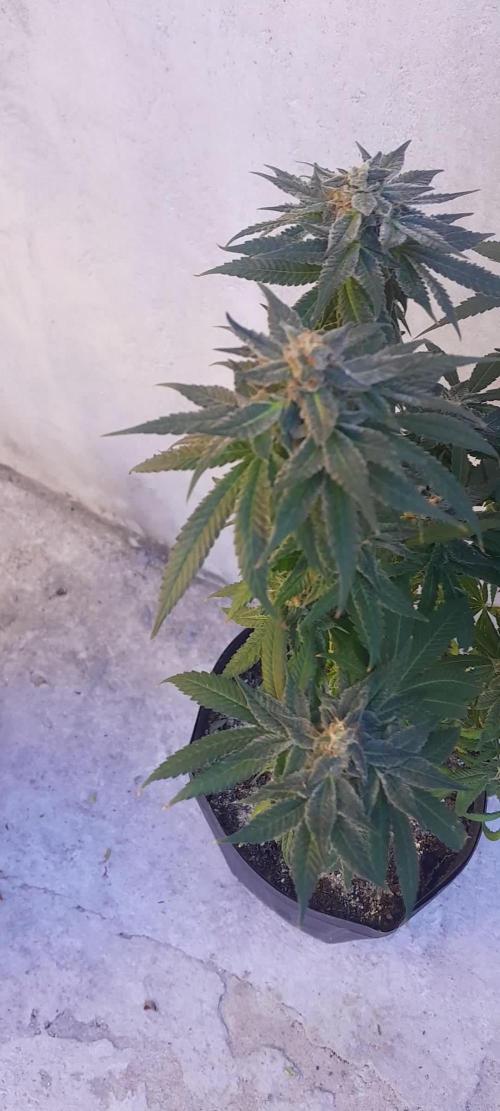
3 plantas colhidas e mais uma ou duas semanas colhidas as 2 que faltam, na verdade acho que uma semana colh uma e mais uma semana se precisar de outra. Duas primeiras plantas secas deram 45 gramas secas, ao final da secagem informamos os totais, me peso umidi foi estimado não pesei efetivamente. Duas plantas secas mais 40 gramas , ao todo até agora 85 gramas 4 plantas . Vou totalizar e quando a última sair ajusto os valores pois acho que ele vai mais de uma semana ainda.
Likes
6
Share


@HJM710024
Follow
This is my first ever grow and i have learned a lot and will forever be learning but one thing I’m going to do is upgrade my lights I made the mistake of going as cheap as possible when I should just shell out the money cause despite this genetic not being a big yeilder I’ve seen someone complain and say they wish they had an xl version when they got a whole oz from their plant I’m guessing I got like 4gs if I’m lucky but it was my mistake you live and you learn, much love❤️


Likes
7
Share


@Oktoberfest
Follow
19. Mai 2025
- Neues Video aus dem Zelt.
- Links nach rechts/Left to right: Sleepy Joe, Lava Cake, Runtz


Likes
39
Share


@CURATI_DA_SOLO
Follow
In realtà ho coltivato 2 semi di questa pianta una l'ho raccolta e seccata mentre un altra è ancora in flush e verrà raccolta tra 5-6 giorni. I fenotipi sono quasi identici e predilige un odore di gas e og! L'effetto è devastante molto narcotica e a breve pubblichero qualche foto di qualche estrazione a freddo! Spero che piacciano a qualcuno i miei lavori e che qualcuno di voi si possa ispirare a tutto questo.
Ringrazio ogni singola persona che è passata di qui a lasciare il suo like o commento e ricordo a tutti voi che potete trovarmi anche su Instagram 😘


Likes
38
Share


@Roberts
Follow
This fruity Pebbles started struggling, and had a ph bottom out. I did a solution change on both today. Everything has been looking good beside the last 48 hours. She should be good to go and bouce back immediately🤞🏻. Thank you I Love Growing Marijuana. 🤜🏻🤛🏻🌱🌱🌱
Thank you grow diaries community for the 👇likes👇, follows, comments, and subscriptions on my YouTube channel👇. ❄️🌱🍻
Happy Growing 🌱🌱🌱
https://youtube.com/channel/UCAhN7yRzWLpcaRHhMIQ7X4g

Likes
3
Share


@weedelicious
Follow
Today I switched the light to the flowering phase. The light is now on for 12 hours.
All plants were fertilized with Hesi Bio Bloom. The Tropical Marker and the Plurple Kush each received 2 liters of water, and the Pink Gelato received 1 liter. I trimmed off some large leaves. I hope they have a smooth transition into flowering.
Day 42:
The girls are growing well. The Purple Kush and Pink Gelato received 2 liters of water with Hesi Bio Bloom and some Biobizz Calmag today.
I dimmed the light to 60%. The Pink Gelato is catching up a bit, but is very small in comparison.
Day 43:
They're all still growing well. The tropical marker has been given 2 liters of water with hesi bio bloom and biobizz call mag. I've raised the lamp a bit higher. Here you can see how the stems of the plants have developed; the pink gelato has grown like crazy. The humidifier from Spider Farmer does a great job!
Day 47:
The girls look good; the first signs of flowering are visible on the Tropical Marker and the Purple Kush. I also defoliated them; it was definitely too much, and they thanked me a day later with preaching leaves. Unfortunately, the Pink Gelato didn't tolerate the topping well and only developed one shoot. I then removed this shoot. Afterward, I watered the Tropical and the Purple with 2 liters of water mixed with fertilizer and Calmag at a pH of 6.3. I set the ventilation to 50%.

Likes
8
Share


@mikearon
Follow
April 16th - Day 59 : Today is Spa day. Did a major defiliation throughout the whole tent. They're pretty much on autopilot from now on..
April 19th - Day 62 : Look at theses beauties. Reacting well to the heavy defoliation. The smell is getting a bit stronger. Didn't do much but water.


Likes
64
Share


@MadeInGermany
Follow
Hi everyone 🤗
Like the last few weeks, it has developed very well :-).
I am still considering whether to repot them again or leave them in the 11 L pot and put them in the flowering tent for the next 14 days 😃.
I think I will leave them in this pot and then I will switch 👍.
I'm curious to see what kind of bush she will be in the flower tent, and hope she leaves the other women some space 😅.
I wish you all a nice start into the new week, stay healthy 🙏🏻 and let it grow 🌱
You can buy this Strain at :
https://www.barneysfarm.com
Strain :
Blue gelato 41 clone from mother (Barney's Farm)
☝️
Genetics:
Blueberry x Thin Mint Girl Scout Cookies x Sunset Sherbert
👍
Vega lamp:
2 x
Todogrow LED HLG Quantum Board 100 W ( 200 W )
💡
Flower lamp:
2x Todogrow LED CXB3590 205 W = ( 410 W )
💡 ☝️
Soil : Canna Terra Professional +
☝️
Fertilizer:
Canna Terra Vega , Canna Terra Flores , Rizotonic, Cannazym, CANNA Boost, Pk 13/14, Canna Cal / Mag, Canna Ph - Grow, Canna Ph-Bloom
☝️🌱
Water:
Osmosis water mixed with normal water (24 hours stale that the chlorine evaporates) to 0.2 EG. Add Cal / Mag to 0.4 Ec Ph with Ph - to 6.0 - 6.3
💦 💧