Likes
Comments
Share
@Xpie77
Follow
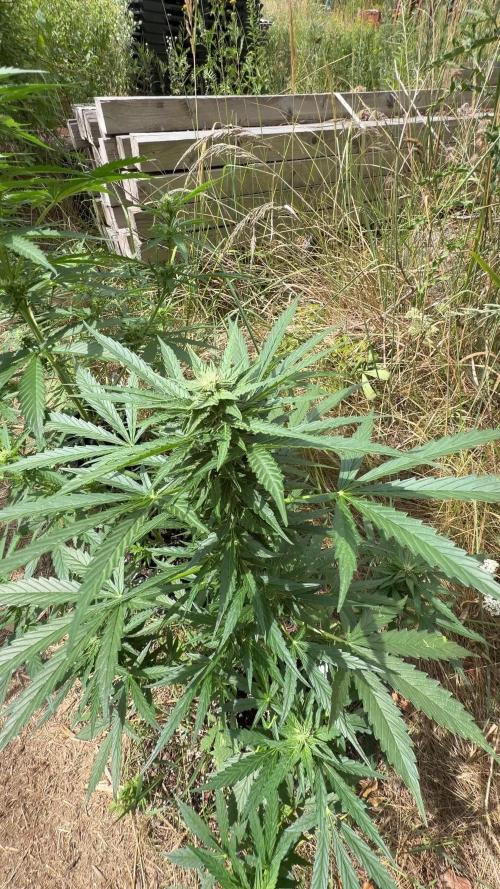
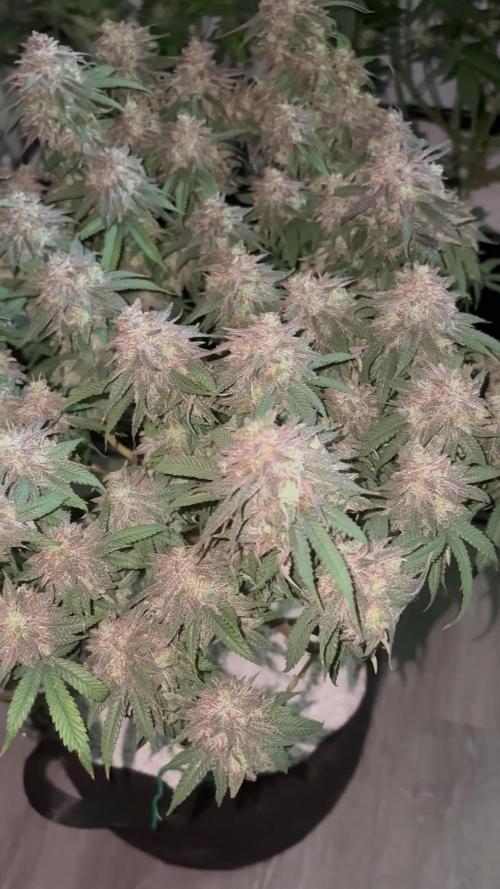
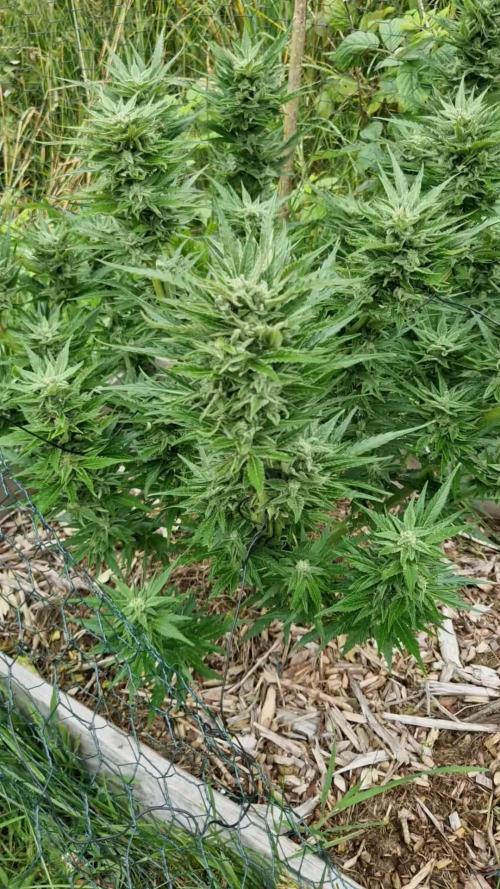
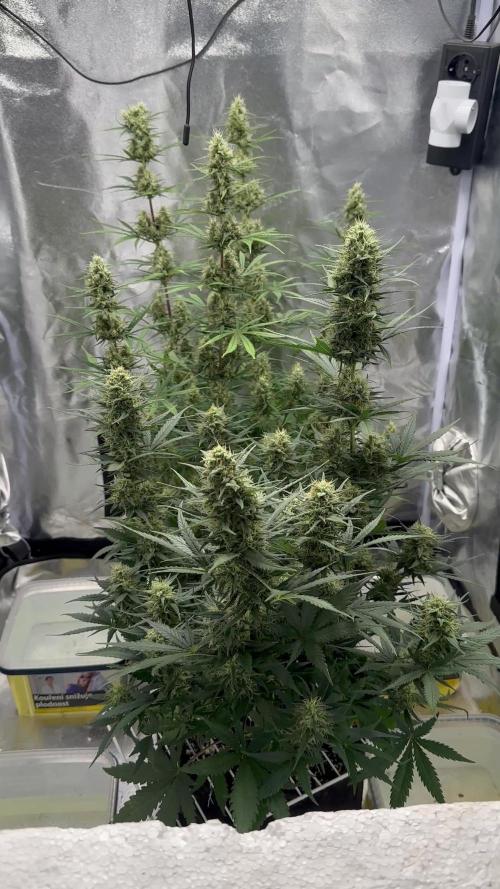
Almost the end of her cycle! Thanks to Luuk from Seeds Genetics Co. For the support and good communication. Really nice genetics they have. Give them a try. The results you can see here. Just a few words from me: i love to grow plants, i dont care if its marijuana or garden plants. I know a bit in what stage the plant needs. So im not this guy that is constant working with meters and science and showing this or that. The plants speaks for themselves. The plant needs her building block and i try my best to deliver this to lovely Marie Jane. So people do what you want to do, i do it my way and i only care about the end result. On this Diary there are some haters, im not going to give their names, but luckily they are the minority. For the rest, i really love this growers diaries, it really brings this community together and also its a big playground for the breeders, now we can see the results real life! With my grow, i have 2 phenotype. One with red in the buds, this one smells more punchy. The phenotype with some red leafs and more green buds have a more sweet smell. Both is packed with trychromes, really good for making bubble hash or Rosin... The buds are super big and dense. Mould resistance is very good! The buds are super sticky and she smells very like candy and red fruits. Im not a wine drinking person, so dont hold me on that one. She is easy to grow and will get big fast, so one week of 18/6 light is good enough for 60/80 cm plants🌿💚🍀 i have 3 gallon (11L) baskets Nutrition: im not a person who precisely mesures the food for the plants. As long the pH is correct, also im reading the plants. I always give les then is asked on the bottles. I also give weeks in advance the nutrition they need in the cycle, because plants need this to start. Smell: plant already have a nice smell, very punchy, forest fruits and sweet wood. Health: nice strong plants, will grow big and flower fast! -----------Red Wine-------- Red Wine was created by crossing Rozay F2 with Jet A. They are 2 very powerful aromatic Cali hybrids. This exclusive new Cali strain is a very strong and fast flowering indica-dominant strain. It has an aromatic, intoxicating and relaxing effect. That is comparable to enjoying a good glass of wine. Red Wine has an average flowering time of about 7-8 weeks when grown indoors. Outdoors it is ready fairly early, usually around the end of September. The yield is very good. Indoors she has an average yield of 450-650 gr/m². When growing outdoors, 600-800 grams can easily be achieved per plant. Red Wine has an aromatic scent that can be compared to a full red wine. Her full, purple-green buds are very compact with few leaves. This is very convenient when cutting the plants and saves a lot of time. Smoking this weed gives you a nice high with relaxing properties. The taste of Red Wine is very fruity sweet with an aroma of red grapes. Flowering time: 7 – 8 weeks Genetics: Rozay F2 x Jet A 30% Sativa, 70% Indica Plant height outside: 100 – 180 cm Outdoor harvest month: from June to October Yield indoors: 450 – 650 gr/m² Yield outdoors: 200 – 800 gr / plant THC: 25% Red Wine from Seeds Genetics Co. Link: https://seedsgenetics.nl/product/red-wine-gefeminiseerd/
Likes
3
Share
@Dysons12
Follow
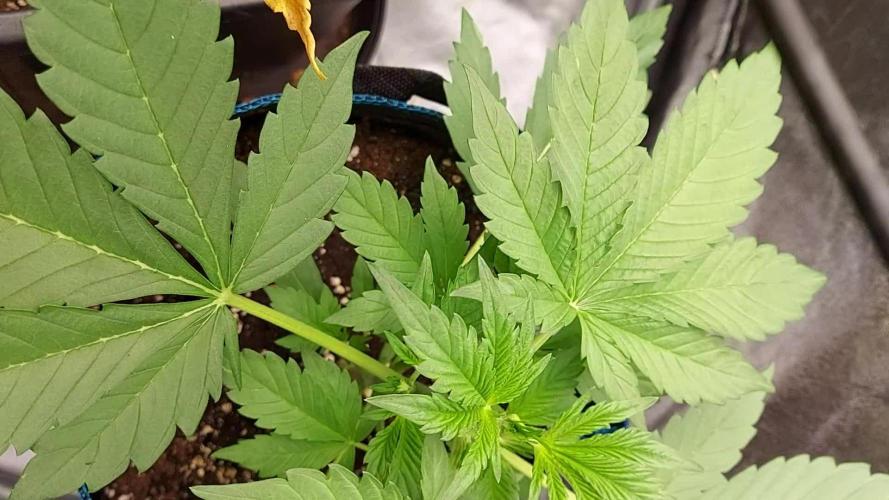
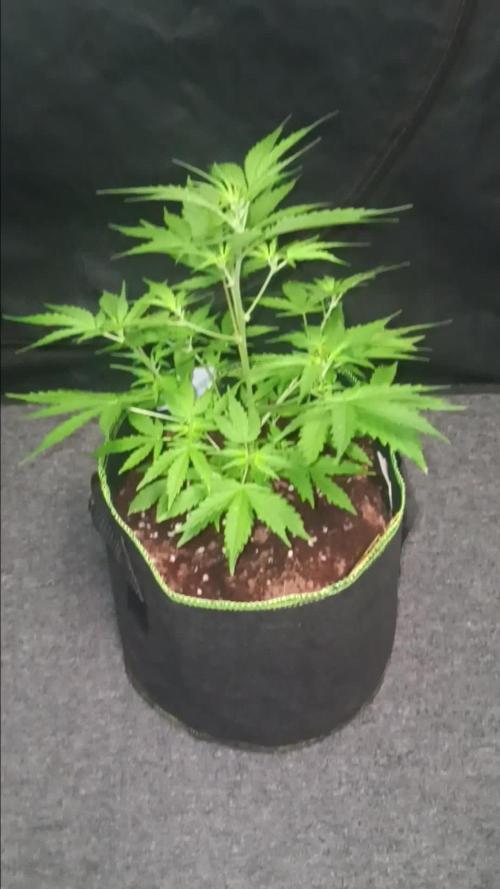
Day 7 i I transplanted the seedlings in jiffy’s to the DWC basket water level was “just” touching the bottom of the basket which meant there was 1mm- 2mm air gap between the water level and the jiffy’s. The high pressured air in the water to spit when air was released at the top which kept the bottom of the jiffy moist which had minimal roots showing to the exterior of it. Day 7-13 I originally had 7.5 litres of water that was to the bottom of the basket. I replaced the water on the 13th which meant the water was changed after 6 days at such an early stage I will regularly change the water in the buckets. You can change every 7-14days but I am taking no chances. I refilled and added nutrients on Day 13 which was yesterday. And the plants are doing really well and are a nice VEG green colour. Hard to tell on the pictures with the light colour but you can see their progress. When I replaced the water this week I put 6.5L of water in each bucket With nutrients PH’d as close to 5.8 as possible. Some varied from 5.72 - 5.9. I have noted these on each bucket so that I can check if one does better than the others or shows deformities or stress I can amend it to match the others but hopefully not in such a close proximity of 5.8ph with an EC of 700+- The roots are now showing in every pot with the longest being some 6inches. The new Wakyme grow light is top notch so far with VEG button on only. Anyone contemplating buying one it cost me £99.00 from amazon and so far is performing just how I would like. Humidity has been taken care of with a cold air intake fan which is pulled from another area of the building of a cooler environment. Temperatures are spot on where I want them but I do allow a 2degree +- allowance but it does change back to its original temperature quickly enough. 5 more speed bud germinated and 2peyote critical feminised photoperiod germinated. Crystal candy XL auto ordered x10 Gorilla glue, Pineapple Express and Cali Kush waiting in the wings. I have these already If I can be anymore help to anyone let me know. Your diaries are helping me and hopefully I can provide the same to you
Likes
40
Share
@Kirsten
Follow
Acapulco, gold has gone absolutely crazy, and we have so many branches. I have lollipoped her this week, too. She is still stretching, hopefully that's gonna end real soon, because we have no room left in the tent, and we're getting light burn. I have been moving the plant around to maximise the light exposure and minimise the light stress and heat damage, she has been drinking a fair amount. I'm just trying to get the fungus gnat population under control with some sticky traps. Here is what I did this week. ACAPULCO GOLD Top dress: 🧡 1/2L Canna Coco 🧡 1/3L Perlite Amendments: 💚 1/4 Cup Diatomaceous Earth 💚 1/4 Cup Ground Cinnamon 💚 1 TSP Ecothrive Grow 💚 1 TBSP Ecothrive Bloom 💚 2 TBSP Ecothrive Life Cycle 💚 1 TBSP Ecothrive Charge Top dressed 27.8.25. 27.8.25: I watered with 6.5L of dechlorinated water PH'd to 5.8 with; 💜 1 TSP CAL-MAG 💜 40 ML FLOURISH 💜 1/2 TSP BUD EXPLOSION 💜 1 TSP MEGA CROP PART A PH: 5.8 PPM: 910 28.8.25: I watered with 4L of dechlorinated water PH'd to 6.5 with; 💜 1TSP Sea K(elp) Greenleaf Nutrients PH: 6.5 PPM: 418 29.8.25: I watered with 4L of dechlorinated water PH'd to 6.5 with; 💜 1ml Trace PH: 6.5 PPM: 321 31.8.25: I watered with 4.5L of dechlorinated water PH'd to 6.2 with; 💜 2ml Trace 💜 1 TSP Biosys PH: 6.2 PPM: 373 Thanks for checking out this week and for hanging out in the comments 😁💚✌️🌱🤞
Likes
4
Share
Likes
39
Share
March 11th. Seedling is showing up... wonderful It was a fast Seedling strong Growing Shes under a" open Dome" for more Humidity for the next Days She get Sprayed with " Fast Plants Spray" March 13th. Iam done with setting up Now i have another Babytent. and Inside the New Viparspectra XS-1000 and the other Stuff to run the Envoirement I already ca see a difference between both Tents. If you stand outside and just look with Eyesight the Viparspectra seems to be brighter// has another color of Light. I made a Unboxing Video for more informations. Amazon: http://url-9.cn/0y9i Amazon US: https://amzn.to/3e0P2bk Amazon CA: https://amzn.to/3bTnEJC Amazon discount Code: it10mlarimar XS1000 10% it15mlarimar XS1500 5% it20mlarimar XS2000 5% it40mlarimar XS4000 5%
Likes
45
Share
"Mens Dei" What can be made to expand, airy and loose, can also be made to contract, dense and tight. Trichomes do not discriminate, although we like to think of trichomes' primary purpose as being to get us high; they are there to provide photoprotection (sunscreen). Trichomes apply themselves based on area dimensions; the more area = the more trichomes in order to protect. Different from density: Trichomes, the resinous glands on plants, are often produced in response to stress, including high light intensity. This increased production can lead to denser trichome coverage on the plant, stress, stress, stress, stress is the signal. There is a certain beauty in watching the large water-filled buds once swollen to the brim slowly shrink during drying, as the surface areas contract, the trichomes just cluster up to form denser and denser coatings, already dense from high light intensities, UVB exposure, and IPS, and every other stressor I could tweak. Trichomes, the resinous glands on cannabis plants, are often produced in response to various forms of stress. These stresses can be environmental, like excess light(HIL) or UV-B radiation, temperature fluctuations, or drought, or mechanical, such as wind, pruning, or even the weight of the plant's own buds. The plant reacts to these stressors by increasing trichome production as a defensive mechanism to protect itself and its valuable compounds like THC and CBD. In essence, cannabis plants perceive stress as a threat and respond by producing more trichomes as a way to protect themselves and their valuable compounds. Several studies have shown this. Not so much a "master" grower as a master of stress. Psssst. Trichomes fill with "antioxidants," including THC. Ant"ox"idants, The production of antioxidants in plants is intricately linked to their oxidative apparatus. The plant has limited oxidative capacity/apparatus. During daytime photosynthesis, a large percentage of that oxidative capacity is tied up in protecting the plant. During the night, plants alter their metabolic pathways. This leads to a far more focused production of specific antioxidants, like THC. Plants also produce antioxidants during the day to scavenge ROS made from photosynthesis. The differential ROS production by blue and IR light can have significant biological consequences. For example, high levels of ROS induced by blue light can lead to cell damage and death, while lower levels of ROS produced by IR light may be involved in beneficial cellular signaling pathways. Long nights under the IR (very low ROS), the boost in cellular respiration, and the boost in energy production. In a perfect world, I'd give the plant a shock treatment of 60DLI in 4 hours and give her the other 20 hours to perform cellular respiration under IR. The stress of those 4 hours would be rigorous and full of stress abound, 1800-2000ppm CO2 is easy for a couple of hours during daylight, it's maintaining it that's hard, but 4 hours is very doable with nothing but a little extra "carbon sugar" in your medium every other night during the first 4 weeks of flower. In my opinion, you only need to jack CO2 for those first 4 weeks of flower to see maximal output, after that it's all about trichome preservation, everything else comes second. Without the temps to assist with metabolism, CO2 is reduced to normal levels along with temps 4-5th week of flower. Buds are primarily composed of water. Developing flower buds, like other plant tissues, require a significant amount of water for growth and turgor pressure, which helps maintain their structure and firmness. Turgor pressure in plant cells is primarily generated by osmosis, but transpiration plays a crucial role in maintaining it. The optimal internal leaf surface temperature for photosynthesis at 1800-2000ppm CO2 is likely in the upper range of 97°F, meaning ambient would need to sit at 102°F-ish or thereabout for full metabolic utilization. That's putting your transpirational pulling force x5 x6 maybe x7 of what it would be if she were cruising at 68F. "My buds won't fatten, what can I do!!" Crank it. If your purpose was to blow up a balloon as fast as you can, as much as you can, would you use 2x force or x5 Force to do so? Bad analogy, but you get the idea. Kiss. Optimize photosynthesis & VPD by day, cellular respiration by night. TECHNICALLY: "While transpiration and cellular respiration are both ongoing plant processes, they are not neatly separated into day and night. Both processes occur both day and night, though at different rates and with different emphasis. Transpiration, the release of water vapor from plant surfaces, is primarily driven by sunlight and photosynthesis during the day, but it also continues at a lower rate at night. Cellular respiration, which provides energy for the plant, occurs continuously, both day and night. " A leaf can perform cellular respiration and photosynthesis simultaneously. During daylight hours, plant cells utilize both processes: photosynthesis to produce glucose and oxygen, and cellular respiration to break down glucose and release energy for the cell's needs. The products of photosynthesis (glucose and oxygen) are used as reactants in cellular respiration, while the products of cellular respiration (carbon dioxide and water) can be used in photosynthesis. The limiting factor is the oxidative capacity; the less a leaf is utilizing photosynthesis, the less oxidative capacity it uses, and the more it can perform cellular respiration. Even if a leaf is not in an optimal photosynthetic position, it can still utilize respiration to its full capacity during daylight hours. Kinda too much info to explain when some asks if they should defoliate or not, yeah add calmag or some shit. BUT Only 10% ATP can be processed through photosynthesis and carbon capture. 90% of ATP is processed when the plant's oxidative capacity becomes available (NIGHTTIME). Cellular respiration relies on the process of oxidation to generate energy. Specifically, the final stage of cellular respiration, called oxidative phosphorylation, utilizes oxygen as the final electron acceptor to produce a substantial amount of ATP, the cell's primary energy currency. Factors such as oxygen concentration, glucose availability and temperature will all impact the amount of aerobic respiration an organism will perform. See you next grow, *twiddles thumbs*
Likes
2
Share
Die achte Blütewoche markiert den Übergang von der reinen Massebildung zur Reifephase. Die Blütenstände sind dicht, kompakt und zeigen eine explosive Produktion von Trichomen, was auf eine intensive Synthese von Cannabinoiden und Terpenen hindeutet. Das Blätterdach bleibt dank des SCROG-Managements makellos gleichmäßig. Die Vitalität der Pflanzen manifestiert sich in einer hohen Wasseraufnahme von 6-7 Litern alle zwei Tage, ein Beleg für die optimale Funktion des Gesamtsystems. Der Fokus liegt nun vollständig auf der Bestimmung des optimalen Erntezeitpunkts durch mikroskopische Analyse der Trichome. Gleichzeitig wurde die finale Spülphase eingeleitet, bei der nur noch pH-reguliertes Wasser verabreicht wird, um die Qualität des Endprodukts zu maximieren. Flower Week 8: Entering the Ripening Phase & Harvest Preparation The eighth week of flowering marks the transition from pure bulking to the ripening phase. The buds are dense, compact, and show an explosive production of trichomes, indicating an intense synthesis of cannabinoids and terpenes. The canopy remains impeccably even thanks to the SCROG management. The vitality of the plants is manifested in a high water uptake of 6-7 liters every two days, proof of the optimal functioning of the entire system. The focus has now shifted entirely to determining the optimal harvest window through microscopic analysis of the trichomes. Simultaneously, the final flushing phase has been initiated, providing only pH-adjusted water to maximize the quality of the final product.
Likes
3
Share
Likes
4
Share
Fastbuds seeds Gorilla zkittles auto Only using spring water for first week and spraying with foop mist. Going to use foop nutrients with Humboldts secret cal/mag and nectar for the gods ph up and down! Planted right into substrate. I’m using Mother Earth coco coir/perlite mix with hydroton at bottom of pot
Likes
2
Share
Blueberry Muffin – Pheno A | Week 3 The Awkward Start Is Officially Behind Her Welcome back to another week of the 8×8 Adventure, where twelve cultivars are being documented individually from seed to harvest under a strict 12/12-from-seed schedule. Each phenotype receives its own diary so development can be followed independently, allowing subtle differences in structure, vigor, and expression to reveal themselves over time. This week marked one of the most significant environmental changes since the project began. The lighting intensity was increased from approximately 370 µmol/m²/s PPFD to 700 µmol/m²/s PPFD at canopy level. Rather than easing into the increase slowly, the decision was made to provide the plants with a much stronger light source and observe their response carefully. The result? They loved it. Alongside the increase in light intensity, feeding volumes and nutrient strength were also adjusted to support the accelerating growth rate. Week 3 Environment 🌡️ Temperature: 27.4°C 💧 Relative Humidity: 55% 💡 PPFD: ~700 µmol/m²/s 🌱 Medium: Plagron Lightmix ? Growing Method: 12/12 From Seed 💦 Water Consumption: ~0.9–1.2L per day Feeding Schedule Days 18 * EC 1.0 * pH 5.99–6.0 * Approximately 1L Day 21 * EC 1.3 * pH 6.0 * Approximately 1.2L As always, the objective remains simple: provide stable conditions, observe carefully, and allow each plant to express its own personality. ⸻ Blueberry Muffin Pheno A I have to admit, this one is becoming increasingly enjoyable to watch. If you’ve been following this diary since germination, you’ll remember that this phenotype showed a few odd characteristics during its earliest days. The first leaves arrived with a slightly unusual appearance and briefly raised some questions about how she would develop. Fast forward to Week 3 and those concerns feel very distant. The new growth is absolutely beautiful. Leaf structure has normalized completely, color is rich and healthy, and the overall plant has developed into a compact, vigorous young specimen with excellent symmetry throughout the canopy. One of the first things that stands out is the internodal spacing. Despite the substantial increase in PPFD, the plant continues to stack nodes tightly, creating a dense structure that suggests strong genetic vigor and efficient use of the available light. Rather than stretching upward, she is focusing her energy on building a solid framework. Looking closely at the canopy, the branching is already beginning to establish itself naturally. Side shoots are emerging confidently and there is a clear sense that this plant is preparing for the next stage of development rather than simply adding height. At this point she is already pushing into the seventh to eighth node range, which is impressive considering the timeline and the 12/12-from-seed approach being used throughout the project. The foliage itself is another highlight. Large, healthy fan leaves radiate outward from the center of the plant, creating a broad solar panel that is capturing every available photon. Color remains a lush, vibrant green from top to bottom, with no signs of stress despite the environmental changes introduced this week. The newest growth is particularly exciting. The central growth tip is expanding rapidly and showing the kind of vigor that makes a grower eager to check on the plant every day. There is a feeling that this phenotype is only beginning to reveal what it has planned. For now, she sits comfortably among the stronger performers in the room, combining healthy structure, excellent color, strong branching, and compact growth habits into a very promising package. Most importantly, she simply looks happy. And happy plants tend to tell the best stories. ⸻ Looking Ahead The coming week should be very revealing. With the root zone continuing to expand, nutrient levels increased, and lighting now operating at a much higher intensity, the pace of development is expected to accelerate noticeably. The main points of interest moving forward will be: * Continued internodal spacing * Branch development * Overall vigor compared to her sister phenotype * Early indications of Blueberry Muffin structural traits * Response to the elevated PPFD levels If this week’s momentum continues, Pheno A could become one of the more interesting plants to follow as the project progresses. ⸻ Thank You A huge thank you to everyone following along and supporting these diaries week after week. Thank you to the entire GrowDiaries community for creating a place where growers from around the world can learn, share, and improve together. Thank you to Plagron for the nutrients and cultivation support that help power this project. Thank you to Zamnesia for providing the genetics, equipment, and the opportunity to explore these cultivars from seed to harvest. And thank you to every grower who takes the time to stop by, leave a comment, share advice, or simply follow the journey. The adventure continues. 🌱💚🍇?Growers Love and see you next week.
Processing
Likes
12
Share
Lowered the time by another hour last week and they seem to be flowering under 14 and 10. Nice smell coming off them now, haven't given bloom yet but I plan to tommorow I think.
Likes
141
Share
💩Holy Crap Growmies We Are Back💩 Well growmies we are 63 days in and everything is going as good as it can👌 Afraid she's had some major issues but that's just how it goes folks 😉 she's definitely on the mend 👈 👉 Shes a short chunky little plant,😉 Lights being readjusted and chart updated .........👍 Even with early major issues due to the soil/medium she's come a long way 👈 👉I used NutriNPK for nutrients for my grows and welcome anyone to give them a try .👈 👉 www.nutrinpk.com 👈 NutriNPK Cal MAG 14-0-14 NutriNPK Grow 28-14-14 NutriNPK Bloom 8-20-30 NutriNPK Bloom Booster 0-52-34 I GOT MULTIPLE DIARIES ON THE GO 😱 please check them out 😎 👉THANKS FOR TAKING THE TIME TO GO OVER MY DIARIES 👈
Processing
Likes
17
Share
Well we are on to week 7, and what a start. I have nicknamed the first one Hulk. It will not stop growing. I defoliate at the end of every week now. I looks like a giant pile of fan leaves when I'm done, but the plants still look full and lush. I was hoping to see some actual flowers by now but nothing as of yet. Maybe by the end of this week they will start to poke out. I did not anticipate such a stretch. This is my first time using this system and it seems to be working rather while. I am trying to go without changing the water now. I want to keep them at this ec for a few weeks so I have been topping up with nutrient water and so far they seem to like it. As long as they stay green and the water stays clear I will continue like this. They are drinking about 2 gallons a day now and eating just as fast. Growing is a true art and I find myself really starting to enjoy the training. I want to make it bigger and better. Already making plans for the next grow. Well I posted up some cool videos and pictures, at least I thought they were, so let me know what you all think. Everyone is so quiet here. Well I will update later on. Keep it growing ya'll.
Likes
10
Share
LSD Zamnesia Tripping 🙂 | Fresh Frozen, Ice Water & Temple Balls — Week 16 From Seed First of all… Yes 😄 We are once again dividing the harvest reports into multiple chapters, and once again we apologize for that. But honestly, there was simply no way to fit: * harvest, * drying, * trimming, * curing, * smoke review, * macro photography, * fresh frozen work, * washing, * extraction, * and hash making… …into a single GrowDiaries update without rushing through important parts of the process. And this part? This part deserved its own spotlight completely. Because this week was not about flower anymore. This week was about resin. Living resin. Fresh frozen material. Ice water extraction. Patience. Cold temperatures. Sticky hands. And slowly transforming trichomes into beautiful hash. For everyone joining only now, quick recap: These LSD girls were grown under 12/12 from seed from the very beginning. Minimal training, mostly natural structure, gentle leaf manipulation, and environmental balance instead of aggressive intervention. Part of the harvest was dried traditionally and already covered in the previous report. But another part… …never got dried at all. Straight during harvest, selected flowers were removed fresh from the plants and immediately vacuum sealed before going directly into the freezer. No drying. No curing. No waiting. Fresh frozen. And that changes everything. The goal here is preservation. When flowers are frozen immediately after harvest, a large portion of the volatile compounds: * terpenes, * flavonoids, * aromatic compounds, * and delicate resin characteristics… …can remain much closer to their living state compared to traditionally dried material. This is why fresh frozen extraction became so respected in modern hash making. It captures a version of the plant that only exists for a very short moment in time. Alive. Wet. Fresh. Fully expressed. And honestly? Opening those frozen bags weeks later felt like reopening harvest day itself 😄 The flowers still looked incredibly resinous even after sitting frozen for weeks waiting for wash day. Now let’s talk process. For the wash itself, we used the Bubbleator machine courtesy of Zamnesia , and honestly huge thanks to them for providing it. They knew I wanted to start exploring ice water extraction properly, and they were kind enough to support the journey. The setup itself is actually beautifully simple. First: ice. Lots of ice 😄 The machine was filled partially with ice first before adding the fresh frozen material inside the working bag. The flowers themselves were placed inside a closed 220-micron washing bag. This is important because the bag keeps the plant material contained while still allowing the trichome heads to separate during agitation. After placing the material inside: * more ice on top, * cold water added, * everything submerged, * and then… …we waited. Around 30 minutes or so. And this step is actually extremely important. A lot of people think washing starts when the machine turns on. But honestly? The wash starts before that. This resting phase allows the frozen material to: * slowly rehydrate, * absorb water again, * become fully saturated, * and most importantly… * become extremely cold throughout the entire plant material. Why does this matter? Because trichomes become brittle at very cold temperatures. The colder everything gets: * the easier the resin heads separate, * the cleaner the release becomes, * and the less physical force is required. That is also why ice exists under and above the material: * lower temperatures evenly, * protect the resin, * and maintain the cold environment throughout the wash. Once the water temperature approached near freezing… …the machine came alive 😄 And honestly? Watching the water slowly transform during the wash is always magical. At first: just ice, water, and flowers. Then slowly: foam, cloudiness, resin separation, and finally that beautiful milky golden water hash makers love seeing appear. Meanwhile on the side, we prepared the filter bags. We did not use every single micron separation individually because honestly sometimes over-separating becomes unnecessary depending on goals and material quality. Instead, we focused on collecting the grades we actually wanted to work with and enjoy. And then came one of the most satisfying parts of the entire process: Collection 😄 Slowly lifting the bags. Watching the resin gather. Carefully scraping. Separating grades. Observing texture and color differences. Beautiful creamy resin everywhere. Some lighter. Some slightly darker. Some sandy. Some greasy. Every layer carrying slightly different characteristics. After collection, the resin was carefully freeze-dried. And this part also requires patience. First freeze drying. Then breaking it apart. Then more drying. Then more waiting 😄 Depending on environment and conditions, full drying can take several days because trapped moisture inside hash is dangerous long term. Rushing this step can ruin months of work later. In this case, the process stretched closer to about a week before everything felt properly stable and ready to work. And honestly… This is where the magic really started. Once dry enough, we allowed the hash to rest briefly before beginning the hand-working process. No extreme heat. No giant pressure. No fancy machinery. Just: room temperature, body warmth, gentle pressure, folding, rolling, stretching, and patience. The room itself stayed around 15°C, which turned out to be perfect for working the resin slowly without overheating it. And this step matters far more than many people realize. When hand-working hash properly: * oils redistribute, * compounds begin merging, * terpenes spread through the material, * oxidation starts slowly, * texture evolves, * and curing begins transforming the resin itself over time. You are not simply “rolling hash.” You are starting a living curing process. And slowly… The texture changed completely. From sandy loose resin… to creamy material… to sticky dough… to smooth beautiful temple balls. Honestly, seeing that transformation happen in your hands never gets old 😄 Final result? Three temple balls total: * two smaller ones from smaller micron collections, * and one large main temple ball that became the true star of the session. Final weight: 46.5 grams.( big one ) And honestly? I was extremely happy with that result. Especially considering the quality, texture, color, and how beautifully this LSD washed overall. Once formed, the temple balls were wrapped carefully in parchment paper before being vacuum sealed for long-term curing. And now? They rest. Months. Maybe longer. Waiting. Because the goal here is not “fresh hash.” The goal is evolution. Traditional temple ball style curing allows: * oils to redistribute, * compounds to merge, * texture to transform, * aroma to deepen, * and the entire resin profile to mature over time. Almost like aging wine. Or curing cheese. Or fermenting traditional products slowly and intentionally. This is medicine with patience built into the process. And honestly… That part alone deserves respect. We also included: * detailed process photos, * collection stages, * macro photography, * texture closeups, * curing progression, * and multiple stacked macro images showing the resin in insane detail. Some of these stacks reached: * 62 frames, * 87 frames, * 114 frames, * and even 152-frame focus stacks. Because honestly, hash under macro magnification becomes another universe completely. The textures stop looking real. Tiny resin mountains. Oil rivers. Micro-crystals. Glossy surfaces. Soft creamy structures. It almost starts looking geological instead of botanical 😄 Mr. Baggy of course supervised the entire operation like the professional resin inspector he clearly believes he is. And next week… The final chapter arrives. Smoke review. Curing review. Flower review. Hash review. Terpene evolution. Effects. Textures. Lessons learned. Mistakes made. And final thoughts after this entire LSD journey from seed to cured medicine. And finally… Thank you. To Zamnesia for the genetics and the Bubbleator. To Plagron. To F.O.G. To all the LEDs, gear, and equipment involved. To GrowDiaries. To the community. To the OG followers. To the new curious visitors. To the silent supporters. To the skeptics. To the lovers and even the haters 😄 To everyone spending time sharing this strange beautiful plant journey with us. Wishing everyone: cold water, sticky fingers, healthy plants, beautiful resin, and enough patience to let good hash become great hash 🌱
Likes
16
Share
@Mrg7667
Follow
Major defoliation/ lollipoping that happened this week right on day 20 my main concern was looking for more hermies (due to stem cracks from lst) and also cut out any lower branches that where going to make larfy buds. I only cut up the branches untill the point that the budsites where at least a nice pistil cluster (10and up ) some branches got a good 6-7 inches shaved off some more like 2-3 just depends on the plant with so much variety. Also my plants are like touching the lights it just wont let me mark less then 4inches i have the ability to raise my light another 2inches so i will definitely be doing that. For now i have the taller branches off to the sides so the can outgrow the light without burning. Smells finally starting to come in with more gassy earth coming from DD and devine chocolate GG4 smell coming from the mellows Still see some nitrogen toxicity not sure if should cut all nutes in half considerIng week three biogrow increases to 3ml/L
Likes
13
Share
Short and stacked with really tight Node Spacing. Packing on the frost already! I decided to go in and take some of the larger Fan leaves off being very selective in which and how many I take .
Likes
3
Share
@coolesrat
Follow
This week things are swelling quick great ! The purple is showing up more but still only trace amounts. The black has no signs of changing colour however I already know my pheno ain’t the one ☝️ . But the purple shows promise!! Slow at cloning and a higher mortality rate then the black amnesia haze. This one almost every single clone I made all root amazingly ! Highly recommend for its yields and ease in the grow room. You can really feed it high . Still unknown why the purp has curling leaves but from others grows I see it’s fairly common . I’m guessing it prefers a slightly more alkaline PH . I’ve been using citric acid to ph correct and every time I sway a little low like 6.4-6.2-5.9 the plants leaves curl slightly more. Most mixes are in the 6.8-6.5 range however.
Likes
2
Share
This week has been pretty smooth sailing. Since all 4 of the testers are being watered at the same time splitting a gal of water ph to 6.1 with products listed. Started some LST on them this week and seems like all the babies are doing well. Tester 01/#1 by far grown the most at this point but time will only tell how they will all turn out. Enjoying this grow quite alot and am super excited to see how it goes.