




Likes
9
Share


@midEastern
Follow
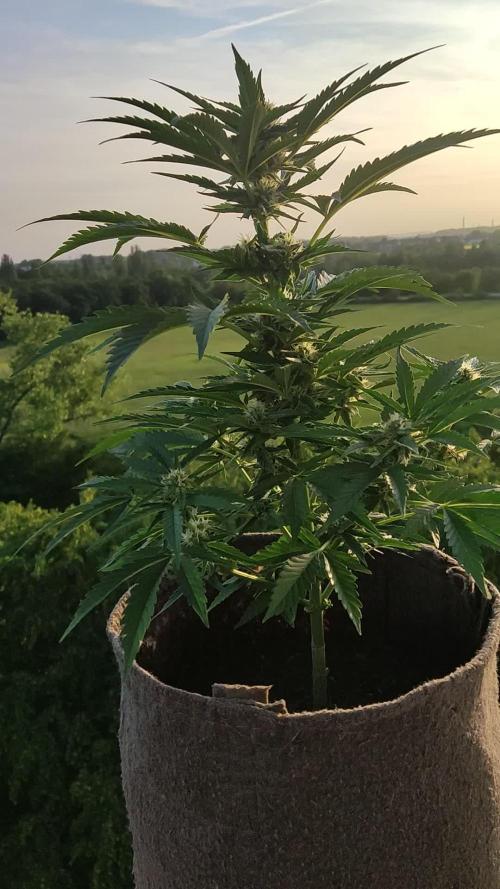
The plants are wayyyyyyyyyyyyy higher than the nets but i think its still effective as the fattening up is still ahead of us.
Switched to bloom furts - high ppm
ppm meter - https://www.ebay.com/itm/324694530867?hash=item4b994d5b33:g:H~oAAOSw8M5g2fqD
For acidalkaline i use the chemical liquid test kit. - kit - https://www.ebay.com/itm/324694530867?hash=item4b994d5b33:g:H~oAAOSw8M5g2fqD

Processing
Likes
22
Share


@eldruida_lamota
Follow
Que hay familia, de nuevo hemos acabado con la segunda semana de crecimiento y llevan un gran ritmo, su crecimiento se va viendo día tras día, están bastante sanas el alimento lo están aceptando muy bien.
No es nada nuevo es la primera variedad que cultive en indoor allá para el 2010, con lo cual siempre que e podido e puesto algunas critical en mi armario.
.
Vamos con parámetros, ya está segunda semana baje un poco la humedad pero poco , anda entre 60/70% la temperatura está entre 22,24 grados, el led es increíble , y como siempre el ph , ya que es de lo más importante,está en 5,8/6,0.
.
AgroBeta:
0,8 ml x L Piramid , vía radicular.
0,6 ml x L Growth black line , vía radicular.
0,1 gr x L Cancerbero , vía radicular.
0,1 ml x L Tucán , vía radicular.
0,1 ml x L Flash Root , vía radicular.
0,4 ml x L Great Green , vía foliar.
0,05 ml x L Gold Joker, vía radicular.
.
así concluye esta segunda semana y estoy bastante contento con el resultado hasta ahora, buenos humos fumetillas.

Likes
18
Share


@VI_Cannabis
Follow
June 7 - We ordered some new lights last week, they are 240w kingbrite samsung lm310h with uv/ir, 3000k, and meanwell drivers.
We setup the new room and moved the girls into there. After a bit of LST and a watering (with nutrients) at roughly 7ph, they were ready to go under the 2 new lights and the same SF-1000 we have been using in this grow.
The new room is a 12 ft enclosed trailer. I moved everything from the small tent into this. I put clear poly on the walls, floor and ceiling. I put poly on the shelf I am going to be keeping in there as well. I bought 50ft of 6mm mylar and lined the floors, roof and sides with it. I plan to get some reflective tape to seal everything and to cover the wood. I did not get much of a chance to watch temp's today as they it was later in the evening after all was said and done. The inline fan blowing in air from outside.
June 8 -
9 AM i checked the plants, they were at 25.2 and 50% RH. Late through the day I had checked and we had gotten up to around 32 degrees. So I moved the inline fan to the closer vent, hooked up to that, and had the air blowing out of the trailer with the inline fan sucking it from above the lights.
I then added oscillating fan and had it blowing air on the left side of the room so it would somewhat circulate once I closed the doors. I then checked at about 9pm and we were at 22 degrees. Definitely noticed a decent amount of growth already. I have the lights on a 22/2 cycle as I was worried about the heat at night time.
June 9 -
Some great growth from the girls, still having problems controlling the temps in the afternoon. I decided to prop the door open a bit to have a constant breeze throughout the day while I am at work. Decided to do some more LST and also a bit of defoliation. I took about 25% of the leaf's that were blocking the new growth as it was getting a bit bunched up. I was then told the leaf's are almost solar panels for them. So from now on I will be trying to just do some tucking unless needed. The leaf's I removed were most of the damaged leaf's, I am not to sure if that makes much of a difference. I gave them a watering with only water as there is a potential I am getting a bit of a nutrient buildup along with the PH problem. Or potentially the reason for the ph problem is nutrient buildup. After watering with A PH of 7 I got some run off and tested it. The smaller plant gave me a PH of about 5.5 where the bigger one is around 5.0.
June 10 -
Plants are looking happy and showing tons of growth. Seems to be trying to stretch outwards. Not a ton of sign of PH issues showing so potentially getting it under control. Still a bit of damage to previous leaf's but it is what it is! The last few days I have been leaving the door open a bit in order to keep the temps down. I decided to test something and turn the lights off (automatically) at 11AM and back on at 5PM so light schedule has now changed to 18/6 and it seems I may have figured out the issue. We haven't had lots of sun the last couple days so it hasn't been to hard and I have yet to know if it truly fixed the heat issue for now. (I will be looking into a ac unit as well since it typically gets to around 30-35 around here.
June 11 - Pulled some of the branches back down and added a few more LST spots. Seems we have a good amount of growth from the smaller plant out of the 2 topped spots. Unfortunately it looks like I fucked up on the bigger plant and only one of the nodes seems to have new growth. I will continue to monitor that but I think I cut the node to low and also to soon. Other then that, the girls are doing great. They seem to be absolutely loving these new lights. I gave them some nutrient water today as well. roughly 3L each. They seem to be A hell of A lot more thirsty under these new lights.
June 12 - The girls are doing great , they are still just doing growing away. Lots of progress everyday. I am going to be getting a go-pro so I can set-up a time-lapse for the rest of this grow. I received my new inline fan, I got A ac infinity CLOUDLINE T4 with the temperature humidity controller. I am going to be having one fan pushing fresh air in and one fan pulling out the hot air. I will be doing that tomorrow since I have to work today.
June 13 - I ordered another 50ft of mylar and that showed up today. I have decided to remove the shelf and add another 3+ feet to the grow space. So today I installed more poly, mylar, the ac infinity fan. I have it set-up to pump in air if it gets to warm. I am thinking of switching it to the output that way if it gets to hot or to humid I can have that air pulled out of the trailer. Right now my other inline fan is the outtake and I just have it set on full. Overall I think everything is set-up a bit better and more accessible. I will be putting my 2x2 tent in there at the left of the doors so I can have a veg room when these 2 are in flower. I plan to have 4 in veg and 4 in flower for the next grow. Still waiting on JOTI seeds, ordered 3 weeks ago and still have not been shipped. I will be getting those going the moment they arrive.
The girls seem to be happy still, did a bit more LST to try to keep everything even, mainly I'm just pulling down on the spots I already have tie wire on.
Likes
1
Share

@Sabre17
Follow
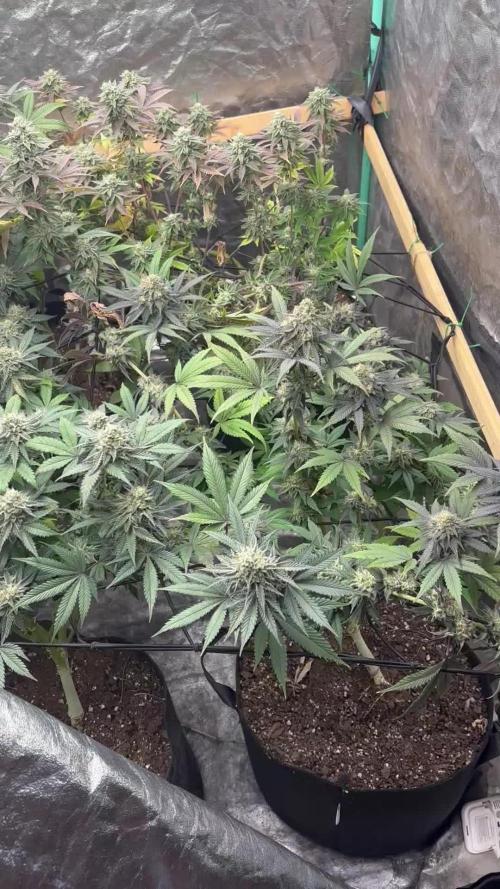
Pics are labeled at the beginning and end of week 7. The flowers are maturing. About 50% pistils are amber. I’m still having some lite green color in 1of 6 plants. Seems to be correcting now with nitrogen.
1 of 6 plants was a free seed. I lost track of which one but I think it’s easier to pick out now. Pic labeled with the one I believe is a different strain. It looks like a later maturing strain and heavier flowers. The smell is very very strong even with a new carbon filter inside the tent and one outside it in the room.


Likes
8
Share


@Weedganja420
Follow
Muy buenas amig@s!!
Me encanta el olor que desprende esta cepa!
Esta en su fase de engorde y se nota por dias.
Lleva 16 dias a 12/12 horas ya que las tengo con feminizades y les cambie el fotoperiodo

Likes
7
Share


@Stoner_Thoughts
Follow
Day 52: Trained them. Sprayed them with nutrients and essential oils.
Light intensity: 25klux 350PPF

Likes
13
Share

@GUGU_choices
Follow
Hello growers!
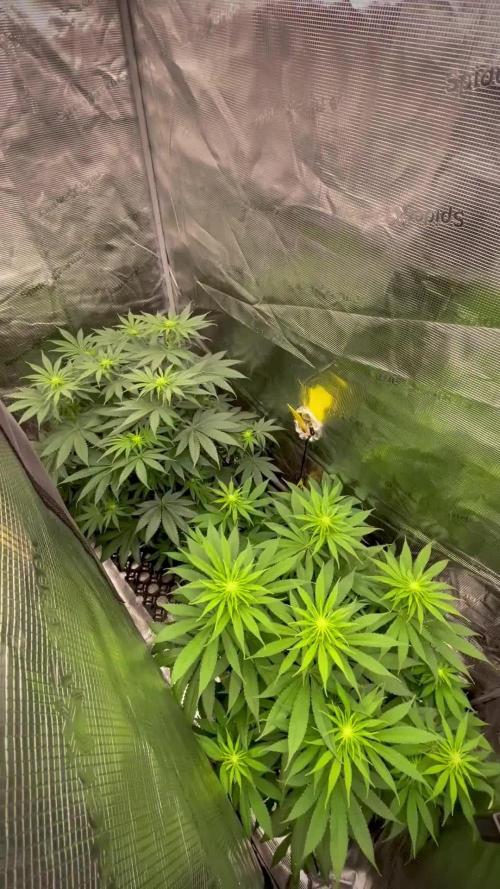
The plants are in their second week of flowering. They are stretching nicely and we have started to form buds. We can expect a lot of fragrant photos in the coming weeks :) I rate their overall condition very positively and we will see how the next weeks, weeks of lush flowering, will look like. So far, Jack Herer and I are getting along well :)
-
Zdravím groweři!
Rostliny mají za sebou druhý týden kvetení. Pěkně se natahují do výšky a začala nám tvorba palic. Můžeme v dalších týdnech očekávat přísun voňavých fotografiií :) Jejich celkový stav hodnotím velmi pozitivně a uvidíme jak budou vypadat další týdny, týdny bujného kvetení. Zatím si s Jackem Hererem rozumíme dobře :)

Likes
41
Share


@Growing88
Follow
Ho aspettato un settimana in più per avere piante circa della solita altezza,le indica si sa che sono più lente in veg,sono pronto per il flip 12/12 😈✌️🏿


Likes
16
Share


@CookiesAndCake
Follow
Week 14
Day 92 (13/11/2020)💧:
Great start to the week with watering today and because all the girls are entering their 4th week of flower, I will again be increasing the BioBloom as per the commendations on the watering chart, but since the pH has been increased they are definitely looking great and have enough nutrients between the watering days. So today I gave the girls 4.5 ml of BioBloom, 1.5ml of BioGrow, 1.5ml of CalMag, and 1.5ml of TopMax for 1.5L of water. I think I will be giving the same nutrients for the rest of the week as well.
Day 93 (14/11/2020):
Not that many updates today actually. The girl is looking amazing as always
Day 94 (15/11/2020):
I wanted to check the trichomes on the girl today with a loupe to see how she is developing up closer but I have no idea where my loupe is :( Really wanted to look closer at the flowers but will have to find it first to take some close up pictures as well
Day 95 (16/11/2020)💧:
We watered the girl today and gave her the same nutrients as before. They were watered with 4.5ml of BioBloom, 1.5ml of BioGrow, 1.5ml of CalMag and 1.5ml of TopMax. I think the TopMax is definitely making the buds fatten up.
Day 96 (17/11/2020):
The girl is super healthy and looking great, I took a picture from below because it’s quite hard to show how she is growing now. She is definitely the smallest girl and has the smallest buds even now after giving TopMax but from the bottom is looks like quite a lot of flowers.
Day 97 (18/11/2020):
Not that many updates today, just gonna mention that the girl does not smell as strong as the others in the tent. The others smell so strong that it is getting through the closed tent. DSD smells quite nice but the smell is not strong at all. It is very earthy, maybe a bit of pine, so quite a nice smell just not enough of it! I wonder how it will be after the flowers dry...
Day 98 (19/11/2020)💧:
I keep wanting to measure the pH to make sure that it is still above 6.0 but I haven’t had enough time because it takes a while, but I will make sure to measure the pH before the next watering. So still watering with the same nutrients as at the beginning of the week with BioBloom, 1.5ml of BioGrow, 1.5ml of CalMag and 1.5ml of TopMax. Although I think this will be the last time I will be adding CalMag because the girl looks like she does not have that deficiency any more. Also it looks like she stopped stretching length-wise and started focusing on growing the buds because the height is the same as last week. But really amazing progress this week, I’ve included a video of all the girls in the tent as well so it’s easier to see how different they are!
Likes
8
Share


@Sur_cannabico
Follow
Estas niñas dieron un “estirón” bien bueno. Después de que empezamos a subir la dosis de alimento se noto el crecimiento vegetal más acelerado.
Además aplicamos king crab ( bacterias de greatwithemyco) para potenciar el desarrollo de raíces ! Y se nota 👌🏻
Ya están con un pan de raíces bien fuertes por lo tanto, se van de trasplante a maceta de 7L.
Likes
5
Share


@Foxbud420
Follow
Had major issues with the mildew lost London Mint Cake, Cookies Kush, Bruce Banner and Cheetos…
The last standing planta has no problems with the mildew.
Malasana Cookies and Gary Payton are finished and now they are drying.
I will give an Update when all is dry and smokeable.


Processing
Likes
17
Share


@The_Projexx
Follow
Start of week #6 !!!! On the home stretch for this girl !! I feel like her flowers are starting to ripen up <3 Im going to be switch from Big Bud To over drive this week for this lady :D :D time to put on that weight girl !!!
A BIG thank you for everyone that takes the time to come check out the diaries AND an even BIGGER thank you to @Fast_buds for letting me grow some of their genetics !!
-Happy Growing!
Day#36F Some of the trichomes are ripening up <3 Gonna switch her into over drive then flush her out soon :D :D :D
Day#37F Watered 2L whole line up ( PPM 1029 ) , Things are swelling and ripening !
Day#38F Responding well to the watering , more and more hairs turning orange daily !
Day#39 n/a moving
Day#40 n/a moving
Day#41 n/a building grow room
Day#42 water whole line up . Pics to come tomorrow .

Likes
3
Share

@AestheticGenetix
Follow
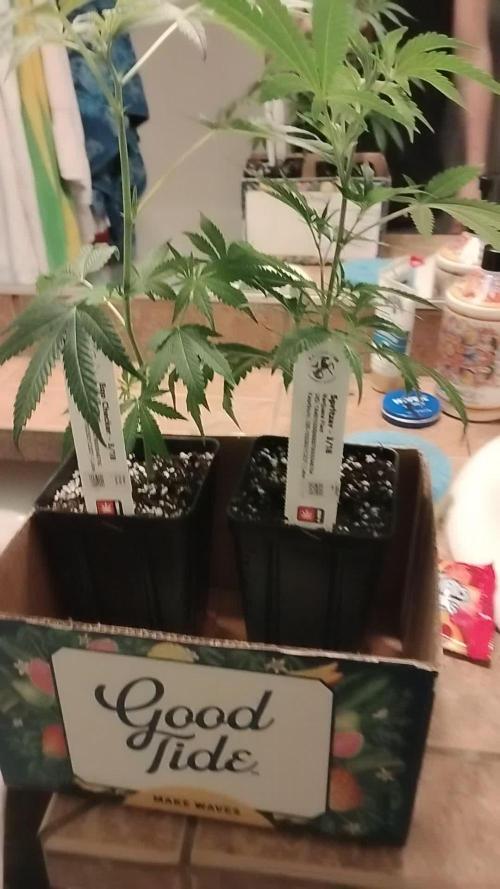
Picked up this Clone today. Excited to see what I can get with her. She's testing super high in terps and cannabanoids. Win win.

Likes
6
Share


@The_Holy_Herb
Follow
Hello everyone and welcome back to my diary.
Tomorrow marks the end of the fourth week of growth for Titan F1.
I don't think the plant is ready to flower yet and I think it needs at least another week to grow. Only time will tell if I'm right or not.
This week has been quiet, but we have two important updates.
1) At the beginning of the week, I gave it some care and removed a few leaves that I thought were unnecessary. A bit of defoliation. Like 6/7 leaves removed.
2) Today, it had some more maintenance, this time more intensive.
I removed two excess leaves and applied the LST technique for the first time.
Honestly, I enjoyed modifying the pot to accommodate the holes where the string would be attached.
To tell the truth, this low-cost adventure is becoming interesting, and I am having a lot of fun doing it and experimenting.
To tell the truth, my LST seems a bit aggressive and excessive, but we'll see in the next few days how the plant decides to respond and react to the LST. Maybe it will die, hahaha.
During this week, and reading other diaries for comparison, I determined that my plant is NOT drinking enough water.
The problem arises because I am unable to determine how much water is left in the soil/pot.
So today I decided to use a little cunning and weigh the pot when it was completely dry and then again after I watered it.
I watered it with about 1050/1100 ml of water mixed with its weekly dose of nutrients.
This time there was excess water, resulting in excess dripping.
In the final weighing after watering and after the excess water had drained away, the final weight increased by about 720/730 grams. The water I added was around 1050 grams. So 75% of the water remained in the soil. Dry it was 4400 grams, wet it reached 5120 grams. I don't know if this is good or not, I hope the plant is doing well.
In the meantime, I have ordered a device that allows me to check several parameters in the soil, such as moisture, acidity and other things that are important to us growers. I feel like a child at Christmas :).
I also bought a pH meter for the water, as mine broke and I had to buy another one, and I haven't been able to check the acidity levels for the last two waterings. I hope it doesn't bother the plant too much and that it continues to grow.
I've deduced that it drinks little because I'm forced to water it practically once a week. I expected it to consume more water, especially in its current pre-flowering phase.
The new device on its way will help me keep all the parameters under control: the soil, the plant, the temperature, the water levels, the humidity and a few other things I can't remember.
Everything should be ready next week.
The lamp is on full power all the time, at 100% with a 24/0 cycle, 7 days a week.
The plant has reached 20 centimetres in height. I wonder if this LST will keep it small. I have some space issues, so I can't let it grow too tall, which is why I'm using LST.
Otherwise, everything seems to be going well, I hope I'll be able to smoke this one.
Thanks everyone, see you next week with new updates, who knows, maybe it will start flowering :)


Likes
26
Share


@Melloganja
Follow
The plantas get a little bit struck, I don't know what's going on, I will start a new phase off fertilizer from advanced nutrients.
Likes
10
Share

@CrackinBeans
Follow
Mephisto and bighead going into darkness for 48-72 hrs. Then the chop. Big bomb is the last one standing in the 5x4 will begin flushing soon


Likes
6
Share


@Tezza2
Follow
The gorilla cookies is looking good but the purple lemonade is doing much better but i think the gorilla cookies is putting out alot of roots through the seven gallon fabric pot thats why it isnt as big as the purple lemonade