Likes
Comments
Share
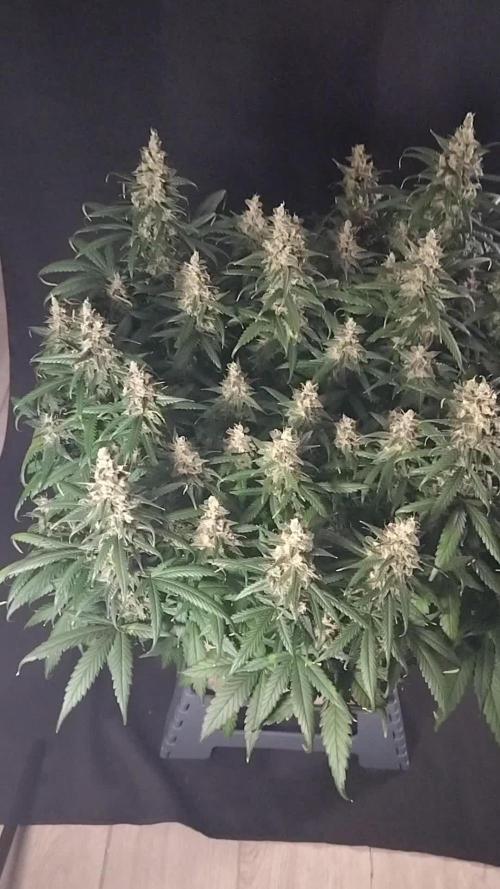
Triple G by ROYAL QUEEN SEEDS WEEK #25 Overall Week #8 Flower This week she's looking and smelling great she's got a sweet aroma to her covered in trichomes super sticky plant she's done a great job being outside 👍 great genetics!! Stay Growing!! ROYAL QUEEN SEEDS TRIPLE G
Likes
17
Share
Day 38- 18/01/22 and we are now in flowering everything is looking good I’m still cutting down the plants from my last grow Afghan kush and once I’m done with that I’ll be moving everything that isn’t chemdawg into the HPS tent!!! Day 42- 22/01/22 all amnesia now under hps light!!!
Likes
14
Share
Likes
42
Share
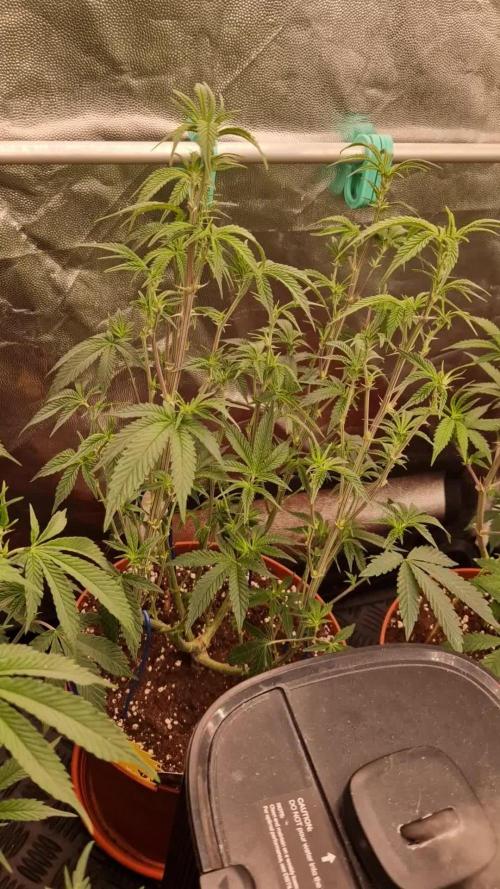
Thank you. Gave her a cocktail to help with stress. Added 1st net for lateral support, not so much now, but for later. Blue light is absorbed by photoreceptor proteins called phototropins, which trigger a hormonal response that causes cells on the shaded side to elongate, making the plant bend toward the light. Try and fill this side a little. She is quite big already, just needs to find her stride again after the undue torture. 5 apex stems with 20-30 mini cola, let them develop a little, with the apical dominance shattered, all those 20-30 will all compete with each other as soon as that stretch is initiated. Key to a good stretch is making sure the plant is cycling efficiently, with large ATP conversions occurring lights out. For now, I'm keeping light intensity high. A plant will slow its vertical growth in very high light intensities, leading to a more compact form with thicker stems and leaves. This response is a protective mechanism against light stress, which can damage the photosynthetic apparatus and lead to symptoms like leaf scorching, yellowing, and brittleness. Instead of growing taller, the plant invests its energy into creating a more robust, stress-tolerant structure. Providing plants with necessary antioxidants helps protect the photosynthetic apparatus by scavenging reactive oxygen species (ROS) that cause damage from excess light. UV light exposure can impact the xanthophyll cycle by either enhancing its photoprotective role or causing damage, depending on the intensity and type of UV radiation. UV exposure can trigger the synthesis of more xanthophyll cycle pigments to increase the plant's capacity to dissipate excess energy, but it can also cause direct damage, particularly to Photosystem II, and may lead to a decrease in the de-epoxidation state (DEPS ratio) which indicates a reduced capacity to dissipate excess energy. Plants can respond to UV stress by increasing the synthesis of xanthophyll cycle pigments, such as violaxanthin and zeaxanthin, to improve their photoprotective capacity. UV-induced changes in xanthophyll cycle pigments can be linked to a plant's overall tolerance to high radiation stress. The xanthophyll cycle helps protect against photoinhibition, which is especially important when the plant is exposed to high levels of both UV and visible light. High doses of UV radiation can directly damage photosynthetic components, including the proteins, lipids, and pigments in the thylakoid membranes. Exposure to UV radiation can have a mixed effect on the de-epoxidation state (DEPS ratio) of the xanthophyll cycle pigments. In some cases, UV can inhibit the conversion of violaxanthin to zeaxanthin, resulting in a lower DEPS ratio and a reduced capacity for energy dissipation. However, the total pool of xanthophyll cycle pigments may increase, and this enhanced pool size could provide a greater potential for photoprotection despite a lower DEPS ratio. The xanthophyll cycle works alongside other mechanisms, such as the accumulation of flavonoids (UV screens), to protect the plant from UV-induced damage. Blue light repairs 100% UV-induced damage in plants through a process called photoreactivation, which uses a light-dependent enzyme called photolyase. This enzyme uses energy from blue and UV-A light to directly reverse the damaging pyrimidine dimers in the DNA caused by UV-B radiation, a key mechanism for maintaining the plant's genetic integrity. After carbon, light, water, temperature, and nutrients, the limiting factor of a plant's growth is often its own internal factors or the amount of a key ingredient. Chlorophyll concentration is one such factor, as the amount of this pigment limits how much light can be captured for photosynthesis. Other factors include chloroplast number, respiration rate, and the concentration of carbon dioxide in the atmosphere, as plants are often in a CO2-deficient condition. 60x60x18=64800seconds x 700 = 45,360,000moles. 45DLI Exposure to 165 µW/cm² of ultraviolet-B (UV-B) light for 3600 seconds = 1 hour, a extremely high, acute dose triggering stress responses and protective mechanisms. . The plant's photoreceptor protein, UVR8, senses the UV-B radiation. This triggers a signaling cascade that activates specific genes to protect the plant from damage. In response to the UV-B signal, the plant ramps up the biosynthesis of protective compounds like flavonoids, phenolic acids, and anthocyanins. These compounds absorb UV radiation and accumulate in the epidermal layers of leaves to shield inner photosynthetic tissues. The plant may increase leaf thickness or deposit more cuticular wax, creating a physical barrier to the radiation. The plant will produce more enzymatic and non-enzymatic antioxidants to neutralize the reactive oxygen species (ROS) produced by the UV-B radiation. The plant activates enzymes, including photolyases, to repair DNA damage caused by the UV-B. These repair mechanisms are critical for preventing permanent genetic mutations. While protective measures are activated, a high dose delivered over a short period can cause stress that overwhelms the plant's defenses. Photosynthesis is highly sensitive to UV-B. A high dose can inactivate Photosystem II (PSII), damage thylakoid membranes within the chloroplasts, and reduce chlorophyll content, which lowers the plant's overall photosynthetic capacity. Despite repair mechanisms, high UV-B doses can inflict persistent damage on the plant's DNA. One study found that acute, high-dose UV-B had a greater effect on genome stability than chronic, low-dose exposure. The overproduction of reactive oxygen species can cause oxidative stress, leading to the oxidation of lipids and proteins and disrupting cellular function.
Likes
5
Share
. 📹 : Full Video on YouTube , please like & subscribe 🌱 : 💧 : 4l day 85 💡 : Dli: 45 mol/m²/d 🤔 :
Processing
Likes
3
Share
Likes
18
Share
Quick update week 3 flower these girls are putting on weight very very quickly. The blue gelato buds are already becoming dense like stones . Watermelon punch literally is the most satisfying smell I have smelt in a while . Wedding cake is the biggest in my tent and most gassiest plant. The terple inhouse genetics are also massive will show the inhouse section next week , just takes to long to take them out of tent
Likes
8
Share
Glueberry OG #1 y #2 se cortaron a los 92 de dias después de haber germinado! Glueberry OG #3 Se corto a los 99 dias, dejando los últimos 3 dias luz uv,far red e híper red a unos 17 grados de temperatura. 26/06/2021 Todavia no está todo enfrascado, se actualizaran los datos a medida que avance el curado!
Processing
Likes
10
Share
@BodyByVio
Follow
This week I Supercrop all the plants and spred them out over both lights. One more week of Veg and they are ready to explode Check me out on Instagram @growmorestressless
Likes
9
Share
@Kushizlez
Follow
Day 60F The PM on the cheese has gotten significantly worse in the last few days. I think it may have something to do with the constant humidity spikes every time I water. I haven’t been running my humidifier at all in flower so maybe it’s having trouble keeping the RH up during lights on. Just another reason to follow a daily watering schedule. The cheese and slurricane look fucking disgusting and I’m starting to doubt that a peroxide wash can totally fix it. It worked well for my outdoor crop so it should be fine but this time there is probably 3x the amount. I’ll make sure to really soak the buds and rinse them off good. Bbb#1 is flopping over like crazy from the weight. Too late to stake it up now so hopefully it holds until next week. Starting to foxtail a bit but nothing too bad. It is now 100% done and ready for chop. Bbb#2 is just getting frostier and frostier by the day. The purple fade is really coming along nicely too. Might reveg. It is now 100% done and ready for harvest. Black garlic #1 is finally filling out! I can’t believe it. Never heard of a plant packing weight on like that in week 8. The breeder did mention that it packs on weight later but I’m stunned. Taking her to 9.5 weeks. Black garlic #2 is looking very average. Average color, average size buds, average frost, average smell, probably an average yield. And it’s starting to get a bit of PM. Overall not happy. Will be taking her to 9.5 weeks. Zkittlez #1 has pleasantly surprised me. It was a bushy runt in veg but came through. It’s the third frostiest in the tent, super dense, stacked tight, smells great and looks great. It’s already got a nice amount of amber so it’s 100% ready for chop. Slurricane #4 looks insanely frosty even under all that PM. If I can’t wash it off it’s going in the trash. I want to chop this asap but have to cut everything at once unfortunately. It’s 100% ready for harvest. Badazz OG cheese is looking like a decent yielder but doesn’t have much else going for it. I think it still has some filling out to do. I can’t even smell the final profile change yet. The leaves are rotting off very quickly. Taking her 9.5 weeks. I don’t mind harvesting a bit later rather than early. From my outdoor experience, when a plant is picked early it smells like hay and wet grass clippings until it’s been curing for 3 weeks. When I harvest late or at 30-50% amber trichomes it smells like same scent profile it had when growing. Just my experience. I’ve read that the tobacco industry adds calcium and potassium carbonate to their crops to help promote fire holding capacity and to increase the whiteness of ash. Turns out some of the organic amendments I bought last week contain exactly that. I’m going to give each plant a light top dress to see if the tobacco industry is onto something.
Likes
16
Share
@Lickey
Follow
Little stress from the scrog and not drinking as fast as normal. They will come around I’m sure. Gave them a second top dressing after about two weeks. A little more feeding than what is recommended plus the liquid kelp, calmag, Herculean harvest, and recharge. Just making sure they are loaded with enough N to get thru stretch and early flower. At least that is the logic. Considering it may take weeks to break down some of the Gai Green 444 all purpose but it’s all you can do!
Likes
11
Share
Week 15 - August 09, 2020 -Day 99 08/09: We’re almost at the end. I gave Aaliyah her first watering with plain water. I’m planning on chopping the top colas off of her in a week. Hopefully I can get something out of the lower growth that isn’t getting any light right now. Alexis is coming down in two and Annie in three. Annie has some damage due to the light, but she is hanging in there. Alexis looks the healthiest overall. She stayed pretty compact, so light is still able to reach her lower parts. I think I could’ve had a better grow overall if I would have stuck with using only 3-gallon pots. [General notes: The nutrients on the diary are based off what I’m giving Aaliyah. Alexis is on the previous weeks schedule and Annie in the schedule from two weeks ago.]
Likes
10
Share
@barlobruz
Follow
09/08/2021 - Fly traps collected a plethora of gnats - Had to till the first few inches of the soil while top dressing, as it was incredibly hard and dry - Fertilized with Gaia Green Power Bloom + EWC + insect frass - Carefully watered with a half gallon tea of DIY kelp extract, molasses, LAB and neem extract
Likes
9
Share
@Kushizlez
Follow
Room is still yellowing quite a bit prematurely. I’m going to feed once more and adjust ph back to 6-7. I’m starting to cut my RO water with filtered tap water at 1:5 ratio, to stabilize the ph a little more and to see if the tap water can help with deficiencies I’ve been seeing. I have heard that it’s not good to add calmag in mid flower and I really don’t want to mess with heavy metals that could affect the way the plant smokes. The powdery mildew has come back. It is only affecting the cheese, slurricane and black garlic #2. All three of these plants are in the same corner so it must be something I’m doing environmentally. That’s the coldest part of the tent so maybe the added fans are letting it get too cold. The small fan I added is probably unnecessary and I might move it to my veg tent. If the powdery mildew keeps getting worse, I’m just going to let it ride out and then wash the final product. I should have trained and topped these in veg a lot better but I got lazy and didn’t want to.
Likes
3
Share
@NYGROW
Follow
Week 10 buds keep growing but the girls got some kind of deficiency… it started at the top of the plant … I’m almost done with the blue dream hopefully this don’t mess her up in her last week or weeks.. other than that she’s a big girl !!! The purple dream seems to be doing fine hopefully she don’t end up dying on me before harvest …
Likes
3
Share
@Thcbd1
Follow
Kinda disappointed but given the circumstances with reveg and having to move the grow think I have to accept what the yields were. It’s all a learning experience that I can apply to my next grow, probably let them go a little longer for more amber and keep her a bit longer in veg and keep an eye on the light cycle 😂 Also think i need to upgrade from this blurple led if i want to expect anything decent off my plants, it has been okay to use to test out and understand growing methods but I think I'll wait till ive upgraded that for my next grow.
Likes
4
Share
Strain: Fast Buds – Mixed Photoperiod Trio Grow Type: Indoor Pot Size: 3 Gallon (x3 plants) Medium: Peat Moss & Perlite Nutrient Line: Athena (Bloom) Week 7 Update These three are doing excellent strong, healthy growth across all of them. Each one has its own little character, but they’re all showing great structure and consistent development. The canopies are even, the leaves look lush, and there are no signs of deficiencies anywhere. They’re taking their nutrients perfectly and stacking up nicely. Really happy with how they’re progressing can’t wait to see how these three look as flower kicks into full swing. Feeding 1.9 L Athena Bloom nutrient mix per plant (steady from this point). Indoor Climate Conditions Temperature: 24–27°C Humidity: 45–55% VPD: ~1.3–1.8 kPa See y’all next week! And don’t forget to use my discount code ISLANDT for 15% off your next order at Fast Buds!
Likes
4
Share
Will be cloning them this week. They are still suffering with trips attack. They still on 18/6, 9 of sunlight and 9 of 300w. Will be transplanting the gorillas soon. Transplanted them all last week, the white widow is in a 40l pot, Anandamida and blue dream on a 20l and Bruce Lemon Diesel on a 29l pot.
Likes
14
Share
@Luv2Grow
Follow
Day 71 - Starting week 11 and what should be this girls final week of life. She’s almost dried up and starting to show a little more amber trichs. Still planning on chopping her sometime this weekend. Day 72 - Almost ready, just some updated pictures for the day, nothing much has changed. Day 73 - Just some more pictures for today, I’ll chop her down on Saturday and looking forward to it. This girl stinks to high heaven and want to get her drying. Day 74 - All set for the chop tomorrow, she’s used up all the water in the soil and she’s about 15% amber, just about the way I like them.