


Likes
Comments
Share


@Chanardo
Follow
Hola! Bueno, ha comenzado otra semana -creo que la última en vegetación- y el crecimiento de la planta es asombroso.
Actualmente tiene 66 cm de alto. La lámpara está a unos 12,5 cm de distancia de la misma, y ya no me va quedando mucho espacio para subirla.
Ha comenzado a tener un débil olor, el cual es muy rico.
Tengo mucha fe en este cultivo. Realmente el sistema hidropónico me está sorprendiendo.
Saludos!

Likes
40
Share

@SundancerS
Follow
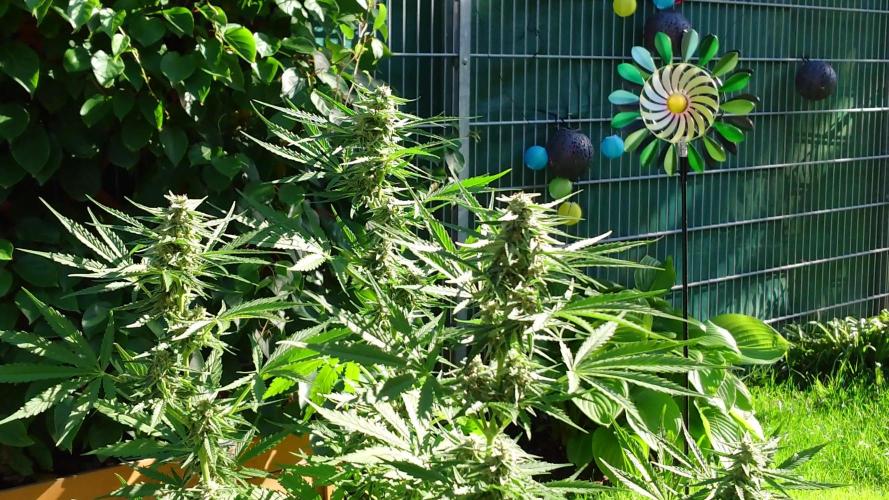
Die Green Crack F1 Auto zeigt sich bisher als echtes Kraftpaket. Sie wächst zwar etwas wilder als ihre Nachbarinnen, aber genau das scheint zu ihrem Charakter zu gehören.
Normalerweise steht sie etwas geschützter als im Video, trotzdem sieht man gut, wie problemlos sie mit Wind und Wetter zurechtkommt. Die Triebe werden von Woche zu Woche kräftiger und die gesamte Pflanze wirkt erstaunlich stabil.
Das einmalige Toppen hat ihr sichtlich gutgetan. Sie bleibt dadurch etwas kompakter, baut aber eine schöne breite Struktur auf und scheint ihre Energie lieber in stabile Seitentriebe als in unnötige Höhe zu stecken. Gerade Outdoor kann das später ein echter Vorteil sein, wenn die Buds schwer werden.Außerdem macht sie dadurch einen deutlich transportableren Eindruck. Wer seine Pflanzen bei Gewitter, Hagel oder anderen Wetterkapriolen mal schnell umparken muss, weiß das durchaus zu schätzen.
Bisher macht die Green Crack F1 Auto jedenfalls genau das, was man sich von einer Outdoor-Pflanze wünscht. Robust, unkompliziert und immer mit einem kleinen Hauch von Chaos. 💪

Likes
31
Share


@ORANGECRITICAL
Follow
What do you think about her potential is with her everything ok I will add that it is not the first but purely theorist you can find out what is happening.

Likes
6
Share


@Pjm70
Follow
7/7 17 days old. Calling this her first week of veg. She did not appear to be growing much for a few days after being transplanted. However in the last couple of days she has been putting on height.
Now that she is growing again it seemed like a good time to top her.
Topped her at the fifth node. A few of my previous grows I topped at the single leaves. This gave me two main branches that I just tied down. Then let all the branches grow up. Gave me a very uniform plant.
7/9 She has a very healthy dark green color. Her branches almost immediately started growing after being topped. I can see the difference in 2 days. Her nodes are very close together.
7/10. This lady has huge tits/leaves. Her leaves are so big they’re blocking out the light for the branches. I used some coat hanger to pull the leaves out of the way.
Really her leaves are huge for her age. They’re almost the size of my hands and I’m 6,3. I pulled 1 leaf off to help open her up some. I will do some reading on this strain. I believe as she gets older she will look more sativa. Right now she looks heavy indica.
7/11 She broke ground 21 days ago. She graduated into veg 4 days ago. This plant is growing very nicely.
7/14 25 days old. Gave her water with liquid kelp. Her branches are quickly growing to the top. Would love to do some defoliation but I’m not. Other than a few 3 blade leaves in the center. Absolutely love her dark green color.
So far the living soil is doing a great job. The company says just water. We will see.
Ethos Genetics is top shelf. My friend grows mostly Ethos and these plants are just amazing. I was hunting for old school so I didn’t grow any Ethos until now. Old school is gone. I have never saw buds like these Ethos. This plant needs to come out close to or better than my friends.
She is growing in organic living soil and her color is great. The only thing I added was myco supreme on her roots. The next time I water her she will get some liquid kelp and humic acid.
The plant is relying on the living soil to eat. So I want to make sure her root system is very healthy and able to process nutrients.

Likes
9
Share


@xmackobox
Follow
Semillas regulares Alioli de Dr. Ganjah
Simplemente alucinante la calidad a pesar del pesimo cultivador xd
Likes
55
Share


@pifflestikkz
Follow
Day 85
26/07/24 Friday
Big feed today full 5L a little run offusimg de-chlorinated water pH 6.
So we are through her first transition week.
Starting to see sex pistils forming at end of last week.
Picture and video update ✌️💚
Day 88
29/07/24 Monday
Just de-chlorinated tap water pH 6 today, full 5L with just under a 1L run off.
Day 89
30/07/24 Tuesday
De-chlorinated tap water pH 6 today but I'm adding in Plagron Power Buds AND Plagron PK13-14 only 5ml each to 5ml water.
It says to use on every irrigation from early flower so here we go. If I start getting burns I'll cut out a few advanced nutrients extras and go again from there.
She is just ridiculous, robust, never stresses, healthy and just wants to throw arms out everywhere 🤣💚
Day 91
01/08/24 Thursday
End of week
Using de-chlorinated tap water pH 6 only this time.

Likes
5
Share

@AestheticGenetix
Follow
Week 5
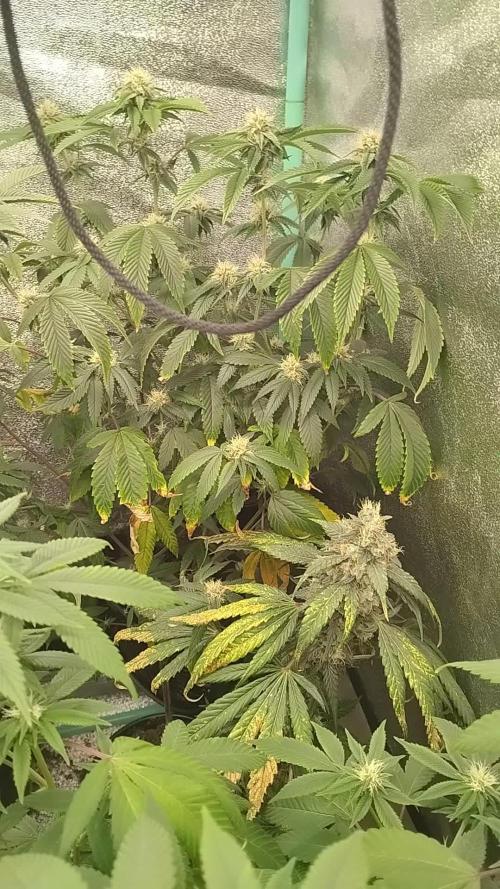
Pistils are changing colors pretty rapidly and she's about to start to bulk
Likes
6
Share


@PoshGrow
Follow
Welcome to Auto Alaskan Purple Grow by PoshGrow!
🍀 Week #2 2020 July 30th - August 6th
General Info:
When planted: 2020 July 23th.
Week: 2
Days: 7 - 14
Last Update Day: 2020 August 6th.
Plants: 5 Alaskan Purple Auto.
Equipment:
Tent: MarsHydro 1mx1mx2m or 39"x39"x72".
Light: HLG 260w V2 Rspec QB Kit.
Exhaust: 4" 322 CFM fan + Viper Carbon Filter.
Intake: 4" 100 CFM Inline Fan.
Oscillating Fan:
Lower: 4" Ram Fan.
Upper: 16" Oscillating Ram Fan.
Humidifier: Taotronics TT-AH001.
Dehumidifier: Pavlit MD750.
Soil: NPK soil 40% Compost, 50% Peat Moss, 10% Agroperlite.
Pot: 7 gallon Fabric Pot x 5pcs.
Nutriens: Fox Farm Trio.
PH Correcton: Chemoform pH-Minus Granulat.
PH Pen: Cheap Chinese one, I callibrate it every time I use it.
Comment:


Likes
13
Share


@FlavoursUk
Follow
Day 44 - The smell is divine, and the buds are looking very pretty. Beautiful fade going on in the leaves, almost like a purple/red/black. Planning to tapper down the nutrients as we are coming closer to Harvest.
Crucial to keep the pH in range during flowering and being away a few days, I wasn't able to correct it until I was back. So they were drinking more water than uptaking nutrients.. leaving a high EC in the system. Corrected the issue by adding plain RO water, treated with cleanse, no nutrients.
They are now on track and could do with a last defoliation, but I've been holding it off. Will get around to it over the next few days.
The buds are sticky, smell great and rock hard. Dehumidifier was added to the tent to try lower the humidity to a better range.
Can't wait to see the end results and product. Another 2 weeks an I think we will be good.

Likes
55
Share


@Organic_LarF
Follow
Just nature at work!!!
Love it!!!
Thats it for this week boys and girls,
Thanks for reading and passing by and 💚💚💚👏👏👏👍👍👍 for Marshydro leds. Quality/price top!
Grow safe buds and feel free to check out my other ladies doing fine thanks!
🌈viparspectra🌈
🎟️Organic_LarF♡viparspectra 🎟️
for your discount!!!!
https://www.viparspectra.com/?aff=nbemz68cxril&utm_source=affiliate
🌈Join us now🌈
🙏🌿🌿🌿🙏
Special thanks to
🏅🌿greenbuzzliquids🌿🏅
Use organic_larF for 15% discount
👏👏👏Weedseedsexpress!!!! 👏👏👏
LarfxWSE for discount at
weedseedsexpress!!! 15% off!!!
👽👽👽Zamnesia!!! 👽👽👽
Add OrganicLarF as a code when buying your own MarsHydro LED light and get a nice reduction!!!👽🚀🛸
Likes
7
Share


@Thckaos
Follow
22-05-21 Se cambia la solución y se realiza un lavado de raíces. Para bajar la conductividad de las raíces de 0.81 a 0.2 ms. Se añade una pastilla de CO2.
Última semana no se abona nada y se baja la temperatura a 16 °C. PH de 6,5
23-05-21 PH 6.5 Conductividad 0.29 ms. Se baja la temperatura de 24 a 15 °C
24-05-21 PH 6.5 Conductividad 0.44 ms.
26-05-21 se deja sin riego y sin luz 48 horas antes de cosechar

Likes
5
Share


@ganzigunnu
Follow
week 7 started first time growing in this much summer. it's really hard.

Likes
7
Share


@DrewbieDoobieNoobie
Follow
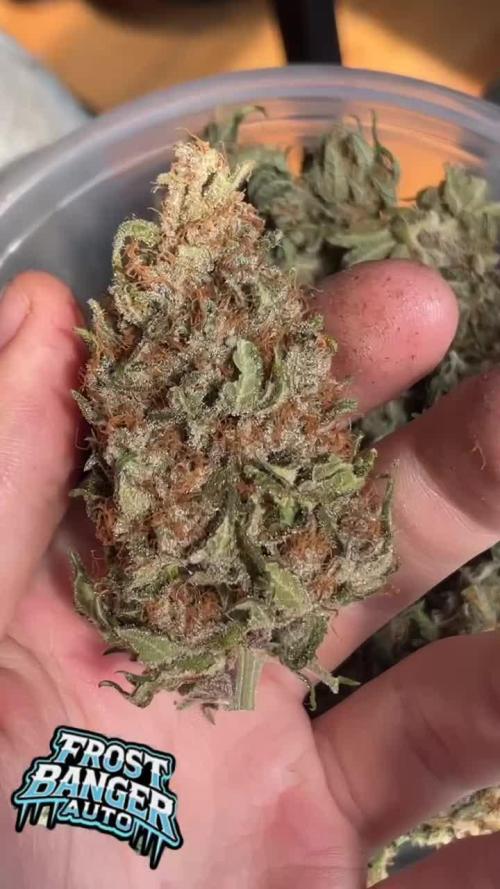
These were all pretty Uniform in height and weight even with #3 being replanted 2 weeks in, lots of Haze smell diesel and pungent on the front end and some sweet at the tail, I should of let these go a few more weeks I think it would be better. I have read and have heard that the flowering time the breeders recommend is based on a 1000w set up. and light plays an important roll in yield as far as flowering goes Its all about time. and maybe next time I will grow these to a more perfect pant. but this round as a grower I give myself a 6 out of 10 got some buds to some and turned the trim and larf to hash, not a huge return and the Trichomes were mainly in the 25 micron range with a minimal amount in the 76 micron bag. so My thinking is that these were all small and under developed trichomes, this leans into my theory that they could have gone another 3 or for weeks, Failure has been my greatest teacher and I really enjoy this hobby. Next grow will be an Organic Dry Amendment Auto Flower with new lights no more Blurple import lights. I got my 1st vaccine shot. hope you all are staying safe and lifted.
BDH#1 13 oz wet
42gm buds
30gm larffy trim
BDH#2 13 oz wet
26gm buds
42gm larffy trim
BDH#3 13oz wet
20gm buds
42gm larffy trim
TOTAL 39oz wet
TOTAL 94 gm buds 97gm larffy buds



Likes
28
Share


@DudeGrowsWeed
Follow
October 22, 2021
I think they are finally starting to look a little better. I have been pulling off any leaves that were showing too much damage. I'm finally starting to see less damage. I didn't feed any Recharge this week. My Recharge has gotten old and I don't think its working like it should. I contacted Real Growers and they are sending out some replacement Recharge for me. I'll definitely add Recharge back into the feeding schedule once the new bag arrives. I gave Neptunes Harvest Fish and Seaweed at full strength, but only 1/2 gallon to each plant. Then a few days later I watered into the reservoir directly, instead of trying to water through. I purchased a funnel with a flexible hose from one of the local auto part stores and I'm able to place the hose directly into the reservoir. I was honestly shocked how the water from the reservoir was completely wicked up into the soil by the next day. I hope this is the way to make these 3 gallon SIP pots work without overwatering.🙏
Cya next week!


