Likes
Comments
Share
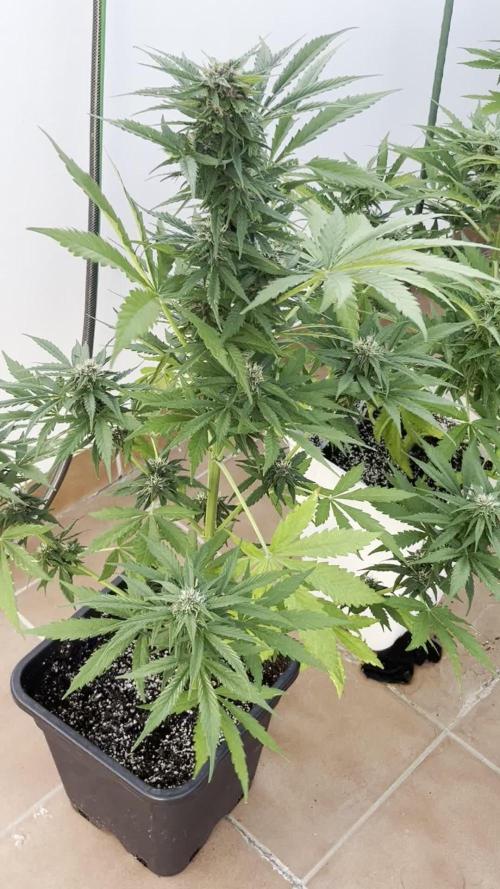
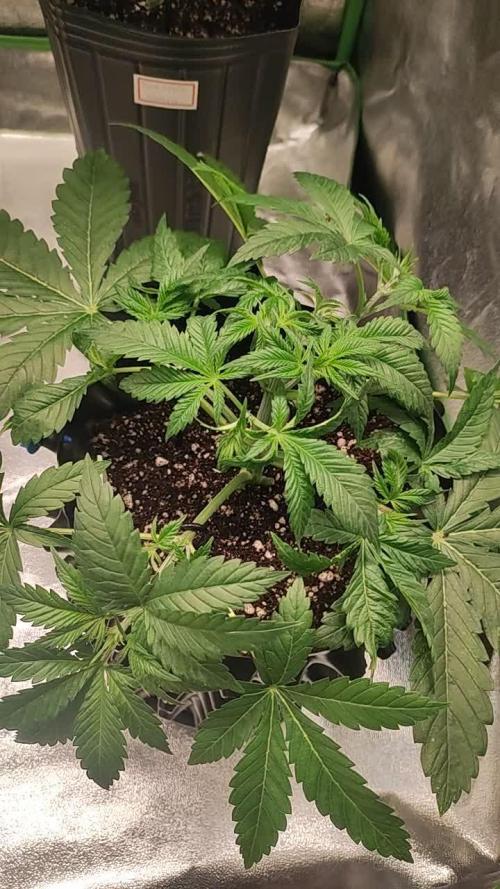
Day 66 from seed for these Pineapple Runtz Autoflower 🍍 The resin is starting to stack up, I'm just waiting on the color to really come through. The smell is sweet as you would expect, overall these plants have done well with whatever I've thrown at them on top of the grow dots. This pack suggests 70-80 days from seed, I expect these to do every bit of 80. Very excited. What do you think?
Likes
27
Share
14. Juni Mein Mikroskop hat leider den Geist aufgegeben :( daher gibt es leider keine Bilder der trichome. Habe mich dennoch nun dazu entschieden. So langsam fertig zu machen. Beim entlauben ist mir die fragwürdige wachstumsstruktur der Blüten aufgefallen. Hab sie wohl doch schwer traumatisiert durch Training und Umweltbedingungen. Des Weiteren hab ich an manchen BlÀttern ein paar Eier gefunden. Hatte ich bisher noch nie, bin allerdings noch ein Outdoor newbie im Vergleich zu indoor. Werde sie die kommende Woche noch etwas im hochbeet trocknen lassen, und dann demnÀchst schneiden. Wirklich ertragreich ist es nicht, aber ich sehe keine Samen. Verbuche ich als Erfolg. War stressig und Richtung Ende habe ich nicht sonderlich viel Aufmerksamkeit schenken kânnen, hat dennoch Spaß gemacht Der Geruch ist absolut bestialisch! Kaum zu überriechen. 16. Juni Hab jetzt mal zwei von drei geschnitten und ins Zelt gehÀngt. Die letzte darf nochmal eine Woche, da sie sich eine Woche zu spÀt aus der Erde kam.
Likes
18
Share
Green light is radiation with wavelengths between 520 and 560 nm and it affects photosynthesis, plant height, and flowering. Plants reflect green light and this is why they appear green to our eyes. As a result, some growers think that plants don’t use green wavelengths, but they actually do! In fact, only around 5 – 10% of green light is reflected from leaves and the rest (90 – 95 %) is absorbed or transmitted to lower leaves [1]. Green wavelengths get used in photosynthesis. Chlorophyll pigments absorb small amounts of green wavelengths. Light that doesn’t get absorbed is transmitted to leaves that are shaded out from direct light. This means that leaves at the bottom of the canopy get more green light than leaves at the top. A high proportion of green wavelengths compared to other colors tells lower leaves that they are being shaded out, so they are able to react accordingly. Lower leaves may react by opening or closing their stomata or growing longer stems that help the leaves reach brighter light [1, 2, 3]. When it comes to growing cannabis, many cultivators are interested in the quality of light used for the flowering stage. In many plants, flowering is regulated by two main photoreceptors: cryptochrome and phytochrome. Both photoreceptors primarily respond to blue light but can also respond to green, although to a lesser extent. Green can accelerate the start of flowering in several species (although cannabis has yet to be tested) [1, 4, 5]. However, once flowering has begun, it’s important to provide plants with a β€œfull spectrum” light that has high amounts of blue and red light, and moderate amounts of green, in order for photosynthesis to be optimized. Green light mediates seed germination in some species. Seeds use green wavelengths to decide whether the environment is good for germination. Shade environments are enriched in green relative to red and blue light, so a plant can tell if it is shady or sunny. A seed that senses a shaded environment may stay dormant to avoid poor growing conditions [1]. Some examples of plant species where researchers have documented this response are: ryegrass (a grass that grows in tufts) and Chondrilla (a plant related to dandelion) [1, 6]. Although green wavelengths generally tell plants NOT to germinate, there are some exceptions! Surprisingly, green wavelengths can stimulate seed germination in some species like Aeschynomene, Tephrosia, Solidago, Cyrtopodium, and Atriplex [1, 6, 7]. Of course, light is not the only factor affecting seed germination – it’s a combination of many factors, such as soil moisture, soil type, temperature, photoperiod, and light quality. When combined with red and blue light, green can really enhance plant growth [1, 8]. However, too much green light (more than 50% of the total light) can actually reduce plant growth [8]. Based on the most current research, the ideal ratio of green, red, and blue light is thought to be around 1:2:1 for green:blue:red [9]. When choosing a horticultural light, choose one that has high amounts of blue and red light and moderate amounts of green and other colors of light. Not many studies can be found about the effect of green light on cannabis growth or metabolism. However, if one reads carefully, there are clues and data available even from the very early papers. Mahlberg and Hemphill (1983) used colored filters in their study to alter the sunlight spectrum and study green light among others. They concluded that the green filter, which makes the environment green by cutting other wavelengths out, reduced the THC concentration significantly compared to the daylight control treatment. It has been demonstrated that green color can reduce secondary metabolite activity with other species as well. For example, the addition of green to a light spectrum decreases anthocyanin concentration in lettuce (Zhang and Folta 2012). If green light only reverses the biosynthesis of some secondary metabolites, then why put green light into a growth spectrum at all? Well, there are a couple of good reasons. One is that green penetrates leaf layers effectively. Conversely red and blue light is almost completely absorbed by the first leaf layer. Green travels through the first, second, and even third layers effectively (Figure 2). Lower leaf layers can utilize green light in photosynthesis and therefore produce yields as well. Even though a green light-specific photoreceptor has not yet been found, it is known that green light has effects independent from the cryptochrome but then again, also cryptochrome-dependent ones, just like blue light. It is known that green light in low light intensity conditions can enhance far red stimulating secondary metabolite production in microgreens and then again, counteracts the production of these compounds in high-intensity light conditions (Kim et al. 2004). In many cases, green light promoted physiological changes in plants that are opposite to the actions of blue light. In the study by Kim et al. blue light-induced anthocyanin accumulation was inhibited by green light. In another study it has been found that blue light promotes stomatal opening whereas green light promotes stomatal closure (Frechilla et al. 2000). Blue light inhibits the early stem elongation in the seedling stage whereas green light promotes it (Folta 2004). Also, blue light results in flowering induction, and green light inhibits it (Banerjee et al., 2007). As you can see, green light works very closely with blue light, and therefore not only the amount of these two wavelengths separately is important but also the ratio (Blue: Green) between these two in the designed spectrum. Furthermore, green light has been found to affect the elongation of petioles and upward leaf reorientation with the model plant Arabidopsis thaliana both of which are a sign of shade avoidance symptoms (Zhang et al. 2011) and also gene expression in the same plant (Dhingra et al. 2006). As mentioned before, green light produces shade avoidance symptoms which are quite intuitive if you consider the natural conditions where the plants grow. Not all the green light is reflected from the highest canopy leaves in nature but a lot of it (50-90%) has been estimated to penetrate the upper leaves at the plant level ((Terashima et al., 2009; Nishio, 2000). For the plant growing in the understory of the forest green light is a signal for the plant of being in the shade of a bigger plant. Then again, the plants growing under unobstructed sunlight can take advantage of the green photons that can more easily penetrate the upper leaves than the red and blue photons. From the photosynthetic pigments in higher plants, chlorophyll is crucial for plant growth. Dissolved chlorophyll and absorb maximally in the red (Ξ»600–700 nm) and blue (Ξ»400–500 nm) regions of the spectrum and not as easily in the green (Ξ»500–600 nm) regions. Up to 80% of all green light is thought to be transmitted through the chloroplast (Terashima et al., 2009) and this allows more green photons to pass deeper into the leaf mesophyll layer than red and blue photons. When the green light is scattered in the vertical leaf profile its journey is lengthened and therefore photons have a higher chance of hitting and being absorbed by chloroplasts on their passage through the leaf to the lower leaves of the plant. Photons of PPFD (photosynthetic photon flux density) are captured by chlorophyll causing an excitation of an electron to enter a higher energy state in which the energy is immediately passed on to the neighboring chlorophyll molecule by resonance transfer or released to the electron transport chain (PSII and PSI). Despite the low extinction coefficient of chlorophyll in the green 500–600 nm region it needs to be noted that the absorbance can be significant if the pigment (chlorophyll) concentration in the leaf is high enough. The research available clearly shows that plants use green wavelengths to promote higher biomass and yield (photosynthetic activity), and that it is a crucial signal for long-term developmental and short-term dynamic acclimation (Blue:Green ratio) to the environment. It should not be dismissed but studied more because it brings more opportunities to control plant gene expression and physiology in plant production. REFERENCES Banerjee R., Schleicher E., Meier S. Viana R. M., Pokorny R., Ahmad M., Bittl R., Batschauer. 2007. The signaling state of Arabidopsis cryptochrome 2 contains flavin semiquinone. The Journal of Biological Chemistry 282, 14916–14922. Dhingra, A., Bies, D. H., Lehner, K. R., and Folta, K. M. 2006. Green light adjusts the plastic transcriptome during early photomorphogenic development. Plant Physiol. 142, 1256-1266. Folta, K. M. 2004. Green light stimulates early stem elongation, antagonizing light-mediated growth inhibition. Plant Physiol. 135, 1407-1416. Frechilla, S., Talbott, L. D., Bogomolmi, R. A., and Zeiger, E. 2000. Reversal of blue light -stimulated stomatal opening by green light. Plant Cell Physiol. 41, 171-176. Kim, H.H., Goins, G. D., Wheeler, R. M., and Sager, J. C. 2004.Green-light supplementation for enhanced lettuce growth under red- and blue-light emitting diodes. HortScience 39, 1617-1622. Nishio, J.N. 2000. Why are higher plants green? Evolution of the higher plant photosynthetic pigment complement. Plant Cell and Environment 23, 539–548. Terashima I., Fujita T., Inoue T., Chow W.S., Oguchi R. 2009. Green light drives leaf photosynthesis more efficiently than red light in strong white light: revisiting the enigmatic question of why leaves are green. Plant & Cell Physiology 50, 684–697. Zhang, T., Maruhnich, S. A., and Folta, K. M. 2011. Green light induces shade avoidance symptoms. Plant Physiol. 157, 1528-156. Wang, Y. & Folta, K. M. Contributions of green light to plant growth and development. Am. J. Bot. 100, 70–78 (2013). Zhang, T. & Folta, K. M. Green light signaling and adaptive response. Plant Signal. Behav. 7, 75–78 (2012). Johkan, M. et al. Blue light-emitting diode light irradiation of seedlings improves seedling quality and growth after transplanting in red leaf lettuce. HortScience 45, 1809–1814 (2010). Kasajima, S., et al. Effect of Light Quality on Developmental Rate of Wheat under Continuous Light at a Constant Temperature. Plant Prod. Sci. 10, 286–291 (2007). Banerjee, R. et al. The signaling state of Arabidopsis cryptochrome 2 contains flavin semiquinone. J. Biol. Chem. 282, 14916–14922 (2007). Goggin, D. E. & Steadman, K. J. Blue and green are frequently seen: responses of seeds to short- and mid-wavelength light. Seed Sci. Res. 22, 27–35 (2012). MandΓ‘k, B. & PyΕ‘ek, P. The effects of light quality, nitrate concentration and presence of bracteoles on germination of different fruit types in the heterocarpous Atriplex sagittata. J. Ecol. 89, 149–158 (2001). Darko, E. et al. Photosynthesis under artificial light: the shift in primary and secondary metabolism. Philos. Trans. R. Soc. B Biol. Sci. 369 (2014). Lu, N. et al. Effects of Supplemental Lighting with Light-Emitting Diodes (LEDs) on Tomato Yield and Quality of Single-Truss Tomato Plants Grown at High Planting Density. Environ. Control Biol. 50, 63–74 (2012).
Likes
4
Share
Moved light to 3ft above plants. 600ppfd plants are reacting well. Day 23 moved lights back to 24 inches above and made sure DLI was 45 -50. Huge growth increase.
Likes
9
Share
@GrowStiga
Follow
a planta vem se desenvolvendo muito bem somente com agua de torneira , sem o uso de fertilizantes quimicos pretendo adicionar fertlizantes flora para verificar os resultados...
Likes
34
Share
@MrJoint
Follow
βœŒοΈπŸŽƒ Thank you for checking my cultivation. ✨ Great development in this week. 🌿 Starting LST in #1
Likes
5
Share
@Bthumb
Follow
This has been such a long journey, finally starting to see some real stack up. I started my first photoperiod grow with 3 strains. This OG Kush and Sour Diesel from RQS, and a land race Afghani strain from Zamnesia. The OG Kush came inside a month ago to make room on my tiny deck for the Christmas tree Afghani out on the porch. The Afghani is over 7 feet tall and frosty stacking hard, picture labeled. The Sour Diesel grew far too big for a tiny suburban deck, she got chopped and relocated. I hope i made the right decisions, regardless man is this growing FUN!
Likes
6
Share
@Bogosi84
Follow
Sono belle vogliose... Fertilizzanti NOVERAL il top... Vasi da 17 LT in tessuto....
Likes
1
Share
Dense colas smells very nice wine gums ...not impressed wit her structure though
Likes
2
Share
Last two weeks the weather was terrible. So I kept girls warm possible as I can.
Likes
Comments
Share
Blueberry Muffin – Pheno B Week 7 | Finally Joining the Flower Party Welcome back to another week of the 8Γ—8 Adventure! πŸ’šπŸŒ± If this is your first visit to the diary, welcome! This project follows twelve different cultivars growing together under exactly the same environment, lighting, irrigation and nutrition. Every plant receives the same care, allowing genetics to become the true variable. It has been incredible watching each cultivarβ€”and even different phenotypes of the same strainβ€”express their own unique personality. Blueberry Muffin Pheno B continues her journey under a strict 12/12 light schedule from seed beneath the Future of Grow Black Series LED. After taking her time compared to the rest of the room, this week she finally decided it was time to move forward. Sometimes patience is rewarded. And this week, she certainly rewarded it. ──────────────────────────── 🌸 Flower Development This is the week I'm officially considering her first week of flowering. Although we're already seven weeks from seed, this phenotype followed her own schedule from the very beginning. While the rest of the room has been well into flower for some time, she spent longer building her structure before making the transition. The exciting part is just how quickly she has responded once flowering began. Fresh white pistils are now appearing everywhere, the tops are becoming much more defined, and every day she seems a little more committed to producing flowers. She may have arrived late... ...but she's certainly not wasting any time now. ──────────────────────────── 🌿 From Slow Starter to Fast Mover One of the biggest changes this week is her overall appearance. The lighter colour from previous weeks has completely disappeared, and she now carries a rich, healthy green from top to bottom. The foliage looks vibrant, balanced and full of energy, with no signs of nutritional deficiencies. Seeing that transformation is incredibly satisfying. It confirms that sometimes all a plant really needs is time. For several weeks she was easily one of the slowest plants in the room, but once she decided to flower, her pace changed dramatically. It's almost as though she's trying to catch up with her sisters. ──────────────────────────── 🌱 Structure & Personality Pheno B continues showing a very different personality compared to her sister. Both plants are actually quite similar in height, but that's where the similarities begin to fade. While Pheno A developed a more open structure, Pheno B has become much bushier and denser, producing a compact canopy with very tight internodal spacing. The Low Stress Training carried out during vegetative growth has created a beautiful, even framework, allowing multiple flowering sites to receive excellent light exposure despite her naturally dense growth habit. She's not trying to become the tallest plant in the room. She's becoming one of the fullest. It will be fascinating to see how this compact structure influences bud development over the coming weeks. ──────────────────────────── 🌑️ Environment Environmental conditions remained stable throughout the week, providing ideal conditions for this important transition into flowering. 🌑️ Day temperature: 29Β°C πŸŒ™ Night temperature: 25Β°C πŸ’§ Relative humidity: 60% πŸ₯₯ Root zone temperature: 21Β°C πŸ’¦ Nutrient solution temperature: 24Β°C βš—οΈ pH: 5.8 ⚑ EC: 1.95 mS/cm πŸ’¨ COβ‚‚: 693 ppm πŸ’‘ Light schedule: 12/12 Keeping these conditions stable allows each phenotype to express its own genetic potential without unnecessary environmental stress. ──────────────────────────── 🌱 Feeding As flowering begins, her feeding programme has now moved forward alongside the rest of the room. This week's nutrient solution consisted of: Plagron Terra Bloom – 2 ml/L Plagron Sugar Royal – 1 ml/L Plagron Pure Zym – 1 ml/L Plagron Power Buds – 1 ml/L pH adjusted to 5.8 The richer green foliage and healthy new growth suggest she's very comfortable with the current feeding schedule, and I'll continue monitoring her closely as flower production accelerates. ──────────────────────────── πŸ“Έ Behind the Lens This week's photographs capture a plant that finally seems confident about the direction she's taking. The close-up shots show clusters of bright white pistils emerging from every growing tip, while the wider photographs reveal just how compact and symmetrical her structure has become. One thing that immediately stands out is the colour. Compared to previous weeks, the foliage is noticeably healthier, richer and more vibrant. She may have been quiet for the first part of this adventure... ...but she's beginning to steal a little attention now. ──────────────────────────── πŸ” Looking Ahead Now that flowering has officially begun, I'm excited to see how this phenotype develops over the next few weeks. Will she remain compact and produce dense, chunky flowers? Or will she surprise us with a stronger flowering stretch before settling into bud production? That's one of the reasons I love documenting different phenotypes. Even sisters can tell completely different stories. Whatever happens next, she'll decide the paceβ€”and I'll simply continue giving her everything she needs to become the best version of herself. ──────────────────────────── πŸ’š Thank You Thank you so much to everyone following this 8Γ—8 Adventure. Every week these diaries remind me that growing isn't just about harvesting beautiful flowers. It's about observing, learning and appreciating the incredible diversity that exists within genetics. A huge thank you to GrowDiaries for providing a place where growers from around the world can document every lesson and share their experiences with such an amazing community. Thank you to Zamnesia for these wonderful Blueberry Muffin genetics. Watching two sister phenotypes develop into such different plants has been one of the highlights of this project. Thank you to Plagron for providing the nutrition that supports every stage of this grow and helps these plants express their full potential. And thank you to Future of Grow LED for delivering the consistent lighting that powers this entire 8Γ—8 Adventure from seed to harvest. Finally, thank you to everyone reading, commenting and following along. Your support makes documenting this journey even more rewarding, and I hope these diaries continue helping and inspiring growers everywhere. Growers Love, and I'll see you all next week as Blueberry Muffin Pheno B continues writing her own unique story. πŸ’šπŸŒ±
Processing
Likes
19
Share
@Ferenc
Follow
Okay, so water intake 300ml per plant per day, the same 600W LED and 12/12 light schedule. Fertilization continues on the same days basically every day one day bat guano and then Epsom salt. Day 67: Getting nice I just removed the rubber bands from plants that helped to spread the stamps. Day 68: They are getting stinky 😜 Day 70: Zkittlez looks like I don't know pistils arevgettign brownish and just checked the trichomes and they are milky but it is too early and hardly have flowers on it. Should take more time and of course more buds... Day 71: I ordered some BioBizz Organic staff I will start feeding them from the 11th week on Monday.
Likes
14
Share
Que pasa familia, vamos con la cosecha de estas Gorilla Zkittlez Auto de FastBuds. Por dΓ³nde empezar, es una autofloreciente que es normalita de cultivar, tiene un periodo corto de crecimiento y de floraciΓ³n igual no es largo, o igual tendrΓ­a que haberla dejado alguna semana mΓ‘s no entiendo bien. En cuanto a la alimentaciΓ³n , pues la aplique una vez por semana y a sido suficiente, se a comportado bien en interior, la flor pues no es muy prieta porque no deja de ser una autofloreciente, pero es una flor que va repleta de tricomas. El periodo de luz pues de principio a fin a 18 horas, fue suficiente para completar el ciclo de vida como esperaba. Agrobeta: https://www.agrobeta.com/agrobetatiendaonline/36-abonos-canamo Hasta aquΓ­ todo, Buenos humos πŸ’¨πŸ’¨πŸ’¨
Likes
12
Share
Ok so had a good week approaching week 5 of flower for the rest of the plants the large critical mass that's a few weeks ahead of these has now started to be flushed checked the trichomes looking nice and milky so will flush that one over the next 2 weeks and continue with the feeding schedule of advanced nutrients for rest of the baby girls
Likes
5
Share
@BripGrows
Follow
still haven't been experiencencing any problems.. since this is my first grow kinda curious when people think i should stop giving nutrients and just give her plain water?
Likes
Comments
Share
@Lushgaia
Follow
Some of the leaves starting to yellow slightly but as it’s coming to the end I think I will let it ride out might give a little pk booster but that’s about it
Likes
13
Share
Ottima crescita ora si Γ¨ un po’ rallentata ma sono sane e belle
Processing
Likes
4
Share
Likes
20
Share
She's grown perfectly with mainlining and lst methods. Very big bush this pheno #1 has been thw most productive and still had 2 branches that broke off because of tje weight so pretty happy with this one, this plant is not only quantity but quality too, very sweet and tropical fragrance coming from this buds
Likes
48
Share
Tangie'Matic growing nicely, as expected. Really excited about growing this stain again at the end of my growing cycle. Tangie'Matic was one of the first strains I grew last fall and I really liked the results. But I'm hoping for even better results now with a few grows under my belt. I feel like I've learned a lot over the past few months. Hopefully it pays off here.πŸ‘