


Likes
Comments
Share


@PapaNugs
Follow
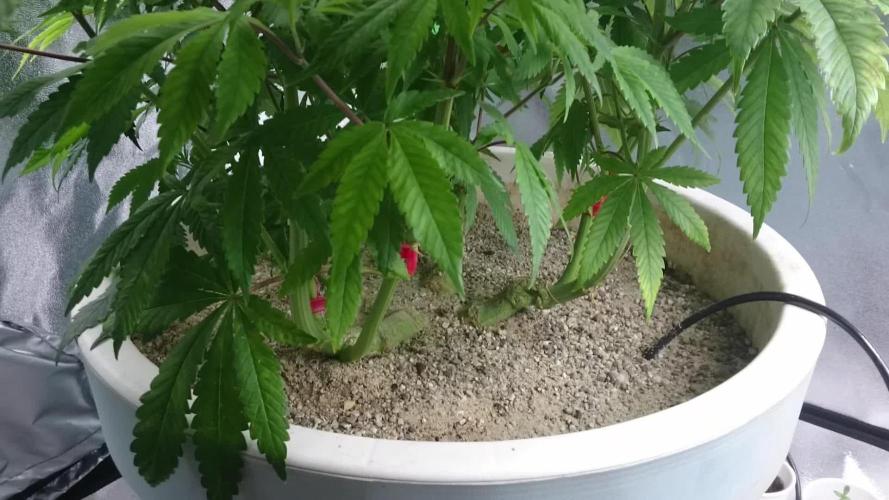
Another good week. Only problem are some naners that grew. No big deal but still noted. Otherwise watering every two to three days. And keeping the water full on the auto watering pots.
Lights at 100% power.
Here are the lights details:
Medic Grow Mini Sun-2 150W LED
Model: MN150-022
Spectrum mode: V1
Efficacy: 2.8 umol/J
Thanks for stopping by!
You can find the light on Grow Diaries:
https://growdiaries.com/grow-lights/medic-grow/mini-sun-2-150-watts
You can find the light on Medic Grow's website:
https://medicgrow.com/

Likes
120
Share


@DogDoctorOfficial
Follow
The Harvest Prelude:
After a patient wait and 48 hours of darkness, the moment arrived. The Tropical Tangie Lego Ninja, standing proudly like a silent guardian, was ready for the grand harvest. The sound of each cut echoed through the grow space, reminiscent of felling a mighty tree. The compact structure of the buds was awe-inspiring, a testament to the ninja's disciplined growth.
The Lego Ninja, like a stoic warrior, was then hung upside down, beginning a two-week drying ritual. Maintaining an ambient temperature of around 21°C and a relative humidity of 60%, this slow-drying process allowed the buds to retain their essence, preserving the symphony of terpenes and cannabinoids.
The trimming phase unfolded like a fragrant masterpiece. Each bud, adorned with a glistening layer of resin, transformed the trimming process into a sensory delight. The zesty aroma of oranges enveloped the room, a tangible expression of the tropical lineage. The compact buds made every snip a careful dance, revealing an abundance of frosty trichomes.
The moment of reckoning arrived with the scale's unveiling. The Tropical Tangie Lego Ninja, from a single plant, bestowed upon me 309 grams of dried medicine. Each gram was a treasure trove of cannabinoids, a promise of euphoria and relief. The sheer compactness of the buds translated into a concentrated potency that left me in awe.
In parallel, the clones, nurtured with equal care, showcased a fascinating divergence. A twist in the tale unfolded as the intense oranges of the mother transitioned into vibrant tangerines. This unique expression, I believe, was a testament to the clones weathering a summer heatwave differently, bringing forth a distinct personality.
The clones, resilient and generous, gifted me a bountiful 549 grams of pure joy. This now my keeper of the garden, an embodiment of the Lego Ninja's legacy. The harvest dance, though familiar, carried the nuances of tangerine zest, a refreshing twist that left me eager to explore its intricacies.
Both harvests shared a common thread—their resinous abundance. The trim bin, akin to a treasure chest, gleamed with golden trichomes and fragrant joy. Sticky fingers became a badge of honor, a tangible connection to the resinous richness that filled the room.
Shout Outs:
No harvest report is complete without expressions of gratitude. A special nod to @DutchPassion_Official for crafting the genetic marvel that is the Tropical Tangie Lego Ninja. Their expertise paved the way for this epic journey, and I tip my hat in acknowledgment.
In conclusion:
As the dust settles on this epic harvest saga, my heart brims with happiness and excitement. The Tropical Tangie Lego Ninja has proven itself not just as a plant but as a living masterpiece. Stay tuned for the smoke report, where we delve into the true essence of this botanical ninja's legacy. Until then, fellow cultivators, may your gardens flourish, and your harvests be as bountiful as the joy they bring.
As always thank you all for stopping by, for the love and for it all , this journey of mine wold just not be the same without you guys, the love and support is very much appreciated and i fell honored and blessed with you all in my life<3 <3 <3
#aptus #aptusplanttech #aptusgang #aptusfamily #aptustrueplantscience #inbalancewithnature #trueplantscience
With true love comes happiness <3 <3 <3 Always believe in your self and always do things expecting nothing and with an open heart , be a giver and the universe will give back to you in ways you could not even imagine so <3 <3 <3
Friendly reminder all you see here is pure research and for educational purposes only
<3 <3 <3 Growers Love To you All <3 <3 <3
P.S- I must extend my sincerest apologies for the missing video reports. Regrettably, Grow Diaries is still facing some technical issues that are preventing me from uploading them. Rest assured, as soon as the situation is resolved, I'll share those videos to give you an even closer look at this fascinating journey. or in my case apparently GD dont let me do uploads over 100mb with is super small file if you working and editing videos , doing my best here to upload them all but GD is not making my life easy on this <3 <3 <3

Likes
12
Share


@420DeepGrow
Follow
Gracias al equipo de AnesiaSeeds, Marshydro, XpertNutrients y Trolmaster sin ellos esto no sería posible.
💐🍁 Coco Jambo:
Con una composición genética 60% Sativa y 40% Indica, Coco Jambo es tu billete dorado a un verano sin fin, ofreciéndote una escapada a un mundo donde el sol nunca se pone en tu felicidad.
Con unos niveles de THC que oscilan entre un relajante 30% y un estimulante 34%, Coco Jambo es un faro de euforia que guía a sus usuarios en un viaje a través de olas de serenidad y vibrante alegría. Su aroma es una celebración de los sentidos; imagina el momento de euforia al abrir un coco y descubrir que rebosa de las frutas tropicales más suculentas.
🌻🚀 Consigue aqui tus semillas:
https://anesiaseeds.com/es/product/coco-jambo/
💡TS-3000 + TS-1000: se usaran dos de las lámparas de la serie TS de Marshydro, para cubrir todas las necesidades de las plantas durante el ciclo de cultivo, uso las dos lámparas en floracion para llegar a toda la carpa de 1.50 x 1.50 x 1.80.
https://marshydro.eu/products/mars-hydro-ts-3000-led-grow-light/
🏠 : Marshydro 1.50 x 1.50 x 1.80, carpa 100% estanca con ventanas laterales para llegar a todos los lugares durante el grow
https://marshydro.eu/products/diy-150x150x200cm-grow-tent-kit
🌬️💨 Marshydro 6inch + filtro carbon para evitar olores indeseables.
https://marshydro.eu/products/ifresh-smart-6inch-filter-kits/
🍣🍦🌴 Xpert Nutrients es una empresa especializada en la producción y comercialización de fertilizantes líquidos y tierras, que garantizan excelentes cosechas y un crecimiento activo para sus plantas durante todas las fases de cultivo.
Consigue aqui tus Nutrientes:
https://xpertnutrients.com/es/shop/
💻 Trolmaster Tent-X TCS-1 como controlador de luz, optimiza tu cultivo con la última tecnología del mercado, desde donde puedes controlar todos los parametros.
https://www.trolmaster.com/Products/Details/TCS-1
📆 Semana 10:
Última semana antes del corte final, los cogollos están bien prensados y cargados de resina de un color muy lechoso, solo falta que se tornen algunos tricomas más en ámbar.
MarsHydro y XpertNutrients han hecho de nuevo un gran trabajo 💪😍

Likes
2
Share


@CuriosityWebster
Follow
Loving how these girls are growing
Fastbuds mystery #1 finally catching up, and may possibly in the end being a better producer than the RQS plant, which is surprising to me because of how badly I stunted this plant. Got me curious how good this plant could’ve been


Likes
12
Share


@VeeDro203
Follow
Some lights out pics in this weeks line up!
Another top feed 70/30 again

Likes
146
Share


@Natrona
Follow
Apollo is in early flower. I water and fertilize Tuesday, Thursday and water on Saturday or Sunday. Even though the plants started within 2 weeks of each other, Apollo is in flower now. The Vpd for veg is much higher than for flower. So on 10/17, I moved the Friends ( Zkittles, Godzilla Cookies and GrandDaddy Purple) to my 3x3.
Stress training done on friends:
Zkittles -tie down
GDP -topped
Gorilla cookies no stress training as this plant is the runt of the friends.
Pics of Apollo's friends before moving tents.
Friends, Royal Queen Seeds Is offering a discount on purchases
👉**GROWERS20** for 20% 👈
Https://www.royalqueenseeds.com
Link to Apollo
https://www.royalqueenseeds.com/us/56-f1-hybrid-cannabis-seeds
Variety: F1 Hybrid auto
Genetic Background: Lemon x Black Domina x Sugar Mangolia
THC: Very high
Yield: XXL
Height: 55 - 75 cm
Flowering time: 45 - 50 days
Harvest: 75 - 80 days after sprouting
Effect: Calming, Creative, Motivating , Physically Relaxing
Flavor: Citrus, Herbal, Lavender, Pine, Vanilla
Major terpenes: Caryophyllene, Farnesene, Myrcene, Terpinolene
Climate: Short Summers
====================================
Equipment: AC Infinity
CLOUDLAB 844 – Advance Grow Tent 48”x48”x80”
CONTROLLER 69 PRO – Grow Tent Controller
CLOUDLINE LITE 6 - Inline Fan 6"
IONBOARD S44 – LED Grow Light Board 400W
CLOUDRAY S6 – Oscillating Circulation Clip Fan
Carbon Filter 6”
Pots: 5 gallon Air pots
Soil Fox Farm Happy Frog amended with worm castings, dolomite lime and mycorrhiza.
Seeds provided by Royal Queen Seeds Check them out 😎
Https://www.royalqueenseeds.com
Link to the seeds
https://www.royalqueenseeds.com/us/56-f1-hybrid-cannabis-seeds
use Discount Code
👉 **GROWERS20** for 20% discount 👈
Nutrients: Total Plant Solution
>TPS1
>Canopy
>Signal
Amended soil recipe #2 used for soil prep.
https://www.paramountseedfarms.com/super-soil-recipes/
Processing
Likes
6
Share


@dank604
Follow
She's starting to smell very nice! Already much stronger smell than my last grow which is welcomed! I moved the lights down 4 inches in hopes to 'light train' it and prevent the main cola from gaining more height so it can concentrate on the budsites, hopefully it pays off. Live and learn!
Happy growing y'all!
Likes
422
Share


@Crashoverite
Follow
Hi everyone.
Welcome to my🍌💜👊 week update.
Hope everyone keeping well and having a great week.
Daily updates and uploads so if week not over yet. Please revisit to see full week content😊
Thank you all for such amazing support 😊🤗💜
So far everything is going great. No issues at all. Both girls started preflower on Tuesday and already I can see that they started stretching nicely. Scrog net will be installed by the end of this week.
Week 5
13-19 Nov.
13/11 day 36
First runoff experience for girls. Loaded both pots with approx. 2.5 ltr each in 4 stages of 500-700ml. Runoff 100-150ml from each. Runoff PH 5.9. Nutrients for this watering were same as on previous week and added only calmag. Next watering possibly Friday but with new measurements.
14/11 day 37
Both 🍌💜👊 girls started preflower on same day. Xena is catching up quick to her larger sister and possibly soon they will be sharing this growing space 50/50
15-16/11 days 38-39
Just happy and healthy days 😁 nice steady growth.
17/11 day 40
Second watering for this week. 5.5l beetwen both. Runoff Ph 6.1
19/11 day 42
Most busiest day so far. Both girls got very bushy in last few days and they stretched enough to install scrog net. Before installing net applied selective defoliation on both girls. 8-10 fan leaves from each.
It's the end of this amazing week 😁
Thank you all again for such a great support 🤗✌️💚
Likes
10
Share


@eldruida_lamota
Follow
Esa familia, ya estamos a mitad de floración como quien dice finalizando la 4 semana , y es que están cogiendo unos tonos también, esos colores rojos y morados que están entonando😈
Tuve que tuitear las 5 plantas de un armario ya lo visteis y las puntas se dirigen hacia la luz. Cómo podéis observar en las fotos y vídeos.
Algunas se sobrealimentaron porque no todas comen igual pero reduci la alimentación solo en esas y ya se está solucionando.
Por lo demás , pronto empezaré aplicar el overdrive junto con el bud candy unas semanas más.
Las temperaturas en estos indoors son perfectas y la humedad relativa es correcta.
Hasta aquí es todo espero que os esté gustando, buenos humos y feliz navidad 💨💨💨
Likes
9
Share


@Grisly
Follow
Harvest 2024
Total Hash: 102g
Total Kief: 95g
Total Flower: 3868g/138oz/8.6lb
Total Yield: 4065g/145oz/9lb/4kilo
———-/-////////—vs———-/////————/
Sugar Diesel #1: 117g
Sugar Diesel #2: 313g
White widow Clone: 14g
Dual OG:
112g
LA Affie North Field: 248g
Granddaddy Purple N: 63g
Black Raspberry Kush N: 210g
————————————————-
Total North: 1077g/38oz/2.5lb
————————///——/—————-/
Fruity Pebbles: 184g
Granddaddy Purp S H2: 54g
Granddaddy Purp S H1: 275g
Granddaddy Purp Total: 329g/12oz
Black Rasp Kush S H1: 160g
Black RaspKush S H3: 70g
Black Rasp Kush S H2: 511g
Black Rasp Kush S H4: 17g
Black Rasp Kush S: 758g/27oz
Blue Cheese S H1: 281g
Blue Cheese S H3: 83g
Blue Cheese S H2: 285g
Blue Cheese Total: 649g/23oz
Dr Grinspoon S H1: 485g
—————————————————-
Total South: 2405g/85oz/5.3lb
————————///——/—————-/
North Popcorn: 148g
BC Popcorn: 100g
GP Popcorn: 73g
BRK Popcorn: 65g
—————————————————-
Total Popcorn : 386g/14oz/0.9lb
————————///——/—————-/
Trim: 8lb
—————————————————
————————///——/—————-/


Likes
8
Share


@kronoslogic
Follow
These things are growing out of control! They’re getting so close to the lights it’s insane. I’ve had to drop the lower slightly to prevent burning. These things are just so robust. They are extremely stable genetics and can handle most anything I’ve thrown at it intentionally or not. They just have a really remarkable vigor. Easily they’re nearly double the size since I started flowing exactly 14 days ago. I see calyx’s but no noticeable flowers (or balls) thus far. Should be any day now they finish the stretch and start to pack on the bulk. Some EC issues but nothing really too crazy or anything. They’re drinking a lot. Easily a gallon per day each. Really I’ve had no problems. Highly recommend growing these if you can

Likes
Comments
Share


@AutomataClub
Follow
La alegria que se palpita es mucha! Siempre soñe con tener cogollos oscuros y esta es la primera vez! Es notable la diferencia entre la planta fertilizada con namaste y la de feeding, aunque con este solo utilize el Grow y el Booster. Esta ultima tiene un aroma mas plano, sutil, pero gana en volumen. En cambio con la que utilize namaste destaca mas la precencia de ese aroma como a frutos del bosque, dulce y terroso.
A comienzos de pre flora aparecieron unos gusanos verdes que se multiplican muy rápido. La mayoria la elimine a mano, pero lo ideal es utilizar jabon potasico + Aceite de neem para eliminarlos inmediatamente.
Likes
5
Share


@mobbly
Follow
"Hi, I received my pH meter this week, so from week 6 onwards, I'm aiming for a pH value of 6.0 - 6.5. This week, I noticed that the plant in the small pot received too much fertilizer. The other two 7.5-liter fabric pots also received double the recommended amount according to the feeding schedule, but they don't show any signs of over-fertilization."
Processing
Likes
10
Share


@KISSOU
Follow
First day with big big sun and hot weather, I use biobizz light mix so I will start to feed the ladies at day 14, we will see the development 😊

Likes
5
Share


@Staffedition
Follow
Очень хороший сорт, не грузяший, держит на позитиве. Хочу заметить при приобладании больше% индики в сон не клонит.
Так же хочу заметить приятный аромат который не похож на другие! Приятное послевкусье. сильно не сушит. Привыкания не вызывает.
Likes
5
Share


@AustinRon
Follow
TH 1Q2025 - Week 11 - Flower 8
(ON Haze X Original Haze) X Northern Lights #2
“Todd’s Haze”
Objective
- 8 Female Plants, Topped ONCE @ Flip, 12” when topped
- Modified Sea of Green
Seeds Wet: 1139PM, 28.2.2025
Germinated: 2.3.2025
Flip: 21.3.2025
Harvest: 77 Days, DATE: 6.6.2025
_________________________________________
__
Fri May 16, 2025
TH 1Q25 57:F:8:1
Harvest Dehu
- [x] Amount: [ 1.5, gal]
- [x] EC: [ 2.9, mS/cm]
Refresh Reservoir
- [x] Primer A&B: [ 36, ml]
- [x] SLF-100: [ 15, ml]
- [x] Amount: [ 3, gal]
- [x] EC: [ 1.8, mS/cm]
Runoff
Amount: [ 2, gal]
EC: [ 1.9, mS/cm]
__
Sat May 17, 2025
TH 1Q25 58:F:8:2
- [ ] Install Line Supports for TALLS!!!
We REALLY need to clean up the foliage, especially lowers.
Defoliation
- [ ] GO SLOW
- [x] Remove Fans w/ Petioles up to Center Bar of tent.
- [x] Selectively Defol above
Note: Last time we defoliated, we thereafter had a flush of new green. (Week 5) May be correlated with CalPHOS (Applied same time) or Not. Point is, GO SLOW.
Runoff:
- [ 0.25, gal] # Leaving Irrigation Parameters overnight. Will gauge amount being taken up SUNDAY
__
Sun May 18, 2025
TH 1Q25 59:F:8:3
The Veg is almost overwhelming. I’m continuing this grow with some encouragement from GrowCast, but:
1. Pistils have integrity, the bracts are completely loosened, but larfing on uppers apparent.
2. IF This plant finishes, they’ll largely be TRIM MONSTERS.
3. I could grow my clones today - without having clones to take -
*** Frustration***
Harvest Dehu
- [x] AMOUNT: [ 2.5, gal]
Refresh Reservoir
- [x] Amount: [ 2, gal]
- [x] Primer A&B: [ 12, ml, gal]
- [x] SLF-100: [ 5, ml, gal]
- [x] EC: [ 1.8, mS/cm]
Runoff
- [x] Amount: [ , gal]
- [x] Installed Lateral Supports for Leaning TALLS
__
Mon May 19, 2025
TH 1Q25 60:F:8:4
We’re using more water than Dehu is providing . . .
Refill with pH’d FILTERED TAP
__
Tue May 20, 2025
TH 1Q25 61:F:8:5
__
Wed May 21, 2025
TH 1Q25 62:F:8:6
__
Thu May 22, 2025
TH 1Q25 63:F:8:7

Likes
4
Share


@KirbyFarm
Follow
Now into flowering the girls are growing many white hairs and slowly chunking up. Some look urhter along than others into the actual forming oi buds. Looking good.

Likes
3
Share

@PatriciaGant
Follow
Dane, We all should help one another.
Human beings are like that.
We should live by each other’s happiness - not by each other’s misery.
We don’t want to hate and despise one another, share the Joint.
And mother earth is rich and can provide for everyone.
We can Grow enough Happiness, In this paradise, there is room for everyone.
We only exist to bring joy into the world and The way of life can be free and beautiful,
but we have lost the way.
Grow High and Give the world A smile.
At the end we own nothing more then all our memories, lets make them amazing for everyone,
nothing to lose only everything to win.
for those who come after, right.
A last kiss goodby, a second one, softer and long as a sign, that you are woth it.
That Everyone worth, who loved and given.
Enought Hippie Talk, now have a nice day and an even better grow, thx for watching by.
((From Seed 🌱
((From Clone 🌿
week report:
shhhit those fking flys sand should be washed and not mineral heavy SHOULD well i let airpump in mabe it helpd sand could strangle off air suply we see
well well sadly she is dying

Likes
42
Share


@Dunk_Junk
Follow
9cm vertical growth this week.
Lots and lots of flower sites. 😎
Very bushy.
Very Kushy 😂 😍


