The Grow Awards 2026 🏆
Likes
6
Share
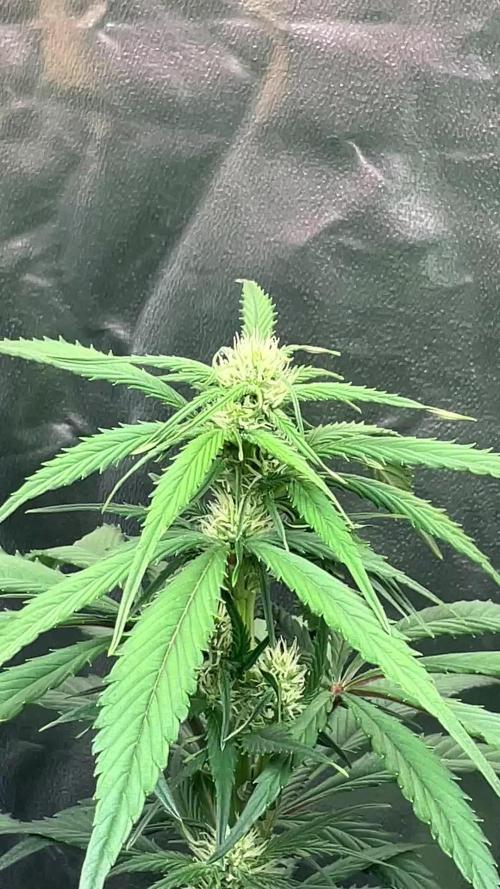
Day 77 she is looking great and smelling great.She is not a big plant but I am sure she will be some very good smoke.Im going to let her grow for another week or so.
Likes
3
Share
unfortunately we noticed some budrod in the headbud. we cut it generously sb, unfortunately the papaya cookies still need something and the weather is now autumnal cold and rainy. We'll see in 7 days at the latest, but hopefully there won't be any more budrod by then... It's the most beautiful of all the outdoor plants so far.
Likes
8
Share
Fast Buds Wedding Glue Day 49 Light viparspectra XS2000 dialed in at 75% light intensity Watering every other day to every two days Buds are taking off on this girl! wow! growing in nice and frosty! super excited how she looks this time next week! See you all next week! Happy growing
Likes
17
Share
@Naujas
Follow
She is much prettier than she was a week ago :) I remembered that I have my first grow light, which is more compact and it will give me more space, so I changed my light, now the girl's side branches get light too:) I add a lot of video memes, because I really want to win Iphone16 pro ;) and those who don't take risks don't drink champagne:) good luck to everyone.
Likes
4
Share
So far so good they are starting to fill out the 1/2 and 1 gallon velcro transplant bags with roots very nicely. I still havent fed them any grow nutrients just some mammoth mycos,hardy gro ultra-bio and a liquid soil inoculant i got from ebay. I will them some NPK raw grow and cal/mag next week.
Likes
15
Share
Hey guys :-) This week she has developed very well. For reasons of time, I topped them again on all the drives that were already high :-) Unfortunately, there is still some time until there is room in the blossom tent. That's why I'll have to train them a little more 😂. Was poured 3 times this week with 1 l each. (nutrients see table above) Since there are still trips in the vegetarian tent, the next few weeks will be treated again with nematodes and neem oil :-( . Otherwise everything was cleaned. Have fun with the update and stay healthy 💚🙏🏻 👇🏼👇🏼👇🏼👇🏼👇🏼👇🏼👇🏼👇🏼👇🏼👇🏼👇🏼👇🏼 You can buy this Nutrients at : https://greenbuzzliquids.com/en/shop/ With the discount code: Made_in_Germany you get a discount of 15% on all products from an order value of 100 euros. 👇🏼👇🏼👇🏼👇🏼👇🏼👇🏼👇🏼👇🏼👇🏼👇🏼👇🏼👇🏼 You can buy this strain at : https://www.amsterdamgenetics.com/product/kosher-tangie-kush/ Water 💧 💧💧 Osmosis water mixed with normal water (24 hours stale that the chlorine evaporates) to 0.2 EC. Add Cal / Mag to 0.4 Ec Ph with Organic Ph - to 5.8 - 6.4 MadeInGermany
Likes
7
Share
@UrbanBoer
Follow
Alike Lamb Breath this lady loves the cold weather, but the most important thing I’ve seen is just balancing light, nutrients, stress, and water. I am going to have fun now with these ladies, when it comes to LST all I am missing is a fan, but this will be an indication whether I really do need a fans to circulate airflow to mimic
Likes
13
Share
@Corwinism
Follow
Week 2 (08.29.2021 - 09.04.2021) Nothing much to report this week. The ladies are looking fantastic. The canopy is from wall-to-wall. The stretch seems to have slowed down quite a bit. However, I've raised my light up as high as it will go with the rope ratchets. If the canopy gets much closer to the light fixture I'm going to have to figure out a way to create some distance. Tying down some branches at this point would be a real pain in the ass, so I'm trying to avoid that. Thank you for stopping by and checking out the progress as we delve deeper into the flowering stage. 2 weeks down, about 7 more to go! See you next week. 🙏
Likes
17
Share
Very fun strain to grow. Easy to train and love to get big. We had 2 different expressions on the plants and both where very pleasing. Both plants grew vigorously and provided me with just over 3/4 pound of dry medicine!
Likes
3
Share
@Luke_Lee
Follow
————————————————————— WEEK 6 / DAY 37-43 Mars Hydro FC-E3000 Floragard Professional GrowMix 11L Plant bag made of fleece Light: 50cm Schedule: 18/6; PPFD: 686-700 umol/m2/s 20° C - 50 RH 1L per Plant PH 6,5-7 2ml BioGrow; 1ml TopMax ; 1ml BioBloom 1ml CalMag #1 Royal Critical Automatic #2 Royal Critical Automatic Fan, extractor and pump ON 24/0. ————————————————————— -24.02.2025 The first week of flowering begins today. The light will be switched to an 18/6 light cycle from today. The distance is 55cm with a value of 686 PPFD (PhotoneApp). TopMax and BioBloom will also be added to the irrigation water from this week. I am curious to see how the plants will develop in the coming weeks. -01.03.2025 The plants are developing very well. They were watered on Tuesday 27.02 and today 01.03 with 1 liter of water each (2ml BioGrow; 1mlCalMag; 1mlBioGrow; 1mlTopMax). The LST was adjusted again and a few leaves and popcorn buds were removed. Total Time-1031:04h Total Energy-166,72kWh
Likes
115
Share
Week 10 Marvel: Cherry Cola's Pruned Elegance and Floral Splendor Greetings, fellow cultivators! We've reached the remarkable milestone of Week 10 in the Cherry Cola Auto journey, and the tent is a painting of botanical wonders. Week 5 of the flowering stage has unveiled a need for a strategic defoliation, and our green queen has undergone a meticulous pruning process. Let's delve into the details of this transformative week. As we navigate through Week 5 of the flowering stage, the Cherry Cola Auto is a testament to the magic of autoflower cultivation. The buds are evolving, and the tent is permeated with the tantalizing aroma of a promising harvest. The journey thus far has been a delight, and the best is yet to come. In response to the flourishing canopy and to optimize light penetration, a strategic defoliation became imperative. The decision to remove excess foliage was not only about enhancing light exposure to critical bud sites but also promoting better airflow and reducing the risk of potential mold or pest issues. The defoliation process involved removing larger fan leaves, allowing the lower branches to receive their fair share of light. In addition to defoliation, a meticulous bottom cleaning ritual took place. Removing the lower, less productive growth not only redirects energy to more crucial upper buds but also eliminates potential sites for moisture retention and pest harborage. This step is crucial in maintaining a healthy, well-ventilated environment as we approach the final weeks of flowering. The defoliation and bottom cleaning were conducted with surgical precision. It's not just about removing leaves; it's a delicate dance of preserving the plant's natural grace while maximizing its potential. The result is a pruned elegance that showcases the structural beauty of Cherry Cola's budding architecture. Our nutrient regimen, with P-Boost, Topbooster, and the strategic addition of Potassium (K), continues to be the backbone of this flourishing spectacle. The phosphorus boost and organic grace provided by Topbooster, combined with the potassium magic, are orchestrating a symphony of blooming processes that bode well for the upcoming harvest. The TDS reading, now at 550, reflects the balanced nutrient environment, ensuring the plant's nutritional needs are met. Maintaining an ideal pH balance of 6.4 ensures that the nutrients are readily available to the plant. This harmony in pH contributes to optimal nutrient absorption and supports the overall health and vigor of our Cherry Cola Auto. As we prune and nurture, the tent is filled with an aroma extravaganza. Cherry Cola's terpene profile is becoming more pronounced, promising a sensory delight in the final product. The olfactory journey is a precursor to the flavors and effects that await. As Week 10 unfolds, Cherry Cola Auto stands as a pruned prelude to harvest, a testament to the meticulous care and strategic decisions throughout the journey. The mood is set for the final act, and we eagerly anticipate the culmination of this horticultural odyssey. Stay tuned, fellow enthusiasts, as the Cherry Cola Chronicles approach their grand finale! Nutrition: @aptusholland @aptus_world @aptus_ Love, Care, and Attention: @dogdoctorofficial As always, thank you all for joining me on this journey, for your love, and for it all. My horticultural odyssey would never be the same without you. Your love and support are cherished, and I feel both honored and blessed to have you in my life Friendly reminder all you see here is pure research and for educational purposes only Growers Love To you All 💚 💚 💚
Likes
2
Share
Great week overall-5 Gallons PH water every 72 hours. Added Beneficial microbes and Molasses to feed them is all. Due to new trich development she remains about 50 percent cloudy. Time will tell.
Likes
52
Share
You don't become confident by shouting affirmations in the mirror, but by having a stack of undeniable proof that you are who you say you are, outwork your self-doubt. Nitrogen fixation is a chemical process by which molecular nitrogen (N2), which has a strong triple covalent bond, is converted into ammonia (NH3) or related nitrogenous compounds, typically in soil or aquatic systems but also in industry. The nitrogen in air is molecular dinitrogen, a relatively nonreactive molecule that is metabolically useless to all but a few microorganisms. Biological nitrogen fixation or diazotrophy is an important microbe-mediated process that converts dinitrogen (N2) gas to ammonia (NH3) using the nitrogenase protein complex (Nif).[2][3] Nitrogen fixation is essential to life because fixed inorganic nitrogen compounds are required for the biosynthesis of all nitrogen-containing organic compounds, such as amino acids and proteins, nucleoside triphosphates and nucleic acids. As part of the nitrogen cycle, it is essential for agriculture and the manufacture of fertilizer. It is also, indirectly, relevant to the manufacture of all nitrogen chemical compounds, which include some explosives, pharmaceuticals, and dyes. Nitrogen fixation is carried out naturally in soil by microorganisms termed diazotrophs that include bacteria, such as Azotobacter, and archaea. Some nitrogen-fixing bacteria have symbiotic relationships with plant groups, especially legumes.[4] Looser non-symbiotic relationships between diazotrophs and plants are often referred to as associative, as seen in nitrogen fixation on rice roots. Nitrogen fixation occurs between some termites and fungi.[5] It occurs naturally in the air by means of NOx production by lightning.[6][7] All biological reactions involving the process of nitrogen fixation are catalyzed by enzymes called nitrogenases.[8] These enzymes contain iron, often with a second metal, usually molybdenum but sometimes vanadium. Green clover (Fixation) White clover (Fixation) Red Clover. (Fixation) Yellow Clover. (Fixation, deeper roots) Sweet Thai Basil. (Terpenes) Italian Basil. (Terpenes) Chamomile.(Oil production) Borage.(Pest attraction taste) Lavender.(Pest attraction smell) Marigold(Pest attraction visual) Mycorrhizae are beneficial associations between mycorrhizal fungi and a plant’s root system. Mycorrhizal fungi spores germinate in the soil, creating filaments (hyphae) that penetrate the root cells, thus establishing a symbiotic relationship. This collaboration leads to the development of both intra-radical and extra-radical networks of filaments, enabling efficient exploration of the soil for enhanced access to nutrients and water. Consequently, these vital resources are transferred to the plant, resulting in numerous benefits for crop cultivation. Various mycorrhizal products are available in diverse formulations (powder, granular, and liquid), concentrations, and qualities. Ongoing advancements in products, technologies, and research are reshaping our understanding of mycorrhizae. Despite these positive developments, certain misconceptions persist. In the following discussion, we aim to clarify the truths and dispel the myths surrounding mycorrhizae products. MYTH #1 A HIGHER NUMBER OF MYCORRHIZAE SPECIES MEANS BETTER RESULTS. Contrary to common belief, having a higher number of mycorrhizae species in a product does not translate to better results; in fact, it often yields the opposite outcome. A plant can sustain only one association with a particular mycorrhizal fungi species. Introducing multiple species creates competition among them, which is not advantageous for the plant. The initial colonizer does not ensure the highest success; instead, it gains precedence. It is recommended to select a product with a concentrated presence of a single mycorrhizae species known for its effective performance, rather than opting for a product with multiple species at lower concentrations. MYTH #2 ECTOMYCORRHIZAE ARE EFFECTIVE FOR CANNABIS PLANTS. Although ectomycorrhizae can colonize five to ten percent of plant species, cannabis is not among them. Ectomycorrhizae do not penetrate the root cells; instead, they develop around the roots and on the exterior. For cannabis plants, it is essential to seek out endomycorrhizae. Endomycorrhizae are capable of colonizing 70% to 90% of plant species, including cannabis. Unlike ectomycorrhizae, endomycorrhizae penetrate the root cells, forming structures like arbuscules for the exchange of nutrients and water with the plant. MYTH #3 WHOLE INOCULANT (PROPAGULES) PERFORM BETTER THAN ONLY VIABLE SPORES. The propagule count specified on most mycorrhizae products indicates the presence of spores (viable and unviable), hyphae, and root fragments. However, it is crucial to note that only viable spores, those with the capacity to germinate, can successfully colonize a plant’s root system. Spores are to mycorrhizal fungi what seeds are to cannabis plants—a fundamental component enabling fungi reproduction. Consequently, even if a mycorrhizal product boasts millions of propagules, its effectiveness hinges on the presence of viable spores. Without viable spores, the product will not contribute to plant development. Therefore, the genuine value of a mycorrhizal inoculant lies in the quantity of viable spores it contains, as only viable spores can efficiently initiate symbiosis. MYTH #4 ALL METHODS OF APPLICATION YIELD IDENTICAL RESULTS. To establish the symbiosis, mycorrhizal fungi spores must be close to the plant roots. The optimal recommendation is to directly apply mycorrhizal inoculant to the roots, either in powder, granular or slurry form. This method ensures maximum proximity between the spores and the roots, facilitating a rapid establishment of symbiosis. Particularly with crops like cannabis, which have a short growing cycle, employing this technique is the most effective way to obtain optimal benefits. Alternatively, techniques such as blending the inoculant with the soil are effective, but there may be a delay in the establishment of symbiosis. This is because the roots need to grow and come into contact with the dispersed spores throughout the growing media. MYTH #5 MYCORRHIZAE CAN ONLY BE GROWN ON LIVING PLANTS. While the predominant method for commercially producing mycorrhizae involves growing them on the root systems of living plants (in vivo production), it is not the exclusive nor the optimal technique. In fact, this production approach has notable drawbacks that the “root organ culture” method just does not have (in vitro production). In vitro production occurs in meticulously controlled, aseptic laboratory conditions, allowing for the consistent generation of products that are viable, highly concentrated, species-specific, and free from pathogens. Achieving such precision and quality is impossible when relying on the cultivation of mycorrhizal fungi on plants exposed to external conditions. In conclusion, it is crucial to take all these factors into consideration when choosing the appropriate product for your crop to fully harness the wide array of benefits provided by a high-quality mycorrhizal product. STRONGER PLANT – Stress resistance. FASTER GROWTH – Improve plant structure and shorter veg time. INCREASE YIELD – Overall more biomass. IMPROVED QUALITY – Increase cannabinoids and terpenes content.
Likes
33
Share
Starting week 2 with lighting under Hps 600w lamp. All three plants growing very fast and healthy 😊 💣💣💣💣
Processing
Likes
8
Share
@e4rtht0ne
Follow
Buds starting to form across all the main branches now. Transition to flowering is pretty clear now. Veg growth has slowed. Have switched to bloom nutes from a general purpose one.
Processing
Likes
5
Share
@pegonter
Follow
Planta cresceu em repouso nas últimas duas semanas e voltarei a praticar o LST na próxima semana. Planta está crescendo em um grow com outras 4 plantas em estado vegetativo e uma em revegetativo. todas as outras 4 plantas da mesma semente não germinaram.