


Likes
Comments
Share


@whenindoubtsmokeitout
Follow
found a small bud rot site, we had to remove the whole cluster around, and sanitise with alcohol.


Likes
12
Share


@NONSENSE
Follow
,, the Flooring going well as you can see buds growing just perfect, I am using nutrients from Hesi.
No overdose, no PH correction.
Recommend

Likes
75
Share


@deFharo
Follow
Bienvenidos cultivadores de marihuana clandestinos y también a los que tienen la fortuna de no serlo!🖐️👨🌾
Se ha completado la octava semana desde el paso a floración, veo a la planta una vez al día, pues permanece todo el tiempo en la carpa de cultivo, ya que los días están siendo muy nublados, poco trabajo sobre el cultivo, apenas me preocupo, sólo regar en el momento justo, para esto, peso todas las macetas una vez al día y llevo el control de consumo de agua y riegos en una hoja de excell.
La planta ayuda mucho, fagocitando, poco a poco, las hojas más viejas, capturando los últimos minerales que estas hojas generosamente dejan, y además, dejando más espacio libre para que la luz entre hasta el centro de la planta. He seguido cortando ramas bajas que no prometían nada.
Sigo nutriendo a la planta con cada riego, creo que es adecuado para engordar al máximo las colas, controlando la concentración de mis preparados solubles no corro el riesgo de sobre fertilización, de todos modos, en estas últimas semanas baso mis mezclas de riegos en el aporte de fósforo y potasio, ácidos húmicos y Microorganismos de Montaña Activados (MMA).
El productor habla de una etapa de floración entre 8-9 semanas, la planta va a cumplir, tal vez llegue a las 10 semanas, ya que el paso a floración fue más lento de lo normal, pues me empeñé en un horario de 14/10h y retrasó la pre flora, al menos, semana y media.
• DATOS:
👨⚖️🤷♀️ Cultivo clandestino de marihuana en el norte de España
🌲 Cepa: https://es.seedfinder.eu/strain-info/Double_Strawberry_Diesel_Jones/Connoisseur_Genetics/
🌼 Maceta textil de 15l
🌍 Sustrato personalizado con 14 minerales y etc... Ver la mezcla: https://growdiaries.com/diaries/127088-grow-journal-by-defharo
💡 Luces del dosel: Mars TS 1000 al 100%, Vipar P1000 al 100%.
💡 Luz lateral:
- Panel LED 30x30cm (36w) 3000K + 660nm, proporción 3/1.
- Panel LED 20x20cm Samsung LM301B (50w) 2700K + 660nm. proporción 12/1.
- Tled SJ Blooming (23w) 3000K, 2100K, IR, proporción 1/1/1.
- Led COB (50w) a 2800K con lente de 90°.
🌞💡 Horario: 12 en interior.
🏠 Carpa de cultivo compartida con 3 plantas y otras 4 plántulas: 60x120x178cm.
🥗 Nutrición soluble 3M, hecha en casa con Materia orgánica, Minerales y Microbiología.
Hasta pronto...
SALUDOS CULTIVADORES!!🖐️👨🌾💧💦🌞💡
=================================


Likes
2
Share

@DogDoctorOfficial
Follow
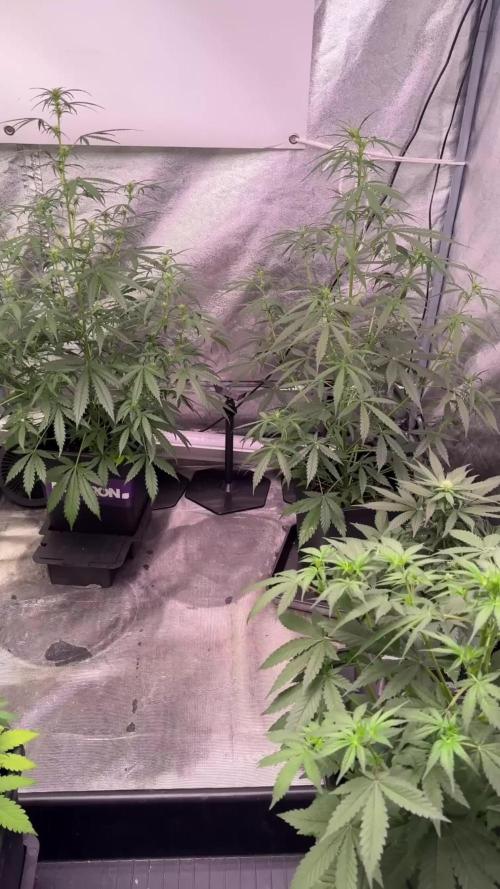
🍬 Candy Rain Auto by Zamnesia | Week 5 (Late Vegetative Growth / Pre-Flower)
🍬 The Solo Survivor – Small Setback, Big Future
Every grow has a story, and not every story begins perfectly.
Candy Rain is the only survivor from this folder. Losing her sister early in the project was entirely on me, and that’s simply part of growing. Every mistake becomes another lesson, and rather than focusing on what was lost, this diary celebrates the plant that kept pushing forward.
Despite her delayed start, she’s proving that healthy genetics and a stable environment can overcome a rough beginning remarkably quickly. She’s only a few days behind the rest of the room, yet every day she seems determined to close that gap.
This project continues documenting how autoflowers perform under a true 12/12 From Seed schedule from germination, challenging the common belief that this lighting regime prevents vigorous development. Supported by the complete Plagron feeding program, grown under the Future of Grow Black Series LED, and thriving inside the Zamnesia-sponsored 8×8 Adventure, Candy Rain is becoming another reminder that every plant deserves its own opportunity to shine.
And this week…
She absolutely deserves her spotlight.
⸻
🌱 Week 5 – Catching Up Fast
Although I’m still considering this her final week of vegetative growth for reporting purposes, the plant clearly finished the week entering pre-flower.
Fresh pistils are now appearing at the top growth, and the transition toward bloom is well underway. Rather than exploding into stretch overnight, Candy Rain is making the change gradually while continuing to build a sturdy framework for flowering.
At around 60 cm tall, she isn’t the largest plant in the room, but she’s beautifully proportioned. The internodal spacing is excellent, the main stem continues thickening nicely, and every branch is positioning itself to receive strong light as flowering progresses.
Sometimes the smaller plants end up becoming the easiest ones to manage, and she’s developing exactly that kind of balanced architecture.
⸻
🌿 Training & Plant Development
Training has remained simple and gentle throughout the grow.
Low Stress Training has helped open the canopy while preserving the plant’s natural structure. Combined with regular leaf repositioning, this has allowed light to reach developing side branches without introducing unnecessary stress.
One thing visible this week is some damage on a few older leaves.
This isn’t something I’m concerned about. Between the early setbacks, a little environmental stress from airflow, and perhaps my own learning moments while dialing everything in, a handful of leaves have certainly seen better days.
The important part is what the plant is telling me now.
The newest growth is emerging vibrant, healthy, and beautifully green, showing that the current conditions are exactly where they need to be. Rather than chasing cosmetic perfection on older leaves, I’m paying attention to the fresh growth—and that’s looking fantastic.
Healthy new growth always tells the real story.
⸻
💧 Nutrition & Irrigation
Although this report still closes the vegetative chapter, the plant has already begun receiving the same flowering transition feed as the rest of the room.
Current feeding:
• Terra Grow — 1.9 ml/L
• Terra Bloom — 1.9 ml/L
• Pure Zym — 1 ml/L
• Sugar Royal — 1 ml/L
• Power Roots — 1 ml/L
• Power Buds — 1 ml/L
The transition has been smooth, with an EC around 1.83, pH maintained at 6.05.
No signs of nutrient deficiencies are developing in the new growth, giving me confidence that the plant has recovered completely from her slower beginning.
She’s now receiving exactly what the rest of the room is receiving—and she’s responding beautifully.
⸻
🌡️ Environment
Environmental conditions continue providing a stable ecosystem for every plant inside the tent.
* Day temperature: 31.1°C
* Night temperature: 25°C
* Relative humidity: 72%
* Solution temperature: 21.6°C
* Root zone temperature: 21°C
* CO₂: approximately 639 ppm
Even with the warm summer temperatures, the healthy root environment, excellent airflow, and consistent irrigation continue allowing the plants to grow vigorously while transitioning naturally into bloom.
The room continues doing exactly what it’s supposed to do.
⸻
👀 Looking Ahead
Next week marks the beginning of a completely new chapter.
The stretch should become much more noticeable as Candy Rain fully commits to flowering, and I’m excited to see how her elegant structure begins filling with bud sites over the coming weeks.
Being only slightly behind the rest of the room really isn’t a concern anymore. In fact, she seems determined to catch up one day at a time, and with every new set of leaves she’s reminding me that healthy plants don’t dwell on the past—they simply keep growing.
I’m looking forward to watching those first flower clusters begin stacking along each branch.
⸻
🙏 Final Thoughts
Not every plant starts life under perfect circumstances.
Sometimes the most rewarding grows are the ones that overcome early challenges and keep moving forward without looking back.
Candy Rain may be the solo survivor of this folder, but she’s far from being “the leftover.” She’s becoming a beautiful example of resilience, proving that a slightly delayed start doesn’t define the final harvest.
Every week she’s writing a better chapter than the last.
A huge thank you to Zamnesia for making this incredible project possible, Plagron for providing such reliable nutrition, Future of Grow for delivering outstanding lighting, and to everyone following this 8×8 Adventure here on GrowDiaries.
Your support, comments, and shared passion for growing make these weekly updates something I genuinely look forward to creating.
Until next week…
Growers love and happy growing! 🌱💚

Likes
Comments
Share

@Pfalzgrown
Follow
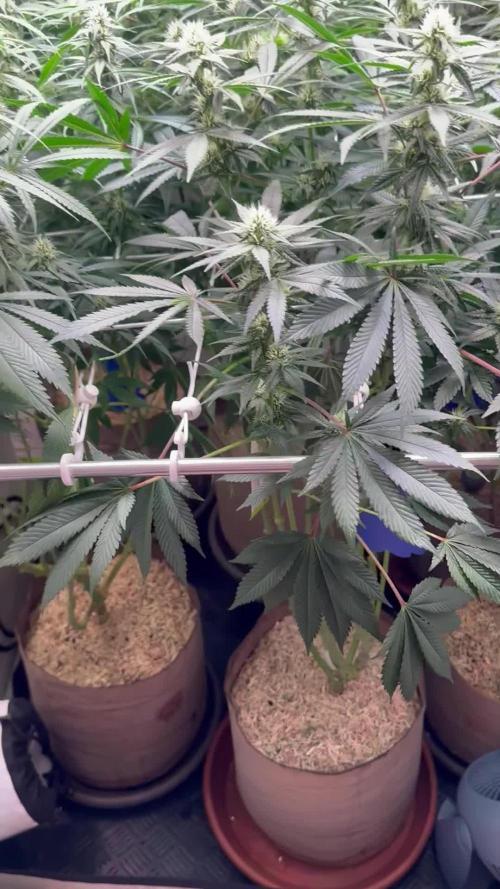
Links = Serious Happiness
Mitte = Strawberry AK
Rechts = RS11
1x pro Woche = 1ml/l Melasse, 0,5g Bittersalz pro 10l Wasser und Green Bull nach Anleitung
Jetzt wird zusätzlich angefangen ein bisschen mineralisch zu boosten


Likes
23
Share


@NordicCropz
Follow
Its done! Even though I expected a higher yield, I'm happy with my first harvest. It could have gone worse. Got 61 grams of the biggest plant, it took eternities, but the yield is pretty decent for a first grow.
Thanks WSE! Next up will be Strawberry kush and Harlequin.

Processing
Likes
7
Share


@greenflipcali89
Follow
Another week in the books and significant growth as I increase dosage of nutrients, closer to 100% full dosage. I have read mixed messages about feeding every watering, to every other, to once a week...full strength, 1/2 strength, etc etc. I decided to ease into the nutes and work my way up, and feed only weekly. Less is more! Wait for her to get a little bigger and more mature and will feel better feeding at 100% full dosage. Did some more LST, pulling down higher stems and continue to build the table.
Day 37: more growth; did some light defoliation to open up center; raised light to 18" (was at 15" in some spots) as it continues to grow.
Day 41: more growth; transplanted into 5 gal fabric pot; installed ScROG and will continue veg stage until rest of the plant catches up to at least a few inches above the screen
Likes
5
Share


@most_dope
Follow
This week I was wondering why the tops looked funny but it looks burned so I chopped the top cola off the afgan kush. It was too crispy and all the holes from the dead pistils made me think it Hermed and those were all seeds. Found some little white maybe beginning of seeds but not sure because it wasn’t many. I tried snipping a sugar leaf a few weeks back and accidentally snipped the bud a little so I might have caused that bud to stress. I’m almost done so I’m just hoping the others in the tent don’t get affected if it pollinated itself at all. I might chop the top of the zkittlez off too and let the bottoms finish off for a week or two longer when I drop the lights down some. For no I just tied the big cola to the side. I need to get a par reader and get on my Ppm meter too because so far I’ve grown 3 plants without those and just guessing based on the packaging lol. I feel like it’s been relatively smooth for the circumstances tho and happy that I could at least smoke all of them so far.


Likes
13
Share


@BudXs
Follow
Dear Diary
Autos are looking good. Suffering from low RH and im doing all that I can, but winter is a bitch.
Plants are healthy and femal, so all is good. These girls will start to rock as the natural RH picks up over the next few weeks
xoxo, BudXs

Likes
32
Share


@BB_UK
Follow
Greeeeeat week! Dynomyco has truly helped these Girlies get off to an amazing start and gave them the force to gain thick stems and more branches! It could also be the addition of Co2 in the grow area! I also give them a diluted foliar feed of formulex as they go through the day as I have a very low humidity for that week but I can bring it up now as I don’t need it so low in my home! Was drying other plants basically! I’ve decided to top these girls too as they run down the centre I can train them! It’s going to be an exciting week! Zamnesia strains once again proving to be a top hit 🤘🏽💚 I’m also running their collab strain with ripper seeds of amnesia punch!
Likes
19
Share


@RDWCGrowing
Follow
Week 1 Day 1 - 8/12/2023
1st Water change Day! Such a special time it is when you remove the little bit of Nutes that you gave them as an appetizer and you give them their first real meal.
Added
39 Gallons of Water to my system
SILICA= .5mil/Gal = 19.5 = 20mil
Root Drip = 1mil/Gal = 39mil
Cal Mag= .25mil/Gal = 9.75 = 10mil
FLoraMicro= 3.0mil/Gal = 114mil
FloraGro = 2.0mil/Gal = 78mil
FloraBloom = 2.0mil/Gal =78mil
ORCA= .5mil/Gal = 19.5 = 20mil
Week 1 Day 2 - 8/13/2023
Everything is looking good the roots are making thier way to the water and the new grow is looking nice and green.
Week 1 Day 3- 8/14/2023
Everything is right on track, they are looking beautiful and in the praying postition all leaves happily lifting towards the light.
Week 1 Day 4- 8/15/2023
Looking beautiful today and looked like she could use her first haircut.. gave her a TOP off. Roots are laying in the water everything is looking right on track..
Week 1 Day 5- 8/16/2023
walked in and the humidity was under 60.... ohh noooooo.. So I added 2 humidifiers to the tent and attached them to my InkBird controller which is set to 62. She had roots nicely in the water.. this grow is on!!!
Week 1 Day 6- 8/17/2023
Humidity was a little low this morning, so I refilled the humidifiers. Other than that, the temp looks great, the PH looks great, the PPM looks good the plant is in the praying position and all damage from the little drowning seems to have been fixed. Happy Happy.
Week 1 Day 7- 8/18/2023
Yay.. week 1 in the books, roots in the water growth has started first hair cut given and both side nodes are growing. Everything is looking good and on track.. A lot better than week one of the last grow when I had them drowning week 1.
Really excited on how this grow is going to come out.
Likes
8
Share


@xXNoShowXx
Follow
Growing medical marijuana has been such an amazing outlet for me. And I think that I would be in a much much worse place without having in my life as far as cultivating goes. I have formal education in horticulture specialist, however marijuana is so resilient and so strong and so willing and ready to live. But I plan to take it to its limits

Likes
3
Share


@Joaka
Follow
Si bien se ve un crecimiento explosivo, no veo un buena generación de tricomas, debe ser porque aún no saco el nitrógeno

Likes
Comments
Share


@Billy_Piff
Follow
Great breeder, great strains to grow, and finished on time as advertised.
Likes
8
Share

@Stoney_Stark
Follow
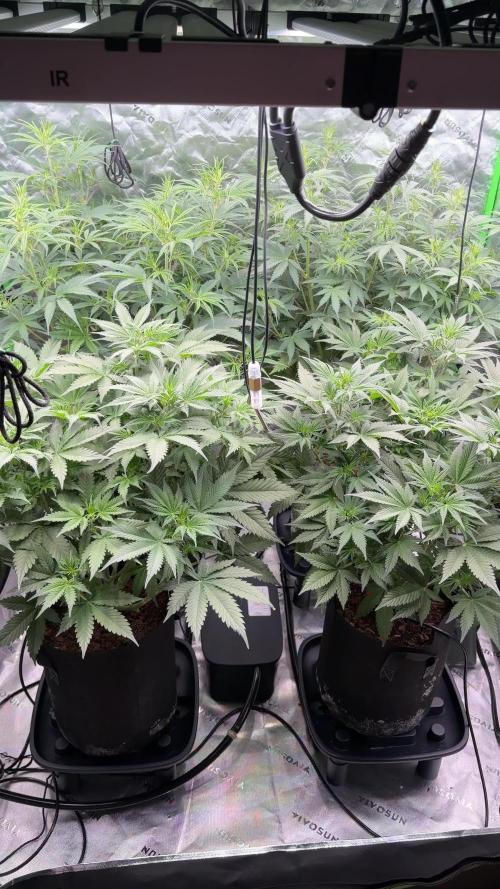
Sticky Broccoli Auto — Week 5 Update
Stage: Early Flower (Week 1)
Grower: Stoney Stark / Little Lilly Farms
⸻
Growth Overview
Week 5 marks the official transition into flower, and all four Sticky Broccoli autos are responding strongly. The two larger plants have entered an aggressive stretch phase, showing more sativa-leaning internodal expansion than expected for an indica-dominant cultivar. The two smaller plants remain shorter and bushier, expressing a more classic indica structure.
Overall vigor is excellent across the tent. Leaf color is vibrant, stems are thickening rapidly, and there are no visible deficiency or toxicity symptoms.
⸻
What’s Happening This Week (Plant Physiology Breakdown)
This week represents the flower initiation + stretch overlap, one of the most metabolically demanding phases of an auto:
1. Rapid Stretch (Hormonal Shift)
• Plants are responding to increased flowering hormones (gibberellins and auxins)
• Internode spacing is increasing rapidly on the larger phenos
• Energy is being redirected toward vertical growth while flower sites are forming
This explains why the two larger plants are stretching “harder” than expected, despite indica genetics.
2. Root Demand & Water Uptake Increase
• Daily feeding to runoff is necessary because:
• Root mass has expanded significantly
• Transpiration rates are high due to stretch
• Coco dries faster under increased metabolic load
The initial underwatering sign on one larger plant (2/18) aligns perfectly with this surge in demand.
3. Nutrient Uptake Shift
• Nitrogen demand is still present (for stretch), but tapering
• Phosphorus and potassium uptake are ramping up
• Enzyme activity and carbohydrate metabolism are increasing rapidly
Your slight drop from ~1100 ppm to ~1000 ppm combined with consistent runoff resets kept the root zone perfectly balanced during this sensitive transition.
4. Post-Defoliation Response
• The 2/20 defoliation and lollipopping improved:
• Light penetration to lower sites
• Airflow through the canopy
• Hormonal focus on top flower sites
The strong recovery seen by 2/21 confirms the plants were ready for it.
⸻
Watering & Feeding Strategy
Medium: Coco
Irrigation: Auto-watering system
Frequency: Near-daily
Runoff Target: 10–30% depending on reset goal
The alternating heavier runoff days (30%) and lighter days (5–15%) is ideal for:
• Preventing salt buildup
• Maintaining stable EC in the root zone
• Supporting rapid stretch without overfeeding
⸻
Nutrient Mix (Per Gallon)
• 0.5 ml Silicium Bloom
• 8 ml Cocos A
• 12 ml Cocos B
• 1 ml Green Sensation
• 1 ml Power Buds
• 4 ml Pure Zym
• 5 ml Ruby Fulvic
• 6 ml Photosynthesis Plus (added 2/24)
PPM: ~1000
pH: 5.8–5.9
⸻
Plant Status Summary
• Stretch is strong but controlled
• Root zone fully reset and balanced
• No signs of stress post-defoliation
• Flower sites stacking rapidly
• Photosynthesis support added at the perfect time
This week sets the foundation for bud size, structure, and final yield. If stretch continues another 7–10 days, that’s completely normal for autos expressing hybrid vigor.
Likes
22
Share


@Naujas
Follow
The girl continues to mature:) the flowers look shiny and sticky, the smell is amazing:) I think she has a maximum of 2 weeks left :).