The Grow Awards 2026 🏆
Likes
Comments
Share
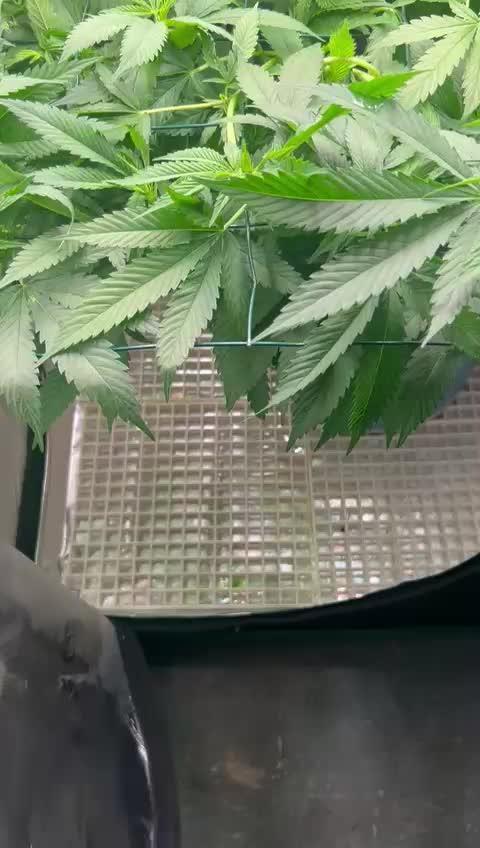
**Encontrarás la traducción a español al final de la descripción** From/Desde: 19/04/19 || To/Hasta: 25/04/19 From day/Desde día: 57 || To day/Hasta día: 63 You can find the Gorillas Diary here (Texts are the same this week): ** Podéis encontrar el diario de las Gorilla aquí (Los textos son iguales esta semana):** https://growdiaries.com/diaries/25675-makingmoney-with-gorilla-mm-vs-gorilla -----IMAGES & VIDEOS----- 1 - Before defoliation 2 - Defoliation 3 - After defoliation -----WEEK SUMMARY----- (Following text was translated with tools and reviewed, sorry for mistakes, misspellings or nosense things) As you can see I've done a defoliation this week. Yes, I have really gone over the top, I have removed many more leaves than I had, and the tails of the plants has not come to join at all due to the failed defoliation. Being the first defoliation I do, I did not really know what I was doing and I went crazy. Now that it has been several weeks since I made this defoliation, I realize that I should not have removed the leaves from the nodes of the tails, because they have stopped growing and have not joined with their superior parts. Anyway, the plants are beautiful today and although they could be much better I feel very happy with them. I know I've made 2 fatal mistakes in this grow - The first has been the massive defoliation badly done, defoliation yes, but with head ... do not follow my example. - The second failure that I see today, is that I did not leave enough growth time (18/6) after having made the last pruning and that has made the tails have been a length much less than what would have been desired, I think that 2 more weeks of growth would have been perfect. -----WATERING CALENDAR----- 20/04/19 - 1,250 ml with Sensizym, Silica, Rhino Sk, Bud Ignitor, Big Bud, Bud Candy & Bud Factor-x @ PH6.4 & 1.2 E.C. 23/04/19 - 1,250 ml with All week nutrients - (Silica, Sensizym & Bud Ignitor) @ PH6.5 & 1.5 E.C. *****ESPAÑOL***** -----IMÁGENES Y VÍDEOS----- 1 - Antes de la defoliación 2 - Defoliación 3 - Después de la defoliación -----SUMARIO SEMANAL----- Como podéis ver esta semana he hecho una defoliación. Si, efectivamente me he pasado de listo, he quitado muchas más hojas de las que debía y las colas de las plantas no ha llegado a unirse del todo debido a la fallida defoliación. Al ser la primera defoliación que realizo, no sabía muy bien que hacía y me lancé a lo loco. Ahora que han pasado varias semanas desde que realicé esta defoliación, me doy cuenta de que no debí de haber quitado las hojas de los nodos de las colas, pues estos han dejado de crecer y no se han unido con sus partes superioras. De todas maneras, las plantas están preciosas a día de hoy y aunque podrían estar mucho mejor me doy con un canto en los dientes. Se que he cometido 2 errores gordos en este cultivo - El primero ha sido la defoliación masiva mal realizada, defoliación si, pero con cabeza.... no sigáis mi ejemplo. - El segundo fallo que yo veo a día de hoy, es que no dejé suficiente tiempo de crecimiento (18/6) después de haber realizado las últimas podas y eso ha hecho que las colas hayan quedado de una longitud muy inferior a la que hubiera deseado, creo que 2 semanas más de crecimiento hubiera sido perfecto. -----CALENDARIO DE RIEGO----- 20/04/19 - 1.250 ml con Sensizym, Silica, Rhino Sk, Bud Ignitor, Big Bud, Bud Candy y Bud Factor-x @ PH6.4 & 1,2 E.C. 23/04/19 - 1.250 ml con todos los nutrientes semanales - (Silica, Sensizym y Bud Ignitor) @ PH6,5 & 1,5 E.C.
Likes
7
Share
Likes
4
Share
@Wescoas
Follow
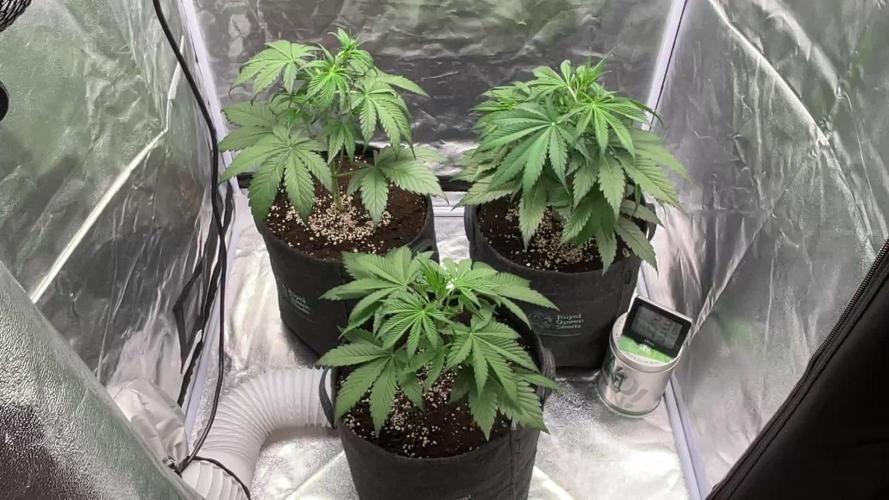
I thought the ladies would have another 2-3 weeks left in veg, but started to notice pistils forming within the last couple of days. So flower will most likely start to begin within the next week, I’m guessing I may see a couple oz per plant come harvest day. Not bad for first time grow & using autos, from what I’ve heard a lot of people do not recommend learning with autos due to how quickly their state can change depending on what you do with them. There are some things I wish now I would have done a bit different within the last couple of weeks, I can’t help but wonder how much bigger they’d be if I did not do any defoliation at all. But I have been combating flies bad and made the call to defoliate mainly for that reason. Started to cut back on veg foods and introduce flower foods and sugars to their diet. Humidity levels still at a steady decrease, aiming to have humidity down in the 30s come flower time. Will be going on vacation for a week soon, so fingers crossed that nothing goes wrong. Will be having a good friend of mine come by every couple of days to FaceTime me and make sure everything is handled as well as possible when the time comes.
Likes
110
Share
ACTUALIZACIONES A DIARIO!! Miles de gracias al equipo de Royal Queen Seeds y a @James por proponerme esta aventura tan trepidante y poder conocer de cerca las nuevas F1 y sobre todo a la gran Titan F1. Espero que lo disfruteis y os sirva como referencia. ¿Qué piensas cuando lees la palabra “Titán”? Hay quienes la asocian con los hijos de Urano de la mitología griega. Otros saben que Titán es la luna más grande de Saturno. ¿Y entre los cultivadores de hierba? Estas personas reconocen a la Titan F1 como una variedad de marihuana con una genética de vanguardia. Se trata de uno de los primeros híbridos F1 autoflorecientes, y es una variedad pionera que ofrece productividad, resistencia y algo completamente nuevo. La Titan F1 deleitará tu olfato durante la fase de floración y más allá. Esta variedad autofloreciente ofrece un potente perfil de terpenos compuesto principalmente por mirceno, farneseno, ocimeno, pineno, bisabolol y limoneno. Gracias a MarsHydro 😊🙏 por darme la mejor luz que hay en el mercado. La marca numero uno en focos 💡, carpas de cultivo ⛺️, extractores 🌬️ y demás aparatos que necesitas para tu cultivo. Para esta aventura arrancaremos con 💡Mars Hydro TS 1000 Full Spectrum LED Grow Light 150W Regulable y 1 semilla autofloreciente a un ciclo de 20/4. Verdaderos 150w con este TS1000, la mejor luz de cultivo LED para principiantes. Ofrece una luz adecuada para 2-4 plantas 🌱. Su precio razonable, la marcada mejora del rendimiento y el control variable de la producción la hacen amigable para los nuevos cultivadores. Todo un tesoro para cualquier cultivador que este comenzando. Usaremos para esta aventura una carpa de 60x60x90, MarsHydro una carpa para los más exigentes.Con una solapa de cremallera mejorada, dobles cremalleras de metal con forro,reflectante diamante tipo Mylar, postes de metal para una estructura mas solida, no se puede pedir nada mas. Garantizando una respuesta en solo 24 horas tanto si has usado antes la marca como si no. 🌻🚀 Consigue tus semillas aqui: https://www.royalqueenseeds.es/semillas-de-marihuana-hibridas-f1/624-titan-f1.html 💡 MarsHydro TS1000: https://www.amazon.com/gp/product/B07PLY1WKK ⛺️ 60 x 60 x 90 MarsHydro: https://www.amazon.com/dp/B081PN2QDN/ Primera semana de floracion, las ramas laterales han comenzado a estirar y se muestran las primeras preflores, es una planta muy compacta y he tenido que quitar alguna hoja baja para evitar la aparicion de algun hongo. Es la genetica que mejor ha respondido, por no decir la mejor. Felicidades Royal Queen Seeds y MarsHydro 😁 📅 Dia 21: Descanso 📅 Dia 22: Riego con nutrientes EC 400, esta Titan F1 crece por momentos, creo que voy a tener que sacar una del armario porque no van a entrar, me falta espacio 😡 para ver el desarrollo de esta genetica, la proxima vez van a ir en macetas de 17litros. 📅 Dia 23: Descanso, se pueden apreciar cambios notables cada 24 horas, va como un cohete 🚀 📅 Dia 24: Riego con nutrientes EC 350 📅 Dia 25: Descanso 📅 Dia 26: Riego con nutrientes EC 350 📅 Dia 27: Descanso, paso una al armario 12/12, no hay sitio para las dos en este armario. MARSHYDRO necesito algo mas big!!! 😁
Likes
128
Share
@PapaNugs
Follow
Another good week. They got their first real water twice this week. They are enjoying the high humidity and temps. Right on track so far and hoping they keep it up!
Likes
Comments
Share
@madlangs
Follow
They are plodding along in the 2x4 tent, waiting for space in the drying tent. The tent should be free in about 7 days then I can up the ppfd and give them a better environment. Cant control the high humidity in this small tent 10.2.25 Ppfd 800ish Dli 34 15.2.25 Jelly 44cm Jelly 74 Slurricane 75cm
Likes
16
Share
@valiotoro
Follow
Hello everyone week 2 of flower has passed for this Tropicana cookies auto 🌴 Same feeding schedule Mars hydro FC-E6500 75% have a great day and wish you all happy growing 😎👨‍🌾🏻
Likes
45
Share
My homework. Rubisco regeneration is intrinsically linked to nitrogen supply because Rubisco is a major sink for nitrogen in plants, typically accounting for 15% to over 25% of total leaf nitrogen. The regeneration phase itself consumes nitrogen through the synthesis of the Rubisco enzyme and associated proteins (like Rubisco activase), and overall nitrogen status heavily influences the efficiency of RuBP regeneration.Structural Component: Nitrogen is an essential building block for all proteins, and the sheer abundance of the Rubisco protein makes it the single largest storage of nitrogen in the leaf. Synthesis and Activity: Adequate nitrogen supply is crucial for the synthesis and maintenance of sufficient Rubisco enzyme and Rubisco activase (Rca), the regulatory protein responsible for maintaining Rubisco's active state. Nitrogen deficiency leads to a decrease in the content and activity of both Rubisco and Rca, which in turn limits the maximum carboxylation rate, Vmax, and the rate of RuBP regeneration Jmax, thus reducing overall photosynthetic capacity. Nitrogen Storage and Remobilization: Rubisco can act as a temporary nitrogen storage protein, which is degraded to remobilize nitrogen to other growing parts of the plant, especially under conditions of nitrogen deficiency or senescence. Nitrogen Use Efficiency (NUE): The allocation of nitrogen to Rubisco is a key determinant of a plant's photosynthetic nitrogen use efficiency (PNUE). In high-nitrogen conditions, plants may accumulate a surplus of Rubisco, which may not be fully activated, leading to a lower PNUE. Optimizing the amount and activity of Rubisco relative to nitrogen availability is a target for improving crop NUE. Photorespiration and Nitrogen Metabolism: Nitrogen metabolism is also linked to the photorespiration pathway (which competes with carboxylation at the Rubisco active site), particularly in the reassimilation of ammonia released during the process. To increase RuBisCO regeneration, which refers to the process of forming the CO2 acceptor molecule Ribulose-1,5-bisphosphate (RuBP) during photosynthesis, the primary methods involve optimizing the levels and activity of Rubisco activase (Rca) and enhancing the performance of other Calvin-Benson-Bassham (CBB) cycle enzymes. Biochemical and Environmental Approaches: Optimize Rubisco Activase (Rca) activity: Rca is a crucial chaperone protein that removes inhibitory sugar phosphates, such as CA1P (2-carboxy-D-arabinitol 1-phosphate), from the Rubisco active site, thus maintaining its catalytic competence. •Ensure optimal light conditions: Rca is light-activated via the chloroplast's redox status. Adequate light intensity ensures Rca can effectively maintain Rubisco in its active, carbamylated state. •Maintain optimal temperature: Rca is highly temperature-sensitive and can become unstable at moderately high temperatures (e.g., above 35°C/95F° in many C3 plants), which decreases its ability to activate Rubisco. Maintaining temperatures within the optimal range for a specific plant species is important. •Optimize Mg2+ concentration: Mg2+ is a key cofactor for both Rubisco carbamylation and Rca activity. In the light, Mg2+ concentration in the chloroplast stroma increases, promoting activation. •Manage ATP/ADP ratio: Rca activity depends on ATP hydrolysis and is inhibited by ADP. Conditions that maintain a high ATP/ADP ratio in the chloroplast stroma favor Rca activity. Enhance Calvin-Benson-Bassham (CBB) cycle enzyme activity: The overall rate of RuBP regeneration can be limited by other enzymes in the cycle. •Increase SBPase activity: Sedoheptulose-1,7-bisphosphatase (SBPase) is a key regulatory enzyme in the regeneration pathway, and increasing its activity can enhance RuBP regeneration and overall photosynthesis. •Optimize other enzymes: Overexpression of other CBB cycle enzymes such as fructose-1,6-bisphosphate aldolase (FBA) and triose phosphate isomerase (TPI) can also help to balance the metabolic flux and improve RuBP regeneration capacity. Magnesium ions, Mg2+, are specifically required for Rubisco activation because the cation plays a critical structural and chemical role in forming the active site: A specific lysine residue in the active site must be carbamylated by a CO2 molecule to activate the enzyme. The resulting negatively charged carbamyl group then facilitates the binding of the positively charged Mg2+ion. While other divalent metal ions like Mn2+ can bind to Rubisco, they alter the enzyme's substrate specificity and lead to dramatically lower activity or a higher rate of the non-productive oxygenation reaction compared to Mg2+, making them biologically unfavorable in the context of efficient carbon fixation. The concentration of Mg2+ in the chloroplast stroma naturally increases in the light due to ion potential balancing during ATP synthesis, providing a physiological mechanism to ensure the enzyme is activated when photosynthesis is possible. At the center of the porphyrin ring, nestled within its nitrogen atoms, is a Magnesium ion (Mg2+). This magnesium ion is crucial for the function of chlorophyll, and without it, the pigment cannot effectively capture and transfer light energy. Mg acts as a cofactor: Mg2+ binds to Rubisco after an activator CO2 molecule, forming a catalytically competent complex (Enzyme-CO2-Mg2+). High light + CO2) increases demand: Under high light (60 DLI is a very high intensity, potentially saturating) and high CO2, the plant's capacity for photosynthesis is high, and thus the demand for activated Rubisco and the necessary Mg2+ cofactor increases. Mg deficiency becomes limiting: If Mg2+ is deficient under these conditions, the higher levels of Rubisco and Rubisco activase produced cannot be fully activated, leading to lower photosynthetic rates and potential photo-oxidative damage. Optimal range: Studies show that adequate Mg2+ application can enhance Rubisco activation and stabilize net photosynthetic rates under stress conditions, but the required concentration is specific to the experimental setup. Monitoring is key: The most effective approach in a controlled environment is to monitor the plant's physiological responses e.g., leaf Mg2+ concentration, photosynthetic rate, Rubisco activation state, and adjust the nutrient solution/fertilizer to maintain adequate levels, rather than supplementing a fixed "extra" amount. In practice, this means ensuring that Mg2+ is not a limiting factor in the plant's standard nutrient solution when pushing the limits with high light and CO2. Applying Mg2+ through foliar spray is beneficial to Rubisco regeneration, particularly in alleviating the negative effects of magnesium (Mg) deficiency and high-temperature stress (HTS). While Mg can be leached from soil, within the plant it is considered a mobile nutrient, particularly in the phloem. Foliar-applied Mg is quickly absorbed by the leaves and can be translocate to other plant parts, including new growth and sink organs. Foliar application of: NATURES VERY OWN MgSO4 @ 15.0g L-1 in a spray bottle. Foliar sprays are often recommended as a rapid rescue measure for existing deficiencies or as a supplement during critical growth stages, when demand for Mg is high. Application in the early morning or late evening can improve absorption and prevent leaf burn. The starting point [of creativity] is curiosity: pondering why the default exists in the first place. We’re driven to question defaults when we experience vuja de, the opposite of déjà vu. Déjà vu occurs when we encounter something new, but it feels as if we’ve seen it before. Vuja de is the reverse—we face something familiar, but we see it with a fresh perspective that enables us to gain new insights into old problems.
Likes
10
Share
@Colossus
Follow
Turned today, got impatient to wait another 2 weeks 🤦🏻 Seen some discoloring heading to nutrient burn so ive corrected it all in this new top up (from today) Didnt take too much notice of the room this week, have removed one foam base from the bottom although i maybe should have left them a little closer to the light. Added CYCO Ryzofuel 0-0-0.2 Added Advanced Nute Rhinoskin 0-0-0.4 Does this literally have the same fuel?😂 Cyco runs for first 2 weeks of bloom Rhinoskin runs for 6 weeks. To add overdrive at 6 weeks to week 7 then flush week 8! Im guessing the overall BigBud is 6 to 8 weeks. I will stretch her to 8 weeks. Any tips from here onwards is appreciated 👌 Added a net but im hopeless and with big hands am prone at breaking main stems at this point once LST is applied so i might just leave it as it is until the knuckles form stronger and see how we go!
Likes
8
Share
Both plants have almost stopped growing in heigth now and are in full flowering mode now. Barbarian (=AK-47 x Barbara Bud) Plant #1 is 15 cm shorter than plant #2, but a little bushier. Both have grown very well and are strong and healthy. They get more and more flower clusters now and start to fill up all branches. Trichomes start to appear all over...the plants start to get sticky and develop a weak sweet aroma now. Its time to take off the biggest fan leaves now for defoliation, I took a round of pics before and after.
Processing
Likes
7
Share
@Mrg7667
Follow
Amazing week! Starting to smell absolutely Devine! Some cherry funk to cherry funk with a hash back and some with just lighter hashy lind of smell all looking great except one oheno growing funky finger nugs (one of the better smelling phenos tho) Need to clone 4,6,3!
Likes
207
Share
@SwissKush
Follow
Day 92 - monster shrubbery - 12 hour light schedule @ 50% intensity both lights. a. the buds are growing even more and the smell is intense b. The bud's leaves are shedding, I am pulling many sugar leaves to keep for hash c. she has slowed down drinking alot to only 3L over night, this might be the last week Day 93 - trichomes are 90% white a. having hard time finding many clears or many ambers, she is in peak THC production at the moment b. wonderful production this plant has made! it is very heavy c. took her out of the tent for the first time, defoliated many old fan leaves d. buds are turning blue! the 5.5 PH flush water is working! Day 94 - looking great! a. the final white pistils are trurning brown, we will have no white pistils when I harvest this b. the resin production is still so high, the buds are just caked in milky white trichomes Day 95 - growing well, still drinking water a. just have a few more pistils that need to turn red/brown, a few whites Day 96 - maturing nicely a. going the distance, this plant will not stop creating resin! b. trichomes are mostly milky white Day 97 - buds are looking really frosty! a. tomorrow will be last day of flush, day 99-101 will be lights off without any water in the tank, will stress her hard Day 98 - last feeding/flushing day and last light day a. will not add any more water to the DWC, will pump out what is in there b. she will get one more day of light, tomorrow starts the 3 days of darkness!
Likes
2
Share
Likes
26
Share
Another good week of growth very luscious green and you can tell the roots are expanding. The GROBUCKET system has been activated lol the soil deep down is moist to the right level. I will still continue to top water to continue to inoculate the nutrients until I feel there fully taken into the soil but other than that my environment has really been consistent for the most part. It’s safe to say they are all in Veg and I will let them go another week before I do any training or stress them out a lil. LINK FOR YOUTUBE IS BELOW THIS IS THE LINK TO MY YOUTUBE WHERE I WILL BE UPLOADING DAILY https://youtu.be/aYn0BZbI1SI
Likes
45
Share
144v Lux in tenebris lucet. Aristotle said "It is the mark of an educated mind to be able to entertain a thought without accepting it." Those who are able to refrain from judgement long enough to genuinely research and weigh the evidence from all sides of a given subject are those most likely to arrive at the truth. Those who instantly resort to knee-jerk ridicule and continue to believe whatever they were first taught are those most easily deceived. Very high light intensity can slow vertical growth. She just doesn't want to grow vertically any longer; once the flower is initiated, that goes right out the window. Apical dominance is shattered; you now have every single stem fighting for survival against each other, with none given particular precedence over another. That is some stretch for a week, explosion. Doesn't matter if they are crowded now; there is space up ahead, and plant perception will fill every inch of available space. The divine intelligence that drives plant growth is far more efficient than any canopy I could make or spread myself. No defoliation. Sometimes you just need to give her what she needs to fill the space herself. All I do is guide the initial framework into the desired outcome, keep everything else flowing and in optimal parameters. Fast-growing leaves to have a lighter green color, sometimes appearing almost yellowish-green, because they haven't had time to produce much chlorophyll yet. New leaves are soft and pale, but they will gradually darken and become a deeper green as they mature and are exposed to light. Every morning, new lime green, with the micros supercharged, may be immobilizing nitrogen in the medium, magnesium was creeping in earlier, so I'll try to hold the line and see what progresses. The ratio of sugar leaves to buds is determined by a combination of hormonal signaling, nutrient availability, and genetics. Sugar levels act as a key signaling molecule, with high sugar availability influencing hormones like auxins and cytokinins to promote bud outgrowth, while nutrient deficiencies can limit development. Specific genes also play a critical role in leaf and bud initiation, expansion, and the overall balance of growth. Buds are like balloons! Need lots of pressure to blow up lots of balloons! Sugar balloons! Plant transpiration and turgor pressure are crucial for bud development because turgor pressure provides the cell expansion needed for growth, while transpiration creates a "pull" that draws water and nutrients up through the plant to fuel this process. High turgor pressure is essential for cells to grow and expand, allowing buds to open and young leaves to unfurl. Transpiration maintains this necessary turgor by driving a continuous flow of water from the soil up to the leaves, where it evaporates. No holding back, this is it, 4-5 weeks of all-out war! What we develop now will be all we have for the final 4-5 weeks. The carbon to nitrogen (C:N) ratio indicates how much carbon is in a substance relative to its nitrogen, affecting nitrogen availability in soil through microbial activity. A high C:N ratio (like in straw or corn residue) requires soil microbes to use a significant amount of nitrogen for decomposition, temporarily tying it up and making it unavailable to plants. A low C:N ratio results in a more rapid release of nitrogen for plant use. The carbon-to-sulfur C:S ratio in plant residue determines whether soil microbes will immobilize or mineralize sulfur (S) during decomposition. This affects the availability of sulfate SO42, the primary form of S that plants can absorb. Mineralization is the process by which microbes decompose organic matter and release excess nutrients, like sulfate, into the soil in an inorganic, plant-available form. Immobilization is the reverse process, where microbes absorb inorganic sulfate from the soil to meet their own nutritional needs, making it unavailable to plants. Glucose typically uses more oxygen than sucrose in a medium because it can be metabolized more directly, while sucrose must first be broken down into glucose and fructose, which can involve additional energy costs and a slower overall process. However, the efficiency of oxygen use can vary depending on the specific organism and conditions, as some bacteria, for instance, can use sucrose for a growth advantage under certain circumstances by producing exopolysaccharides that are more efficient at oxygen extrusion. Why glucose is generally more oxygen-efficient: •Glucose is a monosaccharide and can be used directly by many organisms in cellular respiration. •It does not require an initial enzymatic step to break it down before entering the metabolic pathway, unlike sucrose. •Due to its direct use, glucose can lead to a faster rate of oxygen consumption and carbon dioxide production in comparison to sucrose under typical aerobic conditions. Why sucrose might seem to use more oxygen in certain contexts: •When sucrose is metabolized, it is first broken down into glucose and fructose. This initial hydrolysis is an extra step that requires enzymes. •The fructose component is metabolized differently from glucose, and its specific metabolic pathway can affect the overall oxygen demand. •Some organisms may have regulatory mechanisms that lead to a higher initial oxygen demand when switching from glucose to sucrose, especially if the organisms have specific metabolic pathways that are optimized for sucrose. •While glucose may be used faster, sucrose might provide a growth advantage under certain oxygen-limited conditions due to the specific metabolic pathways and products it can generate. Seems my initial concept of sucrose was inaccurate. Really need to study up on all of this in the coming months. Take care. 9 To get the closest possible NPK ratio of 1-3-2 in 5 gallons of water: Add 2 tsp of the 7-4-5 Grow fertilizer Add 3 tsp of the 3-12-12 Bloom fertilizer Calcium can interact negatively with phosphorus and sulfur, add your Cal-Mag supplement to the water first if needed.
Processing
Likes
25
Share
@Xanthur
Follow
This week stretching is done. One of them had a late growth spurt, and is now only 16 inches below the light. It doesn't feel too hot. Leaf temps are 78 right under the light. I'll leave it unless it starts to show signs of stress. You can clearly see her in the pics and video. I have a problem with controlling smell. My house has an entryway that is open to the basement but separated from the main floor, so the entryway smells like the basement. I know what you are thinking... But it is not flower smell. It smells too clean! The massive fan and filter are running at high power to control humidity, and that makes the whole basement smell not normal. Other than that, the tent is on autopilot for now. Not much work needed other than adding 5-10 gallons of plain water every day.
Likes
4
Share
The frostiest of the 3 different cut strain that I have. Smells like strawberry... Its very interesting... Produttive one... I already love her🤣
Likes
18
Share
Amnesia haze sativa genetikler içinde en sevdiğim olanı. Sert etkisiyle her dumanda daha yüksek kafalar 😁
Likes
7
Share
i opened the plant ti per in more light and tied whit bands ti allow the smaller branches ti become larger. The beginning of the flowering Is upon us and i hope ther will be a great September
Likes
4
Share
The transition is officially happening—the plant has now fully entered the flowering phase!🌱 The stretch is kicking in, and it’s growing rapidly, really taking off this week. It looks incredibly healthy, with vibrant green leaves and strong development. Thanks to the LST, it has spread out beautifully, allowing for even light distribution and great bud site exposure. I’m really happy with how things are progressing and excited to see how the buds start forming in the coming weeks! This one is looking very promising.💪😎