


Likes
Comments
Share


@Gruenerfinger85
Follow
Hi meine sehr geehrten Pflanzen Homes.
Ich begrüße euch zu einer weiteren Wachstums Woche mit dieser wunderbaren Genetik von Ganja Farmer Seeds.
Wie man sehr schön erkennen kann geht es meinen Girls sehr gut, leider habe ich gleichzeitig zu meinen guten Neuigkeiten eine schlechte Nachricht zu verkünden.
Leider wird aus dem dritten Samen nichts mehr deshalb habe ich mich dafür entschieden in aus dem Rennen zu nehmen.
Am 21 Tag werde ich beide Pflanzen in ihren endgültigen Topf pflanzen, ich werde sie dann in 10l Töpfe mit Bio Bizz Light Mix verwenden.
Gefüttert werden sie mit S&R Organics ich habe vollstes Vertrauen in diesen Nährstoff, erst einmal ist dieser Benutzer freundlich, leicht in der Anwendung, versorgt die Pflanzen mit all den wichtigen Nährstoffen die die Pflanzen in den verschiedenen Phasen braucht und sorgt für ein guten Geschmack der seines gleichen sucht von den super Erträgen ganz zu schweigen.
Dieser Dünger sucht seines gleichen das ist nicht mal übertrieben mein Freund.
Wenn du auf der Suche nach einem Nährstoff bist der deine Pflanzen rundum versorgt dann ist der von S&R genau das richtige für dich.
Grow LED: Lumatek ATS 200 Pro
Flower Light: HortiOne 600er Serie
Room: 1.44 m*
Abluft: Prima Klima
Umluft: Secret Jardin
-------------------------------------------------------------------------------------------------------------------------------------------------------------------------------------------------
Tag:14
LFK: 52%
Umgebungstemperatur: 25,2 Grad Celsius
Bei einem Licht Abstand von: 50cm
-------------------------------------------------------------------------------------------------------------------------------------------------------------------------------------------------
Tag:16
#1 hat eine Höhe von 4 cm erreicht die #2 ist im Wuchs ein bisschen langsamer sie ist 2 cm hoch.
soweit ich das beurteilen kann hat die #1 einen normalen Wuchs und die #2 ein etwas langsameren.
Wär weiß das hat noch nichts zu sagen, vielleicht braucht die #2 ein bisschen mehr zeit wird aber vielleicht ein besonderen Geschmack ausweisen oder ein bomben Ertrag haben oder das hat alles gar nichts zu bedeuten, wir werden sehen wie die nächsten Wochen verlaufen werden, ich bin gespannt.
-------------------------------------------------------------------------------------------------------------------------------------------------------------------------------------------------
Tag:17
Die Umgebungsbedingungen sind alle im grünen Bereich Anfänglich hatte ich ein bisschen Schwierigkeiten gehabt die konstant auf ein Perfektes Niveau zu halten, mittlerweile habe ich alles unter Kontrolle.
Die LFK liegt Tags über zwischen 56% und 65%
Die Umgebungstemperatur bei 25-26 Grad Celsius
Bei einer Außentemperatur von 9 Grad Celsius
Der Lichtabstand ist 50cm
-------------------------------------------------------------------------------------------------------------------------------------------------------------------------------------------------
Tag:19
Umgebungstemperatur: 25 Grad Celsius
LFK: 56%
Lichtabstand:50
Außentemperatur:15 Grad Celsius
-------------------------------------------------------------------------------------------------------------------------------------------------------------------------------------------------
Es steht noch ein Update für Woche 3 an!
das am Tag 21 raus kommt.
Danke das du dir die Zeit genommen hast vorbei zu kommen.
Aktuelle Bilder/ Abschluss Bericht für Woche 3
PLAESE COMING SOON!
Vielen Dank mein Pflanzen Freund das du dir meinen Garten angesehen hast, ich hoffe dir hat gefallen was du gesehen oder entdeckt hast.
Ich weiß deine Unterstützung sehr zu schätzen.
Gerne kannst du hier ein bisschen Liebe da lassen, wenn du Interesse hast und mehr von mir und meinen hübschen sehen willst kannst du gerne auf mein Instagram Profil kommen und uns da ein Besuch abstatten und auch hier und da ein bisschen Liebe verteilen.
Das war's fürs erste ein weiteres Update folgt bevor die vierte Woche beginnt.
Schlusswort bitte verzeih wenn nicht alles perfekt ist, ich bin noch dabei mein Content zu Perfektionieren.
trotzdem hoffe ich das alles soweit stimmt habt ihr Fragen oder Tipps stehe ich gerne zur Verfügung.

Likes
17
Share


@MagicGelato
Follow
I told everything in the pics, smell start to spread in my house so I'm planning buying a grow tent and plug it with a charcoal filter, I'm looking for the best atm

Likes
50
Share


@PapaBlob
Follow
Pour moi c'est du jamais vu. 😮 Effeuillé elle fait 530g. Et oui la vérité sort toute nue de ma tente.🤣 Ci elle tient ces promesses en gout et puissance.. Mmmm.. c'est de l'or en branche. 👍

Likes
144
Share


@roro_204
Follow
They grow fast at this Age . Transferred them to 3gal pots this week
I miss how the grow room used to be so clean lol before the huge hose was installed :p


Likes
11
Share


@Smokeitup091191
Follow
This week has gone well again end of the upcoming week I’m gunna give them one last strip down then just let her do her thing. She’s a big girl and the smell is amazing grapefruit peels with a very sour background can’t wait to try this girl as grapefruit is one of my favourites and this girl has it all 😍
Likes
17
Share


@MoneyGrowup
Follow
Things are looking good, started with some lst with my hands at first now I've secured them with ties. The gelato looks like it finally want to start its growth due to whatever stress it was going through. Happy with how things are picking up

Likes
42
Share


@THE_KING_OF_GROWERS
Follow
ULTIMA SETTIMANA DICHIARATA DALLA BANCA, VEDIAMO QUANTE SI AGGIUNGERANNO FINO A FINE CULTIVO
Likes
55
Share


@Vincent_Van_Grogh
Follow
Some people freeze their defoliated leaves to make other products. Some of mine goes to the doggo… she loves them like treats! 🐶🌱😎
Likes
27
Share


@LSchnabel
Follow
What an explosion in growth for week 5. Every day this plant is growing like crazy.
Had to trim up some lower foliage to allow better airflow. Tied down some more branches to even the canopy especially the main stem.
Rubbing the stem gives an amazing smell and can’t wait till it matures fully. Looking like this plant will be a great yield of everything keeps rocking like it has.
I’m feeding a worm castings compost tea spiked with Cultured Biologix EZ Tea Bloom to feed the microbes in the soil that are essential for trichome production. Also started feeding silicon to strengthen the stems and Trichomes.
Week 6 is going to be nuts with growth I can already tell.
Likes
5
Share


@DaisyNabis
Follow
esta semana hice lavado de raiz, por mi parte me gusta aplicar un riego abundante y hacer una espacie de lavado es cosa de gustos de quien cultiva.

Likes
18
Share


@EaRtH
Follow
5.12. - Entering final week before harvest. One plant was flushed last week and other two will be flushed this week. Already seeing some amber trichomes on two of the plants.
6.12. - Flushed the other two plants and watered the one already flushed. Amber trichomes are more present each day and one of the plants is just a few days from harvesting.
10.12. - Today is the last day with light. I'll give them about 3 days of darkness and then proceed to harvest.
11.12. - First day of darkness. They look amazing with the flash, smell is very nice.
5.12. - 11.12.2023
Likes
79
Share


@JUNGLE_B4RNS
Follow
-Sensi Seeds Research:
The Sensi Seeds Research breeding project has created eleven cannabis seed varieties. How? By combining new cannabis cultivars with a selection of strains from their long-established cannabis gene bank.
For the first time in thirty-six years, they are opening the doors of the Sensi Seeds Research and Development Department.
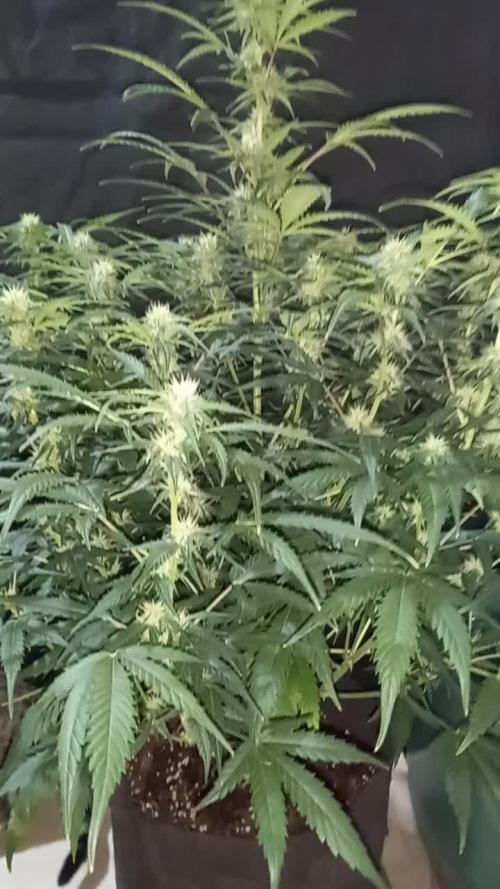
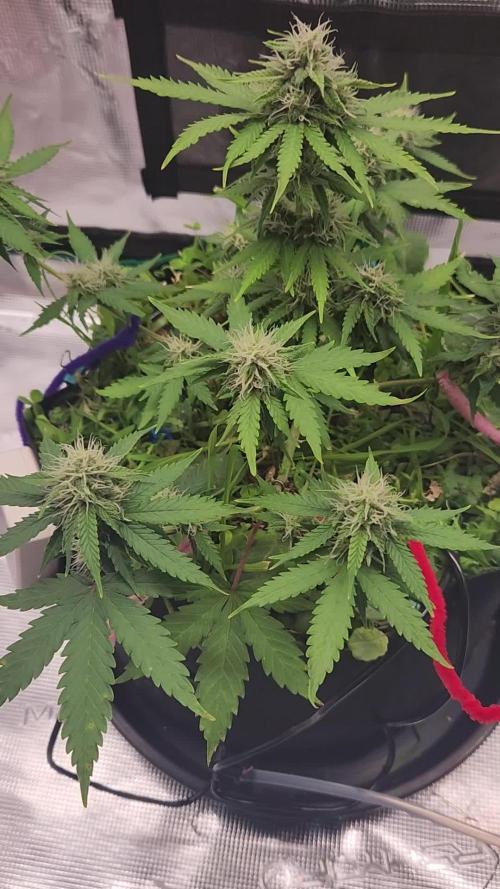
Week 8 finished, this is where Vegging longer Indoor starts to become a waste of time,energy and money, you can go for another last week if needed but any longer than 9 weeks makes no sense !
By the way there’s just enough space left between top of canopy, the lamps, and ceiling for the Flowering stage ( keep in mind that the plants will stretch about twice in size during the stretch phase ), meaning it’s really the time to switch to 12/12 ( otherwise the plants will finish too close to the light ).
For now on, the genetics are excellent, even the Black Domina didn’t mind to be topped. Seams like everyone is suitable for the ScrOG method, almost every holes are occupied by a shoot, the trellis is full at around 90 to 95 % , at least all the light coverage is used which is the main goal to reach !
Had to fed them on the 24/08 and watered them on the 27/08 to keep the soil moist but not dampened ! It’s Ganja, not water lilies in a swamp !
Unfortunately, there’s no perfect schedule for watering plants. The quantity needed by cycles depends on the size of your pots, the size of your plants and the environment, and the rule is the same for the period between two cycles. This is where you can be the only judge and you must learn to read your plants leaves (overwatering symptoms: droopy leaves with some kinds of speed bumps between the veins).
So technically, this is where if you work in a Grow Operation, the Boss is happy, you’re killing it with just two conventional 600w fixed on large wings and no professional lightening equipment like Gavita’s 😎
Stay tuned folks, just hit the like button and subscribe for the incoming Stretch and Bloom stage 😉
(I’m looking for a job in the Cannabis industry as Master Grower, Mineralogist, Quality Control 🐞)





Likes
28
Share


@Ferinky
Follow
Esta semana hubo un par de noches de tormenta, por suerte pude resguardarla bajo un invernadero improvisado y no sufrió daños. Aun sigue pidiendo bastante agua aunque no tanta como hace unas semanas.
Queda poco para la cosecha, las colas están duras y pesadas, pero sus ramas parecen aguantar el peso sin problemas.


Likes
21
Share


@w33dhawk
Follow
Gibt nicht viel zu erzählen die Ladys laufen ganz OK leichte Probleme mit dem Ph Wert (im Abfluss wasser der Töpfe), mal schauen wie ich das etwas runter gedrückt bekomme will die Ladys nicht unbedingt spülen in der Phase. Zum Geruch die lady die vorne links steht riecht nacht Erde, Moos-artig mit einem intensiven typischen Gras Geruch, sie ist aber auch gute 10 cm kürzer als die anderen. Denke mal das sich da mehr indica in der Genetik befindet. Die anderen 3 riechen identisch nach was tropischem, mehr die frucht Note kann es schlecht beschreiben wie ein multi vitamin Saft der mehr Banane und ananas enthält und dadurch so ein cremigen Abgang entwickelt dazu mischt sich der typische gras Geruch und es wird von Tag zu Tag intensiver 🤤🤤🤤🤤 wen das so weiter geht ziehe ich mit Sack und Pack in mein Zelt ein und wohne mit da drinnen😂😂😂 euch noch nen schönes Wochen Ende growmies


Likes
3
Share


@Passx
Follow
The plant is in his last phase of flowering and after this week I'm stopping giving nutrients to it, The plants looks good, the older leaves are turning yellow and the pistils are 40% brown,
Likes
1
Share


@Green_Peace
Follow
The plants are growing at a good rate now and drinking a litre each per day. I feed them by hand and each plant gets 2litres every other day.
Didn't do anything else this week other than install the trellis on the last day.
Love the way these genetics grow and fill out the tent. When I was growing the mother in the pheno hunt I remember remarking how well this plant took to being topped.
These 2 plants are front and right in the timelapse video.