The Grow Awards 2026 🏆 










Likes
5
Share
@420keef
Follow
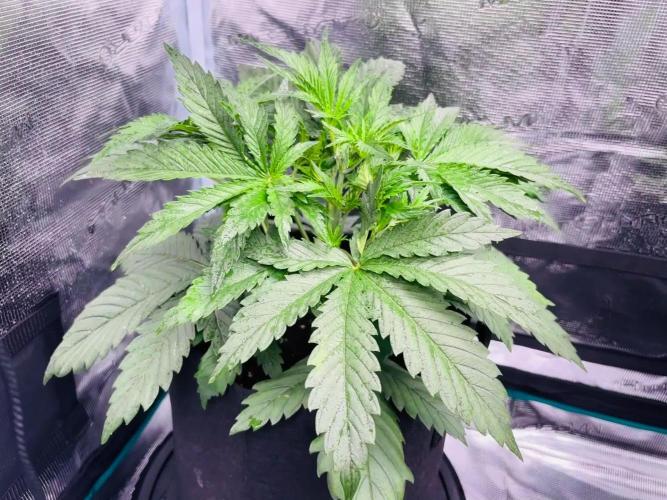
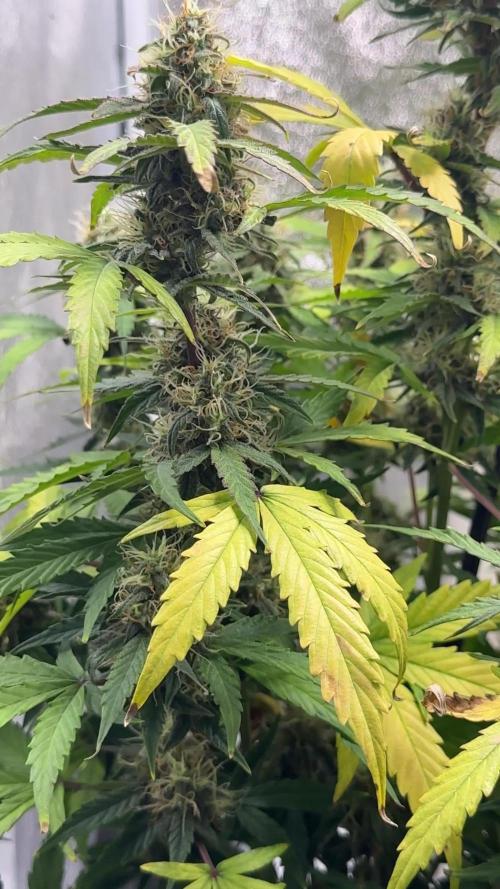
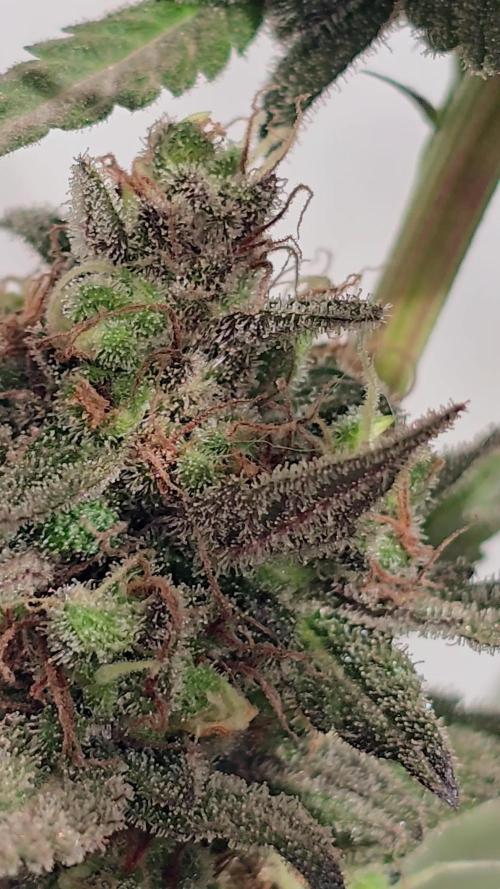
My phone died a couple weeks ago so i couldn’t update my diary or take any pictures.. anyways i’m back haha

Likes
6
Share


Likes
567
Share
@Legendaryseedthumb
Follow
I’m happy with my harvest! Can’t wait to smoke it all😍😎
No photos on plant nr 2 because i harvested it way to early so will post pictures when it’s dried! 😁
3,5 day of drying having some pre dried and trimmed buds to taste on in a day or so!! Don’t worry I will weight them before I smoke it to the contest!
Marshydro SP 3000!!!
🌟🌱🍁🌟🌱🍁🌟🌱🍁🌟🌱🍁🌟
Legendaryseedthumb’s contest!
Guess how much dried buds I get from this whole tent! It contains a kosher cake as well!!!! The wet weight is not the realistic. I don’t know the wet weight.
Person who is closest to the right amount wins!The buds will ofc be trimmed to perfection! The contest is closed when my buds are dry enough to put in jars!
The winner gets a mix pack of souvenir seeds! Both Autoflower and photoperiod
8 different strains!!! 20x seeds
Rules:
1st guess per person
Only European countries
Age 18 , of course
Guesses:
Devilbuds 340grams
TiRobotProds 283grams
Igrowneil 295grams
NatureSolutions 250grams
Gilgamesh15 175grams
UKPersonal420 300grams
JamMAKEcan 130grams
Congratulations: @NatureSolutions 250grams! You are the lucky winner!! 230grams was the final result.

Likes
209
Share
@Rock_n_Roll_Randy
Follow
CHANGED MY EMAIL ADDRESS ON GROW DIARIES AND IT WONT LET ME DO A CONFIRMATION FOR MY NEW EMAIL, SO NOW I CANT LIKE ANYTHING, COMMENT ON ANYTHING OR CHAT. SORRY MY FRIENDS. I HOPE GROW DIARIES TEAM WILL HELP ME OUT SOON🙏🙏🤞🤞
Day 128 for the 54 plant grow. 42 different strains of photoperiods and 12 different autoflower strains in the:
8X8 GROW TENT WITH THE NEW FC-E6500, FC4800 AND TSW2000 AND THE NEW 5X5 GROW TENT WITH A TSW2000 👍and they are being fed GREEN BUZZ LIQUIDS all organic/vegan fertilizers🤘.
I only pinched the tops on 2 or 3 plants but I defoliated every plant ALOT. it slowed the vertical growth alot but it's exactly what I wanted. I can keep track of the plant sizes, how they grew, how healthy they were, how easy they were to grow and how good the final product is👍 every plant was given the same strength of GREEN BUZZ LIQUIDS and I'm keeping track of which plants were happy with the suggested amounts and which plants seemed to want more or less🤘
ALL THE AUTOFLOWERS ARE NOW CHOPPED.
I chopped 22 photoperiods at 125 days of growing. I'm impressed with how good my mars hydro gear is. Always gets em nice and frosty and everything stinks alot.
VERY HAPPY WITH GREEN BUZZ LIQUIDS. I've used lots of brands and this is my NEW favorite brand. And with it being vegan/organic, it makes it even better. Joints burn soo clean👍
The girls are loving their 8x8 MARS MANSION and THE 5X5 INLAW SUITE and everything is doing good and looking nice and getting bigger👍 They are all starting to finish now and the bud sacs are swelling and they are all getting nice and frosty and starting to stink ALOT. MARS HYDRO ALWAYS GETS EM FROSTY👍.I AM NEVER DISAPPOINTED With how awesome these lights are🤘. KEEP KILLING IT MARS🤘👏👏
BREEDERS AND SEEDS:
DIVINE SEEDS:
MAZAR, OPIUM, WHITE WIDOW, OG KUSH, PABLO ESCOBAR, DIVINE INDICA.
AUTO WHITE WIDOW
AUTO PABLO ESCOBAR
AUTO WHITE RUSSIAN
AUTO FRACTAL
AUTO MONTREAL
AUTO OPIUM
AUTO KABUL
AUTO MAZAR.
WEEDSEED EXPRESS:
GREEN CRACK, GHOST TRAIN HAZE, LITHIUM OG, CHEESE.
DOCTORS CHOICE:
DC KUSH, AUTO NIAGARA, AUTO ROCK MACHINE.
EXOTIC SEEDS:
HIPPIE BERRY, MALASANA GELATO, EXOTIC ANIMAL.
GENE/MEME SEEDS:
BLACK HELL.
ORIGINAL SENSIBLE SEEDS:
PURPLE PUNCH COOKIES, WEDDING CAKE, PURE KUSH, GORILLA COOKIES.
SWEET SEEDS:
BLACK JACK, GORILLA GIRL, SWEET ZKITTLES.
EMERALD TRIANGLE SEEDS:
GORILLA GLUE, MASTODON KUSH.
SEEDSMAN SEEDS:
BLACK SUGAR, PEYOTE FORUM, PEYOTE WIFI, BADAZZ COOKIES OG, PURPLE GHOST CANDY, STRAWBERRY BANANA GRAPE, L.A. PEYOTE KUSH, PEYOTE WIFI CBD, FUEL DOG, CRITICAL PURPLE KUSH.
AMSTERDAM MARIJUANA SEEDS:
GIRL SCOUT COOKIES EXTREME, GREEN CRACK.
QUEBEC CANNABIS SEEDS:
BRUCE BANNER, GREEN CRACK, QUEBEC CBD 20:1.
I 💚 GROWING MARIJUANA:
SKYWALKER OG, BANANA KUSH, BLUEBERRY CBD.
FOR EVERYTHING MARS HYDRO VISIT:
www.mars-hydro.com
www.marshydroled.ca
PROMO CODE: rocknroll
VISIT THE ALIEXPRESS STORE:
@marshydro_aliexpress
Instagram: @marshydropenny
https://youtube.com/channel/UChU5ZWwNi-DvnO3oWVU3ceA
https://greenbuzzliquids.com/
#greenbuzzliquids
@GreenBuzzLiquids
https://greenbuzzliquids.com/en/shop/
PROMO CODE: rocknroll
https://www.youtube.com/watch?v=8hEqyS1jPpI
https://growdiaries.com/diaries/112437-grow-journal-by-rock-n-roll-randy/week/593118
Thanks for taking the time to read and check out my diary🤜🤛
FC-E6500 LED GROW LIGHT:
FC-E6500 grow light with 3978pcs OSRAM BridgeLux Diodes & Moso Driver, market-leading PPF 2.7 µmol/J, Max 2.5g yield/watt with 30% higher Average PPE, more cost-effective when compared to same style type lights. Only consumes 650W, perfectly cover 5x5ft (personal), 4x4ft (commercial) grow space. Innovative Precise Uniform Lighting-Built-in removable bars interval & dimmability enable the exact & dynamic PPFD control over each of the plant growing stages, FC-E6500 detachable bars deliverSuperior Heat Dissipation: Real Aluminum heatsink together with 6 slim profile passive cooled bars (THINNER & LARGER surface) and detachable Meanwell Driver, create less heat. save 50% hydro than other old grow lights! Driver can be mounted remotely on the side of a grow tent/rack or on an adjacent wall to remove heat from grow space. Full Spectrum UV IR LED: With Yield Max spectrum (660nm Osram enhanced Deep Red,2800k-5000k,730-740nm IR,380-410nm UV LEDs), Average PPFD the FC-E6500 LED grow lamp enables cultivators to produce BIG FAT Dense Buds, perfect for full-cycle hydroponic, soil, grow tent/grow room.
Dimmable Commercial Grow Light: Cost-efficient, easy dimming & daisy chain With a max up to 20 lights, IP65 Waterproof, master light easily controls the rest. Perfect for commercial & home horticulture.
FC4800 LED GROW LIGHT:
GET THE MAX FROM MARS👍: Welcome one of the newest members of the Mars Hydro family🤜🤛🤘. The Mars Hydro FC 4800 480W LED Grow Light can accommodate up to a 4' x 4' area for flowering. It has OVER 2000 LED chips consisting of the best selling Samsung LM301B diodes which has a Luminous Efficacy of: 220 lm/W
0.2 W, 3 V mid power,
Osram 660nm Diodes, Infrared light and UV LIGHT👍. It boasts the incredible efficiency of 2.8 µmol/J, maximum 2.5gram yield per watt with 30% higher Average PPFD. This High-intensity spectrum is beneficial for plants at all stages - from veg to bloom, and creates Big dense Buds👍. achieve 50% higher yields & quality compared with the old lights! Only consumes 480W for 4x4ft personal grows, and 3x3ft for commerical grow. It comes with a dimmer and daisy chain function with a maximum of up to 15 lights, the master light controls the rest👍. Wide 6-bar design offers even & wide canopy coverage and can maximizes your grow space. slim 180° FOLDABLE DESIGN... YES I SAID FOLDABLE🤘🤣 , making it compact and easy to install, it's IP65 WATERPROOF and will give you no worries while growing in a humid environment and makes it a flexible high performance commercial grow light for enormous SUPER FROSTY yields.😛😛😛. MARS GETS EM FROSTY BOYS👍
AWESOME HEAT DISSIPATION: The Low energy consumption FC4800 growing light has 6 passive-cooled bars and an aluminum heat-sink a removable driver you can upgrade later or have it outside your tent. with zero noise you can save up to 50% in your electricity bill compared to HID's or HPS lights!
It also has a removable driver so you can upgrade it in the future or have it outside your grow space for better heat control in your growroom👍
UPGRADED FULL SPECTRUM: Yield Max Spectrum with enhanced red (Top-Bin Samsung 3000k-5000knm, Osram 660nm Deep Red), speed up blooming & fruiting, perfectly suited for full-cycle growing. The FC4800 LED grow lamp was born for Big Buds, perfect for commercial, grow tent, grow room, hydroponics, and all soil grows.👍
THE BEST SAMSUNG DIODES: THE FC4800 has Top Bin genuine Samsung Osram Diodes, combined with remarkable 2.8 µmol/J Efficacy, 30% higher Average PPFD, 50% less energy consumption, to maximize your yields. They give you a TRUSTED 3 years warranty 100% Satisfactory guaranteed!!!
X2 TSW2000 LED GROW LIGHT:
INCREASE YIELD AND CROP QUALITY WITH MARS HYDRO LED GROW LIGHTS: NEWEST SMD LED technology provides the highest PAR/LUMEN output (1122umol@18") and can make you get 30% higher yield compared to OLD blurple led lights. Max 2.5g yield per wattage and achieve maximum quality and quantity, much better than traditional HPS grow systems
LOW ENERGY CONSUMPTION LED GROW LIGHT: Consuming only 300W true output with 684 LEDS! It saves up to 50% energy than other led grow lights. Perfect for 3.5x3.5ft bloom stage, 4x4ft veg stage. Over 90% light energy can be absorbed by plants, it will have higher intensity in a MARS HYDRO grow tent with diamond design mylar, or by crossing over using multiple TSW2000
HIGH EFFICIENCY FULL SPECTRUM INDOOR GROW: 3000K 5000K and IR 660nm 760nm RED, makes it close to natural light, highly engineered to provide improved growing performance for plants at all stages of growing, rapid plant response from seed to flower; Uniform and wide-beam light distribution for your plant's optimal growth
8x8 & 5X5 GROW TENT:
The MARS HYDRO 8x8 and 5x5 Grow Tent interior is made of a unique diamond design mylar which is highly reflective. (Other companies mylar and reflective rate is as low as 50%, and it won't provide efficient light. They use thick 1680D oxford canvas, and being double stitched, it is tear proof and perfect for locking in the light. Their grow tent keeps 100% of the light inside the tent and helps your plants absorb more light. EXTRA-THICK material means No light leaks or rips at all.👍
Likes
2
Share
@TheTerryBoys
Follow
Empezamos un nuevo cultivo, se vienen unos meses de puro disfrute y cariños para estas niñas 👍

Processing
Likes
27
Share
@Ema26
Follow
What is up guys? The time has finally come! The blue dream has officially sprouted, she sits in 7.5L bio bizz light mix with RQS easy boost. I’m hoping this can take her most of the way feeding her RQS easy combo if she needs it. I’ll be feeding her PH balanced filtered water. The only problem I have is with my other plant being in flower the humidity is low, but I’ll keep them covered with open lids until harvest day when I can fix the whole room humidity. I also had problems with the easy start with all 3 taproots growing straight out the top. All 3 were removed and planted straight into there pots. With the purple lemonade going very bad I hope I can apply everything I learned to this grow and have a more successful harvest day.
Any comments and advice is always appreciated, stay safe and happy growing😎🍁🌱
Day 1: 30/3/20
I added a mini hygrometer to watch the humidity, I removed humidity domes as the humidity was through the roof.
Third day in and I’ve just given her 50-60ml of filtered water at ph 6.
Likes
Comments
Share
@Lord_Ninnyhammer
Follow
Growth has been steadier, and I’m particularly pleased with the new watering system. It didn’t take long at all for the root system to attach to the ropes


Processing
Likes
5
Share
@Rushif90
Follow
Buds plumping up now the tallest of the 3 strains I’m running now but it’s also the least in diameter and canopy density but it’s good for the density it has I still have to defoliate but no where near as often as say the Alaskan purple witch I have to pull 5 to 8 leaves a day and no matter how many you pull the center of the plants like a jungle.
Likes
4
Share
@Lazuli
Follow
She goes fast and good yield, mine was a bit bushy but still the buds underneath were still hard

Likes
2
Share
@TheOtherSide
Follow
4/22/24 - 4/28/24
-----------------------------------
4/2 - Seed popped
-----------------------------------
3 Gallon Fabric Pot
50% Cana-Coco
25% Vermiculite
25% Perlite
-------------------------
Tent:
2’x4’x5’ GA Tent 600D
1 Gal Humidifier
1x 6” Clip Fan
1x 28” Oscillating Fan
1x 4” Carbon Filter with 2x 200 CFM
-------------------------------------------
3 Gallon Tall Fabric Pots
Spider Farmer SF1000 LED - Spider-Farmer
Optic 1 54W 3500k - opticledgrowlights
Optic 1 XL 100W 3500k – opticledgrowlights
Optic 1 XL 100W 3500k (Dimming) – opticledgrowlights
Cana COCO - Coco Brick
Perlite - Sta-Green
Vermiculite – Sta-Green
Filtered Water – Everest Machine
Botanicare Cal-MAG Plus
General Hydroponic – Flora Series
General Hydroponic – pH Up, pH Down
Great White - Root Magic Mycorrhizae+
Real Growers – Recharge
Fish Head Farms – Fish Shit
Brer Rabbit – Blackstrap Molasses
Likes
30
Share
@Green_Dream
Follow
The first week of flowering went great! The girls stretched nicely and they are growing vigorously. The pistils started showing up quite quickly, only a few days after I flipped them. I increased the PK as they showed slight signs of deficiency.
They are packed with shoots, almost too much I would say, I hope they will have enough space for the buds to develop properly and healthily.
Likes
55
Share
@Max1973
Follow
Day 57 - The girls are bursting with flower....... looked abit light (the main tops looked a light green, showed signs of nutrient deficiencies), so upped the Dutch Master Gold One Flower, it's 1000 ppm now.... thinking about Defoliation... outside temperatures are middle of winter, 0oC to 20oC (32oF to 70oF) .... but typical high low is 5-15oC (40-60oF)......... surprisingly the LED's warm the tent upto 20-24oC,
this is important point.... i am running the lights, 6 pm to 6 am... 12hrs lights on all night, and all day is night mode...... during the day is the highest temps of the day... and during the lowest temps, they have the light heat .......
Day 61 - I trimmed em .... this was the third defoliation..... things are starting to get sticky..... ah i'm just going to wing it.... they are 2 months (8 wks) from seed.... idk what i'm doing.......
i did some serious stress bending today, and had to put afew tie downs in..... my theory is to hurt em as much as i can without killin em....
to make em harder, stronger, faster, more stressed, so they can survive anything..... grow em stronger......
the smell is zero in the home, but once i got them out for their 2 week haircut, they started producing some strong wet kisses, that were sticky and wet.... the
aroma of heavenly ladies was abundant...... 😎😎
idk... this tastes so good.... it's like some kind of weird berry combo goodness.... i'm vaping vanilla custard atm and this is so good with vanilla custard.... vanilla custard kush n cookies... haha
watch the video......... 😎
Likes
41
Share
@Mother
Follow
Kaiydaan started showing signs of Flowering early last week. A few stigmas, Pre-Flowering, but still more Vegetative. So I decided to consider this week "Flowering". She was popping stigmas before 21 days.
So far these WeedSeedsExpress genetics have shown to be exceptional.
I will be slowly reducing her Veg feedings and slowly working in Bloom nutrients. I feed very sparingly as the soil has been amended with all the good stuff, organically.
I think my light may have been too close, so I raised it a couple of inches to 20". I'm not 100% sure it was too close, but it's better to be safe than sorry.
July 1, 2021 Little calyxes have started showing all over Kaiydaan. Kaiydaan has really breezed into Flowering without any hiccups *knock on wood.
July 2, 2021 I did some tucking-of-the-leaves and some mild LST on the entire crop. I had to tuck one of Kaiydaan's taller tops. I snapped one of her other tops, but quickly got her into 🚑Urgent Care and she's as right as rain.
July 3, 2021 That main top, I tucked on Kaiydaan, has turned right back up and has put on some height. Trichomes are starting to pop and the leaves are sticky. She still has no smell or none that I've noticed.
July 5, 2021 I'm still dialing back the Veg nutrients on Kaiydaan and Freeman. J is still vegging strong, very light defoliation as she is ALL tops. We're only 1 month away until My Freeman's birthday!
July 6, 2021 I just watered the girls, they're not big drinkers yet, a liter every 3 days. J seems to be a different Pheno from the rest. Her leaves have more texture and she appears to be all tops (likely due to the FIM'ing she underwent) and she is over a week behind Kaiydaan and Freeman.

Likes
9
Share
@Wicked_Stix
Follow
Been another smooth week. A few of the plants are starting to show signs that they are moving towards the finish line. Seeing some swelling, pistils starting to brown, and some beautiful purples coming out in some of the buds. Been debating on giving them a dose of dry koolbloom, but I will probably just keep them running on the maxibloom until flush since they look pretty happy. This grape doesn't have much of a fruity aroma like you would expect. Shes straight greasy gas. And shes building up pretty big.
Likes
1
Share
@Anthonythegrower
Follow
Purple . I love this stage when the plant starts changing the colors of its leaves and buds.
Likes
9
Share
@NewOfficialDrillInvaders
Follow
Cut one plant because she got hermies on all flower other plants got male sacks but not too many so i cut them off im chceck them every 2 days i dont want any pollen plants in my tent

Likes
27
Share
@julian100614
Follow
En su 12° Semana llegamos a su fin. Hemos realizado un lavado de raices para dejar reposar la planta, eliminar todos los nutrientes que ya no aportarán mucho y con ello mejoraremos mucho el sabor de la hierba final.
Por esta semana no creo que actualice nada a no ser que haya algún problema pero en principio solo repasará para la semana que viene cortarla.


