Likes
Comments
Share
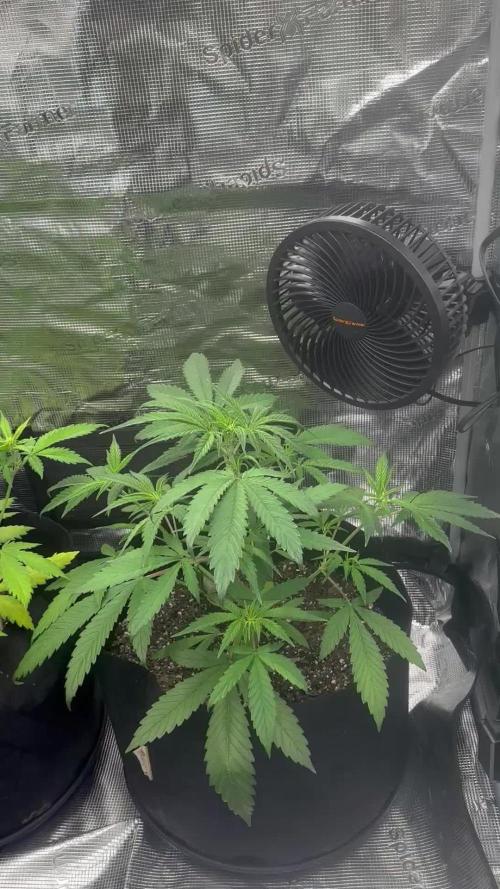
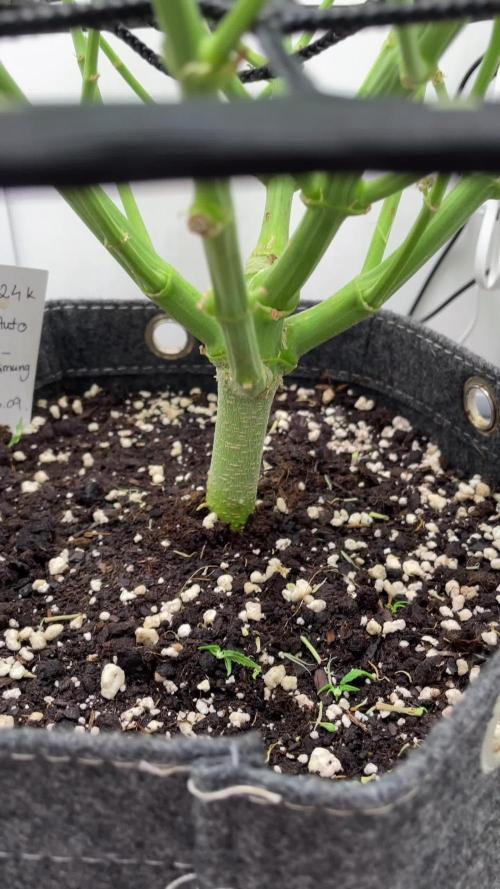
Eccoci qui... Ormai manca davvero poco ci siamo quasi.... Ora niente più fertilizzanti solo acqua ed attendiamo la maturazione.. Seguiranno aggiornamenti, grazie a tutti per il supporto🔥🌲❤️
Likes
2
Share
Cannabis isn't just a plant; it's a test, and most people are failing it. You've been told weed is either medicine or menace, a spiritual gateway or a mind-numbing escape, sacred or sinful. But here's the truth: none of those labels touch the core of what this plant really is. Cannabis doesn't conform to your beliefs about it. It amplifies what's already within you, and that's what makes it dangerous. In ancient traditions, cannabis wasn't a way to pass the time. It was a portal—a tool of transformation—used only by those prepared to meet themselves fully, with no filters and no distractions. Shamans, mystics, and seekers used it to dissolve the ego, not decorate it. Today, however, the plant is everywhere. It's sold like candy, smoked like a trend, and worshipped like a lifestyle. What was once a ritual has become routine. The sacred has been turned into a spectacle. This isn't about whether weed is good or bad. It's about what it does to your soul. Long before cannabis was ever rolled into a joint or packaged for profit, it was a key—handled carefully, reverently, and only by those who understood what door they were opening. At the dawn of civilization, it was never seen as a recreational pastime. It was a sacred tool, aligned with the rhythms of spirit and used only within the context of ritual, fasting, prayer, and solitude. In ancient India, it was offered to Shiva, the god of destruction and transformation—the one who dissolves illusion so that truth can be born. His devotees, the sadhus, didn't smoke for fun. They smoked to die—at least, to the ego. The chillum wasn't an accessory; it was a sacrament. In Taoist alchemy, cannabis was blended with other herbs to refine energy, cultivate inner silence, and trigger visionary dreams. It wasn't used to numb the senses but to awaken subtle perception. Ancient texts describe it as a spirit ally—one capable of sharpening insight or disrupting chi, depending on the user's inner alignment. To the unprepared, it was not a gift. It was a test. Sufi mystics used hashish in ceremonies intended to dissolve the self into divine presence. Yet even among them, the plant remained controversial. Rumi warned against forms of intoxication that imitate awakening while leaving the soul untouched. The plant was revered only when it led to the annihilation of the ego, not the amplification of it. It had to be held like a sword: with respect, or it would cut the hand that held it. Among the Rastafari, cannabis is ganja—the herb of wisdom, the healing of the nations. But it is not merely smoked; it is prayed over. It is brought into reasoning sessions, where words and smoke rise together in a shared search for truth. It is a tool of communion, not escape. It is never separate from the liturgy. In those sacred circles, cannabis is not consumed to forget the world but to remember the divine within it. And yet, here we are. In the modern West, we've turned the sacrament into a souvenir. What once demanded preparation now demands nothing. You can buy weed in drive-throughs, light up between text messages, and scroll through endless content while floating in synthetic calm. The plant is the same, but the context has changed. Without ritual, cannabis loses its compass. When the ceremony disappears, all that's left is sensation. And sensation without direction becomes indulgence. What makes this dangerous isn't the plant itself. It's that we now engage with something once considered sacred as if it were entertainment. Cannabis doesn't offer consistency; it offers amplification. If you're grounded, it deepens you. If you're lost, it magnifies the maze. Most people don't realize they're walking into a temple with muddy feet and then wondering why they see only shadows. The truth is, the plant doesn't decide where it takes you. It holds up a mirror. That mirror reflects everything: your fears, your unresolved pain, your unspoken questions. It doesn't care about your vibe. It cares about your intention. That's why, in most traditions, the preparation was the real ritual. Fasting, chanting, silence, cleansing—all before the first inhale. Not because of superstition, but because they understood that the mind must be stable before it is expanded. Used with reverence, cannabis is not a drug. It's a door. But doors lead both ways. They open to light, but also to shadow. And the most dangerous illusion is believing you can handle both when you've prepared for neither. There's a reason so many people report anxiety, paranoia, or a strange sense of being watched when they smoke weed. Most chalk it up to a bad strain, the wrong dosage, or a chemical reaction. But what if it's not the weed at all? What if the plant is doing exactly what it was always meant to do—stripping away the noise, piercing through illusion, and revealing what's hiding underneath? Carl Jung called it the shadow: the buried aspects of the psyche that you've rejected, forgotten, or never dared to face. Not evil—just uncomfortable. Not malicious—just inconvenient. It's the grief you never processed, the anger you swallowed, and the truths you couldn't bear to confront. The plant doesn't generate these things. It reveals them. Like an amplifier, it doesn't create the music. It simply makes what's already playing louder. And for many people, what's playing is unresolved pain. This is the part of cannabis that nobody likes to talk about. Because it doesn't sell as well as relaxation, good vibes, or being chill. But ask any serious spiritual practitioner and they'll tell you: the path to awakening begins in the underworld. Not in visions, but in discomfort. Not in light, but in confrontation. And cannabis, when used consciously, can be one of the most effective tools for that process. But only if you're ready. Only if you're willing to see your own face without the mask. In mystical psychology, this moment of exposure is sacred. It's not a failure. It's an invitation. The anxiety that creeps in after a puff. The spiraling self-consciousness. The rising paranoia. These are not necessarily signs of malfunction. They are feedback. The system is responding to the shift. What's happening isn't that you're losing control. It's that your filters are breaking down. Your inner guard dogs are panicking because the ego's fortress is being breached. But modern culture isn't built to help you through that experience. There's no shaman. No elder. No circle. You're alone in your room, staring at the ceiling, heart racing, wondering why you feel like you're dissolving. And the truth is: you are. That's what the plant does. It dissolves the artificial. It burns away the performance. And if you're not prepared for that process, it can feel like a nightmare. Not because the plant is wrong, but because the encounter is real. Esoteric traditions understood this. If your internal world is chaotic, cannabis doesn't fix it. It turns up the volume. It invites everything to the surface. For healing to happen, it must. But if you run from that surfacing—if you numb it or distract yourself from it—the cycle repeats. Again and again. High after high. Until nothing feels sacred anymore. Only noisy. This is why cannabis, despite being natural, is not automatically safe. It doesn't distinguish between the ready and the unready. It doesn't decide who should see and who should sleep. It simply opens the curtain. What you do with what's behind it is up to you. And here lies the biggest misunderstanding of all: The belief that the plant is supposed to make you feel better. That's the lie. The truth is that it's supposed to make you see. The pain. The joy. The confusion. It's all information. It's your spirit saying: "Here. This. Look at this." But because we've been trained to fear discomfort, we label these moments as bad trips and walk away with nothing. No reflection. No learning. Just another story about how weed made us anxious. But cannabis doesn't make you anxious. It reveals the anxiety you were already carrying. It doesn't invent the discomfort—it exposes it. And that makes it one of the most honest substances you'll ever encounter. But honesty isn't always kind. Truth doesn't always feel good. And sometimes what it reflects isn't pretty. Yet perhaps it's exactly what you needed to see. One of the greatest spiritual traps is mistaking sensation for truth. And cannabis, more than almost any other plant, tempts us into that illusion. You light up. You feel open. Thoughts seem deeper. Music becomes richer. Synchronicities appear like hidden messages from the universe. Your journal fills with insights you'd never write sober. Everything feels meaningful. Mystical. Even transformative. But the real question is: does any of it actually transform you? The high itself can be seductive. It mimics transcendence. It mimics peace. But imitation is not integration. Feeling expanded is not the same as becoming whole. Cannabis can create the appearance of spiritual clarity without providing the foundation necessary to sustain it. And that's what makes it dangerous—not because it harms the body, but because it can convince the soul that it has already arrived. You begin to believe you've evolved simply because you've felt something profound. But depth is not measured by intensity. It's measured by what you bring back from the experience—and how you live once the feeling fades. Many regular users describe sudden breakthroughs: realizations about trauma, a sense of oneness with life, deep presence, heightened awareness. These experiences are real. The danger arises when those realizations remain suspended in the ether—unanchored and unapplied. They become what esoteric teachers call spiritual inflation: the expansion of the ego around the feeling of transformation without the work required to sustain it. This is what Hermetic and occult traditions sometimes refer to as the false light—experiences that appear enlightened but remain mental simulations. In Kabbalistic mysticism, it resembles the sphere of Hod: the brilliance of intellect divorced from grounded truth. It glows like gold, yet crumbles like ash. You think you've seen the light, when in reality you've only seen the mirror. Insight vs. Identity It's no coincidence that many long-term cannabis users begin to confuse insight with identity. They start wearing the experience rather than integrating it. They sound spiritual. They appear awakened. They quote philosophers and mystics. Yet their lives remain unchanged. Their patterns don't shift. Their relationships don't deepen. Their suffering doesn't dissolve. It simply becomes more poetic. The plant becomes a prop in a performance of progress. Osho once said, "Substances open doors that only silence should open." He wasn't denying their power. He was warning about their instability. A door forced open does not remain open. And the visions offered through altered states can distort reality when the mind is unprepared to receive them. The high can become a pedestal from which you look down on those who haven't seen what you've seen. But often, nothing has been seen clearly. It has only been felt intensely. The problem is not the insight. The problem is what you do with it. An experience, no matter how profound, means little if it never becomes action. A revelation is only valuable when it changes the way you live. Otherwise, the mirror remains just a mirror—and you leave exactly as you arrived. Cannabis can absolutely offer perspective, but unless that perspective becomes practice, it's just stimulation. If it doesn't shift how you show up in conflict, how you face your shadow, how you serve others, how you move through suffering, then it's a spiritual distraction dressed as awakening. And that's the danger. Not the plant. Not the smoke. But the story you tell yourself about what it all means. The high isn't the truth. It's a doorway. But if you stand in the doorway forever, thinking you've arrived, you never actually step into the room. You become addicted not to the substance, but to the illusion of progress. And that illusion is harder to detox from than any chemical dependency. This is why traditions with spiritual depth never worshipped the high. They used it to point to something deeper. They never glorified the vision. They asked what it demanded. Because real awakening isn't what happens on the plant. It's what happens after. It's in the silence that follows. In the choices that emerge. In the humility to realize that seeing something once doesn't mean you understand it. Cannabis offers access, not arrival. But the world doesn't need more access. It needs more anchors. More people who don't just visit the sacred but embody it. Who don't just feel the truth but live it. Cannabis doesn't just affect the mind. It touches the subtle body, the invisible architecture of your being that carries your thoughts, emotions, memories, and energetic imprints. You can't see it, but you can feel it. And when the plant interacts with that field, it doesn't ask for permission. It amplifies whatever is already there. That's why for some, it unlocks intuition, sensitivity, and a heightened sense of presence. For others, it unearths chaos. That chaos isn't random. It's the byproduct of energy that hasn't been cleared. Think of the subtle body as a musical instrument. When it's in tune, cannabis can act like a bow across a string, drawing out resonance, harmony, and even silence. But when that instrument is dusty, out of tune, or misaligned, all the plant does is amplify the noise. And in that noise, people often confuse stimulation for wisdom. You feel more, but you're not necessarily seeing more. You're just louder inside. And when the inner space is crowded, clarity becomes impossible. Traditions that understand this speak of energetic hygiene. It's not a mystical concept. It's spiritual hygiene, in the same way that showering is physical hygiene. Practices like fasting, breathwork, chanting, cold exposure, prayer, and silence aren't accessories. They're clearing rituals. They stabilize the field. They make sure that when you open the door with a plant like cannabis, you're not stepping into a room full of unresolved debris. In Reiki and other energetic healing practices, cannabis is sometimes described as a field disruptor. Not because it's harmful, but because it creates a surge in sensitivity. That surge can help you access subtle energies, but it can also leave you porous. Practitioners who aren't grounded often find their sessions become unstable or chaotic after using the plant. Sensations increase, but control decreases. The same is true in Kundalini work, where cannabis is known to awaken dormant energy before the body is ready to handle it. You feel open, electric, even euphoric, until you don't. Until you crash, spiral, or find yourself unable to ground the experience in any meaningful way. Amazonian shamans say that every plant opens, but every plant also tests. And cannabis is no exception. They believe that each plant carries a consciousness, a spirit, a frequency. And when that spirit enters you, it begins to communicate. Not in language, but in emotion, in memory, in energetic sensation. If you're not clean, mentally, emotionally, spiritually, that communication becomes scrambled. The plant becomes distorted by your own residue. And instead of clarity, you get confusion dressed in insight's clothing. This is why so many people feel drained, unfocused, or emotionally raw after heavy cannabis use. Not because the plant is inherently draining, but because they entered into it unprepared. No clearing, no containment, no reverence. It's like plugging a delicate instrument into a distorted amplifier with frayed wires. The result isn't music. It's noise. And the longer you're exposed to it, the more it wears down your sensitivity. Cannabis interacts with the energy body like fire, interacts with a dry forest. It spreads. It consumes. It brings light, but only if the space is clean. Otherwise, it just burns. Without grounding, without clarity, without intentional boundaries, what was meant to elevate can begin to fragment. You lose focus. You lose willpower. You start living in a fog that feels peaceful, but underneath is a dull kind of stagnation. And here's the subtle danger. You begin to call that fog calm. You begin to associate the dulling of sensation with healing. But healing isn't numbness. Healing is clarity. Healing is the return of power, not its suspension. And cannabis, when used without energetic awareness, can temporarily mask imbalance instead of resolving it. So the question becomes, is your system clean enough for clarity? Have you prepared your inner temple before you invite the plant in? Because cannabis doesn't clean the house. It just turns on the lights. What you see depends entirely on what was already there. Once upon a time, cannabis was only used when the soul was ready. Now, it's used because the week ends here. The shift didn't happen overnight. It was slow, subtle, and disguised as liberation. What used to be sacred became symbolic. What used to be intentional became impulsive. We went from smoke as spirit to smoke as content. And in the process, the plant didn't lose its power. We just lost our way of holding it. In Rastafarian tradition, cannabis wasn't something you did alone in your room to cope with stress. It was integrated into sacred reasoning sessions, ritual gatherings for philosophical and spiritual reflection. The smoke rose with the chants, with the prayers, with the heartbeat of drums. It was a communal ascent, not a personal escape. It wasn't about feeling good. It was about finding alignment with Jah, God, Source, the One. And if your heart wasn't clean, the herb would show you. It wasn't entertainment. It was an initiation. In the African diaspora, especially within Afro-Brazilian religions like Candomblé and Umbanda, cannabis wasn't always central, but the concept behind its use was. Every plant was seen as holding an axé, a spiritual frequency, a purpose, a vibration. To misuse a plant was to misuse its energy, and to do that was to invite imbalance. The ritual determined the effect. The ceremony created the container. Nothing sacred was taken without being earned. There was no casual consumption, only communion. But that's not what the modern world wanted. Ritual requires time, discipline, and humility. Ritual is inconvenient, and capitalism thrives on convenience. So, the plant was extracted from its cultural roots, sanitized for mass consumption, and rebranded as a lifestyle. Now it's wrapped in sleek packaging, endorsed by influencers, and sold with the same pitch as a wellness smoothie. This will make you feel better. No mention of shadow. No mention of mirrors. Just mood boards, pastel fonts, and a shallow nod to mindfulness. The sacred was commercialized. The ceremony was deleted. And cannabis became a product, not a portal. Now people light up while binge-watching shows that feed them more programming. They scroll while smoking, swiping through empty content designed to hijack their dopamine. There is no circle. No chant. No silence. Just stimulation on top of stimulation. And in that layered chaos, the plant becomes fog instead of fire. Numbness instead of clarity. Even the festivals that claim to be spiritual, burning incense, playing ecstatic music, and selling chakra stickers often reduce the plant to background noise. The ritual becomes a performance. The ceremony becomes a costume. And the true essence of the plant, the part that could transform, disrupt, awaken, is buried under layers of aesthetics. But cannabis has no interest in being aesthetic. Its spirit is old, wild, and unapologetically real. It doesn't care about your branding. It cares about your intention. And without a container, its energy spills. It flows into your distractions, into your anxieties, into your unchecked wounds. Without direction, it simply amplifies your current state. That's why some people feel inspired, and others feel stuck. Same plant, different vessel. So when we stripped away the ritual, we stripped away the structure that made the experience sacred. Without that, what's left is entertainment masked as healing. A mimicry of depth. A hollow echo of what once was holy. The plant has not changed. But the way we use it has. And until we reclaim the container, we'll keep wondering why the experience feels shallow, inconsistent, or even chaotic. It's not that cannabis lost its power. We just stopped preparing ourselves to receive it. The ritual was never a performance for the divine. It was a way to prepare you. To cleanse your mind, your energy, your heart. So when the plant opened the door, you walked through it with grace, not confusion. We didn't lose the sacred. We stopped recognizing it. The most dangerous lie is that intention alone is enough. If you mean well, the plant will guide you. But cannabis, like all true spiritual allies, doesn't operate on sentiment. It responds to energy, to readiness, to the clarity of your inner world, not your wishful thinking. Too many seekers approach it with curiosity, but no compass. They light up to feel better, to think deeper, to escape boredom or soften the edges of stress. But they forget that the plant doesn't give you peace. It reveals whether or not peace was already there. Used with discernment, cannabis can be a profound ally. It can help you detach from the noise of the ego, see your patterns more clearly, and soften the grip of your internal narratives. But the key is never the plant itself. The key is who you are when you meet it. Without structure, the experience becomes slippery. Without reflection, the insight evaporates. Without grounding, the openness turns to fragmentation. So how do you use the plant without being used by it? First, by understanding that cannabis should never be your first response. If you feel anxious, don't smoke. Sit with it. Ask it questions. If you're restless, don't escape. Move your body. Breathe deeply. Journal. Only when the body is settled, and the mind is clear can the plant act as a tool of refinement, rather than disruption. Before using, ask yourself, " What am I seeking? Clarity or comfort? Truth or temporary relief? Am I reaching for the plant out of alignment or avoidance? There's a massive difference between using cannabis to explore consciousness and using it to mute what consciousness is trying to tell you. One is sacred. The other is just another loop. The wisest traditions never relied on cannabis alone. It was always one element in a larger spiritual ecosystem. Fasting. Silence. Chanting. Prayer. Breathwork. Cleansing rituals. These were not unnecessary traditions. They were spiritual hygiene. They were the practices that helped prepare the vessel, clear the clutter, and tune the nervous system so that the plant could do its deeper work. Grounding practices matter. Smoke in silence. Sit on the earth. Stay off your phone. Turn off the background noise. Let the plant guide you inward, not outward. Write down what comes. Reflect. Integrate. Take what you learn and bring it into how you move. How you speak. How you love. That's where the real alchemy happens. Not in what you see, but in what you do with what you see. Cannabis without integration becomes a form of spiritual entertainment. You start chasing the feeling instead of doing the work. It becomes part of your identity. You begin to associate your depth with the plant, as if you cannot access wisdom without it. And that's the beginning of dependency. Not chemical, but existential. You forget that the plant is just a mirror. The depth was always within you. The cannabis just helped reveal it. The real journey begins when you can access that state without anything external. You are not meant to live inside the high. You're meant to bring what you found there back into your daily life. The insight is not the prize. The application is. The transformation is. Can you be kind without needing to feel euphoric? Can you stay present without chemical help? Can you walk through conflict, boredom, and routine and still remain awake? This is how you use the plant without losing yourself. By never letting it become your source of meaning. By returning to yourself as the center. The plant may open the door. But only you can walk the path. And if you're not walking, you're just circling. Feeling more. Learning nothing. You don't need more highs. You need more honesty. The kind of honesty that isn't always pleasant, but always real. The kind that strips away the glittering illusions and asks, is this helping me grow or just helping me hide? Cannabis was never meant to be used in isolation. Across cultures, lineages, and centuries, its spiritual use was almost always collective. Not because people couldn't access altered states on their own, but because those who understood the plant knew this. Without a container, power becomes unpredictable. And without community, insight turns to distortion. The plant might open you, but it's the circle that holds you. In the Rastafari tradition, cannabis is not smoked casually. It's part of reasoning sessions, gatherings where the herb is passed with reverence, accompanied by scripture, discussion, chanting, and the pursuit of divine truth. It's not about getting high. It's about getting aligned. Words are shared with weight. Silence is respected. Everyone becomes both student and teacher. Rollers rights, puff puff pass the herb moves clockwise, like time, like energy, like the sacred wheel of life. In that space, cannabis is not the focus. It is the bridge that bonds.
Processing
Likes
19
Share
I'm like 5 days late with this update so I have had to pin videos that I took the same week while I was communicating with TRYHARD so ignore any dialogue that's out of context they aren't diary logs they are simply correspondence between myself And TRY, oh and sorry about my language I'm common as muck me. The pictures are just random pics I took that week as oppose to my usual more organised method but hey ho I'll do a more tidy job next week. The week went swimmingly barring some nitrogen deff on the lowers which I initially put down to the hot weather drying the pots too quickly and causing nute lockout with the salt buildup so I flushed then gave them a nice feed after they dried the pot at which point I noticed the most heavily afflicted by the N deff were also the quickest drinkers and had lower EC on the runoff so I have been giving them a slightly stronger feed than the others and it seems to have solved everything so I'm happy with that. Bud development is nice, frost is nice, terps are through the roof right now..... Zkittlez ones are really stinking of lime and candy bubblegum Punch ones are stinking berry berry nice! Grandpas Crush is smelling kinda hazey right now but I'm hoping the berries comes out of her too. Little else to report really. Thanks for reading One Love 💚 Fire Farmer🔥👨‍🌾
Likes
3
Share
@Papabro2k
Follow
So this will be the last week on the flush she has 24hour light off now so almost an end to my 3.1 Dwc experiment it’s been a hell of a Ride she stings and is frosty to hell thanks to who every followed my Diary many more to come 👍
Likes
84
Share
@Coopmc
Follow
So much Pollen about to fly!! Looks like a few seeds starting to develop Daddy Dust Everywhere!!
Likes
32
Share
Likes
36
Share
Saddest week by far! 😞 Feeling like a bad dad smh should’ve got her a new home sooner than later. Don’t go for the deal in the end all the time, stick with what you know! “This is the lesson I learned this week.” Not many pics this week due to my disappointment in myself. She got way to close to LEDs and in some spots she was touching the diodes. 🤦‍♂️🏿 Burnt spots. Will be giving her a lot of TLC from hear on out. Will she bounce back?!?! 9/10: Bigger tent finally arrived! Tried ordering from Growbuds.com the Spider Farmer Grow Tent 2x4, paid for 2 day shipping. Wasted a week waiting for it before merchant advised the item would not be shipped til September 17th and I would’ve had to wait 4-5 business days for delivery. SMH. Thank goodness for Amazon Prime! Canceled my order immediately and ordered from Amazon. NEW TENT: Spider Farmer Grow Tent 2x4, Indoor Plant Growing Tents 55"x28"x80"
Likes
Comments
Share
@XanHalen
Follow
Weekly update: August 6th Looking great, major spurt of growth on both girls, #1 (sativa leaning girl) had major final stretch to end off stretch in 3 days (hopefully). And #2 (stockier indica leaning pheno) has had a big increase in flower size in 3 days which is promising, and is also producing a very sweet and tropical fruity gas smell, this is TCP after all! Oh yea and I’m running about 1700 center 500 outer ppfd and tapering down if I see anything but nothing so far all good nice genetics, may drop in the next week even if no signs or symptoms, to prevent and not be too greedy. Now for the not so good… been getting 10% runoff almost every feed, but my runoff of #1 was 3500ppm and pH 4.5 and #2 at 5000ppm and pH 4.5. Been giving around 850 ppm input at pH 6.0, never went over 1000ppm input. So I have to correct with 25% increase in feed volume, 300-400ppm input at pH 7.0 for what I infer to be 2-3 feeds until runoff ppm is significantly lower, and pH is at least 5.5. UPDATE Aug 8: To address the toxic/locked-out root-zone I did a regular feed with runoff (1.5 gal total volume per pot @ 820ppm bloom focus), runoff consisted of pH 4.2-4.5 and 4000-6000ppm... OUCH. I then fertigated with 0.5 gal plain pH 6.5-7 dechlorinated tap water each. I repeated this a total of 3 times, to which the last flush had 3 ml/gal cal-mag. final runoff ppm @ 1000-2000, pH 5.3-5.5. To conclude, I more than likely wasn't achieving enough runoff per scheduled feed, and did not cycle a few plain pH adjusted waterings. I had almost the same thing happen last run with autos, except they were showing signs of lockout, these photo girls are not. I must do a regular watering every 3 feeds, achieve 20% runoff with high ppm feeds, and 15% runoff at least with mild to moderate ppm's. Lesson learned, I hope I get a full run in the future without hiccups like this. UPDATE Aug 9: Big thanks to @00110001001001111O for suggesting i omit the light hanger and hang from the carabiner, I thought I was out of vertical space until this was pointed out. Check him out, he always has well informed answers to grow questions: https://growdiaries.com/grower/00110001001001111o
Likes
21
Share
A-Day 53 (into week 8) B&C-Day 49 (end of week 7) A - She is stacking well, and feeling greasy! The smell is coming on stronger everyday, frost is just starting to build up. There is a distinct transition as the leaves go through veg to early flower to late flower. Uniform all around, not very tall, but she is hardy and thiccc! B- Full flower now, so many tops! She has shown to be a slower flower developer than A, but the flowers she are developing are almost completely uniform all across the 🌱! I assume because there are so many they will be a little slower. I put her ties back on, and the middle shoots exploded with new stretch and growth, so she is still in that stretch/flower stage. C- what can I say, patience is a virtue. She is looking lush and vigorous. With this being a slightly longer to finish auto strain, she has had time to recover from a) being a runt, B) having slow growth, c) having almost no training and lighter nutrient feeds her whole existence. This is also my control for Topping, she was not, A and B were. This strain is clearly hardy and able to withstand multiple techniques, we’ll see what the end the result is compared to her sisters. All three plants received a full nutrient feed x2 this week. That was: 3 gallons dechlorinated water mixed with 12 ml Micro, 12 ml Bud, 20 ml Grow, and 6 ml Sensi Extra CalMag, PH’d to 6.2. And another very low feeding of 1/3 that mixture mixed into 3 gallons of water. Ive heard many growers who instead of just watering, they will do a much lower strength of nutrients included in their watering, and ultimately never not feed their plants nutrients until flush. Thoughts?
Likes
16
Share
@SAC87
Follow
Hey Growers. These FastBuds Afghan Kush are coming along nicely. These girls are in their final week/s. I’m just watering and watching trichomes. I removed a bunch of leaves especially the damaged ones and the buds bulked up immediately and the frost poured on. The trichomes are bulbous and granular, they’re so big. The buds aren’t massive, but they are firm. I think that may be because of the XS2000. They are quite similar to the super lemon haze from last run. I’m totally fine with a bunch of buds the size and firmness of golf balls!! A bit more time and I’ll chop them down. Happy Growing 🌱
Likes
16
Share
Day 35 flowering: besides the obvious calmag need this little lady is waking up now. Her buds are looking very nice. Feels solid with a little squeeze and boy is she fruity smelling now. With still so long to go , she should give a very nice tield if i can sort the cal mag issue quickly.
Processing
Likes
5
Share
@Highdro
Follow
I had a busy week moving the plants into NFT once roots started to show, put them into a tent give them a fan. Freebie seed shown slow recovery but decided to use it anyway.
Likes
8
Share
Likes
26
Share
Day 17 17/07/24 Wednesday De-chlorinated tap water pH 6 with calmag 5ml -5L. Very humid week, noticed a green turning colour on top of soils where the humidity has been far to high. I have installed door netting and recently left open all day and night now so they can condition over night in colder temps. All are doing well, one overdose slightly behind and looking ABIT swifted. But she'll come around 💪💚 Day 19 19/07/24 Friday Lite Feed today, 250ml each pot small run off. Seeing excellent start to these babies. Let's get it 👌💚 Day 21 21/07/24 Sunday De-chlorinated tap water pH 6 with calmag 5ml to 5L. Watering in 1L each day from now. Updated video
Likes
Comments
Share
@Martin82
Follow
yep, the heatwave is over, for now. As soon as the temperatures dropped the sweating buddha became a growing buddha. Keep growing, little buddha!
Likes
19
Share
Another great week for these girl, since very wet days surrounded Ontario, I brought these girls inside and flipped them into flower, now on a 12/12 light schedule. They look good and ready to begin blooming, I have top dressed these babies with Gaia Green Bloom 2-8-4 this organic fertilizer consists in fishbone meal, steamed bone meal, glacial rock dust, mined potassium sulphate, fossilized carbon complex, rock phosphate, greensand, kelp meal, gypsum, and bat guano. Stay lit, ill see ya next week! Check my Instagram @GirlGoneWeed
Likes
4
Share
Another Love 💛 ❤️
Likes
14
Share
📆 Semana 5 Con la estructura ya marcada, el cultivo entra claramente en fase productiva. La canopia se mantiene uniforme y las puntas empiezan a ganar presencia a medida que las flores se desarrollan. Los cogollos avanzan en el apilamiento y empiezan a compactar, formando erizos cada vez más definidos. La resina comienza a hacerse visible en cálices y hojas cercanas. El consumo progresivo de hojas grandes continúa de forma natural, señal de que la planta dirige su energía hacia el engorde y la formación de flores. Seguimos creciendo fuerte 💪!
Likes
20
Share
@usere
Follow
dim. lamp at 100W due to warm weather conditions and some burned tips of the leaves. I watered every other day with about 4-6 liters. I 'm using a super soil S.W.A., so any extra nuts has been added just sometimes cannazym and rhyzotonic. Remember that on the left is gorilla fast , right blackberry cake.