




Processing
Likes
28
Share


@Elysian_gardens710
Follow
I'm watering both of these plants 1 gallon ever 2 days. They're starting to build up!! As an overview You can see from the pictures that both are dealing with a little bit of heat stress. They are in a tent where all other plans love it hot and the temperatures are in the low eighties. if you look at the top leaves you can see canoeing my guess is it's heat.
Other than that they're doing great #1 has shot up she stands nearly 12" tall now. this is the plant that we are letting grow completely natural no topping, No training. #2 on the other hand stands almost 8" tall and is much bushier, thicker, and squatter. You can see clearly in the video that we topped her and also are employing some low stress training to tie down her lower branches. both plants are beautiful and doing great! I expect #1 will be transplanted this week sometime
#1 is 15" from the light #2 is 25" from it.
Day 30: quickly measured because it looked like they grew a bit since watering Thursday. Definitely have too! #2 has easy gone up an inch. #1 is close to the limit of her pot I think.they both have asymmetrical growth 🤨 each have a branch on one side much taller than the other sides so I have begun rotating them daily to help light penetration.
Day 31:
Today I transplanted #1 she was in a 1Gal nursery pot for 31 day and starting to show some issues. I moved her into a 10x10 square nursery pot. Approximately 3gals. From here she will go into a 10Gal for flower in about 6 weeks!(I'm letting them get some size)Very faint yellowing of the leaves and needing to be watered daily. Attached is a video, showcasing her roots. Idk why, but everytime I transplant they look like the video. Everyone else seems to have an insane amount of roots.🤷♂️ #1s roots are some of the thickest I've seen tho, a regular tree! I transplanted using real growers recharge. That's about for today hope u had a great 4th!!🇺🇸🇺🇸🇺🇸
Day 33:
Just a quick update today. Check the video I say more in that than here. #2 has nutrient burn from the recharge. These are such easy plants!! They need and want nothing! Water them once every 48 hrs or so and that's it! Im obviously going to back off on the recharge tho for then next couple waterings.✌️💚🌱
Day 35:
Finishing off the week with a transplant. We put #2 into a 10"x10" nursery pot. Works out to be 3 weeks in the small 3 weeks in the medium then she goes into a 12gal for flower. I used Azos and real growers recharge during transplant
Soil: fox farm happy frog
Light: ES300 LED
18/6 on/off
2x4 vivosun tent
6" oscillating fan, 8"tunnel fan
6" inline duct fan
Watering this week: pH 6.5
1 watering of real growers recharge
Maggie's 3-1 garden spray preventative


Likes
3
Share


@MadBumbleBee
Follow
Day 35: Defoliation on some of my overgrown plants.
Day 40: My tallest plant is 43cm tall. Pretty good size, should double or even triple when it comes time to flower. Have had no problems so far, no issues with fungi or bacteria in my plants.

Likes
26
Share


@TheWhiteRussian
Follow
This thing was very easy to grow. Liked low PPMs in flower. Around 600 was plenty for her. Will report taste and effects when curing is complete.

Likes
9
Share


@JardineiroBr
Follow
Elas estão cada dia mais belas, a grande está enchendo de botões e as pequenas estão muito densas , todas com um cheiro forte e muito gostoso, são plantas de baixo THC e alto CBD estou ansioso pela experiência, além do cultivo , o consumo.
Vale ressaltar que esta sendo muiti gratificante o cultivo desta pela variedade da Fast Buds.

Likes
14
Share


@MrWigglyJiggly
Follow
What a journey this has been. This girl weighs(dry) 263grams plus 23 grams(untrimmed lower nugs) could have pulled out 350g if let her veg a bit longer. The taste is like sweet candy and soda a hint of citrus. The effects are as follows, creative, giggles and energetic but once its nearly gone out. You will feel really sleepy and when you wake up you will feel really hungry. Anyways, thank you guys who have been following my journey. Next grow will be seeds from Sunkentreasure seeds


Likes
17
Share


@mrbigbong
Follow
y de nuevo esta semana fue bien, empezaron a aparecer los pistilos de las flores, añadidos a la solución de riego del aptus regulator para micro elementos y para mantener la lámpara un poco más cerca para no estirar demasiado las plantas. Yo diría que va bastante bien ...
👊👽👌
🍁🍁mrbigbong🍁🍁
Likes
4
Share

@Minuteman_Organics
Follow
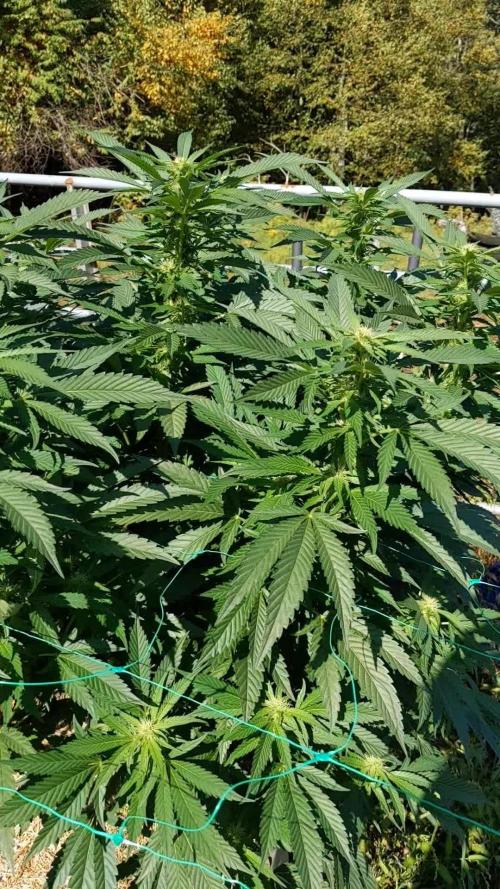
The girls are doing great. Some are much further along than others which is a little worrying. Seems like some are in week 4 while others are ending week 2. Hoping for a dry mid October for the late finishes

Likes
15
Share


@HighOhioAn
Follow
Growing for FastBuds420 has truly been an honor their genetics are truly Best in the world in my book strange our name beautifully mimicking the smells and appearances of their names. Pineapple express is one . They nailed the name right on the head. This plant truly smells just like a pineapple and almost looks like a pineapple once the fade starts one of the biggest autos I’ve ever grown truly thankful for the opportunity to grow this plant
FastBuds420. 4 Life 🌿💨💯


Likes
11
Share


@Mo_Powers
Follow
when you grow a feminised photoperiodic outdoors you have to bring time and patience. she is growing and is strong. still no sign of sex. she hasn't really had much stress, so i'm not worried about her turning male. i'll just keep growing her. her sister, RQS Power Flower is also doing very well. both have been given a homemade fertiliser made from aquafaber, coffee grounds and banana peel. they liked it very much.

Likes
4
Share

@HowtoBubatz
Follow
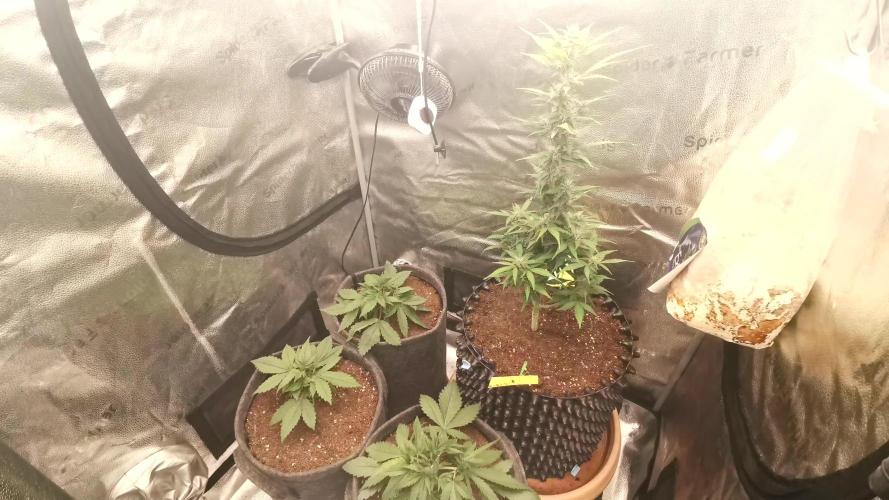
This girl is growing like a sword – tall, slender, and cutting through the canopy with style 😅
She's stretched quite a bit, and down below she’s rocking four tiny side shoots that I’m honestly not sure what to think of yet.
But hey, I’m letting her do her thing.
Stretch seems to be slowing down now, and I'm starting to spot the very first trichomes glistening under the light, always an exciting moment!
Let’s see how she continues to shape up in the coming weeks. Staying hopeful!🌱💚

Likes
10
Share


@6toecat
Follow
Using a Rhaspberry Pi 4 to automate the watering and a TP-link 105 smart plug to automate the Viparspectra P2000 LED grow light.
You can see how I automated it here: https://hackaday.io/project/188129-rhaspberry-pi4-basic-watering-system-for-balcony
Basically, this is an "Automated Watering how-to Guide for Dummies" - as simple as technically possible. You still require some basic command line expertise, but the steps have been proven and I provide links to the gear I used AND the Node Red code, making this EASIER than anything else I've seen online.
Harvesting soon.

Likes
2
Share


@DaddyPrime2
Follow
This clone was neglected so badly. The dispensary got them from had no idea on how to take care of plants. I wanted to take them all to give them better homes. The leaves were so thin that they felt like paper. I've never felt a plant like this one felt. I will make her beautiful. She's exploding with new root
Likes
74
Share


@Ferenc
Follow
Day 36, 25th of October 2021:
Week 6 ;)
First day of the 6th week....
This week is not about LST anymore it is FIMing week that means all of them have FIMmed on all of their "heads" so like each plant approx 6-8 times....
Together, they have strong smell even without flowering lol 😆
So yeah, Mastdoson Kush is still the same very strong and resistant I beleive they won't strech that much so no need any Topping for them. They should stay short and bushy hopefully with nice buds :)
RQS girls:
Gelato Cookies 🍪 is amazing nothing really changed she will be I think a larger lady when starts flowering. I am not sure about streching but I reckon a double size maximum. I am very satisifed with this genetics lovely and first class.
Northern Light for me looks a bit tiny but little bushy so we will see it is obvious that she does not need Topping at all for her midget style...
There are nice branches but she has got some deficiency.
Hopefully it won't effect on her performance in the future I am so curious about her. It is okay if she won't get large -large but I expect a chunky lady at least :)
Spliffs Seeds ladies:
Well, CBD Medi Kush is my favourite lady from here she will be another strong and big plant I think. Very cool I like this one even the smell already amazing!
Smooth chill.... all good 👍. I think she will be a problem free strain in the future but let's see ;)
Afghani Gold typical bushy midget Indica with fan big leafs 🍃 nice creation she will be nice as well, I don't reckon with big strech :)
We will see what comes and obviously I am excited here as well. I wanna see a chunky lady. Hopefully she will fulfill my dreams lol 😆
Spliffs Strawberry 🍓 the typical Sativa with that "saw blade" style leaves...
Well, here I am afraid a bit of streching as she just FIMmed and Sativa however, I beleive she will be cool with that :) She looks pretty a bit lighter in colour.
Honestly I don't really have big experience with Sativas mostly Indicas and hybrids but I am pretty sure that I can handle the situation. I know it will take a bit longer for her to flower and also she won't be the chunky numero uno but I still expect great things haha :)
Blue Berry she is the hybrid lady and still looks a bit pale for me obviously she has got some deficiency but she will make it let's see what comes when she turns to flower.... I am excited 😁
I wanna give them several days before the darkness period which is 3 days and the from next week switching to 12/12. They are FIMmed only so it doesn't really stress them to give them much extra time to recover before flowering.
I think it will be the right time to switch on the next week because I can see they really want to flower 🌼 ☺️ 😅
But for now lamp is still 18 hours on, set to be on 150W (approx 60% of the max) ventilation is on for 10 minutes in every 2 hours but the extraction fan is 18 hours on with the lamp...
Humidity approximately is the same 50% and the temperature as well +/- 1-2 Celsius.
Water intake increased approx 0.12-0.15L per day per plant.
Fertilization is the same Epsom salt once a week, and then 2x a week Biobizz Family included BioGrow, BioBloom, TopMax and of course - Vitalink bat gunao also.
Ratio is above. So that's all let's see 👀


Likes
24
Share


@Jays_Not_Here_Man
Follow
The girls have survived another week ❤️ I did a light defoliation and have been monitoring the RH closely. We have had a very damp week here, and the RH kept climbing and had my fan working hard.
They are starting to plump up and fill in 😋. They have also started to slow their drinking habits, instead of watering every three days, it has moved to every 4 now. Just a couple of weeks left, I think I will be harvesting these over Christmas 🎄, and will have some great bud ready for the new year! 🎉🎊🍾

Likes
144
Share


@1Right_Angle
Follow
August 8th
- we’ve hit the 14hr. of daylight mark and with all of the rain recently, amended soil etc., its Officially into Flower this week
- next meal posted above
- Feed - Feed - Water begins
- carried out an actual Schwazze to the Med/Lar Fan Leaves on the bottom 70% of the plant. Trying it inside, might as well have one tested outside; day 1 flower = Schwazze Day
- Day 20 is next Trim
- Vital-B from npk into the next beverage
9th
- after rain on 4 consecutive days, this Specimen was Thirsty aka DRY at Noon today
- fed 1 gal, posted above
- B-Vital used to de-stress plant, post Schwazze
11th,
- fed 2 L bloom nutes
13th
- fed 2L pH’d water
- she is moving up
14th
- last day of the Week 1st one in Flower
- hit 75cm tall this morning, she started the week at 57cm. Almost 10” vertical growth in this week. She’s a Beauty Doctors Choice

Likes
Comments
Share


@KBxKing
Follow
🌬️ Dry & Cure Process:
• Hung whole for 12-14 days @ 66-73°F / 48-61% RH
• Cure in glass for 3 weeks, burp jar’s for 30 min
→ Result: Smooth, rich, and loud. Gas upfront, fruity on the back. No harshness, just quality.
🌟 Benefits of This Strain:
🧠 Spiritual: Deep introspection, great for meditation or creative flow
💊 Medical: Calms inflammation, eases tension, lifts mood — great for end-of-day recovery
💪🏾 Physical: Full-body melt, especially helpful post-workout or long shifts
🏾 Overall: Euphoric & sedating without being too heavy. Night-time favorite.
‼️I’m not a physician or practitioner of medicine I just grow the herbs of my ancestors who used them for medicine


