


Likes
Comments
Share


@420DeepGrow
Follow
Gracias al equipo de Zamnesia, Marshydro, XpertNutrients y Trolmaster sin ellos esto no sería posible.
💐🍁 Frosted Guava:
La Frosted Guava es una cepa índica dominante y súper resinosa, que es un cruce de la Guava y la Frosted Skywalker. Con unas características de cultivo muy versátiles, un aroma exótico y afrutado, y un subidón relajante y lúcido, la Frosted Guava es ideal para cualquier plantación de marihuana.
🌻🚀 Consigue aqui tus semillas:
Código Descuento 20%: ZAMMIGD2023
💡TS-3000 + TS-1000: se usaran dos de las lámparas de la serie TS de Marshydro, para cubrir todas las necesidades de las plantas durante el ciclo de cultivo, uso las dos lámparas en floracion para llegar a toda la carpa de 1.50 x 1.50 x 1.80.
https://marshydro.eu/products/mars-hydro-ts-3000-led-grow-light/
🏠 : Marshydro 1.50 x 1.50 x 1.80, carpa 100% estanca con ventanas laterales para llegar a todos los lugares durante el grow
https://marshydro.eu/products/diy-150x150x200cm-grow-tent-kit
🌬️💨 Marshydro 6inch + filtro carbon para evitar olores indeseables.
https://marshydro.eu/products/ifresh-smart-6inch-filter-kits/
🍣🍦🌴 Xpert Nutrients es una empresa especializada en la producción y comercialización de fertilizantes líquidos y tierras, que garantizan excelentes cosechas y un crecimiento activo para sus plantas durante todas las fases de cultivo.
Consigue aqui tus Nutrientes:
https://xpertnutrients.com/es/shop/
💻 Trolmaster Tent-X TCS-1 como controlador de luz, optimiza tu cultivo con la última tecnología del mercado, desde donde puedes controlar todos los parametros.
https://www.trolmaster.com/Products/Details/TCS-1
📆 Semana 1:
Ha sido una buena semana, ella ha dado otro gran cambio en su lugar definitivo 😎.
La carpa está ocupada al 75% y comienza una floracion explosiva gracias a @Marshydro y @Xpertnutrients y @Trolmaster con esta gran genética 💪.
A partir de ahora se riega manualmente con las dosis recomendadas por el fabricante.

Likes
33
Share


@valiotoro
Follow
Always rock hard buds💥
Sticky glue👀
The smell is divine & refreshing :
imagine a walk in a pine Forest in Summer with hint of lemon🤤🍋🌲
Moon safari effect

Likes
35
Share


@SmokingTiki
Follow
This week I slightly defoliated the Two mandarin Punch.
The dehumidifier is now always ON and the humidity is always around 50% but I cannot go lower. I poor 2l of tap water during each watering for the 26l pots and 1,5l for the 10l pot.
After one week of 12h of light, the two photoperiod have started to stretch and the two auto are still stretching a lot and begin the flowering phase.
Plants heights at the end of the week:
Honey Melon Haze : 70cm (+20)
O.G. Kush : 48cm (+4)
Mandarin Punch #1 : 76cm (+22)
Mandarin Punch #2 : 71cm (+19)


Likes
30
Share


@XperencdGmanXG
Follow
well what can i say this is what I saved from the fusarium outbreak that I had with the mother and all the clones. Managed to save 5 clones 2 are with a friend now. I have 3, one is a great specimen and the other 2 are lil clones that could. Round 2 here we go! Wish me luck!

Likes
6
Share

@Northern_Ent
Follow
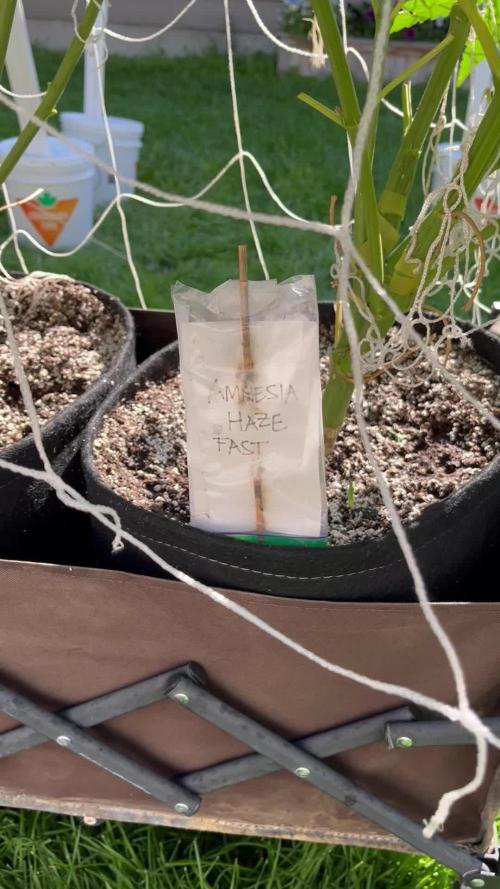
Aug 15: Amnesia Haze Fast is looking good. Late start and heavy hail damage near the end of veg stage has made her smaller but she is healthy and flowering strongly. Plagron nutrients are working great.
Here at 53 N latitude the sunlight, particularly UV light drops quickly starting in mid-August. I have UV lights from AC Infinity that are setup on days with no chance of rain. Easy to do and seems to help a lot.

Likes
16
Share


@NANTANLUPAN
Follow
Fat girl 💙
i used "Flower Fuel" nutrient 3 times Throughout lifetimes

Likes
22
Share


@Greenwolvesfarmer
Follow
Buenísimo , aunque tuve un problema de riego y me entristeció a mi plantita linda , pero ahí pude notar su alta resistencia a altas temperaturas y climas adversos .. muy buena cepa , ideal para iniciados o quienes no pueden estar todo el día con el cultivo . Tiene buena producción ! La recomiendo para scrog desde su inicio ...
Hasta el momento tengo pensado en que me dió unos 52grs en seco . Esperemossss ! Agradezco por nuevamente aprender de mis errores ... Gracias madre tierra por mostrarme el camino de la verdad y poder disfrutar de tus delicias y cuidados , padre Sol siempre apoyándome cada uno de mis movimientos, gracias por su esencia que corre por mis venas y ADN , Los amo .

Likes
6
Share

@k0nz1
Follow
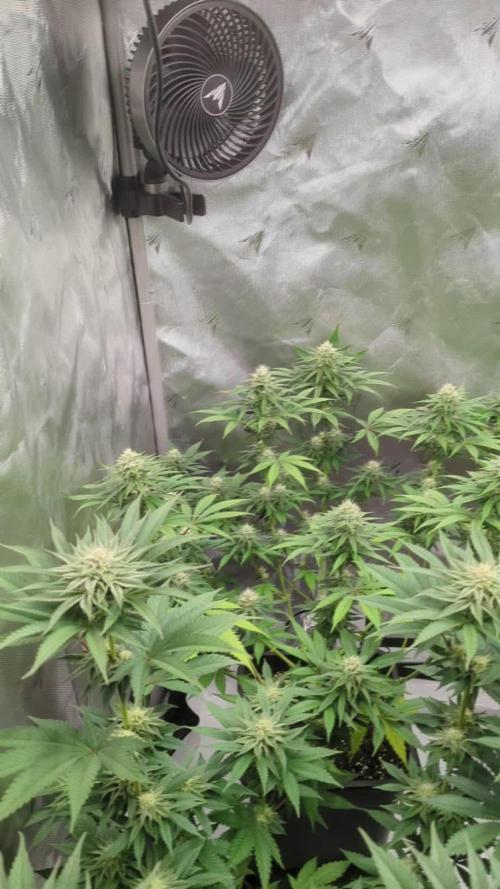
The Lemon Oranges are biests. 100% healthy and good looking/smelling and already full of trichomes. They are the fastest Ladies and a good week ahead in comparison to the other plants.
The Blueberry Pankaces are showing some nitrogen deficencies because the bottom fan leaves turning yellow, but nothing serious. Maybe they are Just heavy feeder. The terps on the BBP are very sweet and fruity.
The radical Juice ist the smallest due to little space and smaller pot size. But really nice aroma already.
The buds are getting bigger everyday. PK 13/14 this week.
19-26 Celsius
55-65 RH
Lights 100%


Likes
24
Share


@Kountryboi90
Follow
Day 38 since flipping and I'm loving what I see. This girls LOVES to eat so I had to switch my feeding cycle to feed, feed, water, instead of feed, water, water. The strong orange citrus aroma is oh so lovely! In the next couple of weeks she should start packing on more weight. I can tell that they are heavy already just but the swaying of the cola from air circulation. I think I messed up by removing my scrog net but I'll tie her up and give her support as needed!

Likes
17
Share


@Fitzwell
Follow
The start was easy as it gets just add water the first 20 days and LST every day. When i saw some of the lower leaves start to change color that's when i started to add nuits. after that it was just following the instructions foxfarm already had laid out for me. I cut back by half in the start of my feeds but by the end of my grow I was at full strength. Testing your run off is key. Cropking send me great seeds and genetics is a great foundation and starting point.
---------------------------------------------------------------------------------------------------------------------------------------------------------------------
I was very happy I got almost 5 ounces off one plant.

Likes
74
Share


@Sillyasswhitedude
Follow
The THC Bomb auto is taking her sweet time...I am gonna let her....I will get some green pics up and update later...making a run to the garden supply store today...HAPPY GROWING EVERYONE!!!! Made it to the garden store at 4:20pm they closed at 4pm...Luckily the owner was still there doing paper work and let me in...got soil for my next grow and some other odds and ends...a lot of cool stuff in there and I will be making some upgrades as my budget allows
9-11 Thc Bomb Auto is at 73 days today buds are still swelling trichs are 5% amber at best I have been flushing and feeding only water since day 60...I'm gonna let her go the distance!!! I have 2 surviving Bubble Bomb clones and their mother is thriving since her move outside...ill get pics of her later...
9-13 Harvested the thc bomb auto all day yesterday...the surviving lady left in this grow is Bubble Bomb and her clones...I'm going to run those in their own diary and clone them again unless anyone objects or I get raided but run the Bubble Bomb Fem out right here...she is getting huge...im runnin her in a scrog because she is way too tall and were I come from you don't wanna be seen in public with a fat girl if you catch my drift...she is 75 days today and just started to grow hair...Ill train her down as much as I can in the next week or so...first full 12 hours of darkness is sept 25 here...im gonna heavy feed her until then...Happy Growing!!!!!

Likes
33
Share


@iLoveGoodWeed
Follow
This strain smell is best. It's sweety orange smell and the buds looks nice and frosty
Likes
121
Share


@NuggetPawn
Follow
So they’re still stretching, I thought they were slowing down a couple days ago, but then I walked in today and realised shit, they’re still going, must have grown another 3 inches since yesterday.
They have almost filled out the whole 6x4ft space, a little space by the door and in the corners, the floor is looking well shaded which I am happy about, as that means I am not wasting too many photons.
I have an maybe another 10/15cm of spare vertical capacity before I’m going to have to start some emergency super-cropping. Starting to get a little anxious
I still haven’t changed out the reservoir from 16 days ago, although my top ups have been the same composition as noted above. I think I will drain her out tomorrow which has a drastically lower ratio of nitrogen. I have to say, this Botanicare range is incredibly stable and forgiving once you get past mid veg.
As for the genetics, she knows how to grow without little fuss. Maybe I have been very lucky, time will tell once I finish my next grow with a different strain. The plant at the back of the room is a little squat compared to the other two but maybe she will catch up.
Waffled on a bit here, thanks for stopping by, have fun all!


Likes
2
Share


@Mastr
Follow
Hi everyone
This week I did defoliation and remove most large fan leaves to get air flow and light will do same next week then I won't touch it until finish
This week I feed my plant with 2ml bloom and 2ml top max
2ml activera
Each Plant drink 2litre water every day morning and once a week just water
Willing to start germinate new seed for next grow I order new seed today (bubble kush)
Usually I veging for 4 weeks and 8 weeks flowering and always I get around 4 oz per plant ans I start growing last year so I'm new in growing but I learn how to veg very fast and strong the nutrients I use for start it cost €50 for 4 plant and you don't need any other nutrients just plain water and in flowering just feed with bloom and bloom booster
Likes
13
Share


@Yiyis_Grow
Follow
Bestva Quantum Board / Samsung LM301B
Mr Hide Seeds
Semana de engorde e inicio de lavado de raíces para dos de ellas.
De momento todo se ve en orden, buen olor y aspecto pesado.
Buenos humos a todos !

Likes
34
Share


@MadeInGermany
Follow
Info:
Unfortunately, I had to find out that my account is used for fake pages in social media.
I am only active here on growdiaries.
I am not on facebook instagram twitter etc All accounts except this one are fake.
Have fun with the Update 😃.
Flowering day 56
since the time
change to 12/12 h.
Hi everyone :-)
The day before yesterday was rinsed ☺️.
The next 5-10 days will be harvested as the trichomes are 80% milky and 20% amber.
Of course, as always, before the harvest update comes a normal update 👍.
As always, the tent was cleaned this week and all containers refilled.
Stay healthy 🙏🏻👍
You can buy this Strain at :
https://www.exoticseed.eu/
Type:
Quick Sherbet
☝️🏼
Genetics:
75% Indica / 25% Sativa
Sunset Sherbet X Black Lemon
👍
Vega lamp:
2 x Todogrow Led
Quantum Board 100 W
💡
Bloom Lamp :
2 x Todogrow Led
Cxb 3590 COB 3500 K 205W
💡💡☝️🏼
Soil :
Canna Coco Professional +
☝️🏼
Fertilizer:
Green House Powder Feeding
☝️🏼🌱
Water:
Osmosis water mixed with normal water (24 hours stale that the chlorine evaporates) to 0.2 EC. Add Cal / Mag to 0.4 Ec Ph with Organic Ph - to 5.5 - 5.8

Likes
32
Share


@Ciocanna
Follow
The seed germination is going very well; I used water with a pH of 6.0.
Big Bazooka 💥
Feminized seeds
Genetics: mostly Indica
Big Bud x Jack Herer
Flowering time: 55 days
THC: 29%

Likes
3
Share
@420DeepGrow
Follow
📆 Semana 5
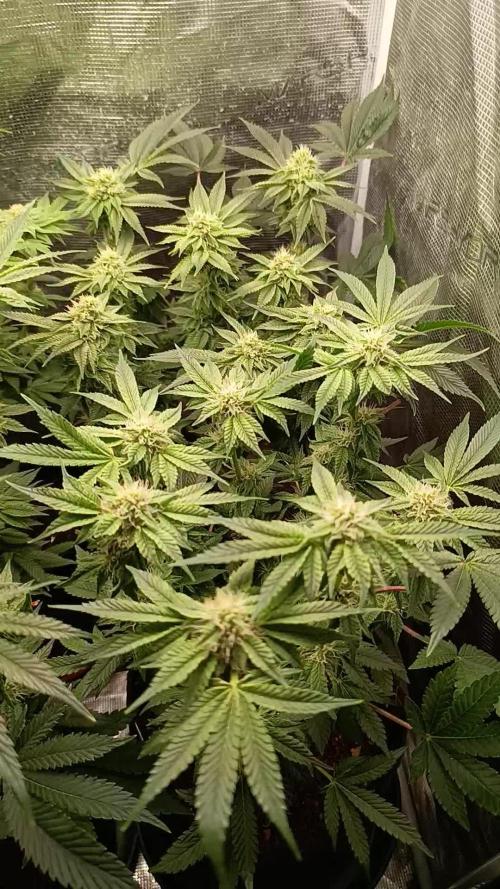
El cultivo entra de lleno en fase de engorde, con las flores ganando volumen y densidad día a día. El stacking se intensifica y los cogollos empiezan a compactarse, formando colas más definidas y pesadas.
La planta mantiene una estructura sólida, con ramas que soportan bien el peso y una canopia estable que sigue aprovechando al máximo la luz. La producción de resina aumenta claramente, cubriendo ya gran parte de las flores y extendiéndose hacia las hojas cercanas.
El perfil aromático se vuelve más complejo e intenso, empezando a mostrar matices propios de cada genética, señal clara de que la maduración avanza en buena dirección.
Seguimos creciendo fuerte 💪!
Likes
3
Share


@FarithAriasFajardo
Follow
Bueno, así terminamos la fase de vegetación. Cometimos algunos errores, aunque se pudo solucionar. Cada día aprendiendo mucho y mejorando para que esta nueva etapa sea muy frutuosa. Muy feliz con lo logrado y cómo se ven las bebés hasta ahora. Próxima semana, floración. Vamos con toda en esta siguiente etapa con mucha emoción de ver cómo se estiran y salen sus pistilos, nos vemos la próxima semana con lo que será la primera semana de flora en estas bebés

