The Grow Awards 2026 🏆
Likes
Comments
Share
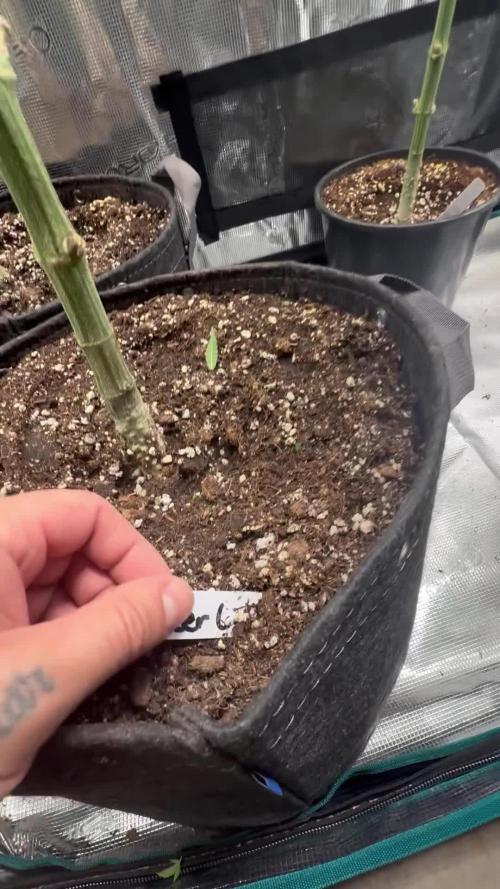
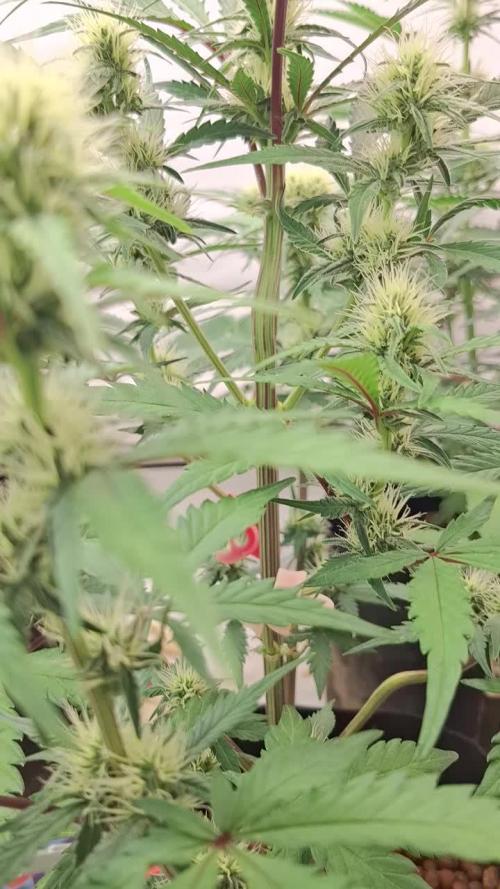
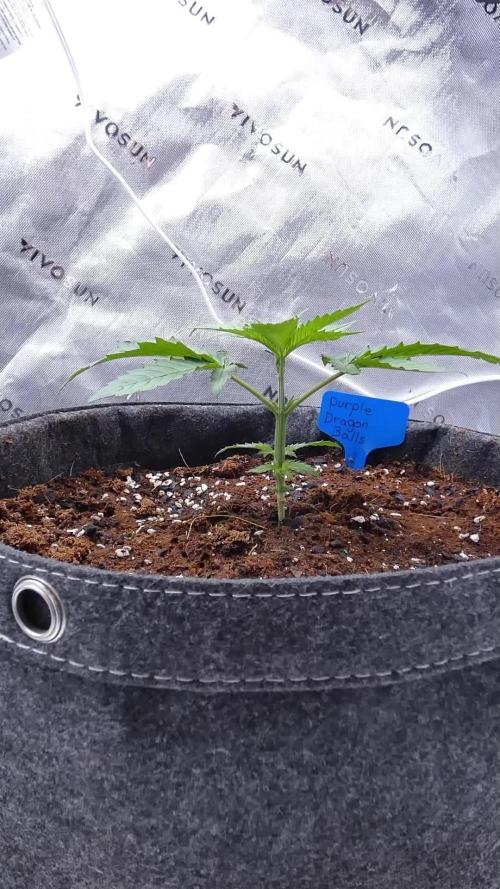
Alle 4 Pflanzen stehen im Zelt die 4 feminisierten in einem kleinen Gewächshaus, die 2 Autos im Endtopf.
Likes
25
Share
ANTHOCYANIN production is primarily controlled by the Cryptochrome (CR1) Photoreceptor ( !! UV and Blue Spectrums are primary drivers in the production of the pigment that replaces chlorophyll, isn't that awesome! 1. Diverse photoreceptors in plants Many civilizations, including the sun god of ancient Egypt, thought that the blessings of sunlight were the source of life. In fact, the survival of all life, including humans, is supported by the photosynthesis of plants that capture solar energy. Plants that perform photosynthesis have no means of transportation except for some algae. Therefore, it is necessary to monitor various changes in the external environment and respond appropriately to the place to survive. Among various environmental information, light is especially important information for plants that perform photosynthesis. In the process of evolution, plants acquired phytochrome, which mainly receives light in the red light region, and multiple blue light receptors, including his hytropin and phototropin, in order to sense the light environment. .. In addition to these, an ultraviolet light receptor named UVR8 was recently discovered. The latest image of the molecular structure and function of these various plant photoreceptors (Fig. 1), focusing on phytochrome and phototropin. Figure 1 Ultraviolet-visible absorption spectra of phytochrome, cryptochrome, phototropin, and UVR8. The dashed line represents each bioactive absorption spectrum. 2. Phytochrome; red-far red photoreversible molecular switch What is phytochrome? Phytochrome is a photochromic photoreceptor, and has two absorption types, a red light absorption type Pr (absorption maximum wavelength of about 665 nm) and a far-red light absorption type Pfr (730 nm). Reversible light conversion between the two by red light and far-red light, respectively(Fig. 1A, solid line and broken line). In general, Pfr is the active form that causes a physiological response. With some exceptions, phytochrome can be said to function as a photoreversible molecular switch. The background of the discovery is as follows. There are some types of plants that require light for germination (light seed germination). From that study, it was found that germination was induced by red light, the effect was inhibited by subsequent far-red light irradiation, and this could be repeated, and the existence of photoreceptors that reversibly photoconvert was predicted. In 1959, its existence was confirmed by the absorption spectrum measurement of the yellow sprout tissue, and it was named phytochrome. Why does the plant have a sensor to distinguish between such red light and far-red light? There is no big difference between the red and far-red light regions in the open-field spectrum of sunlight, but the proportion of red light is greatly reduced due to the absorption of chloroplasts in the shade of plants. Similar changes in light quality occur in the evening sunlight. Plants perceive this difference in light quality as the ratio of Pr and Pfr, recognize the light environment, and respond to it. Subsequent studies have revealed that it is responsible for various photomorphogenic reactions such as photoperiodic flowering induction, shade repellent, and deyellowing (greening). Furthermore, with the introduction of the model plant Arabidopsis thaliana (At) and the development of molecular biological analysis methods, research has progressed dramatically, and his five types of phytochromes (phyA-E) are present in Arabidopsis thaliana. all right. With the progress of the genome project, Fi’s tochrome-like photoreceptors were found in cyanobacteria, a photosynthetic prokaryotes other than plants. Furthermore, in non-photosynthetic bacteria, a homologue molecule called bacteriophytochrome photoreceptor (BphP) was found in Pseudomonas aeruginosa (Pa) and radiation-resistant bacteria (Deinococcus radiodurans, Dr). Domain structure of phytochrome molecule Phytochrome molecule can be roughly divided into N-terminal side and C-terminal side region. PAS (Per / Arndt / Sim: blue), GAF (cGMP phosphodiesterase / adenylyl cyclase / FhlA: green), PHY (phyto-chrome: purple) 3 in the N-terminal region of plant phytochrome (Fig. 2A) There are two domains and an N-terminal extension region (NTE: dark blue), and phytochromobilin (PΦB), which is one of the ring-opening tetrapyrroles, is thioether-bonded to the system stored in GAF as a chromophore. ing. PAS is a domain involved in the interaction between signal transduction-related proteins, and PHY is a phytochrome-specific domain. There are two PASs and her histidine kinase-related (HKR) domain (red) in the C-terminal region, but the histidine essential for kinase activity is not conserved. 3. Phototropin; photosynthetic efficiency optimized blue light receptor What is phototropin? Charles Darwin, who is famous for his theory of evolution, wrote in his book “The power of move-ment in plants” published in 1882 that plants bend toward blue light. Approximately 100 years later, the protein nph1 (nonphoto-tropic hypocotyl 1) encoded by one of the causative genes of Arabidopsis mutants causing phototropic abnormalities was identified as a blue photoreceptor. Later, another isotype npl1 was found and renamed phototropin 1 (phot1) and 2 (phot2), respectively. In addition to phototropism, phototropin is damaged by chloroplast photolocalization (chloroplasts move through the epidermal cells of the leaves and gather on the cell surface under appropriate light intensity for photosynthesis. As a photoreceptor for reactions such as escaping to the side of cells under dangerous strong light) and stomata (reactions that open stomata to optimize the uptake of carbon dioxide, which is the rate-determining process of photosynthetic reactions). It became clear that it worked. In this way, phototropin can be said to be a blue light receptor responsible for optimizing photosynthetic efficiency. Domain structure and LOV photoreaction of phototropin molecule Phototropin molecule has two photoreceptive domains (LOV1 and LOV2) called LOV (Light-Oxygen-Voltage sensing) on the N-terminal side, and serine / on the C-terminal side. It is a protein kinase that forms threonine kinase (STK) (Fig. 4Aa) and whose activity is regulated by light. LOV is one molecule as a chromophore, he binds FMN (flavin mononucleotide) non-covalently. The LOV forms an α/βfold, and the FMN is located on a β-sheet consisting of five antiparallel β-strands (Fig. 4B). The FMN in the ground state LOV shows the absorption spectrum of a typical oxidized flavin protein with a triplet oscillation structure and an absorption maximum wavelength of 450 nm, and is called D450 (Fig. 1C and Fig. 4E). After being excited to the singlet excited state by blue light, the FMN shifts to the triplet excited state (L660t *) due to intersystem crossing, and then the C4 (Fig. 4C) of the isoaroxazine ring of the FMN is conserved in the vicinity. It forms a transient accretionary prism with the tain (red part in Fig. 4B Eα) (S390I). When this cysteine is replaced with alanine (C / A substitution), the addition reaction does not occur. The effect of adduct formation propagates to the protein moiety, causing kinase activation (S390II). After that, the formed cysteine-flavin adduct spontaneously dissociates and returns to the original D450 (Fig. 4E, dark regression reaction). Phototropin kinase activity control mechanism by LOV2 Why does phototropin have two LOVs? Atphot1 was found as a protein that is rapidly autophosphorylated when irradiated with blue light. The effect of the above C / A substitution on this self-phosphorylation reaction and phototropism was investigated, and LOV2 is the main photomolecular switch in both self-phosphorylation and phototropism. It turns out that it functions as. After that, from experiments using artificial substrates, STK has a constitutive activity, LOV2 functions as an inhibitory domain of this activity, and the inhibition is eliminated by photoreaction, while LOV1 is kinase light. It was shown to modify the photosensitivity of the activation reaction. In addition to this, LOV1 was found to act as a dimerization site from the crystal structure and his SAXS. What kind of molecular mechanism does LOV2 use to photoregulate kinase activity? The following two modules play important roles in this intramolecular signal transduction. Figure 4 (A) Domain structure of LOV photoreceptors. a: Phototropin b: Neochrome c: FKF1 family protein d: Aureochrome (B) Crystal structure of auto barley phot1 LOV2. (C) Structure of FMN isoaroxazine ring. (D) Schematic diagram of the functional domain and module of Arabidopsis thaliana phot1. L, A’α, and Jα represent linker, A’α helix, and Jα helix, respectively. (E) LOV photoreaction. (F) Molecular structure model (mesh) of the LOV2-STK sample (black line) containing A’α of phot2 obtained based on SAXS under dark (top) and under bright (bottom). The yellow, red, and green space-filled models represent the crystal structures of LOV2-Jα, protein kinase A N-lobe, and C-robe, respectively, and black represents FMN. See the text for details. 1) Jα. LOV2 C of oat phot1-to α immediately after the terminus Rix (Jα) is present (Fig. 4D), which interacts with the β-sheet (Fig. 4B) that forms the FMN-bound scaffold of LOV2 in the dark, but unfolds and dissociates from the β-sheet with photoreaction. It was shown by NMR that it does. According to the crystal structure of LOV2-Jα, this Jα is located on the back surface of the β sheet and mainly has a hydrophobic interaction. The formation of S390II causes twisting of the isoaroxazine ring and protonation of N5 (Fig. 4C). As a result, the glutamine side chain present on his Iβ strand (Fig. 4B) in the β-sheet rotates to form a hydrogen bond with this protonated N5. Jα interacts with this his Iβ strand, and these changes are thought to cause the unfold-ing of Jα and dissociation from the β-sheet described above. Experiments such as amino acid substitution of Iβ strands revealed that kinases exhibit constitutive activity when this interaction is eliminated, and that Jα plays an important role in photoactivation of kinases. 2) A’α / Aβ gap. Recently, several results have been reported showing the involvement of amino acids near the A’α helix (Fig. 4D) located upstream of the N-terminal of LOV2 in kinase photoactivation. Therefore, he investigated the role of this A’α and its neighboring amino acids in kinase photoactivation, photoreaction, and Jα structural change for Atphot1. The LOV2-STK polypeptide (Fig. 4D, underlined in black) was used as a photocontrollable kinase for kinase activity analysis. As a result, it was found that the photoactivation of the kinase was abolished when amino acid substitution was introduced into the A’α / Aβ gap between A’α and Aβ of the LOV2 core. Interestingly, he had no effect on the structural changes in Jα examined on the peptide map due to the photoreaction of LOV2 or trypsin degradation. Therefore, the A’α / Aβ gap is considered to play an important role in intramolecular signal transduction after Jα. Structural changes detected by SAXS Structural changes of Jα have been detected by various biophysical methods other than NMR, but structural information on samples including up to STK is reported only by his results to his SAXS. Not. The SAXS measurement of the Atphot2 LOV2-STK polypeptide showed that the radius of inertia increased from 32.4 Å to 34.8 Å, and the molecular model (Fig. 4F) obtained by the ab initio modeling software GASBOR is that of LOV2 and STK. It was shown that the N lobes and C lobes lined up in tandem, and the relative position of LOV2 with respect to STK shifted by about 13 Å under light irradiation. The difference in the molecular model between the two is considered to reflect the structural changes that occur in the Jα and A’α / Aβ gaps mentioned above. Two phototropins with different photosensitivity In the phototropic reaction of Arabidopsis Arabidopsis, Arabidopsis responds to a very wide range of light intensities from 10–4 to 102 μmol photon / sec / m2. At that time, phot1 functions as an optical sensor in a wide range from low light to strong light, while phot2 reacts with light stronger than 1 μmol photon / sec / m2. What is the origin of these differences? As is well known, animal photoreceptors have a high photosensitivity due to the abundance of rhodopsin and the presence of biochemical amplification mechanisms. The exact abundance of phot1 and phot2 in vivo is unknown, but interesting results have been obtained in terms of amplification. The light intensity dependence of the photoactivation of the LOV2-STK polypeptide used in the above kinase analysis was investigated. It was found that phot1 was about 10 times more photosensitive than phot2. On the other hand, when the photochemical reactions of both were examined, it was found that the rate of the dark return reaction of phot1 was about 10 times slower than that of phot2. This result indicates that the longer the lifetime of S390II, which is in the kinase-activated state, the higher the photosensitivity of kinase activation. This correlation was further confirmed by extending the lifespan of her S390II with amino acid substitutions. This alone cannot explain the widespread differences in photosensitivity between phot1 and phot2, but it may explain some of them. Furthermore, it is necessary to investigate in detail protein modifications such as phosphorylation and the effects of phot interacting factors on photosensitivity. Other LOV photoreceptors Among fern plants and green algae, phytochrome ɾphotosensory module (PSM) on the N-terminal side and chimera photoreceptor with full-length phototropin on the C-terminal side, neochrome (Fig. There are types with 4Ab). It has been reported that some neochromes play a role in chloroplast photolocalization as a red light receiver. It is considered that fern plants have such a chimera photoreceptor in order to survive in a habitat such as undergrowth in a jungle where only red light reaches. In addition to this, plants have only one LOV domain, and three proteins involved in the degradation of photomorphogenesis-related proteins, FKF1 (Flavin-binding, Kelch repeat, F-box 1, ZTL (ZEITLUPE)), LKP2 ( There are LOV Kelch Protein2) (Fig. 4Ac) and aureochrome (Fig. 4Ad), which has a bZip domain on the N-terminal side of LOV and functions as a gene transcription factor. 4. Cryptochrome and UVR8 Cryptochrome is one of the blue photoreceptors and forms a superfamily with the DNA photoreceptor photolyase. It has FAD (flavin adenine dinucle-otide) as a chromophore and tetrahydrofolic acid, which is a condensing pigment. The ground state of FAD is considered to be the oxidized type, and the radical type (broken line in Fig. 1B) generated by blue light irradiation is considered to be the signaling state. The radical type also absorbs in the green to orange light region, and may widen the wavelength region of the plant morphogenesis reaction spectrum. Cryptochrome uses blue light to control physiological functions similar to phytochrome. It was identified as a photoreceptor from one of the causative genes of UVR8 Arabidopsis thaliana, and the chromophore is absorbed in the UVB region by a Trp triad consisting of three tryptophans (Fig. 1D). It is involved in the biosynthesis of flavonoids and anthocyanins that function as UV scavengers in plants. Conclusion It is thought that plants have acquired various photoreceptors necessary for their survival during a long evolutionary process. The photoreceptors that cover the existing far-red light to UVB mentioned here are considered to be some of them. More and more diverse photoreceptor genes are conserved in cyanobacteria and marine plankton. By examining these, it is thought that the understanding of plant photoreceptors will be further deepened.
Likes
7
Share
Likes
4
Share
@603grower
Follow
These two girls grew in the back of my town with very minimal attention. I only had them in 3 gallon pots. I got about 2 ounces off each plant of top shelf didn’t even trim the larf there wasn’t much. I would definitely recommend Captain Redbeard’s genetics.
Likes
3
Share
First, so sorry again for the lame and horrible pictures. I lost the every single picture I took, the whole process :( and had to take a few just before harvest with a lame phone. This wasn't hard to train at all. Took all the heavy defolation I did like a champ. I just messed up with the nute intake. I can't ask more of this light so I'm quite happy with the results. I've learned so much since my first grow that I'm honestly happy with what I'm getting. I used topping in the fifth node, lst and net for scrog I later had to remove. Next time I'll repeat the same thing but I'll leave less branches and focus on getting them as fat as they can. Too many popcorn bud with so many branches, light can't go trough like with less branches. I could write so much about the smell of this one. At some point IT WAS vanilla, during the cutting process I moved it quite a bit and strangely, it was pure mint. Growing it, it was extremely sweet and a bit earthy, never leaving the vanilla touches. I'll stick with Barney's for a few more plants. It was a resistant and lovely plant to grow.
Likes
38
Share
-------------------------------------------- ~DUTCH PASSION OUTLAW AMNESIA~ -------------------------------------------- Outlaw Amnesia is a top quality old-school Amnesia Haze dominant Sativa that will appeal to both beginners and connoisseur growers alike. She is 80/20 Sativa/Indica with around 20% THC and is a cross of our Super Haze with a very special clone of Amnesia. The high is powerful and fast with a clear uplifting sativa high and a strong Haze accent. The taste is fresh, sour, strong and old-school Hazy. Outlaw will stretch more than most, she can triple in height during bloom, and grows well with the SCROG method. Although she can be harvested as early as 9 weeks, a full 12 week flower period may be required for best taste, yield and high. She grows well in all grow mediums with perhaps the best yields in hydro where yields of up to 500g/m2 are possible, classifying this as a high production variety. *description credit to Dutch Passion OUTLAW AMNESIA (DUTCH PASSION) FEMINIZED DATA SHEET Breeder: Dutch Passion Genetics: 20% Indica / 80% Sativa Parents: Super Haze x Amnesia Flowering Time: 11-12 weeks THC: 20% Yield (Indoor): 450-500 gr/m² Height (Indoor): 50cm Available as: Feminized seeds Flowering Type: Photo-period Sex: Feminized *Specified by breeder when grown under ideal circumstances -------------------------------------------------------------------------------------------------------------------------------------------------------------------------------------------------------------------------------------------------------------------------------------------------------------------------------------------------------------------------------------------------------------------------------------------------------------------- THE SETUP: ~Planted into Jiffy Peat Pellets that were hydrated with de-chlorinated water with SuperThrive added then ph'd to 6.0 @ 80℉ ~Grown 100% organic in 10g fabric pots with Mother Earth 70/30 Coco/Perlite medium amended with 2tbs/g of Down To Earth 4-4-4 / 2 cups/g of Earthworm Castings / 1tbs/g of Dr. Earth Flower Girl 3-9-4, 1tbs/g of Dr. Earth Bat Guano, 3/4 cup of Down To Earth Azomite and 1 tsp/g Down To Earth Fish Bone Meal. ~24hr light cycle during Germination / 19/5 light cycle for Vegetation and 12/12 for Flower ~Straight water ph'd @ 6.2-6.8 when needed and weekly Compost Tea's. __________________________________________________________________________________________________________________________________________________________________________________________________________________________________________________________________________________________________________________________________________________________________________________________________________________________________________________ WEEKLY UPDATES: 9/20- 💥BOOM!💥 Week Six of flower is here and my girl's in high gear, stacking her flowers and pumping out trichomes! Today I watered her with 1.5g de-chlorinated water with 5ml/g of Botanicare CalMag+ added, then ph'd to 6.2 @ 72℉. I turned her pot and plucked a couple of yellow shade leaves...the basic daily maintenance. 9/22- I didn't water her yesterday as she looked great and was 'praying' hard. Today she was given 1.5g of de-chlorinated water which was ph'd to 6.2 @ 72℉ which I gave her through her drip pan (bottom chuggin) and I also gave her pot a turn. I'm keeping an eye on what appears to be a few seeds developing. I'm hoping they're just fat calyx's that haven't matured yet however there's a strong possibility that, due to a temperature fluctuation that was excessive (20℉) may have caused her to stress and turn hermaphroditic... Fingers crossed! 🤔🤞 9/24- We're getting close to wrapping up Week Six of flower in a couple of days and she'll be past the half-way point with the most exciting weeks yet to come! I didn't water yesterday and today I went ahead and Top Dressed her with 2 tbsp/g Dr. Earth Flower Girl 3-9-4, 1 tbsp/g Dr. Earth Gold Premium 4-4-4, 1/2 cup Down To Earth Bio-Fish, 1/3 cup Down To Earth High Phosphorus Bat Guano and 2 cups of Worm Castings. I watered in the Top Dress with 1.5g of de-chlorinated water which was ph'd to 6.2 @ 72℉ and let her enjoy her meal! 😜 9/26- After her heavy watering on the 24th I didn't water yesterday and when I checked her today at 'lights on' and she still had some weight to her pot and her leaves were praying hard so I held off on watering today and will hit her tomorrow with her usual 1.5g watering. ~Thanks for stopping in! Things should be getting a lot more interesting in the coming weeks...Stay lifted and be Blessed! 😎🙏~
Likes
13
Share
@DrJawn
Follow
Progressing nicely, after a rough two weeks. Flushed her with Ph water and she came back nicely. Yellowing and a few crispy leaves way under her skirt. Her buds are small but plentiful.
Likes
7
Share
Added scrog net and starting 12/12 light next week
Processing
Likes
24
Share
Hi all 🤗. Runtz did the topping very well :-). She grows nice and bushy, and hopefully becomes a monster 😍👍. This week will be topped again. I wish you all a nice week, stay healthy 🙏🏻 and let it grow 🌱 Type: Runtz ☝️🏼 Genetics: Zkittlez x Gelato 👍 Vega lamp: 2 x Todogrow Led Quantum Board 100 W 💡 Bloom Lamp : 2 x Todogrow Led Cxb 3590 COB 3500 K 205 W 💡💡☝️🏼 Soil : Canna Bio ☝️🏼 Nutrients : Canna bio ☝️🏼🌱 Water: Osmosis water mixed with normal water (24 hours stale that the chlorine evaporates) to 0.2 EC. Add Cal / Mag to 0.4 Ec Ph with Organic Ph - to 6.0 - 6.3 💦💧
Likes
12
Share
@Hawkbo
Follow
3 in the 1 gallons are starting to take shape and swell a little bit. I like growin autos in little pots. I'll get pics up later today.
Likes
5
Share
@DrShotzUK
Follow
All round a very good plant to grow , one of them stretched but I lollypopped and topped it late into flower due to outgrowing my tent and she took it well, producing absolutely top quality buds covered in milky thricomes and glistening all over the nuggs. Absolutely frosted. The smell at this point was around 7.8 smelling strong of orange and citrus , the main cola nice and dense, with lots of other colas branching off. Easy strain to grow to this point although I did have a calcium deficiency but it was fairly rectified.
Likes
123
Share
Harvest Week 19, 19-25 February 2025 19-24 Feb - Observed and let the plant mature. 25 Feb - Harvested the plant, began the curing process. Jealousy Glue matured beautifully. I love the sweet, piney smell. The trichomes are mostly milky with very few amber colored, most hairs have turned brown, leaves have faded and turned purple around the bud area, all this is fine with me. The breeder recommended 68 days in flower, which is close to spot on with what she was grown in. She appears to have large, thick, resinous, and smelly buds. Very colorful I might add. It has me thinking her smoke must be good! She was cut down the morning of 25 Feb. All big leaves were cut off, and it was hung upside down in a closet by it’s branches. With a set RH of 55%, and temperature of 65 degrees F., it will hang here for 7-10 days, in darkness, with a slight air circulation (not directly on the buds). After that time the buds will be hand trimmed and then put into quart glass mason jars. I’ll place a size 8 Boveda 62 TerpShield in each jar and burp them until 62% RH is achieved. This usually takes about a week. Here they will cure for an additional 30 days. It will last in this state for a good 6-8 months. The Smoq Report: 11 March 2025 After 12 days curing I sampled some product. I couldn’t be more pleased with the flavor and potency. It is a smooth smoke, with a sweet herbal taste that will get you buzzed with just a couple of tokes. You can feel the high pick you up and any stresses or issues of the day just start to fade away and help turn your mind into a relaxing mode. You won’t feel couch locked, she has a good blend of genetics to keep you alert and talkative. She yielded fairly heavy with 11 ounces of smoke. 8 ounces of quality bud, and 3 ounces of lesser and more larfy bud. But it all smokes good. I will definitely grow this variety again, and recommend it to anyone who enjoys a quality uplifting high from a gorilla strain. - 19 Feb nutrient solution changed - 19 Feb feeding schedule updated - Using reverse osmosis water with EC/TDS at 0 - Nutrient Solution EC 0.8 at 51 degree F - Adjusting PH daily to 6.2 using GH up/down - Light power is at 75%, DLI 45 canopy coverage at 12hrs - Using General Hydroponics, HGC728040, Dual Diaphragm Air Pump, 320 GPH That is it for this grow. Thanks for the look, read and stopping by.
Likes
19
Share
@18/06 Trying to get under control the raising EC. Tomorrow I will made the res change for the final stage. EC: 1.7 PH: 6.1 @19/06 New res: 11L with 3ml/L of Flash Clean (a.k.a. Flora Kleen) Putting the plant in the new res I saw some little bugs in the container. Hope this is not a problem. I'm going to make the flush until 7-10 days for final ripening. Tomorrow I will add to the res about 2ml/L of Ripen until the end. Today parameters are: EC: 268 PH: 6,2 👍👍👍👍👍👍👍👍👍👍👍👍👍👍👍👍👍👍 Lesson Learned: AVOID THE BUGS WITH THE YELLOW TREES 👍👍👍👍👍👍👍👍👍👍👍👍👍👍👍👍👍👍 @20/06 Added 40ml of Final Part (Ripen). This res wil run until the end, before the final flush. EC: 1550 PH: 5,45 @21/06 Added 2l with 7ml of ripen and PH+. EC: 1524 PH: 5,8 @22/06 Changed res only ripen and PH+ EC: 1250 PH: 6,4 @23/06 Added only fresh water and balancing PH EC: 1354 PH: 6,27 @24/06 Added 1l with 4ml of ripen. She seems quite close to the finish EC: 1290 PH: 6,01 @25/06 Added 2l of fresh water as PH is lowed and EC is raised. EC: 1226 PH: 5,67 @25/06 h230:00 Ready for the next week, maybe the last one ? Let's see.. Good Luck to myself
Processing
Likes
21
Share
@Siriuz
Follow
Week 9 Here we go with the updates We've been adding nutes twice a week @1800ppm every 4/5 days Day 70 She's been doing good Growing like a monster! Day 71 Very well Day 72 More LST Day 73 Schedule for 20/24hrs Day 74 Time to feed them again Floranova bloom plus water I have been watering her lil every day early morning and before bed just sprinkle some for extra humidity but not much just to recreate some good environmental flow. Day 75 SUPER growing and added more soil Day 76 End of week 9 Doing very well growing fast and good
Likes
55
Share
02/09/22 changed nutrient water PH 5.93 TDS 890. Gave 2 quarts recharge. Will give foliar feeding at lights out. 02/10/22 PH 6.15 TDS 863. Removed a couple small suckers. 02/11/22 Ph 6.19 TDS 920 02/12/22 PH 6.22 TDS 924 02/13/22 PH 6.15 TDS 916 gave 2 quarts recharge. will give foliar feeding tonight at lights out. This is final foliar feeding. 02/14/22 PH 6.15 TDS 942 02/15/22 PH 6.15 TDS 902 tomorrow morning will start feeding 2x day.
Likes
19
Share
Likes
17
Share
Well after failure fist time around after germination we go again,.. seeds germinated 24th and broke soil 26th ,.. conditions should be perfect, roll on next few weeks 👌
Likes
10
Share
Day 64 my baby is going really well by now, she s been running fast until now and I think that’s enough with fertiliser. From today o start my flush, I will give today my last dose of regulator and from next irrigation just on controlled water until the end of maturation, I want this baby to eat everything . day 65 started flushing. ph controlled water at 6.0 i think 20 more days at max before m Day 68 First check with micro today. The baby looks already milky and amber on the top buds but the rest of the plant is still transparent. I’ll wait at least until this weekend for a re check maybe I’ll cut her in two rounds. As I be been watching a lot with micro I noticed so many dust and other stuff on the buds so I think I’ll wash her in water. Today watered ph 6. Let’s see! 🌱🔥🌱🔥🌱🔥🔥
Likes
9
Share
@Colo420
Follow
Atrasados con el seguimiento debido a las vacaciones pero aquí regresamos!! Proximamente 6 comienzan su flora en exterior y 2 en interior
Likes
14
Share
Welcome to Week 6, Day 42 for the Sweet Seeds Gorilla Girl XL Autoflowering grow. All four of these lovely ladies are now fully into flower and the tent has filled up considerably. Even though this grow cycle is not going to produce the XL plants I was originally hoping for, this strain seems to have a lot of bud sites compared to other autos I have grown previously. Had these plants reached their full potential- I truly believe that this could/would have been a massive harvest. I fertilized them again in Week 6 with their final dose of a Grow based formula at 2 mls/gallon. They will be switched over a Bloom based fertilizer in Week 7 at a rate of 2.5 mls/gallon. I am still watering every 4th day and all four plants are receiving 3 litres each or 0.75 of a litre per plant per day. There is something killing off the foliage from the bottom up on the plant in the front of the tent on the left hand side. Not sure what the problem is so I am simply removing the dead/dying foliage as needed and hoping that she’ll have enough leaves to make it through to harvest. Mom’s Tip for Week #6- When it comes to Fertilizer- $Less$ = More… For me, successfully growing Cannabis indoors means trying to mimic what nature normally provides for free. Sun, fresh air, water and nutrient rich soil are all essential for healthy, happy plants. At some point during the grow (usually 4-6 weeks in) the plant has used up all of the nutrients originally present in the soil thus requiring the grower to have to supplement with some type of fertilizer. I see many growers photographing and showing off their huge displays of colourful bottles and I gasp when I read their long lists of 10-15 different fertilizers and supplements being added to every single batch of water. Not only is this unbelievably expensive and overwhelming but time consuming and completely unnecessary for a successful grow. For those seeking an Organic path there are options such as homemade compost tea or powdered formulas consisting of bat guano, glacial rock dust, bone meal, alfalfa meal, etc. I often use a Canadian made brand called “Gaia Green Organics", mixed in at the start to create my own super soil thus carrying the plants through their first 4-6 weeks of life needing nothing more than PH’d water. The organic fertilizers are usually more expensive and often have a slower uptake by the plants themselves as they tend to feed the soil first which in turn feeds the plants. For novice/newbie growers and those with fast flowering strains such as Autos- a non organic, liquid, water soluble fertilizer is often the way to go. They are generally cheap, easy to use and quickly taken up by the plants when they need it most. My ride or die brand is "Flora Nova” by General Hydroponics and it comes in a 1 part nutrient grow and bloom formula catering to my plants’ needs from start to finish. This company has many options available including all kinds of additional supplements to be used in conjunction with their standard grow/bloom formulas but I’ve never found these products all that necessary or beneficial. Using them in the past has led to over fertilization resulting in burnt foliage, stunted bud development and harsh flavours when smoking/vaping the final product. Not only does $Less is More$ apply to how many fertilizers you are giving your plants but it also applies to how much. Most photosensitive strains can easily tolerate a full dose (as per the manufacturer’s recommendations) and thrive with being fed every time you water. But Autoflowers and some smaller photosensitive strains seem to respond differently to a slight tweak- keeping in mind that if you start small, you can always add more but if you start big, you can’t take back what’s already been given. I will generally only fertilize at half of what the manufacturer recommends for a photosensitive strain- every other or every second watering. Starting out at a quarter dose for the initial feeding which can sometimes be as low as 1.25 mls per gallon and working my way up from there. It doesn’t seem like much but within hours I can see my plants responding positively with increased/sustained turgor, greening up a little and increased resin production which equals "smell/scent". For me, I can smell when I’ve just fertilized my plants- it’s a stronger smell than the normal scent that they give off with a plain watering. If you’re lucky, you’ll end up growing a greedy Autoflowering strain that seems to want more than what you’re giving it. Rather than increasing to a higher dose in a single feeding, try feeding more often at the same dose- so if you’re feeding every other or every second watering, try feeding every watering at the same dose (trying not to increase above half of the manufacturer’s recommendation for the photo strains). Occasionally I will increase beyond the halfway dose to accommodate for the plants’ needs in late flower as most fertilizer companies list an increase to adequately feed during late flower anyhow. I guess the main message for this week is to keep it simple as nature intended. Learn to read your plants and supplement the small amount of nutrients that your plants don’t already have in the high quality soil you initially provided. Cannabis cultivation can be overwhelming at first but the $Less is More$ approach will save you time, money and the realization that you’ve accidentally fried your plants!
Likes
2
Share