The Grow Awards 2026 🏆
Likes
Comments
Share
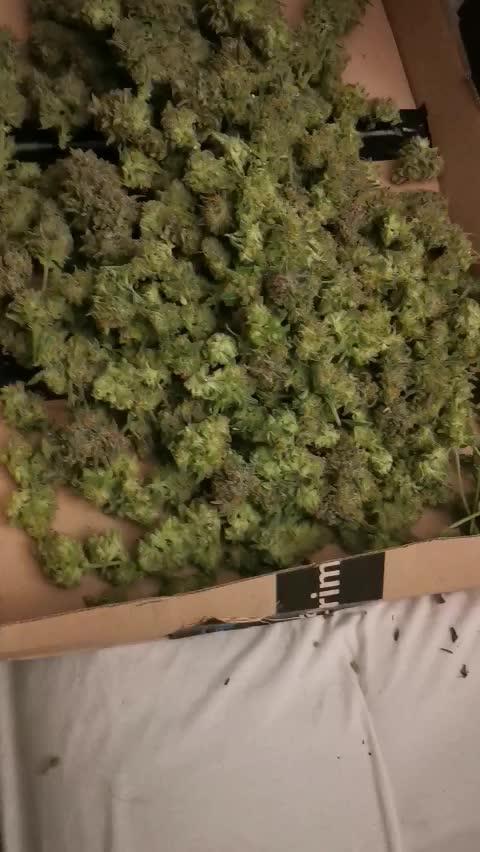
Alright I've updated this postmortem and cure just to give an idea of what I was up to during the dry and cure weeks. This grow was a ton of work and I'm very please with the results. I learned a ton about soil and environment control and really feel like I'm gaining confidence and coming into my own as a cultivator. I've been playing a lot with ice water hash and rosin and have set some neat goals for the future like hunting ice water hash cultivars, going perpetual and expanding the amount of canopy I can work with by building a network of remote-operated satellite flower tents in friends' and family's abodes . I'm not sure I'll go through all this effort of documentation here again, but please follow along on my instagram, stay in touch and chill out with me sometime @Fullmeltalchemist.00 All in all, I was running 1000w of quantum board across three tents and pulled just over 1100 grams, which was a big goal of mine. Thanks for all the advice and love growmies! And thanks growdiaries for the platform. It's been coo.
Likes
21
Share
Been feeding just water ready for the chop. Some of them have all brown pistils and have pretty much stopped all together. The kalimist indica pheno is still flowering so I'll let it go until it looks ripe 👍
Processing
Likes
4
Share
Likes
26
Share
Day 79 (First Grow, Flowering Phase): Hey everyone! It's the start of a new week, and we're now on day 79 of our first grow. The flowering phase is progressing beautifully, with the buds getting bigger and frostier day by day. 🌸✨ We've started to see the formation of orange hairs, which is a promising sign of the buds maturing. The plants are looking healthy and vibrant, and the SCROG net is helping to keep everything well-supported and evenly exposed to light. Humidity issues from last week are still being monitored, and we're considering adding a dehumidifier to ensure optimal conditions as we move closer to harvest. Thanks for all your support and suggestions. Any tips for these final weeks of flowering are always welcome!
Likes
56
Share
We are at day 14 and things are running smooth for the most part. Topped most the plants on day 10 and a couple of the slower ones on day 12. Twisted helix had a root issue showing droopy leaves and some abnormal color. She is showing some growth so the roots are developing and I expect her to catch up over the next couple weeks. Got some clones that were taken late flower on the last run and those will veg for a couple weeks before switching them back to flower and forcing a couple to produce pollen. Other than that just going to let everyone grow a little before starting some training.
Likes
7
Share
@gablmo
Follow
I finally turned 600 watts on, would love to get comments from you folks, so clueless here. If you see something wrong, please let me know.
Likes
25
Share
ANTHOCYANIN production is primarily controlled by the Cryptochrome (CR1) Photoreceptor ( !! UV and Blue Spectrums are primary drivers in the production of the pigment that replaces chlorophyll, isn't that awesome! 1. Diverse photoreceptors in plants Many civilizations, including the sun god of ancient Egypt, thought that the blessings of sunlight were the source of life. In fact, the survival of all life, including humans, is supported by the photosynthesis of plants that capture solar energy. Plants that perform photosynthesis have no means of transportation except for some algae. Therefore, it is necessary to monitor various changes in the external environment and respond appropriately to the place to survive. Among various environmental information, light is especially important information for plants that perform photosynthesis. In the process of evolution, plants acquired phytochrome, which mainly receives light in the red light region, and multiple blue light receptors, including his hytropin and phototropin, in order to sense the light environment. .. In addition to these, an ultraviolet light receptor named UVR8 was recently discovered. The latest image of the molecular structure and function of these various plant photoreceptors (Fig. 1), focusing on phytochrome and phototropin. Figure 1 Ultraviolet-visible absorption spectra of phytochrome, cryptochrome, phototropin, and UVR8. The dashed line represents each bioactive absorption spectrum. 2. Phytochrome; red-far red photoreversible molecular switch What is phytochrome? Phytochrome is a photochromic photoreceptor, and has two absorption types, a red light absorption type Pr (absorption maximum wavelength of about 665 nm) and a far-red light absorption type Pfr (730 nm). Reversible light conversion between the two by red light and far-red light, respectively(Fig. 1A, solid line and broken line). In general, Pfr is the active form that causes a physiological response. With some exceptions, phytochrome can be said to function as a photoreversible molecular switch. The background of the discovery is as follows. There are some types of plants that require light for germination (light seed germination). From that study, it was found that germination was induced by red light, the effect was inhibited by subsequent far-red light irradiation, and this could be repeated, and the existence of photoreceptors that reversibly photoconvert was predicted. In 1959, its existence was confirmed by the absorption spectrum measurement of the yellow sprout tissue, and it was named phytochrome. Why does the plant have a sensor to distinguish between such red light and far-red light? There is no big difference between the red and far-red light regions in the open-field spectrum of sunlight, but the proportion of red light is greatly reduced due to the absorption of chloroplasts in the shade of plants. Similar changes in light quality occur in the evening sunlight. Plants perceive this difference in light quality as the ratio of Pr and Pfr, recognize the light environment, and respond to it. Subsequent studies have revealed that it is responsible for various photomorphogenic reactions such as photoperiodic flowering induction, shade repellent, and deyellowing (greening). Furthermore, with the introduction of the model plant Arabidopsis thaliana (At) and the development of molecular biological analysis methods, research has progressed dramatically, and his five types of phytochromes (phyA-E) are present in Arabidopsis thaliana. all right. With the progress of the genome project, Fi’s tochrome-like photoreceptors were found in cyanobacteria, a photosynthetic prokaryotes other than plants. Furthermore, in non-photosynthetic bacteria, a homologue molecule called bacteriophytochrome photoreceptor (BphP) was found in Pseudomonas aeruginosa (Pa) and radiation-resistant bacteria (Deinococcus radiodurans, Dr). Domain structure of phytochrome molecule Phytochrome molecule can be roughly divided into N-terminal side and C-terminal side region. PAS (Per / Arndt / Sim: blue), GAF (cGMP phosphodiesterase / adenylyl cyclase / FhlA: green), PHY (phyto-chrome: purple) 3 in the N-terminal region of plant phytochrome (Fig. 2A) There are two domains and an N-terminal extension region (NTE: dark blue), and phytochromobilin (PΦB), which is one of the ring-opening tetrapyrroles, is thioether-bonded to the system stored in GAF as a chromophore. ing. PAS is a domain involved in the interaction between signal transduction-related proteins, and PHY is a phytochrome-specific domain. There are two PASs and her histidine kinase-related (HKR) domain (red) in the C-terminal region, but the histidine essential for kinase activity is not conserved. 3. Phototropin; photosynthetic efficiency optimized blue light receptor What is phototropin? Charles Darwin, who is famous for his theory of evolution, wrote in his book “The power of move-ment in plants” published in 1882 that plants bend toward blue light. Approximately 100 years later, the protein nph1 (nonphoto-tropic hypocotyl 1) encoded by one of the causative genes of Arabidopsis mutants causing phototropic abnormalities was identified as a blue photoreceptor. Later, another isotype npl1 was found and renamed phototropin 1 (phot1) and 2 (phot2), respectively. In addition to phototropism, phototropin is damaged by chloroplast photolocalization (chloroplasts move through the epidermal cells of the leaves and gather on the cell surface under appropriate light intensity for photosynthesis. As a photoreceptor for reactions such as escaping to the side of cells under dangerous strong light) and stomata (reactions that open stomata to optimize the uptake of carbon dioxide, which is the rate-determining process of photosynthetic reactions). It became clear that it worked. In this way, phototropin can be said to be a blue light receptor responsible for optimizing photosynthetic efficiency. Domain structure and LOV photoreaction of phototropin molecule Phototropin molecule has two photoreceptive domains (LOV1 and LOV2) called LOV (Light-Oxygen-Voltage sensing) on the N-terminal side, and serine / on the C-terminal side. It is a protein kinase that forms threonine kinase (STK) (Fig. 4Aa) and whose activity is regulated by light. LOV is one molecule as a chromophore, he binds FMN (flavin mononucleotide) non-covalently. The LOV forms an α/βfold, and the FMN is located on a β-sheet consisting of five antiparallel β-strands (Fig. 4B). The FMN in the ground state LOV shows the absorption spectrum of a typical oxidized flavin protein with a triplet oscillation structure and an absorption maximum wavelength of 450 nm, and is called D450 (Fig. 1C and Fig. 4E). After being excited to the singlet excited state by blue light, the FMN shifts to the triplet excited state (L660t *) due to intersystem crossing, and then the C4 (Fig. 4C) of the isoaroxazine ring of the FMN is conserved in the vicinity. It forms a transient accretionary prism with the tain (red part in Fig. 4B Eα) (S390I). When this cysteine is replaced with alanine (C / A substitution), the addition reaction does not occur. The effect of adduct formation propagates to the protein moiety, causing kinase activation (S390II). After that, the formed cysteine-flavin adduct spontaneously dissociates and returns to the original D450 (Fig. 4E, dark regression reaction). Phototropin kinase activity control mechanism by LOV2 Why does phototropin have two LOVs? Atphot1 was found as a protein that is rapidly autophosphorylated when irradiated with blue light. The effect of the above C / A substitution on this self-phosphorylation reaction and phototropism was investigated, and LOV2 is the main photomolecular switch in both self-phosphorylation and phototropism. It turns out that it functions as. After that, from experiments using artificial substrates, STK has a constitutive activity, LOV2 functions as an inhibitory domain of this activity, and the inhibition is eliminated by photoreaction, while LOV1 is kinase light. It was shown to modify the photosensitivity of the activation reaction. In addition to this, LOV1 was found to act as a dimerization site from the crystal structure and his SAXS. What kind of molecular mechanism does LOV2 use to photoregulate kinase activity? The following two modules play important roles in this intramolecular signal transduction. Figure 4 (A) Domain structure of LOV photoreceptors. a: Phototropin b: Neochrome c: FKF1 family protein d: Aureochrome (B) Crystal structure of auto barley phot1 LOV2. (C) Structure of FMN isoaroxazine ring. (D) Schematic diagram of the functional domain and module of Arabidopsis thaliana phot1. L, A’α, and Jα represent linker, A’α helix, and Jα helix, respectively. (E) LOV photoreaction. (F) Molecular structure model (mesh) of the LOV2-STK sample (black line) containing A’α of phot2 obtained based on SAXS under dark (top) and under bright (bottom). The yellow, red, and green space-filled models represent the crystal structures of LOV2-Jα, protein kinase A N-lobe, and C-robe, respectively, and black represents FMN. See the text for details. 1) Jα. LOV2 C of oat phot1-to α immediately after the terminus Rix (Jα) is present (Fig. 4D), which interacts with the β-sheet (Fig. 4B) that forms the FMN-bound scaffold of LOV2 in the dark, but unfolds and dissociates from the β-sheet with photoreaction. It was shown by NMR that it does. According to the crystal structure of LOV2-Jα, this Jα is located on the back surface of the β sheet and mainly has a hydrophobic interaction. The formation of S390II causes twisting of the isoaroxazine ring and protonation of N5 (Fig. 4C). As a result, the glutamine side chain present on his Iβ strand (Fig. 4B) in the β-sheet rotates to form a hydrogen bond with this protonated N5. Jα interacts with this his Iβ strand, and these changes are thought to cause the unfold-ing of Jα and dissociation from the β-sheet described above. Experiments such as amino acid substitution of Iβ strands revealed that kinases exhibit constitutive activity when this interaction is eliminated, and that Jα plays an important role in photoactivation of kinases. 2) A’α / Aβ gap. Recently, several results have been reported showing the involvement of amino acids near the A’α helix (Fig. 4D) located upstream of the N-terminal of LOV2 in kinase photoactivation. Therefore, he investigated the role of this A’α and its neighboring amino acids in kinase photoactivation, photoreaction, and Jα structural change for Atphot1. The LOV2-STK polypeptide (Fig. 4D, underlined in black) was used as a photocontrollable kinase for kinase activity analysis. As a result, it was found that the photoactivation of the kinase was abolished when amino acid substitution was introduced into the A’α / Aβ gap between A’α and Aβ of the LOV2 core. Interestingly, he had no effect on the structural changes in Jα examined on the peptide map due to the photoreaction of LOV2 or trypsin degradation. Therefore, the A’α / Aβ gap is considered to play an important role in intramolecular signal transduction after Jα. Structural changes detected by SAXS Structural changes of Jα have been detected by various biophysical methods other than NMR, but structural information on samples including up to STK is reported only by his results to his SAXS. Not. The SAXS measurement of the Atphot2 LOV2-STK polypeptide showed that the radius of inertia increased from 32.4 Å to 34.8 Å, and the molecular model (Fig. 4F) obtained by the ab initio modeling software GASBOR is that of LOV2 and STK. It was shown that the N lobes and C lobes lined up in tandem, and the relative position of LOV2 with respect to STK shifted by about 13 Å under light irradiation. The difference in the molecular model between the two is considered to reflect the structural changes that occur in the Jα and A’α / Aβ gaps mentioned above. Two phototropins with different photosensitivity In the phototropic reaction of Arabidopsis Arabidopsis, Arabidopsis responds to a very wide range of light intensities from 10–4 to 102 μmol photon / sec / m2. At that time, phot1 functions as an optical sensor in a wide range from low light to strong light, while phot2 reacts with light stronger than 1 μmol photon / sec / m2. What is the origin of these differences? As is well known, animal photoreceptors have a high photosensitivity due to the abundance of rhodopsin and the presence of biochemical amplification mechanisms. The exact abundance of phot1 and phot2 in vivo is unknown, but interesting results have been obtained in terms of amplification. The light intensity dependence of the photoactivation of the LOV2-STK polypeptide used in the above kinase analysis was investigated. It was found that phot1 was about 10 times more photosensitive than phot2. On the other hand, when the photochemical reactions of both were examined, it was found that the rate of the dark return reaction of phot1 was about 10 times slower than that of phot2. This result indicates that the longer the lifetime of S390II, which is in the kinase-activated state, the higher the photosensitivity of kinase activation. This correlation was further confirmed by extending the lifespan of her S390II with amino acid substitutions. This alone cannot explain the widespread differences in photosensitivity between phot1 and phot2, but it may explain some of them. Furthermore, it is necessary to investigate in detail protein modifications such as phosphorylation and the effects of phot interacting factors on photosensitivity. Other LOV photoreceptors Among fern plants and green algae, phytochrome ɾphotosensory module (PSM) on the N-terminal side and chimera photoreceptor with full-length phototropin on the C-terminal side, neochrome (Fig. There are types with 4Ab). It has been reported that some neochromes play a role in chloroplast photolocalization as a red light receiver. It is considered that fern plants have such a chimera photoreceptor in order to survive in a habitat such as undergrowth in a jungle where only red light reaches. In addition to this, plants have only one LOV domain, and three proteins involved in the degradation of photomorphogenesis-related proteins, FKF1 (Flavin-binding, Kelch repeat, F-box 1, ZTL (ZEITLUPE)), LKP2 ( There are LOV Kelch Protein2) (Fig. 4Ac) and aureochrome (Fig. 4Ad), which has a bZip domain on the N-terminal side of LOV and functions as a gene transcription factor. 4. Cryptochrome and UVR8 Cryptochrome is one of the blue photoreceptors and forms a superfamily with the DNA photoreceptor photolyase. It has FAD (flavin adenine dinucle-otide) as a chromophore and tetrahydrofolic acid, which is a condensing pigment. The ground state of FAD is considered to be the oxidized type, and the radical type (broken line in Fig. 1B) generated by blue light irradiation is considered to be the signaling state. The radical type also absorbs in the green to orange light region, and may widen the wavelength region of the plant morphogenesis reaction spectrum. Cryptochrome uses blue light to control physiological functions similar to phytochrome. It was identified as a photoreceptor from one of the causative genes of UVR8 Arabidopsis thaliana, and the chromophore is absorbed in the UVB region by a Trp triad consisting of three tryptophans (Fig. 1D). It is involved in the biosynthesis of flavonoids and anthocyanins that function as UV scavengers in plants. Conclusion It is thought that plants have acquired various photoreceptors necessary for their survival during a long evolutionary process. The photoreceptors that cover the existing far-red light to UVB mentioned here are considered to be some of them. More and more diverse photoreceptor genes are conserved in cyanobacteria and marine plankton. By examining these, it is thought that the understanding of plant photoreceptors will be further deepened.
Likes
25
Share
easy to grow and comes with n amazing nose 👃... i could not believe the candy type smell that this lady is putting out, i'm kind of in love.... smooth amazing high with a stress and pain relief you wouldn't believe! it takes anxiety away like nothing and tastes overall amazing, big and kind of dense buds! 2nd place in bud structure ✅
Likes
11
Share
F1 youngest of them all, will try to just leave it be without lst or topping or anything... Maybe.
Likes
7
Share
Happy Easter Everyone!!! Everything is Great and Growing Up Extraordinarily Nice and Divinely Outstanding! #PabloEscobar and #Opium *Fem* #SalamiLegF3P's1&2 and #FireAlienRomulan Trained Out and Looking Super Tight, it was a Breeze and Super Easy to using those Pipecleaners to Train them with #TheGrowBags from Broski #www.as420.ca #PabloEscobar *Fem* breed by #DivineSeeds #DivineSeedsSquad #DivineSeedsBreedingCompany Topped and Looks Spectacularly Gorgeous!!! Origin:Canada/Columbia Type:Indica/Sativa Flowering:71 Days THC:>25% Harvest:700 g/m2 Height:180-200 cm She's Awesomely Trained, Topped and Strengthening out while spreading her Wings to fill her 10 gallon Grow Bag from Broski #www.as420.ca in 8 Weeks of Veg! #Opium *Fem* breed by #DivineSeeds #DivineSeedsSquad #DivineSeedsBreedingCompany Origin:Afghanistan Type:Indica/Sativa Flowering:63 Days THC:29% Harvest:1000 g/m2 Height:150-205 cm Getting Trained out into her 7th Week of Veg and Looking Mighty Fine!!! She's getting Humongous and Hearty in her 10 gallon!!! Yo!!! #SalamiLegF3 Romberry×GarlicBreath- Romberry: Indica Dominant Hybrid70% Indica / 30% Sativa THC: 19% - 21% Romberry is a rare indica dominant hybrid strain (70% indica/30% sativa) created through crossing the classic Romulan X Blueberry strains! GarlicBreath: Indica Dominant Hybrid70% Indica / 30% Sativa THC: 16% - 18% Garlic Breath is a super rare indica dominant hybrid strain created through crossing the powerful Hogsbreath X Chemdog D BX2 strains! Check it Out my fellow Growmies and Growmets! That's what I'm talking about #thehumancannabinoid Broski!!! Great Genetics that popped out in under 36 hours! Your #DankFlowGenetics are The Real Deal and some Kill! Lol I Totally love them and Can't wait to see these in Action! Your a Fantastic Friend and my Brother Indeed!!! It's a Pleasure working with you! I Hope that Everyone will Go over and Spread That Love to you on your #EastCoastSeedBank Website and Instagram! I'll most definitely have his Links posted down Below⬇️! I'm starting the Training process on my Cannabis plants and thier Loving it and Enjoying Life! These Cannabis plants are Camping out in the Closet for a week or so! Lol This is my 2nd run using the Osree.Light QB1000w and Everything is Mesmerizing!!! My Opium and Pablo Escobar *Fems* from #DivineSeeds Regs: SalamiLegF3's×2 and FireAlienRomulan look$ Outstandingly Awesome and Growing Up Phenomenally Fine into thier 8th week of Veg in our 2- 10 gallon The Grow Bags from Broski #www.as420.ca and also 2- 5 gallons as Well! I 1st started with my FireAlienRomulan breed by Broski #AlienBloodGenetix and on my Opium breed by #DivineSeeds which are Growing into thier 8th Week of Veg and also Defoliated the lower leaves from every Cannabis plant! I threw in a few #ProGrowerTipz throughout as Well! I'm always sharing and hoping to Help everyone else with what I've learned along the way on my Journey! Teacher teaching with his Teaching Techniques!!! These Sunflowers×5 and The 5 Brand New and Fresh Starts are Wonderful with a Huge Hint of Fantastical Fire is my #SalamiLegF3×2 by Broski #thehumancannabiniod #DankFlowGenetics #EastCoastSeedBank #FireAlienRomulan by Broski #AlienBloodGenetix my #PabloEscobar and #Opium by Team #DivineSeeds #DivineSeedsBreedingCompany Growing under our #Osree QB1000w and #GrowStarStore Kokokala QB1000w with #TNBNaturals The Enhancer Co2 Despersal canister and ph'd them w/ Declorinated watering w/ TNB ph Up and Down! Totally Top Quality Topz all Around! I had to Throw two of my Broski's some Shout Outs for sharing, showing and explaining the Benefits of Growing Lavender×3 and other Companion plants with our Cannabis Treez! Thanks Again! #DaHomieGnomie #MOJOGREENGROW #thehumancannabiniod #AlienBloodGenetix #divineseeds #divineseedssquad #divineseedsbreedingcompany #HarleyGrower #GallowGlas420 #TNBNaturals #XtremeGardening®️ #ThrivingDesign Family's and Teams!!! Your Genetics are Merry Magnificent, Mega Marvelous and Mighty Medical! Love um!!! I really Can't stress enough how Thankful and Grateful I am of All of you and what you've Shared with Us! Means the World!!! It's definitely a Pleasure being able to Grow with these Phenomenal Grow Lights! Please Enjoy! BudBrothers4-Life! Cheers Famz!!! Much Props and Much Topz!💯🔥 #Osree #GrowStarStore #Growatt #TNBNaturals #TNBTeam #GrowYourOwn #Bliss https://instagram.com/osree.light?igshid=1cftlnsvta4w2 https://instagram.com/thehumancannabinoid?igshid=17k159pumklkq EastCoastSeedBank Website Link: https://ecseedbank.com/ https://www.instagram.com/alienblood_genetix_official/ https://instagram.com/tnbnaturals?igshid=1brotdb4385sz https://instagram.com/divine.seeds?igshid=osxe2v7en33v https://instagram.com/as420.ca?igshid=1t8j7pcf3aw2p The Grow Bags: https://www.as420.ca/en DaHomieGnomie YouTube channel Link: https://youtube.com/channel/UCIJIuuCRm84DXjHYw4j4_CA https://instagram.com/dahomiegnomie4562?igshid=1cfhekzfa56tu MOJOGREENGROW YouTube channel Link: https://youtube.com/c/MOJOGREENGROW https://instagram.com/mojogreengrow1?igshid=1p7pgxh779om https://instagram.com/gallowglas420?igshid=qzzp2y5llzuj https://instagram.com/harleygrower?igshid=ndy7zh8y0k5g https://instagram.com/beardedbudbrothers?igshid=dpow775jzr5j https://instagram.com/xtremegardening?igshid=1w077ypflhb3t https://instagram.com/thrivingdesign?igshid=vqhwa4k8ts9g
Likes
32
Share
@Belverde
Follow
Welcome growers And also the week n°3 of veg. is finished for this young AYAHUASCA PURPLE 😈 She is the little girl of the garden, but in terms of health and growing vigor she is no less than the other girls 🌿 About five days ago I have transplanted into a 3l plastic pot.. Usually my choice of pot is the smartpot or the airpot 💯 Since the aeration of the substrate will be less than in my usual growing style, due to the choice of the pot, I have chosen to use a greater quantity of coco coir in the substrate.. I have mixed around 50% of light-mix soil (Canna professional and Biobizz), a 30% of coco coir (Atami), 10% worm-cast or humus (Atami) and around a 5% perlite wich it's already present in the light -mix.. I have also put a few micorizzae (Micosat F), like 10 grams, in direct contact with the roots and around 4 grams of Microlife (Bionova) in pellet form I will use this last one also for making an areated Tea, but during flowering.. About nutrients 👇 In this week i have giving their always organic/veganic nutrients.. Root-Juice (Biobizz) and Rizostimo (Biomagno) for the last time, plus a little bit of silicium (Bionova) and then Activator (Biomagno) / Crescita (Biomagno) / The Missing Link (Bionova) / X-Cell (Bionova) {This last two i have used in a foliar spray solution} Simply a little bit of everything at any watering 💧 About the lights 💡 I currently using for the first time, two Mars-Hydro SP3000, running at 25% of the power for now.. Next week im going to increase at least to 50% ⬆️ Onestly this lights looks pretty solid, definetly intense, with a spectrum really close ro the sun light One of the cool things about it it's that you can connected each one toghter with a cable and so you can controll the intensity of the lights very easy, in a precis way 👌 We will see in this months how they works And that's pretty much everything.. Easy times for now.. Soon the best part will begin.. See you next 📆 Thank you so much for stopping by 😎👍 FC ✌️ 🇮🇹
Likes
13
Share
4/20: She's growing well now, and I'm pretty sure her pale coloration is genetic. Everybody else looks fine. 4/22: I FIM'd her today and gave her about 20oz of water with cal-mag, humic acid, and boomerang and foliar fed with big bloom and fulvic acid. Later, I rinsed off all the plants with a stiff stream of filtered water in preparation for tomorrow. 4/23: Today was BoomBoom Spray day! I just love how visible the growth is the day after a BoomBoom Spray day!😲 Tomorrow I'll spray her down with Axiom Harpin a|b proteins..she'll start flowering soon and I want her hitting her stretch with mega-vigor.👈 4/24: I did a foliar application of Harpin proteins today and I fed her about 1/4-gallon. She's starting her stretch now...go for it girl, I can raise the lights as much as you need! I'll start increasing P and K with the next feeding. I bent over her apex branch and another branch and tied them down. I turned on the 3rd pair of QB's and bud boosters today and removed all the blue and cool white lights from the garden. 4/25: Was busy with life, but checked on her a couple of times...she's really stretching now. Last day of week 3-
Likes
36
Share
7/19: Started new nutrients today. Filled gallon jug with new nutes. Poured half of new nute mix in half gallon jug. Poured the entire half gallon jug into reservoir. 7/20: Bumped light intensity to 50% 7/21: Filled reservoir to the 2nd line today. Added a total of 1 gallon to res to get it to that line. Poured the rest of the mixed nutes for this week (half gallon) and then another half gallon of just plain water. 7/24: Bumped light intensity to 55% 7/25: Sadness today 😞.. While in the process of doing more LST today I accidentally snapped the main stem. I Panicked! Moved plant back in opposite direction to counteract the split. Will be monitoring very closely! 🙏🏾 ***** For this Grow****** “Day Air Temperature” will be the max temp of tent for the week. “Substrate Temperature” will be the average temp of tent for the week. “Night Air Temperature” will be the lowest temp of the tent for the week.
Likes
12
Share
@MrRaid
Follow
Day 16 some low stress training for her 👍 I'm using tap water so not fully organic but food wise it's all organic
Likes
9
Share
Un jour je vais avoir un endroit bien isolé pour lui donner les meilleurs conditions. Malgré tout elle est quand même impressionnante ❤️Divine Seeds
Likes
7
Share
@apmcfly76
Follow
Likes
18
Share
~ FASTBUDS TESTER #2206 ~ Well friends, here we go on another 'canna-venture' together! The grow room has had a complete remodel and some upgrades done to it including brand spanking new 4x8 and 4x4 tents and a Trolmaster Hydro X controller along with a new Control Panel. This tester strain is one of six tester strains that FastBuds has graciously provided me with and I'm looking forward to seeing what this girl has to offer when she's grown to her full potential! One drawback of 'testers' is I have little to no information on it other than its number and that it's an autoflower... 🤪 But, it's ALWAYS a blast growing them for me because not knowing a lot allows me to just concentrate on the essentials: Light, Environment, Water, Nutrients and possibly a bit of LST... not complicated, just basics like keeping a constant temperature and RH in the tent at a level that gives a good VPD, watering when almost dry and maintaining proper light levels according to their stage of growth. ____________________________________________________________________________________________________________________________________________________________________________________________________________________________________________________________________________________________________________________________________________________________________________________________________________________________________________________ ~THE SETUP~ ~Initially seeds were lightly scuffed, then soaked for 3 hours in 78℉ distilled water after which they were transferred to moist paper towels laid out in a Jiffy Pellet plastic starter tray with lid. Underneath the tray was placed a Vivosun Heat Mat with Controller that was set to 78℉ where they stayed until their tap roots emerged. ~Planted into Jiffy Peat Pellets that were hydrated with distilled water warmed to 78℉ with a 7.0 ph. ~Once roots emerge from the Jiffy Pellet they're transferred to their fabric pots. ~Grown 100% organic in a 4g Gronest fabric pot and a 3g fabric pot by Wraxly filled with Mother Earth 70/30 Coco/Perlite medium and initially amended with Dr. Earth 4-4-4 / Earthworm Castings / Dr. Earth Flower Girl 3-9-4 and Coast of Maine Stonington Blend Organic Plant Food 5-2-4. ~19/5 light cycle for the entire run with supplemental UVA added during flower. Lights are controlled by a Trolmaster Hydro X controller set for a 15min Sunrise/Sunset simulation. ~Top dressing every 3-4 weeks with slow release dry amendments and Earthworm castings. ~Straight water ph'd @ 6.2-6.8 when needed and bi-weekly Compost Tea's. ____________________________________________________________________________________________________________________________________________________________________________________________________________________________________________________________________________________________________________________________________________________________________________________________________________________________________________________ Weekly Updates: 12/15- Here we go into the second week of veg for the FastBuds Tester #2206 girls and they're on a roll! When I checked on them today they both were still moist so I let them go until I check them tomorrow. Basically at this point in the run all I have to do is make sure they don't dry out, fill the humidifier and watch them grow! 12/17- Yesterday I watered them both and increased the amount to roughly 0.25g each of de-chlorinated water with 3ml/g of Botanicare Silica Blast (added to begin to help strengthen their branches) and then ph'd to 6.4 @ 74℉. I've also increased the output of the HLG 650R's to 35% which equates to about 230w at the wall which, of course has raised the temp's in the tent so I've also begun to run the A/C unit in the grow room which is keeping the temp's now at 75℉ in the tent. The RH is running around 75-78% RH giving a VPD of .67-.74 which I'll take! 😁👍 Other than what I've mentioned above, all I did was fill the humidifier with distilled water and watched my girls grow! 🤩 12/19- Today I watered them each with 0.25g of de-chlorinated water to which I added 3ml/g Fish Head Farms Fish Sh!t and 1 tsp/g Unsulfured Molasses which I then ph'd to 6.3 @ 74℉. I'm now watering through the bottom, filling the drip pan and letting the plant draw up the water into itself. I am also watering from the top, but only just enough to moisten the medium. They're really starting to take off now, a sure sign their roots are beginning to get well developed. Their 4th set of leaves have emerged and I'm thinking over topping them in the next day or so. 12/21- Well, yesterday I went ahead and topped the #1 Tester #2206 taking off the 5th leaf set. Hopefully she won't stress out over this and starts shooting out those secondary branches. I left the #2 alone as she's not quite as tall as the #1. I may not top the #2 as a sort of comparison to see how each grows out. Today I watered them both with 0.25g of straight de-chlorinated water each which was ph'd to 6.3 @ 74℉. I gave about 3/4 of it into their drip pans so they can draw it up into their medium, the rest I applied to the top of their medium just to moisten it. Well there's two weeks of veg behind us now, Week Three of vegetation is beginning and they should really start to take off! 😍👍 😎💚 Thank you for checking out my passion in life! Please visit as often as you wish and I hope you enjoy this journey as much as I know I will! Grow Strong! 💪😎🤙
Processing
Likes
15
Share
1 of my girls popped up on day 6. I’ll give her sister until day 8 before I take a look under the soil.